Tulip River Cruise Ports: Kinderdijk, Keukenhof, Veere and Antwerp
A tulip-season river cruise is not one single experience repeated at every stop. One morning you can walk from the ship into a field of historic windmills, while the next day may begin with a motorcoach ride to a carefully designed flower park.
The best itineraries balance headline attractions with smaller Dutch and Belgian ports. Kinderdijk, Keukenhof, Hoorn, Veere, Dordrecht, and Antwerp each require a different plan, and bloom timing is never as predictable as the brochure photography suggests.
The quick take
Book the itinerary for spring landscapes and compact historic towns, not for a guarantee that every outdoor field will be at peak color. Weather controls the commercial bulb fields, while Keukenhof’s gardeners use many varieties and layered planting to create a longer display season.
Kinderdijk is the easiest signature stop to explore independently when the ship docks nearby. Keukenhof usually requires organized transportation, and the smaller towns reward unhurried walking more than a checklist of attractions.
Tulip river cruise ports quick facts
- Typical season: Late March through early May
- Keukenhof 2027 dates: March 18 through May 9, daily from 8:00 AM to 7:00 PM
- Best-known windmill stop: Kinderdijk
- Easiest small-town walks: Hoorn, Veere, and Dordrecht when centrally berthed
- Major city stop: Antwerp, where river berths can place you close to the historic center
- Weather reality: Cold slows outdoor blooms and warm spells bring them forward
- Best clothing: Waterproof outer layer, warm midlayer, and shoes with grip
- Currency: Euro in both the Netherlands and Belgium
- Accessibility concern: Gangways, cobbles, windmill interiors, and wet paths
- Planning rule: Confirm every berth, excursion departure, and all-aboard time on the ship
When will the tulips bloom?
There is no exact peak date that works every year. Soil temperature, winter cold, spring sunshine, rain, and wind all influence when outdoor tulips open and how long the display lasts.
Early sailings may find daffodils, hyacinths, crocuses, and early tulip varieties taking the lead. Midseason cruises often have the broadest mix, while later departures may see mature displays and more fields already cut for bulb production.
Commercial tulip fields are working farms, not public gardens. Growers often remove flower heads to direct energy into the bulbs, so a field that looked brilliant in yesterday’s photo may be green when your bus arrives.
Never enter a field unless access is clearly permitted. Walking between rows can spread disease and damage a crop, and the best respectful photographs usually come from designated roadsides or visitor farms.
Why Keukenhof is more reliable
Keukenhof plants millions of bulbs in carefully planned layers, using early, middle, and late varieties to extend color through its short season. Pavilions and indoor flower shows also provide displays when outdoor weather has been difficult.
For 2027, the official park schedule lists March 18 through May 9, with daily hours from 8:00 AM to 7:00 PM and last entrance at 6:15 PM. Tickets are dated and capacity can sell out, so use the cruise excursion or the official ticket system rather than assuming walk-up space.
Kinderdijk
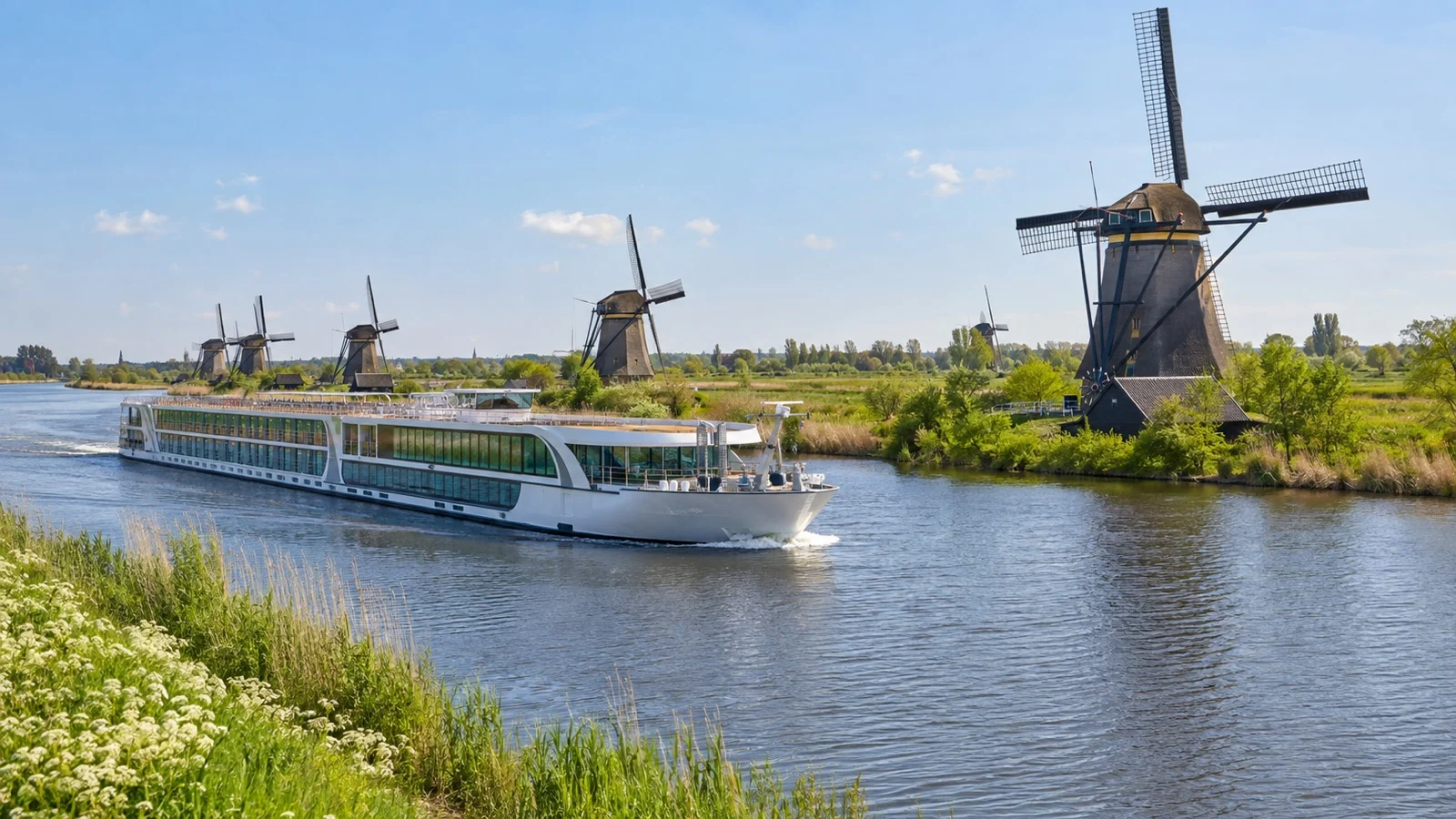
Kinderdijk is the stop that most closely matches the classic Dutch water-management image. Nineteen historic windmills stand within a landscape of canals, dikes, pumping systems, and low polders recognized as a UNESCO World Heritage Site.
Many river vessels berth close enough for passengers to walk directly into the heritage area. Exact positions vary, but the transition from gangway to windmill paths can be wonderfully simple compared with big-city ports.
The outdoor paths and views can be enjoyed independently, while a paid ticket supports the nonprofit site and includes access to visitor experiences such as museum mills, the pumping station exhibition, audio interpretation, and tour boats according to the day’s program.
Kinderdijk’s official planning guidance suggests about one hour for a short route and two to three hours for its most popular experience. That is a useful reality check because entering mills and waiting for boats takes longer than simply photographing the first row.
What not to miss
Walk far enough beyond the entrance to let the landscape open around you. The first viewpoint can become crowded when a ship unloads, while the paths farther along usually feel calmer.
A museum mill reveals how little private space a working family once had inside the structure. Stairs can be extremely steep and narrow, so the interior is not appropriate for every visitor.
A tour boat provides a low perspective across the waterways and saves some walking. Service can be seasonal or affected by weather, so check the site schedule when you arrive.
Kinderdijk accessibility
Main paths are generally level, but surfaces and weather matter. Wind, rain, puddles, gangway angles, and distances between facilities can be more significant than the lack of hills.
Museum mills have inherent historic barriers that cannot be eliminated. Travelers using mobility devices should focus on the landscape, visitor center, pumping-station interpretation, and any accessible boat option confirmed that day.
Keukenhof from a river cruise
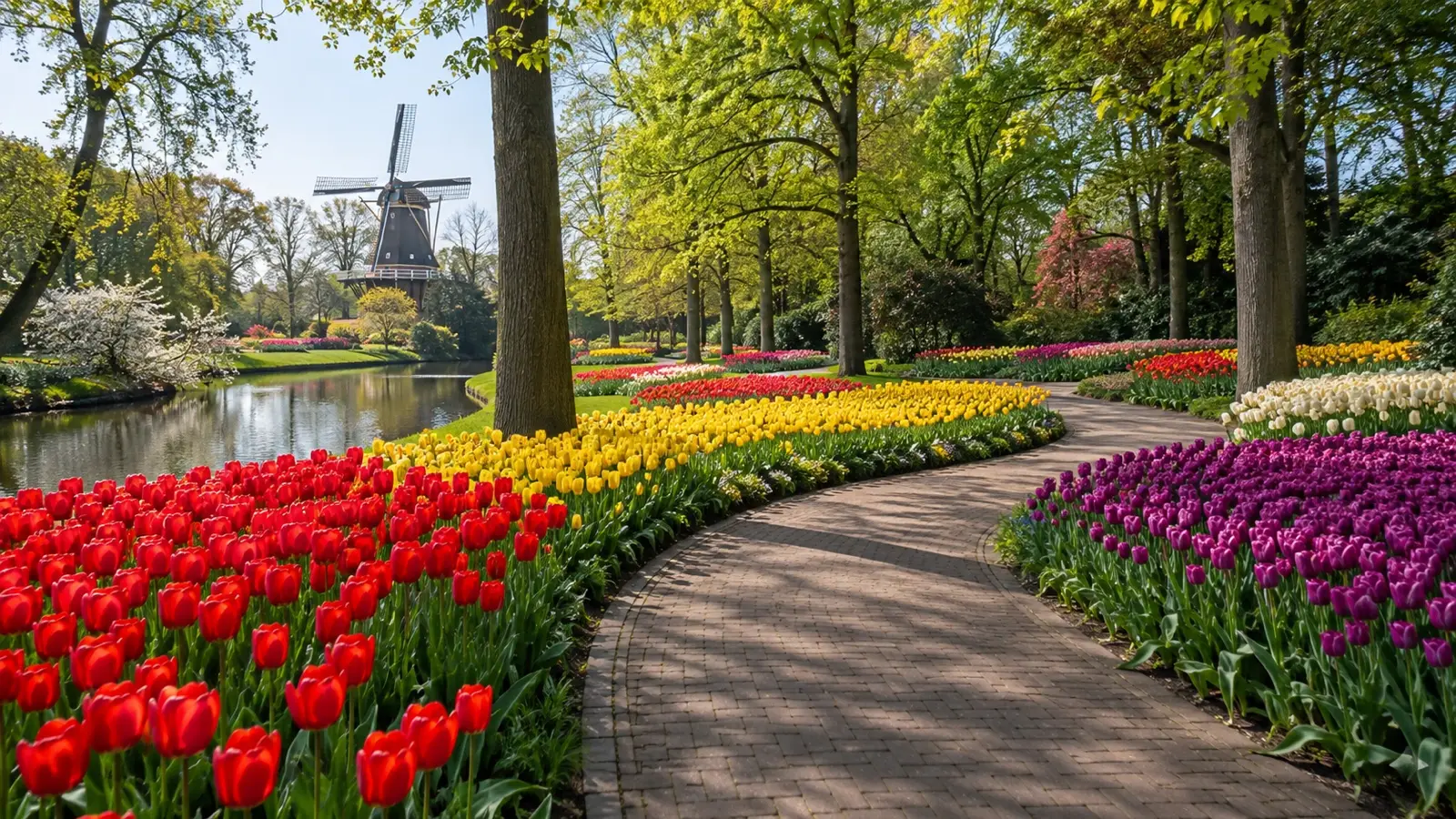
Keukenhof is in Lisse, not in central Amsterdam and not beside a typical river berth. Unless the itinerary specifically docks nearby and provides a special connection, expect a bus transfer that can be affected by highway traffic and intense seasonal demand.
A cruise-line excursion is usually the most efficient choice because it coordinates admission and transportation with the ship. Independent travelers need a timed park ticket plus a complete plan from their actual berth, not simply from Amsterdam Central Station.
Arrive as early as your schedule permits. Tour buses build through the morning, and the park’s most photographed paths feel very different before the largest groups arrive.
How long to spend at Keukenhof
Three hours inside is enough for a purposeful circuit, several themed gardens, a pavilion, and a break. Flower enthusiasts and photographers can happily spend four or five hours.
The park is larger than it first appears, and crowded paths slow movement. Agree on a meeting point and time before separating from companions because phone service and noise do not make last-minute coordination effortless.
Use the official map to choose priorities instead of trying to cover every corner. If rain starts, move into a pavilion and return to outdoor beds when conditions improve.
What Keukenhof is not
Keukenhof is a display garden rather than an endless commercial tulip farm. Its artistic beds, mature trees, water features, pavilions, and temporary displays create a curated experience.
Nearby bulb fields may appear during the transfer, but their color depends on timing and farm operations. A park visit should stand on its own even if roadside fields are early, late, or already cut.
Hoorn
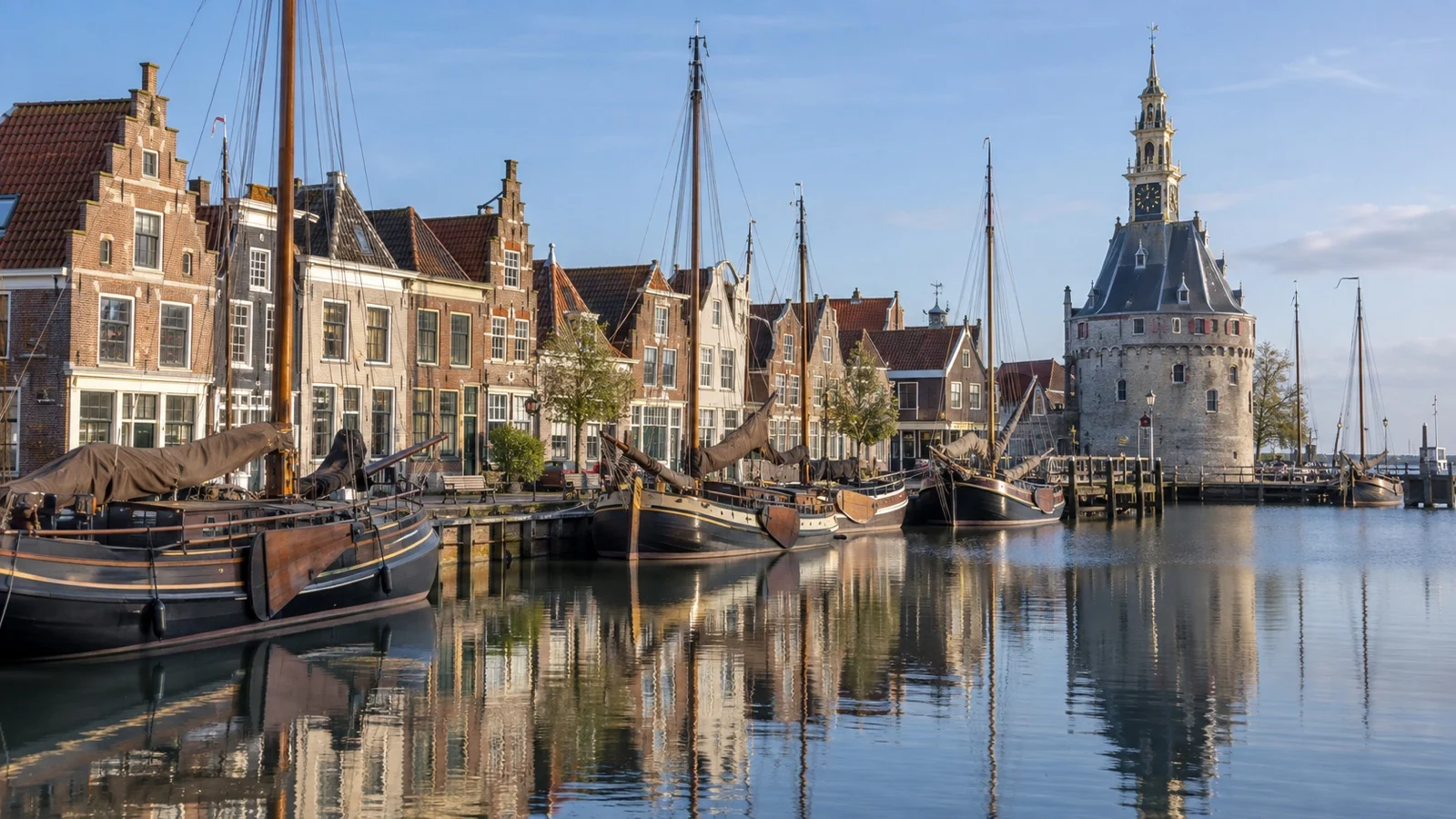
Hoorn offers a compact harbor city with a strong Dutch East India Company-era streetscape and a pleasant maritime atmosphere. River ships may dock within a manageable walk of the historic center, although final berth information always comes from the vessel.
The harbor, Hoofdtoren tower, Roode Steen square, and surrounding lanes form an easy independent loop. This is a port where wandering slowly often works better than joining a bus immediately.
The Westfries Museum is a major cultural anchor, but renovation or temporary presentations may affect access. Check the museum’s official site close to sailing if its collection is a priority.
Hoorn is also a useful place to slow the pace after Keukenhof. A café, cheese shop, harbor view, and short architectural walk can make a satisfying call without complicated transportation.
Veere
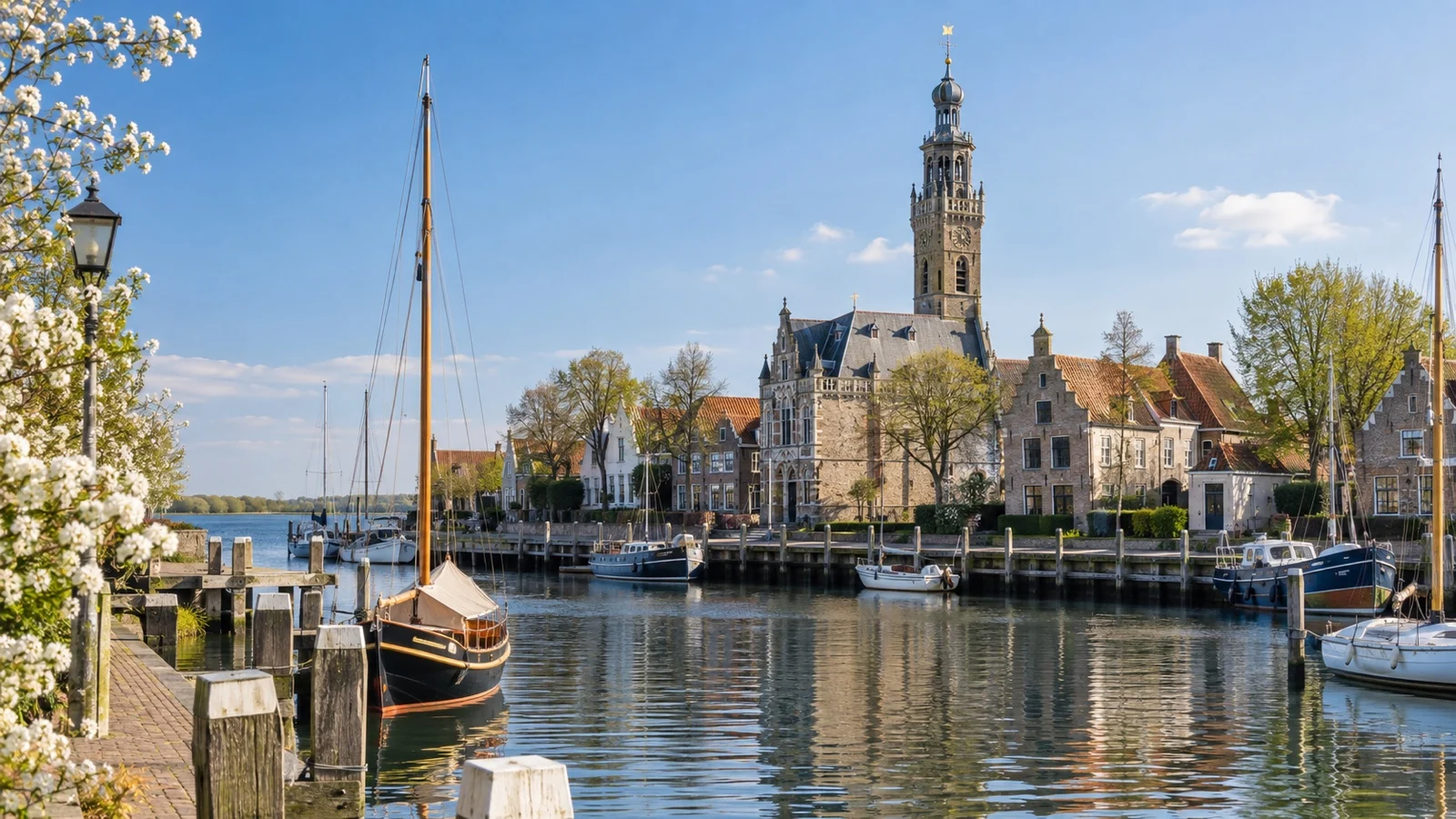
Veere is a small Zeeland town wrapped around a picturesque harbor. Its scale is intimate, with old merchant houses, a monumental church, waterfront walks, and short lanes that invite an unstructured visit.
The exact arrival can involve a local landing stage or transfer depending on vessel size and itinerary. Listen for operational details because small waterways and weather can shape the day.
Walk toward the harbor and Markt, then let the town’s compact plan do the work. Veere does not need an aggressive sightseeing schedule, and much of its appeal comes from the relationship between stone buildings, boats, and open water.
The Delta Works or other regional excursions may be offered from Zeeland calls. Those are worthwhile for travelers interested in engineering, but choosing one means giving up part of Veere’s quiet atmosphere.
Weather in Zeeland
Wind can be stronger near the coast than it was at the previous inland stop. A sunny forecast does not eliminate the need for a wind-resistant layer.
Rain turns old paving slick and makes exposed harbor walks feel colder. Pack a compact waterproof jacket rather than relying on an umbrella in gusty conditions.
Dordrecht
Dordrecht sits at a meeting of rivers and has one of the Netherlands’ richest historic waterfronts. Depending on the berth, passengers can often begin exploring on foot with little delay.
The Grote Kerk, old harbors, narrow streets, and merchants’ houses fit into a compact loop. The church tower and waterfront perspectives reward photographers, while cafés make it easy to adjust the plan around weather.
Dordrecht is also associated with excursions to Kinderdijk, so read the itinerary language carefully. A call labeled Dordrecht may offer a bus or boat connection rather than a separate ship stop at the windmills.
If you already visited Kinderdijk, stay in Dordrecht and give the city its own time. Doubling back to repeat the same attraction can erase one of the itinerary’s most pleasantly underrated ports.
Antwerp
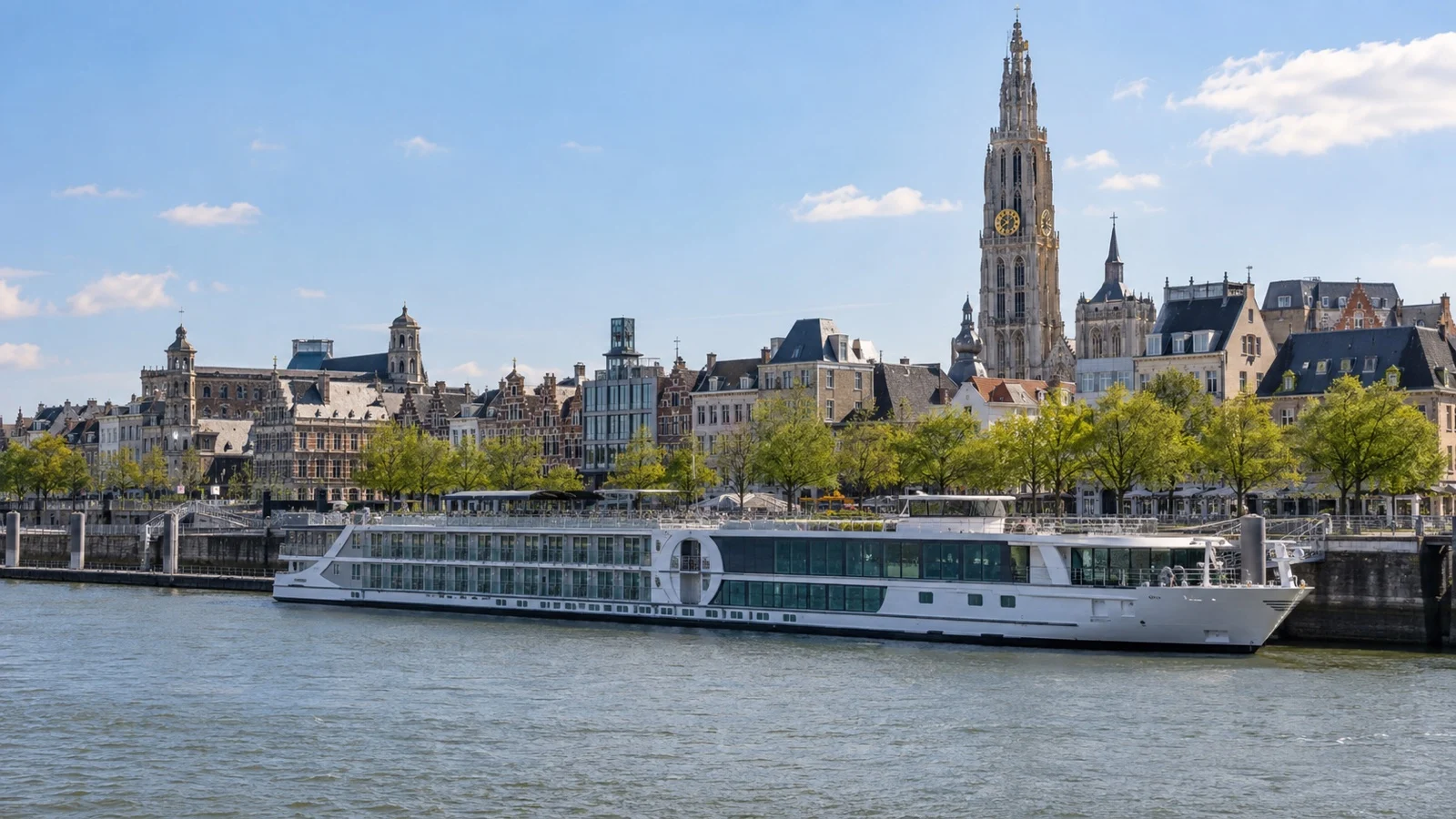
Antwerp brings a different scale and energy to a tulip itinerary. River cruise berths along the Scheldt can place you near the historic center, but port assignments and security arrangements still vary.
The Cathedral of Our Lady, Grote Markt, guild houses, riverfront, and medieval Vlaeykensgang sit within a rewarding central walk. Antwerp is also a major fashion, art, and diamond city, so you can build a day around interests far beyond spring flowers.
The Museum Plantin-Moretus is an outstanding choice for printing and book history, while the Royal Museum of Fine Arts Antwerp requires transportation or a longer walk from the old center. Check official opening days before designing the itinerary around either museum.
Antwerp’s historic center is generally more accessible than a windmill interior, but cobbles and construction remain common. The riverfront transition can also include ramps, stairs, or a substantial gangway depending on water level.
A practical Antwerp plan
Start with Grote Markt and the cathedral area before crowds grow. Continue through the historic lanes, then choose one museum, shopping district, or food stop rather than trying to cross the entire city.
Belgian chocolate, waffles, beer, and fries are easy to find, but the most visible tourist counter is not always the best choice. Walk a few blocks beyond the central square and check current menus before committing.
Leave enough time to relocate the ship if your cruise line has warned about a berth change. The Scheldt is tidal, and operational instructions deserve close attention.
Amsterdam and the flower region
Many tulip cruises begin, end, or pause in Amsterdam. The city’s passenger berths vary, and construction around major transportation areas can change pedestrian and vehicle routes.
Amsterdam is not a substitute for Keukenhof, and Keukenhof is not a substitute for Amsterdam. The city offers canals, major museums, neighborhoods, and history, while the garden delivers the concentrated spring display.
If you have only one free day, decide which experience motivated the trip. Combining a major museum, a canal cruise, and Keukenhof usually creates more transit than pleasure.
Timed tickets are essential for the Anne Frank House and often wise for major art museums. Buy only through official channels because popular dates attract misleading resellers.
Other ports you may see
Enkhuizen is a handsome IJsselmeer town known for maritime heritage and the Zuiderzee Museum. Access to the outdoor museum and ferry components can be seasonal, so check what is operating on your date.
Rotterdam offers bold modern architecture, the Markthal, maritime history, and transportation links across the region. Its large port geography means the berth location matters much more than the city name alone.
Ghent or Brussels may appear as Belgian excursions even when the ship docks elsewhere. These transfers can be rewarding, but they consume time that could otherwise be spent in the actual port town.
Arnhem and Nijmegen sometimes appear on broader Dutch spring routes. They bring wartime history, museums, and riverfronts rather than a tulip-centered experience, which helps diversify the itinerary.
How to compare itineraries
Read the day-by-day schedule for docking locations, not only the marketing headline. “Amsterdam and Keukenhof” might mean a hotel night, a central berth, a distant berth, or an excursion offered at extra cost.
Look for a balance of one major garden day, one windmill landscape, several walkable towns, and enough free time. Repeated long coach excursions can make a river cruise feel less connected to the waterways.
Check whether Keukenhof admission is included and whether the excursion is guaranteed or optional. Also note if Kinderdijk is a true berth, a tender-style landing, or a trip from Rotterdam or Dordrecht.
Late-night or overnight calls create valuable flexibility. They reduce the pressure of choosing between a museum and an evening walk, but you still need the ship’s security and access details.
Packing for a spring river cruise
Build outfits in layers because mornings can be cold, afternoons mild, and exposed quays windy. A waterproof shell, warm midlayer, and compact hat handle more conditions than one heavy coat.
Choose closed shoes with grip for wet paths, cobbles, and steep ship gangways. Bring a second pair so you are not forced to wear damp shoes on consecutive days.
A small reusable water bottle, portable battery, and lens cloth earn their space. Flower photography drains phones quickly, while drizzle leaves spots on camera glass.
If allergies are significant, carry the medication you normally use and keep it accessible. Pollen exposure varies, but gardens, fields, wind, and long outdoor days can combine.
Accessibility and energy
Ask the cruise line for specifics rather than accepting the word “moderate.” A level town walk, a narrow windmill staircase, a long coach transfer, and a crowded garden path create very different demands.
Kinderdijk’s landscape can be enjoyed without entering a mill, and Keukenhof offers broad paths with benches and facilities. Crowds still affect turning space and walking pace, particularly around indoor displays.
In small ports, shuttle capacity for mobility devices may be limited. Confirm arrangements before sailing and again with the onboard team when the final berth is known.
Schedule recovery time after the largest excursion. Tulip itineraries look gentle on paper, but repeated early starts and long garden walks add up.
Common mistakes
The first mistake is chasing a mythical perfect bloom week. Choose dates that suit your schedule and value the gardens, towns, and water landscapes together.
The second is assuming every ship docks beside every named attraction. Keukenhof is a transfer, and several itinerary labels describe a region or excursion rather than the gangway location.
The third is entering commercial flower fields for photographs. Respect farm boundaries and use designated visitor locations.
Finally, do not book independent transportation with a narrow return margin. Spring traffic around Lisse and berth changes on busy waterways can undo an otherwise sound plan.
Quick answers
What is the best month for a tulip river cruise?
April usually offers the broadest odds, but there is no guaranteed peak week. Early and late sailings can still be excellent because Keukenhof plans for a long sequence of blooms.
Can I visit Keukenhof independently?
Yes, but you need a timed ticket and transportation from the ship’s actual berth. A cruise excursion is often more efficient when the port window is limited.
Is Kinderdijk free?
You can see parts of the outdoor landscape without entering paid attractions. A ticket supports the site and adds museum mills, exhibitions, audio interpretation, and boat access according to the current program.
Which ports are easiest on foot?
Hoorn, Veere, Dordrecht, and central Antwerp can be rewarding walking ports when the berth is close. Exact docking positions and gangway conditions still require confirmation.
Will I see tulip fields from the ship?
You may see spring landscapes, but most commercial bulb fields are not directly beside the main cruising channels. Excursions and road transfers provide better opportunities, subject to bloom timing.
The last word
A strong tulip cruise is about more than flowers. Windmills, water management, maritime towns, art, food, and the contrast between the Netherlands and Belgium give the itinerary its depth.
Accept the weather, verify the logistics, and choose one or two priorities in each port. The result will feel less like a race for the perfect photograph and more like a genuine spring journey through the Low Countries.
Planning details were checked against official information from Keukenhof, the Kinderdijk UNESCO World Heritage organization, Dutch and Belgian destination offices, local museums, and cruise-port authorities.
No firsthand tulip-season river cruise is claimed. Information was reviewed on September 12, 2026; confirm current opening dates, berth assignments, excursion inclusions, accessibility, and transportation schedules before your trip, and see our editorial policy for how we research port guides.