Königswinter River Cruise Port: Drachenfels and the Railway to the Top
Königswinter is a compact Rhine stop with one very obvious prize: the Drachenfelsbahn climbs from town to the Siebengebirge, with Schloss Drachenburg partway up and broad river views near the top. It is one of those ports where an independent outing can be delightfully simple, provided the railway is running and you know your actual landing.
The catch is timing. Seasonal railway hours, queues, weather, and the walk between your gangway and the valley station all matter more than the short distances suggest.
My quick take
If your call gives you several usable hours, ride up first and decide on the castle stop after you have protected the return. On a shorter call, choose the summit area or Schloss Drachenburg rather than trying to do both at a museum pace.
Königswinter also works as a pleasant riverfront stop without the mountain. That lower-effort plan is especially sensible in poor visibility, during a railway closure, or when the ship’s schedule is tight.
Königswinter quick facts
- Where ships arrive: Passenger landings sit along the Rhine promenade, but the assigned gangway can vary, so use the berth or landing named onboard.
- Main attraction: Drachenfels, reached by the historic Drachenfelsbahn or a steep walking route.
- Railway access: The operator says its valley station is only a few minutes from the Rhine promenade and boat landings.
- Railway pattern: Trains are generally scheduled every 30 minutes, with more frequent service possible when demand and operations allow.
- Good short-call plan: Railway to the top, viewpoint time, then a direct return to town.
- Currency and transit: Euro; VRS covers local and regional public transport, including links toward Bonn.
- Essential check: Verify the railway timetable, your landing, and the ship’s all-aboard time on the day.
Where ships actually dock
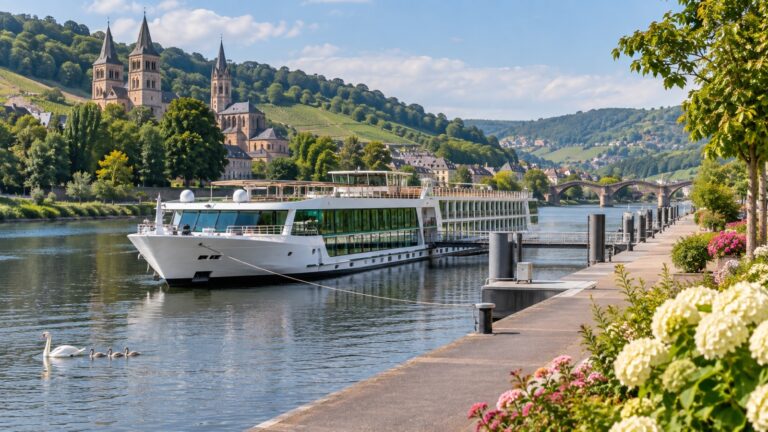
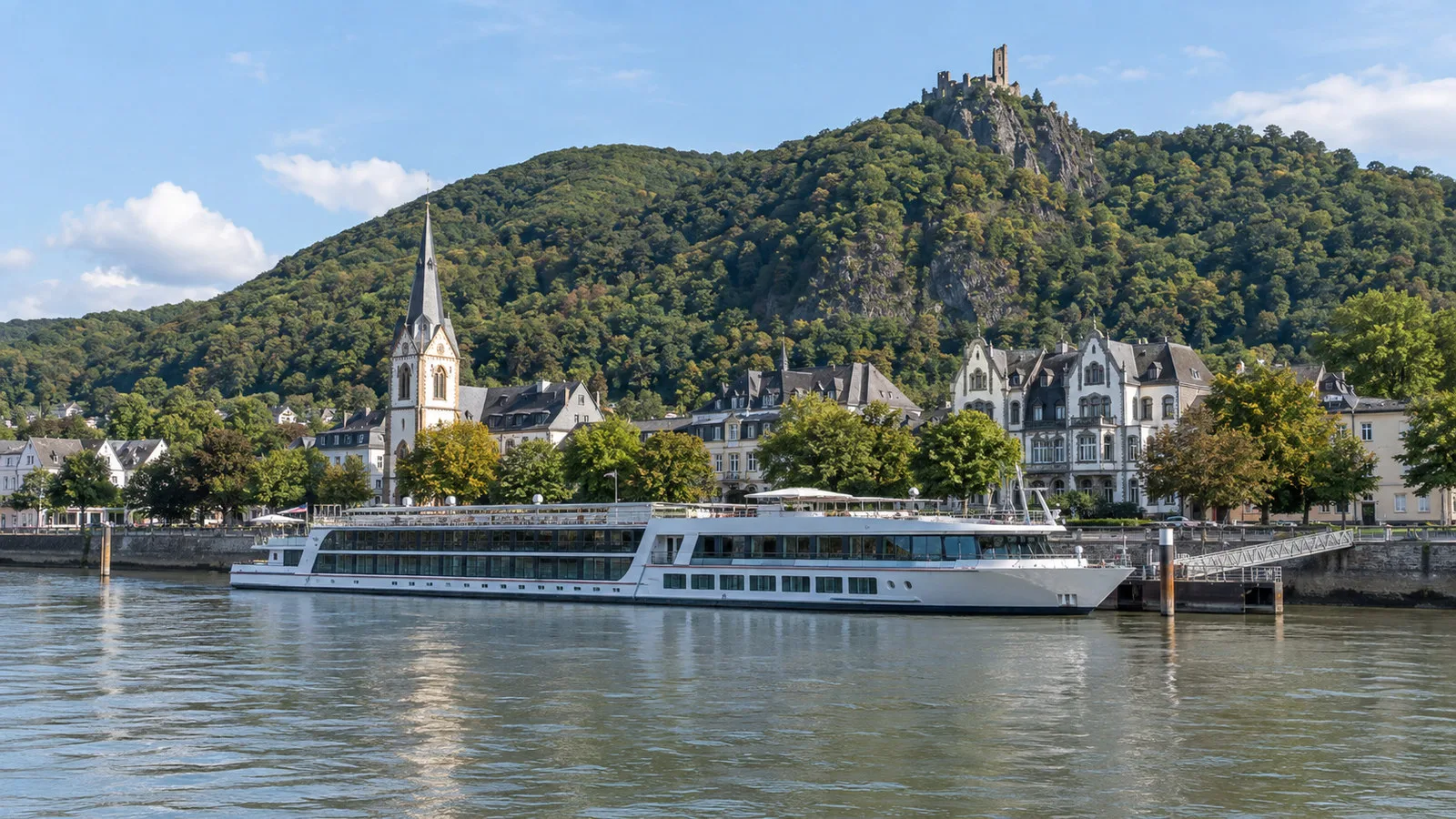
River vessels use passenger landings on the Königswinter waterfront rather than one cruise terminal building that applies to every call. The promenade is close to the old-town streets, but a vessel’s exact position can change with traffic, river conditions, and local operations.
Check the landing name or number during the ship’s briefing and photograph the gangway area before leaving. If your vessel is double-moored, expect steps across another ship and ask the crew about the access arrangement before committing to an independent plan.
From the landing to the Drachenfelsbahn
The railway’s official arrival page describes the valley station as a few minutes from the Rhine promenade and passenger landings. That is more dependable than a universal minute count from “the port,” because the walking route starts at your specific gangway.
Use Drachenfelsstrasse and the railway’s own signs for the final approach. The valley station address is Drachenfelsstrasse 51, and the operator warns drivers that current construction and detours can confuse navigation apps, which is another reason not to build a tight taxi plan around a map estimate.
Tickets and timetable
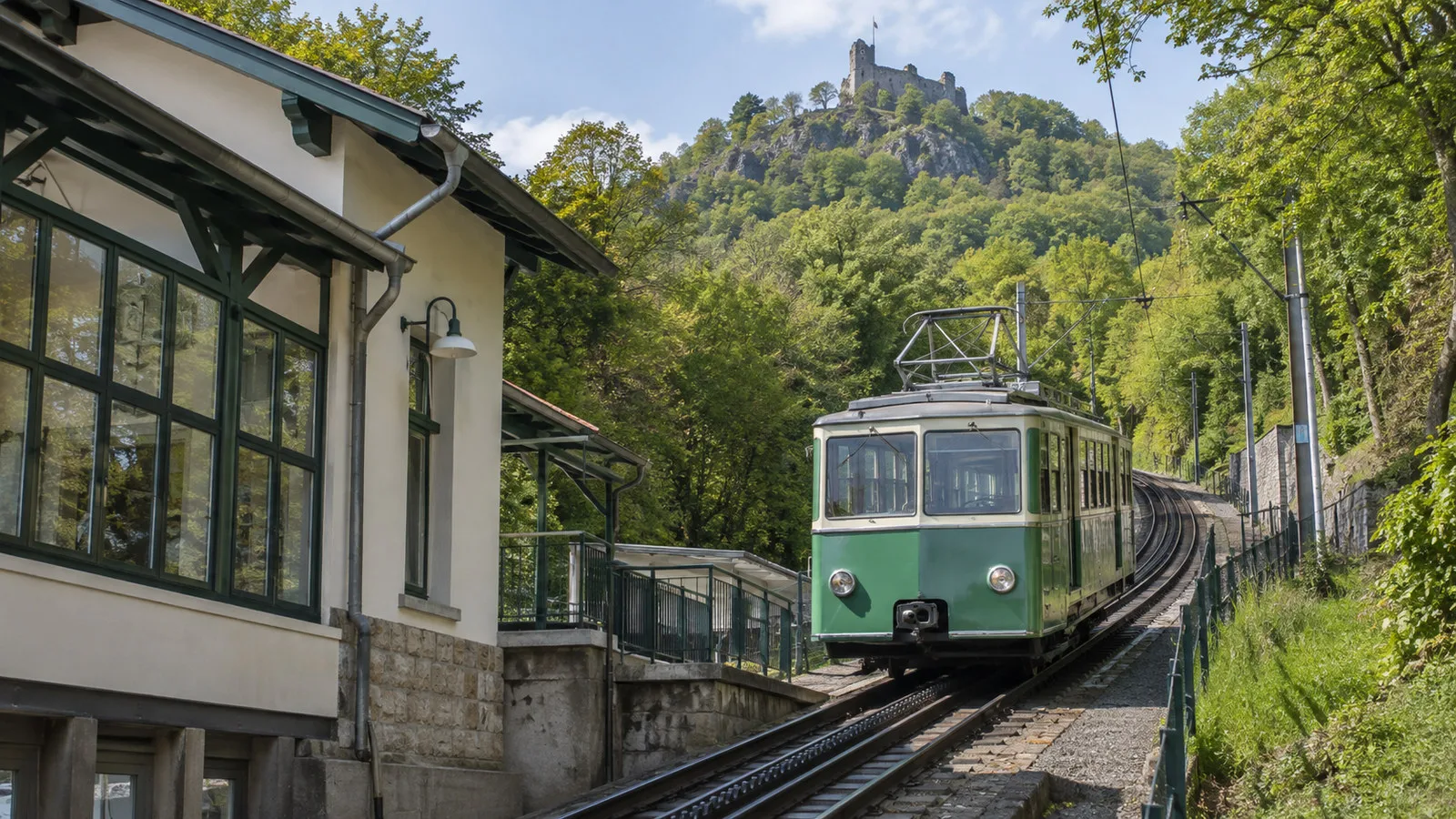
The official Drachenfelsbahn timetable says trains normally leave the valley station every 30 minutes on the hour and half hour, while downhill departures are generally 15 minutes later. It may run every 15 minutes during busy periods, but that extra service is conditional rather than guaranteed.
Hours change substantially by season, and there can be winter closures or special-event schedules. Buy or check tickets on the official railway site, then confirm the last workable descent against your ship’s deadline.
Drachenfels, Schloss Drachenburg, and the railway
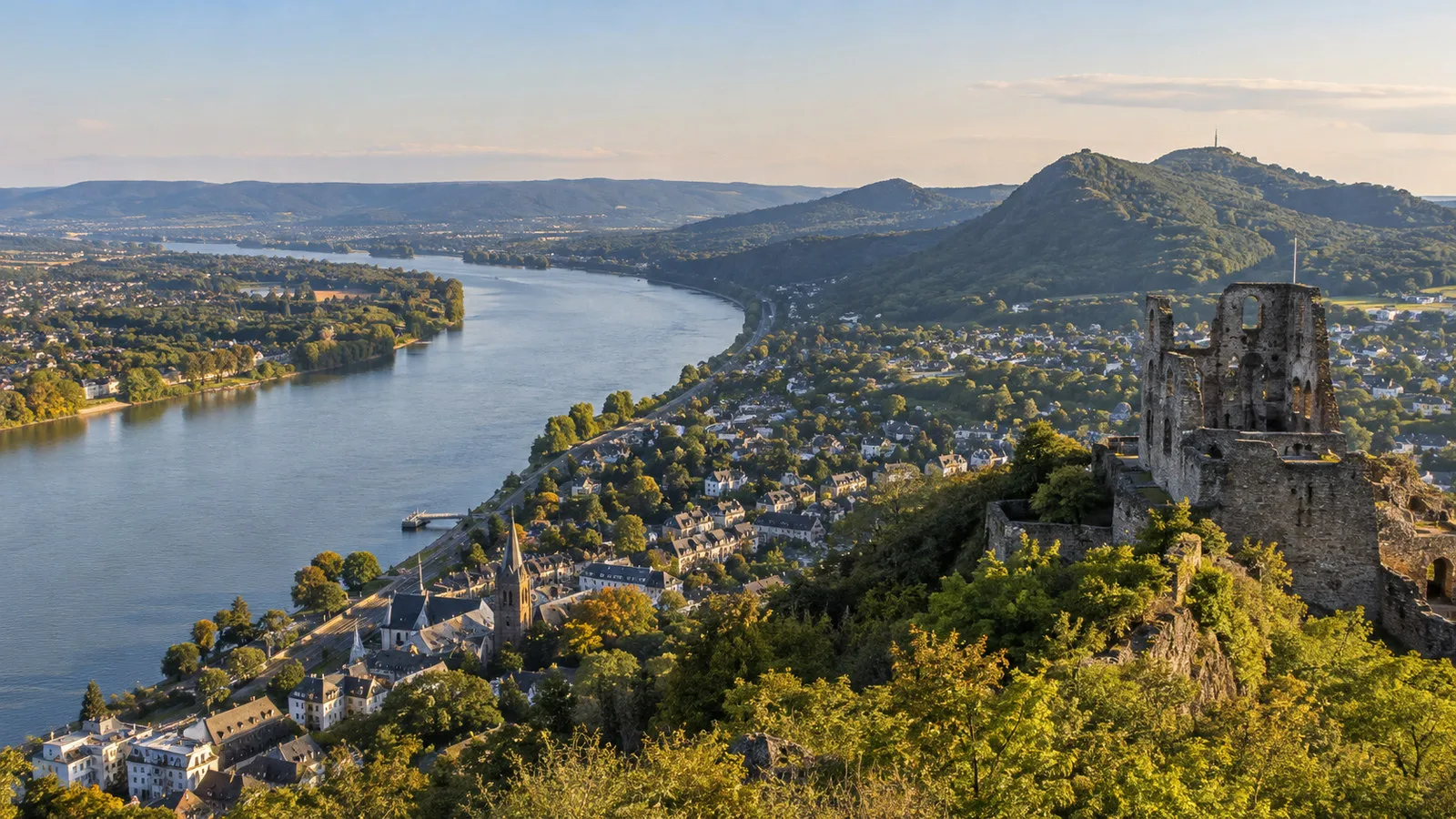
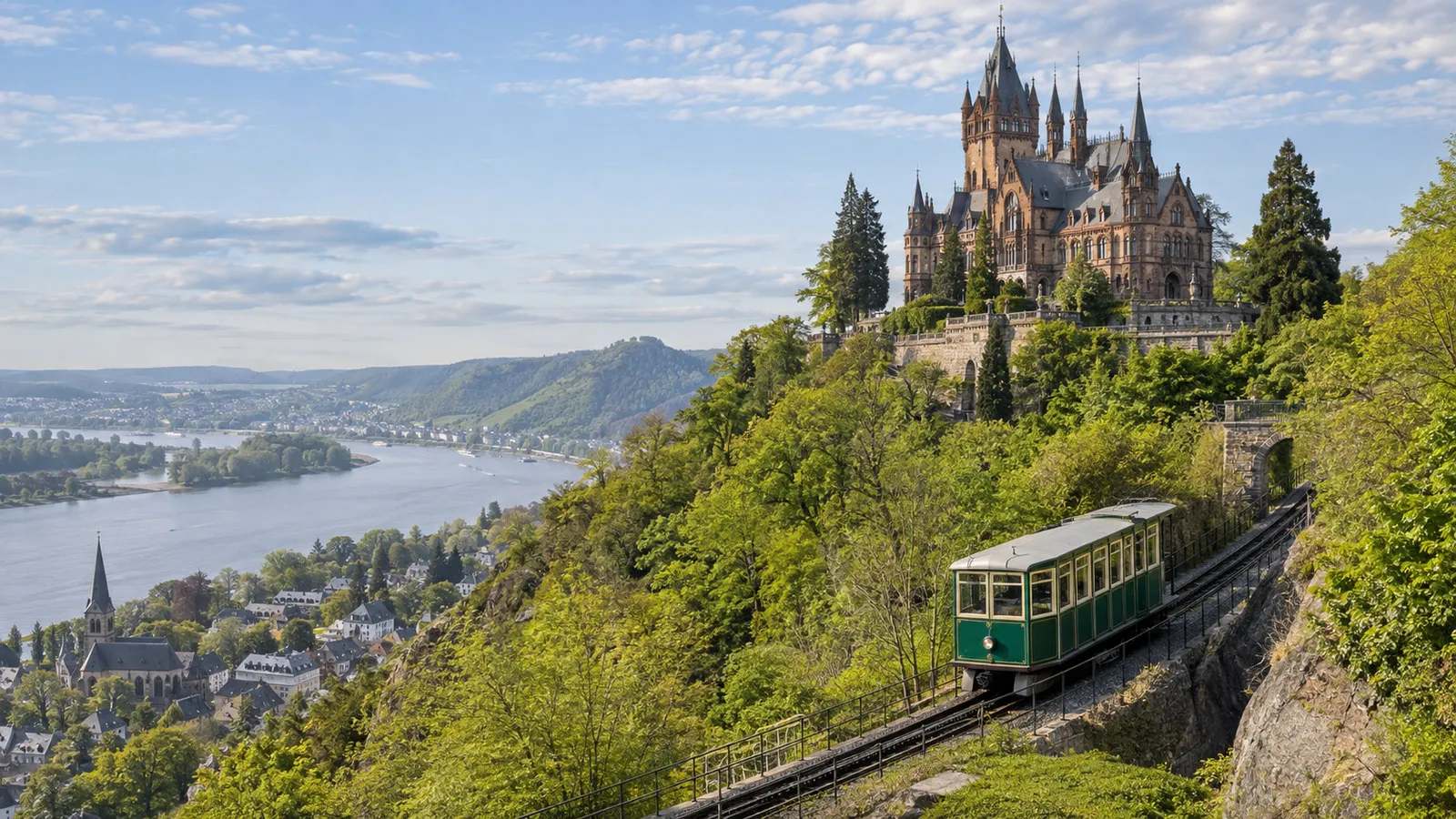
The Drachenfelsbahn has linked Königswinter with the mountain since 1883 and calls itself Germany’s oldest cog railway. Its 1,520-meter route serves the valley station, the middle stop for Schloss Drachenburg, and the upper plateau.
Go to the top first
For a short cruise call, the upper station and nearby plateau deliver the clearest version of the outing. You get Rhine and Siebengebirge views without committing to a long hike or a full interior visit.
The historic ruin sits above the plateau and requires additional uphill walking on an outdoor path. Decide at the top whether the surface, weather, and remaining time make that extra climb sensible.
Add Schloss Drachenburg when the clock allows
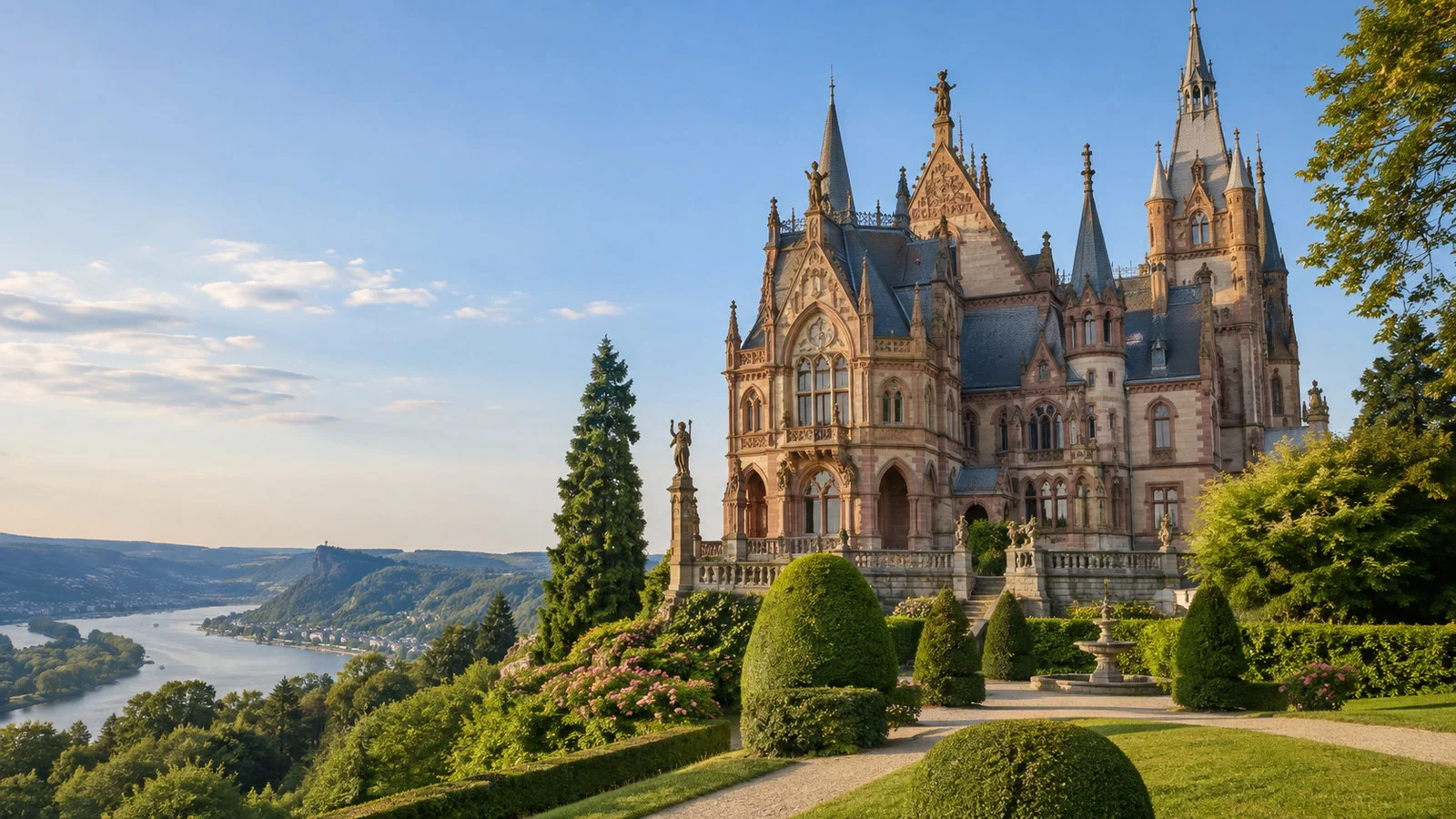
Schloss Drachenburg is a lavish late 19th-century villa near the railway’s middle station. Its official site currently lists daily hours that vary between the main season and winter, plus special Advent hours and some closures, so check Schloss Drachenburg directly before treating it as a guaranteed stop.
A practical sequence is to ride to the top, descend to the middle station for the castle, then continue down. On a crowded or short call, skip the interior before you sacrifice the train or walking buffer back to the ship.
Walking instead of riding
The Siebengebirge is a protected natural landscape with marked routes, but the climb is not a casual extension of the flat promenade. Elevation, woodland surfaces, wrong turns, heat, rain, and descent time can turn a simple-looking walk into the entire port call.
Only hike if your ship schedule leaves generous time and you have a current route from the Siebengebirge Nature Park or another official local source. Do not rely on a screenshot that omits closures or the time needed to get back from the summit.
Ship excursion or on your own?
Independent travel is attractive because the waterfront, valley station, and railway are close together. It works best when the ship is docked for several hours, the railway timetable fits cleanly, and everyone in the group can manage the gangway and local walk.
A ship excursion becomes more valuable when the program includes reserved transport, a guided castle visit, limited walking, or coordination during a short call. Read the excursion description closely because “Drachenfels” may mean the railway and viewpoint, the castle, a coach transfer, or some combination.
Three realistic plans
Short call: Walk to the valley station, ride directly to the top, enjoy the principal viewpoint, and descend with a full train of margin. Keep the castle interior and summit ruin optional.
Comfortable call: Ride to the top, stop at Schloss Drachenburg on the descent, and finish with a short old-town or promenade walk. Reserve enough time for a missed train or a queue.
Railway closed or weather poor: Stay in lower Königswinter for the riverfront and town center, or use official transit information for a modest nearby alternative. Do not improvise a mountain hike simply because the train is unavailable.
Accessibility
The Drachenfelsbahn describes itself as generally low-barrier, with step-free access to relevant railway areas, mobile boarding ramps, wheelchair spaces, and an accessible toilet at the valley station. It limits wheelchairs to 70 by 110 centimeters and 150 kilograms, excludes battery-powered mobility devices, and can carry no more than two wheelchairs per railcar.
The operator recommends advance contact so it can plan assistance and may be able to provide a loaner wheelchair. Review the official accessibility page and provide the exact device dimensions before the cruise.
Railway access does not make every mountain path or attraction step-free. Confirm the gangway, route from the landing, middle-station exit, castle areas, plateau surface, accessible restroom, and return boarding as separate parts of the day.
Families and slower walkers
The short train ride and views make Drachenfels appealing for mixed-age groups, but strollers and mobility aids still need space on busy departures. Build in a departure cushion instead of assuming the next car will have room.
Families can choose the viewpoint as the fixed goal and treat the castle, Nibelungenhalle, or longer paths as optional. That keeps the day fun even when a queue or snack stop consumes more time than expected.
Bonn and regional transport
Königswinter is connected to Bonn by local rail and Stadtbahn services, including line 66 from the Königswinter Fähre stop. Use the VRS journey planner for the current route, disruption notices, ticket rules, and accessible options.
Bonn can work on a long call, but it is not a casual add-on after a full Drachenfels visit. If the mountain is your priority, decide before leaving the ship whether Bonn is the main plan or not.
Weather and safety
The Rhine promenade can be breezy while the mountain is cooler, wetter, or cloudier than town. Carry a light rain layer and shoes with reliable grip, even if you expect to use the railway both ways.
Stay behind barriers at viewpoints and on the ruin paths, and do not rush a descent to catch a train. In a medical emergency in Germany, call 112; for police, call 110.
High or low water can affect river schedules and landing operations even when the town attractions remain open. Follow the ship’s announcements because an altered arrival time or landing can invalidate an independent plan.
Return timing
Work backward from all-aboard, not the published sailing time. Include the uphill attraction exit, the next usable downhill train, the walk from the valley station, and a final margin for the gangway.
For the railway, one full scheduled departure of margin is a sensible minimum planning rule, and more is better during busy periods or poor weather. If your ship changes berth, use the crew’s revised directions rather than returning to the morning pin.
How Königswinter fits a Rhine cruise
Königswinter sits on the Rhine south of Bonn and north of the better-known Middle Rhine Gorge scenery. It offers a mountain-and-railway day that feels different from cathedral-focused Cologne, wine-town stops, or castle viewing from the ship.
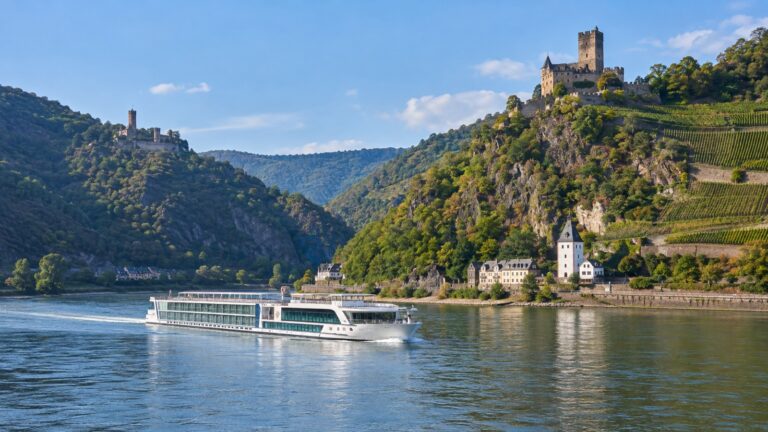
Do not confuse Drachenfels with the distant castles and vineyard slopes commonly used in generic Rhine imagery. The local signature is the Siebengebirge rising directly above Königswinter.
Quick answers
Do I need a guide for Drachenfels?
No, the railway and main viewpoint are manageable independently when the timetable and ship schedule fit. A guide adds value for history, a structured castle visit, or a group that benefits from transport coordination.
How long is the Drachenfelsbahn ride?
The line is 1,520 meters long and climbs to the plateau on a short ride, but the total outing depends on queues, departure intervals, stops, and walking. Plan the complete round trip rather than budgeting only the time on the train.
Can I walk up instead of riding?
Yes, established walking routes reach the mountain, but the climb and descent need suitable footwear, weather, fitness, and a generous ship buffer. For a short call, the railway is the more predictable choice when it is operating.
Can I visit Schloss Drachenburg and the summit?
Usually, if your call is long enough and both attractions are operating. Ride to the top first, then use the middle station for the castle on the way down so the essential viewpoint is not lost to a late start.
Is the railway wheelchair accessible?
It is generally low-barrier, but the operator has firm size, weight, battery, and capacity limits for wheelchairs. Confirm your device and assistance needs directly before travel.
Is Bonn worth combining with Königswinter?
Bonn is worthwhile on a genuinely long call, and line 66 provides a useful regional link. It should replace part of the mountain day, not be added after an ambitious summit and castle plan.
The last word
Königswinter is wonderfully straightforward once you separate the fixed goal from the optional extras. Confirm the landing and railway, ride to the view first, and let the clock decide whether Schloss Drachenburg or a longer walk earns the remaining time.
For nearby comparisons, continue with the Cologne cruise port guide or plan farther south with the Cochem river cruise port guide.
How this guide was researched: Unless a first-hand visit is explicitly identified above, this guide is based on independent research using official railway, attraction, transit, nature-park, and local information where available. Logistics and time-sensitive details were reviewed in September 2026; see our Editorial Policy.