Seyðisfjörður Cruise Port: Piers, Tenders and Waterfall Walks
Seyðisfjörður is small enough to charm you before breakfast and dramatic enough to derail an overstuffed itinerary by lunch. Cruise ships may dock or anchor, but either arrival puts waterfalls, painted wooden houses, art, and the famous rainbow street remarkably close.
Your ship may dock or tender here
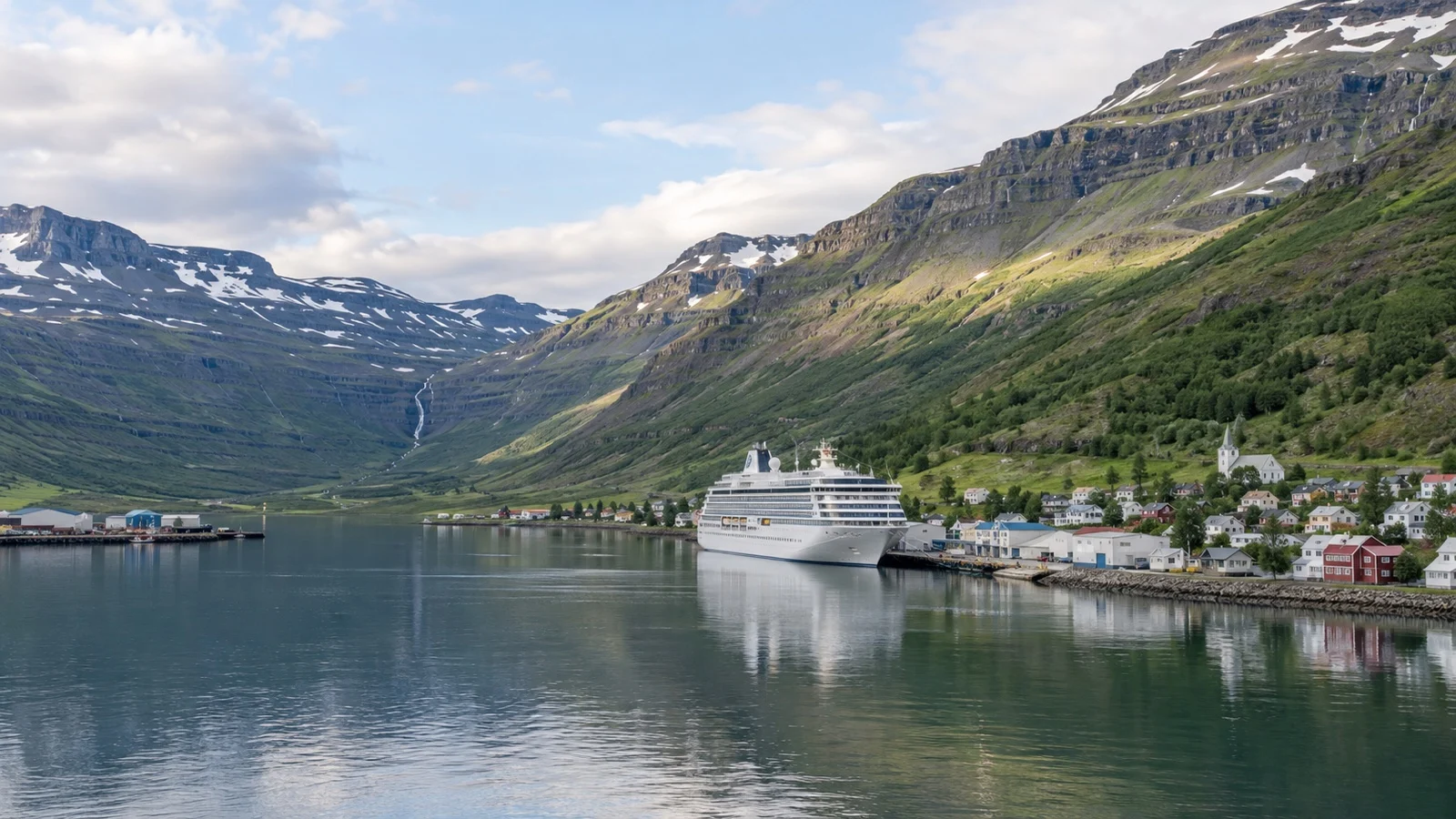
Seyðisfjörður has two main cruise-capable piers, Strandarbakki at about 558 feet and Bjólfsbakki at about 492 feet. The official Ports of Múlaþing technical page lists depths, pier dimensions, anchorage, and a floating tender dock.
A confirmed berth puts the ship about 985 feet from the town center, while anchored vessels use ship tenders over an official distance of roughly 0.2 nautical miles. The tender landing itself is about 655 feet from the passenger terminal area.
Strandarbakki also serves scheduled ferry traffic, creating date and time restrictions that are especially relevant in the main cruise season. Your ship’s size, confirmed reservation, ferry schedule, and other calls decide whether you dock or anchor, so do not accept a generic “always docks” promise.
The quick facts
- Where you land: Strandarbakki (about 558 feet) or Bjólfsbakki (about 492 feet), both about 985 feet from the town center, or the floating tender dock roughly 655 feet from the terminal area. The Ports of Múlaþing technical page lists the piers, depths, and anchorage.
- Dock or tender: It genuinely varies: ship size, a confirmed berth reservation, and the Norröna ferry schedule at Strandarbakki decide it.
- Into town: About a 5 minute walk either way.
- Currency and language: The Icelandic króna (ISK) and Icelandic, with English spoken almost everywhere.
- Time zone: Greenwich Mean Time (UTC+0) all year.
- How often the call is missed: Medium (roughly 3 to 7%): wind or swell can halt tender operations.
What the 2026 schedule means for your day
The port maintains an official 2026 cruise arrival calendar and downloadable season schedule. Multiple ships can appear on the same date, increasing pressure on local tours, cafés, taxis, and the small tender landing.
Schedules remain vulnerable to wind, visibility, sea conditions, and itinerary changes, even within a deeply sheltered fjord. Recheck the ship’s daily program and port announcements rather than planning from a screenshot saved months earlier.
Meet the town before chasing the Eastfjords
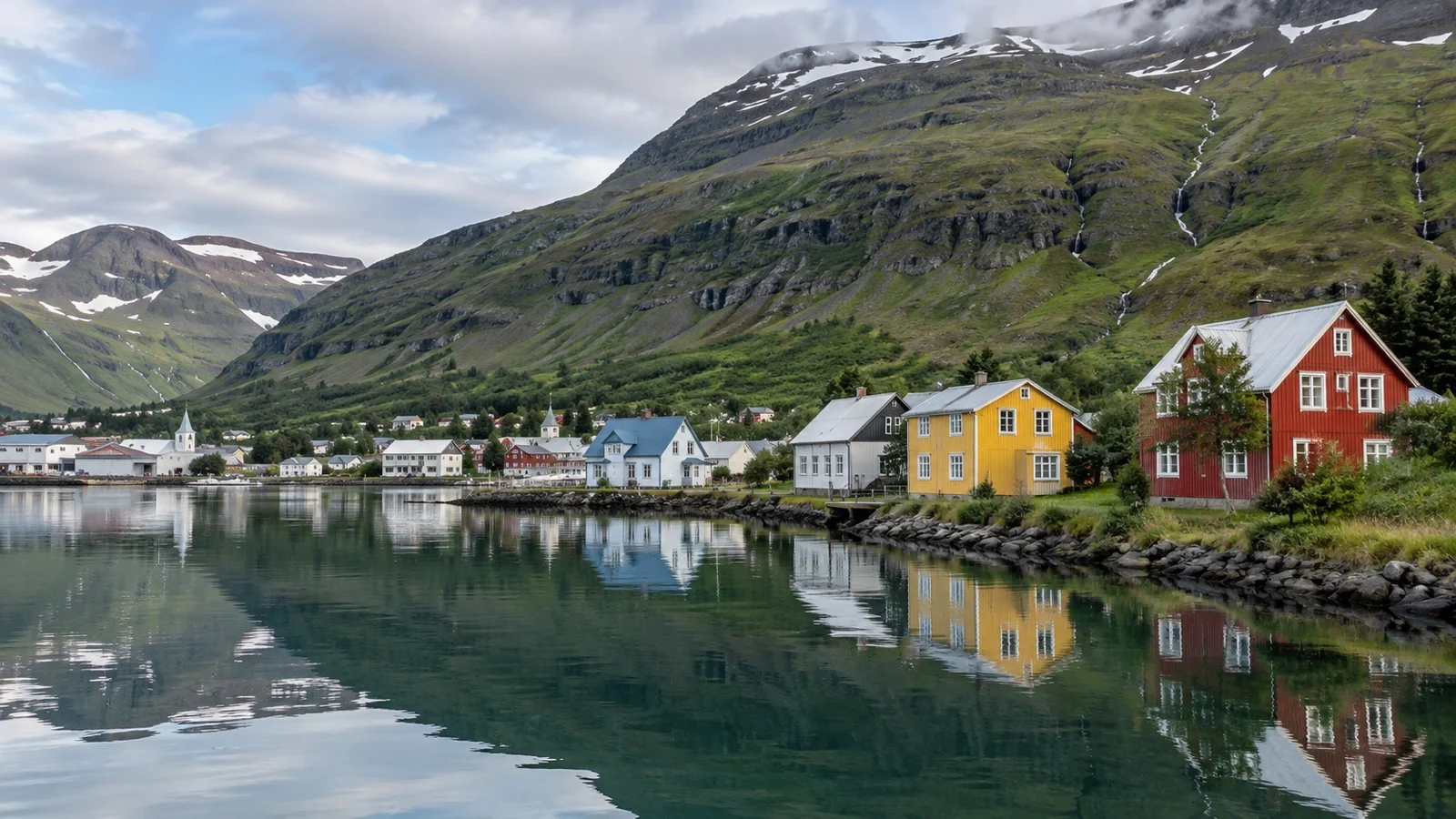
Seyðisfjörður grew around fishing, trade, and later the ferry connection to mainland Europe, leaving an unusually rich collection of colorful wooden buildings. The setting at the end of a roughly 10.5-mile fjord makes even an ordinary grocery run look suspiciously cinematic.
Rainbow street and the Blue Church
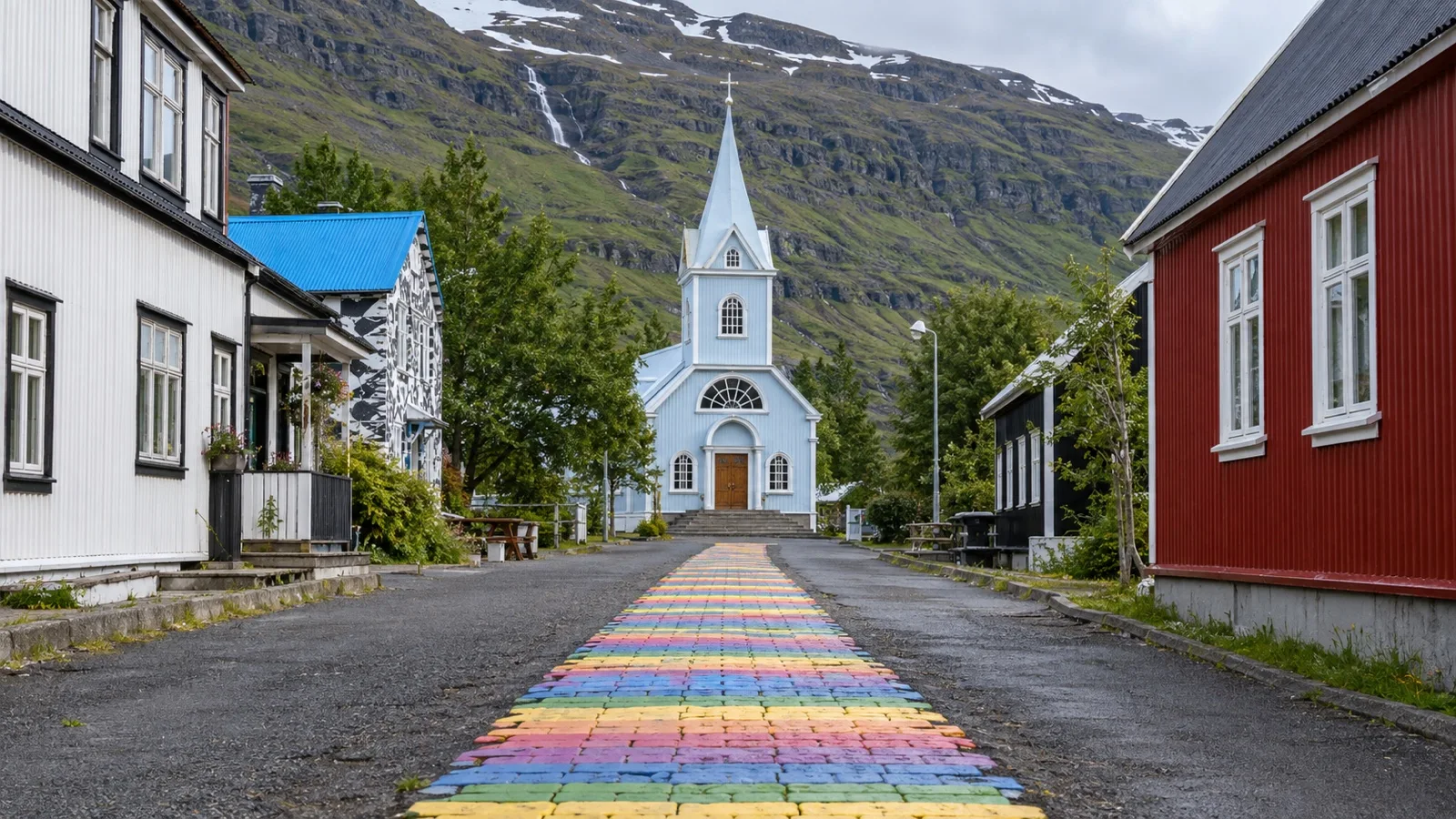
The rainbow-painted path leading toward Seyðisfjarðarkirkja, usually called the Blue Church, is the town’s best-known photograph. Visit early or later in the call if several ships are present, then step aside so residents can still use their own street.
Church opening depends on services, events, and seasonal programming. The exterior and surrounding streets remain worthwhile when the door is closed.
Art, sound, and old industry
Skaftfell Center for Visual Art reflects the town’s long creative streak, while local workshops and cultural spaces make browsing more interesting than a row of identical souvenir shelves. Check the day’s exhibition and café hours, especially outside July and August.
The Technical Museum area preserves parts of the town’s industrial and communications story, but access has changed following landslide damage and recovery work. Verify what is open rather than following an older guide into a closed or restricted area.
The Waterfall Lane question
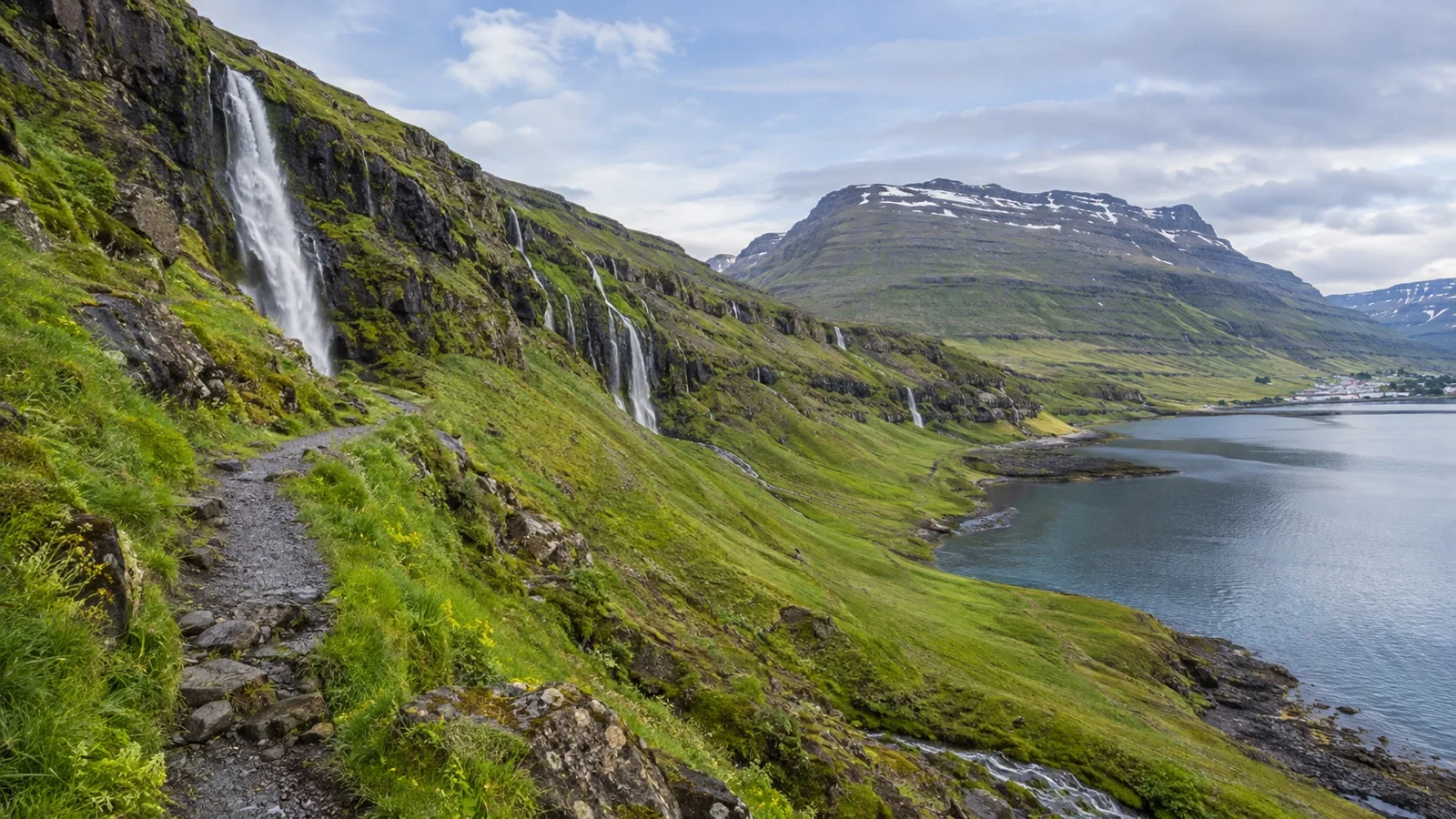
Streams descend the mountainsides behind town, feeding a sequence of waterfalls reached by local paths often described collectively as a waterfall trail or lane. The lower sections offer an easy taste of the landscape, while continuing upward adds mud, exposure, gradients, stream crossings, and time.
Turn around when the ground, clouds, or clock stop cooperating. Icelandic weather does not award points for finishing a trail in wet jeans.
Check SafeTravel Iceland for conditions and alerts before any substantial hike or road excursion. Wear waterproof layers and shoes with grip even when the ship arrived under blue sky.
Tvísöngur is a hike, not a town ornament
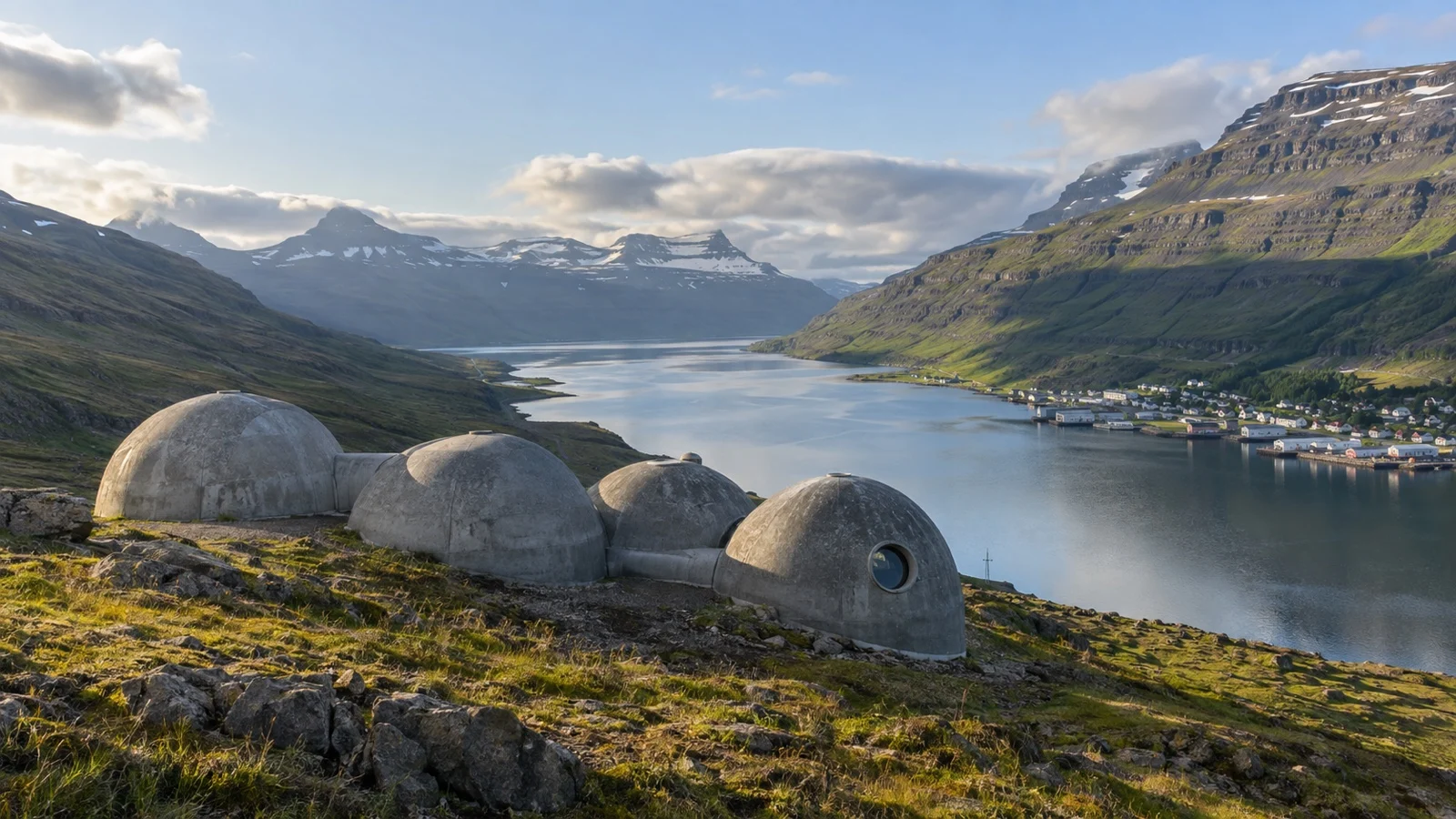
Tvísöngur is a sculptural sound installation on the mountainside across the fjord, formed from interconnected concrete domes tuned to Icelandic musical tradition. Reaching it requires an uphill walk on an exposed trail, so allow a couple of hours for the outing rather than treating it as a five-minute photo stop.
The trail can be wet, windy, and unsuitable for wheelchairs or uncertain footing. It is best attempted after confirming visibility and leaving a generous descent margin.
Skálanes belongs to a proper excursion
Skálanes Nature and Heritage Centre occupies a roughly 3,090-acre conservation landscape near the mouth of the fjord, with wetlands, cliffs, shoreline, and bird habitat. The official Visit Austurland listing describes the restored farmhouse, sea cliffs, coves, and bird colony.
The final road is rough and access is normally handled by suitable guided transport, not an ordinary city taxi. Tour duration, walking, wildlife, and road conditions vary, so confirm exactly what is included and how the operator protects the ship’s return time.
Bird sightings are seasonal and never guaranteed. Nesting wildlife should be watched quietly from designated areas, without drones or ambitious close-up missions.
Egilsstaðir, Vök Baths, and longer road choices
Road 93 climbs over Fjarðarheiði toward Egilsstaðir, the regional hub on the other side of the mountains. The drive can lead to Vök Baths, Lake Lagarfljót, forest stops, or longer East Iceland excursions, but fog, wind, rain, snow, and road conditions can change the timing.
A ship excursion or cruise-aware local operator is the sensible choice, especially on a tender day or short call. Pick one regional theme rather than stacking a spa, canyon, waterfall, and wildlife stop into an itinerary built from optimism.
Stuðlagil Canyon and Borgarfjörður Eystri may appear in excursion listings, but each involves substantial road time from Seyðisfjörður. Read the duration and activity details closely, and reject any plan that returns too close to the final tender or all aboard.
The ferry schedule can change your berth
The port reserves confirmed berths, but Strandarbakki also serves the Norröna ferry. Official port guidance restricts cruise use around ferry traffic on summer Thursdays and on Wednesdays and Thursdays from September through May, so a generic pier map is not a berth confirmation.
Alongside: Follow the marked route from Strandarbakki or Bjólfsbakki and keep working-port traffic in mind.
Tender: The official landing is a floating dock about 0.2 nautical mile from the anchorage, and sea state still controls passenger and mobility-device transfers.
Town and waterfalls: Make this the default after a late clearance, with a firm turnaround before the trail becomes steeper or more exposed than expected.
Skálanes or Vök Baths: Prebook a cruise-aware operator, confirm the road and weather fallback, and require a return at least 90 minutes before all-aboard.
A town-and-waterfall day is the strongest first choice because it survives berth changes and variable weather. Spend on a longer excursion only when the destination matters enough to accept a large road component and the return is protected.
Four ways to spend the call
The gentle version: explore rainbow street, the Blue Church, waterfront buildings, a gallery, and a café. This keeps you close to the ship and works beautifully when rain comes sideways.
The walking version: combine town with lower waterfalls or Tvísöngur, but not both unless the call is long and conditions are friendly. Put the exposed walk first, then enjoy town on the way back.
The nature version: use an organized Skálanes excursion and reserve remaining time for a short town loop. Keep expectations flexible around birds and road access.
The regional version: cross Fjarðarheiði with a reliable tour for one major East Iceland objective. The mountain pass makes this a transport-dependent day from the first mile.
For other Iceland layouts, compare our Iceland cruise ports guide, Akureyri guide, and Ísafjörður guide. Seyðisfjörður’s special advantage is how much atmosphere fits within a short walk of shore.
Food and small-town logistics
Look for fresh fish, lamb soup, rye bread, pastries, and Icelandic skyr, with opening hours that reflect a settlement of roughly several hundred people. On a multi-ship day, lunch tables and tour seats can disappear quickly.
Cards are the normal way to pay, and Icelandic cash is rarely needed. Mobile signal and payment terminals can still hiccup, so carry one physical card and do not depend entirely on a phone battery.
Accessibility depends on the arrival method
An alongside berth offers the easiest start, though gangway angle and pier distance depend on the vessel. A tender can involve steps, moving platforms, crew assistance, and restrictions on wheelchairs or scooters, all subject to sea conditions.
Central streets are compact with some level stretches, but curbs, gravel, rain-slick surfaces, and gradients remain. Waterfall paths, Tvísöngur, and parts of Skálanes are not step-free experiences.
Ask the cruise line for its tender and mobility policy before sailing, then request specific access details from any tour. Our limited-mobility activity guide provides a useful checklist.
Weather and return risk
The fjord can feel calm while cloud sits heavily on the pass or wind increases outside the harbor. Dress in waterproof layers, secure hats, and keep dry protection for medication and electronics.
For a town day at an alongside berth, aim back at the security area 45 to 60 minutes before all aboard. On a tender call, join the shore line 60 to 75 minutes before the stated last-tender deadline, or earlier if weather worsens.
Regional road excursions deserve at least a 90-minute operational cushion and a provider monitoring both pass conditions and ship updates. Our guide to how tendering changes time ashore explains why the boat line must be part of the itinerary.
Seyðisfjörður cruise port FAQs
Will my ship dock?
It may dock at Strandarbakki or Bjólfsbakki, or anchor and tender. Ship size, confirmed berth, ferry traffic, and daily operations determine the answer.
Can I walk into town?
Yes, both the pier area and tender landing are only a short walk from central sights. The town itself is one of Iceland’s easiest cruise calls to explore independently.
Is the waterfall trail easy?
The lower portion can be approachable for confident walkers, while higher sections become steeper, wetter, and more exposed. Conditions matter more than the trail’s casual nickname.
Do I need a tour?
No tour is needed for town, the lower waterfalls, or an independent hike in good conditions. Skálanes and destinations beyond Fjarðarheiði are better with organized transport.
What happens if the weather turns?
Shorten exposed walks, remain in town, and monitor ship notices. Tenders and road tours may pause or change even when the pier area still feels manageable.
Small port, sensible ambitions
Seyðisfjörður needs no grand excursion to justify the call. Confirm dock or tender, choose town plus one landscape experience, and leave enough flexibility for Iceland to change its mind about the weather.
Research note: Berths, ferry conflicts, tenders, roads, and openings can change quickly. Our Editorial Policy describes the evidence behind this guide, while ship and port instructions remain final on the day.
How this guide was researched: Unless a first-hand visit is explicitly identified above, this guide is based on independent research using official port, tourism, transit, government, and attraction sources where available. Details were checked against SafeTravel Iceland; logistics and time-sensitive details were reviewed in September 2026; see our Editorial Policy.