Trondheim Cruise Port: Berths, Cathedral & Bakklandet
Trondheim is a port day with range: medieval pilgrimage, bright riverside warehouses, Nordic food, a fortress climb, and a national rock museum beside one possible berth. The city is compact enough for independence, but not so compact that every ship starts from the same pavement.
Your first decision is Pier 68 or Ila Pier 30
Trondheim Port Authority’s current 2026 call list uses more than one cruise berth. Many large calls are assigned to Kai 68 Turistskipskaia at Brattøra, while some ships use Kai 30 Ila Pir west of the center.
The official Trondheim port call schedule is the cleanest source for the assigned quay. Cruise apps sometimes say only “Trondheim,” which is geographically correct and logistically underachieving.
Start with our Norway cruise ports guide for the national picture. Trondheim offers more urban history than a small fjord village, so the strongest day often stays in the city rather than racing toward a distant panorama.
The quick facts
- Where you land: either Kai 68 Turistskipskaia on the Brattøra waterfront, beside Rockheim and Pirbadet, or Kai 30 Ila Pir west of the center. The Trondheim Havn call schedule is the cleanest source for which quay your ship gets.
- Dock or tender: Both cruise positions are alongside berths, so tendering is not the routine arrival here.
- Into town: Roughly 20 to 30 minutes on foot from Turistskipskaia to Nidaros Cathedral and the Archbishop’s Palace.
- Currency and language: The Norwegian krone (NOK) and Norwegian, with English spoken almost everywhere.
- Time zone: Central European Summer Time (CEST, UTC+2) through the cruise season, Central European Time (CET, UTC+1) in winter.
- How often the call is missed: Low (under 1%): the sheltered berth is rarely limited by local weather.
If you dock at Turistskipskaia
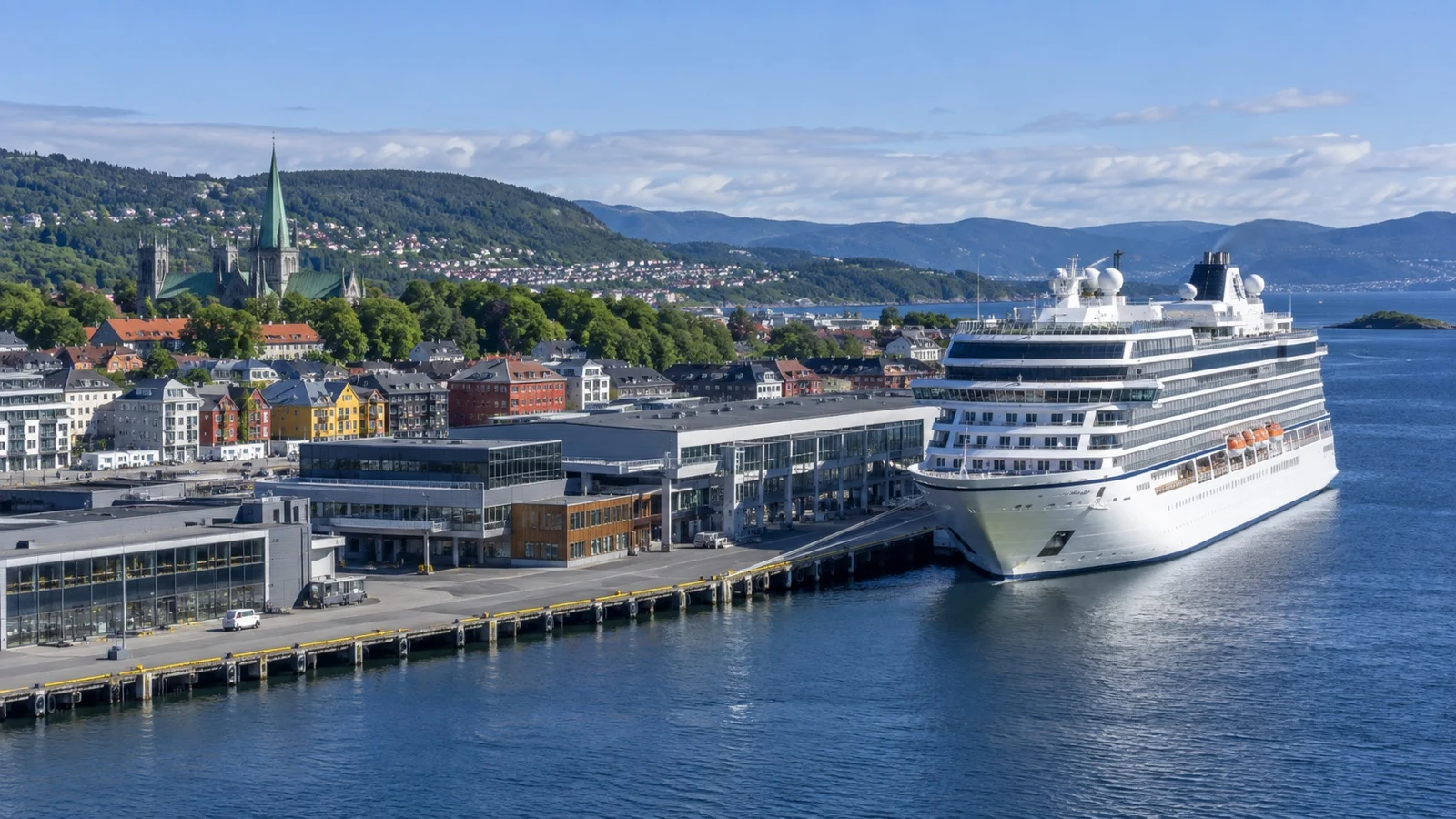
Kai 68 sits in Brattøra, Trondheim’s redeveloped waterfront district north of the railway tracks and canal. Rockheim, Pirbadet, offices, hotels, and transport infrastructure are close, while the historic center begins beyond pedestrian crossings and bridges.
Allow roughly 20 to 30 minutes to walk to Nidaros Cathedral at a purposeful pace, more for crossings, photos, construction, or limited mobility. Torvet and the main shopping streets are somewhat closer.
The route is mostly urban and reasonably level until individual attractions introduce slopes, cobbles, and stairs. Follow the signed port exit because rail, road, and restricted harbor areas make unofficial shortcuts a poor form of Nordic efficiency.
If you dock at Ila Pier
Kai 30 Ila Pir lies west of central Trondheim near the Ila district. It is not beside Rockheim, and a map or excursion description written for Brattøra can therefore begin with the wrong assumption.
Walking into town is possible for travelers comfortable with a longer urban route, while shuttle arrangements vary by cruise line. Check the daily program for a shuttle stop and return frequency before leaving the ship.
A taxi can save time for Nidaros Cathedral, Bakklandet, or Kristiansten Fortress. Tell the driver the exact pier for the return, since “the cruise terminal” is not precise enough on a multi-berth day.
Nidaros Cathedral deserves the fixed slot
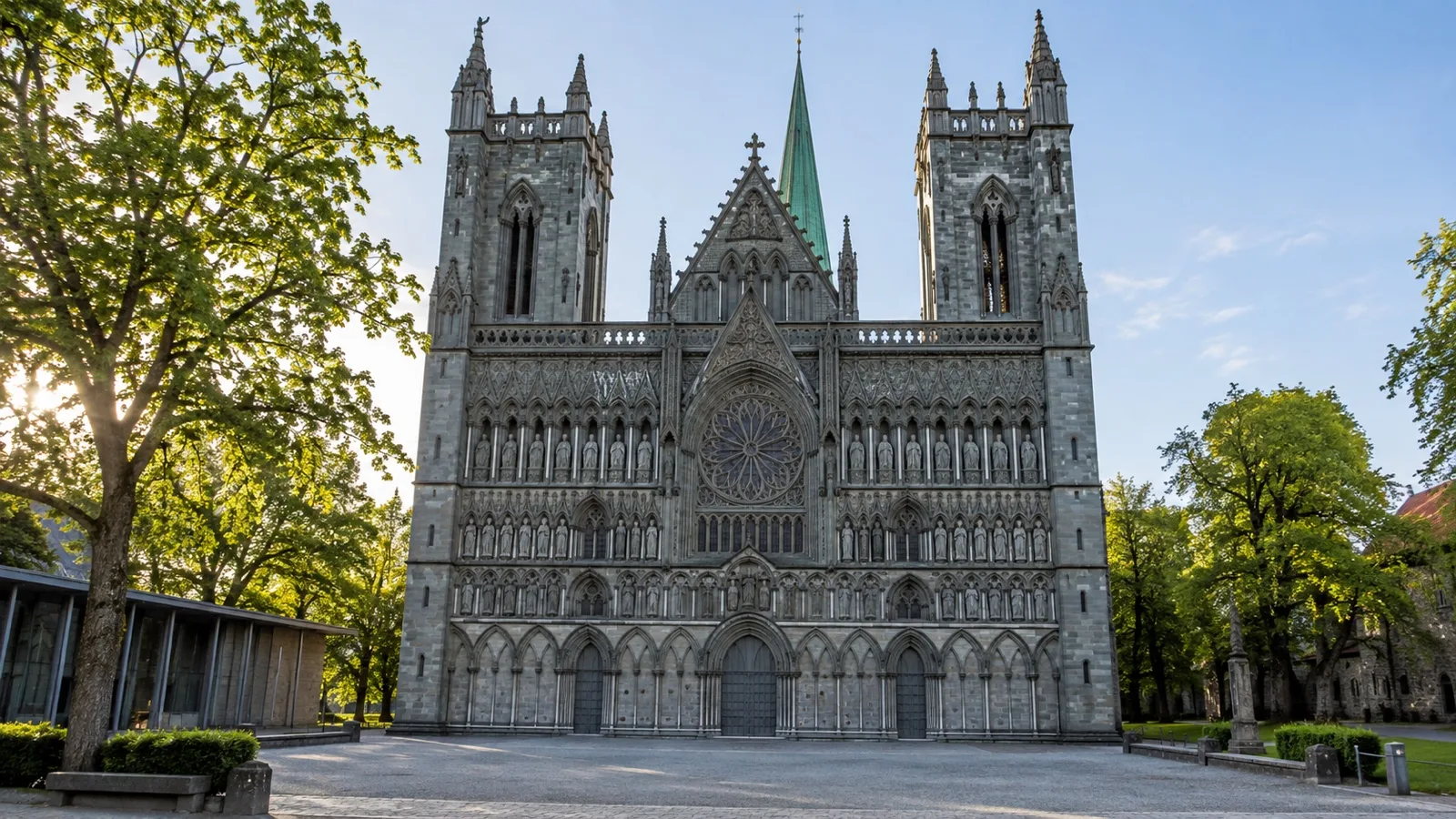
Nidaros Cathedral was built over the burial place of Saint Olav and became the traditional coronation church of Norwegian monarchs. Its long construction history, restored west front, stained glass, sculpture, and continuing religious role make it Trondheim’s defining visit.
Opening hours change for worship, concerts, ceremonies, and seasons, so consult the official Nidaros Cathedral visitor information. Admission products may cover the cathedral, Archbishop’s Palace Museum, crown regalia, or guided experiences in different combinations.
Give the complex at least 90 minutes if entering both the cathedral and a museum. The building is an active sacred space, and a service has priority over even the most beautifully organized cruise itinerary.
Cross the river into Bakklandet
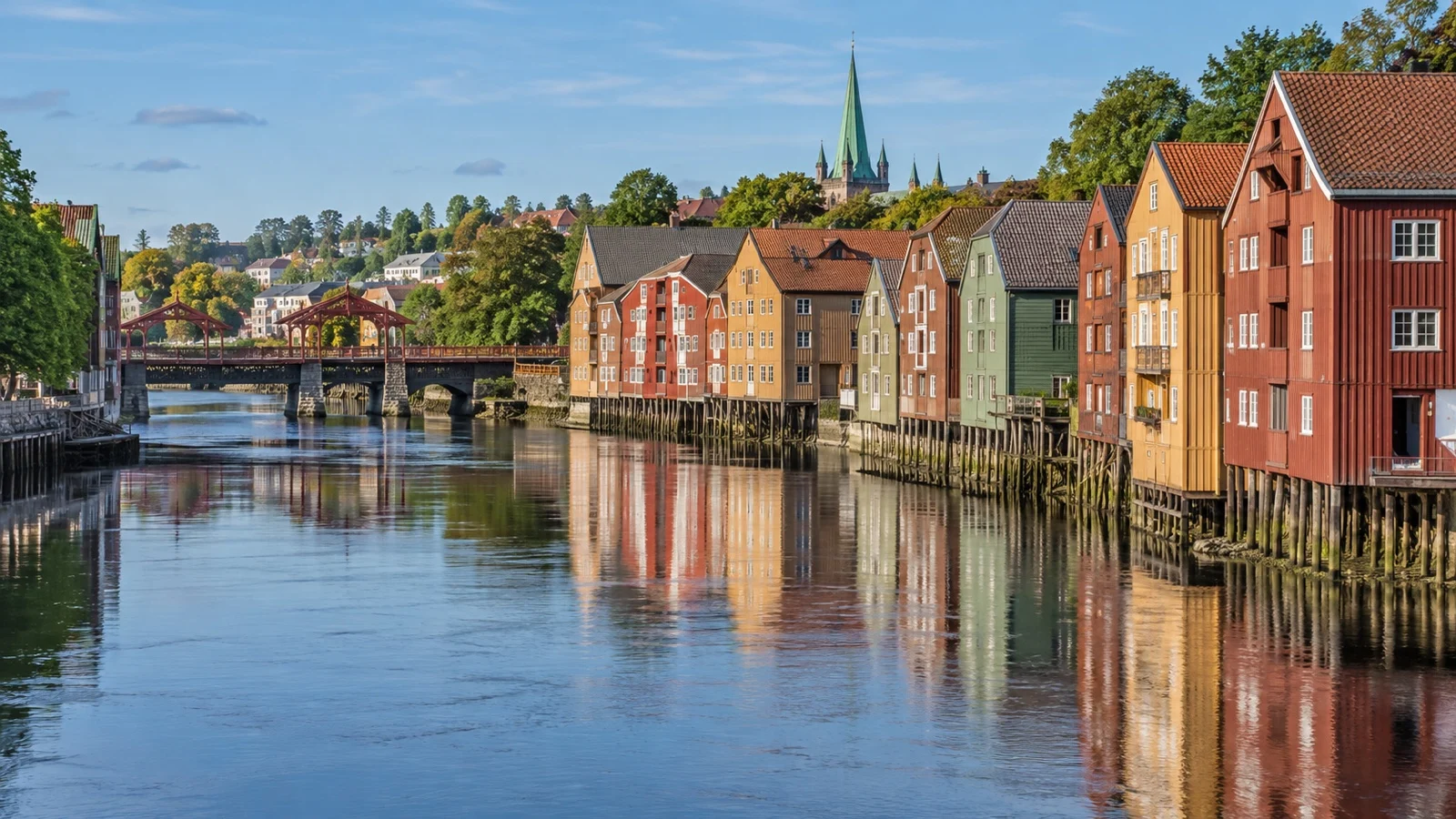
Gamle Bybro, the Old Town Bridge, crosses the Nidelva beside rows of colorful former warehouses. The bridge leads directly toward Bakklandet, a neighborhood of wooden buildings, cafes, small shops, and residential streets.
This area provides Trondheim’s classic river photograph, but the bridge and lanes remain working public space. Step aside for cyclists, ask before photographing people closely, and resist stopping in the exact center of every narrow passage.
Bakklandet pairs naturally with Nidaros Cathedral because the two are close and require no vehicle transfer. It also makes a good lunch district, provided the chosen cafe’s opening hours match the ship’s unusually early Norwegian morning.
The fortress climb is optional, the view is persuasive
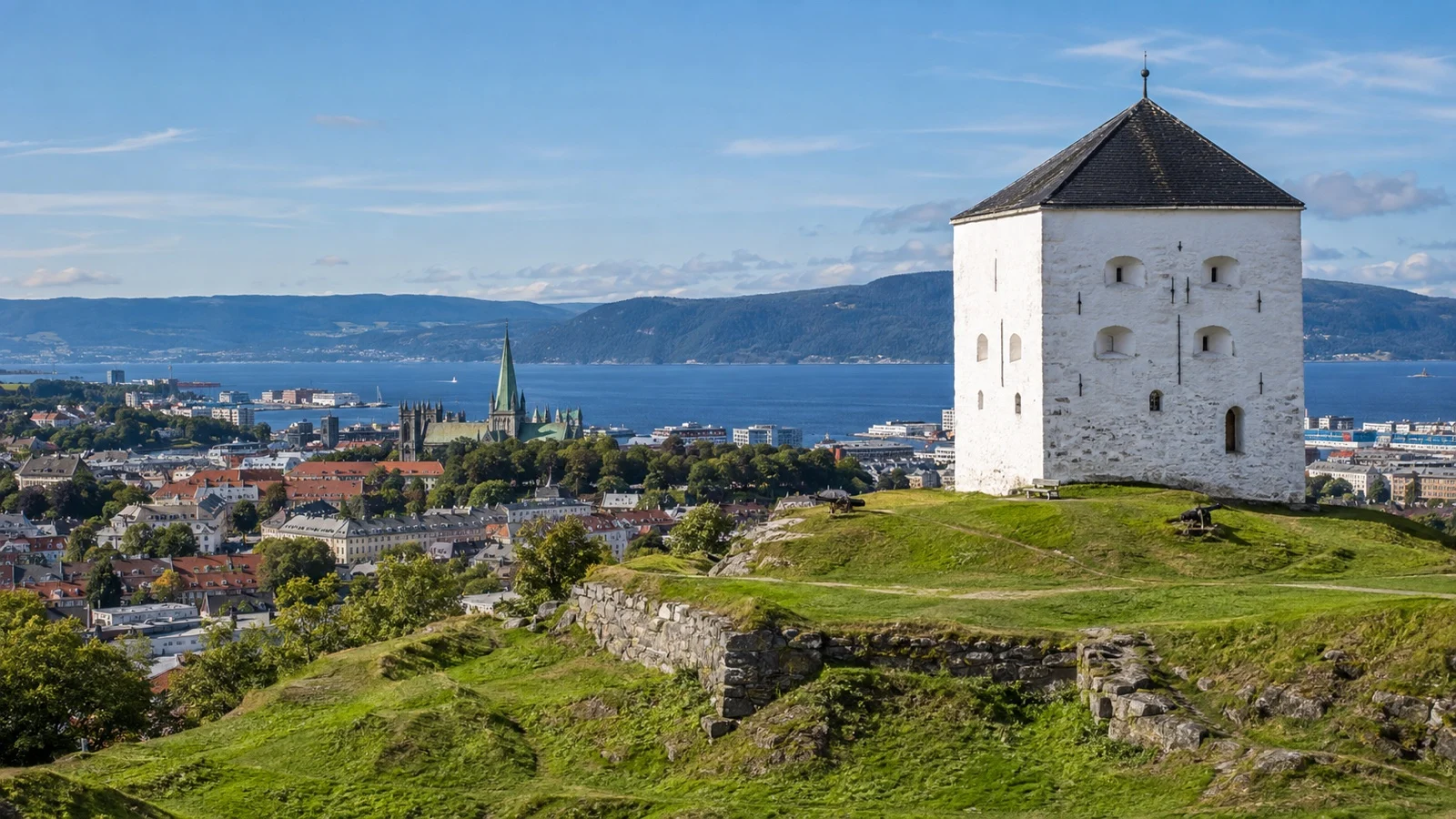
Kristiansten Fortress stands on a hill east of Bakklandet and was built after Trondheim’s devastating 1681 fire. The grounds offer broad city, fjord, and cathedral views, while interior opening and exhibitions vary.
The approach is steep enough to deserve honest shoes and an honest assessment of knees. A taxi can reduce the climb, but confirm the drop-off point and accessible route because historic fortifications enjoy creating gradients.
Do not force the fortress into a cathedral-heavy short call. The river district already supplies excellent views with less uphill bargaining, and a relaxed Trondheim day is not a moral failure.
Rockheim is the smart Brattøra finale
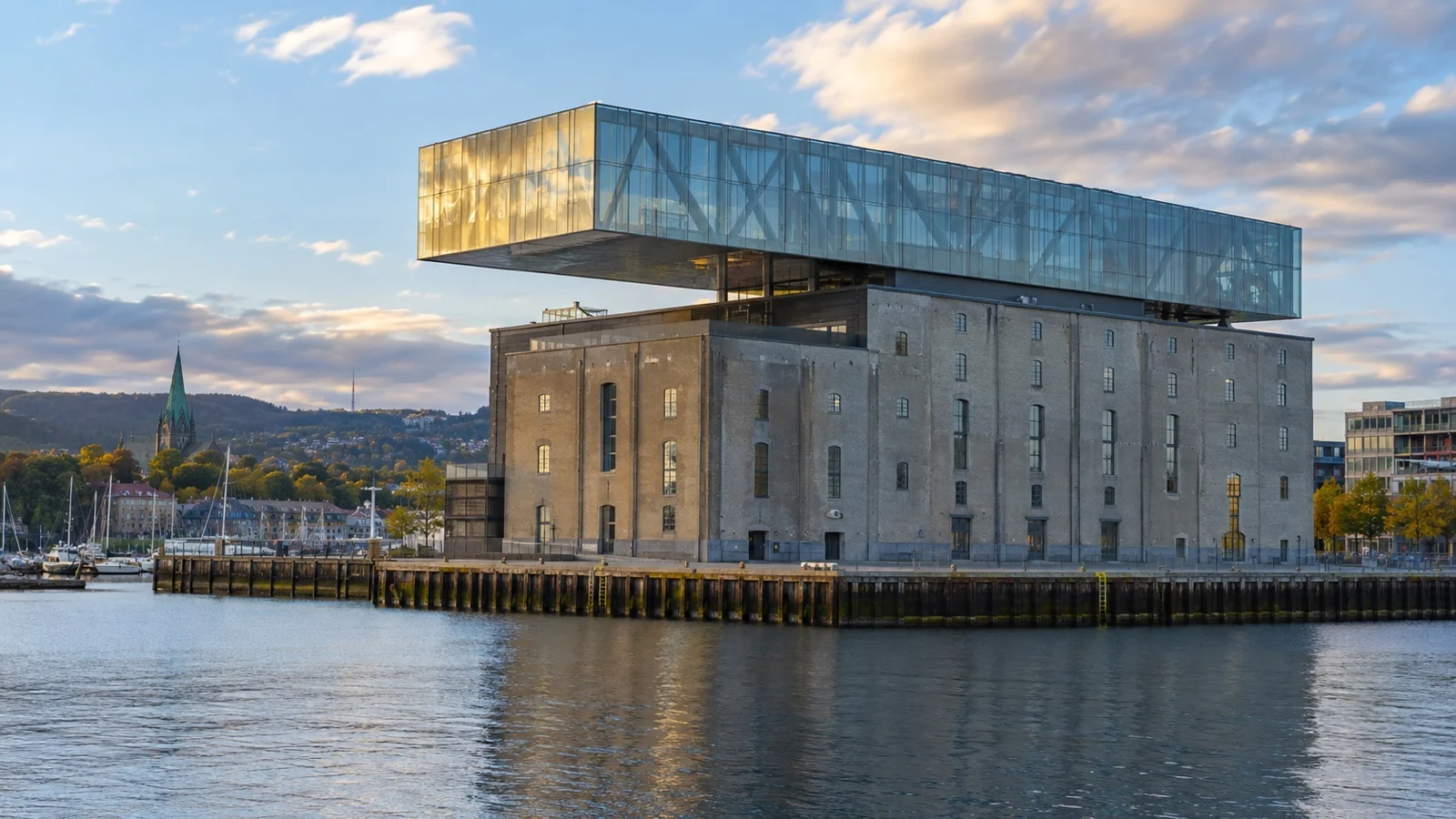
Rockheim is Norway’s national museum of popular music, housed in a converted warehouse with a distinctive illuminated upper structure. It sits beside the Brattøra cruise area, making it especially convenient for passengers at Kai 68.
Exhibitions explore Norwegian music through sound, objects, archives, and interactive installations. Check the official Rockheim hours and accessibility information, since opening days and temporary exhibitions can change.
Ila passengers should treat Rockheim as a city attraction rather than a terminal amenity. Allow travel time back across the waterfront, and do not accidentally report to Kai 68 afterward because the museum felt conveniently port-like.
Public transport can rescue tired feet
AtB operates Trondheim’s buses and trams, with ticketing and live journey planning in its official system. Use the AtB journey planner for your date because stop locations, construction diversions, and ticket methods evolve.
The historic Gråkallbanen tram climbs from the center toward Lian and the Bymarka recreation area. It can be a pleasant longer ride, but it should be the day’s main transport experience rather than a casual extra before a tight departure.
Buy or validate the correct ticket before boarding under the current rules. Preserve at least one service of margin on the return, more when a connection is required or the ship uses Ila Pier.
Use the berth to set the route
Kai 68 at Brattøra and Kai 30 at Ila are both alongside berths, but they favor different first and last stops. Save the live Trondheim Port call assignment before arranging a taxi or tour meeting.
Kai 68: start or finish with Rockheim, then continue through the center to Nidaros Cathedral and Bakklandet.
Kai 30: treat Ila as a separate west-side approach and use a current AtB route or taxi when the extra walking would weaken the cathedral and riverfront day.
Cathedral: check the official dated hours and ticket options, because worship, events, and seasonal access can change which spaces are open.
Return: reach the correct port gate 45 to 60 minutes before all-aboard, and add more time if a bus, mobility pickup, or distant excursion controls the final leg.
Nidaros Cathedral, Bakklandet, and the old bridge make the best first visit. Add the fortress only for good walkers in decent weather, and use Rockheim as the natural indoor finish from Kai 68.
Three ways to spend the call without cloning it
History first: head directly to Nidaros Cathedral and the Archbishop’s Palace, cross Gamle Bybro, and eat in Bakklandet. Return through Torvet and the central streets, adding no hill unless time remains generous.
Architecture and views: walk the river warehouses, Bakklandet, and Kristiansten Fortress, then descend through the center. Visit the cathedral exterior if interior timing does not fit rather than rushing a paid admission.
Low-weather-risk culture: combine Rockheim with a shorter city walk and Nidaros Cathedral. This is particularly efficient from Turistskipskaia and remains easy to shorten when rain becomes Trondheim’s most interactive exhibit.
Our Ålesund cruise port guide covers another highly walkable Norwegian city with a strong architectural identity. For a more intensely fjord-centered day, compare the Geiranger cruise port guide.
Accessibility depends on the berth and the building
Both regular cruise locations provide alongside operations, removing the usual tender transfer. Gangway angle, port surface, and distance to the gate still vary, so the cruise line must confirm ship-specific assistance.
Central Trondheim has curb cuts and modern pedestrian infrastructure alongside cobbles, bridge slopes, winter damage, and historic thresholds. Rockheim is a modern museum conversion, while the cathedral complex and fortress require site-specific route planning.
AtB vehicles support accessible travel, but space is limited and the closest stop may not create a step-free final approach. Confirm mobility-device dimensions, ramp access, and the correct return stop before building the day around public transit.
Weather and the two-stage return
Trondheim can feel cool and wet even in summer, while sunny days may warm quickly away from the fjord. Pack layers, a waterproof outer layer, and shoes with grip for stone, bridges, hills, and museum floors recently visited by everyone else’s wet shoes.
Use marked crossings near Brattøra’s rail and road infrastructure, and stay out of restricted port zones. Around the river, do not climb railings or step onto wet edges for a slightly improved warehouse angle.
First calculate when you must reach the berth, then calculate when you must leave the final attraction. For a walking day, aim to reach port security 45 to 60 minutes before all-aboard; add at least 30 minutes when a bus, tram, taxi, or Ila transfer is involved.
Trondheim questions, answered plainly
Do cruise ships tender in Trondheim?
Regular calls normally berth alongside, often at Kai 68 Turistskipskaia or Kai 30 Ila Pir. Operational changes remain possible, so follow the current ship and port notice.
Can you walk to Nidaros Cathedral?
Yes, from either cruise berth for capable walkers, although Ila creates a different and often longer approach. Allow roughly 20 to 30 minutes from Turistskipskaia, plus personal pace and crossings.
Is Rockheim next to the cruise terminal?
It is beside the Brattøra cruise area near Kai 68. It is not next to Ila Pier 30, so confirm the berth before treating it as a last-hour attraction.
What should I book in advance?
Reserve cathedral tours, special tower access, or limited museum experiences that matter to you. An ordinary city walk, river view, and Bakklandet visit need no tour.
Trondheim’s best trick
The city carries national-scale history without requiring capital-city logistics. Once the exact berth is known, passengers can build a rich day around one cathedral, one river crossing, and one neighborhood instead of collecting attractions like receipts.
Official port, attraction, tourism, and public-transport information was reviewed in September 2026 without claiming firsthand experience. The standards used for changing access and schedule details appear in our Editorial Policy.