Puerto del Rosario Cruise Port Guide: Fuerteventura on Your Own
Puerto del Rosario is Fuerteventura’s working capital, not a resort built around the cruise pier. That is exactly why I find it useful: the town offers an easy local wander, while the rest of the island waits for travelers willing to plan transportation.
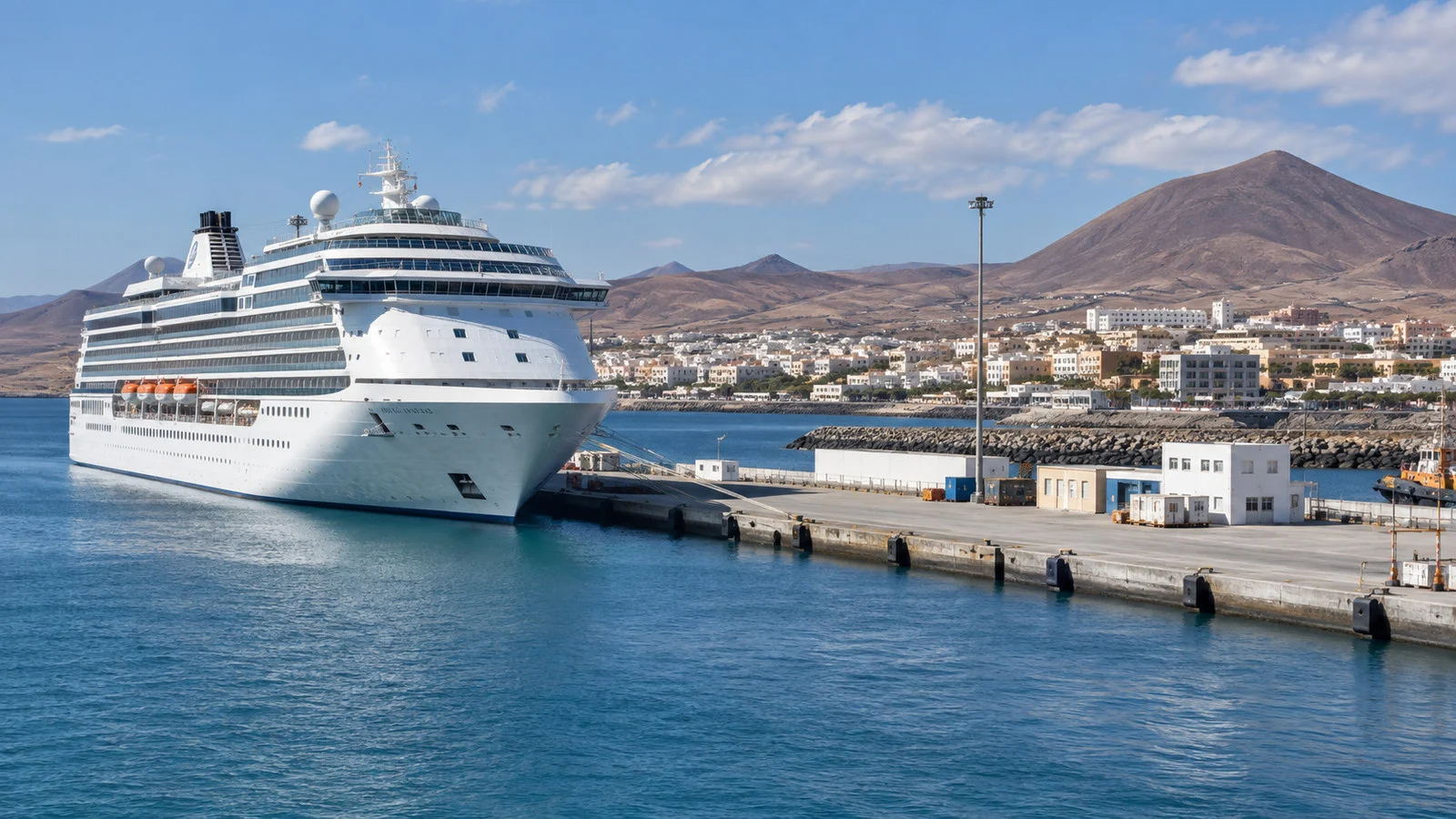
Cruise ships berth alongside in the commercial harbor, with no tender ride between vessel and shore. Your exact walk depends on the assigned berth and port controls, so the ship’s daily instructions always beat a generic map.
My quick take
Stay in town if you want a low-stress day with sculptures, a small museum, cafes, and an urban beach. Go farther only when Corralejo’s dunes, Betancuria, or a wider island loop matters more than having flexibility.
Puerto del Rosario is not the place to expect a dramatic old quarter outside the port gate. It is an ordinary Canarian city whose strongest sights appear in small pieces rather than one blockbuster landmark.
I would happily spend a short call on foot and save the island drive for a longer visit. On a full day, a prearranged driver or ship excursion opens the volcanic landscapes that make Fuerteventura memorable.
Puerto del Rosario quick facts
- Docking: Cruise ships normally berth alongside in Puerto del Rosario’s commercial harbor, with no tender operation.
- Into town: Central streets are reachable on foot, though the distance varies with berth assignment and the route through port security.
- Best easy plan: Walk the sculpture route, check the Miguel de Unamuno house, stop at Playa Chica, and enjoy a cafe.
- Island excursions: Corralejo’s dunes lie north of the capital, while historic Betancuria is inland to the west; treat them as separate planned outings.
- Public transit: TIADHE operates Fuerteventura’s interurban buses, but current schedules and the distance to the bus station must fit your all-aboard time.
- Currency: Fuerteventura uses the euro, and cards are common in town.
- Language: Spanish is the local language, with English commonly used in tourism businesses.
- Time zone: The Canary Islands use Western European Time and observe seasonal daylight saving time.
- Accessibility: The waterfront is generally easier than sand dunes or Betancuria’s older streets, but gangways, curb cuts, and excursion vehicles vary.
- Emergency number: Call 112 for police, fire, or medical help anywhere in the Canary Islands.
The working harbor at Puerto del Rosario
The Las Palmas Port Authority’s port-access plan confirms that the commercial harbor serves passengers alongside container and roll-on, roll-off traffic. Its pedestrian route links the berthing area with the city, though you should still follow the controlled path assigned to your ship.
That mix explains the first view from the gangway. You may see paved operational areas, warehouses, vehicles, and port equipment before the route reaches the public waterfront.
Passengers normally leave by a controlled pedestrian path or shuttle arrangement set for the day’s berth. Follow signs and port staff rather than trying to take a shorter path through a working area.
There is no reason to assume every call uses the same pier. Berth allocation can change with vessel size, ferry movements, weather, maintenance, and traffic.
A direct alongside berth removes the inconvenience of a tender, but the gangway can still be steep. Travelers with mobility equipment should ask the cruise line about the actual setup rather than relying on the port’s general layout.
Walking into the capital
Puerto del Rosario is compact enough for an independent visit once you leave the secure harbor. The route to the center is generally straightforward, though its length depends on where the ship is placed.
Use Plaza de España, the waterfront, and Calle Primero de Mayo as useful orientation points. Photograph the entrance used by cruise passengers so the return feels obvious even if several gates look similar.
The town is more functional than polished, with municipal buildings, apartment blocks, local shops, and cafes sharing the center. I like that honesty, especially after several ports where the first streets feel designed only for visitors.
Traffic crossings and occasional uneven pavement deserve normal attention. Shade can also be limited, so a short distance may feel longer under a bright Canarian sun.
What to see in Puerto del Rosario
The open-air sculpture route
Sculptures appear in plazas, on traffic islands, and along ordinary streets throughout the capital. The collection grew through local art initiatives, and finding pieces gives a town walk a simple purpose without locking you into opening hours.
Do not worry about completing an official checklist. Pick a loose loop through the center and waterfront, then let the artwork turn up between a coffee stop and the next view of the sea.
Casa Museo Miguel de Unamuno
Writer and philosopher Miguel de Unamuno lived in Puerto del Rosario during his 1924 exile from mainland Spain. The house associated with that period is now a small museum focused on his stay and work.
Check current hours through the Cabildo de Fuerteventura before making it the center of your day. The island government reopened the house with a renewed permanent exhibition in 2024, but small-museum hours can still change around holidays, staffing, or maintenance.
This is a quiet, specific historical stop rather than a sweeping island museum. It works best for travelers interested in Spanish literature, political history, or a short indoor break.
Playa Chica and the waterfront
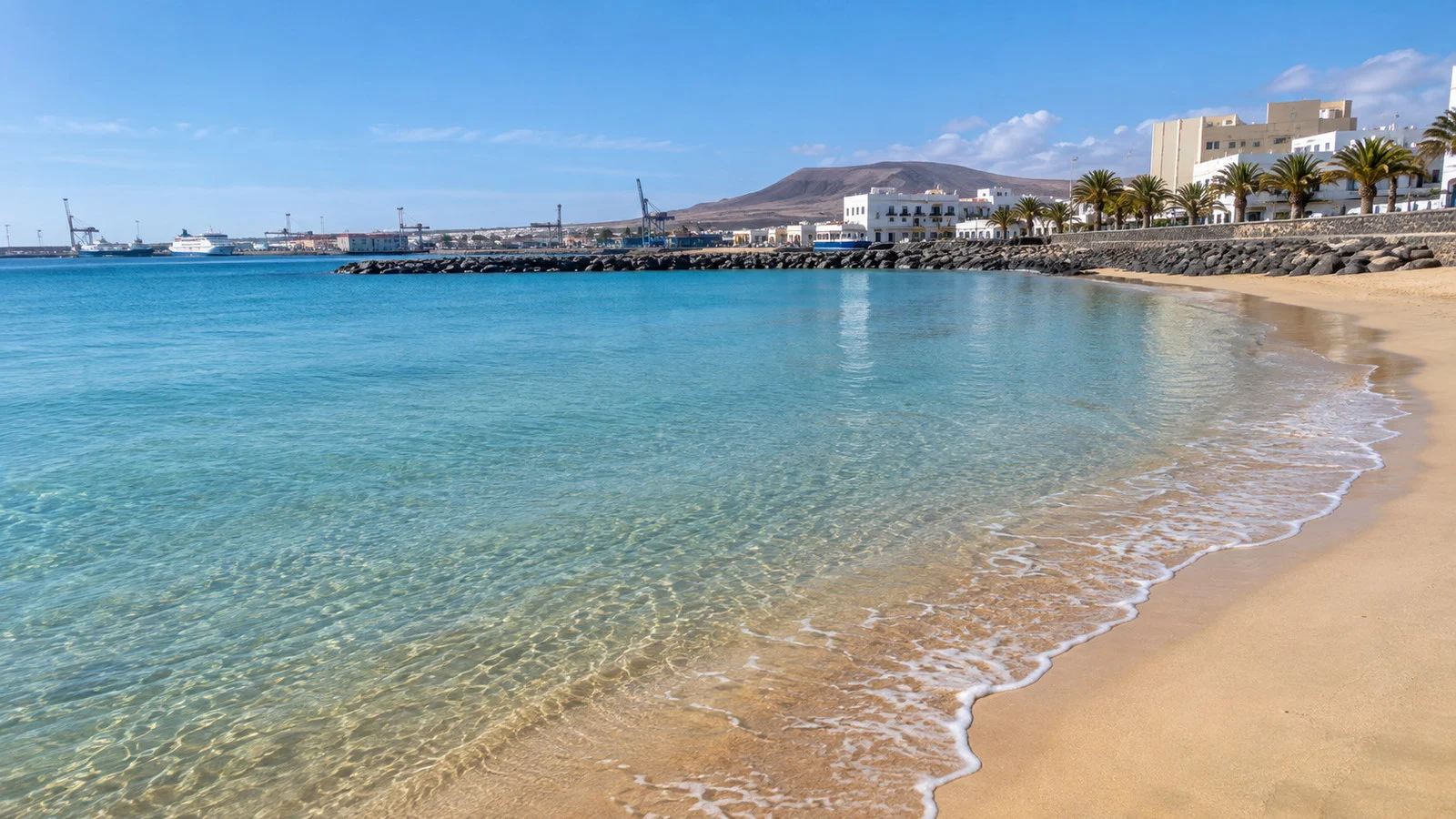
Playa Chica, also called Los Pozos, offers a small urban beach close to the center. It is convenient for a seaside pause, but it should not be confused with the long dune-backed beaches around Corralejo.
Swim only when current conditions and posted flags allow it. Wind, swell, water quality notices, and local restrictions matter more than how calm the beach looked in an older photo.
A beach stop needs its own return buffer because changing, rinsing sand, and walking back through port security all take time. Keep valuables watched and do not leave a passport or ship card unattended.
Church, streets, and everyday life
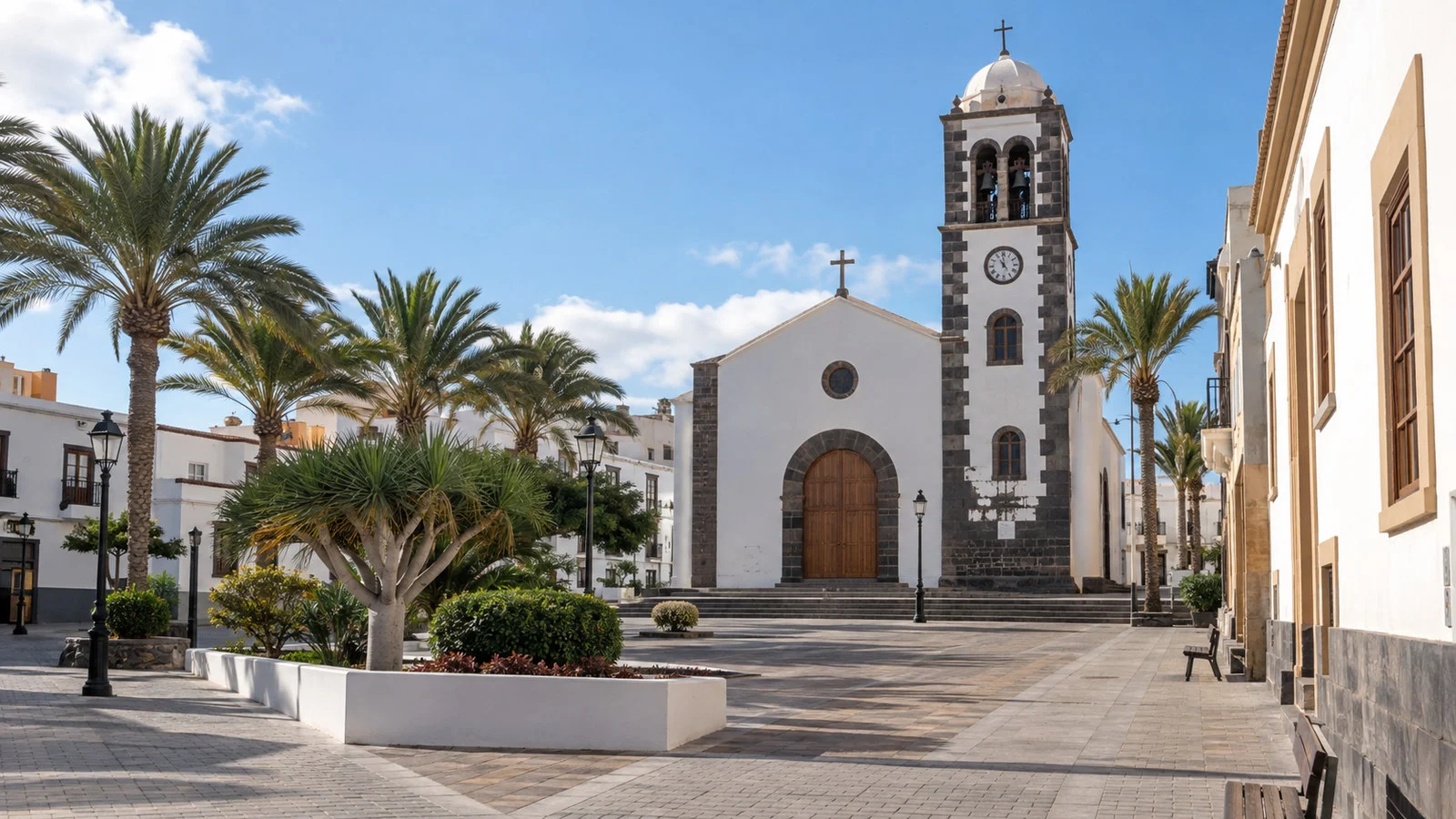
The Church of Nuestra Señora del Rosario anchors part of the town’s historic identity. If it is open, enter quietly and avoid interrupting services or private prayer.
Markets, bakeries, and local cafes often provide a stronger sense of Puerto del Rosario than a hurried bus tour. Order something simple, watch the pace of town, and remember that opening hours can shift outside the busiest season.
Corralejo dunes from the cruise port
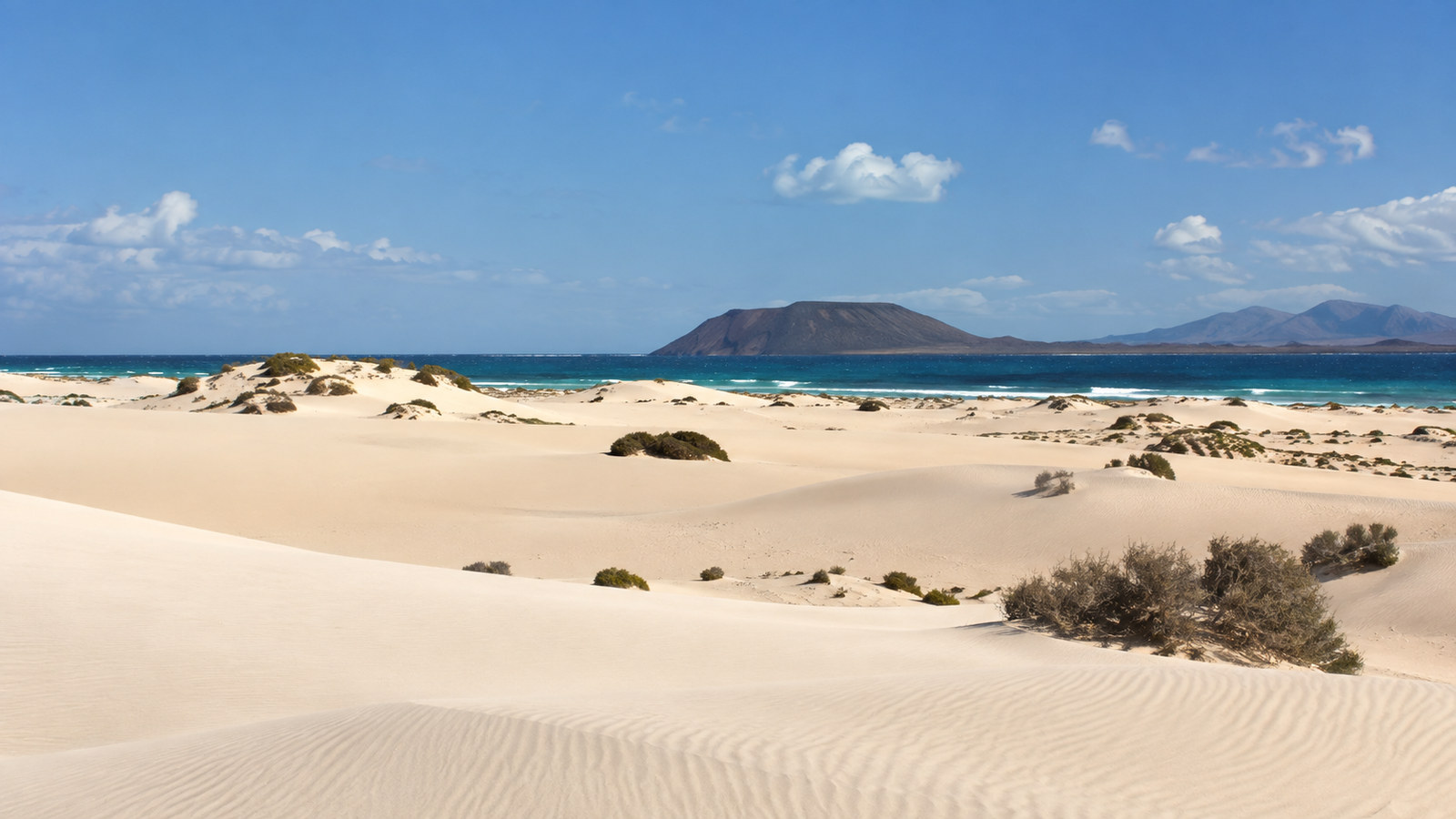
Corralejo Natural Park is the headline landscape for many first-time visitors to Fuerteventura. Pale dunes meet blue water on the island’s northeast coast, well beyond walking distance from the ship.
A taxi, rental car, public bus, or organized tour is required. Driving time varies with traffic, the selected beach access, and the day’s road conditions, so do not build your plan around one optimistic estimate.
Use a ship excursion when the port day is short or you want the simplest return protection. A prebooked private driver works well for a small group that wants specific photo stops or more beach time.
Public bus travel can be economical, and TIADHE’s current route list identifies Line 6 between Puerto del Rosario and Corralejo. Check both directions on the day and include the walk between the harbor and bus station before deciding whether the timetable is safe.
The dunes are a protected natural area, not an unlimited playground. Follow marked access, avoid trampling vegetation, take litter away, and respect any parking or beach restrictions.
Wind can blow sand hard enough to sting and can make umbrellas impractical. Protect cameras, contact lenses, and electronics while keeping water and sun protection close.
Betancuria and the island interior
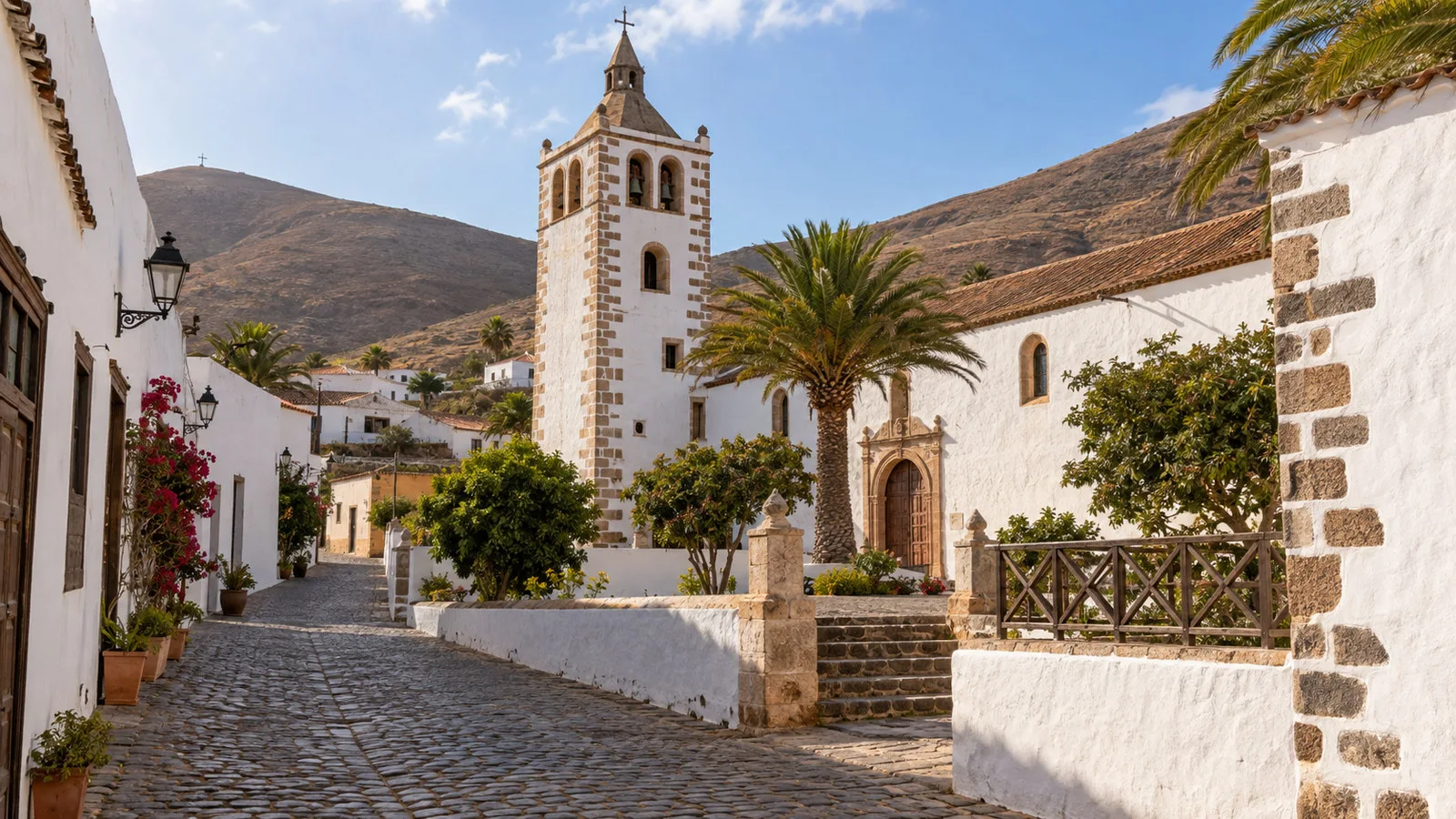
Betancuria was Fuerteventura’s historic capital and offers whitewashed buildings, a church, and a mountain setting unlike the east-coast harbor. It lies inland, so visiting requires a dedicated drive rather than a casual extension of the town walk.
The road adds scenery but also time, especially when a tour stops at viewpoints, craft shops, or villages. Read the excursion description carefully to learn how much time is actually spent in Betancuria.
I would not combine Betancuria and Corralejo independently unless the call is long and a driver has planned the route. The two attractions pull in different directions from Puerto del Rosario.
Travelers interested in history and rural landscapes may prefer Betancuria to the beach. Those who came for Fuerteventura’s famous sand and ocean views will probably value Corralejo more.
Older lanes and building entrances can include slopes, steps, and uneven stone. Ask about the walking route before booking if mobility or heat tolerance affects your day.
Other island excursions worth considering
Fuerteventura’s appeal extends beyond its two most famous stops. Volcanic viewpoints, goat-cheese producers, coastal villages, and wind-shaped interior terrain often appear on half-day island tours.
A cheese tasting can add real local context because majorero cheese is closely associated with the island. Confirm whether a tour visits a working producer, a shop, or only a brief sales stop.
Long drives toward Jandía or Cofete belong on a land vacation or a very long call. The distances and road conditions make them poor spontaneous choices for most cruise passengers.
A panoramic excursion can be satisfying when walking is limited, but check how many times passengers must enter and exit the coach. Frequent short stops may be more tiring than one longer destination.
Ship excursion or explore independently?
Explore independently when your priorities are the town center, sculptures, Unamuno museum, waterfront, and Playa Chica. These sights allow you to adjust the day easily if the ship arrives late or the weather changes.
Choose a ship excursion for a broad island circuit or a tightly timed visit to Corralejo. The organized return removes the hardest risk from a destination where the main landscapes sit away from the pier.
A private driver offers the most control over pacing and can be valuable for travelers with mobility needs. Confirm the vehicle, pickup point, total price, accessibility, and latest safe departure from the final stop.
Rental cars can work, but port pickup, paperwork, parking, fuel, and navigation all consume part of the call. Reserve in advance and verify the office hours rather than assuming a car will be waiting beside the gangway.
Public buses suit travelers who are comfortable reading live schedules and abandoning a plan if the connection looks risky. Never use the last plausible return bus as your only route back to the ship.
Accessibility in town and farther afield
An alongside berth usually makes disembarkation simpler than a tender port, but the gangway slope changes with vessel and tide. The captain and crew decide whether a mobility device can be handled safely on the day.
The waterfront and many central streets are paved, though curb cuts, construction, and older surfaces are not perfectly consistent. A shorter loop near the water may be easier than roaming side streets without a route.
Playa Chica may offer a more practical beach visit than remote sand areas, but beach access and water entry are separate questions. Ask local services about current accessible facilities before relying on them.
Corralejo’s sand is naturally difficult for standard wheelchairs and walkers. An accessible viewpoint or beach access point may still provide excellent scenery without crossing loose dunes.
Excursion coaches often have steps even when they can store a folding wheelchair below. Confirm boarding requirements, restroom access, walking distances, and whether a companion must assist.
Weather and safety
Fuerteventura is dry, sunny, and famously windy. The breeze can hide how quickly you are heating up or burning, so use sunscreen, a secure hat, and water even when the temperature feels comfortable.
Cloud and wind can change across the island, especially between the coast and interior. Carry a light layer that blocks wind rather than assuming every stop will feel like the sheltered harbor.
Puerto del Rosario generally calls for ordinary city awareness. Keep valuables secured, use marked crossings, and stay alert around traffic near the commercial port.
Spain’s emergency number is 112 for police, fire, and medical assistance. Save the ship’s contact number and photograph the daily program before leaving the harbor.
Ocean conditions deserve respect at every beach. Follow flags and lifeguard instructions, and do not enter unfamiliar water simply because it looks calm from the sand.
Returning to the ship on time
Your return plan begins with the exact all-aboard time and the correct port entrance. Work backward from both, adding time for traffic, parking, walking, and security.
If you stay in town, the short distance gives you useful flexibility. I would still return well before the deadline because a changed gate or berth can add an unexpected final walk.
From Corralejo or Betancuria, use a much larger buffer. A taxi shortage, road incident, missed bus, or delayed tour stop can quickly remove the comfort from the day.
Ship excursions coordinate with the vessel, but passengers must still meet the coach on time. Keep the guide’s instructions and avoid wandering away during the final stop.
How this call fits a Canary Islands cruise
Puerto del Rosario often appears with Arrecife, Las Palmas, or Santa Cruz de Tenerife. Each island rewards a different plan, so do not assume one Canary port represents the rest.
Fuerteventura is the landscape day in many itineraries, with wind, dunes, broad beaches, and an austere volcanic interior. The capital itself is quieter and less monumental than the larger neighboring island cities.
If this is your only visit, decide whether you want to understand the town or see the island’s signature scenery. Both are valid, but trying to do everything can leave you with more windshield time than experience.
Quick answers
Do cruise ships tender at Puerto del Rosario?
Normally no. Ships berth alongside in the commercial harbor, though the gangway and passenger route depend on the day’s berth.
Can I walk into town?
Yes. Central Puerto del Rosario is reachable on foot, but the distance changes with berth assignment and port access controls.
Can I walk to a beach?
Yes. Playa Chica is an urban beach near the center, while the famous Corralejo dune beaches require transportation.
How do I reach Corralejo?
Use a ship tour, taxi, private driver, rental car, or the island bus network. Check live schedules and preserve a generous return margin.
Is Betancuria near Corralejo?
No. They lie in different directions from Puerto del Rosario, so combining them independently can create a long and rushed day.
What currency is used?
The euro. Cards are common, but a small amount of cash is useful for minor purchases or a payment outage.
Is the port wheelchair accessible?
It can be manageable because ships berth alongside, but gangway slope, port routing, curb cuts, and vehicle access vary. Confirm the actual arrangements with the cruise line.
The last word
Puerto del Rosario works best when you stop asking it to be a resort and let it be an island capital. Walk slowly, notice the public art, and enjoy the freedom of a port day that does not demand a ticket.
If Fuerteventura’s dunes or interior brought you here, plan the transportation with equal care. The island is wide enough to reward ambition and punish a casual return schedule.
How this guide was researched: This guide uses current information from the Las Palmas Port Authority, Fuerteventura public agencies, TIADHE, and Canary Islands visitor services. Time-sensitive details were reviewed in September 2026; always follow your ship’s instructions and see our Editorial Policy.