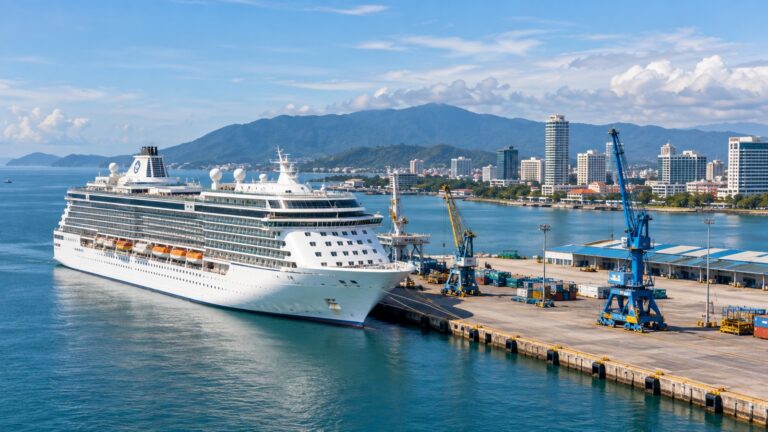
Oudong River Cruise Excursion Guide: Stupas, Steps and Transfers
Oudong is one of the most rewarding history excursions on a Cambodia river cruise, but it is not a standard port where every ship uses the same dock. The landing, road transfer, visit length, and return point depend on the operator and the day’s river conditions.
The former royal capital offers sacred stupas, a broad hilltop landscape, and a story that connects post-Angkor Cambodia with Phnom Penh. The tradeoff is a hot, stair-heavy outing that needs honest mobility planning.
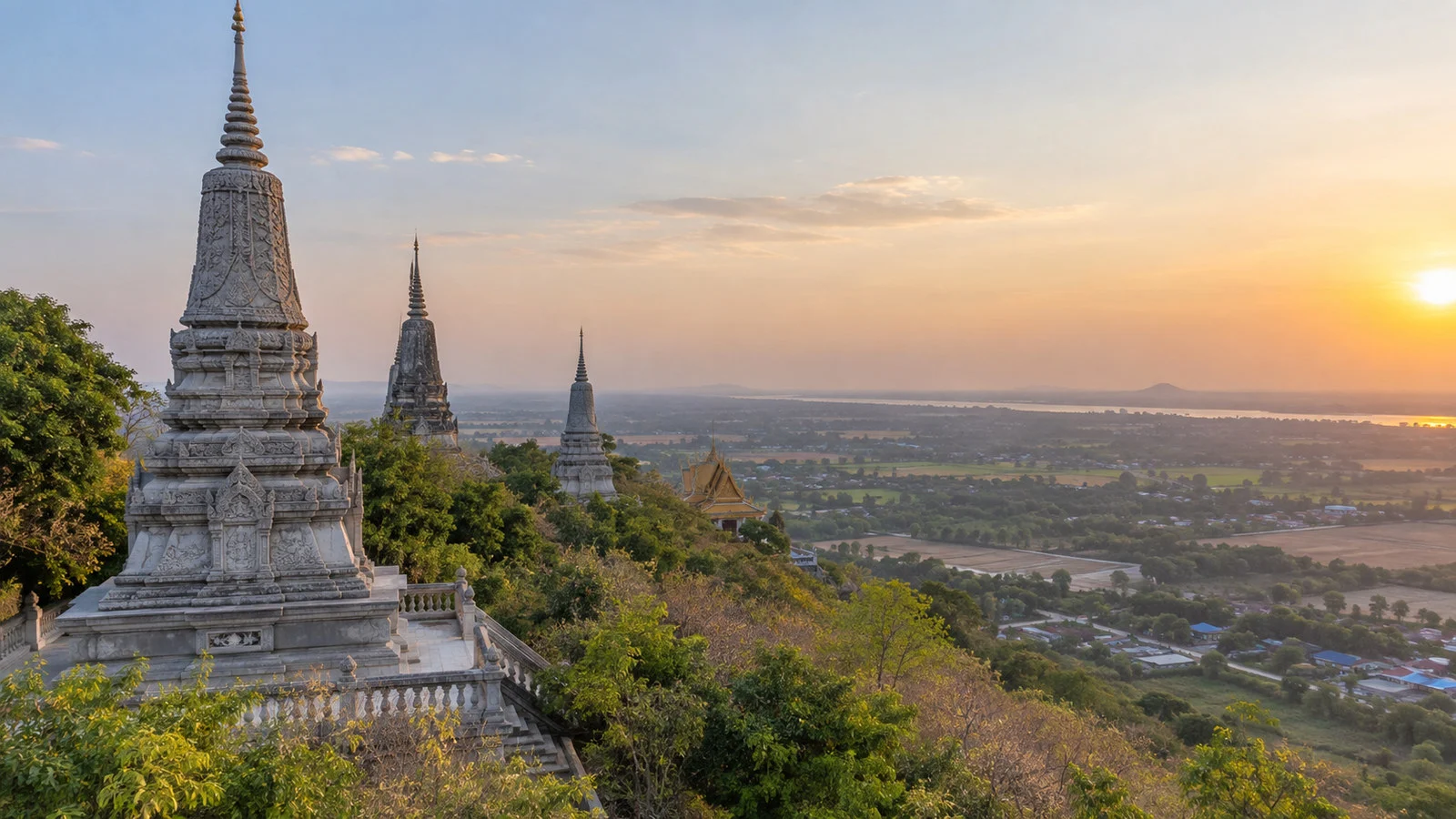
My quick take on Oudong
Choose Oudong if you want guided history and are comfortable with a physical outdoor visit. A knowledgeable guide adds meaning to monuments that can otherwise look like isolated towers on a beautiful ridge.
If the full climb is not a good fit, do not dismiss the excursion immediately. Ask the cruise line what can be seen from lower ground and whether a shorter, shaded, or vehicle-assisted version is available.
Oudong quick facts
- Port status: Oudong is an inland excursion, not a modern passenger cruise terminal
- Distance: UNESCO places the ancient city about 35 km northwest of Phnom Penh
- Historic role: A Cambodian capital during the post-Angkorian period from 1618 to 1863
- UNESCO status: On Cambodia’s Tentative List, not the inscribed World Heritage List
- Main sights: Royal stupas, Buddhist monuments, archaeological remains, and views from Phnom Oudong
- Walking: A sustained outdoor stair climb with heat, uneven surfaces, and limited shade
- Currency: Cambodian riel is official, while United States dollars remain widely used
- Return rule: Follow the ship’s current landing and all-aboard instructions rather than an old map pin
What Oudong actually is
Cambodia’s UNESCO Tentative List submission describes Oudong as a post-Angkorian city dating from 1618 to 1863. King Jayajetha II established the capital there in 1618.
The site lies about 35 km northwest of Phnom Penh via National Road 5. Its remains spread around Phnom Oudong rather than forming one compact museum complex.
UNESCO’s page describes an ancient city shaped by a sacred mountain, a river connection, workshops, markets, villages, and a Royal Port at Kampong Loung. Oudong was a political, religious, cultural, and trading center rather than merely a royal burial hill.
Oudong is not yet a World Heritage Site
Cambodia submitted the Ancient City of Oudong to UNESCO’s Tentative List in 2020. A Tentative List entry is a preliminary national step, not the same as inscription on the World Heritage List.
This distinction matters because marketing often shortens the description to “UNESCO site.” The accurate phrasing is that Oudong is on Cambodia’s UNESCO Tentative List.
How cruise access works
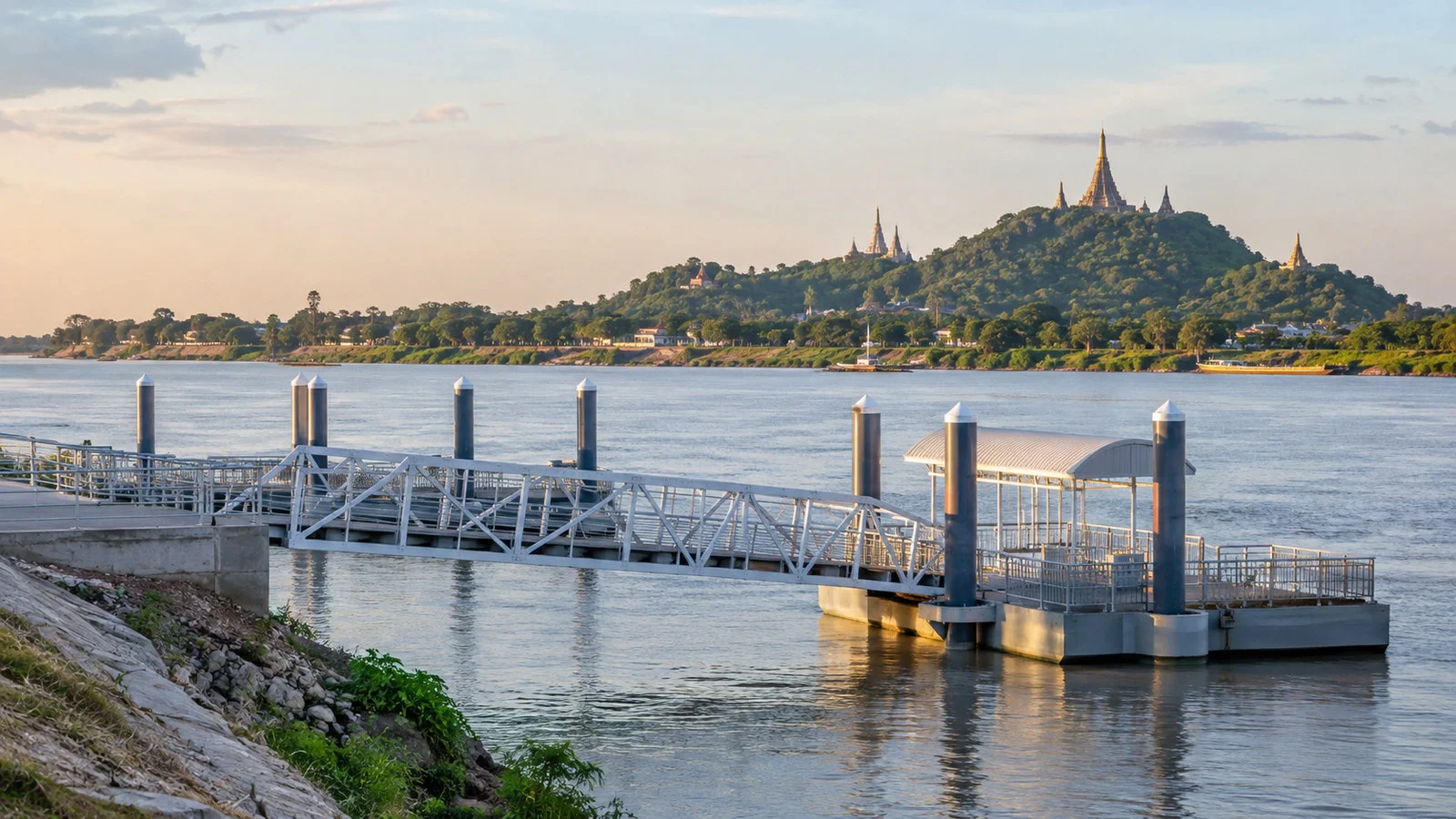
Begin with the current cruise line app, printed program, or onboard briefing. Do not assume that every Oudong excursion starts at the Phnom Penh riverfront or returns to the same place.
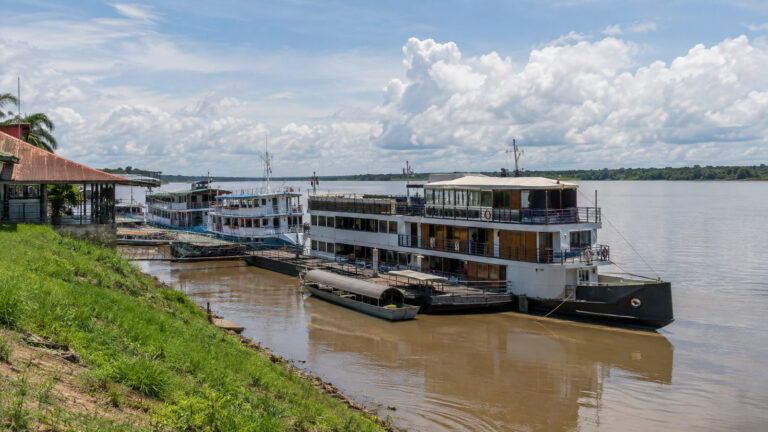
Mekong ships can use different berths, local landings, or tenders as water levels and itineraries require. Aqua Mekong, for example, describes a private tender fleet for shore excursions.
The boat-to-road transition can be as important as the drive. Ask about the gangway or tender, the distance to the vehicle, the surface at the landing, and whether the ship moves while guests are ashore.
Photograph the daily program before leaving. Save the all-aboard time, vessel contact, port-agent information, return landing, and any group number offline.
What you will see at Oudong
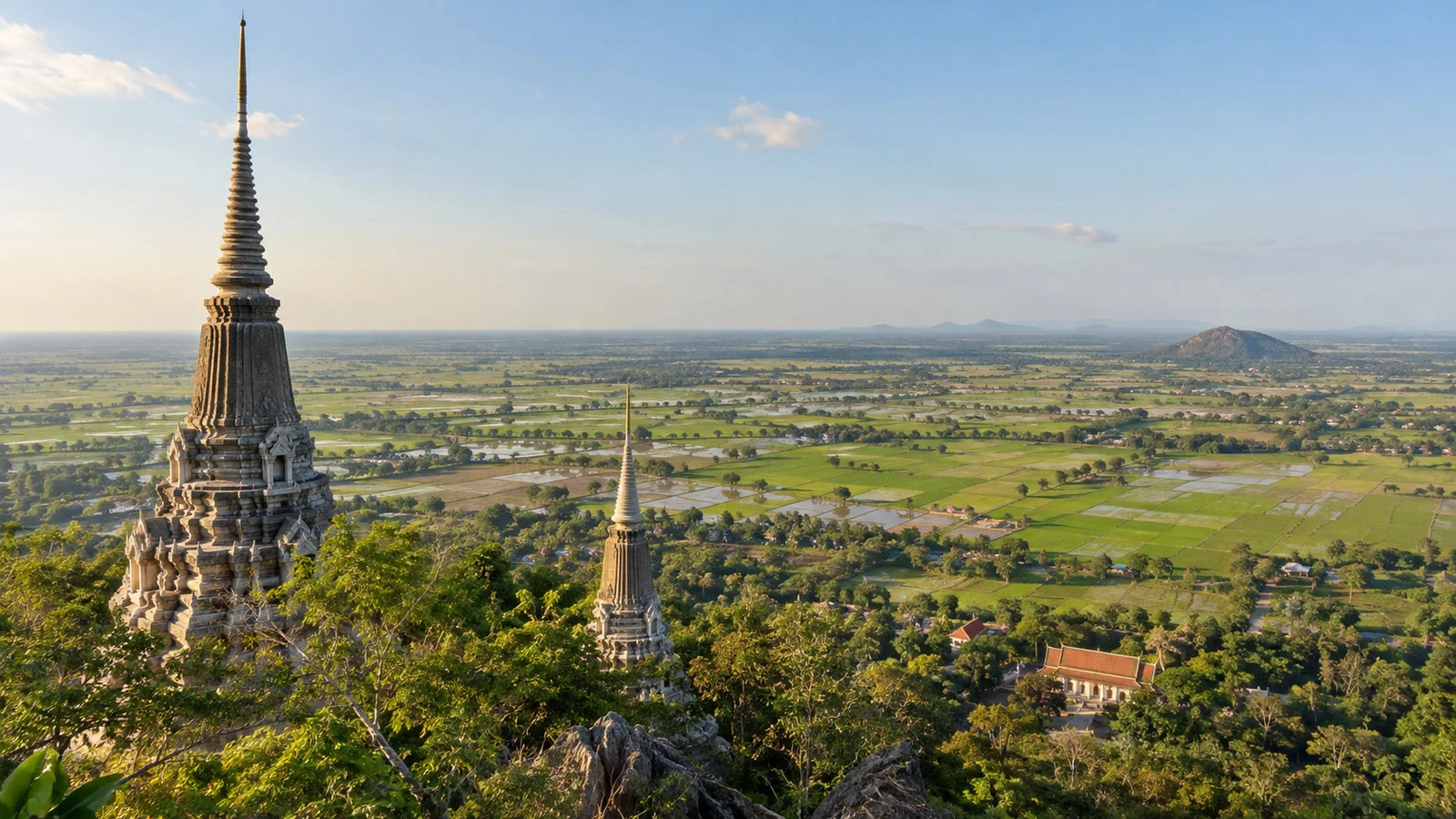
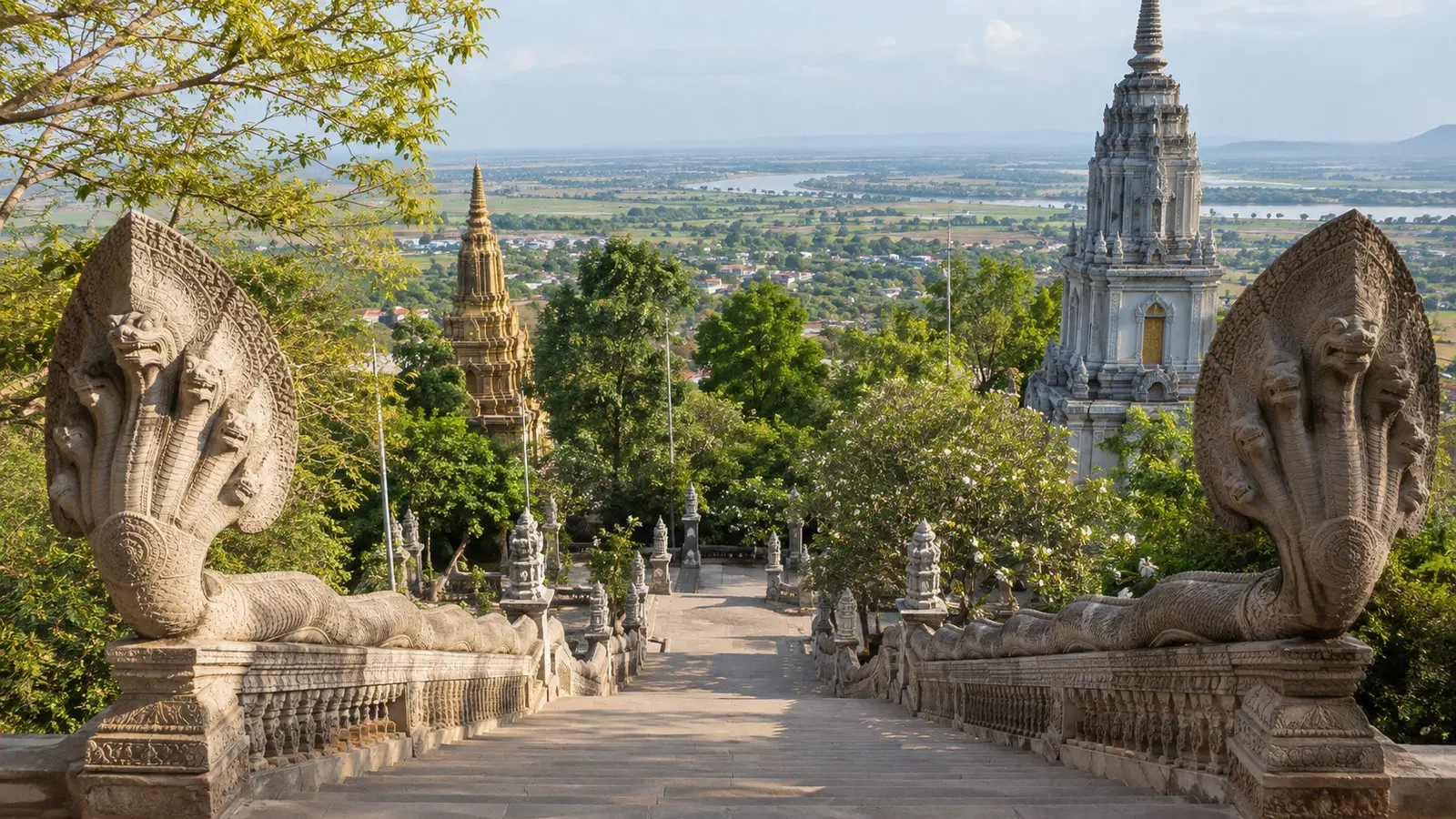
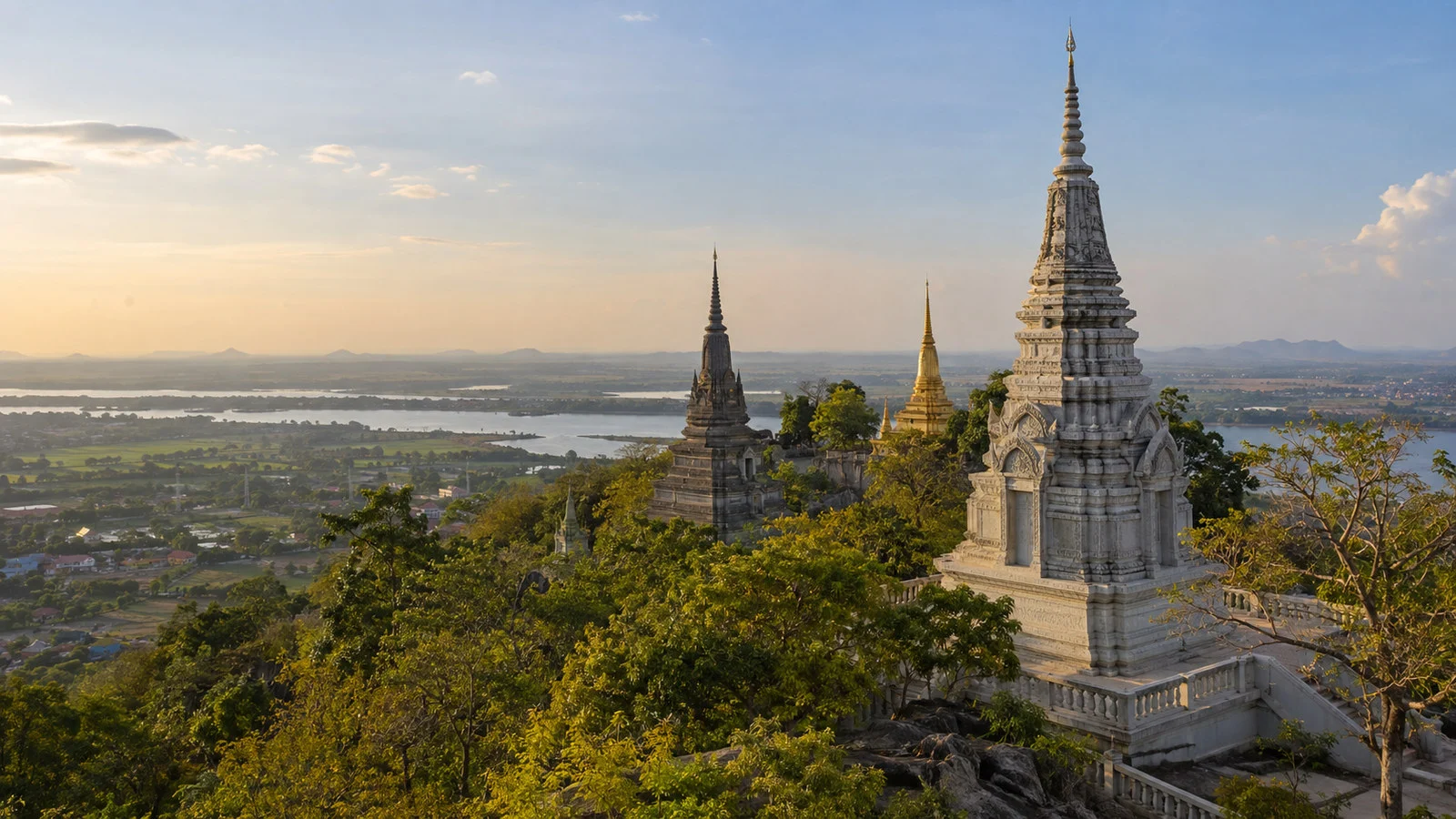
The royal and religious monuments on Phnom Oudong are the visual heart of the visit. Cambodia’s UNESCO submission records 16 stupas associated with Theravada Buddhist kings and the royal family, with 13 on the mountain and three at its foot.
The wider site also contains Buddhist images, viharas, archaeological material, and evidence of several religious traditions. Those layers help explain why Oudong remained important across different periods.
A large stupa built by King Norodom Sihanouk in 2004 holds a relic of Gotama Buddha, according to the submission. This is a living sacred landscape, not an abandoned collection of royal monuments.
Move quietly around worship, follow local instructions about shoes, and ask before photographing people or ceremonies. Never climb on the stupas or treat religious objects as props.
The climb and the easier alternative
The hilltop route requires a sustained climb on outdoor steps. Heat, humidity, uneven surfaces, and rain can make it more demanding than the distance suggests.
Online step counts vary because visitors and tours may use different routes. Plan for a significant stair climb instead of trusting one exact number or assuming continuous handrails.
Wear closed shoes with dependable grip and take the climb at a measured pace. A hat, sun protection, and water make the outing much more comfortable.
For a lower-impact visit, ask what is visible at the foot of the mountain and how close the coach can get. A vehicle cannot be assumed to reach every monument.
Ship excursion or independent visit?
During an active cruise itinerary, the ship’s excursion is usually the lowest-stress choice. It coordinates the landing, guide, vehicle, site visit, and return to a vessel that may not remain in one place.
Read the operator’s walking description and cancellation terms before booking. The label “moderate” can hide stairs, heat, uneven ground, and limited shade.
An independent visit is more practical before or after the cruise from a Phnom Penh hotel. Hire a reputable driver and guide, confirm the route and price, and arrange the return before leaving the city.
If you plan to visit independently during a port call, obtain the exact landing and all-aboard point in writing. A bargain ride has little value if it returns to the wrong riverbank.
How much time do you need?
There is no reliable universal duration because the starting landing and excursion design vary. Use the time in the current cruise program, then ask how much is driving, climbing, guided touring, and free time.
Road traffic can make a tidy map estimate misleading. Rain can also slow transfers and make the walking portion more cautious.
Independent visitors should build a generous margin before all aboard. Set the return time from the ship’s deadline, not from how long the attraction usually takes.
Accessibility questions that matter
Accessibility begins before Oudong’s stairs. Ask about the ship gangway, tender boarding, landing surface, distance to the coach, vehicle step height, closest drop-off, restroom, shade, and handrails.
The main hilltop route will not suit every wheelchair, rollator, or limited-stamina traveler. Request an operator-specific description of the lower-level visit and ask whether a companion is expected to assist.
A blanket claim that the excursion is accessible or inaccessible is not enough. The ship, shore landing, vehicle, and exact sightseeing route must all be considered together.
Weather and what to wear
Cambodia is hot and humid for much of the year, and the hill can feel exposed. Rain adds slippery stone and mud, while strong sun makes hydration and shade breaks important.
Wear modest clothing that covers shoulders and knees because Oudong remains a religious site. Choose breathable fabric and shoes that stay secure on stairs.
Check the forecast on the morning of the excursion and follow the operator’s instructions. Weather can change the safe pace or lead to a shortened route.
Health and safety
The current United States travel advisory for Cambodia is Level 2 because of crime and landmines, with a Level 4 warning for areas within 31 miles of the Thai border because of armed conflict. Oudong is not in that border zone, but the advisory also warns that suitable medical care may require travel to a major city and that first responders may not reach remote areas quickly.
Bring essential medication and know how to contact the ship. Check whether your insurance covers medical care and evacuation based on your personal needs.
Street crime is a greater concern in busy urban visitor areas than on a guided hill visit, but valuables still need attention. Keep phones and bags secure during transfers and avoid displaying large amounts of cash.
Follow the advisory issued by your own government as well, because security and border conditions can change. Countrywide guidance belongs in the plan even when Oudong is far from an area named in a specific warning.
Money and entry documents
The Cambodian riel is the official currency, and United States dollars are widely used. Damaged dollar notes are commonly refused, so carry small clean bills and some riel rather than depending on cards.
Entry rules depend on nationality, passport, and itinerary. Use Cambodia’s official eVisa service, the cruise line, and the relevant embassy or immigration authority for current requirements.
A cruise crossing between Cambodia and Vietnam can involve different document handling from a hotel arrival. Confirm whether the operator collects passports and whether any arrival form must be completed in advance.
How Oudong fits a Mekong itinerary
Oudong adds royal, religious, and commercial history to a wider Mekong itinerary. It helps explain Cambodia between the Angkor period and the later rise of Phnom Penh.
The stop also contrasts with everyday river communities and a city visit in Phnom Penh. Together, those places show changing centers of power, trade, and religious life.
A call at Kampong Cham offers another perspective on present-day Cambodia. Oudong is the history-heavy excursion that makes those later stops more legible.
Common Oudong planning mistakes
The first mistake is treating Oudong as a cruise terminal. It is an inland excursion reached from the landing chosen for your itinerary.
The second is calling it an inscribed UNESCO World Heritage Site. Oudong remains on Cambodia’s Tentative List.
The third is underestimating the stairs, heat, and uneven surfaces. Read the walking description and ask about lower-level alternatives before booking.
The final mistake is using an old dock location or generic excursion length. Your ship’s current program controls the day’s logistics and return.
Final take
Oudong is worth choosing when you want a guided, physical, history-rich excursion rather than an easy town stroll. The royal stupas and living sacred landscape reward visitors who arrive with context and realistic expectations.
Confirm the landing, transfer, walking route, and return before leaving the ship. Once those pieces are secure, the former capital becomes one of the most memorable links in Cambodia’s Mekong story.
How this guide was researched: Unless a first-hand visit is explicitly identified above, this guide is based on independent research using official UNESCO, cruise-line, government, immigration, tourism, and travel-advisory sources where available. Logistics and time-sensitive details were reviewed in September 2026; see the Editorial Policy.