Mekong River Cruise Ports: Why High Water and Low Water Change Everything
Mekong river ports change with the water, and the important change can be the airport transfer rather than the sightseeing. High water may allow a Tonle Sap crossing, while low water can move the ship handoff to a river port hours away by coach.
Quick take
A Mekong cruise puts the river, villages, and historic sites at the center of the trip. Before booking nonrefundable flights, get the actual embarkation and disembarkation points in writing from the cruise line.
October and November can combine high water with easing rain, but no month guarantees that a particular vessel will cross Tonle Sap. Vessel draft, channel conditions, sediment, and the operator’s safety decision can still move the handoff to Kampong Cham or another road-transfer point.
Angkor is normally handled as a hotel-based extension rather than a visit from the ship. Allowing two days gives you far more breathing room across the large archaeological park.
The quick facts
- Where you land: Itineraries commonly use My Tho or Cai Be in the Vietnamese delta, Chau Doc near the border, Phnom Penh, and a Cambodian embarkation or transfer point chosen for the sailing. The exact sequence depends on direction, operator, vessel, and river conditions.
- How you get ashore: Landings vary among quays, pontoons, simple riverbanks, planks, steps, and local boats or sampans. Rafting can occur at busy city berths, but the exact route and extra crossing time depend on the day’s mooring assignment.
- Into town: Central Phnom Penh berths can put the riverfront and major sights within a short ride, but the exact berth and walking route vary by mooring assignment.
- Currency and language: Vietnamese dong and Vietnamese are used in the delta, while Cambodian riel and Khmer are used in Cambodia. US dollars are also commonly accepted in Cambodian visitor areas, but small riel notes are useful for change.
- Getting around cost: Tuk-tuks and ride-hailing services are common in Phnom Penh and Siem Reap, but fares and payment methods vary. Check the Tuol Sleng Genocide Museum website for current admission details before visiting.
- Visas: Vietnamese and Cambodian entry permission depends on nationality and the exact river border used. A general e-visa approval does not prove it is valid at your cruise crossing, so use the US State Department as a starting point and follow the cruise line’s written instructions for both countries.
- Time zone: UTC+7 in both Vietnam and Cambodia, with no daylight saving in either.
- How often the call is missed: No reliable public percentage is available. Local water, weather, berth, and navigation conditions can change a landing or transfer plan.
How Mekong river cruise ports change with the water
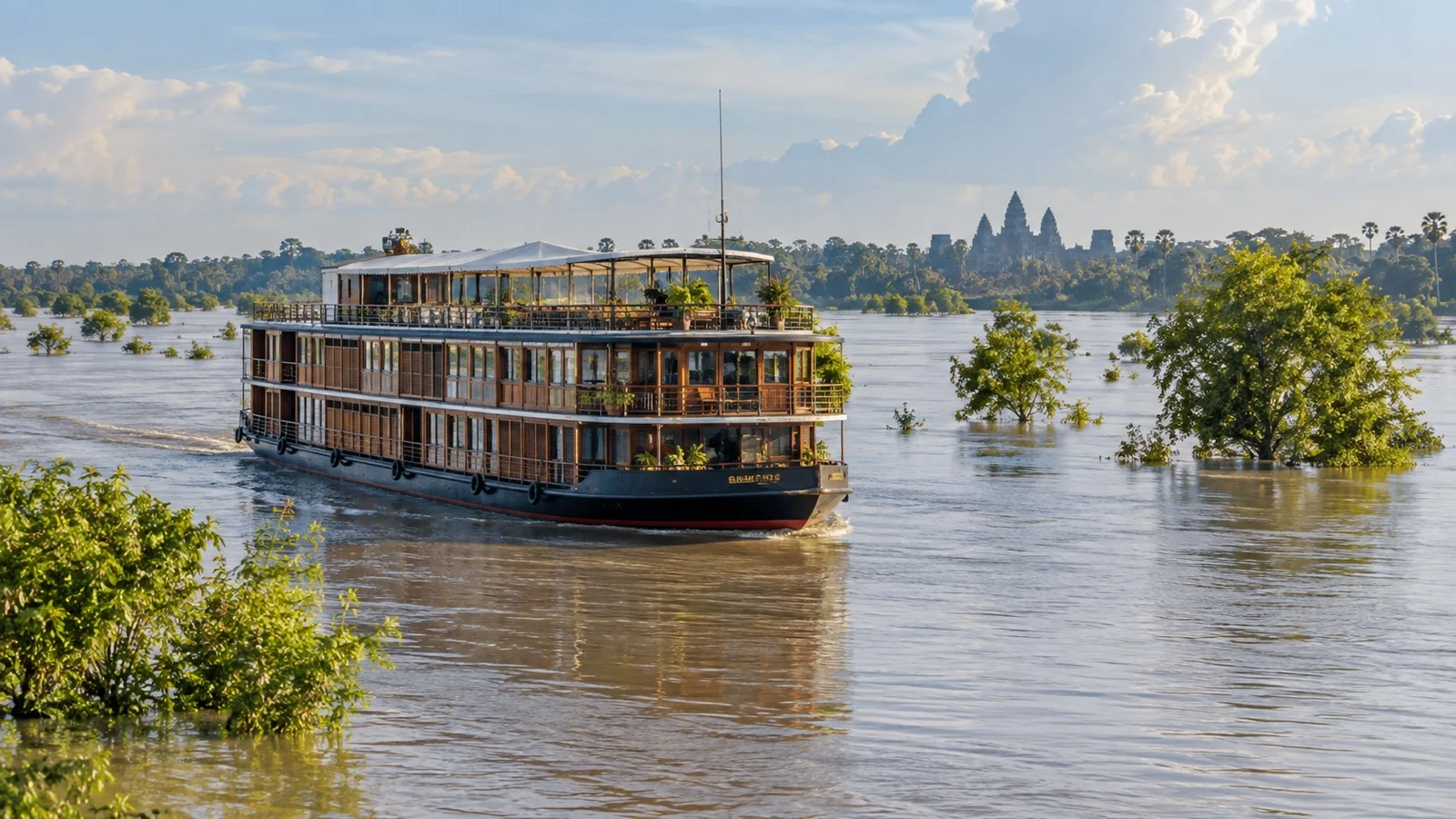
The Mekong follows a strong seasonal flow cycle. The Mekong River Commission identifies a June through November flood season and a December through May dry season, so water conditions vary substantially across the cruise calendar.
The Tonle Sap is the part that surprises people. It is a lake fed by a river that reverses direction, filling when the Mekong is in flood and draining back out when the flood recedes.
The Tonle Sap system expands and contracts as Mekong floodwater reverses the flow of the Tonle Sap River. That seasonal change helps explain why a cruise line may alter the Cambodian ship-to-road handoff.
Some high-water itineraries may use a Tonle Sap landing for the transfer to Siem Reap. When navigation conditions do not suit the vessel, the operator may use Kampong Cham or another transfer point instead.
Kampong Cham sits on the Mekong east of the Tonle Sap route. If it replaces a lake-side handoff, the road journey to or from Siem Reap can be much longer.
Ask the cruise line for the scheduled transfer time and the exact pier in use for your departure. Those two details are more useful than a general gateway-city label.
Why this is a flight booking problem, not a sightseeing problem
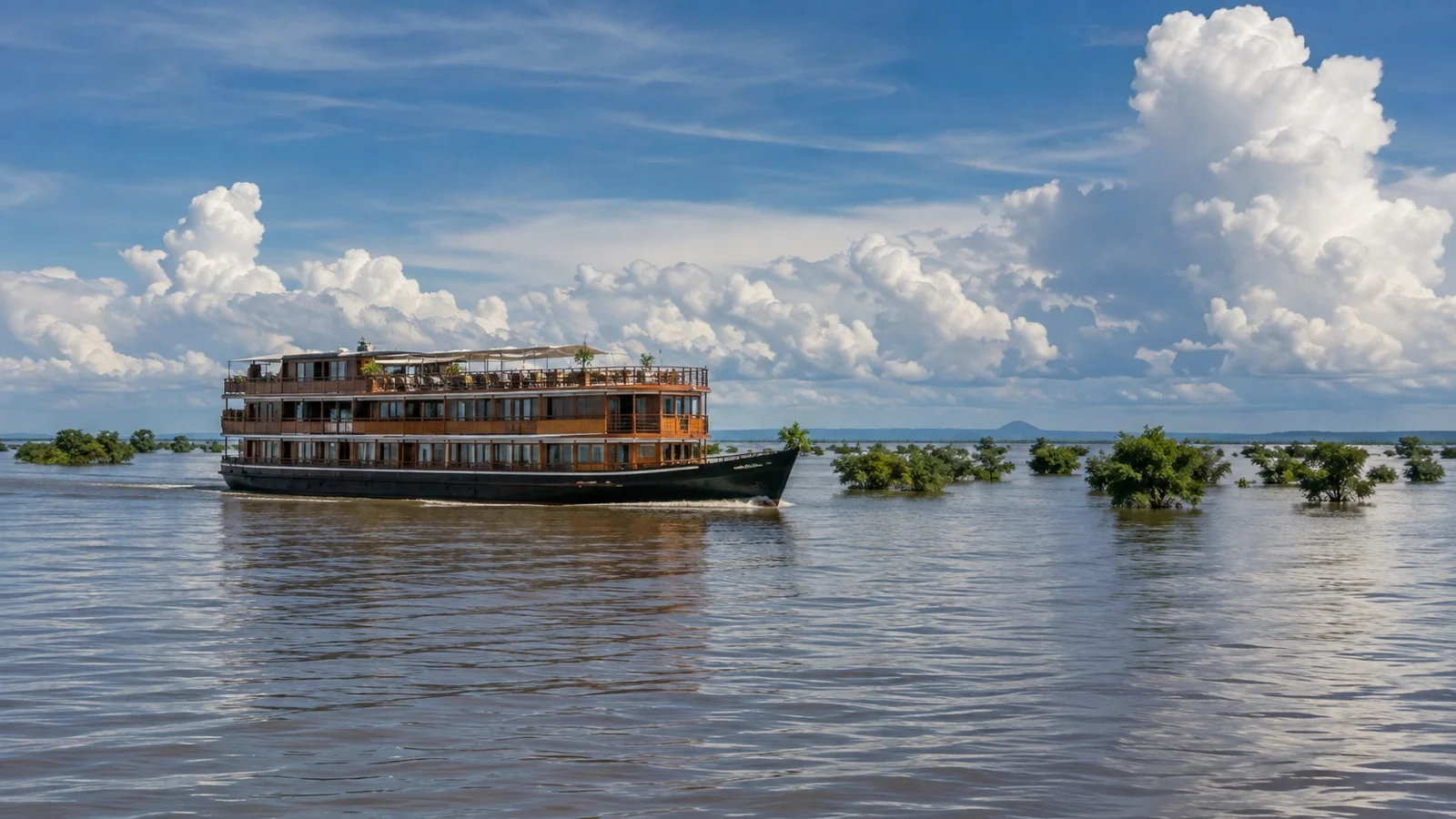
On the Mekong, a seasonal routing change can alter the physical place where passengers meet or leave the ship. That can affect which airport and hotel night make sense.
A Tonle Sap-side transfer and a Kampong Cham transfer create different road journeys to Siem Reap. Some programs may instead connect through Phnom Penh, so use the transfer instructions for your specific sailing.
Book air through the cruise line or choose flexible tickets if the embarkation point is not yet firm. Ask which pier the ship expects to use, which airport the included transfer serves, and how long the road segment is scheduled to take.
The Vietnamese end: My Tho, Cai Be and Chau Doc
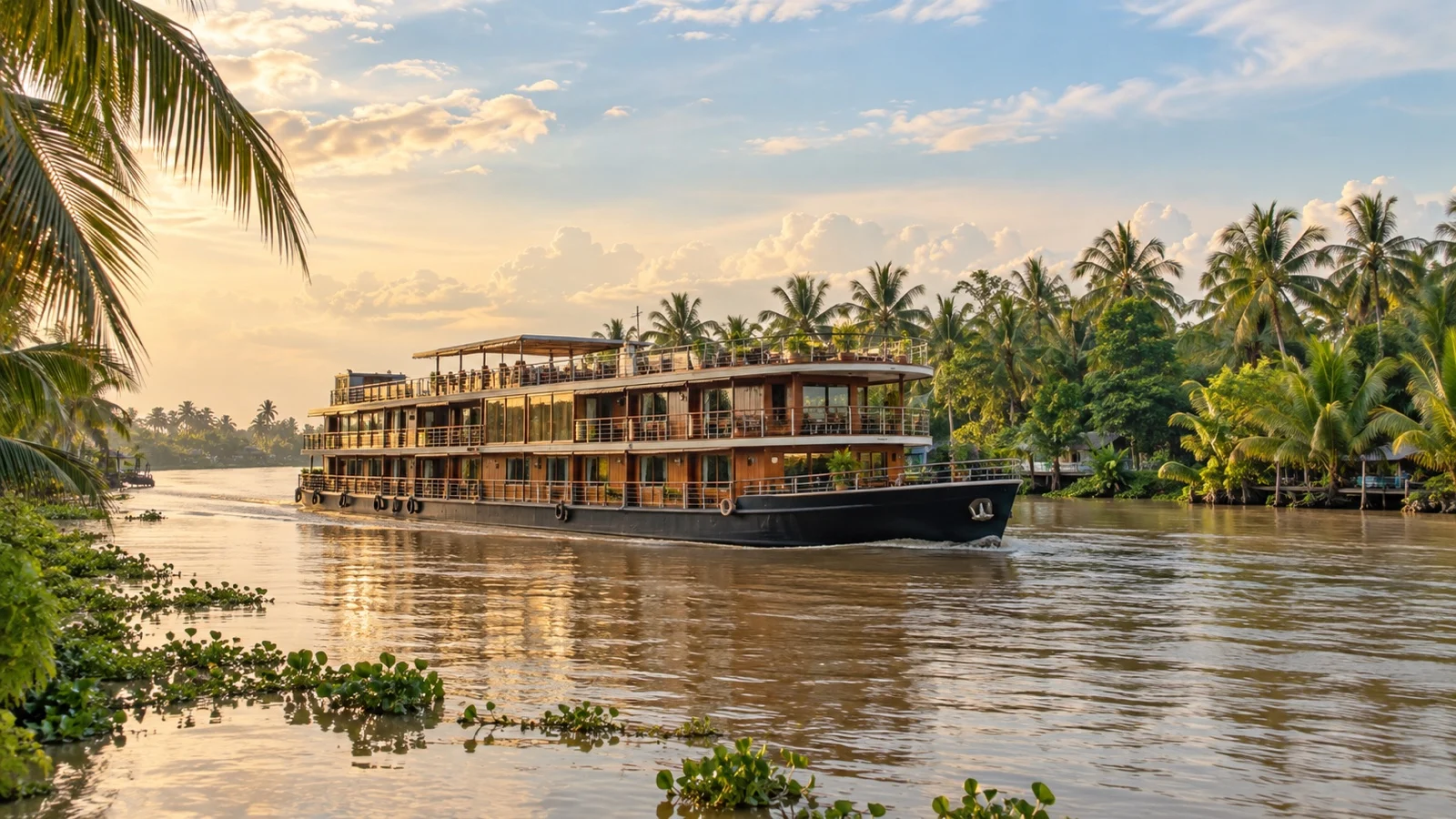
Ho Chi Minh City is usually the gateway for Mekong cruises in southern Vietnam rather than the river embarkation point itself. Many itineraries transfer passengers by road to a delta landing such as My Tho or Cai Be.
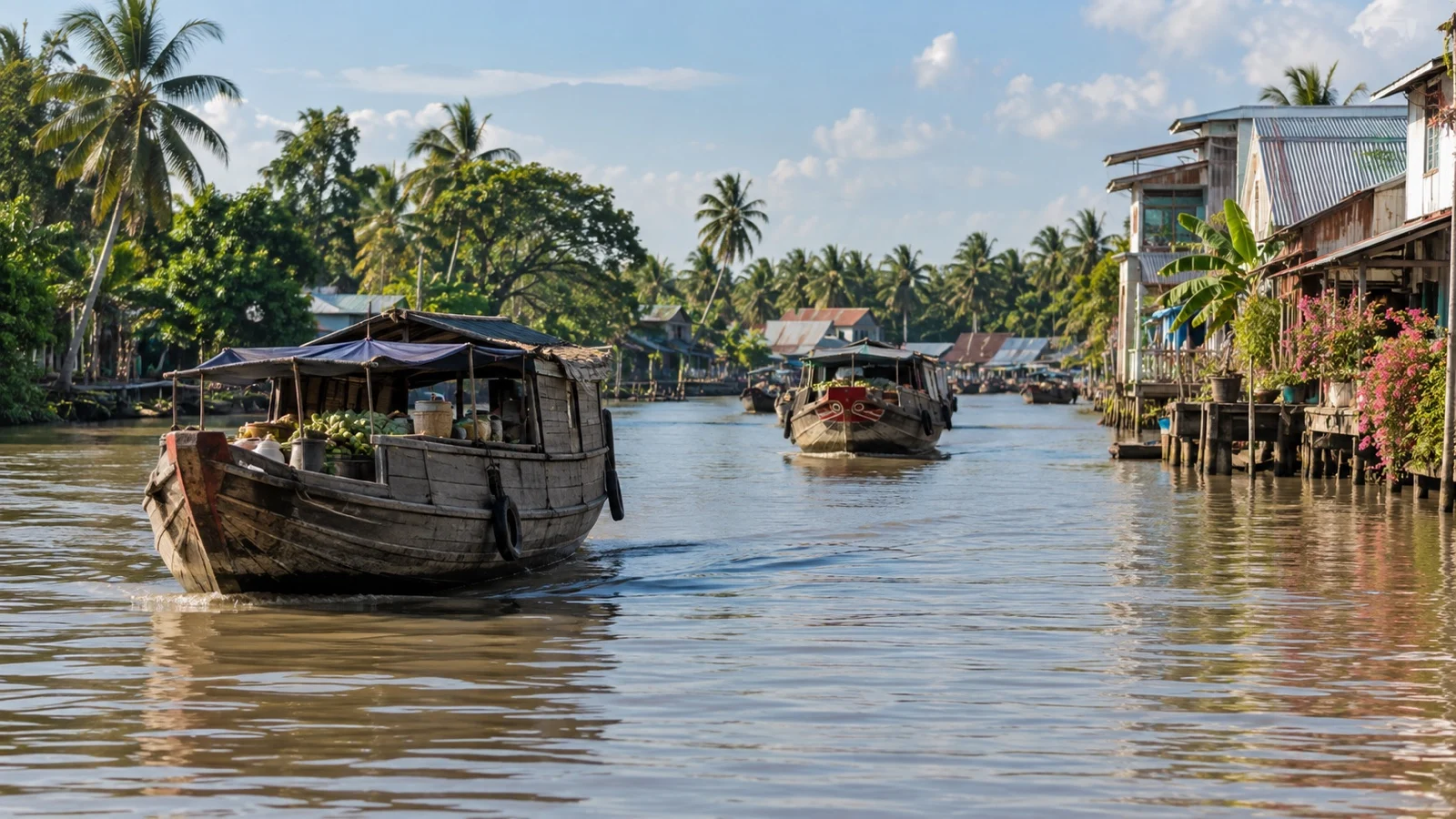
Cai Be excursions often focus on the water, including small-boat trips through delta channels and visits to local workshops. The exact stops and shopping opportunities depend on the operator.
Chau Doc sits on the Bassac River near the Cambodia border and is a common stop on cross-border itineraries. Border formalities may be completed onboard or at the checkpoint, depending on current procedures.
Crews commonly collect passports so Vietnamese and Cambodian officials can process the group at the river border. Follow the line’s instructions, keep a copy available, and do not assume a Cambodian or Vietnamese e-visa is valid at this specific waterway checkpoint unless the line confirms it in writing.
Transfer details to confirm before booking flights
Ask for the operational embarkation or disembarkation point, the airport the included transfer actually serves, and the longest published road-transfer time. A brochure label such as Siem Reap or Ho Chi Minh City may describe the gateway city rather than the riverbank where the ship is waiting.
Use flexible air or add a hotel night after the cruise, because water conditions can move the ship-to-coach handoff even when the sailing itself continues. For a same-day flight that the line explicitly supports, follow its minimum connection and transfer rules rather than building your own shorter one.
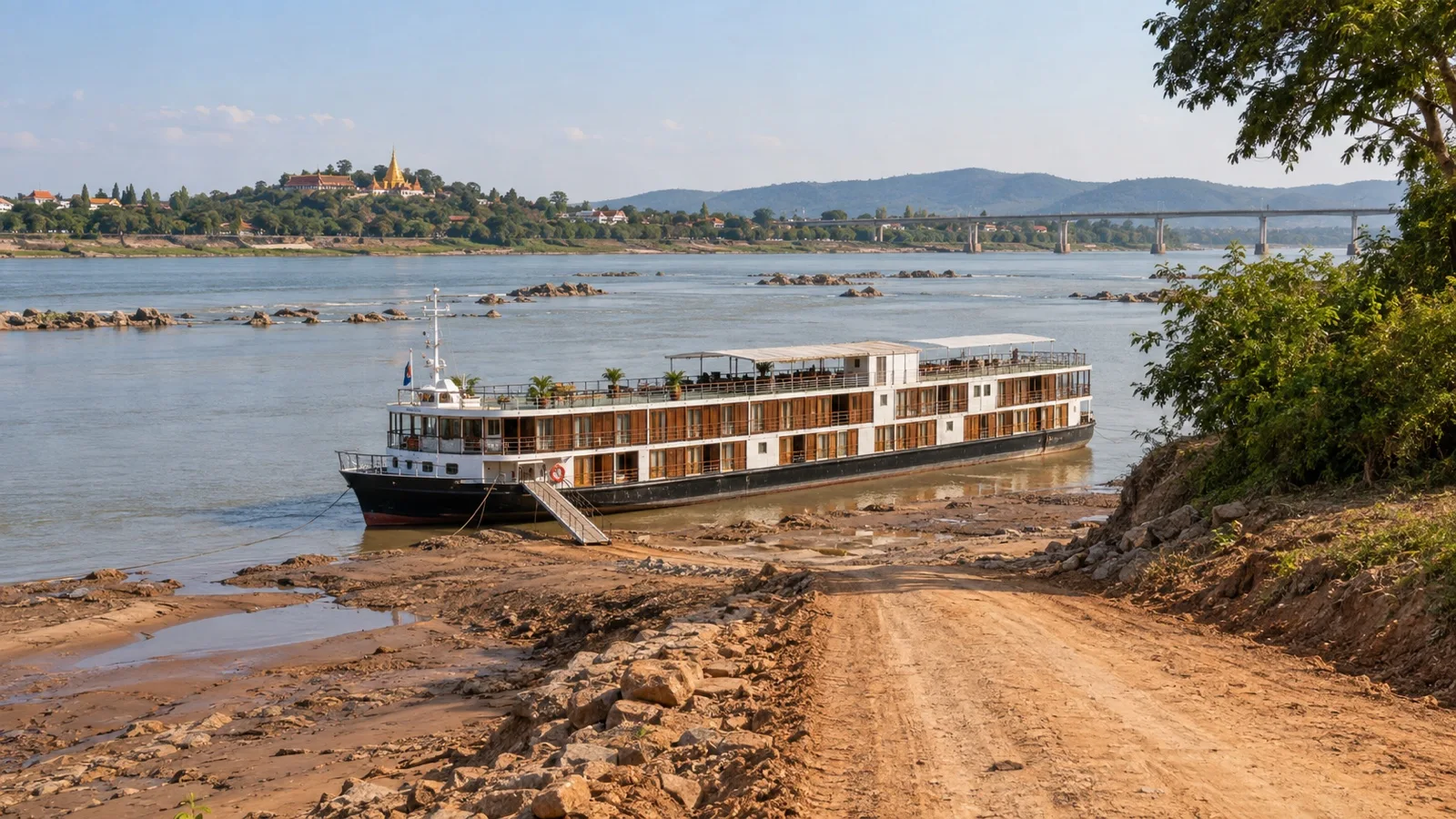
Temple and village landings may involve mud, uneven steps, a narrow plank, or a transfer into a sampan with no mechanical lift. Ask for each landing separately, give the line the dimensions and weight of any device, and make a safe skip plan before boarding if the traveler cannot manage a moving boat or steep bank.
Stops worth prioritizing
These are common highlights on Mekong itineraries, listed roughly in upstream order. Your sailing may use a different sequence or substitute stops.
- Cai Be and the delta channels: Small-boat trips can reach narrower waterways that the cruise vessel cannot enter. Workshop visits vary by itinerary, so check what is included and whether shopping time is optional.
- Cai Rang floating market: This wholesale market near Can Tho is most active early in the morning. Departure time and market activity vary, so confirm the boat schedule with your operator.
- The Royal Palace, Phnom Penh: The palace complex includes the Throne Hall and Silver Pagoda near the riverfront. Dress requirements and opening arrangements can change for official functions, so check before setting out.
- Tuol Sleng and Choeung Ek: These sites document Cambodia’s Khmer Rouge period and can be emotionally difficult. Families should review the subject matter before deciding whether a visit is appropriate for children.
- Angkor, as an extension: The archaeological park outside Siem Reap covers a large area and includes Angkor Wat, Angkor Thom, and many other sites. Two days is a practical starting point if your schedule allows.
Useful context: UNESCO says Angkor Archaeological Park covers about 400 square kilometers and preserves remains of Khmer Empire capitals dating from the ninth to the fifteenth centuries. It is much larger than a single temple complex.
How to plan the day
Early departures are useful for markets, village visits, and temple days, especially in warmer months. Carry water, sun protection, and a light layer that meets temple dress rules.
In Phnom Penh, avoid stacking every major site into one rushed block. Tuol Sleng and Choeung Ek can make for an emotionally demanding morning, followed by a quieter lunch and a separate palace or riverfront visit.
Included excursions can simplify transport at rural landings where independent options are limited. Phnom Penh offers more flexibility, but confirm the ship’s berth and return time before heading out independently.
At Angkor, a private guide can offer more flexibility while a group tour keeps transport and timing simple. Sunrise at Angkor Wat is popular, so expect crowds and an early start.
A realistic word on accessibility
Accessibility varies sharply among Mekong ships and landings. The vessel may be manageable while a riverbank, pontoon, or small-boat transfer creates the harder part of the day.
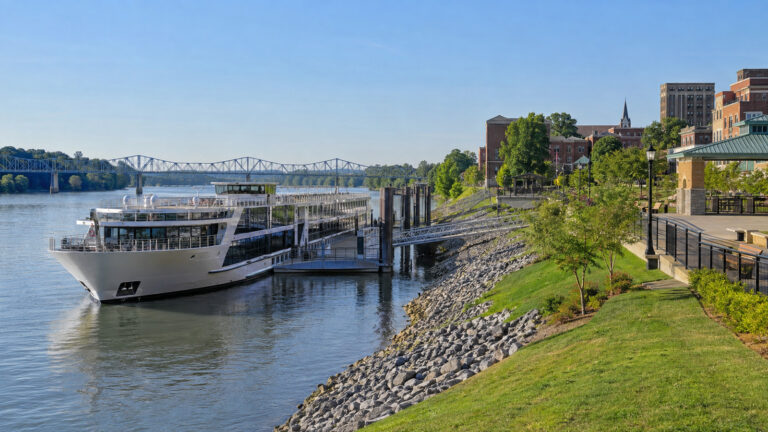
Many Mekong calls are not proper quays at all. They are riverbanks with a plank, a pontoon that rises and falls with the water, or a flight of concrete steps cut into mud, and the gradient changes with the season.
A sampan transfer may require stepping into a small boat from a pontoon or riverbank. Do not assume a lift, ramp, or level boarding route is available unless the operator confirms it for that specific stop.
If mobility is a concern, ask for a written description of each landing and any small-boat transfer, then make a safe backup plan for unsuitable stops. The guide to river cruise accessibility explains the questions worth asking before you book.
When to go, and the weather
Cambodia has distinct wetter and drier parts of the year, while temperatures remain warm across the cruise season. For packing and excursion planning, check current national weather forecasts as well as the cruise line’s seasonal guidance.
The hottest months can make exposed temple days tiring, and lower seasonal water can affect route planning. Start early, carry water, and do not assume Tonle Sap navigation from the calendar alone.
The wetter months can bring heavy rain, high humidity, and changing river conditions. Pack a breathable rain layer and shoes that can handle wet or muddy landings.
Late October through December can offer a useful balance of seasonal water and somewhat milder conditions, but it does not guarantee a Tonle Sap crossing. Choose dates for the full itinerary and let the operator confirm the final navigation plan.
Quick answers
Where do Mekong river cruises actually start and end?
Many itineraries use My Tho or Cai Be at the Vietnamese end, with a Cambodian transfer point selected for that sailing. The operator may use a Tonle Sap landing, Kampong Cham, or another point depending on the vessel and river conditions.
Do Mekong ships dock in Ho Chi Minh City?
Most itineraries use Ho Chi Minh City as a gateway and transfer passengers by road to a delta embarkation point. Ask for the exact meeting place and scheduled transfer time.
When is the water high enough to cross the Tonle Sap?
The Mekong River Commission identifies June through November as the flood season, but a calendar date cannot guarantee navigation. The operator confirms the route for its vessel and current conditions.
Is the border crossing at Chau Doc difficult?
The cruise line normally coordinates the group process, but officials may still require your passport, visa, and an in-person check. Follow the operator’s current instructions and keep a copy of the passport available while the original is being processed.
Can I do Angkor from the ship?
Angkor is normally offered as a hotel-based extension from Siem Reap rather than an excursion directly from the ship. Allow more than one rushed day if your schedule permits.
The last word
A Mekong cruise rewards careful planning around the river’s seasonal changes. The key is to confirm the real ship-to-road handoff before locking in flights.
The guide to what low water actually means for your cruise explains the basic mechanics of shallow-water changes. On the Mekong, those changes can affect long road transfers as well as the sailing plan.
For the coastal side of Vietnam, the guide to Vietnam’s cruise ports covers larger ships and fixed seaports. Some travelers also combine a river week with an ocean itinerary using Thailand’s cruise ports.
Book flexible air when the route is uncertain, pack clothing that covers shoulders and knees for temple visits, and expect early starts. The practical details make the days much easier.
How this guide was researched: This guide is based on current official and operator information where available. Seasonal flow patterns were checked against the Mekong River Commission, Angkor facts against UNESCO, visitor details against the Tuol Sleng Genocide Museum, and entry guidance against government sources.
Logistics and time-sensitive details were reviewed on September 12, 2026. See our Editorial Policy.