Chobe River Cruise: Kasane, Border Crossings and Game Viewing by Boat
A Chobe River cruise is closer to a floating safari lodge than a conventional river voyage. You unpack for two or three nights, watch elephants and buffalo gather at the water, and make most wildlife outings in small tender boats that can nose into channels the larger vessel cannot reach.
The logistics surprise first-time guests because Kasane is in Botswana while several well-known river vessels operate from the Namibian side of the channel. That means passport control, small-boat transfers, and repeated border formalities are part of the experience rather than a minor footnote.
The quick take
Choose this trip for water-level wildlife viewing, birding, photography, and a slower safari rhythm. Do not choose it because you expect the main ship to cruise long distances every day like a Rhine or Danube vessel.
The journey works best when booked as a package with transfers from Kasane Airport or a local hotel. Independent border improvisation adds risk without adding much freedom, especially when immigration offices, boats, and the mother ship must coordinate.
Chobe River cruise quick facts
- Main gateway: Kasane, Botswana
- Typical operating area: Chobe River channels along the Botswana and Namibia border
- Common stay: Two or three nights, sometimes combined with a land lodge
- Wildlife viewing: Guided excursions in small motorized tender boats
- Main ship experience: Floating hotel with cabins, meals, deck views, and limited daily repositioning
- Border reality: Guests may clear both Botswana and Namibian immigration during transfers and activities
- Best-known wildlife: Elephants, hippos, crocodiles, buffalo, antelope, and prolific birdlife
- Currency planning: Ask the operator which currencies and cards are accepted onboard and for gratuities
- Health planning: Obtain personalized advice on malaria prevention and routine travel vaccines before departure
- Most important document: A passport meeting both countries’ current validity, blank-page, and visa rules
What a Chobe River cruise really is
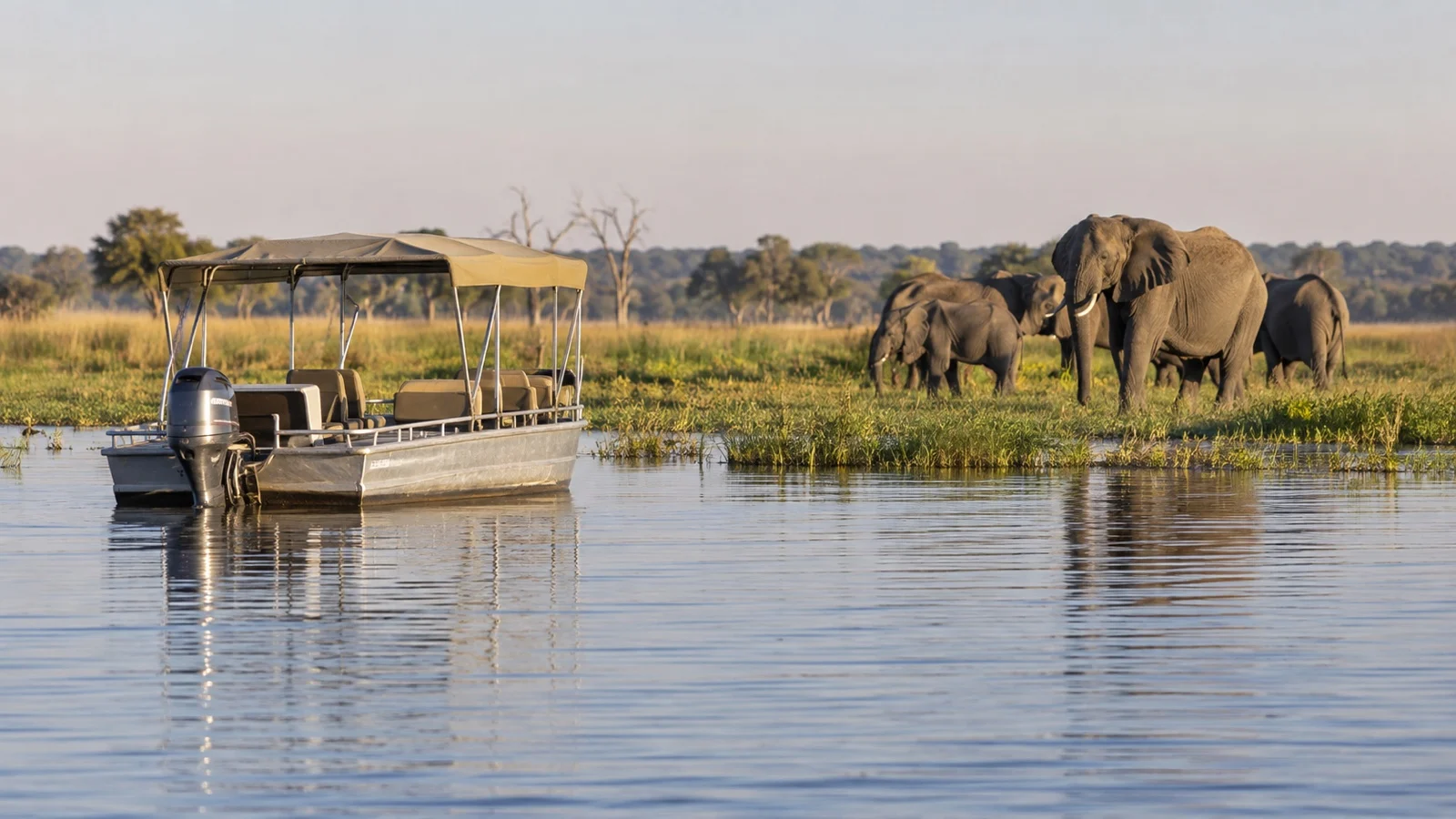
The Chobe forms part of the international boundary between Botswana and Namibia in this region. Botswana’s Chobe National Park protects the southern bank, while Namibia’s Zambezi Region lies to the north.
Large houseboats remain on the river and function as your accommodation, restaurant, lounge, and observation platform. Daily wildlife viewing usually happens from smaller aluminum or fiberglass boats with a guide.
This arrangement is a strength, not a compromise. A tender can approach shallow edges, turn into narrow waterways, and reposition quickly when the guide sees movement or hears a call on the radio.
The mother ship may move between approved anchorages, but this is not a point-to-point voyage with a new city every morning. The changing light, animal activity, and river channels create the variety.
Which boats operate here
The Zambezi Queen is the region’s best-known larger boutique houseboat, and the smaller Chobe Princess vessels offer a more intimate version of the same concept. The operator also pairs cruises with Ichingo Chobe River Lodge on Impalila Island.
Other safari boats and lodges work in the wider Chobe region, so your exact procedure depends on the company and itinerary. Read the transfer instructions issued for your booking rather than assuming every vessel uses the same landing.
Getting to the boat from Kasane
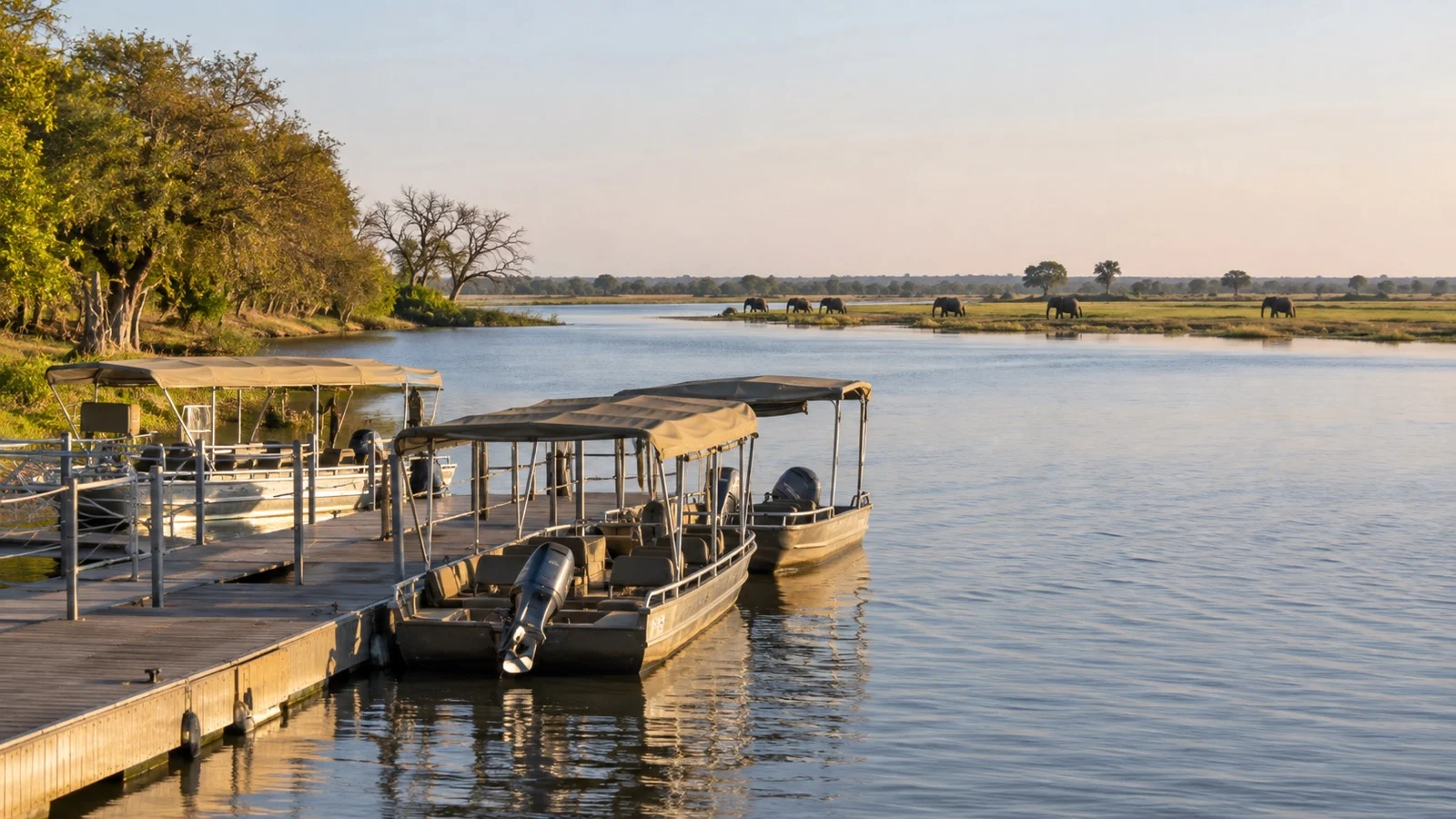
Kasane Airport is the practical air gateway for many itineraries. Guests are commonly met by a representative and driven to a riverside immigration point, where the luggage and passenger transfer process begins.
The first formalities usually involve departing Botswana, followed by a small-boat ride and entry procedures for Namibia. You may then continue by tender to the main vessel or to a lodge connection.
This can feel elaborate after a flight, but established operators handle it every day. Keep your passport, required visa evidence, arrival forms, medication, sun protection, and one light layer in a small personal bag rather than buried in checked luggage.
Hard-sided oversized cases are awkward on small boats and at simple landings. Follow the operator’s luggage limits closely, particularly if your trip includes a light-aircraft safari sector.
Expect multiple steps
Transfers may involve vans, floating jetties, narrow boats, sloped gangways, and short walks. Water level changes the height and angle of every transition.
Crew members normally assist with luggage, but travelers must still be able to sit securely and follow instructions during boat movements. Discuss mobility limitations before paying the final balance, not at the dock.
The border-crossing reality
A wildlife outing may cross an invisible river boundary even though the landscape looks continuous. Operators structure activities and clearances to comply with Botswana and Namibian requirements.
Passport rules and visa policies can change, and they depend on nationality. Namibia introduced new visa requirements for citizens of several countries in 2025, making old travel blogs especially unreliable.
Check both governments’ official immigration information and confirm the operator’s current procedure in writing. Your airline may also verify documents before boarding the flight to Southern Africa.
Carry enough blank passport pages for the full trip because repeated entries and exits can consume space. If you continue to Zimbabwe or Zambia for Victoria Falls, those countries add their own rules.
Do not separate from the organized transfer
This is not the place to take a random taxi to a map pin and hope the boat is waiting. Immigration operating hours, river conditions, and vessel positions are coordinated around scheduled arrivals.
If a flight delay threatens the transfer, contact the emergency number in your travel documents immediately. The operator can explain whether a late crossing is possible or whether an overnight in Kasane is required.
Wildlife viewing from the water
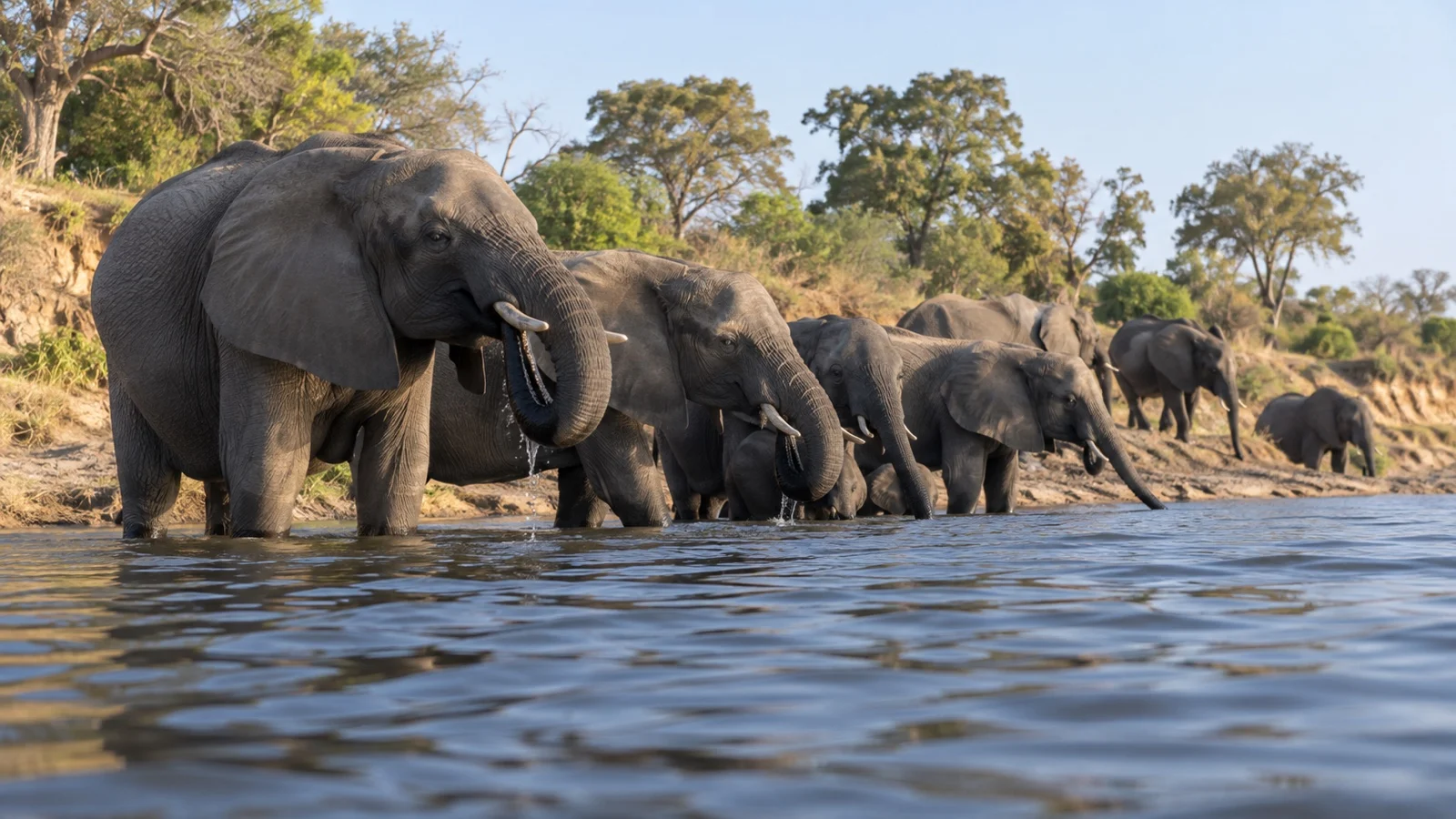
The Chobe riverfront is famous for large concentrations of elephants, especially during the dry season when animals depend on permanent water. Botswana Tourism describes Chobe National Park as roughly 11,700 square kilometers of floodplain, swamp, woodland, and river habitat.
Elephants may drink, bathe, cross channels, or guide calves through deeper water. Give them space and let the guide control the boat’s position because animal behavior and currents can change quickly.
Hippos often appear placid while resting, but they are powerful and territorial. Crocodiles lie low along banks, while buffalo, kudu, impala, waterbuck, and other mammals move through the floodplain.
Predator sightings are possible but never guaranteed. Lions and leopards are usually harder to find from the river than elephants or hippos, and a land safari offers a different angle.
Birding is not a consolation prize
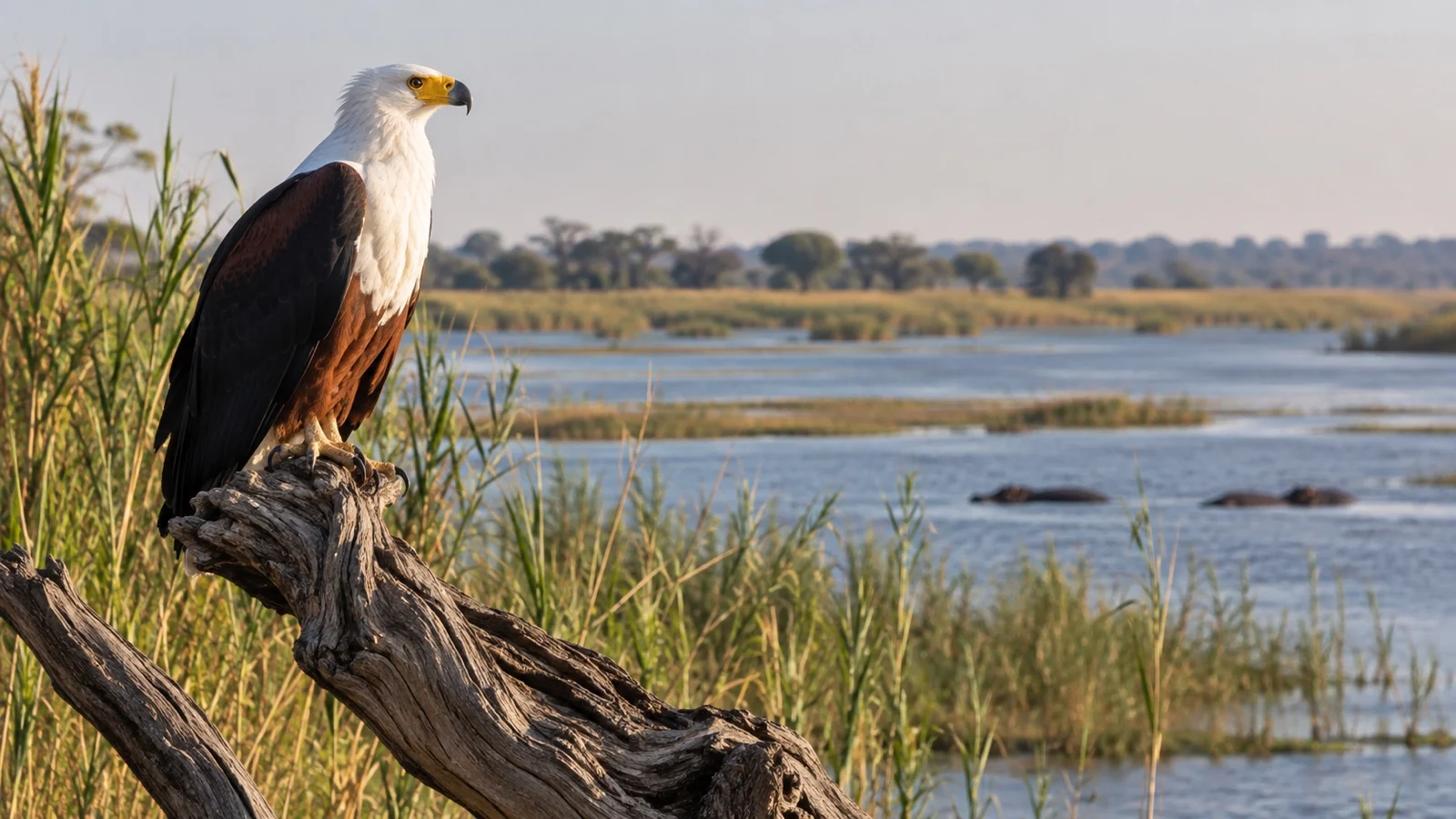
The river supports kingfishers, fish eagles, herons, egrets, storks, bee-eaters, cormorants, and many other species. Even travelers who do not identify birds at home often become absorbed by the color and behavior here.
Bring binoculars with a comfortable strap and practice focusing before the trip. A small boat moves, the subject moves, and the best sighting rarely waits for a complicated setup.
What the tender safari feels like
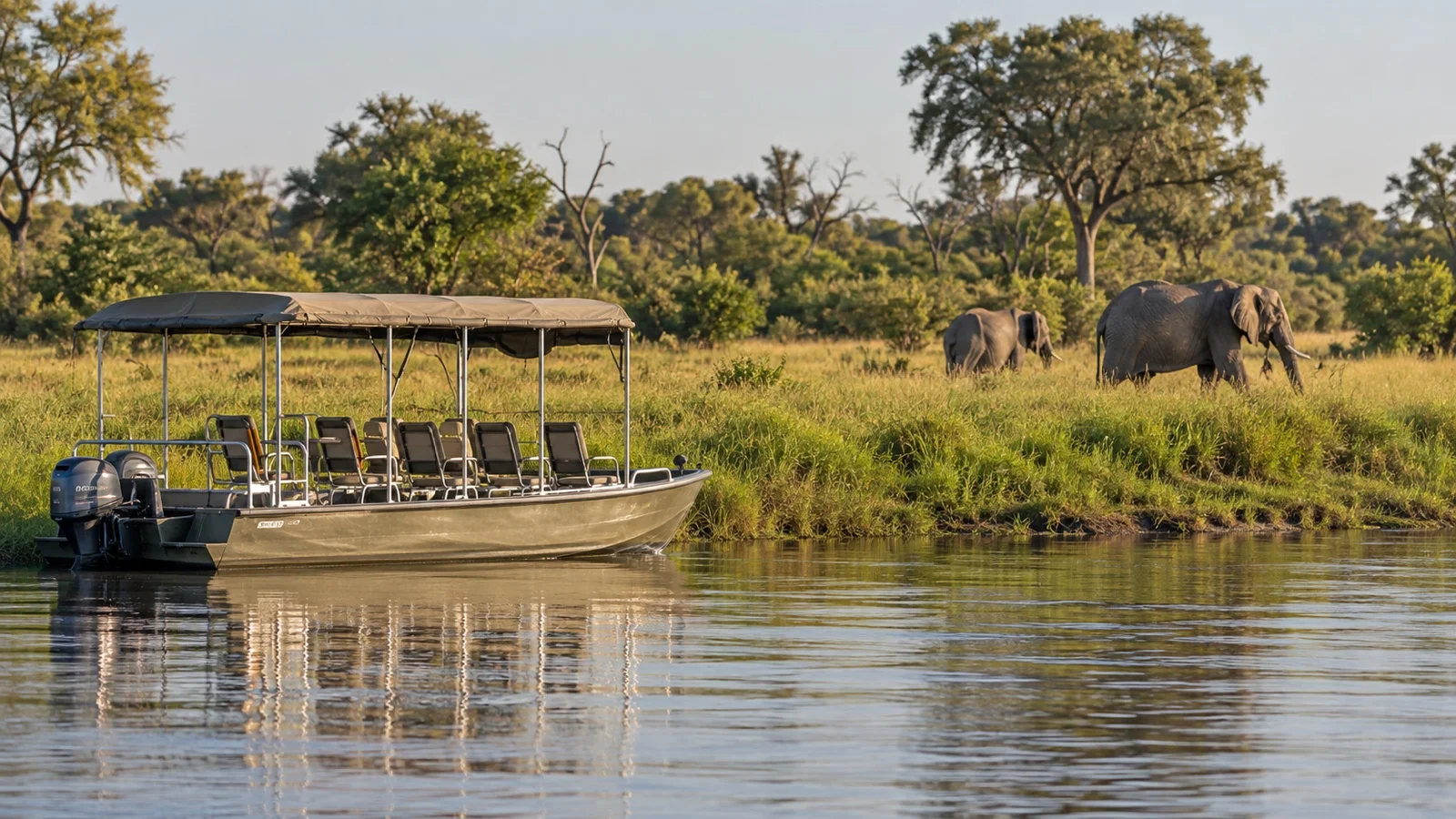
Excursions often begin early or in the later afternoon when temperatures are softer and wildlife is active. The boat has open sides or unobstructed viewing, which is excellent for photography but exposes you to sun, wind, and spray.
Seating may be on benches rather than the high individual chairs used in land safari vehicles. Ask about back support, shade, boarding steps, and restroom availability if any of those factors affect your comfort.
Guides read tracks, bird alarms, water movement, and the behavior of other animals. A patient approach often produces better encounters than rushing from one reported sighting to another.
Remain seated when instructed and keep hands inside the boat. Never pressure the guide to move closer than regulations or animal welfare allow.
Photography from a small boat
A zoom lens in the moderate telephoto range is more versatile than the longest lens you own. Close elephants can fill the frame quickly, while birds across a channel still reward extra reach.
Use a fast shutter speed because both boat and subject may move. Protect equipment from spray with a simple rain cover or dry bag, and bring a cloth for mist and dust.
Do not spend every sighting behind a screen. Put the camera down for a few minutes and listen to the water, bird calls, and low elephant rumbles.
Life aboard the mother ship
The large vessel provides private cabins, meals, shared lounges, and open-deck viewing. Cabin size and window design vary, so compare deck plans carefully if a balcony, air conditioning, or minimal stairs matters.
Meals are normally included, and established operators request dietary details in advance. Remote provisioning makes last-minute special requests more difficult than they would be in a city hotel.
The pace between excursions is part of the appeal. You can watch the bank from a shaded deck, rest during the heat, sort photographs, or listen for animals moving near the water.
Evenings are quiet and dark compared with urban river cruises. Dress is casual, and practical layers matter more than formal clothing.
Power and connectivity
Electricity, outlet types, charging schedules, and Wi-Fi policies differ by vessel. Bring the correct adapter, a compact power bank, and realistic expectations about bandwidth.
Remote connectivity may be good enough for messages one hour and absent the next. Download books, maps, insurance documents, and entertainment before arriving.
When to go
The dry season, broadly from May through October, often concentrates animals near the river as inland water becomes scarce. Days are usually clearer, but early mornings and nights can become surprisingly cold in the middle of the season.
The wetter months bring greener scenery, dramatic skies, insects, newborn animals, and strong birding. Wildlife can spread across a larger landscape when water is widely available, making some sightings less concentrated.
The hottest period can be intense on exposed boats and decks. Heat tolerance, air conditioning, and shaded excursion design deserve attention if you are considering the shoulder between dry and wet seasons.
There is no universally best month. Choose between concentrated dry-season wildlife, green-season color, bird migration, temperature, and budget.
Water levels and daily routes
The Chobe’s channels change with seasonal flows, and navigation depends on depth, vegetation, and local rules. A route used on one trip may not be available on the next.
Low water can expose broad banks and concentrate animals, while higher water opens side channels and flooded areas. Both conditions can produce excellent wildlife viewing in different ways.
Let the captain and guides choose the route rather than measuring the trip by miles traveled. This cruise is about access and observation, not distance.
Chobe by boat versus a land safari
A boat brings you level with the water and close to animals coming to drink. It is exceptionally good for elephants, hippos, crocodiles, water birds, and clear views without a line of safari vehicles.
A game drive reaches woodland and inland roads where lions, leopards, giraffes, and other species may be more visible. Kasane lodges and cruise packages often make it possible to combine both.
If this is your only safari in Africa, add at least one land drive if the schedule and budget allow. The two perspectives complement each other rather than compete.
Travelers sensitive to rough roads may prefer boat viewing, but boats have their own movement and boarding demands. Discuss medical or mobility concerns with a clinician and the operator.
Victoria Falls extensions
Kasane is a common starting point for road transfers to Victoria Falls in Zimbabwe or Livingstone in Zambia. The drive itself is manageable, but the international borders add time and document requirements.
A same-day excursion can work when professionally organized, although it creates a long day and may feel rushed. An overnight stay allows more time for viewpoints and reduces pressure from border queues.
Water volume at the falls changes dramatically through the year. High flow creates enormous spray and limited visibility at some viewpoints, while low flow exposes the rock structure and can reduce water on certain sections.
If a helicopter flight or other premium activity matters, book through a reputable operator and understand weather cancellation terms. Keep passport and visa needs separate for every country on the route.
Health preparation
The Chobe region is in a malaria-risk area, and prevention advice depends on season, itinerary, medical history, and current public-health guidance. Consult a travel-medicine professional well before departure.
Use repellent, long sleeves and pants around dusk, and screens or air conditioning as provided. These physical precautions remain important whether or not medication is recommended.
Ask about yellow-fever documentation if your routing passes through a country with transmission risk. Requirements can depend on where you have recently traveled, not only your final destination.
Bring prescription medicine in original labeled packaging with enough supply for delays. A small personal medical kit is useful because the vessel operates far from a city pharmacy.
Sun and dehydration
Sun reflects off the river and can burn skin quickly, even in cooler weather. Use a broad-brimmed hat, sunglasses, sunscreen, and light protective clothing.
Drink water consistently rather than waiting to feel thirsty. Alcohol and repeated coffee can make an exposed afternoon feel harder than expected.
Safety around wildlife
Wild animals are not predictable props, and the river is not a swimming area. Crocodiles, hippos, currents, and hidden hazards make entering the water unsafe unless the operator identifies a controlled activity away from wildlife habitat.
Follow crew instructions on decks, tenders, and landings. Keep noise low near animals and never feed anything.
At night, do not wander away from approved areas at a lodge or landing. Hippos and other animals can leave the water after dark and move with surprising speed.
Children must be supervised constantly, and some operators set minimum ages for activities. Confirm family rules before booking flights.
Accessibility and mobility
This experience involves more transfers than the phrase “river cruise” suggests. A typical arrival may include a vehicle, immigration offices, floating docks, small boats, and the main vessel.
Gangway angles change with water level, and tender seats may require stepping down. Some mother ships have multiple decks connected mainly by stairs.
Ask specific questions about step heights, handrails, cabin location, bathroom layout, and the number of transfers. A generic statement that assistance is available does not tell you whether the trip matches your needs.
Travel companions should also understand what help crew can safely provide. Lifting a person or heavy mobility device between moving boats may not be possible.
Packing without overpacking
Pack neutral lightweight clothing, a warm layer for dawn, rain protection in the wet season, and shoes that stay secure during transfers. Bright colors do not automatically ruin a safari, but subdued clothing is practical and less distracting.
Bring binoculars, camera batteries, memory cards, a dry bag, sun protection, insect repellent, and any medications. Keep the most important items in carry-on luggage during flights and transfers.
Soft-sided luggage is easier to move through small boats and storage areas. Confirm weight limits if a light-aircraft flight appears anywhere in the itinerary.
Laundry availability varies, but safari clothing can usually be repeated. Formal outfits and heavy shoes add bulk without adding value.
Common mistakes
The first mistake is expecting a conventional cruise that covers long distances. The mother ship is a safari base, and the small boats deliver most of the daily action.
The second is treating the Botswana and Namibia border as an administrative detail. Passport validity, blank pages, visas, and transfer timing can determine whether you reach the vessel.
The third is packing important documents or medication deep inside a suitcase. Keep them with you through every vehicle, office, and boat transfer.
The last mistake is judging the trip by a checklist of animals. Wildlife is unscripted, and the quiet moments often make the dramatic sightings feel more meaningful.
Quick answers
Do Chobe cruises leave from Kasane?
Kasane is the usual gateway and transfer point, but several vessels operate from the Namibian side of the river. The journey commonly includes Botswana exit formalities, a boat transfer, and Namibian entry formalities.
Will I see elephants?
The Chobe riverfront is one of Africa’s strongest elephant-viewing regions, especially in the dry season. No ethical operator can guarantee a specific sighting.
Is this suitable for first-time safari travelers?
Yes, particularly for travelers who like comfortable accommodation and wildlife viewing from the water. Adding a land game drive gives a more complete first safari.
Do I need a visa?
That depends on your nationality, routing, and current rules in Botswana, Namibia, and any extension country. Verify with official immigration sources and your operator before travel.
Can I swim in the Chobe River?
Treat the river as wildlife habitat, not a swimming destination. Only participate in water activities specifically organized in a location the operator has assessed as safe.
The last word
A Chobe River cruise turns the idea of river travel inside out. The destination is not a sequence of towns but a living boundary where animals, water, and light reshape the view hour by hour.
Arrive with the right documents, accept the transfer routine, and let the guides set the pace. Once the paperwork is done, few travel experiences feel as immediate as watching elephants enter the river from a small boat.
This guide is based on independent research, not a first-hand Chobe sailing or border transfer. Planning details were checked against official information from Botswana Tourism, the Namibia Tourism Board, Botswana and Namibian immigration authorities, and established Chobe River vessel operators.
Information was reviewed on September 12, 2026; confirm current visa rules, passport requirements, transfer procedures, health guidance, and vessel details before travel, and see our editorial policy for how we research port guides.