Lyon River Cruise Port: Where the Saone Meets the Rhone
Lyon rewards river cruisers with a city that is easy to understand once you see its two rivers. The Saône curves past the historic center, the Rhône runs along the eastern side of the Presqu’île, and Fourvière hill rises above the old town as the most useful landmark in the city.
A ship may berth on the Rhône, the Saône, or farther south near the Confluence district, so the gangway location matters more than the words “Lyon port” on an itinerary. Confirm the berth and return time on board before leaving, especially when several river ships are in town.
Lyon river cruise port quick facts
- Rivers: The Rhône and Saône meet at Lyon.
- Historic core: Vieux Lyon and the Presqu’île sit between the riverfronts and Fourvière hill.
- Berths: Docking positions vary by operator, river conditions, and traffic.
- Local transport: TCL operates metro, tram, bus, and funicular services.
- Best viewpoint: The terrace near the Basilica of Notre-Dame de Fourvière overlooks the city.
- Signature experience: Walk Vieux Lyon, find a few traboules, and try a traditional bouchon meal.
- Currency: Euro.
- Language: French, with English common at major visitor sites.
Where river cruise ships dock in Lyon
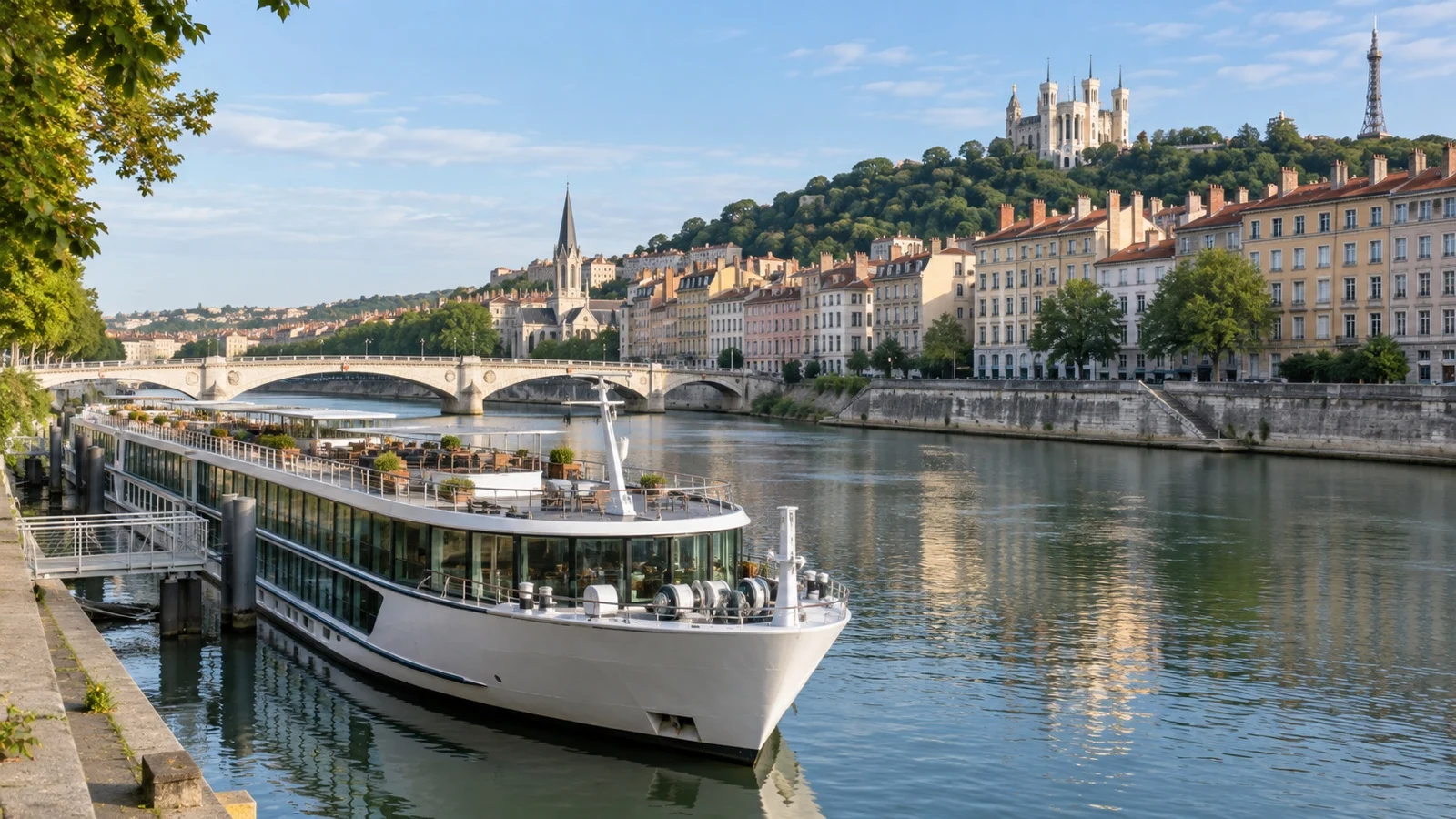
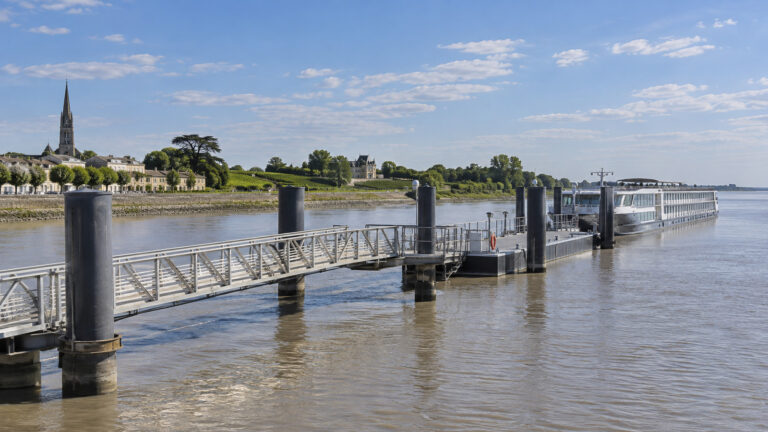
Lyon does not have one cruise terminal that every ship uses. Operators can assign ships to quays on either river, including locations close to central Lyon and positions farther south toward the Confluence.
Some berths put the Presqu’île within a comfortable walk, while others make a tram, metro, taxi, or arranged coach the better first move. Ask the cruise director for the exact quay name because a generic map pin can lead to the wrong side of a river.
River ships may be rafted side by side at busy times. That can require walking through another vessel and using steps or short gangways, which passengers with limited mobility should discuss with the crew before going ashore.
Getting from the quay into central Lyon
The Presqu’île is the long central strip between the Saône and Rhône. Place Bellecour, Place des Terreaux, the shopping streets, and many restaurants are here, so it is a practical target when you first leave the ship.
TCL tickets work across the local public transport network under the conditions shown on the ticket. Current official fares start at €1.60 for a single trip, while a 24-hour pass starts at €5.30, but zones and validity periods affect the price.
Buy and validate the correct ticket before or as you board, following the instructions at the stop or station. Check the official TCL fares page on the day because prices and products can change.
A taxi is useful when the ship is at an outlying quay or when the return window is tight. Allow extra time during weekday peaks, large events, and road closures around the riverfront.
Why Lyon’s historic center matters
Lyon’s historic site was added to the UNESCO World Heritage List in 1998. UNESCO describes a city whose development can be read across its landscape, from the Roman settlement on Fourvière through medieval and Renaissance districts to later growth on the Presqu’île and Croix-Rousse.
That layered geography makes a short visit unusually satisfying. You can cross a bridge, change centuries, and still keep the rivers or hill in sight for orientation.
The protected historic property covers 427 hectares, according to the UNESCO listing for Lyon. Cruise passengers do not need to cover all of it to understand the city, and a focused route through Vieux Lyon and the Presqu’île works well on a half-day call.
Vieux Lyon and the traboules
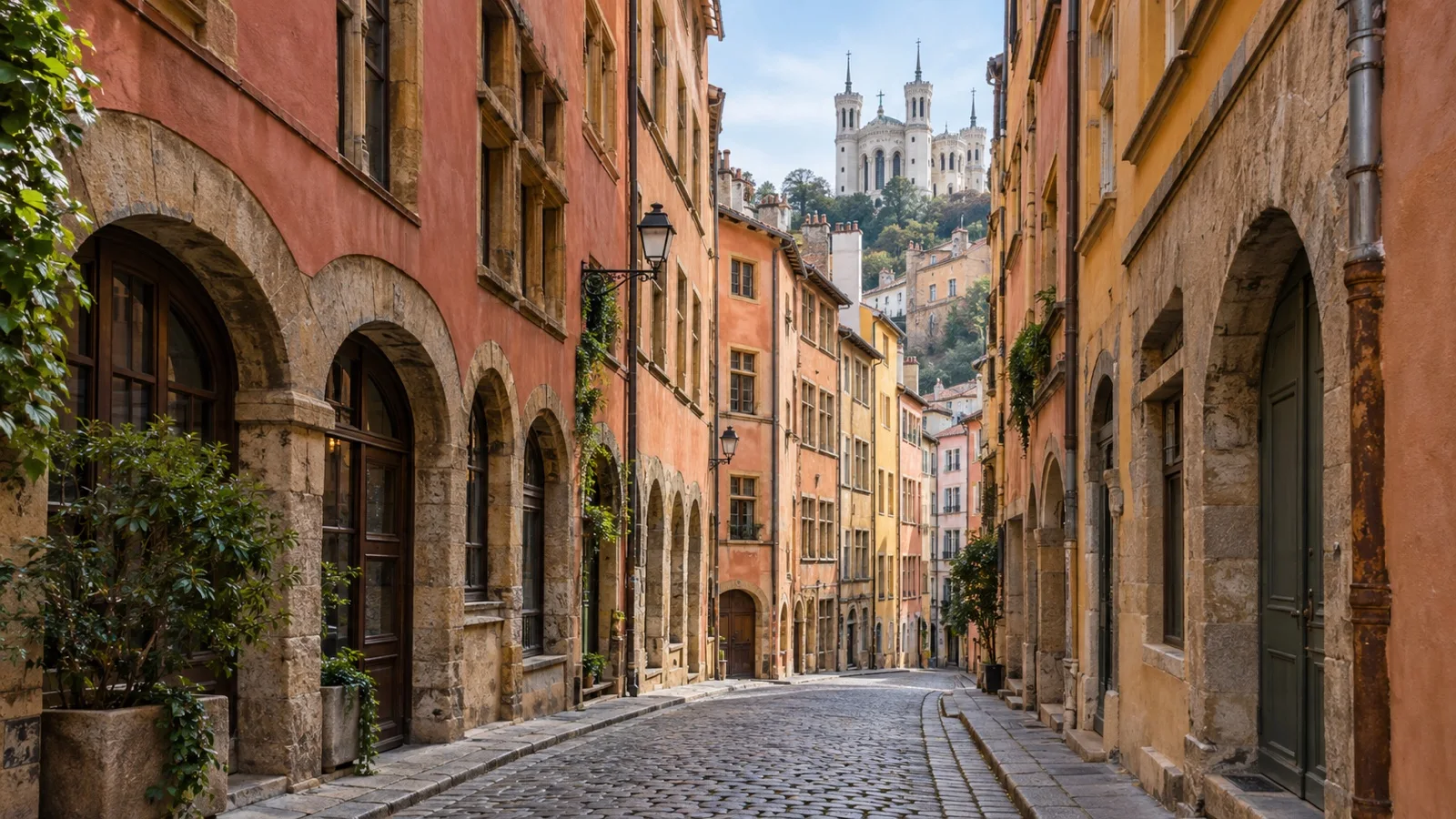
Vieux Lyon runs along the Saône beneath Fourvière. Its narrow streets, courtyards, church architecture, and ocher facades form the atmospheric heart of the visit.
Traboules are passages that lead through buildings and courtyards, historically connecting streets and helping residents move through dense neighborhoods. The best known examples are in Vieux Lyon and Croix-Rousse, but access can change because many passages cross private property.
Use signed public routes, keep voices low, and never force a closed door. An official guided walk is the easiest way to see appropriate passages while respecting the people who live around them.
Saint-Jean Cathedral is a natural anchor in the old quarter. From its square, wander a few nearby lanes, look into accessible courtyards, and leave time for the riverside rather than trying to chase every marked sight.
Fourvière hill and the Roman city
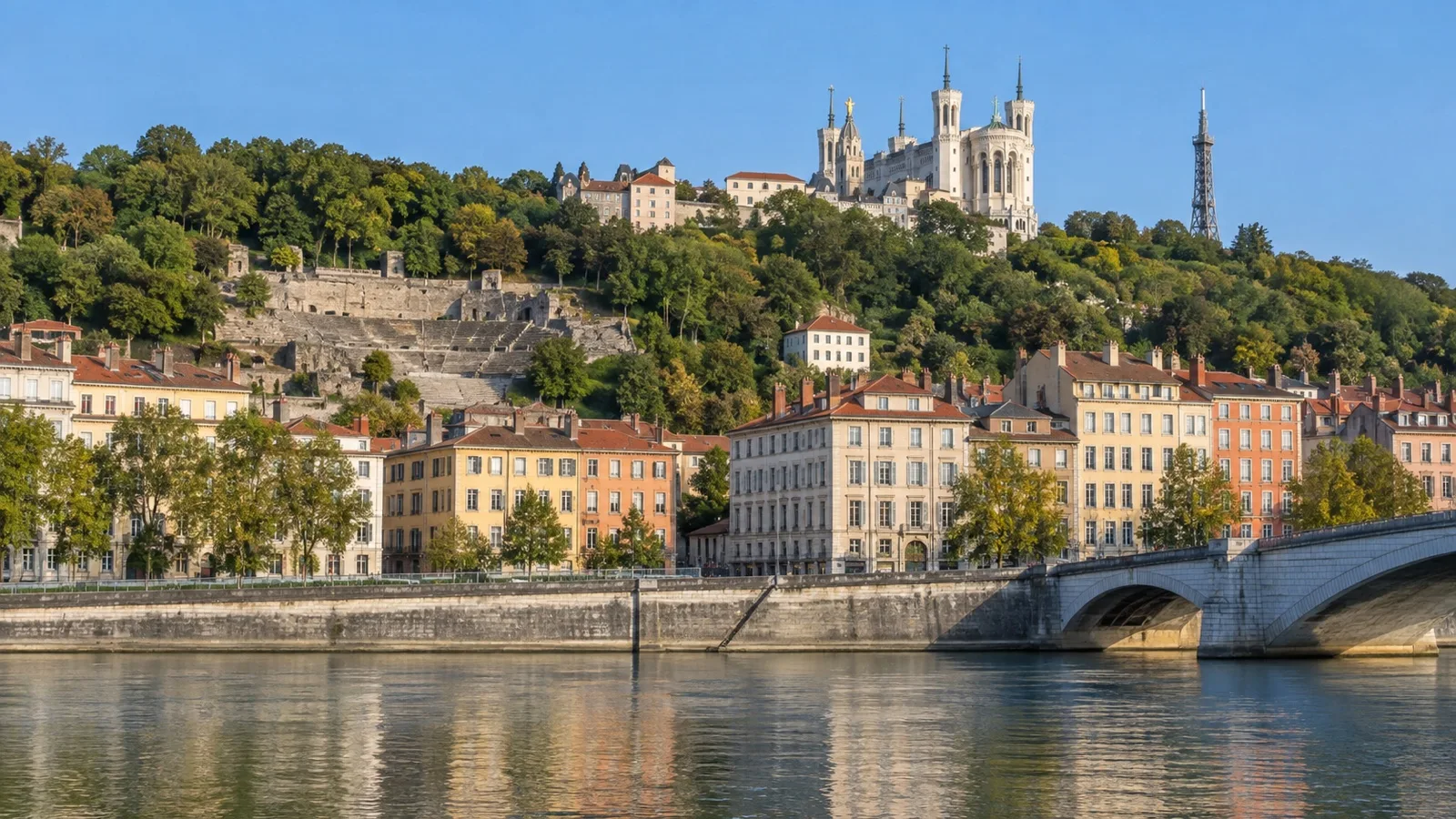
The Basilica of Notre-Dame de Fourvière stands above Vieux Lyon and offers a broad view across both rivers. On a clear day, the city’s layout becomes obvious from the terrace, making the climb or funicular ride worthwhile.
The funicular from Vieux Lyon avoids the steepest ascent. Check operating notices before committing to it because engineering work or service interruptions can require a replacement plan.
Nearby, the Roman theaters and Lugdunum museum reveal Lyon’s origin as Lugdunum, founded in the first century BC and later the capital of the Three Gauls. Travelers with limited time can view the theater area and terrace without adding a long museum visit.
Walking downhill through the old town can be more comfortable than walking up, but the descent includes slopes, steps, and uneven paving. Supportive shoes and a cautious pace matter after rain.
The Presqu’île and central squares
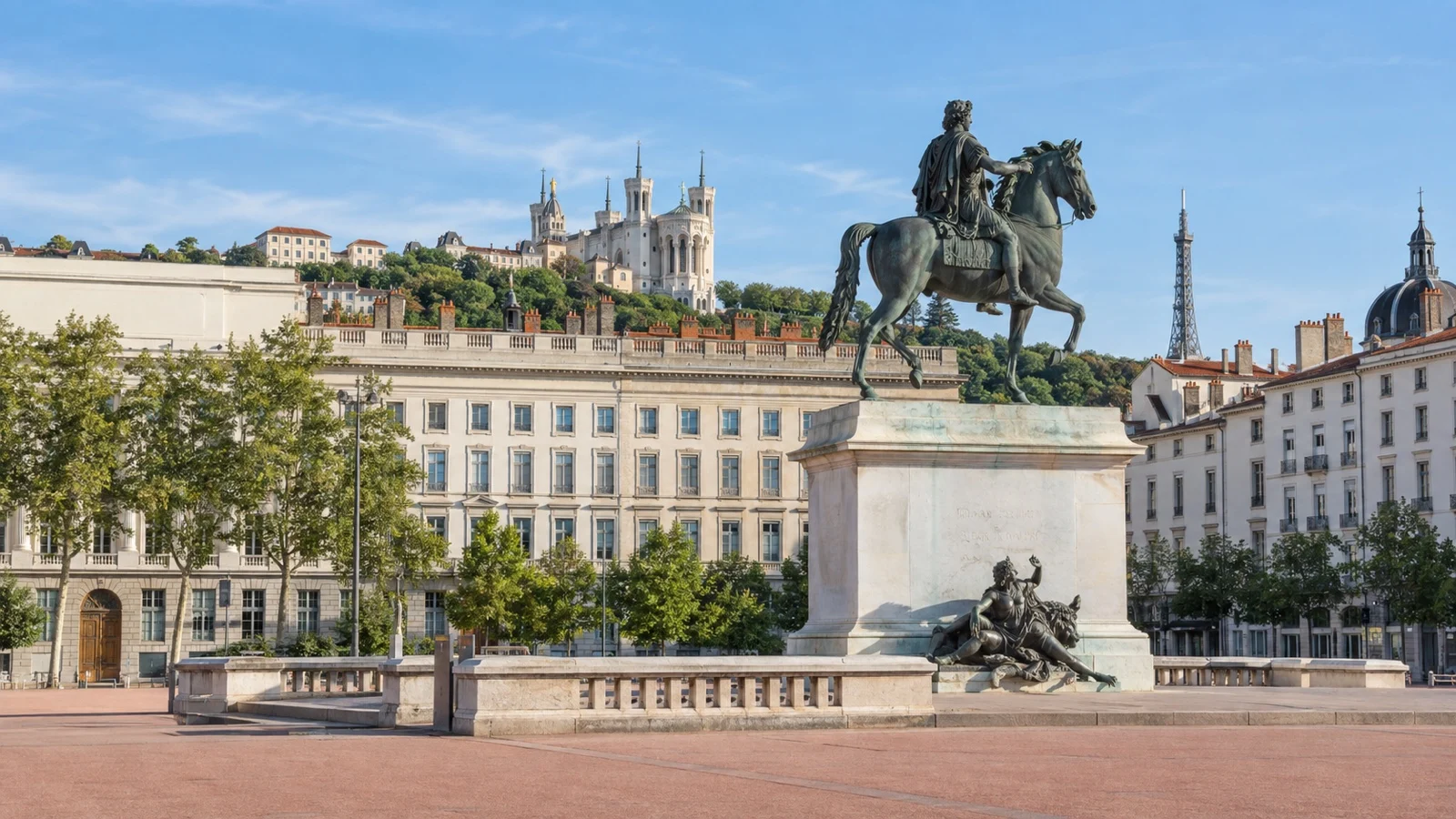
Place Bellecour gives central Lyon a spacious meeting point between the two rivers. From here, pedestrian streets lead north toward Place des Jacobins, Rue de la République, the opera house, Hôtel de Ville, and Place des Terreaux.
This side of the city is flatter than Fourvière and generally easier for a relaxed independent walk. Covered shopping passages, cafes, and frequent transport stops also make it forgiving when weather or energy changes the plan.
The Musée des Beaux-Arts occupies a former abbey beside Place des Terreaux. It is a strong rainy-day choice, but opening hours and temporary closures should be checked directly before leaving the ship.
Eating in Lyon during a port call
Lyon’s reputation for food can create more pressure than pleasure, so keep the goal simple. A traditional bouchon meal, a market stop, or a pastry and coffee can all provide a convincing taste of the city without consuming the entire call.
Bouchons are associated with hearty Lyonnais cooking, including sausages, offal, quenelles, salads, and regional cheeses. Menus vary, and travelers with dietary restrictions should ask specific questions rather than assuming every dish can be adapted.
Les Halles de Lyon Paul Bocuse is a celebrated indoor food market east of the Rhône. It suits travelers who value tasting and browsing, but it sits away from Vieux Lyon, so combine it with public transport or a taxi rather than forcing it into an already crowded walking route.
Confluence and modern Lyon
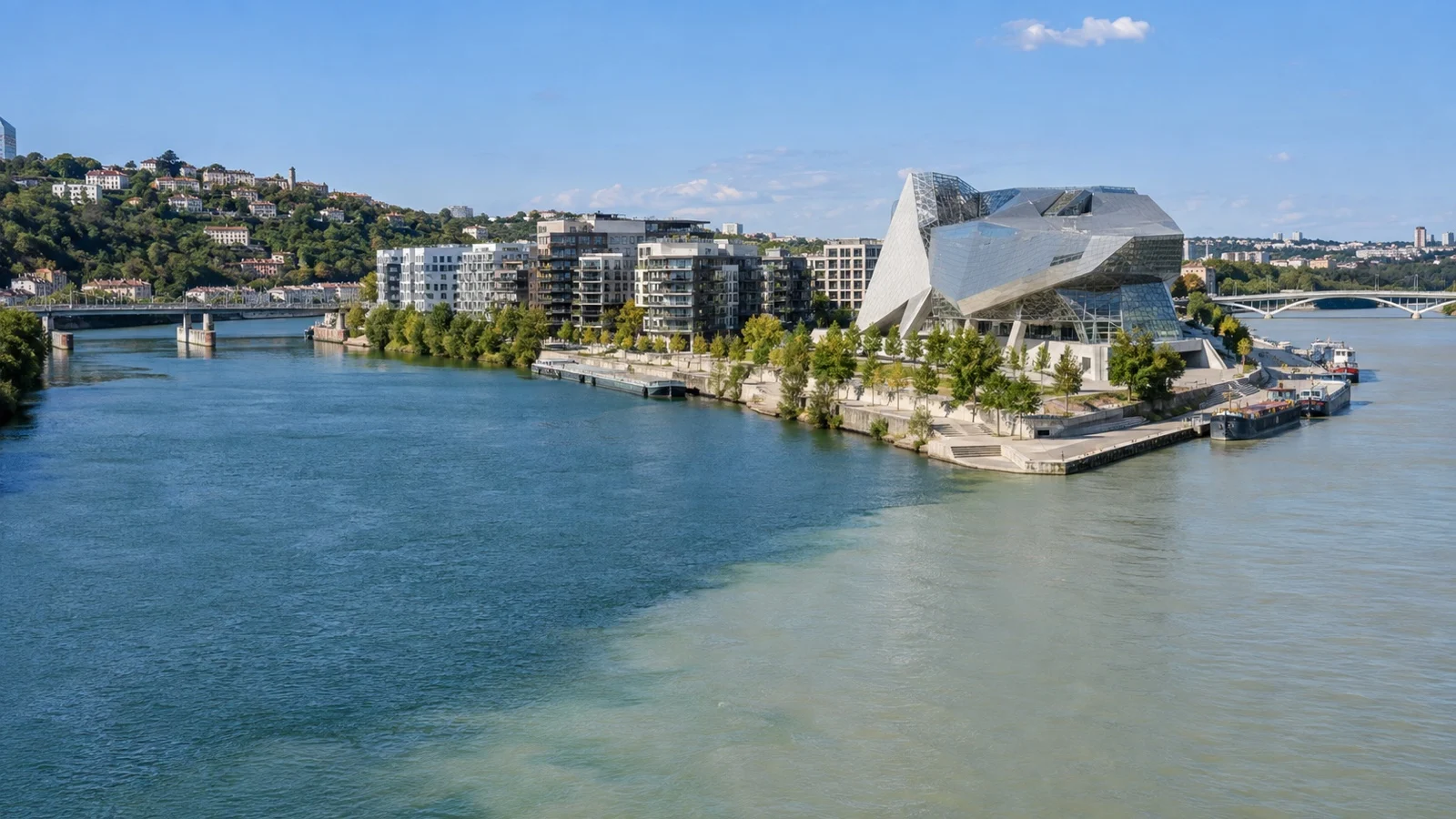
South of the traditional center, the Confluence district shows Lyon’s newer face. Contemporary buildings, converted industrial spaces, apartments, shops, and cultural venues occupy land near the meeting of the rivers.
The Musée des Confluences is the area’s architectural landmark and explores science, societies, and human history. Its location makes it especially convenient when a ship docks south of central Lyon, though the permanent collections deserve more time than a rushed photo stop.
How river operations affect the day
A Rhône and Saône itinerary depends on water levels, lock traffic, bridge clearance, and operating decisions made for safety. A published schedule is a plan, not a guarantee of an identical berth or arrival time.
High water can increase current and reduce bridge clearance, while low water can limit draft on parts of a route. Operators may adjust sailing times, swap transport, or change an excursion sequence, so treat the daily briefing as the controlling information.
Locks are part of normal Rhône navigation and can shape overnight timing. Passengers usually experience them from the vessel, but delays elsewhere on the river can shorten an independent visit even when conditions in Lyon look calm.
Accessibility and walking conditions
Central riverfront promenades and much of the Presqu’île are relatively level, but the complete Lyon experience includes old paving, curbs, slopes, and crowded passages. Fourvière is the main challenge, and the funicular is usually the practical alternative to climbing.
Low-water gangways, rafted ships, and changing quay arrangements can create barriers before the city visit begins. Ask the cruise line about the actual berth, assistance policy, and mobility equipment limits rather than relying only on general port descriptions.
Travelers who use wheelchairs or avoid steps can prioritize Place Bellecour, the Presqu’île, accessible museums, and a vehicle transfer to a viewpoint. Public transport accessibility varies by line and station, so check the live TCL network information for the exact journey.
Weather and what to wear
Spring and autumn can shift quickly between cool mornings, rain, and mild afternoons. Summer can be hot, particularly on stone streets and open squares, while winter calls can bring cold air and damp conditions beside the rivers.
Wear shoes with dependable grip and carry a light layer that fits in a day bag. In warm weather, water and sun protection matter on Fourvière and along exposed quays.
Three practical Lyon port-day plans
A short first visit
Start at Place Bellecour, cross the Saône into Vieux Lyon, see Saint-Jean Cathedral, and ride the funicular to Fourvière if time allows. Return by the most direct transport option recommended on board.
A food-focused day
Visit Les Halles de Lyon Paul Bocuse earlier in the day, then continue to the Presqu’île for a cafe stop or reserved bouchon lunch. Keep the final hour flexible because a leisurely meal can easily run longer than expected.
A lower-effort route
Use a taxi or cruise transfer to a central drop-off, explore the flatter Presqu’île, and choose one accessible museum or indoor market. Add Fourvière only if transport can take you close to the viewpoint and the return is secure.
Questions cruise passengers ask
Can I walk from the ship to Vieux Lyon?
Sometimes, but it depends on the assigned quay. A central berth can make walking practical, while a position near or beyond Confluence may call for transit, a taxi, or a cruise transfer.
Is Lyon easy to explore independently?
Yes, once you confirm the berth and return deadline. The rivers create clear boundaries, the center has useful public transport, and the major sights form logical clusters.
Should I book a guided tour?
A guide adds the most value in the traboules, where access rules and hidden entrances can be confusing. Independent sightseeing is straightforward for the Presqu’île, riverfronts, and Fourvière viewpoint.
How much time should I keep for the return?
Follow the ship’s stated all-aboard time and allow a generous buffer beyond the expected journey. Add more time when using connecting transit, dining away from the berth, or visiting during a major event.
Final thoughts on Lyon river cruise port
Lyon works best when the day is built around geography rather than a long checklist. Confirm the quay, choose one side of the city as the main focus, and let the rivers guide the route.
Port details, fares, access, and schedules can change, so verify them with the cruise line and local operators before travel. This guide was reviewed September 12, 2026, against current official TCL fare information and the UNESCO Historic Site of Lyon record, and it does not replace live instructions from the ship, port, or transport provider.