Avignon Cruise Port: Palais des Papes & Provence Guide
Avignon is one of the Rhône’s most rewarding river-cruise stops, with a medieval core that makes an easy day ashore.
A central river berth puts you a short walk from the medieval ramparts, while an outer assignment requires a transfer. Here is how I would spend the day once the ship confirms the quay.
My quick take
Avignon rewards walkers, so I treat it as a stroll-first port and save the taxi for day trips. The old town is small, walled, and packed with the good stuff.
If you are still mapping out your season, my roundup of the best cruise ports in Europe puts Avignon in context. It is a river stop, not an ocean one, and that changes the whole feel.
Quick Facts
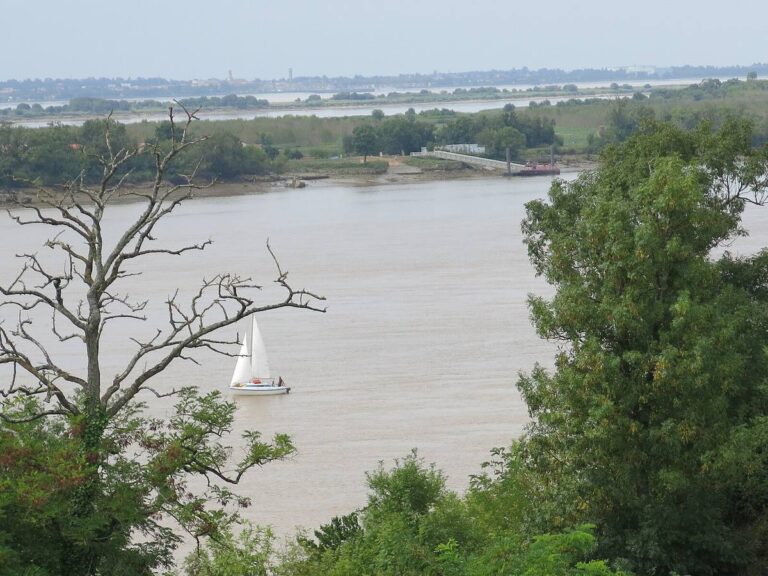
- Where you land: on the Rhone beside the old town, along the quays near the Allees de l’Oulle and the medieval ramparts. When the central quays are full some lines berth further out at Le Pontet, so confirm your berth the night before. More on the town at Avignon Tourisme.
- Dock or tender: Avignon is a river-cruise berth, so you step off onto the quay and walk in.
- Into town: From a central Oulle-area berth, allow roughly 10 to 15 minutes on foot to enter the walled center, then more time for cobbles and the rise toward the Palais des Papes. An outer berth changes the plan.
- Currency and language: The euro (EUR) and French, with English spoken in the tourist trade.
- Time zone: Central European Summer Time (CEST, UTC+2) through the river-cruise season, CET (UTC+1) in winter.
- Schedule risk: No official public cancellation rate is available. River levels, navigation conditions, and berth availability can move, shorten, or reroute the call.
The logistics of landing here
Central Rhône berths put many river ships beside the walls, but an outer berth such as Le Pontet changes the first mile. Use the line’s daily program for the assigned quay and shuttle, since river level and berth availability can move a ship.
From the quay you follow the river a short way and pass through a gate in the ramparts. Within minutes you are on stone streets that have not changed much in centuries.
Some itineraries may use an outer berth in the Le Pontet area instead of the central quays. If that happens, follow the cruise line’s transfer plan and confirm where the return pickup will operate.
Confirm the exact berth with the ship the night before. That tells you whether you are walking in or catching a ride.
A central river berth offers the luxury of returning to the ship for lunch or a rest without losing the afternoon. That convenience disappears at an outer berth, which is why the nightly docking notice matters.
The central riverfront feels more like arriving beside a town than entering a large ocean terminal. Stay aware of bikes, vehicles, gangways, and any temporary access controls along the quay.
Getting around
My honest advice is to walk. The historic center is compact, and almost everything worth seeing sits inside the walls.
For wider Provence sights you will want arranged transportation. Confirm the taxi or tour pickup location in advance because access beside the assigned quay can change.
Local small-bus routes and seasonal circulators can reduce the walking, but names, fares, and routes change. Check the current Orizo network rather than assuming a free Baladine is running, and use a taxi for a time-critical outer berth.
The climb toward Rocher des Doms is the most obvious rise, but cobbles, slopes, and historic thresholds appear throughout the old center. Choose the step-free route published for each attraction rather than judging access from a flat map.
Street signs point you toward the big landmarks, so getting lost is more charming than stressful. Following the ramparts until something catches your eye works well here.
The stops I would actually spend time on
Palais des Papes
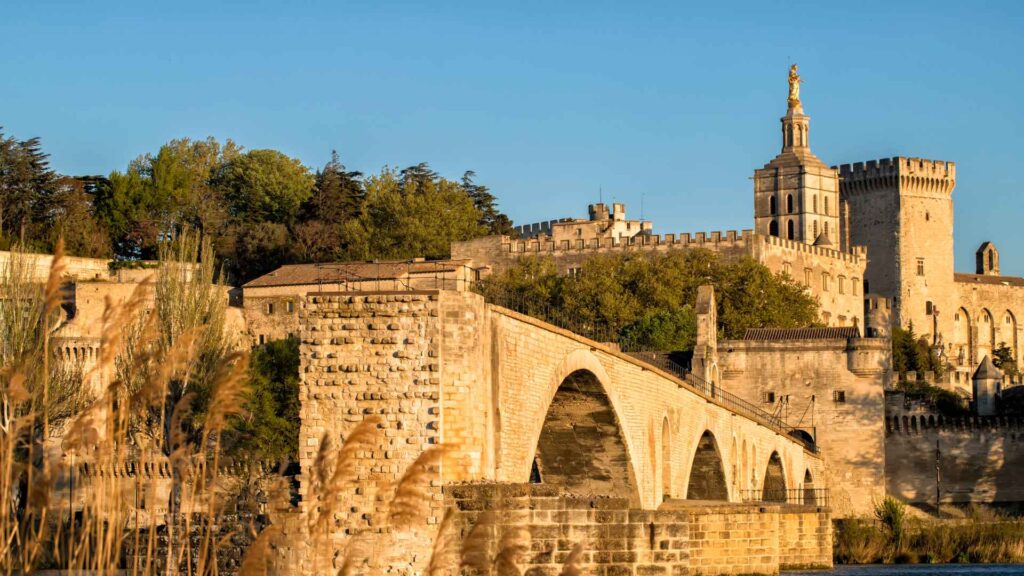
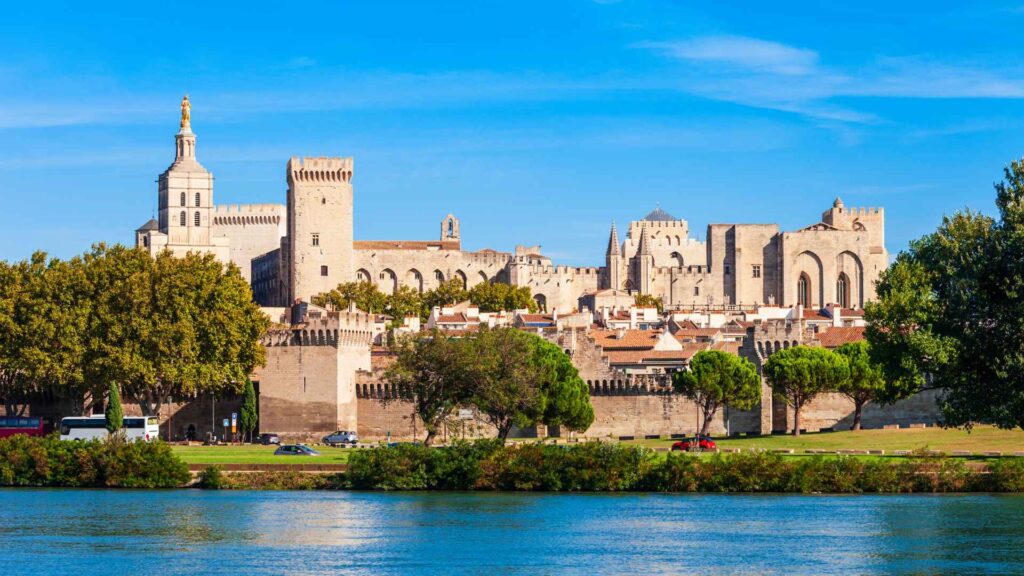
This is the reason most people come, and it earns the hype. The popes ran Western Christendom from these halls in the 14th century.
The current palace route includes 25 rooms, the papal gardens, a multilingual web app, and temporary exhibitions, but a visitor-experience transformation continues through spring 2027. Check the official Palais des Papes site for the rooms, hours, and access route available on your date.
Fun fact: Avignon Tourisme records the palace at roughly 161,500 square feet, which makes it the largest Gothic palace in the world and the equivalent volume of four Gothic cathedrals.
Pont Saint-Bénézet (Pont d’Avignon)
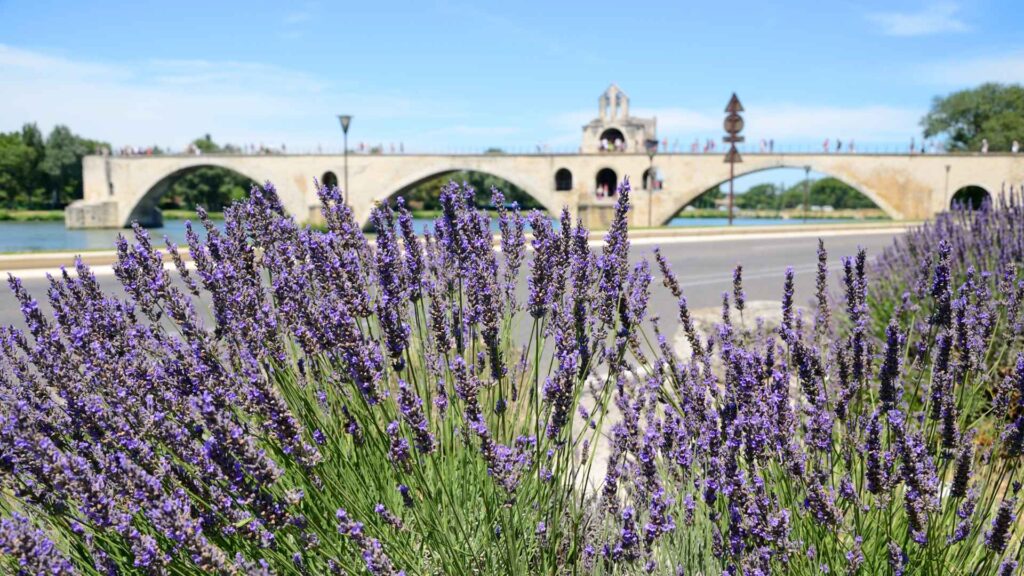
The famous half-bridge juts out over the Rhône and simply stops. It is oddly moving to stand where it breaks off.
Fun fact: UNESCO notes that only four of the original twenty-two arches of this 12th-century bridge still stand, the rest lost to centuries of river floods.
Place de l’Horloge
The main square is where I stop for a coffee and let the port day slow down. Cafe terraces line it, with the old theater and town hall at one end.
It is touristy, and I do not mind. A carousel spins, plane trees give shade, and it is a natural pause between sights.
Rocher des Doms
Climb the rock garden behind the cathedral for the best free view in town. The Rhône, the broken bridge, and Mont Ventoux all open up below you.
There is a small pond, shady benches, and a real sense of calm up here. Budget about half an hour for it.
Les Halles market
The covered market is my favorite stop for a quick, honest lunch. Cheese, olives, tapenade, and a warm baguette make a perfect riverside picnic.
Browse first, ask before sampling, and use the posted prices rather than assuming every stall works the same way. It is an easy way to build a Provençal lunch without turning the stop into a long restaurant meal.
Day trips: Pont du Gard or Châteauneuf-du-Pape
With extra time, I would head out to the Roman aqueduct at Pont du Gard or the vineyards of Châteauneuf-du-Pape. Both are short drives and utterly Provençal.
Fun fact: UNESCO puts the Pont du Gard at nearly 164 feet tall across three tiers of arches, built in the 1st century to carry water about 31 miles to Roman Nîmes.
Châteauneuf-du-Pape takes its name from the popes who kept a summer residence nearby. Its bold reds are among the most celebrated in the Rhône valley.
A wine outing works best as a prebooked half day with a designated driver, while Pont du Gard gives non-drinkers a stronger history-and-landscape choice. Pick one, confirm the attraction’s current hours, and do not combine them on a normal call.
Reserve a timed palace entry on festival and peak-season days, then allow about two hours rather than treating the complex as a quick photo stop. The bridge, market, and Rocher des Doms can fill the rest of a central day without a rural transfer.
How I would plan the day
Start with the Palais des Papes if it is your priority, using the timed entry and current route on your ticket. Allow enough time for security, the active 2026 to 2027 visitor-route changes, and the parts of the complex you actually want to see.
From there I walk up to Rocher des Doms for the view, then down to Pont Saint-Bénézet on the river. It is a tidy loop with no backtracking.
Lunch is easy at Les Halles, the covered market, or on a terrace at Place de l’Horloge. I like grabbing market bites and eating them by the water.
If Provence is calling, swap the afternoon for a wine tour or the aqueduct. Just keep a firm eye on the all-aboard time, because river ships leave sharp.
Work backward from the ship’s posted departure and meeting times, then add margin for a rural drive, an outer berth transfer, or a changed pickup point. River ships can leave promptly and may reposition during the itinerary, so follow the line’s exact return instructions.
If you would rather not rush, keep the whole day inside Avignon and go deep. There is easily enough here to fill it without ever hailing a taxi.
A realistic word on accessibility
The riverside and the flat old-town streets are manageable for most visitors. The surfaces, though, are historic cobbles that rattle wheels and test ankles.
Rocher des Doms involves a genuine climb, and parts of the palace have stairs and slopes. Neither is impossible, but neither is effortless.
If steps are a concern, use current local transit or a taxi and ask the Palais des Papes which route and rooms are accessible on your date. The cobbles, slopes, and historic thresholds still require more planning than the flat map suggests.
When to go, and the weather
Avignon has a hot, dry Mediterranean summer and mild winters. July and August can push past 86°F, so carry water and use the shade at midday.
Spring and early autumn are the sweet spots for a port call: softer light, thinner crowds, and terraces that are still buzzing.
One local quirk is the mistral, a cold wind that can blow hard down the Rhône valley. It clears the sky beautifully but can chill an exposed quay.
If your cruise lands in July, expect the famous theater festival to fill the streets. It is lively, though hotels and tours book out fast.
Quick answers
Is Avignon a walkable port?
It can be from a central berth beside the ramparts, while an outer assignment requires a transfer and makes a quick walk back unrealistic.
Do I need to book the Palais des Papes ahead?
In peak summer it helps to reserve online, and I check times and tickets on the official palace and Avignon Tourisme sites before I go.
Can I fit a Provence day trip into a port call?
Yes, if you keep it tight, though Pont du Gard and Châteauneuf-du-Pape both need a comfortable buffer for the return.
Why is Avignon a UNESCO site?
The historic center was inscribed in 1995 for its papal palace, cathedral, and bridge, as recorded by UNESCO.
How it compares to nearby ports
If you love Avignon, you will probably love Arles too. It is another Rhône stop, smaller and steeped in Roman ruins and Van Gogh.
For a bigger, saltier contrast, Marseille is the ocean gateway to the same region. Where Avignon is intimate and papal, Marseille is loud, coastal, and sprawling.
String the three together and you get the full Provence picture. Avignon is where I would slow down the most.
How this guide was researched: This guide uses current information from Avignon Tourisme, the official Palais des Papes site, UNESCO, local transport resources, and river-operator guidance where available. Berth variability, palace access and its 2026 to 2027 visitor-route changes, monument logistics, day trips, and return planning were reviewed on September 11, 2026; see our Editorial Policy.