Galway Cruise Port: Tenders, City Walks & Cliffs
Galway begins with an Atlantic boat ride and rewards you with medieval lanes, river water, music, seafood, and enough weather to support several opinions before lunch. The city is wonderfully compact, but the tender and every regional excursion still belong on the clock.
I would keep a complete Galway walking day ready until the first passengers are safely ashore. The Cliffs of Moher and Connemara can be magnificent, but neither is improved by pretending the final tender will wait for traffic.
Quick Facts
- Arrival: Most cruise ships anchor in Galway Bay and tender passengers to the inner docks.
- Landing: Follow the ship’s exact pier and gate instructions because the operational point can vary.
- City access: The historic center is generally walkable from the normal inner-dock landing.
- Best easy plan: Spanish Arch, Galway City Museum, the Latin Quarter, Saint Nicholas’ church, and lunch.
- Best regional plans: Choose either the Cliffs of Moher and Burren or one defined Connemara route.
- Currency: The euro.
- Languages: English is widely spoken, and Irish is also an official language.
- Main risk: Wind or swell can delay or cancel tendering even when the city itself is open.
Galway is an active tender port
The Port of Galway’s official schedule lists a substantial 2026 season, including calls by large vessels that cannot use an ordinary city-center cruise berth. Most ships anchor in Galway Bay and transfer guests ashore by tender or another approved passenger craft.
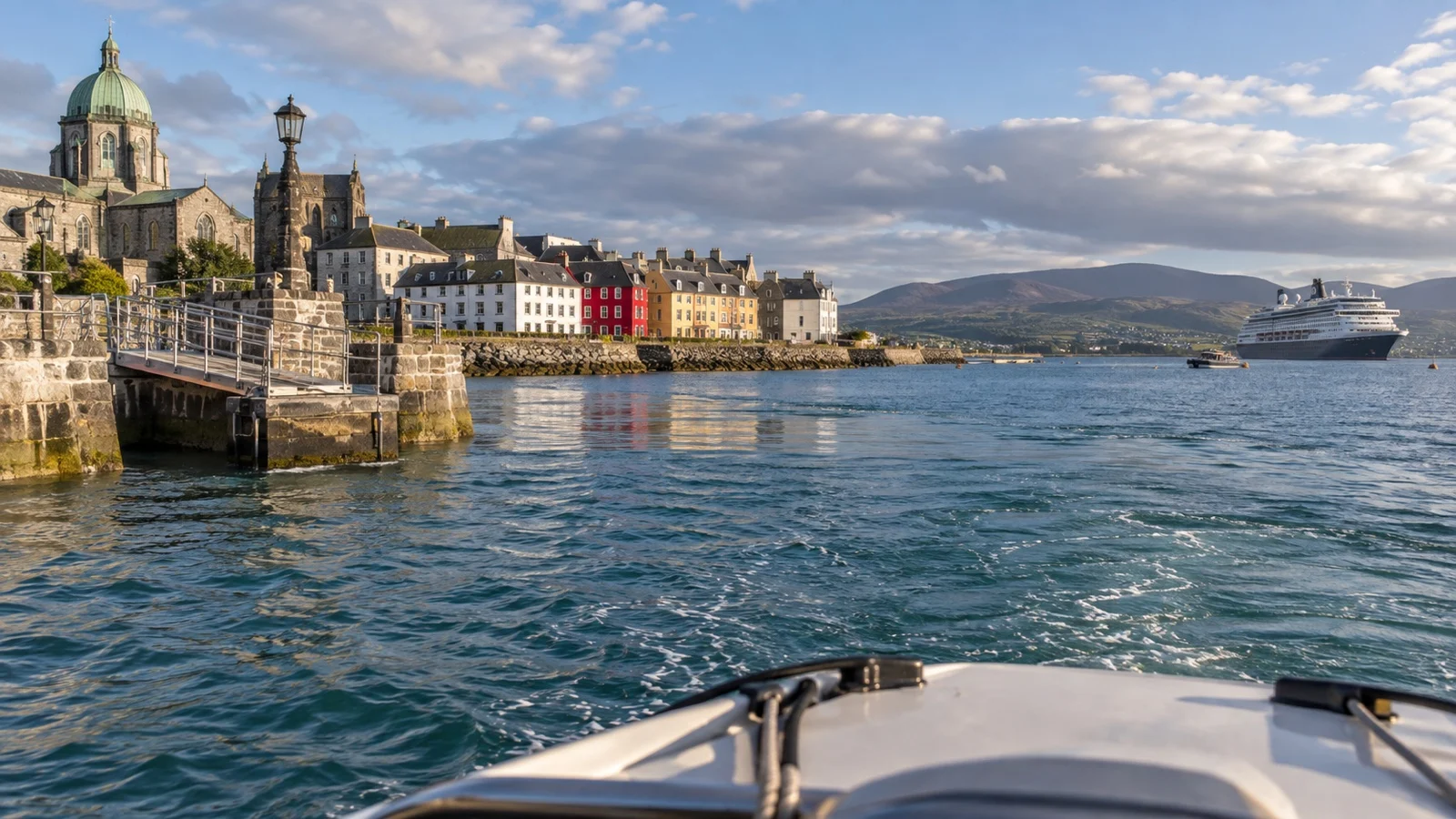
A smaller expedition vessel may receive a harbor arrangement when its dimensions, tide, traffic, and the harbor master permit it. That exception should not become the planning assumption for a conventional cruise ship.
The exact anchorage, landing, tender provider, and route through the docks are operational details for the sailing. Use the ship’s daily notice instead of walking toward a pier named in an old review.
A published schedule confirms intent, not a successful landing. Atlantic wind, swell, visibility, and harbor conditions can delay boats, suspend service after it begins, or cancel the call entirely.
Tender time changes the shape of the day
The scheduled arrival is not the moment your shoes touch Galway. Clearance, boat preparation, ticket groups, sea conditions, and safe loading all reduce the useful time ashore.
Ask whether a ship excursion includes tender priority and where its guests meet aboard. Independent travelers should collect the right ticket and avoid promising a local operator an unrealistically early pickup.
The return includes a line, loading, the ride across the bay, and the transfer back onto the ship. Plan for an earlier boat than the final allowed tender rather than using the cutoff as a personal departure time.
The city absorbs a delayed landing beautifully
Normal inner-dock landings put the historic center within a manageable walk, though the gate and pedestrian route should always be confirmed. Spanish Arch makes the clearest first landmark where the River Corrib meets Galway Bay.
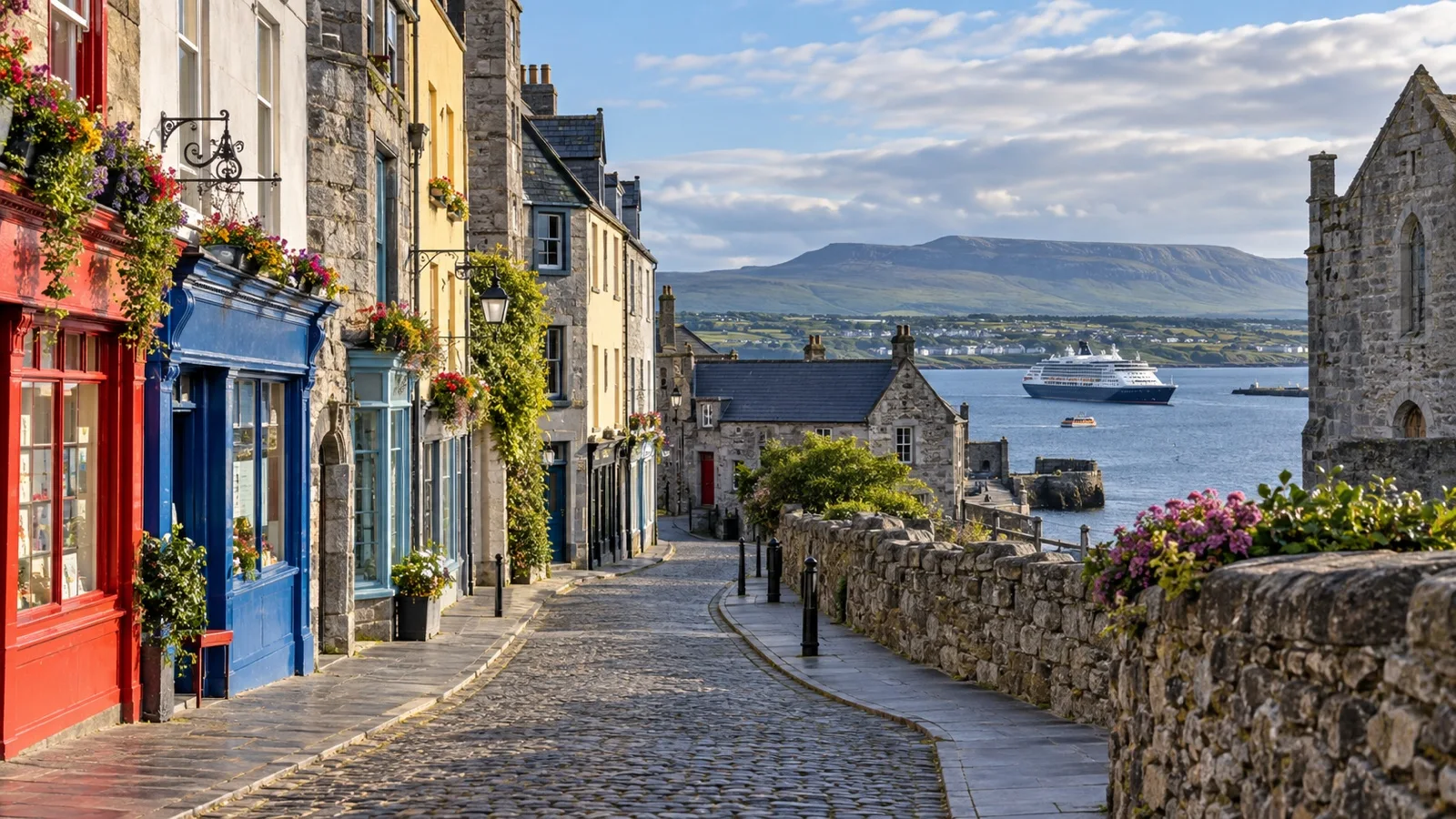
Galway City Museum stands beside the arch and interprets the city, Claddagh, archaeology, maritime life, and regional history. Check the museum’s official site for current opening and access because a compact indoor stop is especially useful in rain.
Continue into the Latin Quarter along Quay Street and High Street, where shops, pubs, restaurants, historic facades, and buskers turn a short route into a full sensory argument. The pleasure is in wandering slowly rather than collecting every shop sign.
Saint Nicholas’ Collegiate Church, Shop Street, Eyre Square, and the Corrib can complete a central loop. Keep one section optional so the route still works after a late tender or long lunch.
Spanish Arch and the Claddagh tell the port story
Spanish Arch grew from the old city defenses and stands beside the channel where trade shaped Galway’s identity. A guide can connect the surviving stonework with the merchant city more effectively than a quick photograph can.
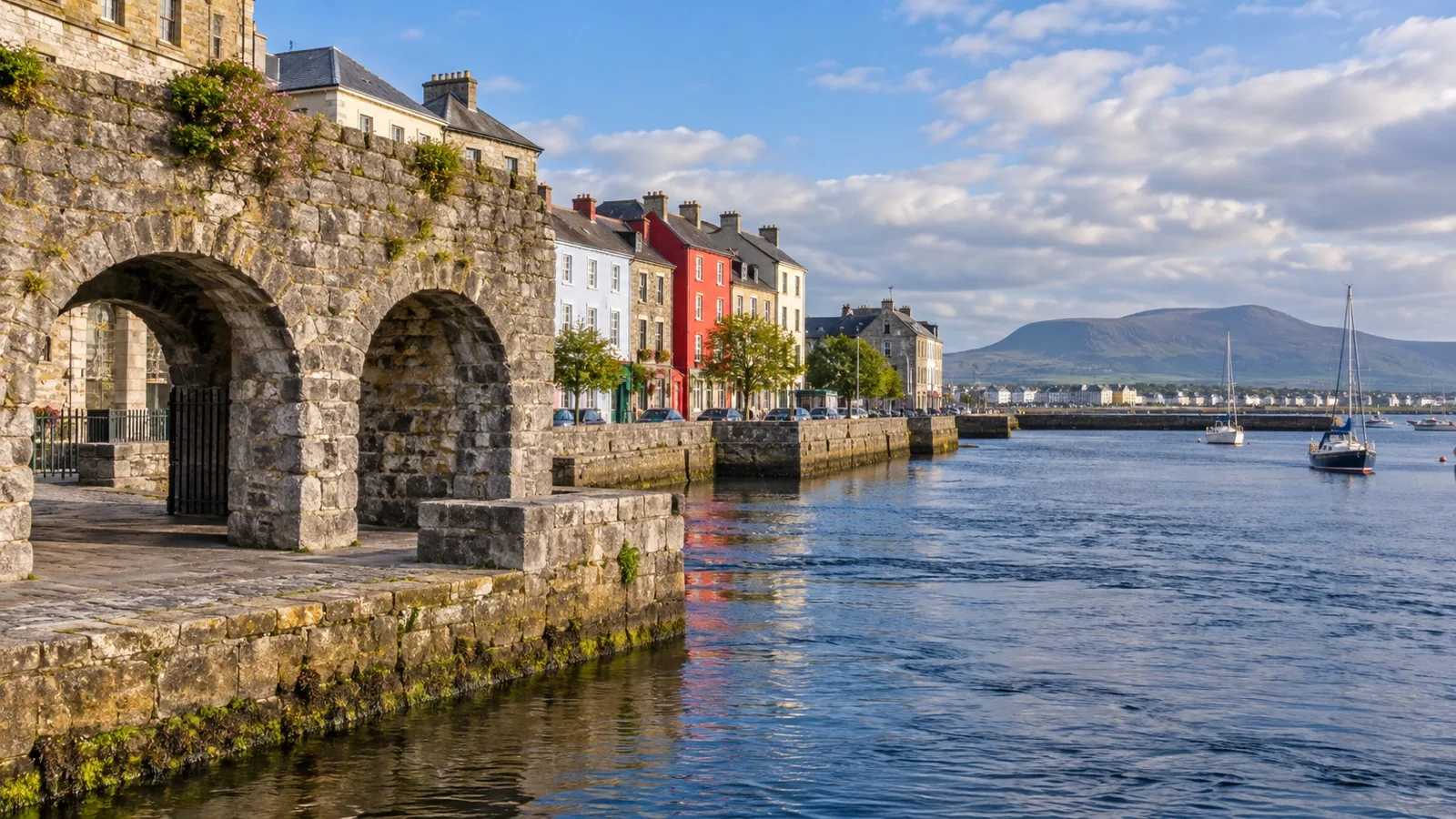
Across the river, the Claddagh recalls the fishing community whose name became associated with the famous ring. A short waterside extension delivers harbor views, swans, and a quieter perspective without committing to a vehicle.
The river edge can be slick, windy, and crowded, so use marked paths and keep children close. Atlantic charm is not improved by testing the grip of wet stone beside fast water.
Salthill is a longer extension than it looks
Salthill Promenade runs west along Galway Bay with broad coastal views and the Blackrock diving tower as a familiar landmark. The route looks flat on a map but adds real distance to a city day.
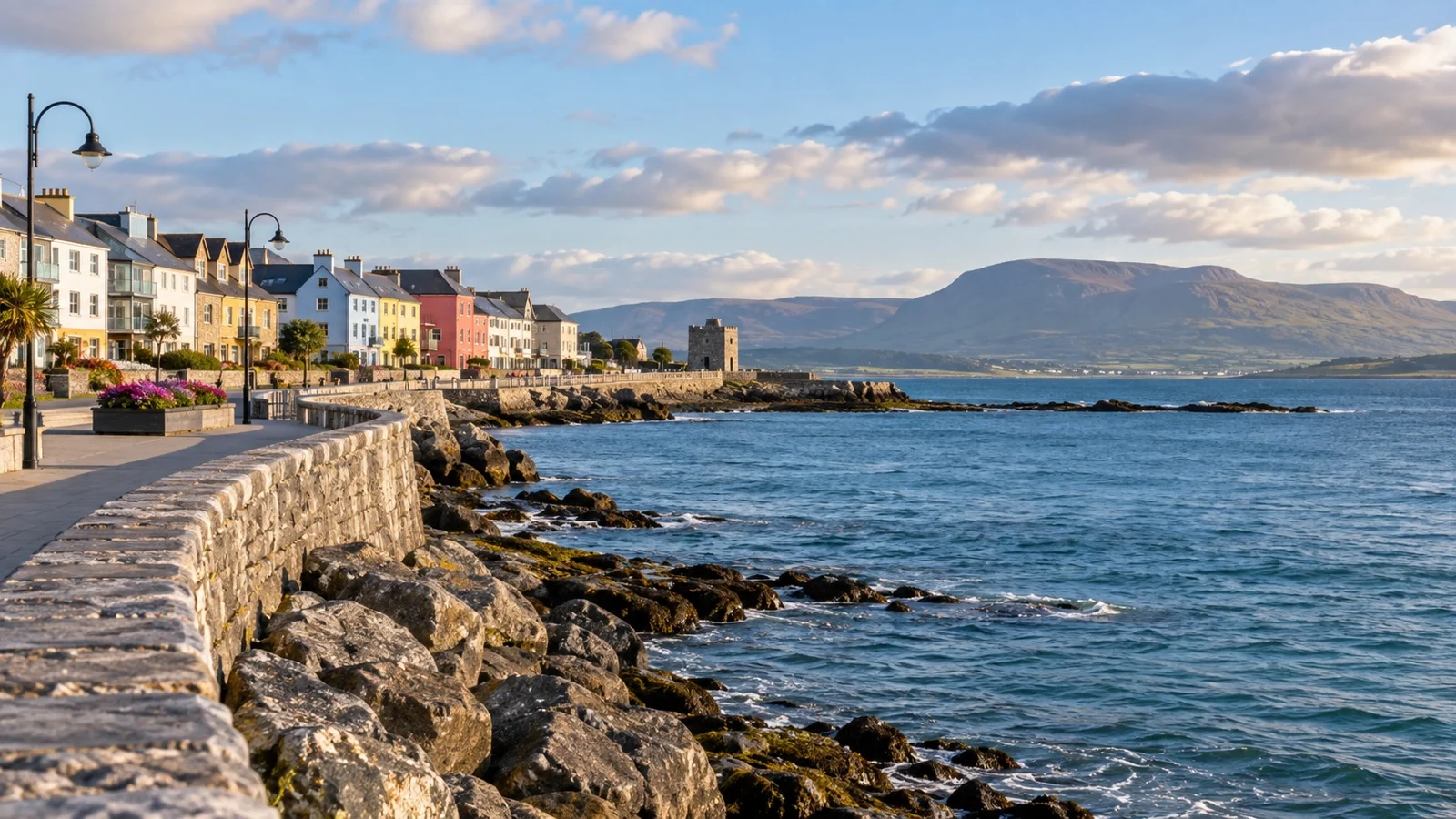
Use a local bus or taxi in one direction when time, weather, or stamina suggests it. Agree on the exact return point and leave the promenade before the tender margin begins to feel theoretical.
Cold Atlantic water, wind, tides, and local conditions make swimming a separate decision from sightseeing. Follow current local guidance and do not use another person’s leap from Blackrock as your personal safety briefing.
The Cliffs of Moher require a full excursion
The Cliffs of Moher lie across County Clare and demand substantial road time from Galway. Treat them as the day’s main event, especially when the call already starts and ends with marine transfers.
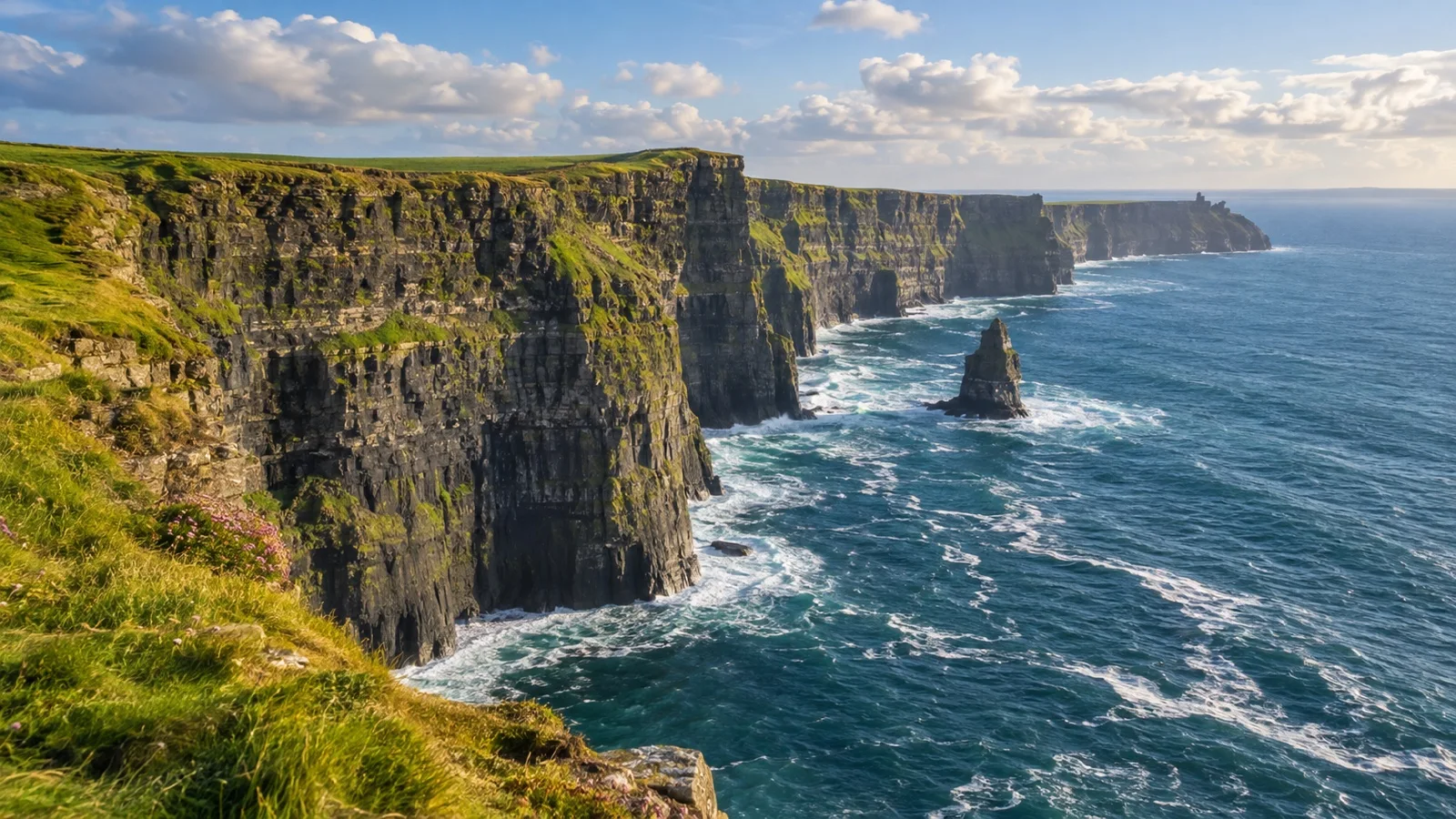
The official Cliffs of Moher site publishes hours, booking, weather, route, accessibility, and current access information. Wind and visibility can change the experience, while exposed paths or O’Brien’s Tower may face restrictions.
Use a ship excursion or cruise-specific driver with the final tender recorded in writing. An ordinary regional bus or sightseeing product is not designed to protect a ship connection.
Stay behind barriers and obey every closure because the cliff edge is vertical, exposed, and affected by powerful wind. A photograph gained by crossing a boundary is not improved by the fact that other visitors are doing the same thing.
The Burren makes sense with the cliffs
The Burren is a broad limestone landscape rather than one attraction, with coastal road, villages, archaeological sites, caves, flora, and bare karst scenery. A focused tour can pair it naturally with the Cliffs of Moher.
Ask for the named route and principal stops before booking a vague Burren panorama. The right circuit adds context, while an overloaded one becomes a lengthy seminar on narrow roads and motorcoach mirrors.
Weather can make one viewpoint more valuable than another, so a local guide should retain flexibility. The return time, however, is not the flexible part of the itinerary.
Connemara needs one defined route
Connemara spreads west of Galway through bog, mountains, lakes, coast, villages, and farms. It cannot be completed in a day, but one well-chosen route can communicate the region far better than a frantic list of pins.
Kylemore Abbey is a substantial road commitment and works best with a ship excursion or an experienced cruise-day operator. A closer loop through selected viewpoints can deliver more outdoor time and a larger return buffer.
Confirm whether admission, lunch, walking, and restroom stops are included. The operator should also state how a late first tender changes the route before the vehicle leaves.
Mountain and coastal weather can differ from central Galway, so bring a waterproof layer and shoes with grip. Connemara looks especially atmospheric in shifting light, but no landscape needs you to arrive back breathless.
The Aran Islands add too many independent links
The seasonal Galway City ferry to Inis Mór operates as a fixed-format trip with the return sailing routed past the Cliffs of Moher. The current 2026 season runs from April 3 through September 27, but the day length does not fit many cruise calls.
Year-round island services use Rossaveel, adding a road transfer west of Galway before the public ferry. The complete chain can become ship tender, bus, island ferry, island transportation, ferry, bus, and ship tender.
Use an Aran Islands excursion only when the cruise line coordinates it or a specialist product is explicitly designed around the sailing. Otherwise, enjoy the islands from the bay and give Galway city the time it deserves.
Accessibility begins offshore
Tender boarding is the largest access barrier and depends on ship equipment, sea state, landing design, device dimensions, and the crew’s safety assessment. Ask whether a wheelchair or scooter can be carried and what walking or steps are required at both ends.
Central Galway is compact but includes cobbles, curb changes, crowds, and older interiors. The waterfront and Eyre Square can support gentler routes, while a taxi may reduce the distance to Salthill.
The Cliffs of Moher publishes dedicated accessibility and parking information, but the motorcoach, wind, grades, surfaces, and restroom route still matter. Request the actual distance from bus seat to viewing area rather than relying on a broad accessible label.
An Aran Islands day adds another vessel after the ship tender. Travelers who need step-free movement should not book until every operator in the chain confirms the arrangement directly.
Irish weather deserves its own plan
Galway can deliver rain, wind, cool air, bright sun, and another shower in quick succession. Wear layers, carry a waterproof shell, and choose shoes that grip wet stone.
Use Met Éireann for the official forecast, then follow the ship’s marine decision. A sunny street does not prove that conditions at the anchorage are safe for tendering.
Secure hats, umbrellas, and anything light enough for the boat breeze to donate to Galway Bay. A compact hood is generally more useful than wrestling a large umbrella through a tender doorway.
If the ship advances the final boat because weather is deteriorating, return immediately. No last pint, shop, or photograph is worth betting against an Atlantic operational notice.
Ireland has its own entry rules
Ireland is part of the European Union but is outside the Schengen Area. Visa and entry requirements therefore need an Ireland-specific check rather than an assumption based on another European port.
Use the official Irish Immigration guidance for your nationality and follow the cruise line’s document instructions. Carry the passport or photo identification named in the daily program and protect it from spray.
First-port clearance or another immigration process can reduce the morning ashore. A regional tour should account for that possibility instead of scheduling departure at the published arrival minute.
Money, language, and everyday safety
Ireland uses the euro, and cards are widely accepted in established businesses. Carry a little cash for small purchases, but avoid making an ATM search the centerpiece of a short call.
English is widely spoken, and Irish is also an official language visible on signs and place names. Save the tender landing, ship agent, and operator contacts offline before leaving the vessel.
Galway is busy and welcoming, yet crowded streets and pubs still require ordinary care with bags, phones, and wallets. Use 112 or 999 for a serious emergency and contact the ship agent immediately for a return problem.
Food and music need breathing room
Galway is a better city when lunch is not treated as a refueling error. Choose one seafood, bakery, market, or pub stop and allow enough time to notice where you are.
Traditional music sessions do not always begin on a cruise passenger’s ideal schedule, and a live pub is not guaranteed at midday. Enjoy what is playing, avoid disrupting performers, and do not add an evening session to a daytime tender deadline.
Ask about allergens and note that portions, service pace, and queues can vary during major events. The easiest final city stop is one located between you and the correct tender landing.
Return timing needs road and boat buffers
A city-only day requires enough time to find the correct dock, pass any gate instruction, queue, load, and cross the bay. Set a personal landing deadline earlier than the final tender listed by the ship.
An independent Cliffs of Moher or Connemara vehicle should target central Galway with a substantial margin before the ship cutoff. Add more time during events, road work, heavy rain, or high-wind forecasts.
Photograph the landing and nearby landmarks before walking away. Galway’s waterfront serves fishing, commercial, leisure, and passenger traffic, so “meet near the boats” is friendly language and terrible logistics.
Four realistic Galway plans
The late-landing city loop
Walk from the approved dock to Spanish Arch, Galway City Museum, the Latin Quarter, Saint Nicholas’ church, and lunch. This plan loses the least value when the first tender is delayed.
The expanded city day
Add Eyre Square, the Corrib, the Claddagh, or part of Salthill to the central route. Use a taxi or bus to protect the return if weather or stamina changes.
The County Clare day
Choose a ship excursion or cruise-specific Cliffs of Moher and Burren route. Follow the operator’s schedule and do not add independent city sightseeing until the vehicle is safely back.
The Connemara day
Book one named westbound circuit with a clear turnaround point and an answer for late tender clearance. A shorter landscape route often feels richer than a distant attraction reached mostly through glass.
Frequently asked questions
Do cruise ships dock in Galway?
Most cruise ships anchor in Galway Bay and tender passengers to the inner docks. A small vessel may receive a harbor position when specifically assigned.
Can I walk into Galway from the landing?
Usually yes from the normal inner-dock tender points, with Spanish Arch and the Latin Quarter nearby. Follow the ship’s precise gate and pedestrian route.
Can I visit the Cliffs of Moher?
Yes on a long enough call with ship-protected or cruise-specific transportation. Treat the cliffs as the main excursion and preserve a generous tender return margin.
Can I visit the Aran Islands independently?
Usually not safely within an ordinary call because the public trip adds long fixed boat schedules after the cruise tender. Use only a product coordinated with your sailing.
What if the first tender is late?
Stay in Galway and enjoy the compact historic center. The city absorbs lost time better than any distant road or ferry itinerary.
My final advice
Galway is one of those rare tender ports where the easiest plan is also genuinely excellent. Medieval lanes, river edges, museum stories, food, and music begin close enough to let the day unfold without a motorcoach.
Choose the cliffs or Connemara when the weather, call length, and operator are strong, but never apologize for staying in town. Galway has more personality per walking mile than most itineraries manage in a full day.
How this guide was researched: This guide was independently checked on September 11, 2026, against the Port of Galway, Galway City Museum, the Cliffs of Moher, Irish Immigration, Met Éireann, Aran Island Ferries, and current cruise operating information.
Reconfirm the anchorage, tender landing, boat schedule, entry documents, attraction access, road and weather conditions, accessibility, and final return time before sailing because live details can change.