Gijón Cruise Port: Asturias’ Beach City on the Cantabrian Coast
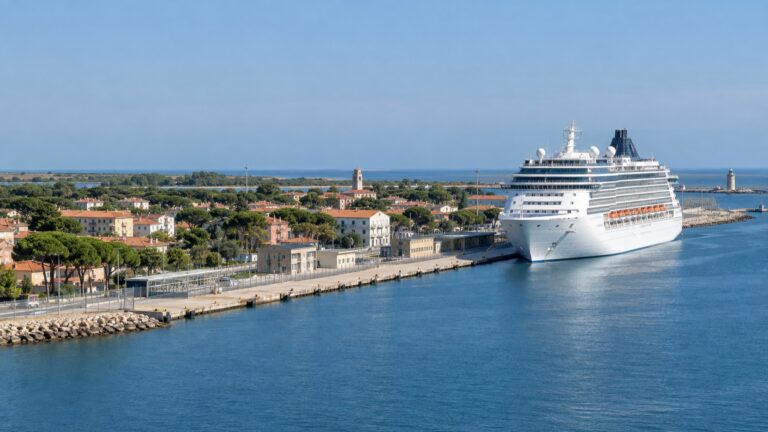
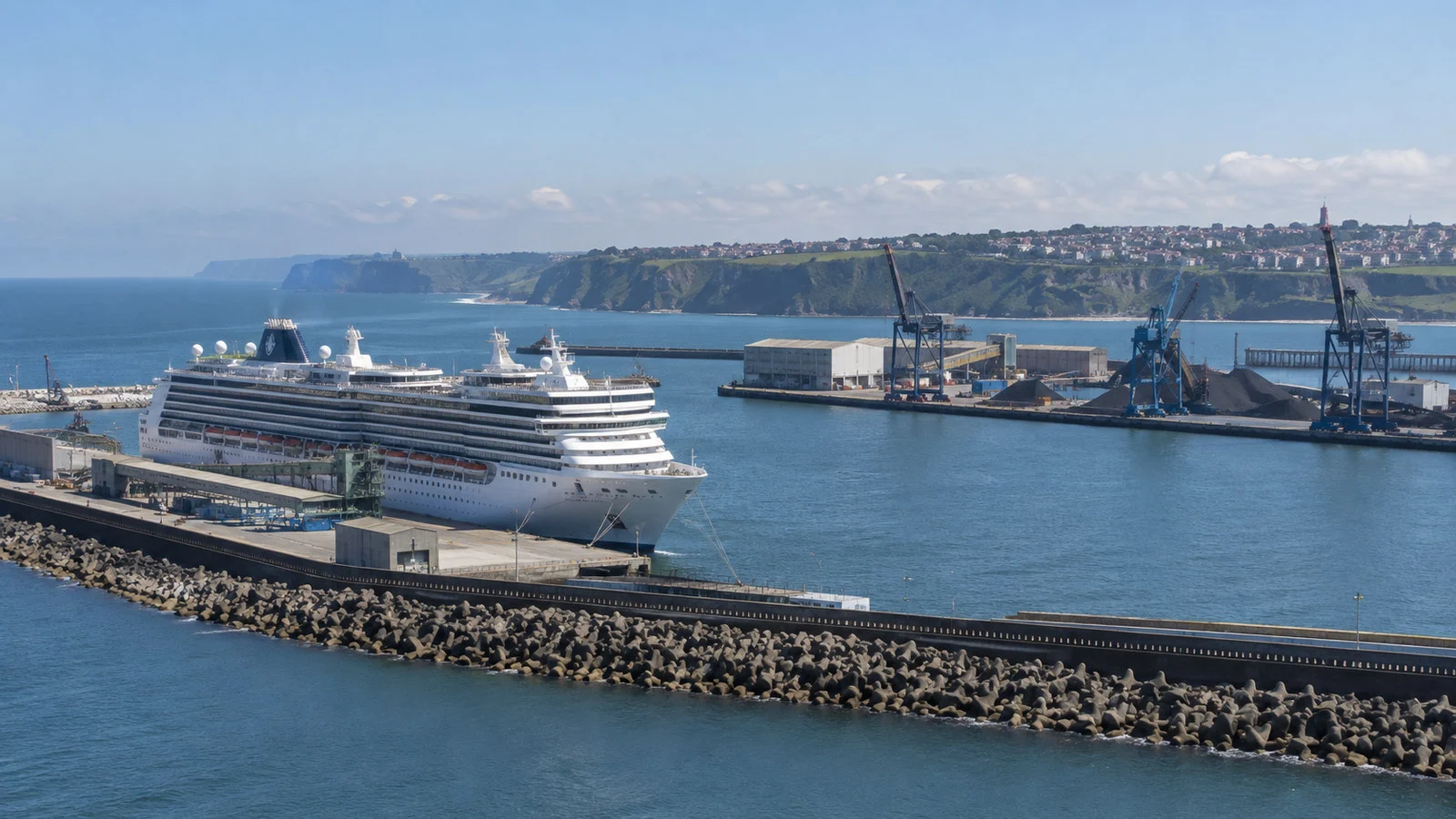
Gijón gives cruise passengers two very different first impressions. The ship arrives at the working port of El Musel, while the city you came to see is a lively waterfront destination with beaches, Roman history, a former fishing quarter, and a distinctly Asturian food culture.
The transfer is the key piece of the day because El Musel is not beside the central sights. Once you reach the city, Gijón is easy to enjoy on foot if you keep the plan compact and know where the return shuttle stops.
My quick take
Use any cruise shuttle provided and focus on Cimavilla, Cerro de Santa Catalina, and the San Lorenzo waterfront. Add the Roman baths or a cider lunch if the timing works, but do not spend the day trying to connect too many distant attractions.
An excursion to Oviedo can be worthwhile for architecture and regional history, while an Asturias countryside tour suits travelers who want landscapes beyond the city. Gijón itself is the safer independent choice when the call is short.
Gijón quick facts
- Country: Spain
- Region: Asturias
- Sea: Cantabrian Sea
- Main cruise area: El Musel, a working commercial port
- City-center transfer: Cruise shuttle, excursion coach, taxi, or a confirmed public transport route
- Best central sights: Cimavilla, Cerro de Santa Catalina, Roman baths, and San Lorenzo Beach
- Popular regional excursion: Oviedo
- Currency: Euro
- Best first check: Shuttle drop-off, final return time, and exact berth
The berth at El Musel
El Musel is a large industrial and commercial port west of central Gijón. Security rules, berth assignments, and the walking route inside the port make it a place to follow crew instructions rather than begin an improvised city walk.
The Port Authority of Gijón manages the port, but your cruise line provides the passenger-specific instructions for your call. Confirm whether transportation is complimentary, whether a ticket is required, and where independent passengers are released.
Do not assume you can walk from the gangway through the port gates. Even if a map shows a route, pedestrian access may be restricted around cargo operations and heavy vehicles.
Before boarding the shuttle, photograph the berth information and save the ship’s contact number. If several vessels are present, note your ship’s name and any terminal or gate identifier.
Getting into Gijón
A cruise shuttle is normally the most practical transfer when offered. It takes you beyond the industrial setting and gives you a defined pickup point for the return.
Ask where the shuttle stops because “city center” can mean different places. A drop near the marina, Poniente, or a central square changes the best order for Cimavilla and San Lorenzo.
A taxi offers flexibility for a small group, but availability at the berth and the rules for entering the port vary. Arrange the return in advance if you plan to visit an outlying attraction.
Public transport can work only if the cruise line confirms how to reach the permitted stop outside the secure area. Do not choose a route solely because an online map draws a line from El Musel to town.
A practical walking route through central Gijón
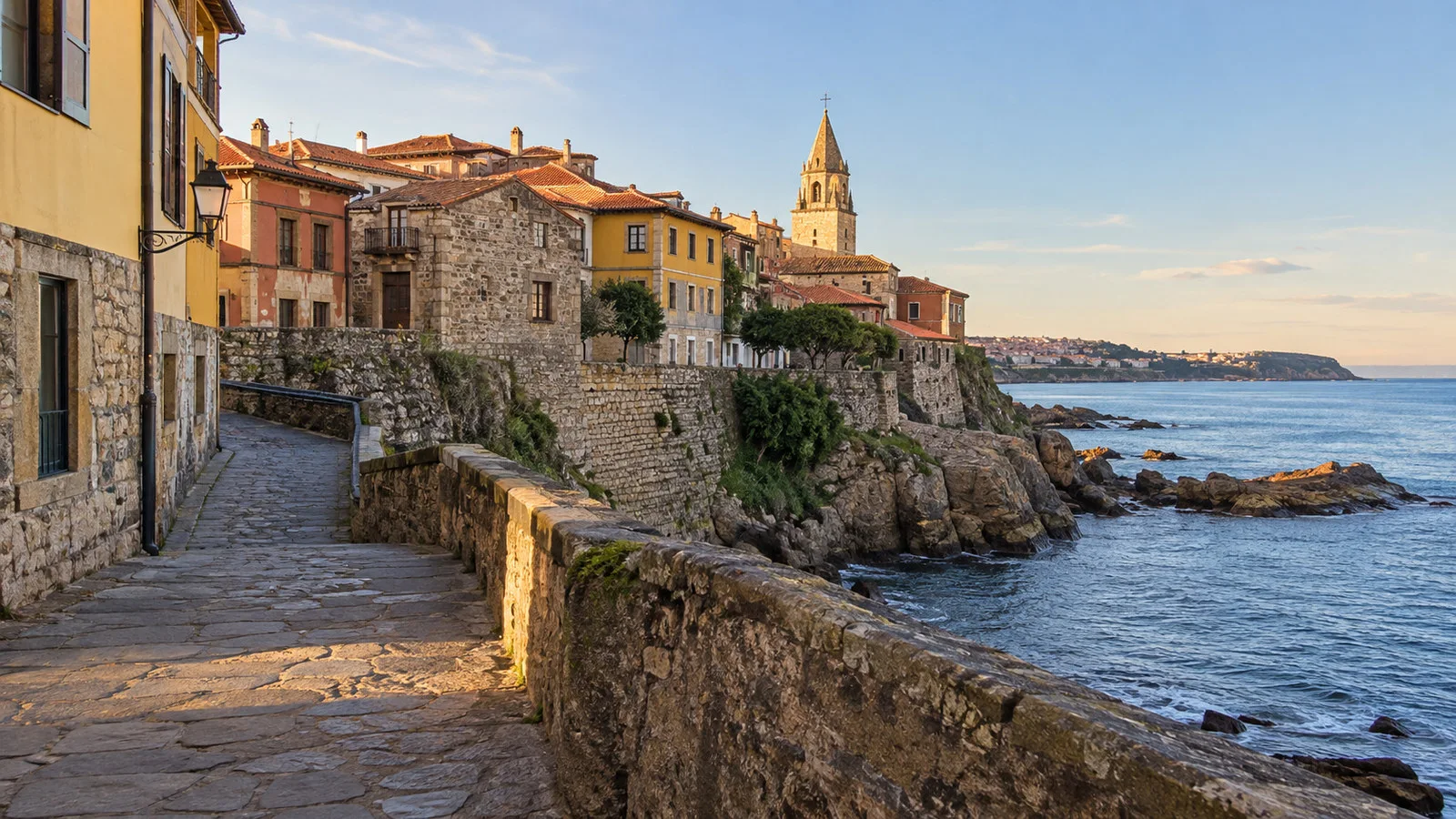
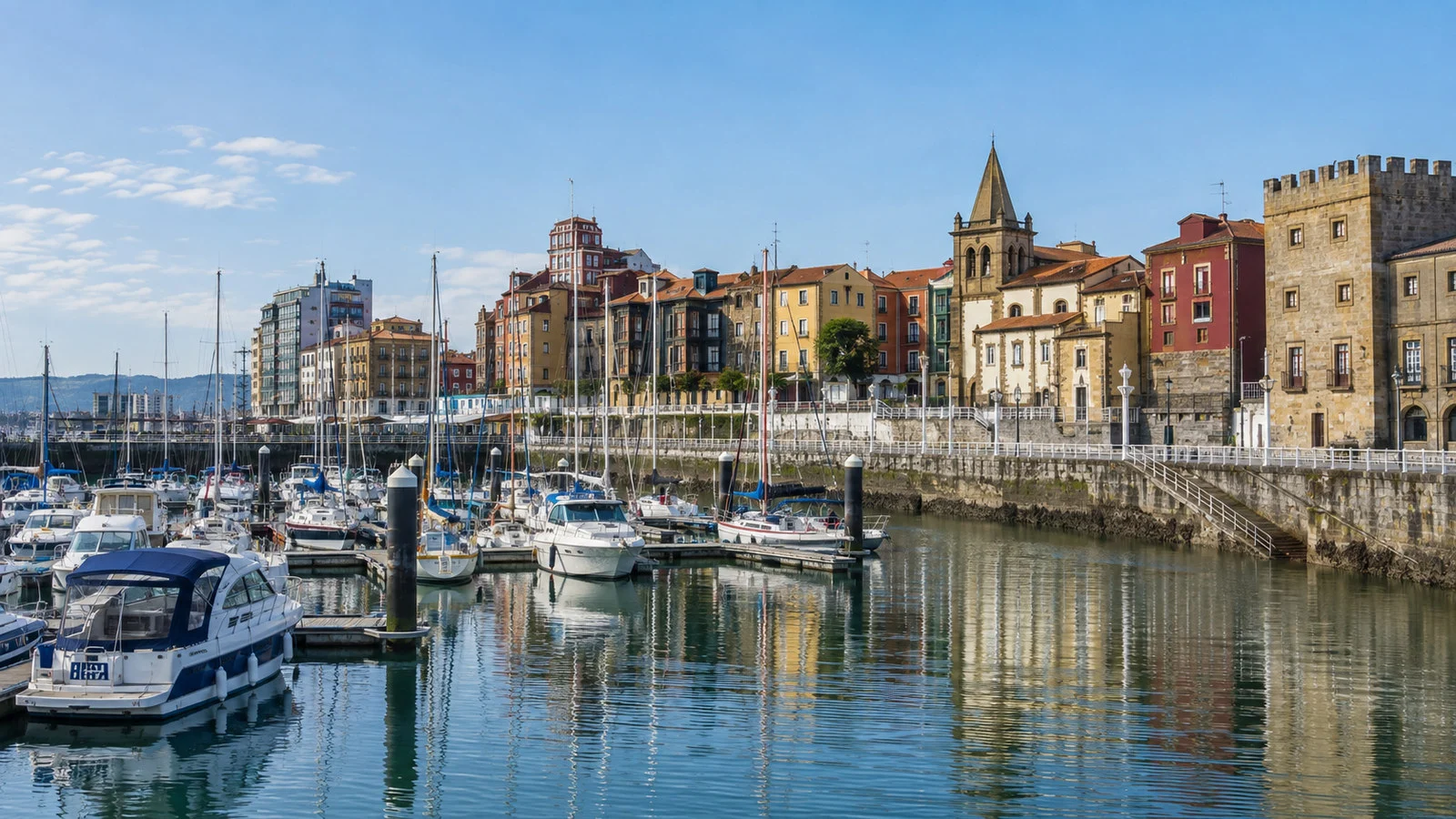
Begin near the marina or Poniente side and walk toward Cimavilla, the old fishing quarter on the headland. Its lanes and slopes lead naturally toward the Church of San Pedro and the Roman baths area.
Continue uphill to Cerro de Santa Catalina if the weather and your mobility allow. The park holds Eduardo Chillida’s Elogio del Horizonte and broad views over the coast, but the exposed headland can be windy.
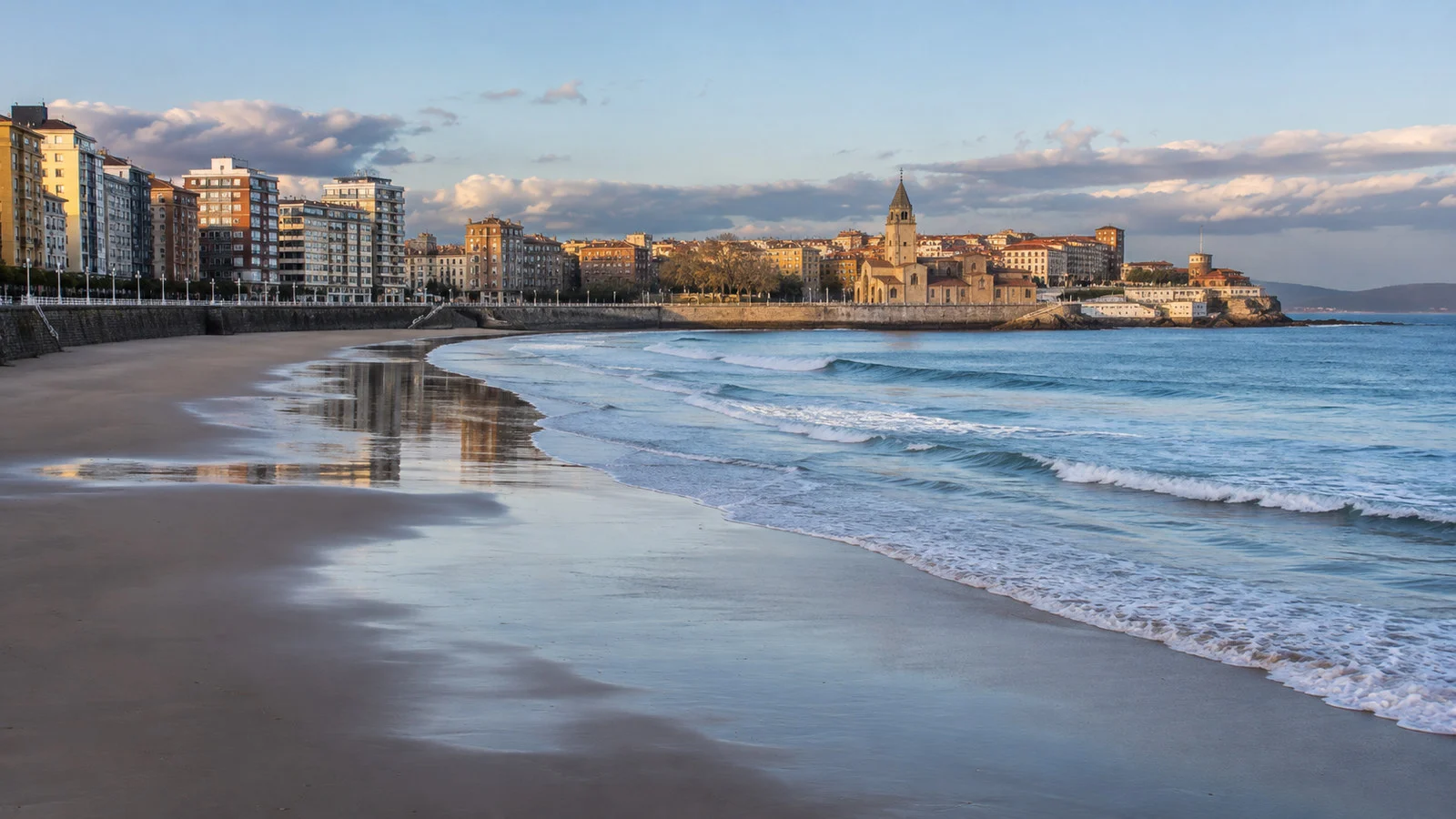
Descend toward San Lorenzo Beach and follow only as much of the promenade as your schedule permits. The regional official Gijón tourism overview describes San Lorenzo as a shell-shaped urban beach almost two kilometers long.
Turn back through the central streets toward the shuttle point instead of walking the full bay by default. A shorter loop leaves time for the baths, a drink, or an unhurried lunch.
Cimavilla, the headland, and Roman Gijón
Cimavilla preserves the setting of Gijón’s seafaring past even though it is now part of a modern city. The pleasure comes from the relationship between narrow streets, the harbor, the headland, and the open water.
The Roman baths lie near the Church of San Pedro below the headland. Check current opening hours and entry procedures through the official Gijón city website, since a closed museum can otherwise create an unnecessary detour.
Elogio del Horizonte is an outdoor landmark rather than a ticketed attraction. Give it time for the changing sound and view, but keep clear of exposed edges in strong wind.
Cimavilla has hills, irregular paving, and steps on some routes. A traveler who wants a gentler day can stay closer to the marina and lower waterfront without losing the atmosphere entirely.
San Lorenzo Beach is a view, not a promise of a swim
San Lorenzo is one of Gijón’s defining urban spaces. The wide promenade gives excellent coastal views, while the sand available at any moment depends on the tide.
Swimming conditions on the Cantabrian coast can change quickly. Obey lifeguard flags, local warnings, tide conditions, and beach closures, and never use calm-looking water as your only safety test.
If you plan to swim, carry dry clothing and leave far more return time than a normal sightseeing walk requires. A cruise call is not the right setting for ignoring a warning flag or entering outside supervised conditions.
Poniente Beach lies on the western side of the center and may be closer to some shuttle stops. It can be a convenient waterfront pause, but confirm your location before assuming it is San Lorenzo.
Cider culture without the guesswork
Asturian natural cider is poured from height to aerate a small serving, a practice known as escanciar. In a traditional sidrería, let the staff guide the ritual rather than attempting it over the floor or another guest.
The small amount poured is intended to be drunk soon after serving. Ask for a nonalcoholic option if you do not drink, and remember that alcohol affects balance before a shuttle ride and gangway crossing.
Fabada, local cheeses, seafood, and grilled meats are other regional possibilities. Choose a restaurant close to your walking route and ask about service speed before sitting down during a short port call.
Meal times in Spain can run later than some cruise schedules. A reservation or a simple early lunch plan is safer than expecting every kitchen to serve a full menu when you arrive.
Oviedo and other excursions
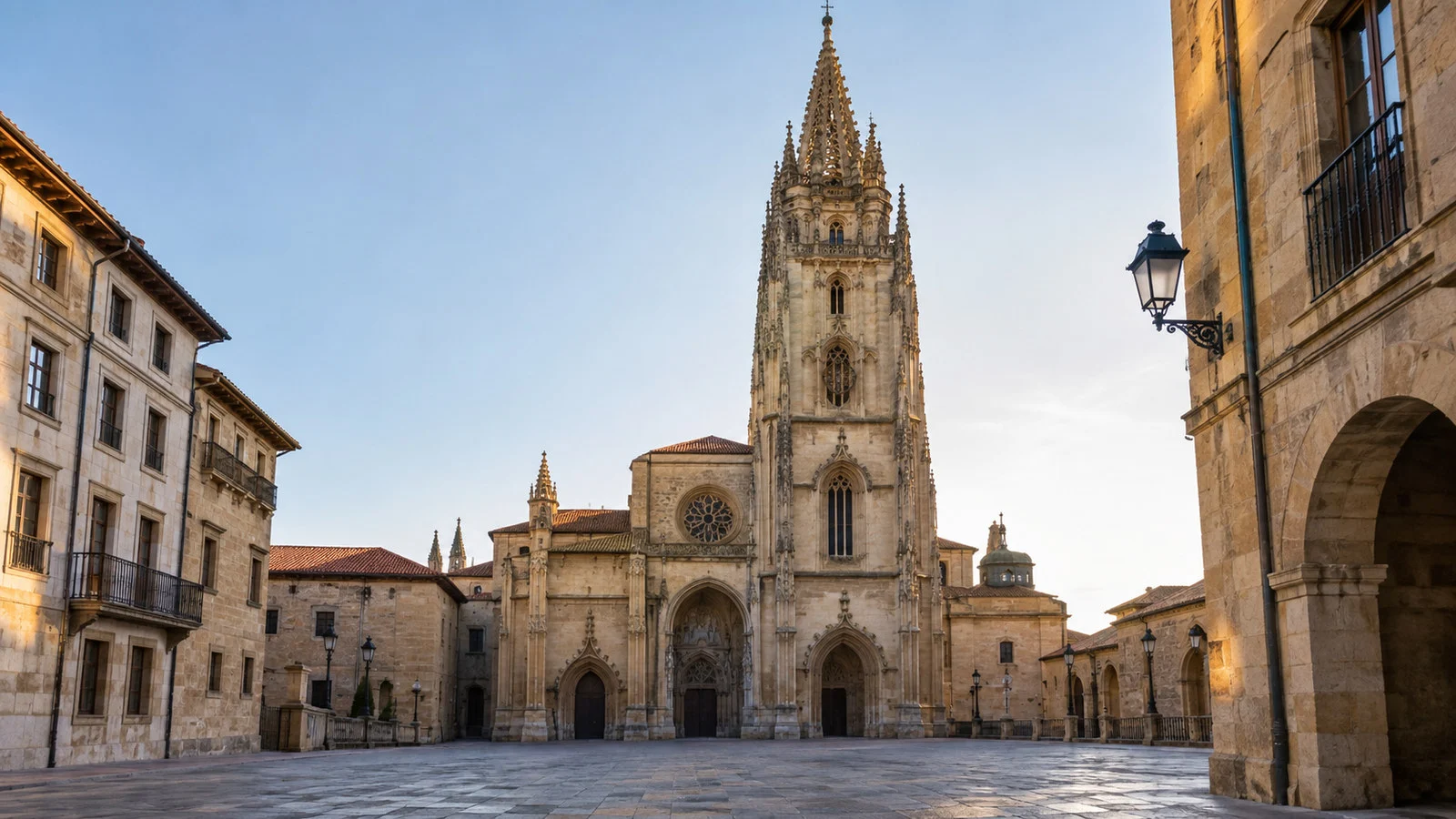
Oviedo is the strongest cultural day trip for many visitors. It offers a historic center, cathedral setting, and access to the Asturian pre-Romanesque heritage associated with the UNESCO property.
The official UNESCO listing for the Monuments of Oviedo and the Kingdom of the Asturias identifies the protected heritage. The inscription does not mean every place marketed under an Asturias excursion is itself inside the property.
A ship excursion simplifies transport between El Musel, Oviedo, and the vessel. Independent travel is possible with careful planning, but you must account for the port transfer on both ends rather than timing only the journey between city centers.
La Laboral City of Culture and the Atlantic Botanical Garden are important Gijón attractions outside the compact waterfront route. Combine them only with arranged transportation and current opening information.
Avilés is another regional option and has its own port identity. Our Avilés cruise guide helps separate that call from Gijón rather than treating the two cities as interchangeable.
Ship excursion or do it yourself?
Explore independently if your priority is central Gijón and the shuttle schedule is clear. Cimavilla, the headland, Roman baths area, and a section of San Lorenzo form a logical self-guided route.
Choose a ship excursion for Oviedo, a countryside itinerary, or multiple distant stops. It reduces the risk of coordinating a regional return with the separate transfer through El Musel.
Read the excursion description closely for walking difficulty, free time, and interior admissions. A panoramic coach tour and a guided old-town walk deliver very different experiences.
If weather is poor, a central plan remains easy to shorten. Use the Roman baths or another confirmed indoor attraction, then have lunch near the shuttle pickup rather than committing to a long exposed promenade.
Accessibility notes
Accessibility starts with the transfer from El Musel. Ask whether the shuttle has a lift or only steps, whether a mobility device can be stored, and how far the vehicle pickup is from the gangway.
Central promenades offer the easiest surfaces, while Cimavilla and Cerro de Santa Catalina introduce slopes, cobbles, and route choices. A step-free alternative may require approaching the headland from a different side or skipping the highest section.
Contact individual museums for current lift access, accessible entrances, and restroom information. Historic settings can have partial rather than complete access, and temporary works may change the usual route.
Beach sand is a separate obstacle even when the promenade is smooth. Enjoying the bay from the paved waterfront can be the more comfortable option for many travelers.
Weather and safety in Gijón
Northern Spain can be wet, cool, or windy even when another Spanish port on the itinerary is hot. Carry a light waterproof layer and use shoes that grip on damp stone.
The exposed headland can feel much windier than the marina streets. Keep loose hats and phones secure, and do not approach edges for a photograph in gusty weather.
Watch for bicycles and scooters along shared waterfront spaces. Cross roads deliberately because traffic direction and turning patterns may differ from what you expect at home.
Use normal city precautions in crowded areas and keep valuables controlled. The larger practical risk for cruise visitors is usually missing the remote port transfer, so save enough time for the return.
Return timing for El Musel
Photograph the shuttle stop and posted timetable as soon as you arrive downtown. Ask whether the final bus is the last departure or simply the recommended departure.
I would choose an earlier shuttle when traffic, rain, or a regional excursion could create delays. Reaching the port gate is not always the same as reaching the gangway, so preserve time for security and internal movement.
If you return by taxi, show the driver the ship name and exact port instructions. Saying only “the port” may not identify the correct access point inside a large commercial complex.
Independent visitors to Oviedo or another town should work backward from the shuttle they intend to catch. Do not plan around the final possible train or bus connection into Gijón.
How Gijón fits a northern Spain cruise
Gijón feels greener and more Atlantic than many Mediterranean calls. Its working-port arrival, urban beach, and cider culture give it a character distinct from Santander or Vigo.
It also rewards passengers who stay local rather than treating every stop as a long coach day. A well-paced loop through Cimavilla and San Lorenzo can reveal more of the city’s identity than a rushed regional checklist.
For broader comparisons, see our guide to Spain’s cruise ports. Port layouts vary widely, and Gijón’s El Musel transfer is one of the details worth understanding before arrival.
Quick answers
Is the cruise berth in central Gijón?
No. Cruise ships use the El Musel port area west of the central waterfront, so passengers should expect a transfer rather than a walk from the gangway to Cimavilla.
Can I walk out of El Musel?
Do not assume pedestrian access is allowed or sensible. Follow the cruise line’s shuttle and security instructions for your assigned berth.
What is the best independent plan?
Use the shuttle, walk through Cimavilla to the headland, visit the Roman baths if open, and enjoy part of the San Lorenzo promenade. Turn back with time for a meal or cider close to the pickup point.
Is Oviedo worth the excursion?
Yes, for travelers most interested in regional history, architecture, and the pre-Romanesque heritage. Stay in Gijón if you prefer coastal scenery or want to minimize transport.
Can I swim at San Lorenzo?
Only when local conditions, tide, and safety flags permit. A cruise call should never pressure you to enter rough or unsupervised water.
How much time do I need in town?
A half day can cover a compact central route if the shuttle is efficient. A longer call lets you add a museum, a relaxed meal, or a regional excursion, but not all three without careful timing.
The last word
Gijón is worth the industrial arrival because the city beyond El Musel is walkable, distinctive, and closely tied to the sea. Confirm the shuttle, keep the route compact, and let Cimavilla and San Lorenzo carry the day.
If local arrangements change after your call, our editorial policy explains how to submit a correction. Current instructions from the ship and port always take priority over general guidance.