Finnsnes Cruise Port: Gisund Bridge, Senja & Segla
Finnsnes is the town that makes Senja possible, a bridge, a quay, and about five thousand people standing between the mainland and one of the most photographed landscapes in Norway. Hurtigruten and Havila both call here on the coastal express, and for most passengers this stop is really about what lies on the other side of the strait.
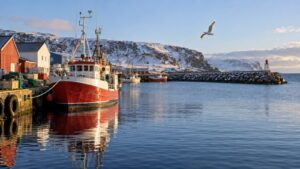
The quay sits on the mainland side of the strait
Finnsnes is a mainland town, not an island call, and the coastal ship berths on the Gisundet Strait side facing Senja. Hurtigruten and Havila both publish the port address as Bernhard Lunds vei 11.
The berth sits close to the compact center of a town of almost five thousand people. No operator publishes one universal walking route from every gangway position, so treat your ship’s daily notice as the final word on the day.
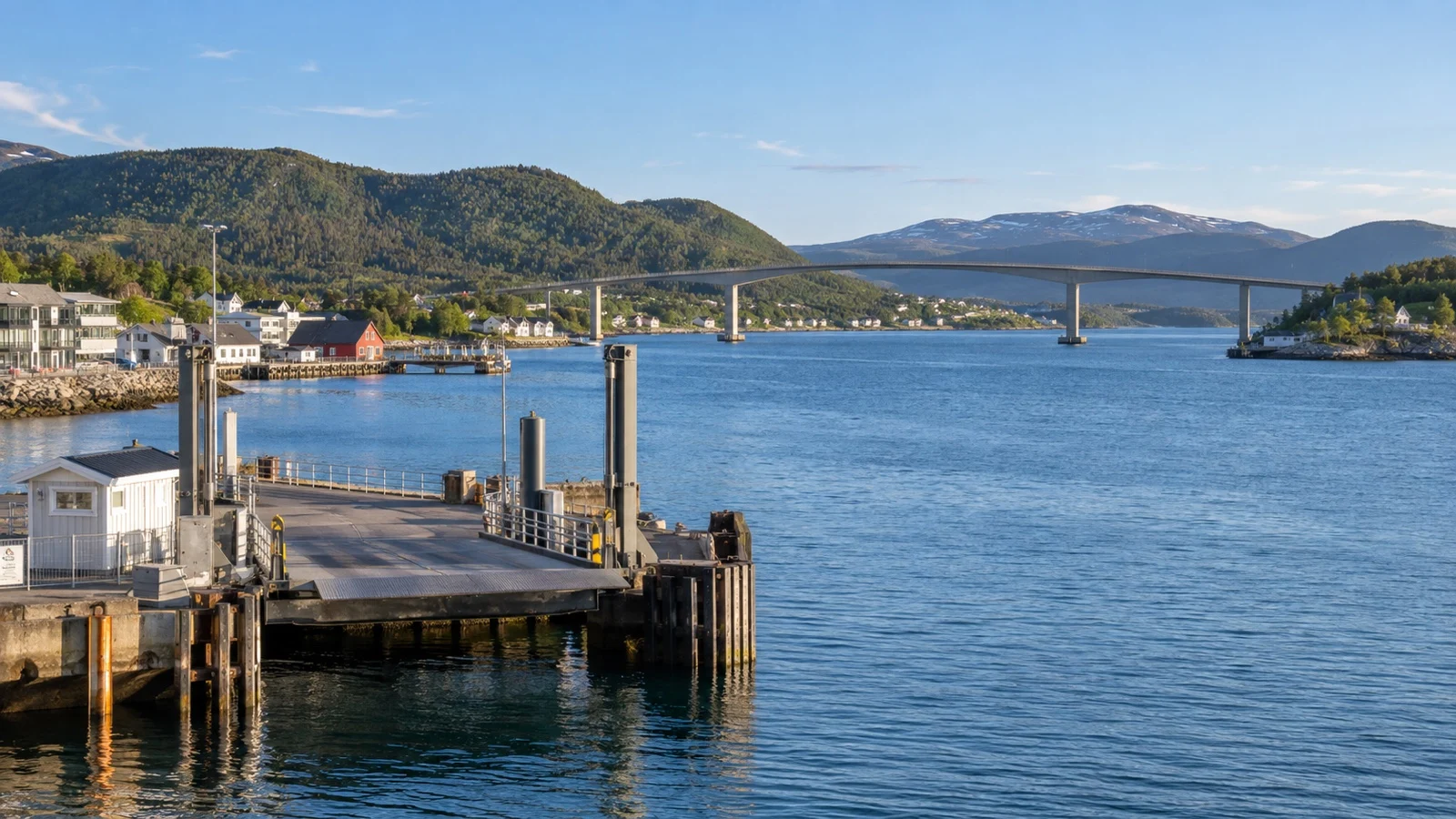
What you can count on is the view. Hurtigruten identifies the cantilevered Gisund Bridge between Finnsnes and Silsand as the first landmark from the water.
Finnsnes cruise port quick facts
- Docking: Coastal ships normally berth alongside at the town quay at Bernh. Lundsvei 11, facing Senja on the Gisundet Strait.
- Into town: A short walk from the quay into central Finnsnes; no official distance is published; confirm the exact route in your ship’s daily notice.
- Currency: The Norwegian krone (NOK) and Norwegian, with English widely spoken.
- Time zone: Central European Summer Time (CEST, UTC+2) during the cruise season, CET (UTC+1) in winter.
- Schedule caution: No trustworthy public missed-call percentage is available; weather and operating conditions can shorten, change, or cancel a call.
Walk the strait before you decide anything
Finnsnes reads like a small regional center rather than a fishing village. It serves as a transport, shopping, and supply hub for Senja and the surrounding Midt-Troms area.
The center itself is walkable in the way a town of under five thousand people usually is. Shops, cafes, and Finnsnes Church cluster within a few streets of the water, and the Finnsnes House of Culture anchors the town’s cultural life.
The Gisund Bridge is the town’s real landmark, and it is worth walking toward even if you are not crossing it. From the shore you get the same cantilever silhouette that greets ships arriving from the sea, framed by the forested hills behind town.
Do not expect a resort town. Finnsnes is a working regional center first, and its appeal on a short call is orientation, not spectacle, before the real scenery starts across the water.
A farm village that became the gateway
Hurtigruten traces Finnsnes from a small farm community in the late 1800s to a regional trading and transport hub. That history helps explain why today’s compact town feels practical rather than staged for visitors.
Fish farming and processing remain important to the local economy, while tourism has grown around Senja’s landscapes. The town still functions first as a year-round community and service center.
Finnsnes is the administrative center of Senja municipality, which brings public services and transportation links to the mainland side of the bridge. That role matters more to a short visit than a long list of population statistics.
None of that is dramatic in the way a stave church or a battle site is dramatic. It matters here because it explains why a town this size has real infrastructure, real shops, and a real transport terminal, none of which is a given this far up the Norwegian coast.
A loop that fits between the church and the bridge
The simplest plan on a short call is a loop, not a hike. Start at the quay, walk the shoreline toward the Gisund Bridge, then cut back through the center past Finnsnes Church.
The church itself is a modest, modern building rather than a medieval landmark, but it marks the old heart of town and is a useful point of reference if you lose the water. From there, the shopping streets and the House of Culture are a few minutes further on.
If the ship’s timing gives you an hour or two rather than a full day, this loop is honestly the whole plan. It is flat, it is short, and it does not require a car, a guide, or a bus.
What it will not give you is Senja. Finnsnes town is a pleasant hour, not a highlight, and I would not build an entire call around it with the bridge across the strait sitting right there.
Segla, Tungeneset, and the island everyone actually comes for
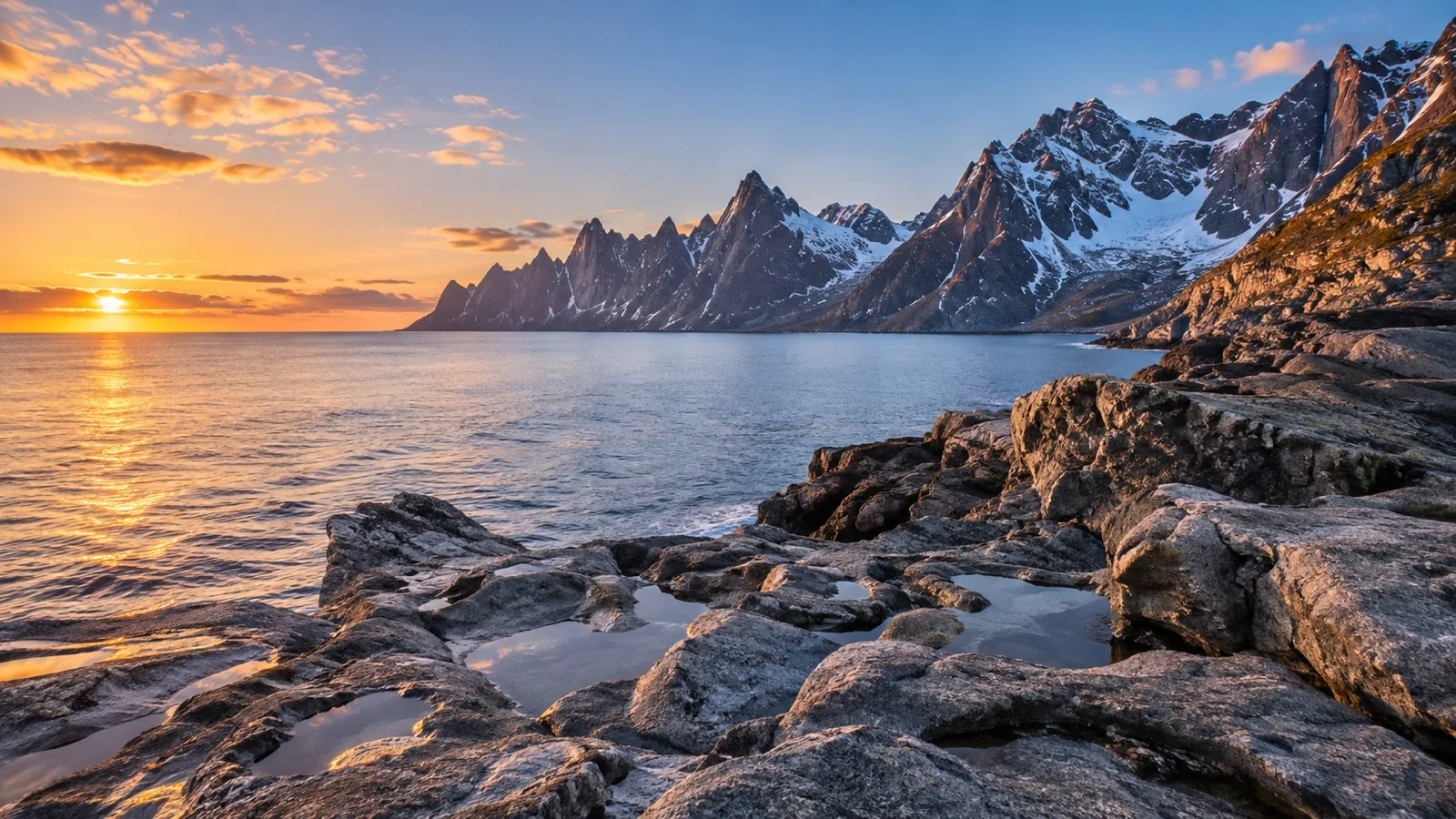
Senja is often described as Norway in miniature because mountains, fjords, beaches, and fishing villages sit close together. The island’s outer coast is the scenic prize, but it takes real driving time from Finnsnes.
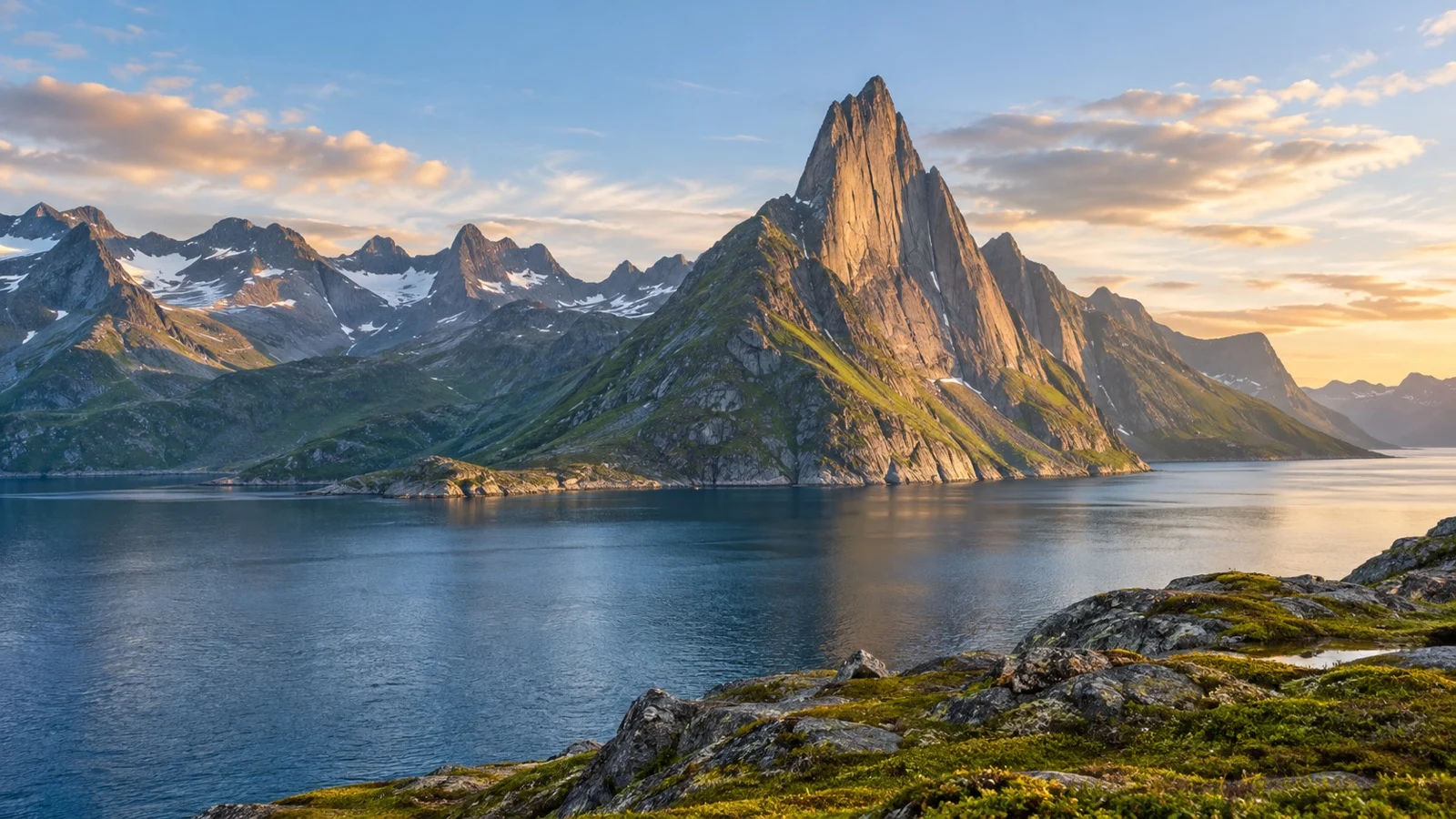
The 102-kilometer National Scenic Route Senja runs between Botnhamn and Gryllefjord. Its official viewpoints include Tungeneset, with views toward the Okshornan peaks, and Bergsbotn above the fjord.
Be honest with yourself about distance and time. Fjordgård, Tungeneset, and Bergsbotn require substantial driving from Finnsnes, so confirm current travel times and road conditions before treating any of them as a port-call outing.
A short port call favors staying in Finnsnes unless the operator sells a protected-return excursion onto Senja. Check Visit Norway’s Senja and Central Troms guide and official road notices before committing a longer call to the island.

Choose town, bridge, or island
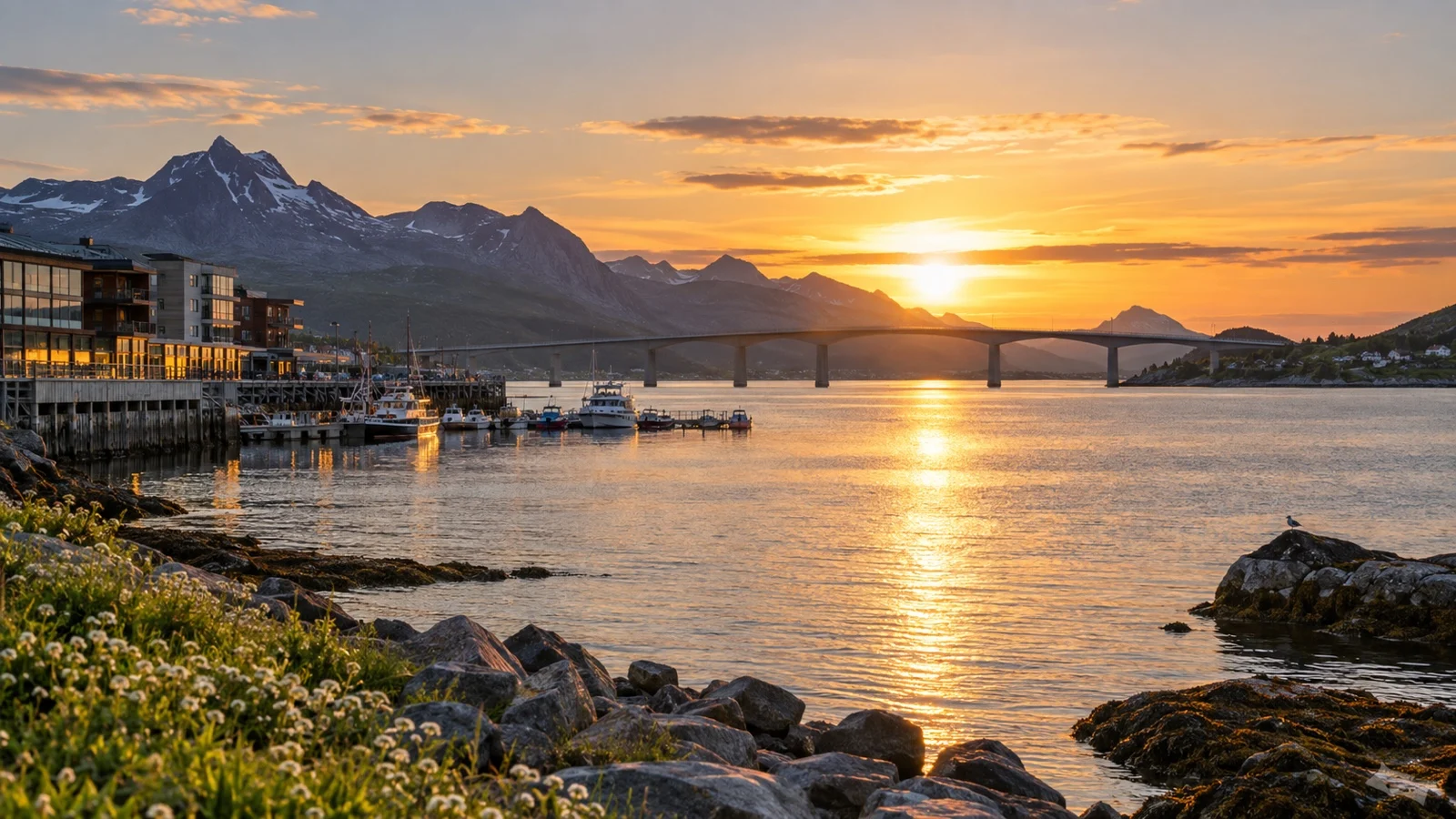
Town: Walk the shoreline loop past the Gisund Bridge and Finnsnes Church, and treat the center as an easy hour rather than a full day. This is the flexible, weatherproof option if the call is short or the forecast turns.
Bridge and near shore: Cross toward Silsand or drive a short way onto Senja for a taste of the island without committing to the far coast. This suits travelers who want Senja’s atmosphere without the long drive to Segla or Tungeneset.
Island: Book a shore excursion or private driver to Tungeneset, Bergsbotn, or the Segla area, and let it own the day. The scenic route deserves a focused outing, not a rushed add-on squeezed around a museum visit.
Skip it entirely: If your call is under two hours, the honest answer may be to stay close to the quay and enjoy the bridge view rather than start a long drive you cannot finish. Senja rewards time, and a rushed version of it is not much of a version at all.
Accessibility from quay to fjord
Coastal ships normally berth alongside in town, which avoids a tender transfer when that plan operates. Gangway angle still depends on conditions and the specific ship, so passengers needing assistance should arrange it through the cruise line in advance.
Central Finnsnes is compact and largely flat near the water, which helps. Curbs, crossings, and weather-worn pavement are the more likely obstacles here than any dramatic incline in town itself.
Senja is a different matter. The scenic route includes narrow, winding roads, gravel pull-offs at some viewpoints, and a genuine mountain hike if the Segla summit is the goal, none of which is realistic for limited mobility.
Tungeneset and Bergsbotn are formal scenic-route viewpoints, but that does not guarantee step-free access from every vehicle. Confirm surfaces, gradients, restroom access, and mobility-device storage with the excursion operator before booking.
Weather and safety this far north
Finnsnes sits well above the Arctic Circle, and the weather follows the same pattern as the rest of coastal Troms: mild for the latitude thanks to the Gulf Stream, but changeable and often wet. Layers and a genuine waterproof shell matter more here than a heavy coat.
Summer calls bring the midnight sun and long, bright days, good conditions for the Segla and Tungeneset drive. Winter calls bring the polar night and a real chance of the northern lights, though neither cloud cover nor road conditions are guaranteed in your favor.
Roads on Senja are narrow and can be affected by wind, rain, or snow depending on the season, so build weather margin into any excursion. Norway’s emergency numbers are 112 for police, 113 for medical emergencies, and 110 for fire.
Return timing
Use the all-aboard time in the ship’s daily program, not a generic buffer. On Havila’s current 20- to 30-minute coastal stops, stay immediately around the quay and be ready to reboard when instructed.
Only consider Tungeneset, Bergsbotn, or the Segla area on a genuinely long call with transportation that protects the ship’s return deadline. Current traffic, weather, and road works can change the safe turnaround point.
Save the quay address, operator contact, and exact departure time before you head for the island. Download the route for offline use so your return plan does not depend entirely on mobile service.
How Finnsnes fits a Norway cruise
Finnsnes is one of the smaller, quieter calls on the Hurtigruten coastal express route, more gateway than destination in its own right. It earns its place on the schedule because of what it connects to, not because the town itself is trying to compete with Bergen or Tromso.
If your itinerary is built around the far north generally, compare it with our wider Norway cruise ports overview, and if the aurora is part of your plan, our northern lights cruise guide covers the season and the odds in more depth than a single port call can. Both frame Finnsnes as what it actually is: a small, useful stop with an extraordinary neighbor.
The practical checks I would make before Finnsnes
Confirm the Bernhard Lunds vei quay, direction, and call length because Finnsnes is an alongside Coastal Express stop with a fixed departure, not an open-ended Senja base. Stay near the harbor on a short call and use the gangway time rather than a general itinerary map.
The town and Gisund Bridge views are the reliable walk, while Segla, Tungeneset, and the scenic route require substantial island driving. Use a protected-return excursion on a long call, and do not attempt the outer island during a brief coastal stop.
Check Norway and Schengen entry rules, National Scenic Routes notices, weather warnings, and seasonal road conditions. Wind, ice, rain, exposed viewpoints, trail gradients, gangway slope, and limited accessible vehicles can change the plan quickly.
Finnsnes cruise port FAQs
Do cruise ships dock or tender at Finnsnes?
Ships dock alongside at a town quay on the Gisundet strait side of Finnsnes; it is not a tender port. Follow your ship’s daily program for the exact berth.
How do I get to Senja from the cruise ship?
The Gisund Bridge connects Finnsnes directly to Silsand on Senja, and road excursions use it to reach the island. No ferry is needed for this crossing.
Can I see Segla or Tungeneset on a short call?
Only consider Tungeneset or Bergsbotn on a long call with prebooked transportation and a protected return. The Segla summit hike is not a realistic short-call plan.
What is Finnsnes like if I skip the island entirely?
It is a practical, walkable regional town with a church, a cultural center, and views across the strait. Travelers who skip Senja can treat Finnsnes as a quiet reset before or after a busier port.
The gateway earns the name
Finnsnes will never be the reason someone books a Norway cruise, and it does not pretend otherwise. It is the bridge, literally and otherwise, to Senja’s mountains, and that is a perfectly good reason for a port to exist.
If you are comparing it against other small coastal calls, our guides to Kristiansund and Narvik cover two more Norwegian towns built around a single, defining nearby attraction. Cruise Ports documents its research standards in our Editorial Policy, and as always, confirm the berth, the bridge traffic, and the weather before committing a short call to the far side of the strait.
How this guide was researched: This guide uses current Hurtigruten, Havila Voyages, Norwegian Scenic Routes, Visit Senja, Visit Norway, and Norwegian government information. Logistics and time-sensitive details were reviewed in September 2026; see our Editorial Policy and follow current onboard instructions.