Patmos Cruise Port: Tender Guide to Skala, Chora and the Monastery
Patmos is a small Greek island with an unusually clear cruise-day shape. Tenders land at Skala, the hill town of Chora rises above it, and the Cave of the Apocalypse and Monastery of Saint John form the spiritual and historic center of the visit.
The island’s scale makes a rewarding half-day possible, but the steep roads, stone steps, tender schedule, and sacred-site hours still need respect. Visit the monastery and cave early, then let Skala, a beach, or a slow lunch fill whatever time remains.
Quick facts about Patmos cruise port
- Arrival: Normally by ship tender to the Skala waterfront
- Main port town: Skala, with cafés, shops, buses, taxis, and boats close to landing
- Essential sights: Chora, the Monastery of Saint John, and the Cave of the Apocalypse
- UNESCO site: Chora, the monastery, and the cave are recognized together
- Easy plan: Skala, a nearby beach, and a relaxed meal
- Currency: Euro
- Language: Greek, with English common in visitor services
- Dress: Modest clothing for active religious sites
- Main risks: Tender delays, steep surfaces, heat, limited opening hours, and returning on the wrong boat schedule
The tender lands in the middle of Skala
Cruise ships normally anchor in the bay and use tenders to carry passengers into Skala. The ride is usually short, but boarding order, sea conditions, crowding, and the final return boat can reduce usable time.
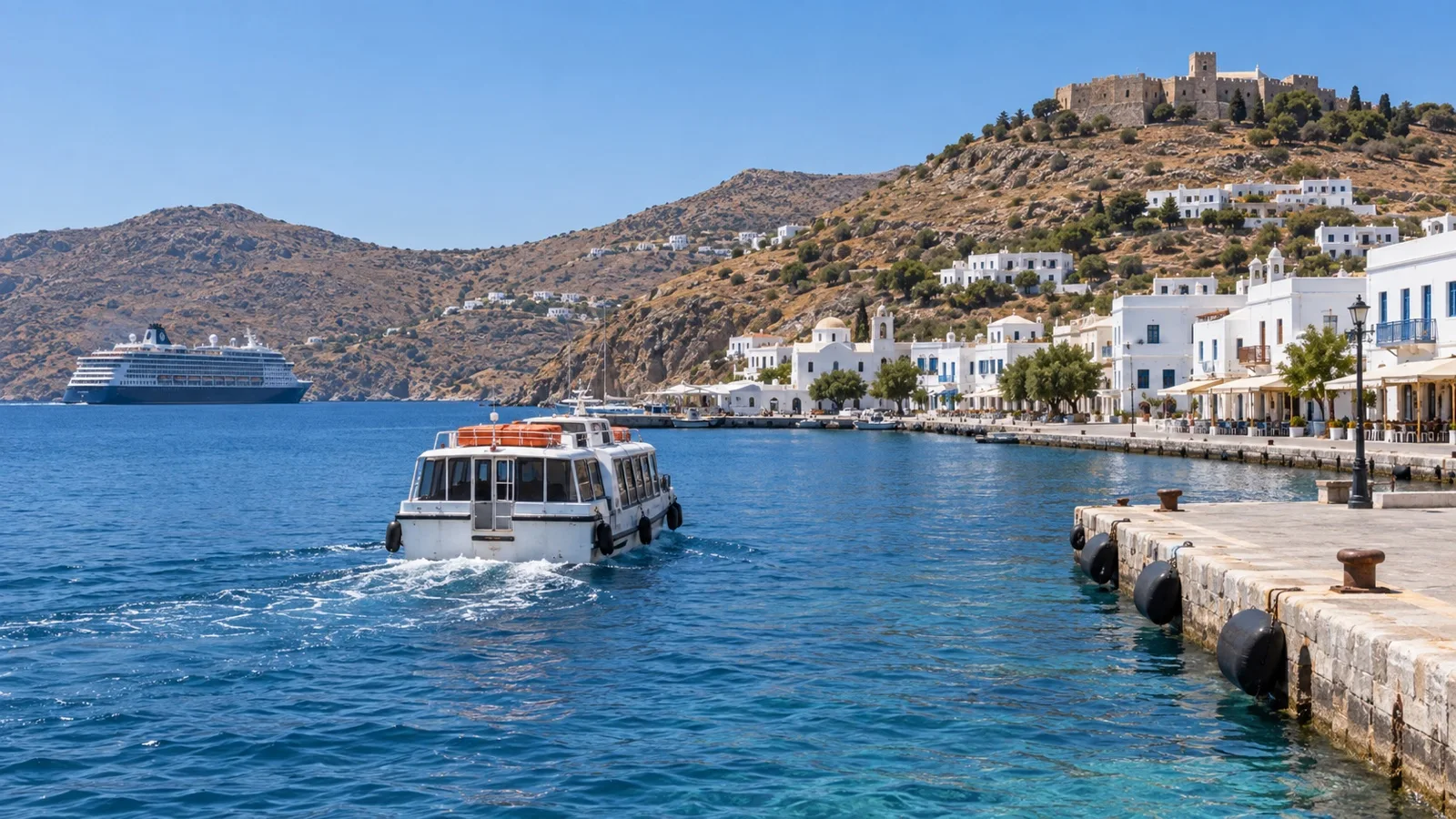
Listen for ticket or meeting instructions before leaving the ship, especially if independent tours have a fixed start. Photograph the landing, note the return queue, and save the published last-tender time rather than relying on the ship remaining visible offshore.
A moving tender requires steps and a transfer between vessels, which can be restricted when conditions are unsafe. Ask the cruise line about mobility-device and assistance rules for the actual ship, not a different vessel’s experience.
Skala is compact and useful
Skala gathers cafés, restaurants, bakeries, shops, pharmacies, taxis, buses, and excursion boats around the harbor. It is easy to explore on foot and forgiving if the ship’s tender operation starts late.
The waterfront can become busy when several boats arrive, but quieter lanes sit just behind it. Keep enough time for a meal or swim after the hilltop sights rather than filling every minute with transport.
Chora is the island’s white hill town
Chora wraps around the fortified monastery above Skala with whitewashed houses, churches, stone lanes, and broad Aegean views. UNESCO describes it as one of the best preserved old settlements of its kind in the Aegean.

The streets are beautiful and demanding, with steps, slopes, smooth stones, and little shade in places. Wear secure shoes, carry water, and allow time to wander without blocking doors or photographing private courtyards as if the neighborhood were a stage set.
The monastery rewards an early arrival
The Monastery of Saint John the Theologian dominates Chora like a dark stone fortress. UNESCO dates its foundation to 1088 and highlights its manuscripts, icons, liturgical art, churches, cells, and long role in Greek Orthodox learning.
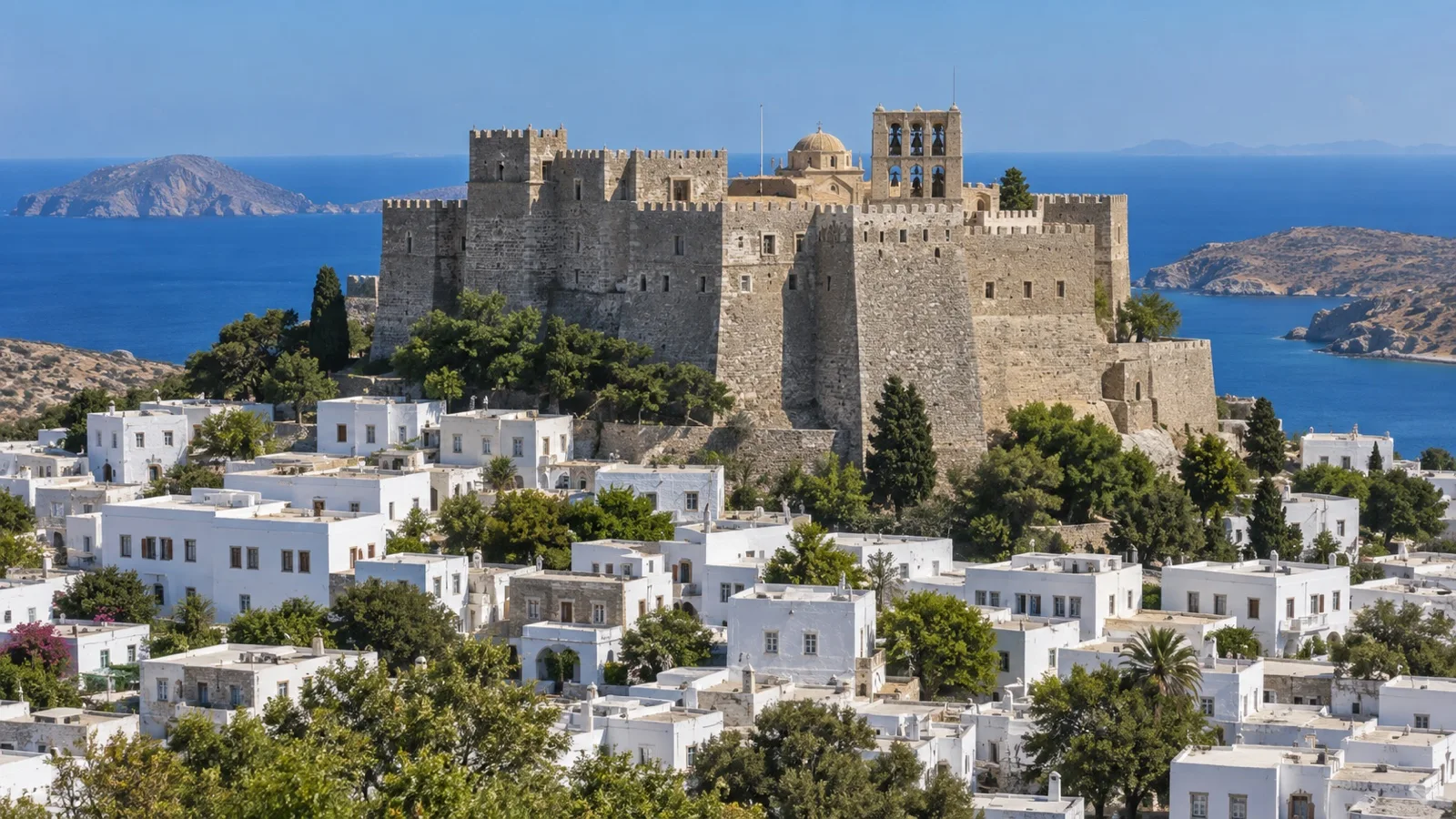
Opening hours can be limited and may change for worship, feast days, maintenance, or seasonal operations. Arrive early, dress modestly, follow photography rules, and remember that this remains a working religious community rather than only a historic attraction.
Expect steps, thresholds, uneven stone, and possible crowding around the compact interior. Travelers who cannot manage the full route can still enjoy Chora’s views and exterior atmosphere with a driver positioned as close as current access rules allow.
The Cave of the Apocalypse sits below Chora
The Cave of the Apocalypse lies partway along the road between Skala and Chora. Christian tradition identifies it as the place where Saint John received the Revelation, and UNESCO includes the sacred complex with the monastery and historic town.
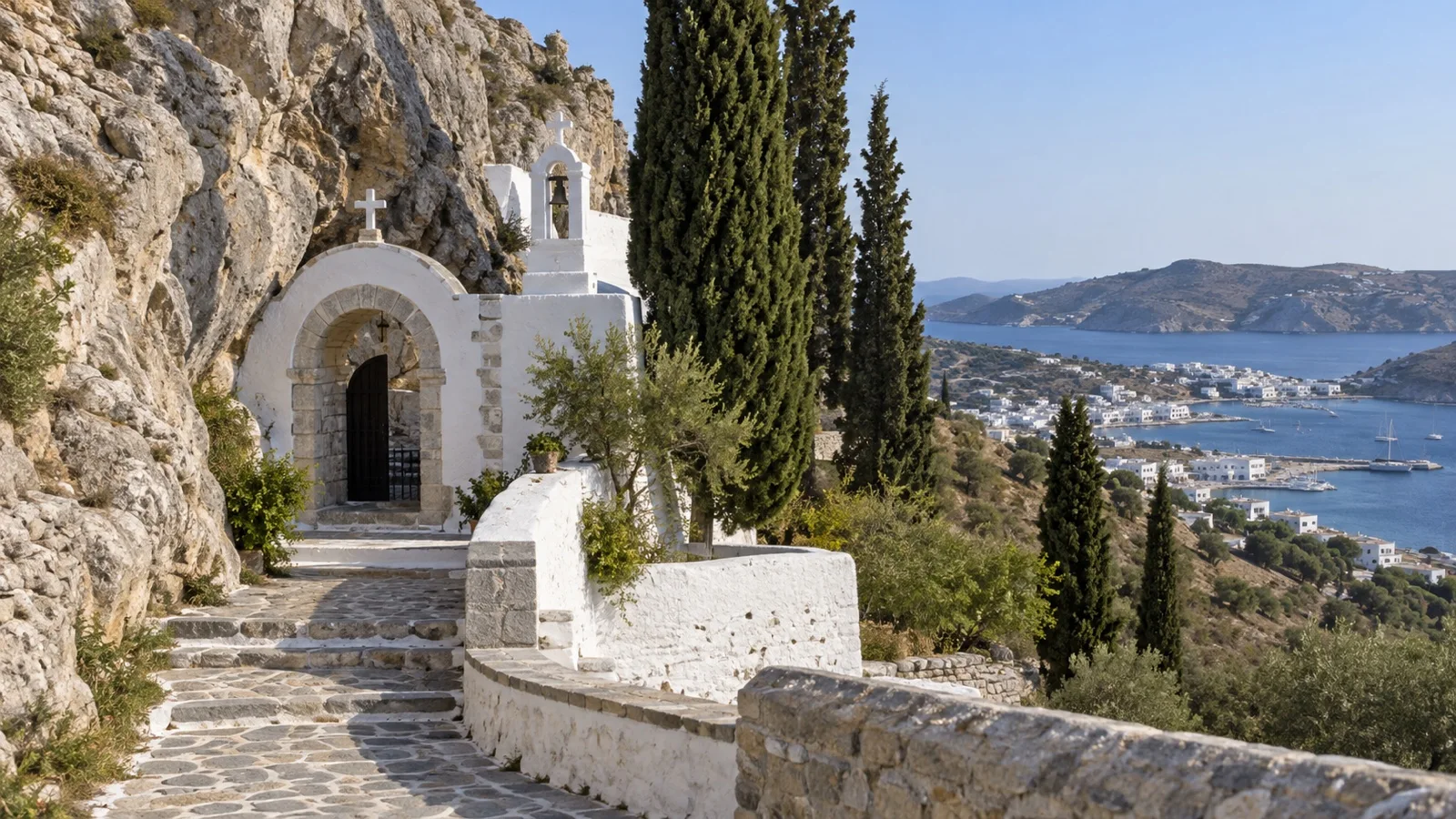
Visitors descend steps into an intimate worship space where silence and respectful behavior matter. The stairs and enclosed setting make access difficult for some passengers, so ask a guide to describe the route honestly before committing.
A vehicle tour can visit the monastery first and the cave while descending, or reverse the order around current hours. Confirm the sequence on the day because arriving at a locked sacred site is a particularly quiet form of itinerary failure.
Buses are inexpensive but schedules matter
Public buses connect Skala with Chora and other island points on a seasonal timetable. They can suit independent visitors, but a crowded sailing day may fill departures and create a longer wait than the printed journey time suggests.
Check the current schedule at the Skala stop and identify the return bus before going uphill. Leave enough margin to take a taxi if service changes, and carry small euro notes for fares where cards are not accepted.
Taxis make the classic loop simple
A taxi or prearranged driver is the easiest way to combine Chora, the monastery, and the cave within a short call. Agree on the total fare, waiting, site order, pickup point, and return time before leaving Skala.
Taxi supply can tighten when multiple ships or ferries arrive, so do not assume one will be waiting after every stop. For a private tour, keep the same vehicle and make sure the driver understands the ship’s last-tender time.
A beach can follow the sacred sites
Patmos has coves and beaches with very different levels of development, shade, and road access. Nearby choices suit a short swim, while farther beaches make sense only when transportation and the return are firmly arranged.
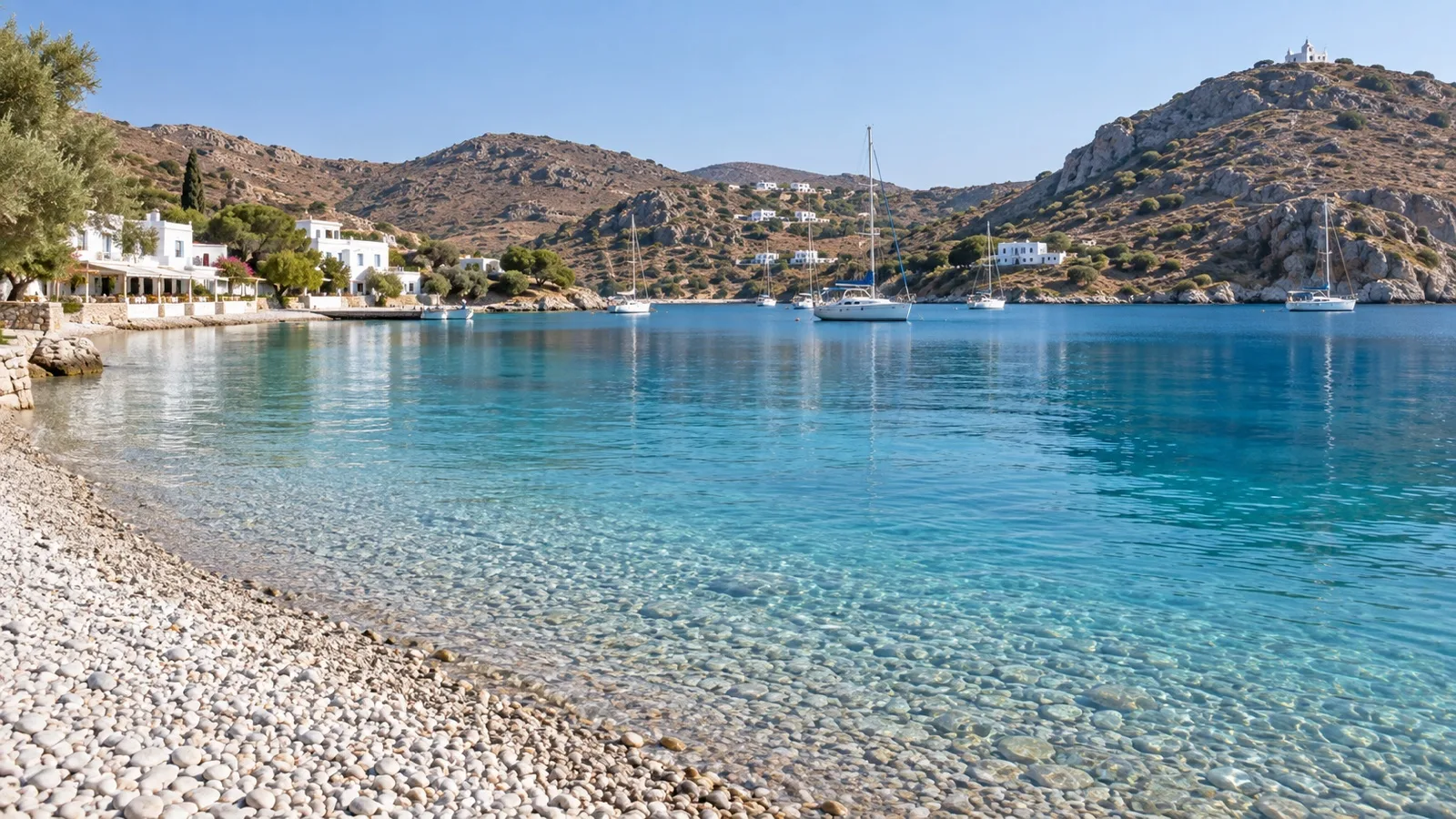
Ask whether the beach is sand or pebbles, whether chairs and food operate that day, and how the return taxi will be secured. Wind and sea conditions can make one coast less comfortable than another, so same-day advice is more valuable than a permanent ranking.
A boat trip adds another weather dependency
Small boats may offer beach stops or trips around nearby islands, but the cruise tender schedule already places one boat transfer in the day. Choose an established operator with a firm return to Skala and a weather policy that protects more than the deposit.
Confirm shade, toilet, life jackets, swimming access, total duration, and where the boat boards. Independent operators cannot hold the cruise ship, even when a delay feels completely reasonable from the middle of a blue bay.
Food gives Skala a gentle finish
Fresh fish, grilled octopus, salads, local cheese, baked dishes, honey sweets, and strong coffee suit a waterfront lunch. Choose a busy taverna with clear prices, then tell the server when you need the bill rather than relying on a rushed final wave.
Patmos uses the euro, and established businesses commonly accept cards, though cash remains useful for buses, small shops, or a connection outage. Carry water before climbing because Chora’s beauty does not lower the midday temperature.
Accessibility requires specific questions
The tender transfer is the first constraint, with moving boats, steps, and cruise-line safety rules. Skala’s waterfront is the easiest area, while Chora’s lanes, the monastery, and the cave include significant slopes and stairs.
Ask whether a taxi can carry the mobility device assembled and how close it may approach each entrance. A panoramic drive, accessible café, and Skala waterfront visit can provide a strong alternative when the sacred interiors are not safely reachable.
Three realistic Patmos days
Summer brings strong sun, reflected heat, and dry conditions, while spring and autumn can add cooler wind or showers. A hat, sunscreen, water, and a light layer cover more possibilities than dressing only for the temperature shown in Skala.
Wind matters twice on Patmos because it can affect comfort on exposed hills and the operation of small boats. Check the ship’s announcements before leaving, then choose the sheltered city or beach plan that suits the actual morning.
The classic plan takes an early taxi or tour to the monastery, explores Chora, visits the cave, and returns for lunch in Skala. It covers the island’s defining story while keeping the afternoon flexible.
The easy plan stays around Skala for harbor lanes, food, shopping, and a nearby swim. It is the sensible answer when tendering begins late, mobility is limited, or heat makes the hill unappealing.
The scenic plan combines Chora and the monastery with one carefully chosen beach or island drive. Skip the cave only if stairs are unsuitable or current hours make the sequence impossible.
Protect the final tender
Return to Skala well before the published last tender and allow time for the line. Wind, traffic on narrow island roads, a delayed bus, and a busy taxi rank can each consume the cushion.
If the first tender runs late, remove the final stop instead of borrowing from the return margin. The ship’s official time and instructions override every general estimate in this guide.
Final thoughts
Patmos is most rewarding when its sacred history receives the first, coolest hours and the rest of the day remains light. Let Chora, the monastery, and the cave form the core, then enjoy Skala or the sea without racing the tender clock.
CruisePorts.co provides practical, independent planning guidance for cruise travelers. Tender operations, sacred-site hours, transport, prices, access rules, and weather can change, so verify critical details with official sources and your cruise line before travel.