Trollfjord Cruise Guide: Scenic Sailing, Tours and Svolvær
Trollfjord is not a cruise port in the usual sense. There is no pier, town, road, cafe, or excursion desk at the head of the fjord, so the experience happens from the water and often from the deck of the ship you arrived on.
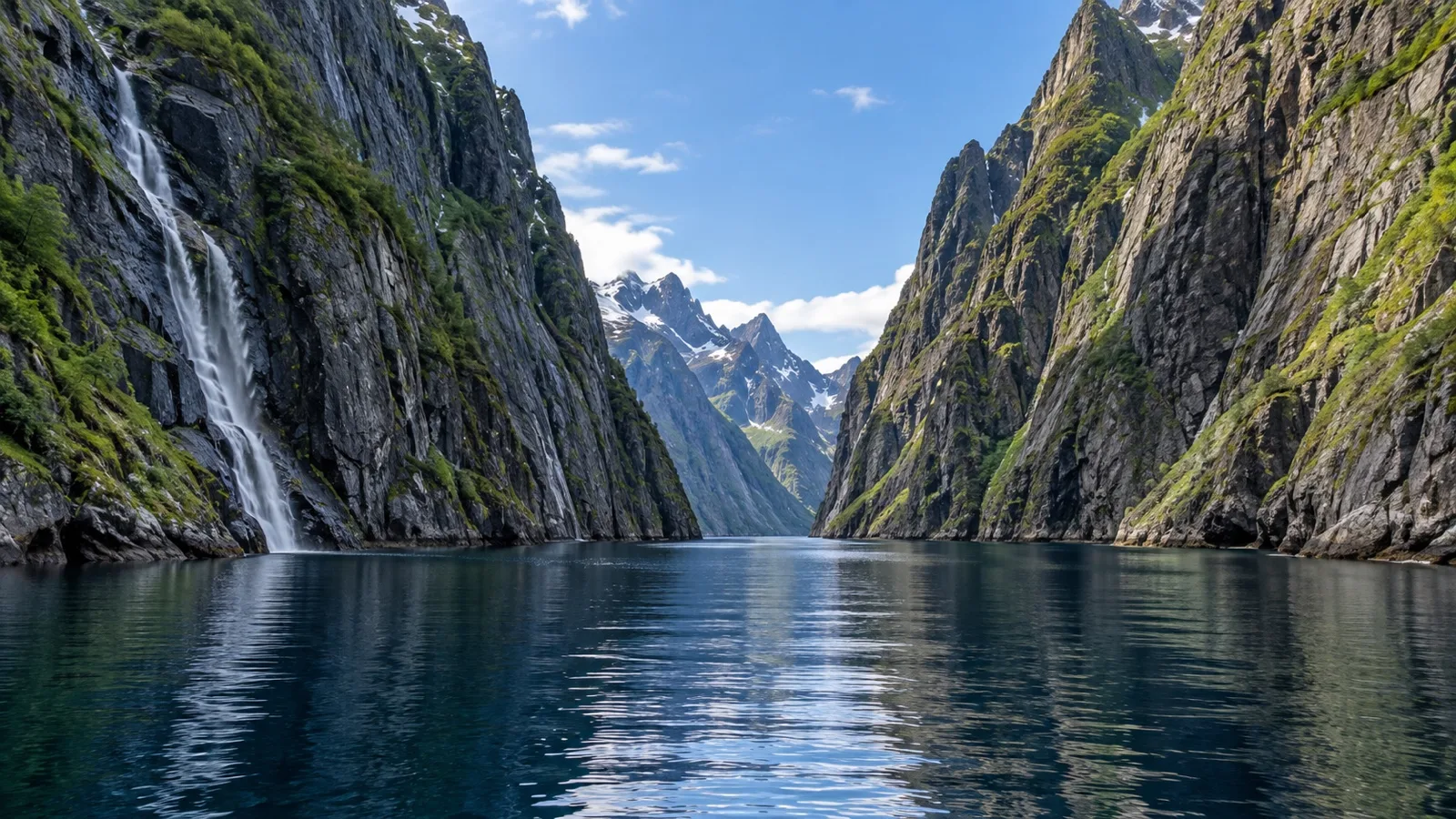
This narrow arm of Raftsundet sits between the Lofoten and Vesterålen island groups in northern Norway. Its tight entrance and steep walls create one of the most theatrical scenic sailings on the coast, but entry is never something a traveler should assume.
My quick take
Trollfjord is a short experience with an outsized sense of drama. The best moment is often the transition from broad Raftsundet into the narrow opening, followed by the captain’s turn inside when conditions and vessel size permit.
If your main ship cannot enter, a small-boat trip from Svolvær can offer a closer look and more time near the cliffs. Choose the larger sightseeing boat for comfort or a RIB for speed and exposure, then judge honestly whether cold, spray, noise, and motion suit you.
Quick Facts
- Country: Norway
- Region: Raftsundet, between Lofoten and Vesterålen
- Type of call: Scenic cruising destination, not a port
- Access: Boat only, with no road to the fjord
- Approximate length: 2.5 kilometers
- Approximate width at the mouth: 100 meters
- Nearest tour hub: Svolvær
- Currency: Norwegian krone, abbreviated NOK
- Time zone: Central European Time, with daylight saving in season
- Accessibility: Good from a stable ship lounge, more demanding on small boats
Where Trollfjord is and why it feels so narrow
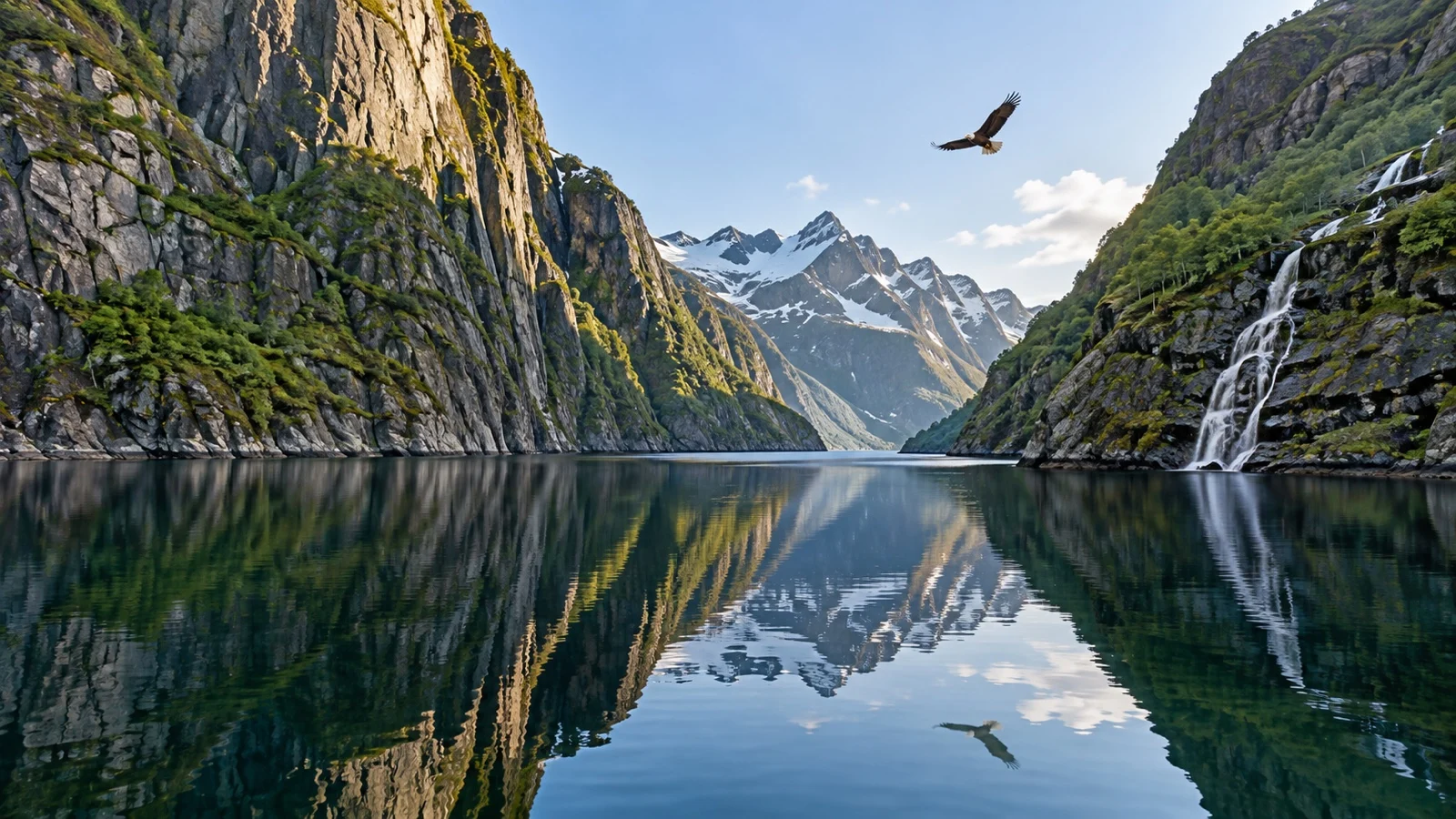
Trollfjord branches from Raftsundet on the eastern side of Austvågøya. The official Visit Lofoten destination guide places it in this dramatic strait and describes a fjord about 2.5 kilometers long with a mouth only around 100 meters wide.
The fjord widens after the entrance, which gives some coastal ships room to turn. Even so, the maneuver depends on the individual vessel, visibility, wind, sea state, traffic, and the captain’s judgment.
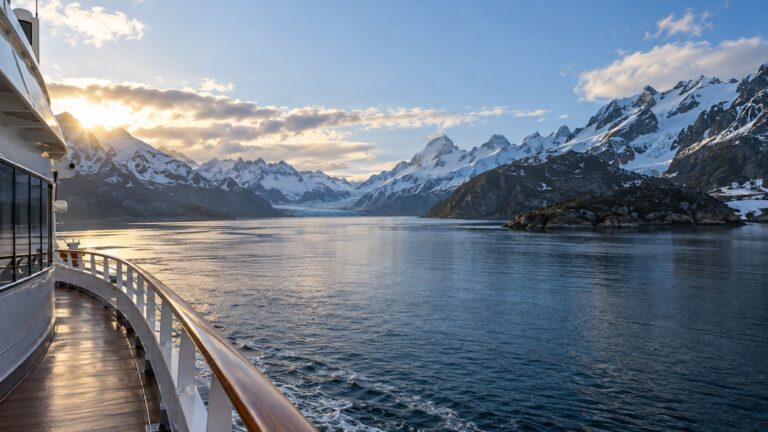
Mountains rise sharply around the water, with waterfalls appearing when rain or snowmelt feeds them. The scale can be difficult to understand in photographs because there are few buildings or roads to provide a familiar reference.
Trollfjord also sits in a region where Lofoten and Vesterålen meet, so marketing descriptions do not always use the same regional label. For cruise planning, the important location is the branch off Raftsundet and the boat connection from Svolvær.
What happens on a scenic cruise into Trollfjord
The approach begins before the fjord entrance. Find an outdoor position or panoramic window while the ship is still in Raftsundet, because the surrounding passage is part of the experience rather than empty travel time.
As the ship lines up with the mouth, the cliffs appear to close around the bow. Passengers often move suddenly to the forward rail, so keep walkways clear and resist the urge to lean around barriers for a photograph.
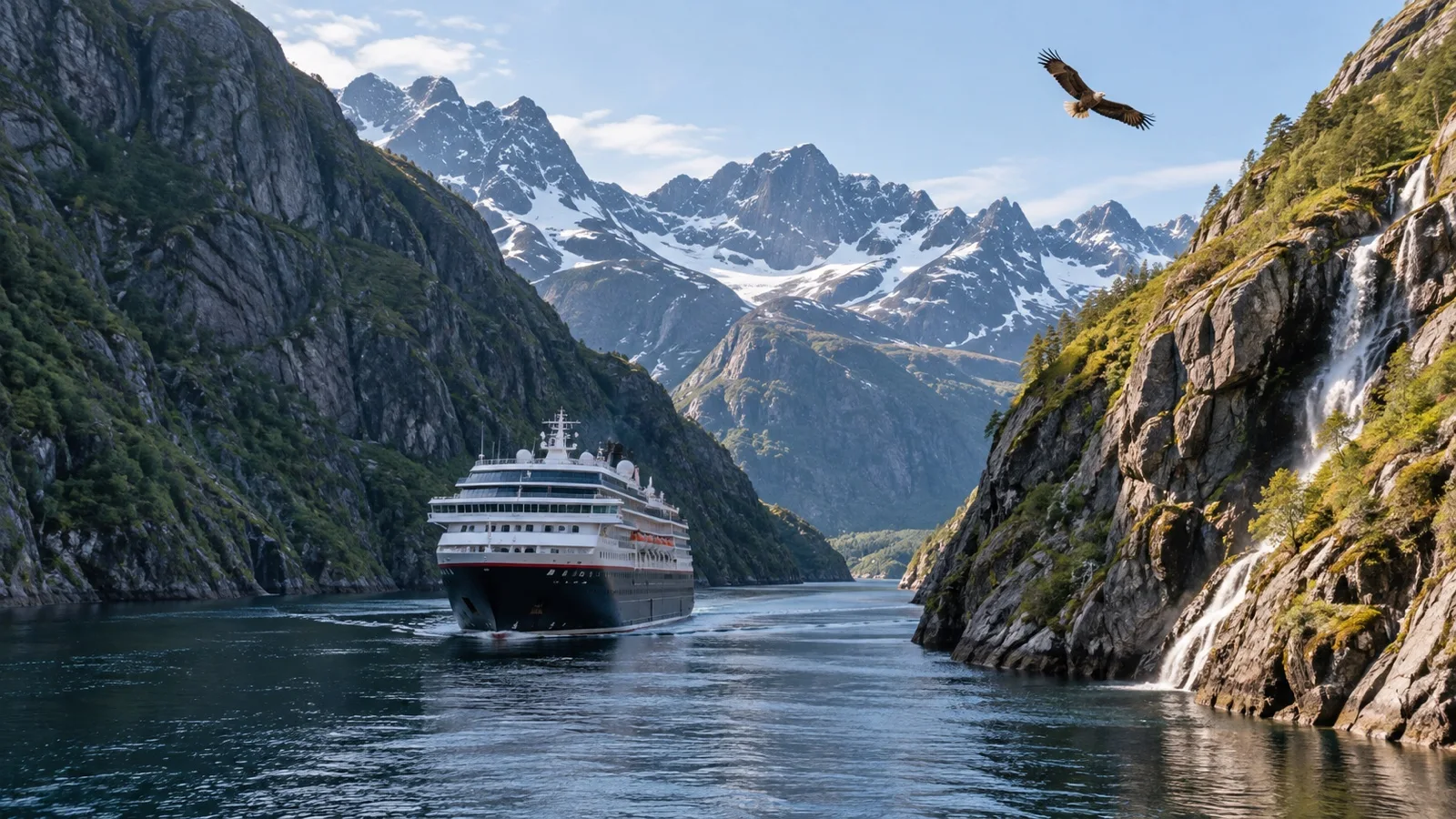
If the vessel proceeds inside, speed drops and the captain may rotate the ship in the wider basin. Hurtigruten describes the turn as one of its signature coastal moments, but its own guidance makes entry conditional when safety or navigation requires a different plan.
The entire visit may feel brief compared with a conventional port call. That is normal, since there is no shore program to fill several hours and no reason for a large vessel to remain after completing the scenic maneuver.
Do not expect to go ashore
Trollfjord has no public road connection and no cruise terminal. Visit Lofoten states that the fjord is accessible only by boat, which means a scenic call is not a tender port or a chance for independent walking.
Your ship may continue to Svolvær, Stokmarknes, or another scheduled port before or after the fjord. Read the itinerary carefully so you do not confuse a scenic passage with an actual disembarkation stop.
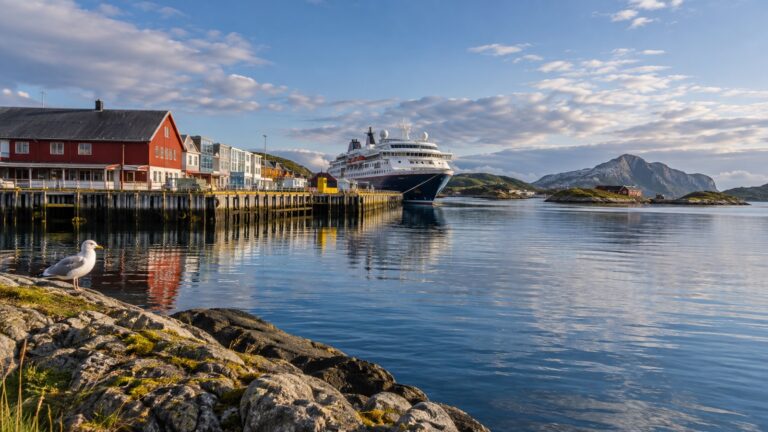
Anyone who wants more time near the water should arrange a boat excursion from a real harbor. Svolvær has the broadest selection of Trollfjord trips, including enclosed sightseeing vessels, quieter electric options, and faster RIB safaris.
Watching from the best place on your ship
A forward outdoor deck gives the clearest view of the approach, while an upper side deck helps when the ship begins to turn. The perfect side can change during the maneuver, so mobility and patience matter more than claiming one rail early.
Arrive before the announced entry time because schedules can shift. Keep a warm layer and rain protection nearby, since a calm lounge can hide how cold and windy the open deck feels.
A panoramic indoor lounge is an excellent alternative in poor weather or for travelers who cannot stand safely outside. Window reflections are easier to manage if you move close to the glass, turn off flash, and shade the lens with a hand or jacket.
Do not spend the entire visit watching through a phone. Take a few wide views, a vertical frame of the cliffs, and a short video of the turn, then give yourself time to look without a screen.
Large ship versus small boat
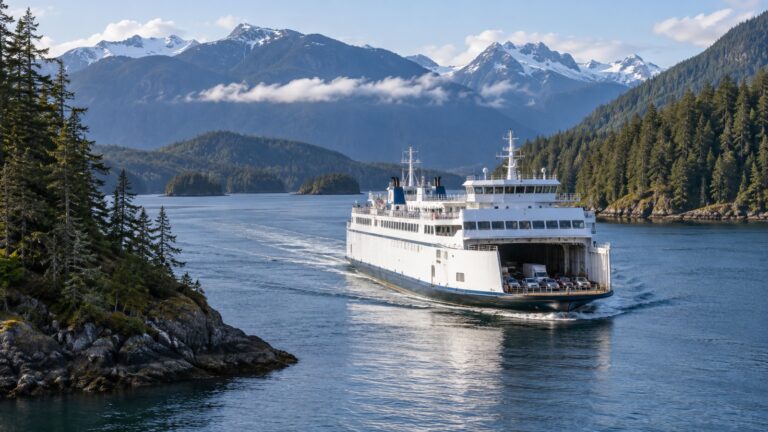
A coastal passenger ship offers warmth, restrooms, stable decks, food service, and multiple viewing areas. It also creates the memorable sight of a surprisingly large vessel operating in a compact space.
A small sightseeing vessel can linger longer and may use a route that feels more intimate. Enclosed cabins and outdoor decks make this the more forgiving independent option for families, photographers carrying equipment, and travelers who dislike the physical demands of a RIB.
A RIB safari moves quickly and places passengers close to wind, spray, and sea motion. The excitement is real, but so are the cold, noise, straddled seating, and impact over choppy water.
No boat type guarantees wildlife. Sea eagles are a major local attraction, while seals, porpoises, or whales may appear, but responsible planning treats every sighting as a possibility rather than part of the ticket price.
Booking a Trollfjord tour from Svolvær
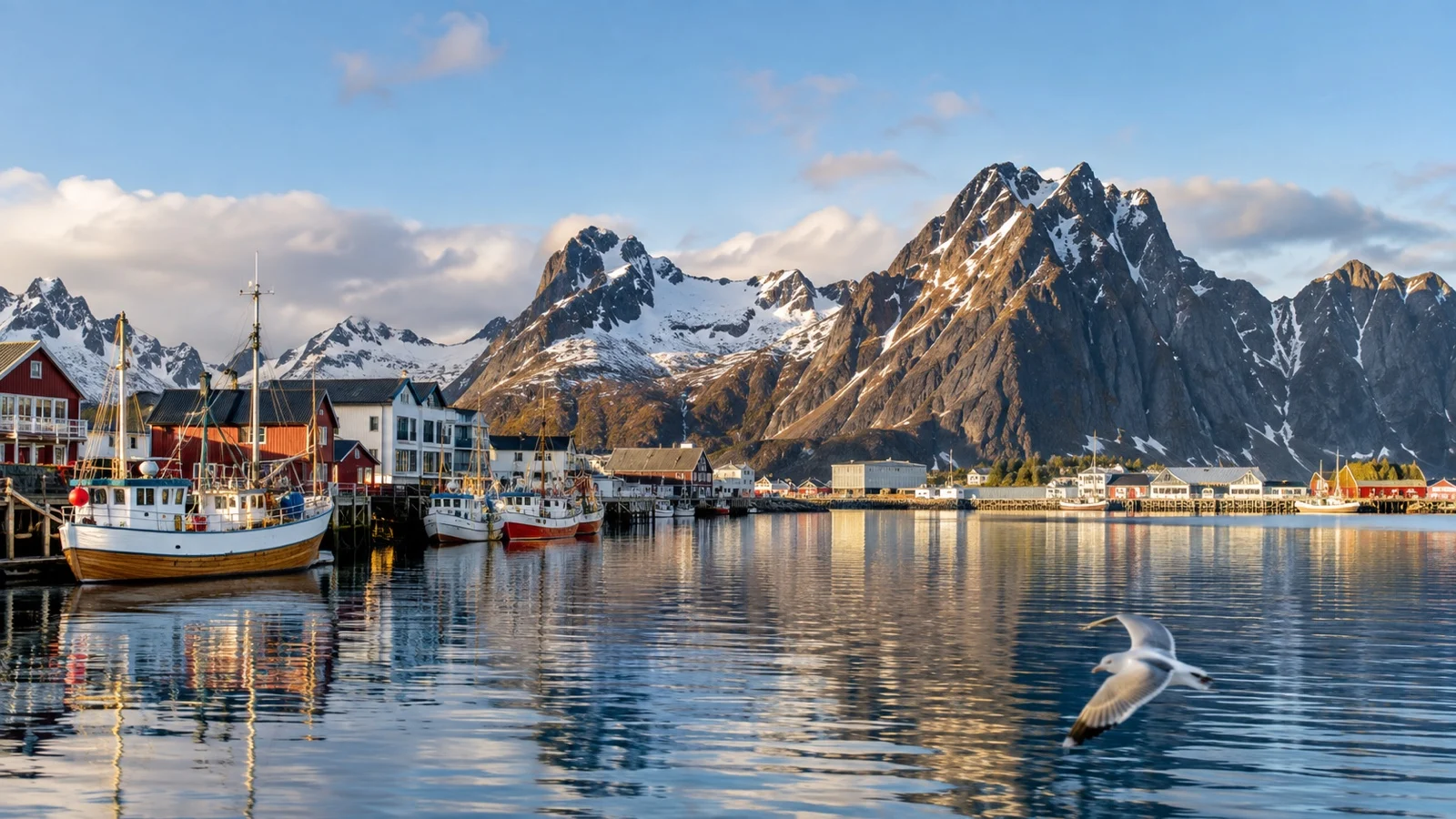
Svolvær is the practical base for independent Trollfjord trips and a common cruise port in Lofoten. Visit Lofoten lists daily summer departures and a range of RIB and larger-boat experiences, although schedules vary by season and operator.
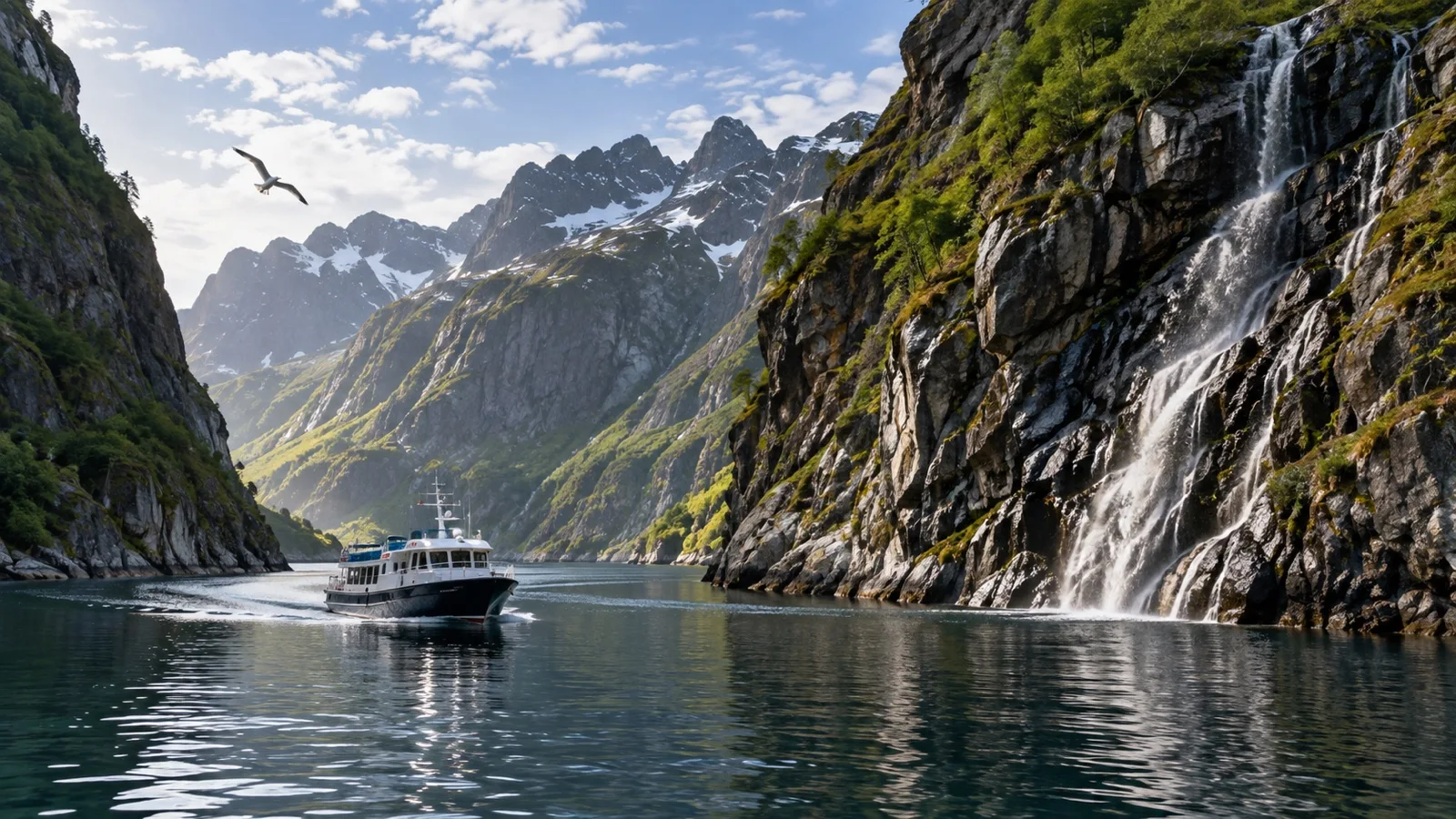
If your cruise ship calls at Svolvær, compare the tour duration with the all-aboard time rather than the published departure time alone. Allow for walking between the berth and tour boat, check-in, equipment fitting, and possible delays on the return.
A ship-sponsored excursion is usually the safer choice when the port call is short. Independent booking may offer a smaller group or different vessel, but you carry the risk if the tour returns after your cruise ship’s deadline.
Ask exactly what is included before paying. Protective suits, goggles, gloves, flotation gear, refreshments, restroom access, and commentary vary widely between a RIB and an enclosed sightseeing boat.
Also confirm the operator’s cancellation policy and the conditions that trigger a route change. A tour may operate in weather that feels unpleasant to you, so “weather permitting” does not always mean you can cancel without cost.
The Battle of Trollfjord
The scenery carries a working history as well as a dramatic name. In 1890, conflict broke out between small-boat fishermen and larger steam-powered vessels after access to the fishery was restricted with nets.
Visit Lofoten explains that the dispute became widely known and helped accelerate changes to Norway’s Lofoten Act in 1891. The event became a lasting symbol of tension between independent fishermen and industrial methods.
Artist Gunnar Berg captured the confrontation in the painting Trollfjordslaget. Travelers spending time in Svolvær can connect the quiet water they see today with the fishing culture and economic struggle that shaped the region.
The story adds meaning to a visit that might otherwise be reduced to a narrow-channel photograph. Listen to onboard commentary during the approach, because the landscape becomes richer when the fishing history is placed back into it.
Accessibility and mobility realities
Trollfjord can be one of the more accessible scenic experiences when viewed from a cruise ship. A heated lounge, elevator access, seating, and restrooms allow many travelers to enjoy the fjord without stepping ashore.
Accessibility still differs by vessel. Ask whether the panoramic lounge has step-free access, whether windows can be reached from a seated position, and whether crew assistance is available during crowded viewing periods.
Small-boat tours require closer scrutiny. Boarding may involve a sloped gangway, a step across moving surfaces, narrow doors, steep stairs, or a transfer into low seating.
RIB tours are generally unsuitable for travelers with back, neck, hip, balance, or mobility concerns. Operators may also set age, height, pregnancy, or health restrictions, so disclose relevant needs before booking rather than at the dock.
For hearing or vision needs, ask whether commentary is amplified, written, or available through an app. A private guide or smaller conventional boat may be more adaptable than a fast group safari.
Weather and seasonal light
Northern Norwegian weather changes quickly, even in summer. Sun at departure can become low cloud, rain, or sharp wind by the time a boat reaches Raftsundet.
Summer brings very long daylight and, around the weeks of the midnight sun, the possibility of bright scenery late at night. Spring runoff can strengthen waterfalls, while autumn light and winter snow create a different mood.
Winter does not guarantee a northern lights display, and the aurora is not visible through cloud. A Trollfjord sailing may also be altered because of darkness, snow, wind, avalanche risk, or navigation concerns.
The safest expectation is simple: the captain decides what the vessel can do. An itinerary that says Trollfjord may result in a view from Raftsundet rather than a full entry, and that is a responsible operational choice.
What to wear and bring
Dress in layers that can handle cold air and spray. A wind-resistant outer layer, warm midlayer, hat, and gloves can be useful even when the harbor feels mild.
Choose secure footwear with grip rather than smooth soles. Decks become slippery when wet, and a RIB operator may have specific footwear instructions to protect both passengers and the boat.
Use a strap on your phone or camera and keep gear inside a dry bag while the boat is moving. A longer lens helps with birds, but wide-angle views are more useful for showing the scale of the cliffs.
Binoculars are worthwhile for sea eagles and details high on the rock walls. Keep them under your jacket or in a case when spray begins, since saltwater and optics are a poor combination.
Safety and timing
Follow crew instructions about railings, restricted decks, and movement during the turn. A vessel can change direction suddenly, and a crowded photo position is not worth a fall.
On an independent excursion, save the operator’s contact details and your cruise ship’s port number offline. Keep the all-aboard time in local time and set an earlier personal deadline that includes a delay buffer.
Norway’s general emergency number for police is 112, fire is 110, and medical emergencies use 113. These numbers do not replace the boat crew’s safety procedure, so alert the crew first when you are aboard.
How Trollfjord fits a Norway cruise
Trollfjord is best understood as a scenic highlight within a coastal itinerary rather than a destination that fills a day. It pairs naturally with port time in Svolvær, Stokmarknes, or another community where you can go ashore and learn more about northern fishing life.
The experience differs from the broad, waterfall-lined fjords of western Norway. Trollfjord’s appeal is compression, with a narrow threshold, close walls, and a ship maneuver that makes the geography feel immediate.
It also complements Lofoten’s road-accessible beaches, villages, and mountain scenery. If your itinerary includes both, save energy for the shore day and treat the fjord passage as a focused hour of observation.
Common questions
Can I go ashore in Trollfjord?
No conventional visitor landing is part of the cruise experience. The fjord has no road or cruise terminal, and tourism access is by boat.
Do all cruise ships enter?
No. Larger vessels may be unable to navigate the entrance, while even suitable ships can skip entry because of weather, sea state, traffic, visibility, or the captain’s safety decision.
Is a RIB tour essential?
No, the main ship or a conventional sightseeing boat can deliver an excellent view with more comfort. A RIB is best for travelers who actively want speed, exposure, and a more physical ride.
When should I book?
Book early when your Svolvær call is short or falls in the busy summer season. Before paying, verify that the departure and return fit the cruise schedule with a conservative margin.
The last word
Trollfjord is memorable because it strips a cruise day down to water, rock, weather, and careful navigation. There is no attraction ashore to check off, yet the narrowing approach and slow turn can become the scene you remember most.
Prepare for cold, arrive at your viewing spot early, and accept that the captain may alter the plan. If you want a closer encounter, use Svolvær as the starting point and choose a boat that matches your body, comfort level, and schedule.
Official planning resources
How this guide was researched: This guide was checked on September 12, 2026, against current information from Visit Lofoten and the Hurtigruten Trollfjord guide. Always confirm the final sailing plan directly with your own cruise line or tour company because entry depends on the vessel, weather, navigation, and the captain’s decision.
More on this topic: browse every guide on expedition and alternative cruises.