Torvik Cruise Port Guide: What a Ten-Minute Stop Means
Torvik is a ten-minute lesson in what Norway’s Coastal Express really does. The ship is not arriving for a conventional port day, but pausing at a working island quay to move people, goods, and local traffic along the coast.
You may be allowed to step ashore, yet there is no time for a village walk, bus ride, café stop, or shore excursion. The most rewarding way to approach Torvik is to watch the operation closely, enjoy the coastal scenery, and accept that the briefness is the story.
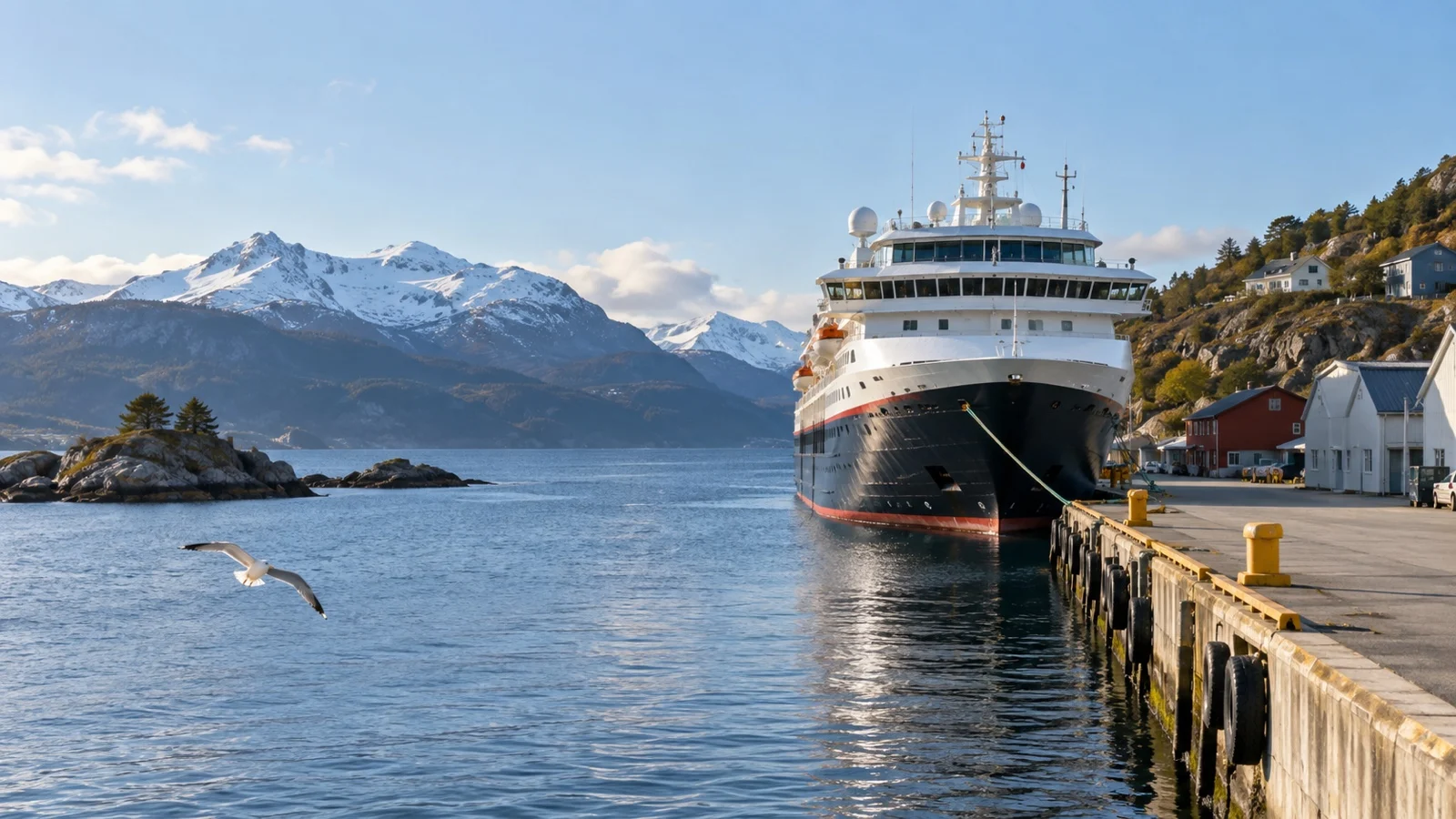
Both Hurtigruten and Havila Voyages include Torvik on the historic coastal route. Their current schedules show a ten-minute call, though exact times and daily operations should always be checked in your own sailing schedule.
Quick Facts
- Location: Torvik on the eastern side of Leinøya in Herøy municipality, Møre og Romsdal
- Operators: Hurtigruten and Havila Voyages both serve the port on Norway’s Coastal Express route
- Typical call: About ten minutes northbound and southbound on current official schedules
- Arrival: The ship comes alongside the working quay, with no tender transfer
- Shore time: Enough for a very brief step onto the pier when crew permits, not for independent sightseeing
- Facilities: Do not count on shops, restrooms, taxis, or visitor services beside the gangway
- Currency: Norwegian krone, although there is usually no reason to spend money during the call
- Best plan: Stay close to the ship, photograph the harbor, and watch the local port operation
What Kind of Port Is Torvik?
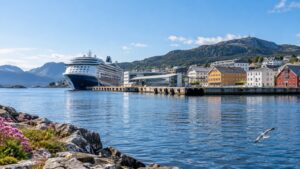
Torvik is a small settlement on Leinøya, one of the islands that form the Herøy seascape southwest of Ålesund. Low buildings, working waterfront structures, fields, forested slopes, bridges, and open water define the view.
This is not a miniature cruise terminal waiting to entertain passengers. It is a functional stop in a transport network that has connected remote Norwegian communities for generations.
Hurtigruten describes Torvik as a tiny port on Leinøya and currently lists ten minutes in port in each direction. Havila Voyages also publishes ten-minute calls and gives the port address as Torvikveien 116, 6095 Torvik.
Those schedules tell you how to plan better than any list of attractions. Think of Torvik as a live glimpse of coastal life rather than a destination where you can complete an itinerary ashore.
What Happens During the Ten Minutes
The approach begins before the ropes are secured. From an open deck, you can watch the ship thread through islands and skerries, line up with the quay, and bring a large vessel alongside with practiced speed.
Once the gangway is ready, local passengers may board or disembark while crew handle cargo and routine port work. The efficient sequence is the attraction, especially for travelers curious about how the Coastal Express functions beyond its scenic reputation.
Announcements may come quickly, and the gangway can close only a few minutes after it opens. Follow crew directions rather than assuming the published departure minute gives you permission to remain ashore until the last second.
Weather, traffic, and operational needs can alter what happens on a particular call. A delayed arrival does not necessarily produce ten full minutes ashore because the ship may need to recover its timetable.
Can You Get Off the Ship?
Passengers may be able to step ashore when the crew opens the gangway and conditions allow. Hurtigruten’s own Torvik page encourages guests to hop off at the tiny port, but the same page confirms that the scheduled stay is only ten minutes.
That means getting off is a moment, not a walk. Stay within immediate sight of the gangway, listen for instructions, and return before crew begin closing procedures.
If the call occurs while you are asleep, eating, or not dressed for the weather, you lose very little by remaining aboard. The view from deck often gives a better sense of the harbor and surrounding islands than the narrow patch of quay beside the ship.
Never carry luggage ashore unless Torvik is your booked embarkation or disembarkation port. A traveler making a port-to-port journey should follow the operator’s specific baggage and check-in instructions rather than general cruise guidance.
Northbound and Southbound Calls
Current official operator schedules place Torvik on both directions of the coastal route. Havila currently publishes a morning northbound call from 8:20 to 8:30 and an overnight southbound call from 2:35 to 2:45.
The northbound visit is more likely to offer useful daylight for much of the year, though winter mornings can still be dim. The southbound stop may occur in the middle of the night, so most through passengers will reasonably sleep through it.
Seasonal daylight changes dramatically along the Norwegian coast. Check sunrise and sunset for your travel date before deciding whether to set an alarm for photography.
Ship time and local time should match in Norway, but always use the time shown in the operator’s daily program. A phone that fails to update correctly is a poor authority for a ten-minute call.
The View From the Ship
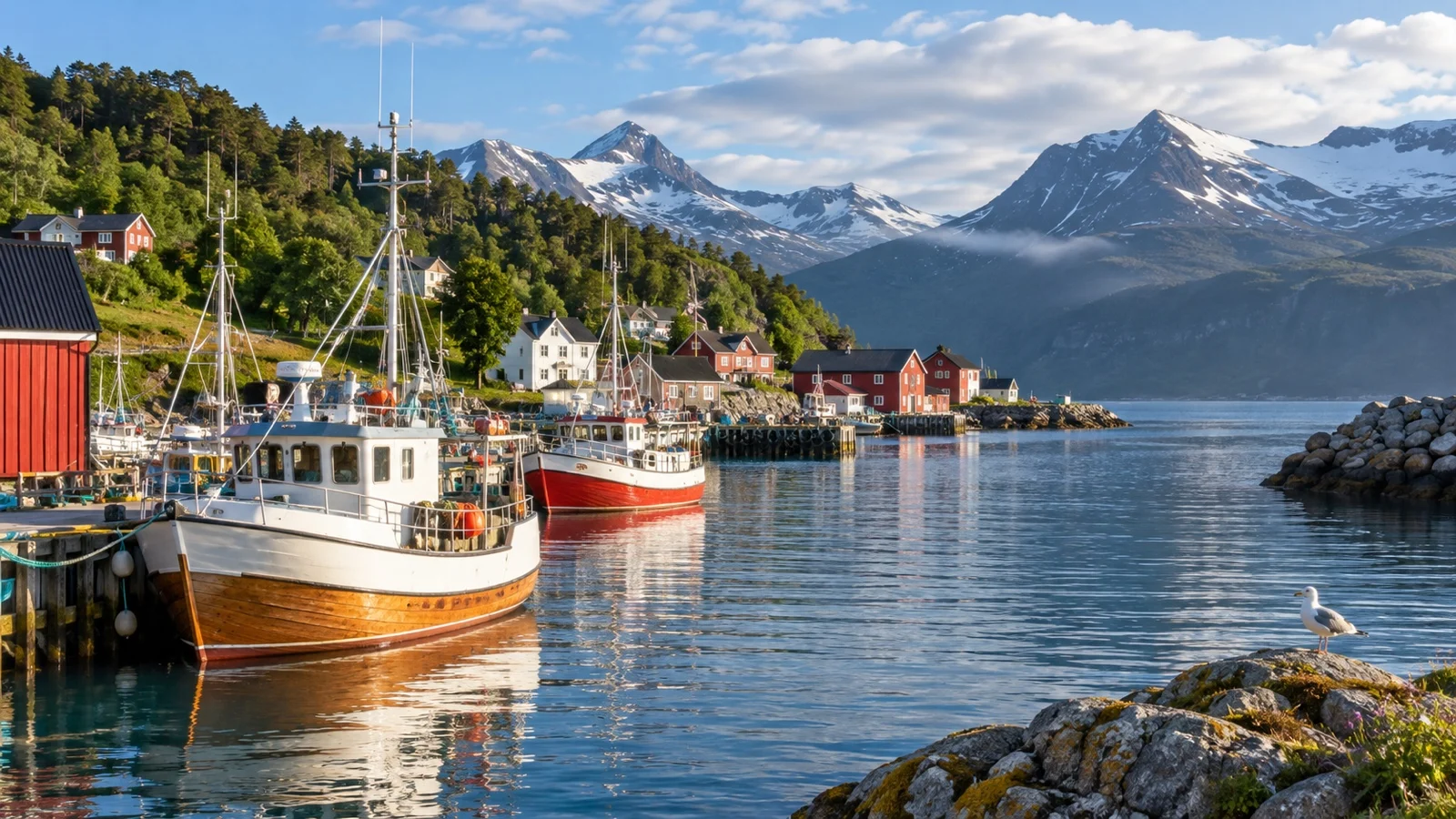
Torvik makes more sense as part of a moving coastal panorama than as a pier. Watch for island homes, fishing activity, low warehouses, moored boats, changing weather, and the network of bridges connecting communities across Herøy.
Hurtigruten notes that the ship passes beneath the 544-meter-long Herøy Bridge just south of Torvik. The bridge view belongs to the sailing experience, so being on deck before or after the stop can be more rewarding than rushing down the gangway.
Use a medium zoom lens if you want details without changing equipment in wind or spray. A phone secured with a wrist strap is often the easier choice for a quick harbor call.
Do not focus so closely on the pier that you miss the broader landscape. The layered islands and practical infrastructure explain how people live with the sea in this part of Norway.
Why Runde Appears in Torvik Guides
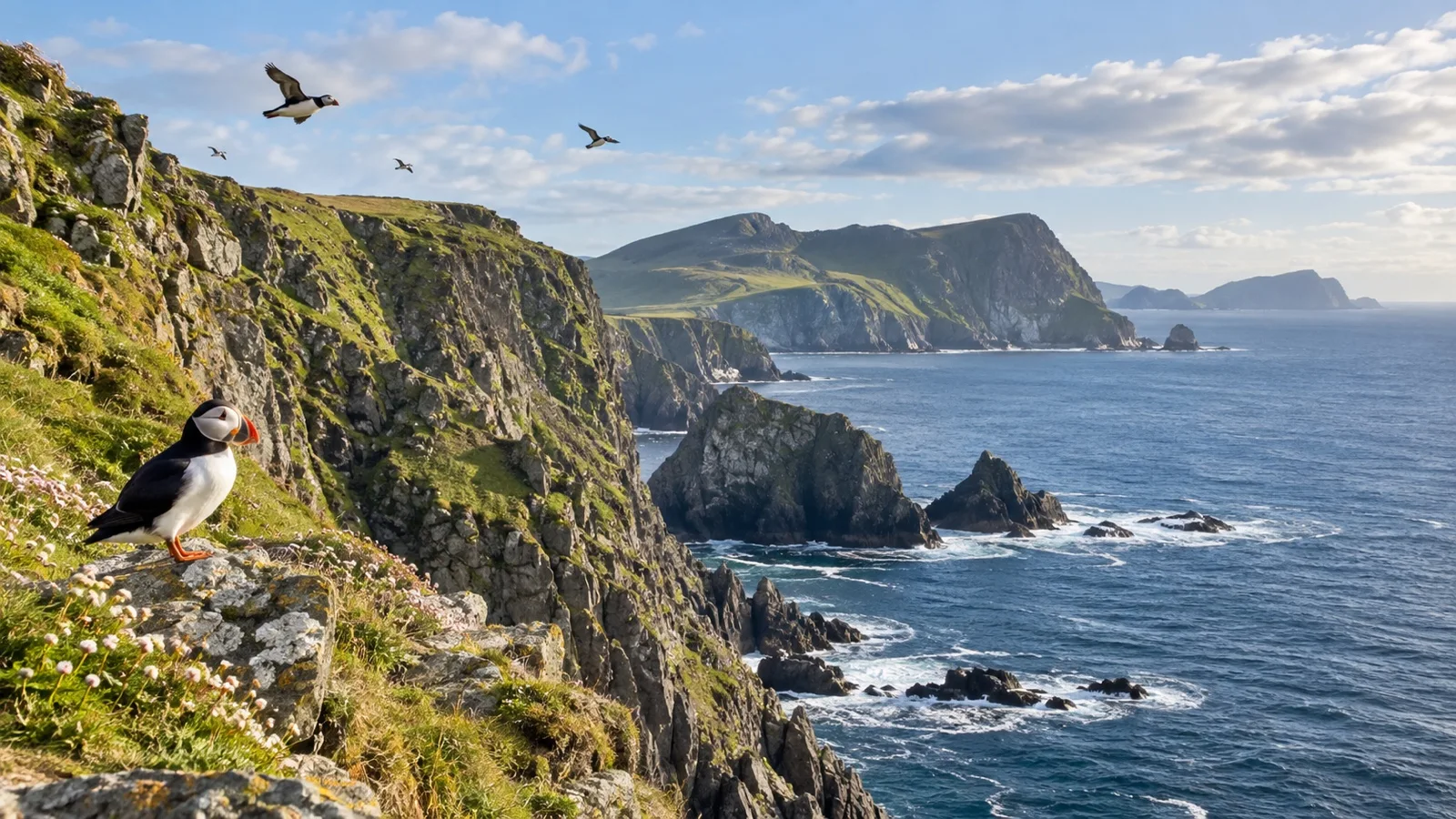
Runde is the famous bird island in the wider Herøy area, and it is one reason travelers become curious about this coast. Hurtigruten says the April-to-August nesting season brings around 100,000 puffins to the island.
Sea eagles can be seen through the year, and dozens of bird species nest on the island. Runde also holds the story of the Akerendam wreck and a remarkable treasure of coins discovered centuries after the ship sank.
None of this makes Runde a realistic shore excursion from a ten-minute Torvik call. It requires a separate land stay, organized outing, or itinerary that provides dedicated time in the region.
If puffins are a major goal, build them into a longer Sunnmøre trip and confirm current seasonal tours. Nature sets the schedule, and no operator can guarantee a particular bird encounter.
Fosnavåg and the Wider Herøy Area
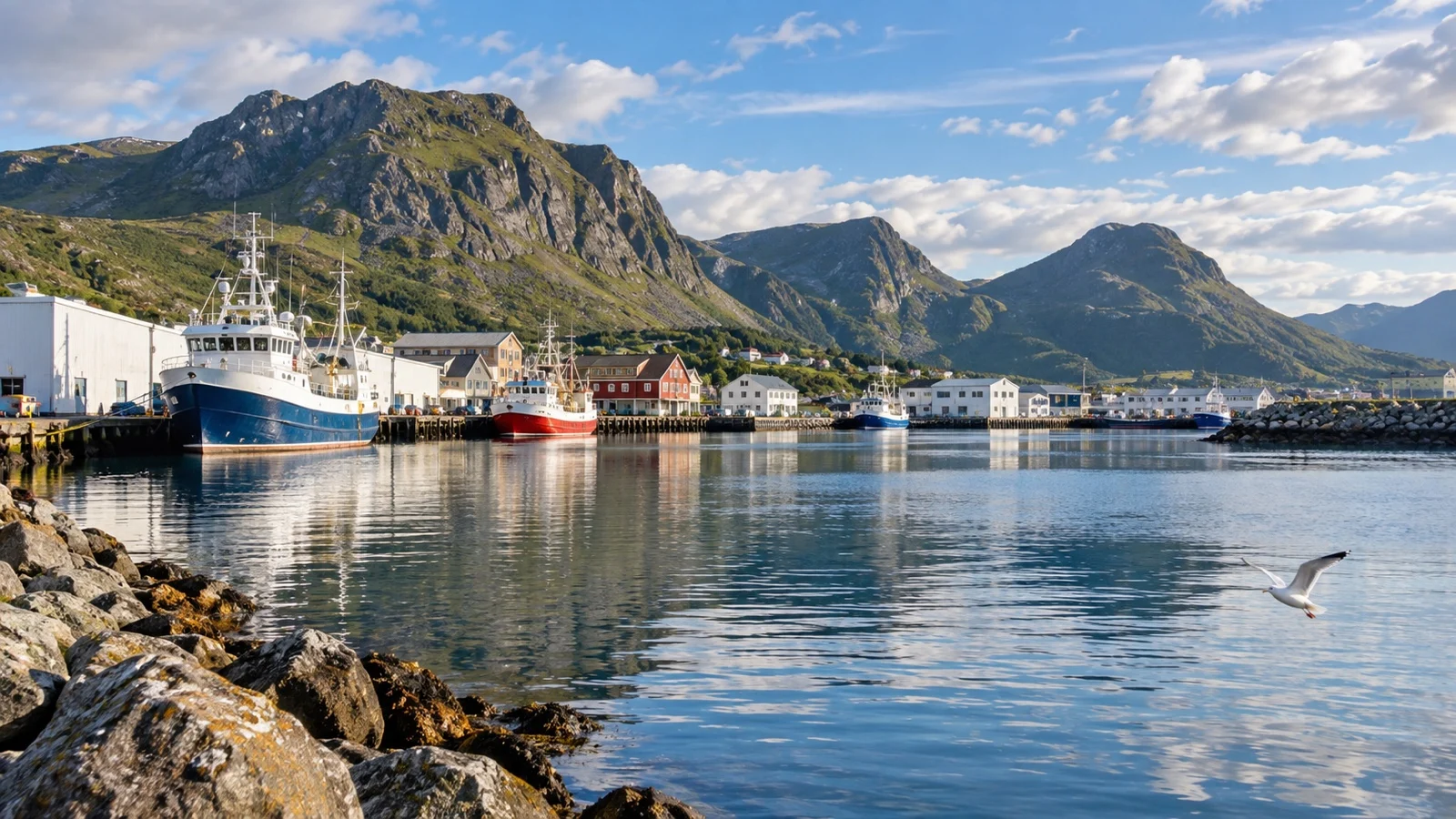
Fosnavåg is the administrative and service center most visitors use for a longer exploration of Herøy. Fjord Norway describes Torvik as roughly a ten-minute drive from Fosnavåg, but that road connection does not help a traveler with only ten minutes of total port time.
The islands are linked by bridges and roads, creating an appealing route for travelers with a rental car or organized land visit. Fishing, shipbuilding, coastal history, hiking, birdlife, and small communities make the area worth more than a rushed stop.
Regional buses are managed through FRAM, but public transit cannot convert the cruise call into an independent outing. Use buses only when Torvik is the start or finish of a longer local journey and you have checked the current schedule.
For most through passengers, Fosnavåg and Runde are context rather than same-day options. Knowing they are nearby deepens the landscape without creating an impossible plan.
There Are No Shore Excursions to Plan
Torvik does not function like Bergen, Ålesund, Trondheim, or Tromsø, where the ship pauses long enough for tours and independent wandering. The ten-minute operation leaves no practical space for a shore excursion.
If an operator ever adds a special activity connected with Torvik, judge it by the exact timetable rather than the port name. A true excursion would need dedicated transportation and a much longer stay than the routine coastal stop.
Save your tour budget and energy for ports with enough time to use them. Torvik’s value is observational, and it costs nothing to enjoy from the rail.
Travelers who dislike missing any port may feel pressure to step off simply because the gangway is open. There is no prize for touching the quay, and staying aboard is often the wiser choice.
Accessibility and the Gangway
The ship docks alongside, so there is no tender boat to board. Even so, gangway angle, width, surface, and assistance can vary with the vessel, tide, weather, and exact position at the quay.
Wheelchair users and travelers with limited mobility should ask reception whether the gangway is suitable before going down. The crew may recommend remaining aboard when conditions or the short turnaround make disembarkation impractical.
There is little reason to deploy a heavy mobility device for a few minutes on a working pier with no confirmed facilities. The open deck can provide an excellent view without the time pressure of the gangway.
If Torvik is your ticketed embarkation or disembarkation point, contact the operator well before travel. Boarding with luggage is a different operation from briefly stepping ashore as a through passenger.
Weather on Norway’s Outer Coast
Torvik faces the changeable conditions of the Sunnmøre coast, where wind, rain, sun, and low cloud can cycle quickly. A waterproof and wind-resistant outer layer is useful in every season, even if you only spend a few minutes outside.
Decks and gangways can become slick in rain, sea spray, frost, or snow. Wear closed shoes with grip and keep one hand free for the rail.
Summer can feel cool near the water, while winter calls may be dark, wet, and cold. Dress before the approach so you do not spend the entire stop searching for gloves or another layer.
Weather can also hide the view or change the port operation. Treat a missed or restricted step ashore as a normal feature of coastal travel rather than a failed excursion.
What to Bring for the Stop
Carry almost nothing. A phone or compact camera, your ship card, and weather protection are enough for most travelers.
Leave backpacks, umbrellas, shopping bags, and loose accessories in your cabin unless they serve an immediate purpose. Wind and the rapid gangway cycle make unnecessary items more trouble than they are worth.
If you photograph from deck, use a strap and protect equipment from spray. Keep clear of working areas, mooring lines, and crew routes while the ship is alongside.
You do not need Norwegian cash for this call. There is no time to seek an ATM or shop, and Norway is highly card-friendly when a purchase opportunity does arise elsewhere.
Safety and Port Etiquette
Torvik is a working quay, so follow crew directions and stay outside marked operational areas. Never step over ropes, approach moving equipment, or stand where cargo and local passengers need to pass.
Wait until the gangway is declared open, and reboard when the crew calls. A posted departure time does not override a direct instruction to return.
If you miss the ship, local transportation and accommodation options are not waiting beside the pier in the way they might be in a major city. The financial and logistical consequences can be serious, so there is no sensible reason to test the deadline.
Norway’s emergency numbers are 110 for fire, 112 for police, and 113 for medical emergencies. Save the ship’s contact separately because a timing question or delayed traveler should go to the operator first.
Photography Tips for a Very Short Call
Choose your position before arrival, ideally on the side facing the quay or a higher open deck with a broad view. Ask crew which side will be useful if the daily briefing does not make it obvious.
Set your camera in advance and avoid changing lenses during the stop. A moderate shutter speed can help freeze a moving ship, fluttering flag, or seabird in windy conditions.
Capture context rather than only a sign proving you visited. The ship, quay, homes, bridges, fishing vessels, and weather together tell the Torvik story.
At night, brace the camera against a rail only if it is safe and does not block anyone. Do not expect a bright aurora simply because the ship is in Norway, since cloud, season, darkness, and solar activity all have to cooperate.
Torvik in Winter
A winter call can feel especially authentic, with darkness, weather, and the illuminated quay emphasizing Torvik’s transport role. Snow is possible, but outer-coast temperatures and wind can also produce rain, sleet, and ice.
The northbound morning stop may occur around twilight depending on the date, while the southbound call is likely to be overnight. Check the daily program before setting an alarm.
Northern lights are possible in suitable conditions, but Torvik is not a guaranteed aurora show. Look from a dark open deck when the sky is clear and follow any shipboard aurora announcements.
Do not step onto an icy pier merely to say you did. The coastal view from a stable deck is safer and often more impressive.
How Torvik Fits the Coastal Express
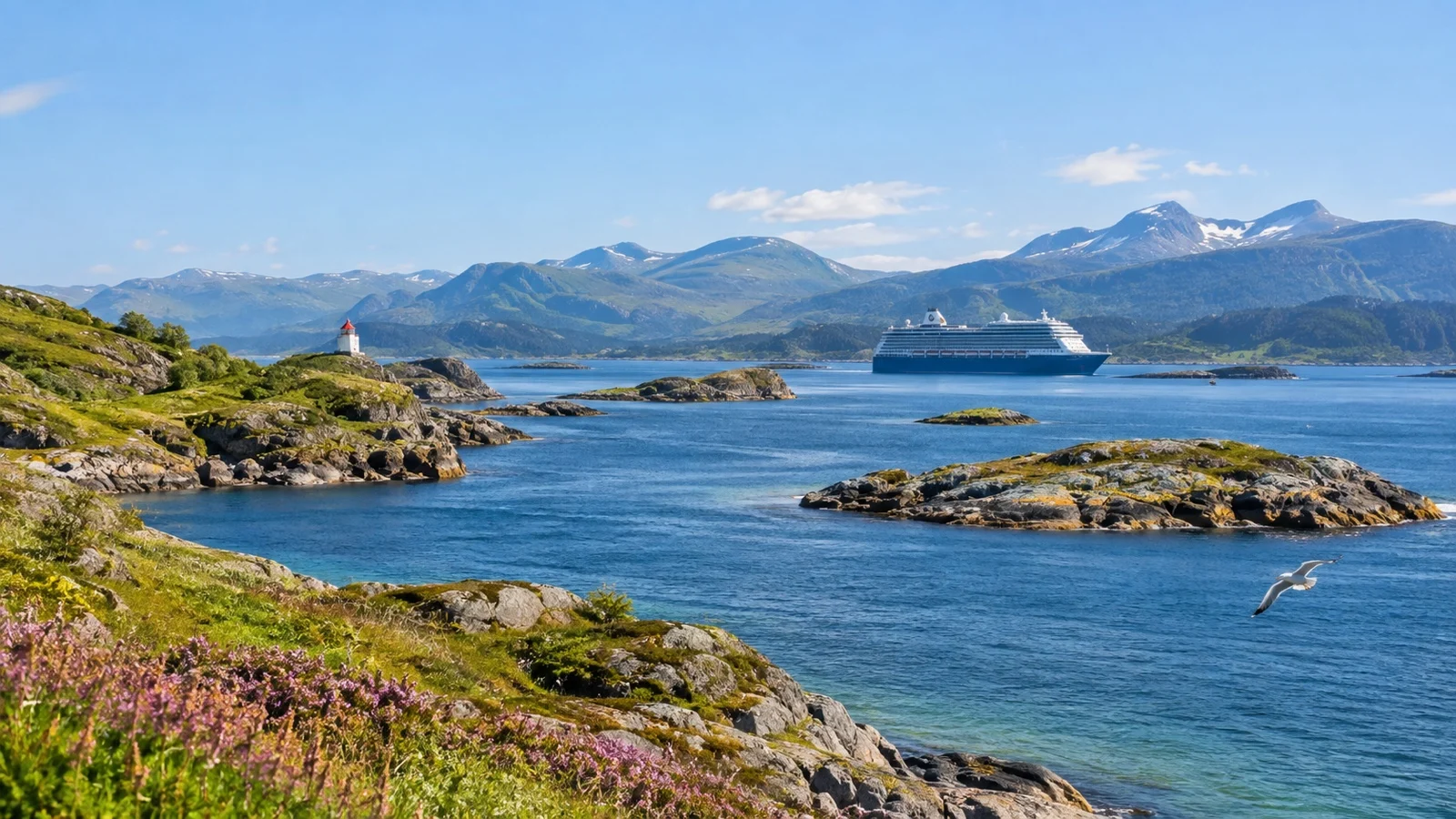
The Coastal Express is both a scenic voyage and a working transportation service, and Torvik makes that dual purpose visible. Larger ports provide long stops and excursions, while smaller calls keep communities connected to a reliable coastal schedule.
This rhythm is part of the journey’s appeal. A ten-minute quay visit can sit between hours of island scenery, a longer town call, and an overnight passage to the next region.
Read the full sailing plan so you know which stops are worth an alarm and which provide real walking time. Torvik belongs in the short-stop category, and planning it honestly prevents disappointment.
If you want a proper Sunnmøre visit, add land time around Ålesund, Fosnavåg, or Runde before or after the voyage. The ship introduces the landscape, while a separate stay lets you experience it at human speed.
Common Torvik Mistakes
The biggest mistake is treating every dot on the itinerary as a sightseeing port. Torvik is a transport stop, and ten minutes cannot support a shore plan.
Another mistake is reading about Runde’s puffins and assuming the island is an excursion from the quay. Runde is nearby in regional terms but unreachable within this call.
Travelers also wait until docking to dress or choose a camera. By the time you reach an open deck, the ship may already be preparing to leave.
Finally, do not trust a generic online timetable over your operator’s daily schedule. Arrival times, delays, and port procedures can change, while the shipboard team has the current plan.
The Final Take
Torvik is not a failed port day or a hidden collection of attractions. It is an honest ten-minute window into Norway’s island transport network, framed by working boats, bridges, weather, and the steady discipline of the Coastal Express.
Be ready before arrival, stay close to the gangway, and give more attention to the view than to stepping ashore. If the harbor sparks your curiosity, return to Sunnmøre for the longer trip that Runde and Herøy deserve.
More on this topic: browse every guide on expedition and alternative cruises.