Española Island Cruise Guide: Punta Suárez, Gardner Bay, and Albatross
Española Island is not a cruise port in the conventional sense. There is no town, terminal, pier, taxi line, or independent sightseeing route, only protected visitor sites reached by small boat with an authorized guide.
That stripped back setup is exactly why the island can feel so extraordinary. Your day is about wildlife, volcanic coast, sea conditions, and the privilege of entering a place where human access is tightly managed.
My quick take
Española is one of the Galápagos calls I would choose for the wildlife rather than for comfort. Punta Suárez delivers the richer land experience, while Gardner Bay offers a softer beach setting and possible marine activities.
The name of the island alone is not enough when comparing itineraries. Look for the exact visitor sites, landing type, activity level, and season before deciding that one route is better than another.
Quick Facts
- Destination: Uninhabited Española Island in the protected Galápagos archipelago.
- Main land sites: Punta Suárez for a rugged wildlife walk and Gardner Bay for a beach landing.
- Arrival: Small expedition boat or panga from a vessel anchored offshore, with no conventional pier.
- Independent access: Self-guided visits are not allowed, so use an authorized cruise or guided tour.
- Signature wildlife: Waved albatross, Nazca boobies, blue-footed boobies, sea lions, marine iguanas, and mockingbirds.
- Currency: US dollar, although there are no shops ashore.
- Time zone: Galápagos Time, which is UTC minus 6.
- Main challenge: Moving boat transfers, exposed terrain, heat, and no visitor services on land.
There is no cruise terminal here
Your vessel remains offshore and a small expedition craft handles the final transfer. Crew and guides control the timing because swell, wind, wildlife protection, and park operations can change what is safe or permitted.
Listen closely to the landing briefing, even if you have used pangas on earlier days. The step height, handhold, footwear, splash risk, and direction of movement can differ from one site and sea state to another.
Keep both hands available during transfers and put cameras, phones, and extra layers in a small dry bag. A beautiful landing is much less fun when you are trying to protect loose equipment while the boat moves under you.
Why access is so controlled
The Galápagos National Park manages authorized marine and land visitor sites and the activities assigned to them. Its current site information describes 176 visitor sites across the archipelago, divided between 91 marine and 85 terrestrial locations.
That system means a traveler cannot simply arrange a ride, step ashore, and explore alone. The guide, approved route, activity, group timing, and protected area rules are part of the visit rather than optional extras.
UNESCO notes that the uninhabited islands are strictly controlled through carefully planned tourism itineraries. Española is a wild destination within that managed system, not a beach resort with a wildlife trail attached.
Punta Suárez
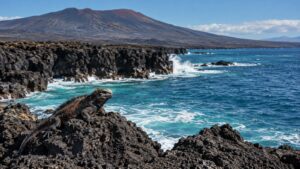
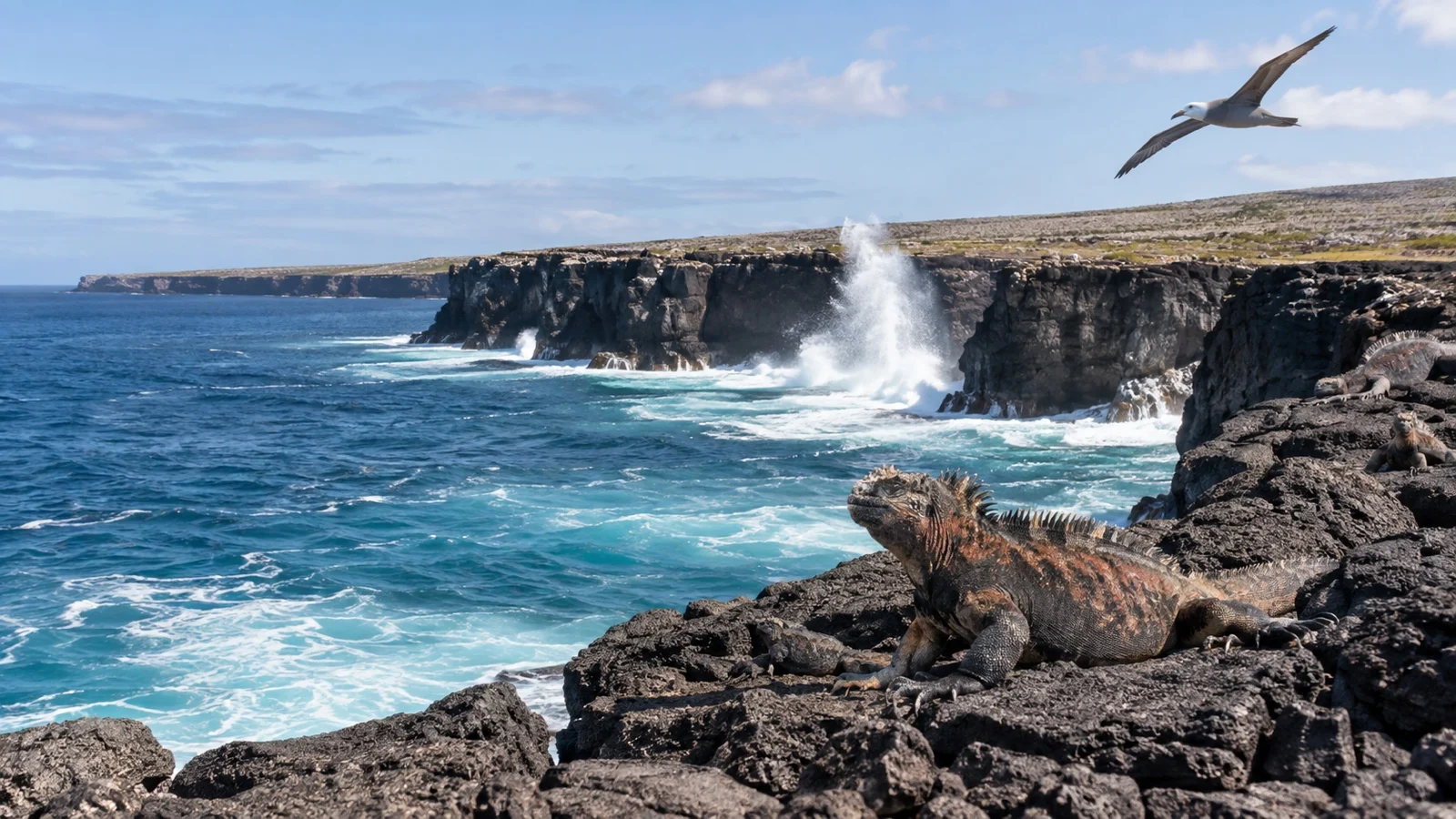
Punta Suárez is the choice for travelers who want Española’s most intense land experience. Expect a rocky landing, uneven volcanic ground, little shade, and frequent stops as the guide interprets birds, reptiles, and the coast.
The trail is not difficult because of altitude, but it can be demanding because every step needs attention. Lava, loose rock, sun, and wildlife on or near the route can make a modest distance take longer than expected.
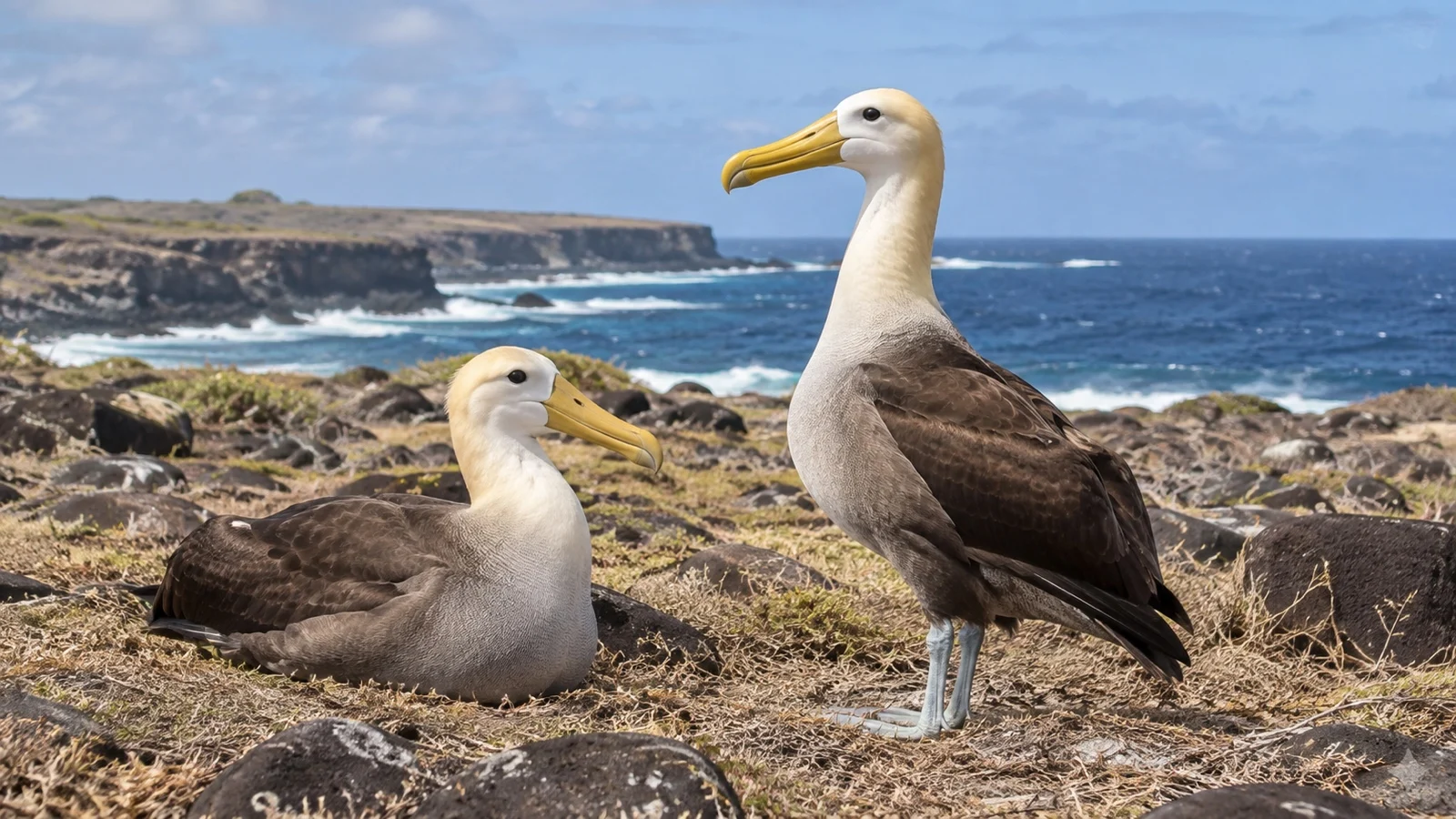
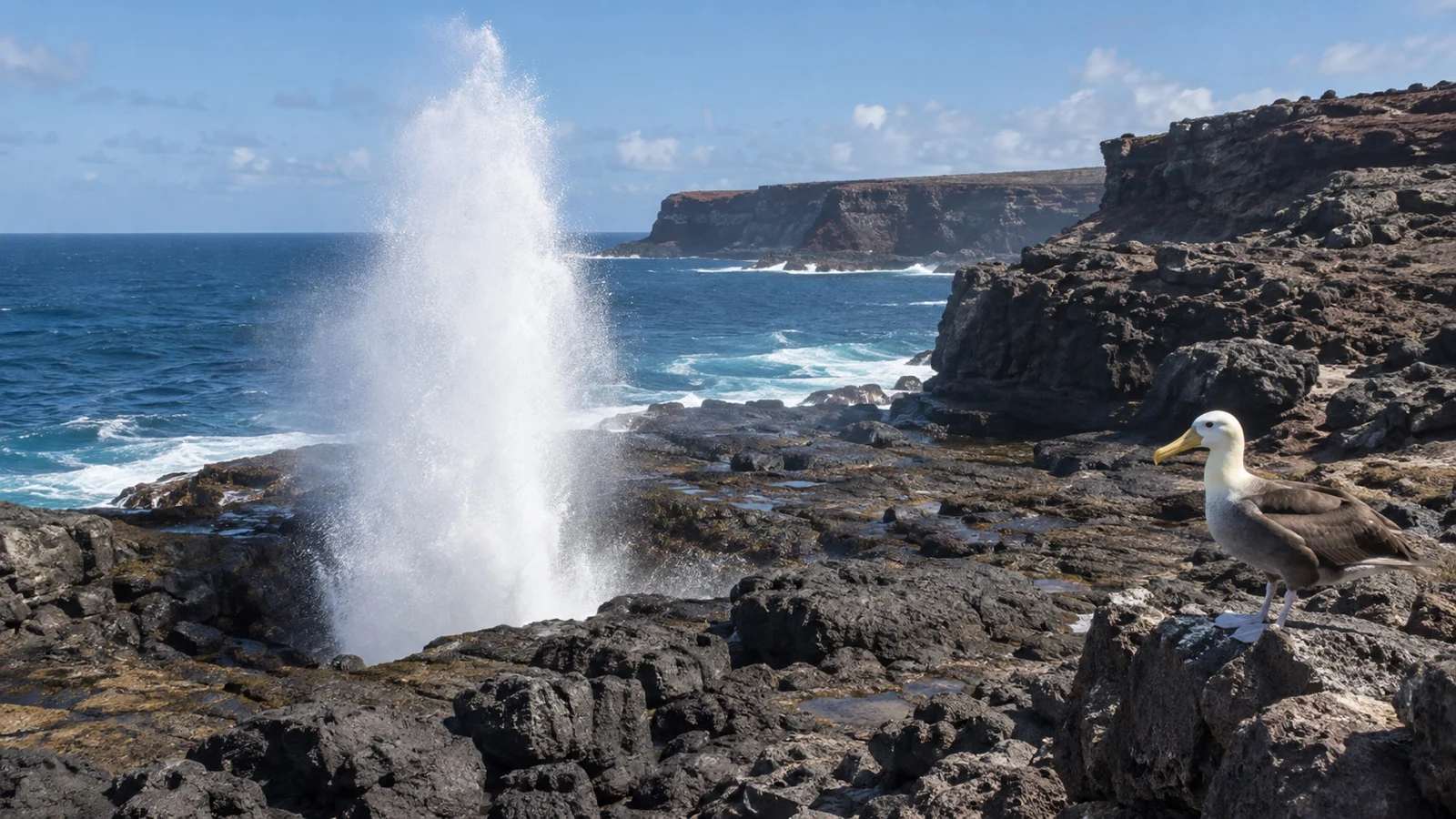
This is the island site most strongly associated with waved albatross. HX’s current eastern Galápagos itinerary describes albatross on Española cruises from April through December, but exact arrival and departure timing varies and no sighting is guaranteed.
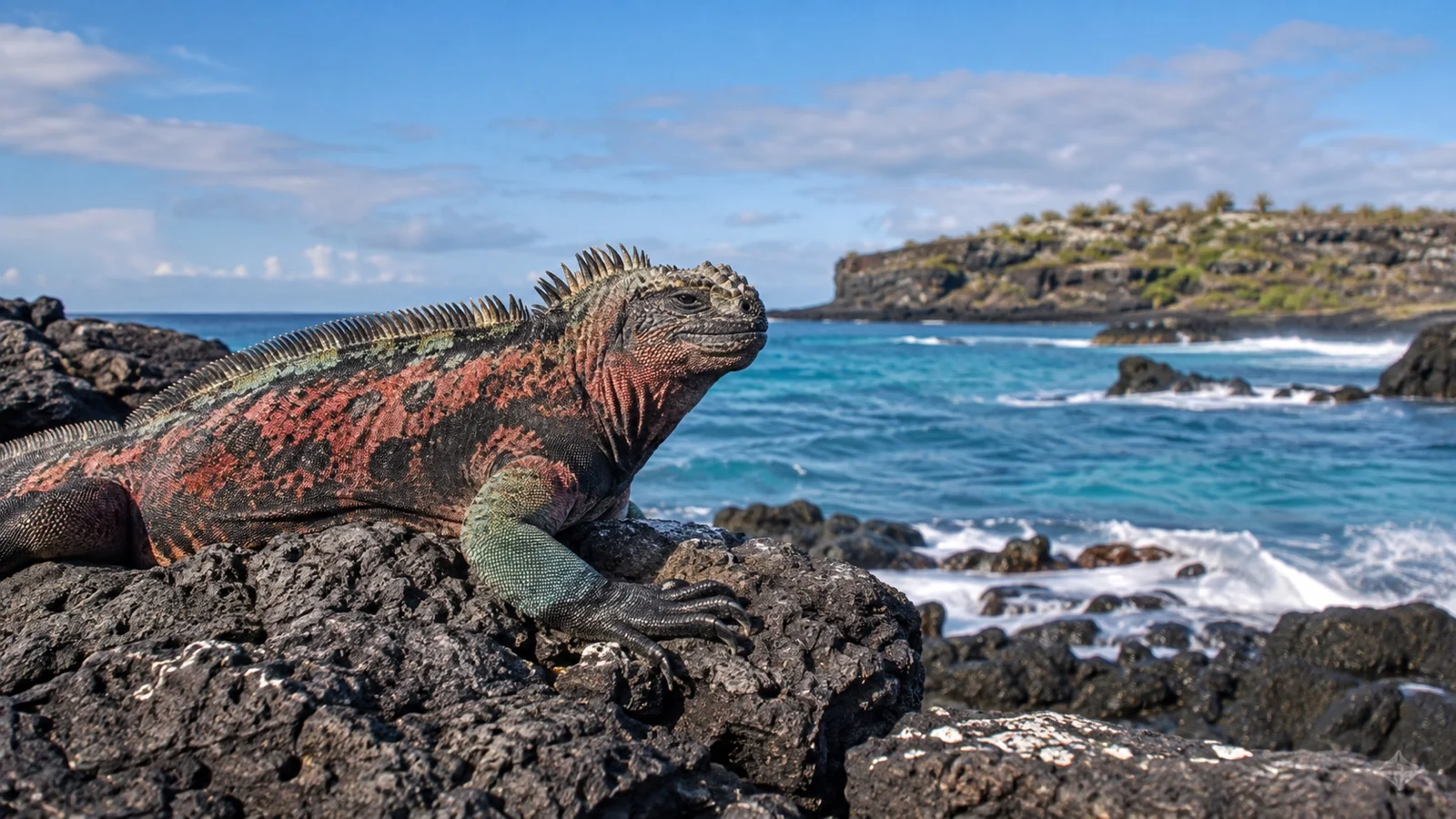
Nazca boobies, blue footed boobies, swallow-tailed gulls, marine iguanas, lava lizards, and Española mockingbirds can add just as much interest. I would not dismiss the day as unsuccessful if one headline species is absent.
The blowhole and coastal edge
A blowhole along the Punta Suárez route can send spray high above the lava when waves and tide align. It is a dramatic feature, but its height and force are natural variables rather than scheduled entertainment.
Stay behind the guide’s boundary even when the best photo seems one step closer. Wet rock, sudden spray, and a rough edge are a poor combination, especially when attention is fixed on a camera screen.
Gardner Bay
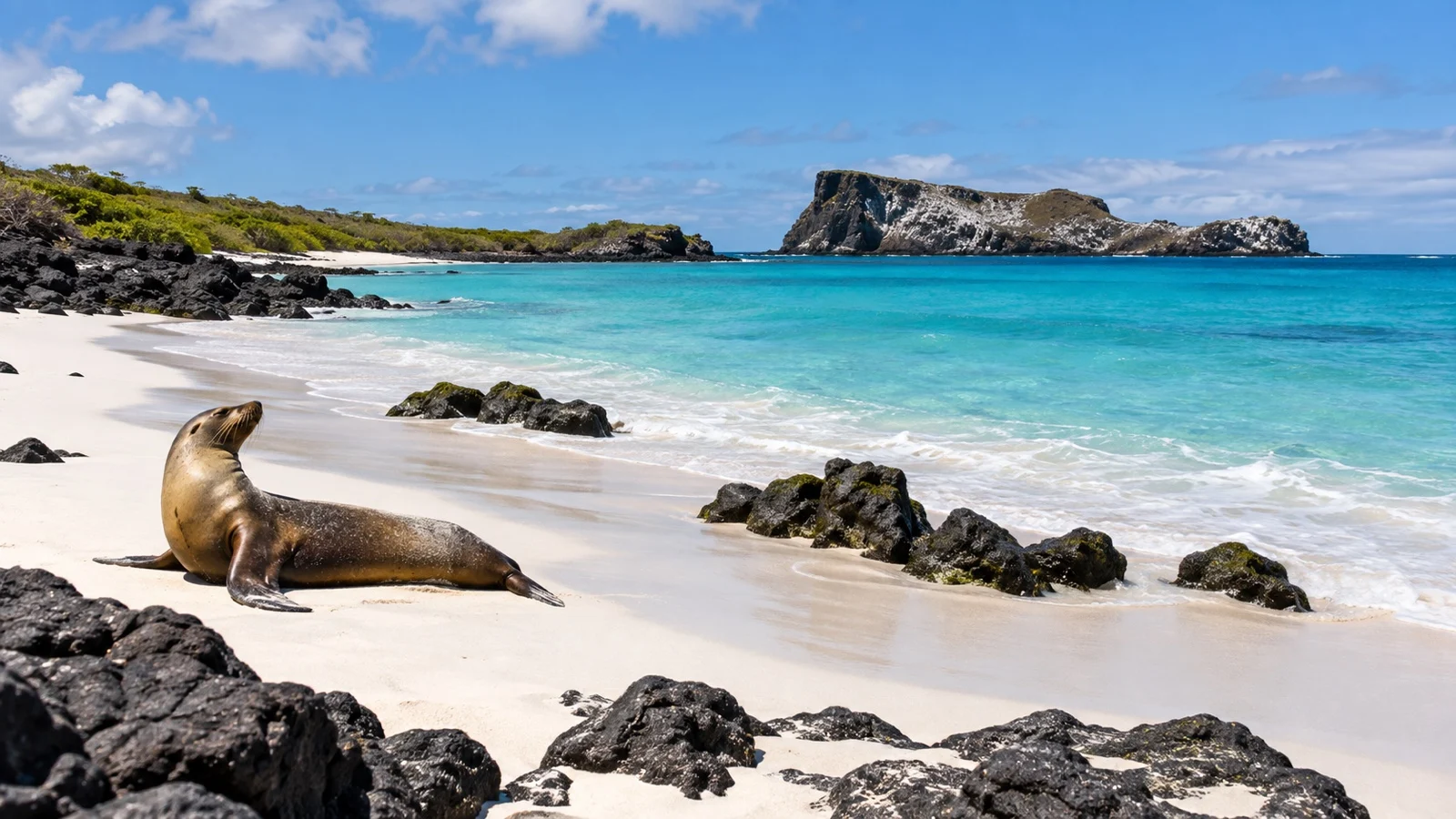
Gardner Bay changes the mood with pale sand, open water, and sea lions resting close to the designated visitor area. The landing is usually wet, which means stepping from the small boat into shallow water and walking through soft sand.
There is no inland village or broad trail network behind the beach. Your group remains within the authorized area and follows the guide’s instructions about walking, swimming, photography, and wildlife distance.
Sea lions can appear wonderfully relaxed around people, but familiarity is not permission to approach or touch. Let the animal control the distance, keep the route clear, and move away if the guide asks.
Snorkeling and nearby marine sites
Some itineraries add snorkeling, kayaking, or a small boat exploration near Gardner Bay, Osborn Islet, Gardner Islet, or another approved marine site. The exact activity depends on the operator’s permit, route, equipment, and conditions that day.
HX currently pairs Gardner Bay and nearby Osborn Islet with possible snorkeling or kayaking on its eastern route. Treat that as one live itinerary example, not as a promise that every Española visit includes the same combination.
Ask whether snorkeling starts from the beach or a small boat, how deep the entry is, and whether a flotation vest or wetsuit is supplied. Those details matter much more than a generic label such as easy or moderate.
Choosing between the two land experiences
Choose Punta Suárez when seabirds, island endemics, and rugged coastal scenery are the priority. Choose Gardner Bay when you prefer sand, sea lions, and a less technical walk, while remembering that the wet landing and soft beach still require balance.
Some expedition schedules include both sites in one day, often with a return to the ship between activities. Others may feature one landing and one marine activity, so read the day by day plan rather than relying on a destination summary.
Cruise visit or day tour from San Cristóbal
An expedition cruise usually offers the easiest way to experience more than one Española activity without repeating a long open water crossing on the same day. It also gives the captain and expedition team more flexibility to adjust the sequence.
Authorized day tours from San Cristóbal can make Española possible without an overnight cruise, but they are not public ferry trips. Confirm the operator, permitted sites, total boat time, lunch, gear, guide, minimum age, and cancellation terms before paying.
The National Park’s public interisland transport page covers routes among Santa Cruz, San Cristóbal, Floreana, and Isabela. Española is not one of those public passenger launch destinations, so do not arrive expecting to buy a normal ferry ticket at the dock.
The sea crossing deserves honest attention if you are prone to motion sickness. Ask a clinician about suitable medication well before travel, then follow the timing and safety directions rather than waiting until the boat is already underway.
Accessibility and physical demands
Española has no step-free passenger terminal because it has no passenger terminal at all. Access begins with a moving boat transfer, and the crew must decide whether conditions permit a safe landing for each guest.
Punta Suárez is the harder option because it adds a rocky landing, uneven lava, exposure, and a sustained guided walk. Gardner Bay removes the rough inland trail but adds shallow water, shifting sand, and the effort of walking on a beach.
Before booking, ask about the panga step, handholds, crew assistance, seating, transfer pace, and whether your mobility device can be carried. Also ask what happens if you decide to remain aboard for one activity.
Travelers with limited stamina should discuss the full day rather than only the trail distance. Heat, sun, boat movement, snorkeling, and repeated transfers can add up even when no single segment sounds extreme.
Wildlife etiquette that actually matters
Follow the National Park visitor rules and every direction from your naturalist guide. Stay on the designated route, do not feed or touch animals, and never block an animal’s path for a photograph.
Do not use flash close to wildlife or fly a drone without specific authorization. Keep food sealed, secure loose items, and take every piece of waste back to the vessel.
Wildlife may approach because many animals have little fear of people. Your responsibility is to create space rather than treating that curiosity as an invitation to move closer.
Weather and sea conditions
The Galápagos has seasonal patterns, but conditions still vary by day and location. The cooler garúa period generally brings more cloud and wind, while the warmer period tends to feel hotter and wetter.
The National Park says public launch conditions are usually more stable from January through June and rougher from July through December. That statement applies to interisland transport broadly, not a guarantee for Española, but it is a useful reminder that open water comfort can change with the season.
A landing can be changed, shortened, reordered, or canceled for safety and conservation. Build your expectations around the expedition process rather than one exact photograph or promised species.
What to wear and pack
For Punta Suárez, sturdy closed-toe shoes with reliable grip are the sensible default. For Gardner Bay, follow the operator’s wet landing footwear rules and bring a small towel if the vessel does not provide one.
Pack water, a secure sun hat, high protection sunscreen permitted by your operator, sunglasses, and a breathable long-sleeve layer. Add a light wind or rain layer when the forecast and season suggest it.
A compact dry bag protects a phone, camera, medication, and spare layer during panga transfers. Keep the load light because you need free hands and should not set belongings on protected ground.
Ask whether the operator provides mask, snorkel, fins, wetsuit, flotation gear, and drinking water. Do not discover at the landing briefing that the equipment you expected was available only for rent or in limited sizes.
Restrooms, food, and communications
There are no public restrooms, cafés, shops, or water refill points at the landing sites. Use the vessel’s facilities before departure and carry only what the crew permits ashore.
Assume cellular service and internet access will be unavailable or unreliable. Download medical details, emergency contacts, and any necessary documents before leaving San Cristóbal or the ship.
If someone is injured or becomes ill, alert the guide immediately. Assistance and evacuation depend on boats, crew, communications, and sea conditions, so early reporting matters.
Return timing
This is one port day where you should never create your own return plan. Stay with the guide, follow the designated route, and be ready at the panga meeting point when instructed.
There is no taxi, alternate pier, or public ferry if you fall behind. The same operational limits that protect the island also make improvisation impossible.
How Española fits a Galápagos itinerary
Española is among the oldest islands in the archipelago, and UNESCO places it with San Cristóbal in an age range of roughly three to five million years. Its isolation and position help explain the distinctive wildlife and the sense that the island has its own ecological identity.
A current HX eastern itinerary includes Española with Punta Suárez, Gardner Bay, and Osborn Islet, with departures listed from 2026 onward. Other operators and routes can make different choices, so compare actual visitor sites instead of cruise length alone.
Our Galápagos cruise ports guide explains how protected landings, inhabited islands, and embarkation points fit together. The San Cristóbal hotels guide can help if your trip begins or ends in Puerto Baquerizo Moreno.
Quick answers
Can I visit Española without an overnight cruise?
Yes, authorized guided day tours may operate from San Cristóbal. There is no self-guided visit or public ferry service to Española.
When can I see waved albatross?
April through December is the commonly published viewing window on current expedition itineraries. Exact presence and breeding activity vary, and sightings are never guaranteed.
Which landing is easier?
Gardner Bay is generally less rugged than Punta Suárez because it avoids the uneven lava trail. Its wet landing, moving boat, and soft sand can still be challenging.
Can I skip an activity?
Often you can remain aboard, but options depend on the vessel and day’s operations. Tell the expedition team early so they can explain the safe arrangement.
Is Española suitable for children?
It can be for families comfortable with long boat days, wildlife rules, sun, and difficult transfers. Confirm minimum ages, life jackets, wetsuit sizes, and trail requirements with the operator.
Will the landing always happen?
No. Captains, expedition leaders, and park authorities may alter plans when weather, swell, wildlife protection, or safety requires it.
The last word
Española rewards travelers who arrive prepared to follow the island’s rhythm rather than control it. Choose the right visitor sites, respect the transfer and terrain, and give every animal more room than you think it needs.
How this guide was researched: Unless a first-hand visit is explicitly identified above, this guide is based on independent research using official park, UNESCO, transport, conservation, and current operator sources where available. Logistics and time-sensitive details were reviewed in September 2026 under our Editorial Policy.
More on this topic: browse every guide on expedition and alternative cruises.