Fernandina Island Cruise Guide: Punta Espinosa and Panga Landings
Fernandina Island is one of those rare cruise calls where the absence of a port is the whole point. There is no terminal, town, pier, taxi line, souvenir shop, or independent sightseeing circuit waiting ashore.
Your expedition ship anchors offshore, naturalists organize small groups, and inflatable pangas carry guests toward a protected visitor site. For most itineraries, that site is Punta Espinosa, a stark lava shoreline where wildlife often appears astonishingly close.
This is not a conventional port day with a menu of excursions. It is a tightly managed nature landing whose success depends on sea conditions, volcanic activity, park authorization, and your ability to walk carefully over uneven rock.
Quick Facts
- Main visitor site: Punta Espinosa on Fernandina’s northeastern coast
- Arrival: Expedition ship offshore, followed by a small panga transfer
- Landing style: Usually a dry landing onto lava, though rocks can be wet and slippery
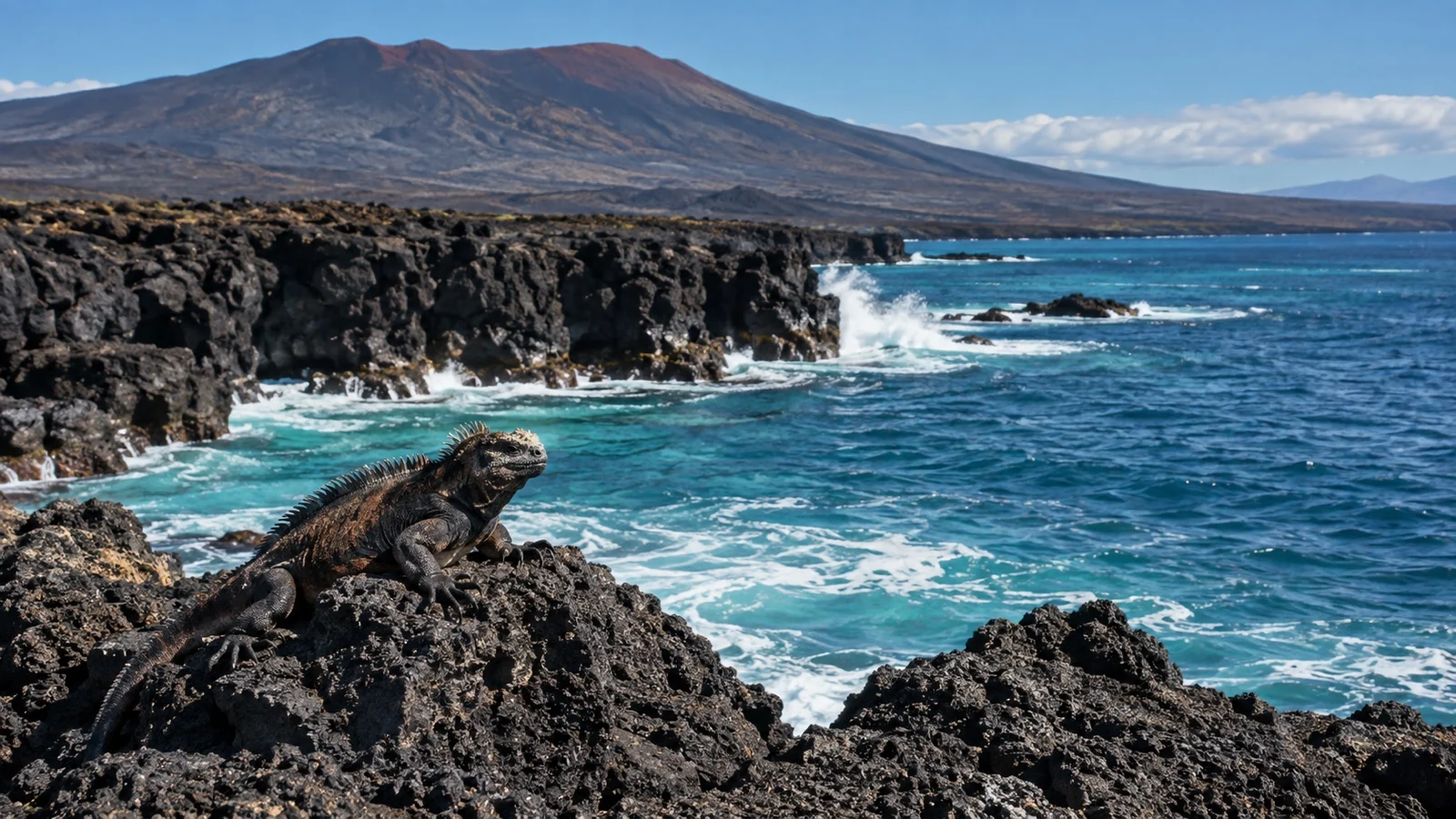
- Best known for: Dense marine iguana colonies and dramatic young volcanic terrain
- Other possible wildlife: Flightless cormorants, Galápagos penguins, sea lions, turtles, hawks, and shorebirds
- Facilities: No restrooms, food outlets, shops, roads, or visitor center
- Independence: Guests remain with authorized guides and follow the approved route
- Accessibility: Difficult because of panga boarding, exposed lava, gaps, and irregular footing
What a Fernandina Cruise Call Actually Means
When a cruise line lists Fernandina Island, it is describing an expedition operation rather than a harbor call. The ship normally stays offshore while the expedition team evaluates wind, swell, landing conditions, and any guidance from Galápagos National Park authorities.
Once the landing is cleared, guests receive a briefing and board pangas by group. The ride is part transportation and part wildlife search, so keep your camera protected but accessible and listen for the naturalist’s instructions.
There is no option to step ashore and explore on your own. Visitor access on uninhabited islands is controlled through approved itineraries, designated sites, authorized guides, and rules intended to protect animals and fragile habitats.
The experience can change quickly with the Pacific. A calm morning may allow an easy transfer and long walk, while swell or volcanic hazards can shorten, relocate, or cancel the operation.
Why Fernandina Feels So Wild
Fernandina is the westernmost major island in the Galápagos archipelago and one of its youngest. UNESCO describes Fernandina and neighboring Isabela as the youngest large islands in a geologically active chain shaped by ongoing volcanic and seismic processes.
La Cumbre volcano dominates the island, and eruptions are part of Fernandina’s living geology rather than ancient history. The national park may restrict access when monitoring indicates a risk, which is why any landing should be treated as a privilege rather than a guarantee.
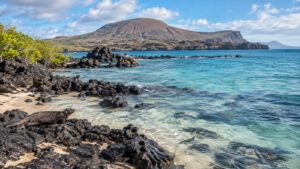
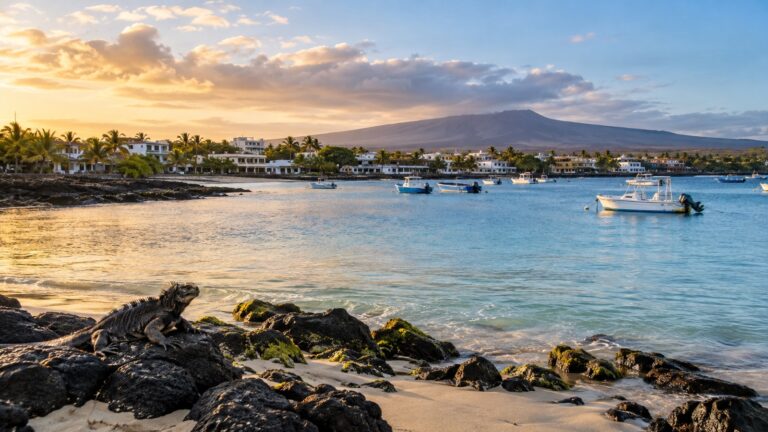
The landscape around Punta Espinosa is spare and beautiful. Black lava meets clear water, pioneer plants grip narrow cracks, and the lack of roads or buildings makes the island feel wonderfully unfinished.
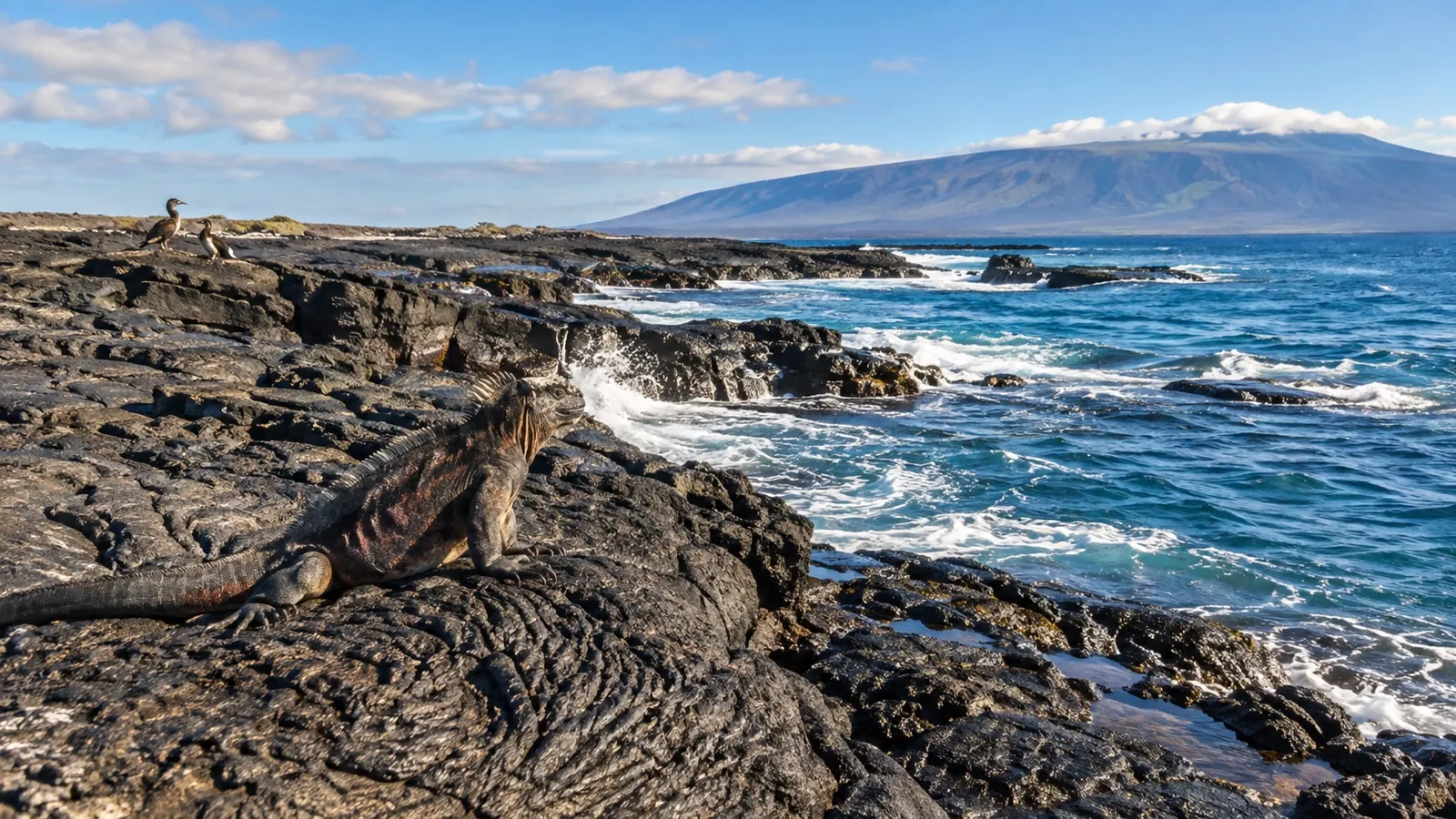
That apparent barrenness is deceptive because the surrounding sea is highly productive. Ocean currents bring cool, nutrient-rich water to the western islands, supporting algae, fish, seabirds, reptiles, and marine mammals in an unusually concentrated ecosystem.
Punta Espinosa Landing Experience
Punta Espinosa is Fernandina’s signature visitor site and the name you should look for in a detailed itinerary. A generic reference to Fernandina does not always promise a landing, so confirm the exact planned activity before choosing a cruise.
The panga generally approaches a low lava edge where crew members help guests step out one at a time. Guides may call it a dry landing because you are meant to step onto rock rather than into the water, but spray and algae can still make the first steps slick.
After landing, the group follows a marked or guide-directed route across irregular lava. The walk is less about distance than concentration because cracks, raised plates, loose fragments, and wildlife can interrupt every few steps.
Your naturalist sets the pace and may pause frequently to interpret geology, animal behavior, and conservation work. Those stops are not wasted time because the most memorable moments often happen while everyone stands quietly and watches.
Marine Iguanas Are the Headline
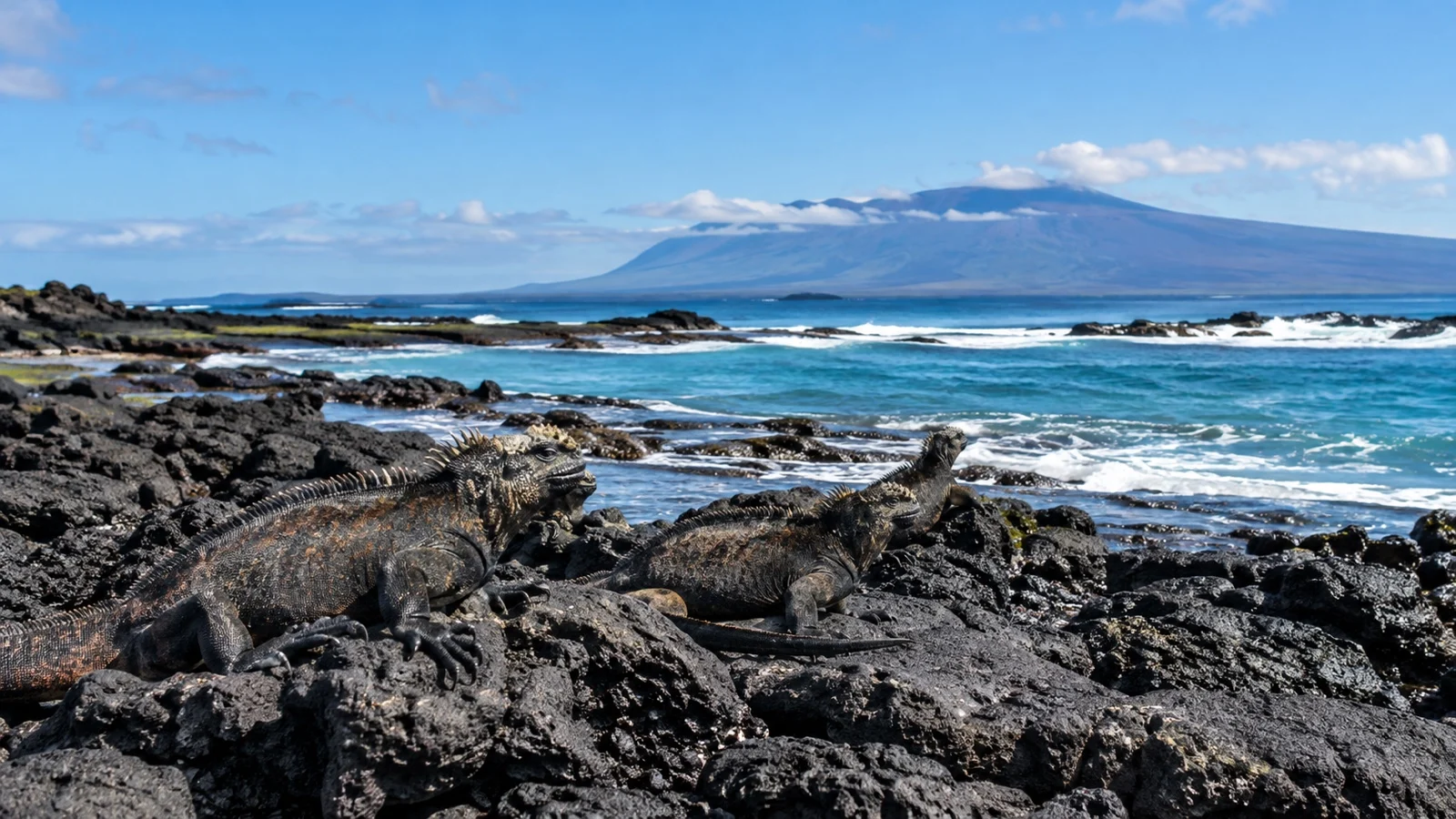
Fernandina’s marine iguanas are the stars, especially when large groups lie piled across dark lava. Their charcoal coloring can make them almost disappear until one lifts its head, sneezes out salt, or shuffles toward the sea.
These reptiles feed on marine algae and regulate their body temperature by basking after cold-water foraging. Watching them move between surf and sun connects the island’s volcanic land directly to its productive ocean.
The animals may appear indifferent to people, but that does not make them tame or invite a closer approach. Follow the guide’s route, maintain the distance required by park rules, and never block an iguana moving between the water and its resting place.
Photography is often excellent because the colony provides behavior, texture, and scale rather than a single posed subject. Kneeling may be discouraged or impractical on sharp lava, so learn to frame images from a stable standing position.
Other Wildlife You May See
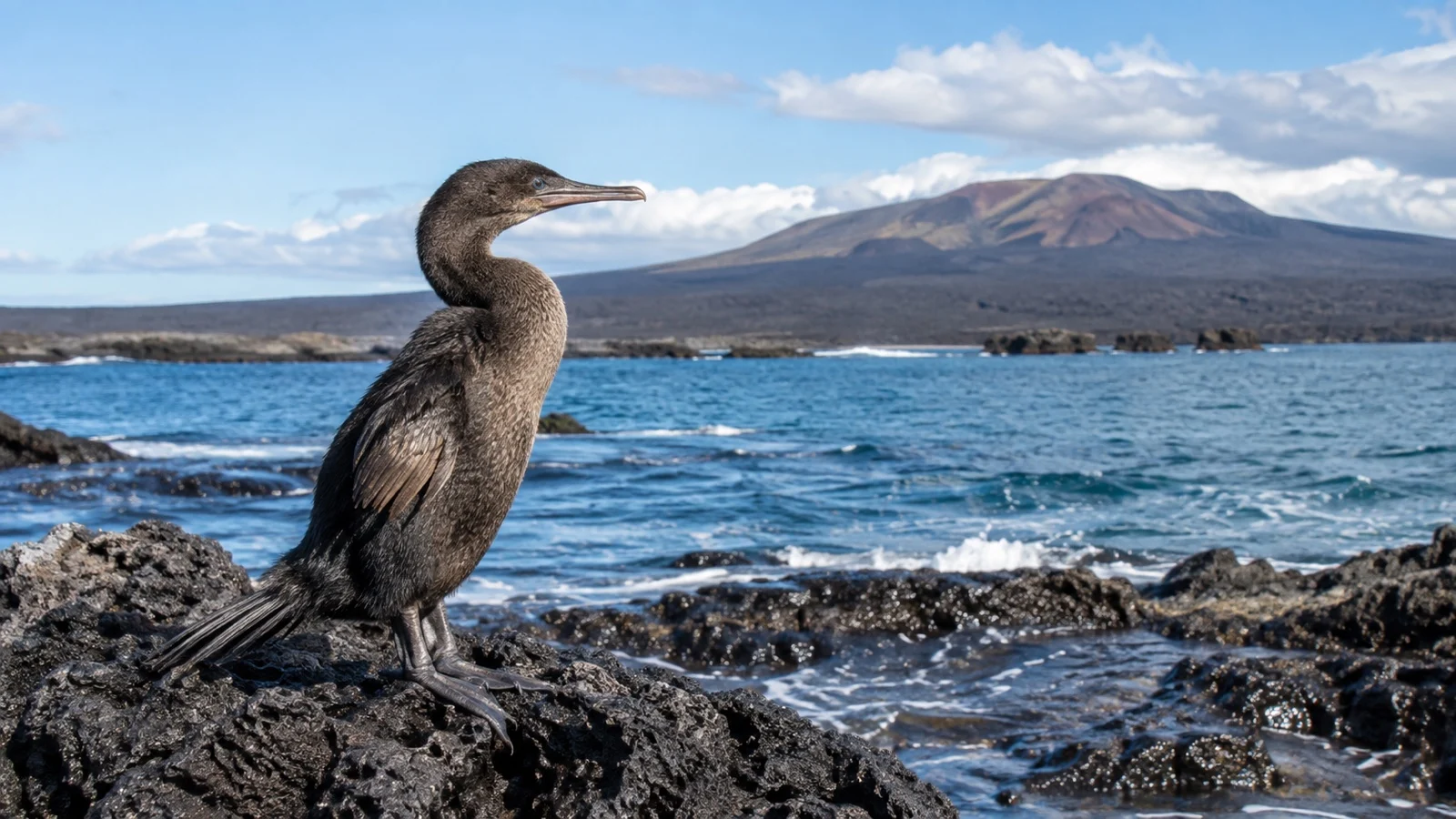
Flightless cormorants are another western Galápagos specialty and a major reason naturalists value this site. Their small wings cannot carry them through the air, but powerful legs and streamlined bodies make them effective underwater hunters.
Galápagos penguins may appear along the coast or flash through the water beside a panga. Sightings are never guaranteed, and a brief encounter can be easy to miss if you are focused only on the trail.
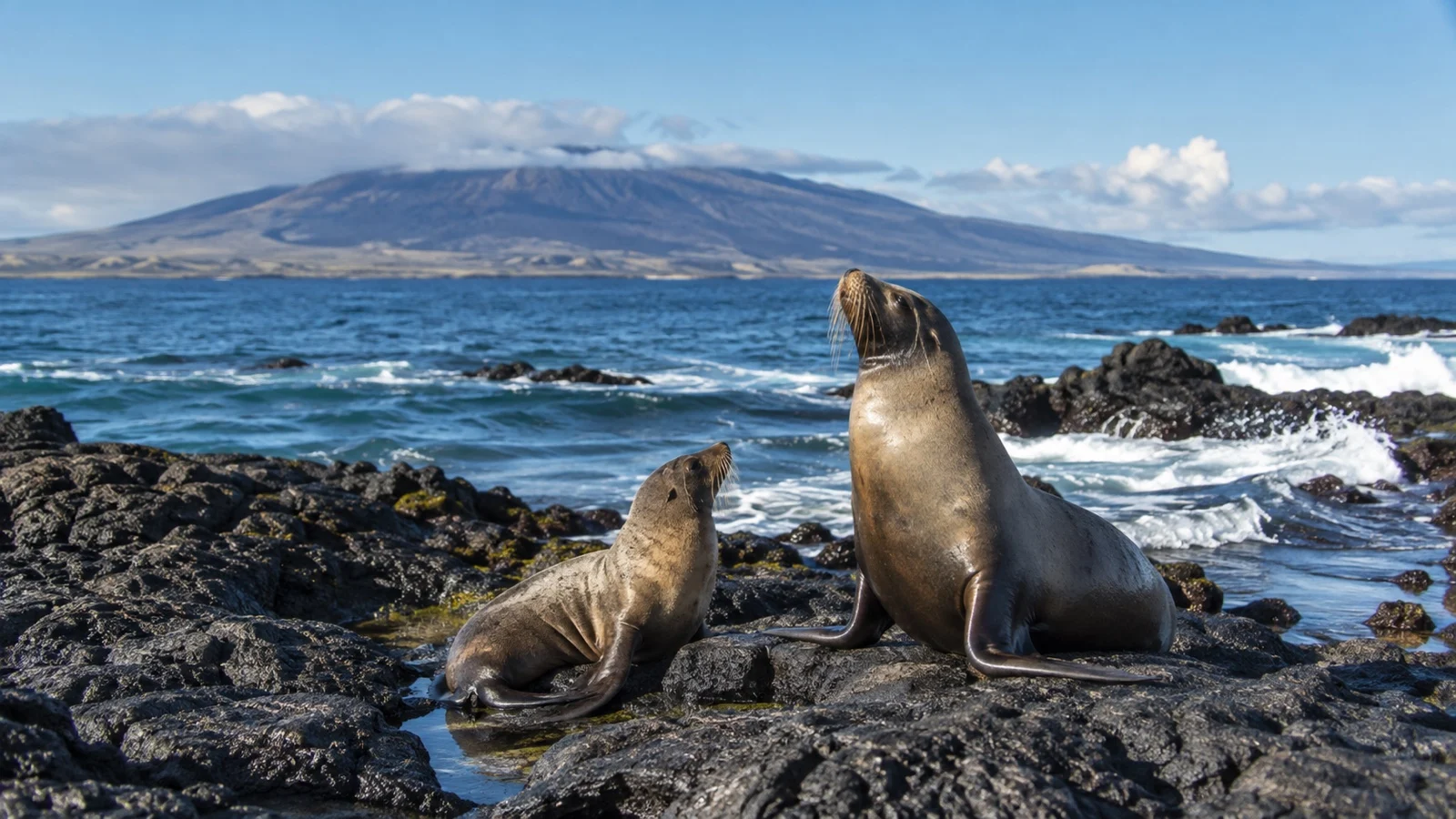
Sea lions, sea turtles, crabs, herons, pelicans, and other coastal species can also be present. A Galápagos hawk may circle above or perch on the lava, although every visit produces a different mix.
Do not confuse wildlife potential with a checklist promised by the cruise line. Seasons, water temperature, tides, food availability, breeding cycles, and plain luck all influence what appears during a particular landing.
How the Panga Transfer Works
Boarding usually begins at a side platform near water level, where crew members stabilize the panga and direct each guest to a seat. Use the hand grip the crew indicates, keep both hands available, and wait until you are told to move.
Most operators assign guests to groups and call them at specific times, which keeps the landing from becoming crowded. Be fully dressed and ready before your call because delaying at the platform can shorten the group’s time ashore.
Place cameras, phones, and spare layers in a waterproof bag or protective pouch. Even on a dry landing, spray can reach the panga and a dropped item can disappear quickly between rocks or into deep water.
The return follows the same careful sequence in reverse. Sit where the crew directs, remain seated during the ride, and do not stand for a photograph when the boat is moving.
What to Wear and Carry
Choose closed-toe walking shoes with firm grip and a sole that feels secure on wet rock. Heavy hiking boots are not always necessary, but smooth deck shoes, loose sandals, and flip-flops are poor choices for this landing.
Lightweight pants offer protection from sun and rough lava, while shorts can feel cooler on a hot still morning. Wear a breathable long-sleeve layer or bring one in case the panga ride turns breezy.
A brimmed hat needs a secure chin strap because wind can rise during the transfer. Reef-safe sun protection, sunglasses, water, and any essential medication should travel with you because nothing is available ashore.
Binoculars are useful for birds and offshore activity, though a compact pair is easier to manage than a heavy full-size model. Bring only equipment you can carry without needing both hands on every step.
Walking Difficulty and Accessibility
The biggest challenge is not elevation but the combination of moving boats, a low lava landing, uneven surfaces, and sustained attention to footing. Guests should be comfortable stepping across a gap with assistance and walking over exposed rock without a handrail.
A cane may not sit securely on jagged lava, and a walker or wheelchair cannot normally use the route. Some ships may offer a panga ride without the landing when conditions and staffing allow, but this is an operator decision that must be requested in advance.
Travelers with limited balance, recent surgery, joint pain, or reduced mobility should discuss the complete transfer with the expedition team. The honest question is not only whether you can walk the trail, but whether you can board, disembark, and repeat the process safely.
If you choose to remain aboard, ask whether naturalists will present a recap later. Many expedition ships share photographs, maps, and observations that can still provide a meaningful understanding of the site.
Park Rules That Matter on the Ground
Galápagos National Park rules are practical conservation tools, not background etiquette. Stay with your guide, remain on the authorized route, keep the required distance from wildlife, and never touch or feed an animal.
Do not remove shells, rocks, plants, feathers, or any other natural material. Avoid flash when the guide prohibits it, keep voices low, and do not use drones unless you have the specific permits required by authorities.
Food should remain aboard unless the expedition team explicitly allows a necessary item. Before arrival in the islands, follow biosecurity instructions carefully because seeds, soil, and insects carried on footwear or bags can threaten isolated ecosystems.
The commonly cited wildlife distance is a minimum, not permission to crowd an animal that approaches. If an iguana, sea lion, or bird moves closer, stop and let the guide manage the encounter rather than backing blindly across sharp rock.
Volcanic Activity and Itinerary Changes
Fernandina’s active geology is central to its appeal and a real operational consideration. La Cumbre has produced recent eruptive activity, and the national park works with scientific authorities when deciding whether visitor operations can proceed.
A captain may also alter the plan because of swell, wind, visibility, or a landing crowded with wildlife. These decisions can disappoint guests, but a flexible itinerary protects both people and the site.
Build your expectations around a western Galápagos expedition rather than one guaranteed hour-by-hour schedule. A strong operator should explain alternatives clearly and use the changed conditions to create another worthwhile wildlife experience.
Best Time to Visit Fernandina
Fernandina is a year-round destination, with conditions shaped more by seasonal patterns than a simple good or bad month. Warmer, generally wetter months can bring warmer water and intense sun, while the cooler garúa season often brings cooler water, cloud, and richer marine feeding activity.
Sea state can vary in every season, and western waters may feel cooler than travelers expect near the equator. If snorkeling is included elsewhere in the day’s program, a wetsuit can make the experience far more comfortable.
Wildlife behavior also changes throughout the year, so ask what your preferred sailing tends to emphasize. Choose dates for the broader archipelago experience rather than trying to time a single guaranteed species at Punta Espinosa.
Choosing the Right Itinerary
Not every Galápagos cruise reaches Fernandina because the archipelago uses controlled itineraries and the western route requires additional sailing. Look for Punta Espinosa by name and confirm whether the plan is a landing, a coastal panga ride, or both.
Fernandina is often paired with western Isabela, where sites may add penguins, cormorants, volcanic scenery, snorkeling, or whale-searching opportunities. That pairing creates one of the most distinctive expedition days in the islands.
Compare more than ship luxury and cabin size. Guide quality, group size, panga capacity, platform design, mobility support, daily briefing detail, and time allocated at visitor sites all shape the actual experience.
Ask how the operator handles a missed landing and whether a panga-only alternative is usually possible. No reputable company can promise access regardless of conditions, so clarity and good contingency planning matter more than certainty.
Costs, Entry Formalities, and Practical Planning
Galápagos entry processes and conservation fees can change, and they are normally handled before the Fernandina day. Check the current requirements with Galápagos National Park, Ecuadorian authorities, and your cruise operator shortly before travel.
Confirm which fees are included in your cruise fare and which must be paid separately. Carry the requested form of payment because card acceptance and processing arrangements can vary during the wider journey.
Travel insurance should cover medical treatment, evacuation, trip interruption, and activities included in your expedition. Fernandina has no medical facility, so any serious problem requires transport away from the island.
Download documents and emergency contacts before sailing because internet service can be limited. Tell the expedition team about medical restrictions, allergies, and mobility concerns early rather than at the panga platform.
Photography Without Missing the Moment
The black lava and dark iguanas can fool automatic exposure systems, especially under bright equatorial sun. Check your first few images, protect highlights, and use a slightly faster shutter speed for moving animals or a rocking panga.
A medium telephoto lens handles portraits while still letting you maintain park distance. A wider lens is valuable for showing the colony, shoreline, and volcano together, which often tells the stronger Fernandina story.
Keep gear changes to a minimum because dust, salt spray, and unstable footing are poor companions for an open camera body. A phone in a secure strap or pouch can be the best choice when you need both hands for balance.
Let the guide point out behavior before you start shooting continuously. A few seconds of observation can reveal where an iguana is heading, when a cormorant may dive, or how a sea lion is interacting with the group.
What Not to Expect
There is no port infrastructure and no chance to buy a snack, use a restroom, find shade, or arrange a private car. Everything you need for the landing comes from the ship and leaves with you.
You should not expect to see every famous Galápagos animal on one walk. Giant tortoises are not the central visitor experience at Punta Espinosa, and the remarkable Fernandina tortoise discoveries reported from remote inland terrain do not translate into routine cruise sightings.
You also should not expect a perfectly smooth trail or unlimited time ashore. The protected setting requires discipline, and the expedition team must balance wildlife, safety, group movement, and the ship’s wider schedule.
A Thoughtful Final Take
Fernandina earns its place on a Galápagos itinerary because it feels raw, specific, and impossible to reproduce in an ordinary port. The experience is built from a panga nosing toward black lava, marine iguanas warming in heaps, and a young volcanic island still visibly in motion.
It is not effortless, and that is part of its character. Come prepared for the transfer, respect the guide’s instructions, accept that nature sets the schedule, and Punta Espinosa may become the day you remember long after the cruise ends.
Research note: This guide was checked against current information from the Galápagos National Park Directorate, UNESCO, and official volcanic monitoring sources. Landing controls, visitor rules, and volcanic conditions were reviewed on September 12, 2026, but your expedition team and park authorities provide the final instructions for each call.
More on this topic: browse every guide on expedition and alternative cruises.