Galapagos Cruise Ports: Baltra, San Cristobal, Fees and the Fourteen Day Rule
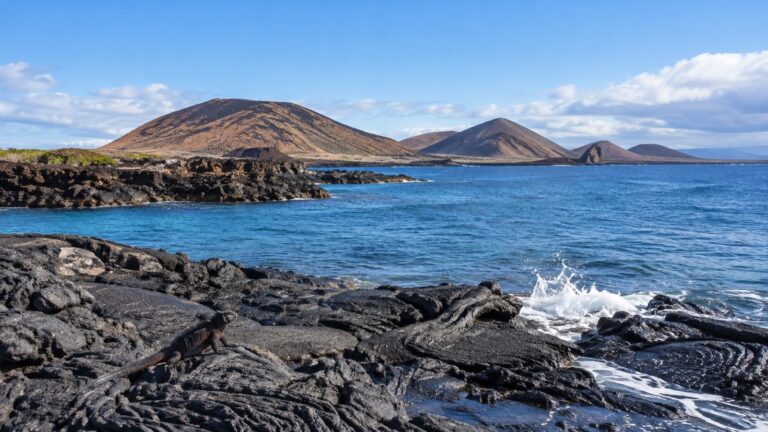
The Galapagos cruise ports are not really ports, and that is the first thing to understand before you book. There are two airports, a couple of working piers, and then 176 authorized visitor sites where no pier exists at all.
You do not choose your itinerary either, not in any meaningful sense. The Galapagos National Park licenses it to your vessel, and the boat sails the route it is permitted to sail.
The quick take
Galapagos expedition planning is easy to get wrong on paper because the trip depends on fixed procedures, licensed routes, and coordinated flights. Most administrative problems are avoidable with careful preparation.
Check the park’s current payment instructions and carry clean US-dollar cash as a backup. The national park entrance fee is collected in person after arrival at Baltra or San Cristobal.
Boat size and the guide-to-guest ratio shape each landing more than luxury extras do. Ask the operator how guests are divided among licensed naturalist guides before booking.
Arrive in mainland Ecuador at least one night before the island flight. A delayed connection into Quito or Guayaquil can otherwise put the vessel departure at risk.
The quick facts
- Where you land: two airports serve the islands, Seymour on Baltra and San Cristobal at Puerto Baquerizo Moreno. Which one you use is set by your itinerary rather than by you.
- How you get ashore: by panga, the local name for a small tender that may be rigid or inflatable, either wet or dry. Wet means stepping off the bow into shallow water; dry means stepping onto rock or a small platform, often slippery.
- The entrance fee: the Galapagos National Park charges 200 US dollars for foreign adults aged 12 and over, 100 for Andean Community and Mercosur nationals, and 30 for Ecuadorians. It is paid on arrival and covers a stay of up to two months.
- The transit control card: a separate 20 US dollar card issued by the Galapagos Government Council desk at Quito or Guayaquil before you check in. Keep it, because you hand it back when you fly home.
- Into town: San Cristobal airport is about ten minutes from Puerto Baquerizo Moreno, at roughly 1.50 to 3 dollars.
- Currency and language: The US dollar, Ecuador’s official currency, and Spanish, with guide languages varying by vessel and departure.
- Time zone: An hour behind mainland Ecuador, at UTC-6, with no daylight saving.
- Landing changes: Individual sites can be dropped for swell, safety, conservation closures, or other operational reasons. The guide and captain provide the current plan.
Baltra and San Cristobal, the two front doors
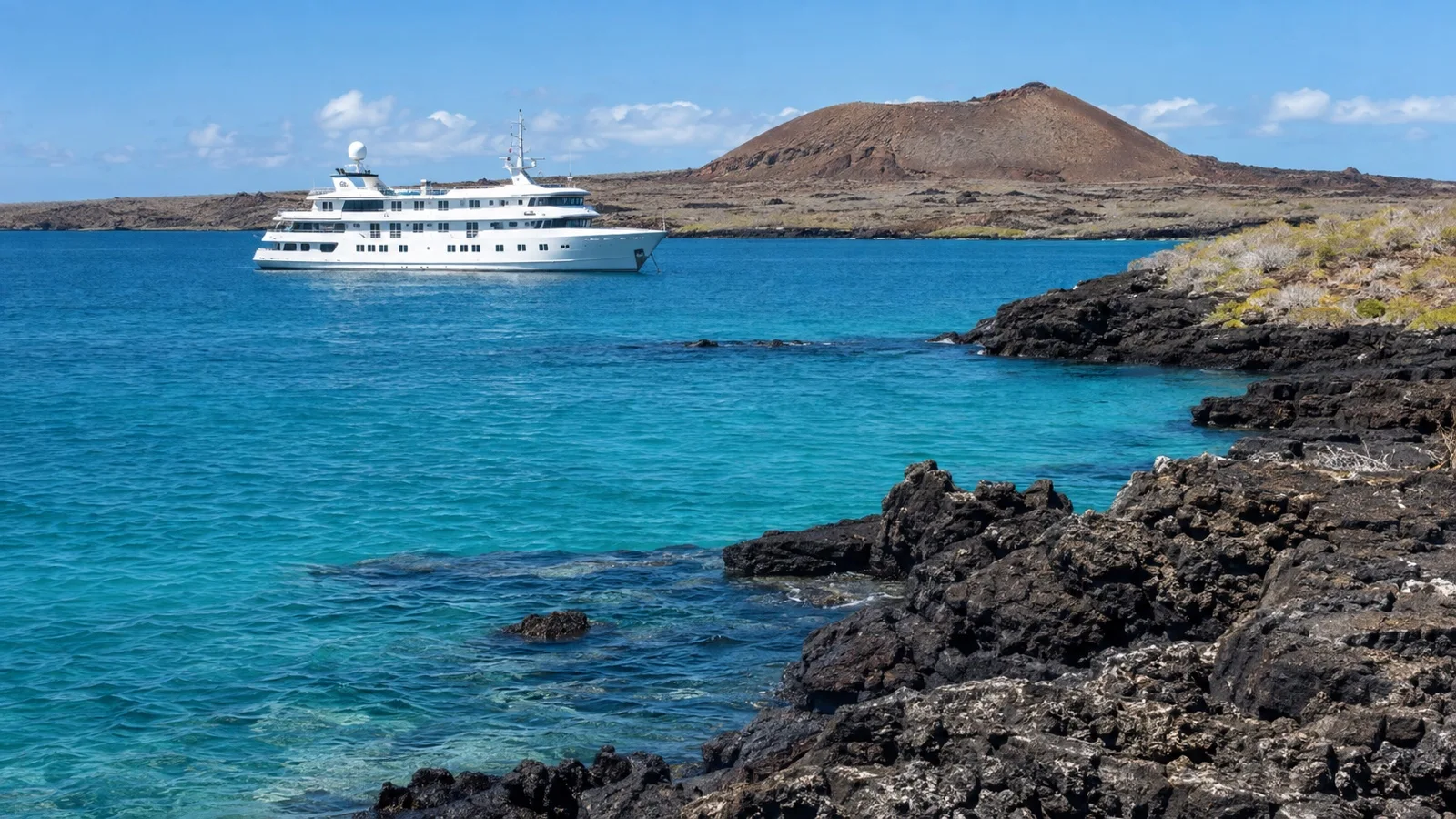
Baltra is the busier of the two and the odder. It is a small flat island north of Santa Cruz with no town and no residents, built around an airfield the US military put there in the Second World War.
The terminal that replaced it is marketed as an ecological airport, and the claim has substance. Ecogal holds LEED Gold certification from the US Green Building Council and carbon neutral accreditation from Airports Council International.
If your boat embarks at Baltra, you will not walk from the terminal to the ship. A bus runs you to a dock, a panga takes you out to the vessel at anchor, and the two airports are separate flights, so check yours before booking.
San Cristobal is the more pleasant arrival. The airstrip sits on the edge of Puerto Baquerizo Moreno, the provincial capital, so ten minutes after landing you are on a seafront covered in sea lions.
San Cristobal can also receive larger visiting vessels under specific permits. That operation differs from a small expedition cruise, so confirm exactly what landing access the itinerary includes.
The fees, the cards and the biosecurity line
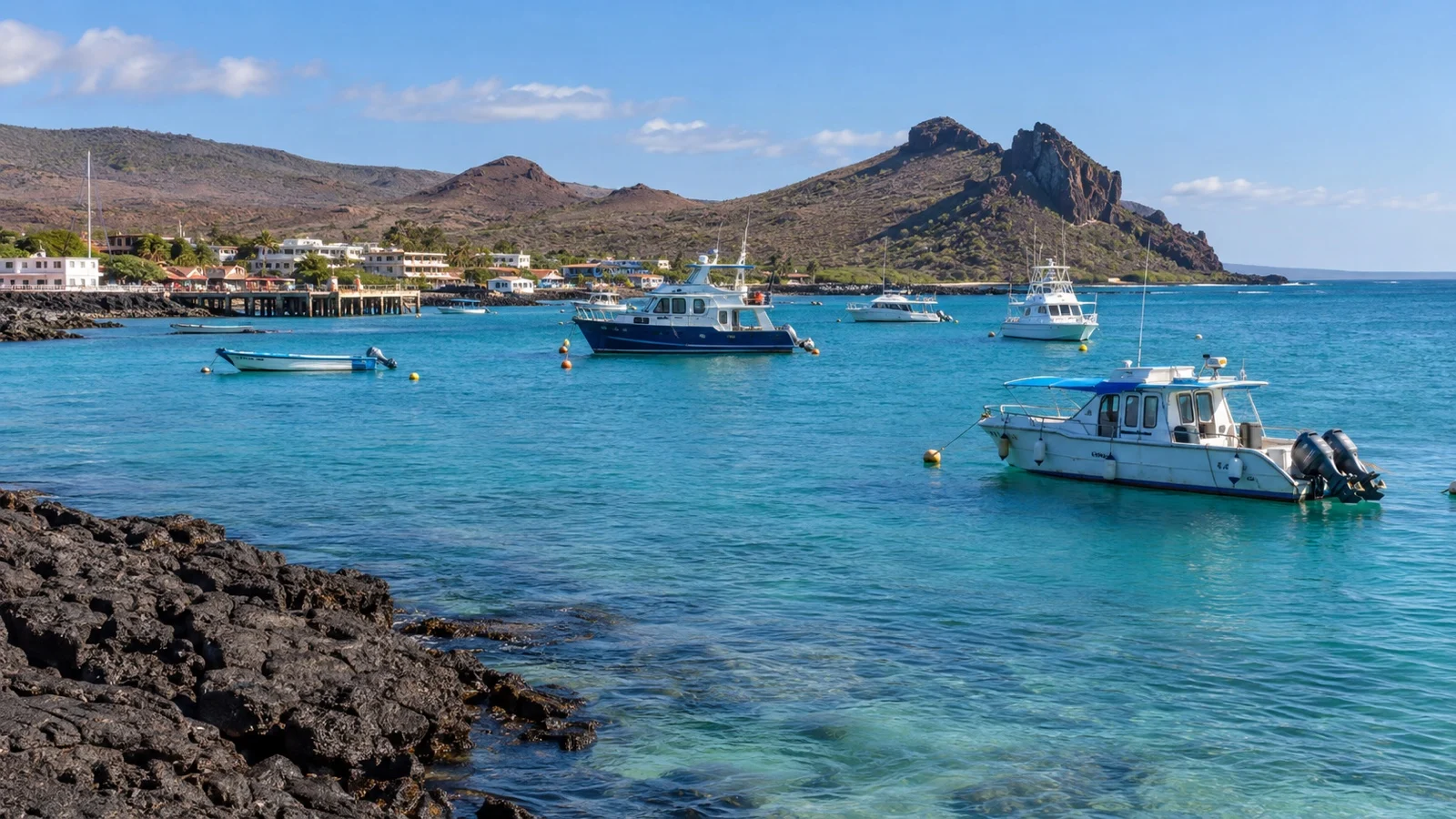
There are two payments in two places, which is why people get caught. The transit control card is bought on the mainland before you fly, the fee is paid in the islands after you land, and most cruise fares include neither.
Follow the park’s current payment instructions for the 200 dollar fee and carry clean US-dollar cash as a backup. Do not assume a card reader will be available after a long flight.
Before any of that, your luggage goes through a biosecurity inspection run by Ecuador’s Agency for Regulation and Control of Biosecurity and Quarantine for Galapagos. It happens at Quito or Guayaquil, and hand luggage is checked again on arrival.
The agency sorts everything into a traffic light system, and the ABG product list is worth two minutes: red prohibited, yellow restricted, green processed enough that it cannot carry a pest. Fresh fruit, seeds and plants are the usual casualties, and none of it is theater, because introduced species are the largest single threat to the archipelago.
The fourteen day rule and why your week arrives in halves
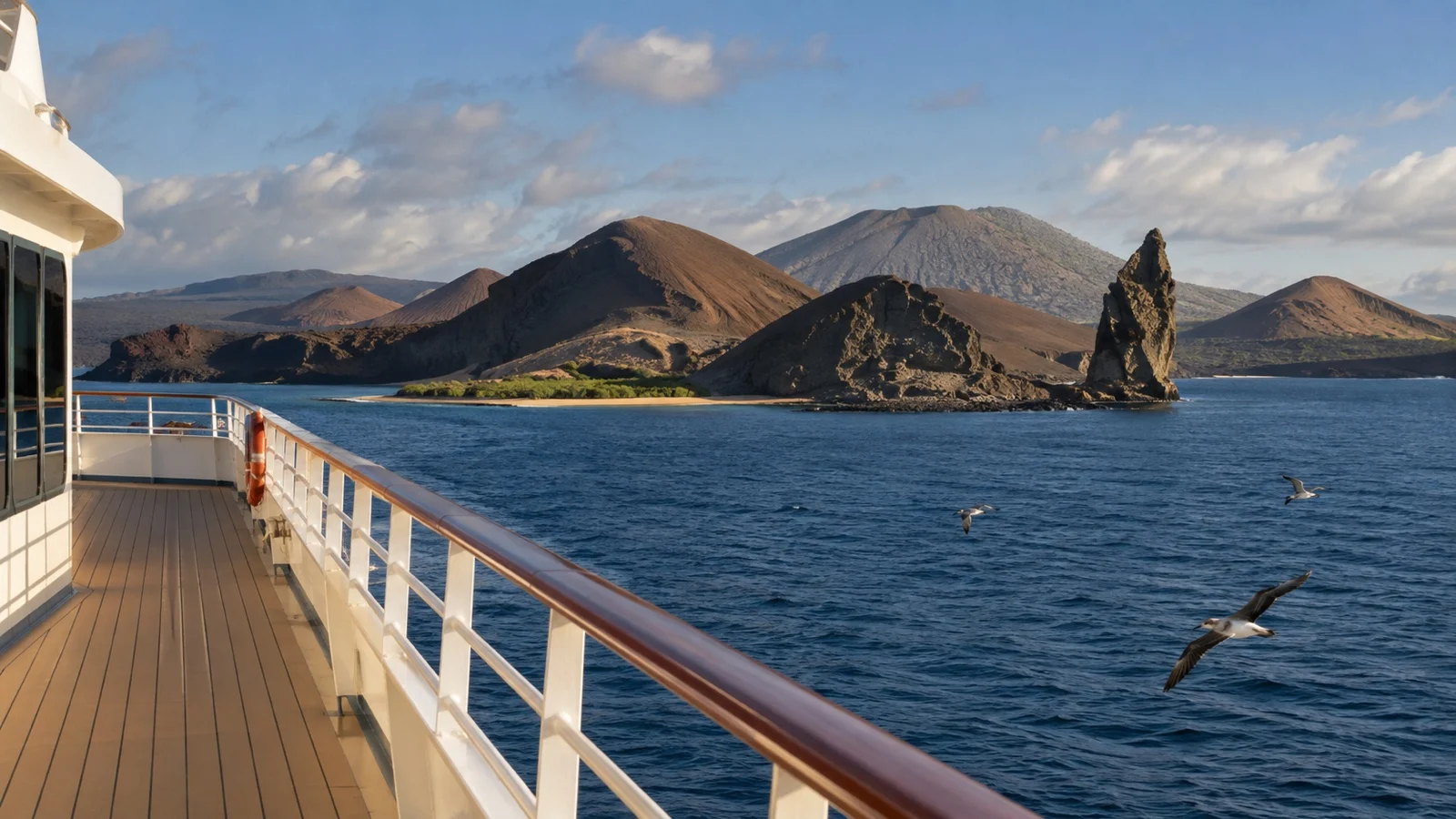
Here is the fact that explains most of what looks strange about Galapagos cruise ports. Operators do not design routes; they hold a licensed quota and a park-approved itinerary, and changing it means a formal application to the park directorate.
Each vessel follows its own park-approved itinerary, which is designed so the same visitor site is not repeated within the authorized rotation. Fourteen or fifteen days is the figure operators quote, and the exact length sits in the individual vessel’s license, so confirm it with your line.
Many operators sell shorter segments within a longer approved rotation, but segment lengths and turnaround patterns vary by vessel. The halves visit different islands, and a western loop with Fernandina and Isabela is a different trip from an eastern one with Espanola and Genovesa.
Booking both halves of a vessel’s longer rotation can provide broader island coverage. It costs more, so compare the named visitor sites rather than assuming every full cycle is identical.
Guides, group size and the six-foot rule
You cannot walk into the national park alone. Visits are permitted only with a naturalist guide licensed by the park directorate, and that license is renewed through the park like any other permit.
Groups are kept small and split by guide, so a 48-guest boat lands as three or four parties on staggered timings. Ask your operator for its guide-to-guest ratio, because that number says more about the trip than the cabin photographs.
The distance rule is the one people break by accident. The Charles Darwin Foundation sets it out plainly: stay at least about 6 feet from wildlife, use no flash, and stay on the marked trail.
The rest is simple. Do not bring food, smoke, or take shells or rocks on landings; use marine-friendly sunscreen, and remember that professional photography or drone use requires advance park authorization.
Visitor sites worth comparing
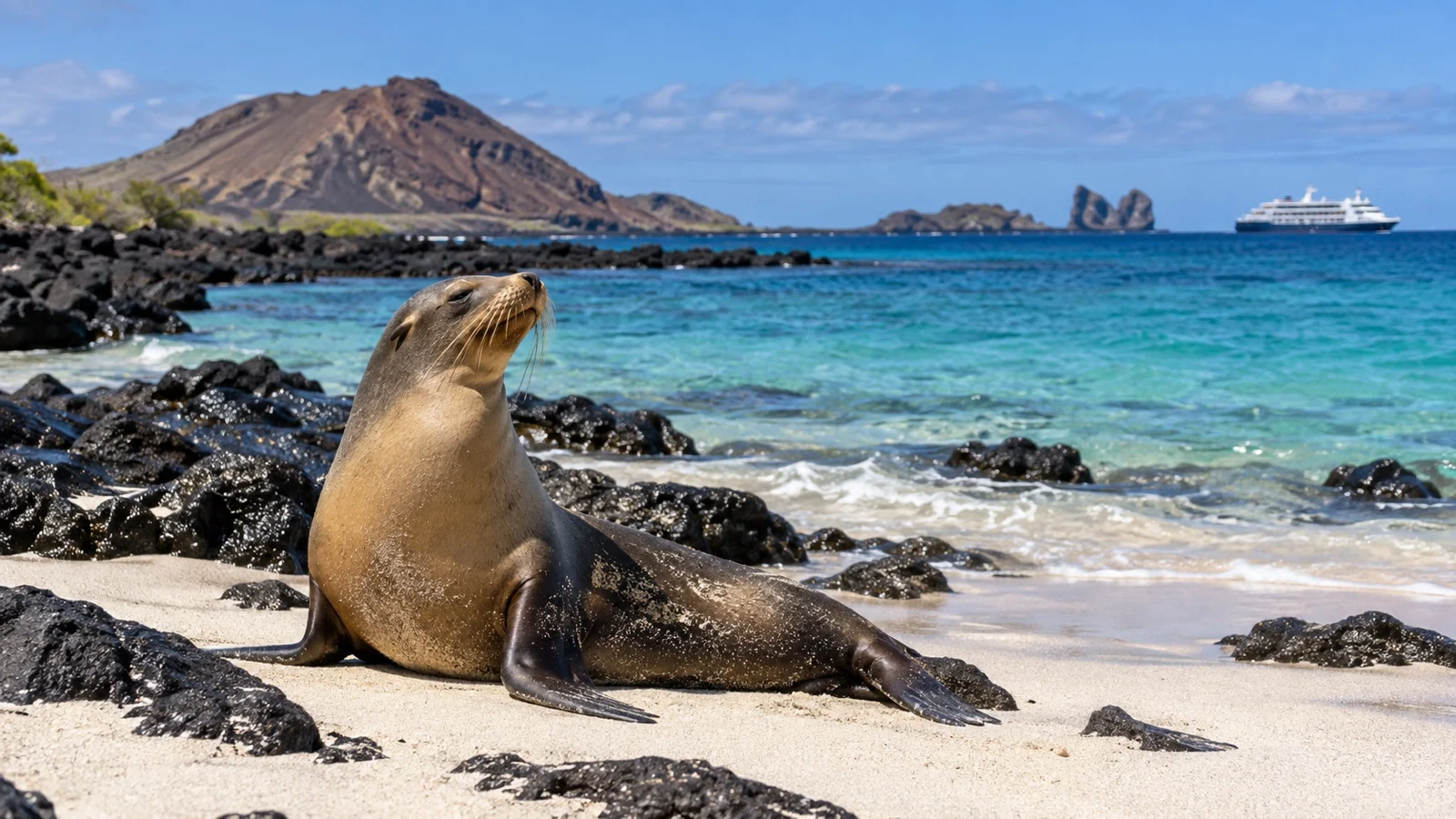
The park manages 176 visitor sites, 85 terrestrial and 91 marine, and no trip sees more than a fraction. Compare the following sites when choosing among licensed itineraries.
- Punta Suarez, Espanola: a dry landing onto rock, then a loop past sea lions, marine iguanas and a blowhole. It is the only nesting site of the waved albatross, which is present for part of the year only.
- Genovesa: the far northeastern outlier, reached by an overnight crossing and worth every hour. Darwin Bay is a wet landing onto coral sand and Prince Philip’s Steps a dry landing followed by a steep climb.
- Punta Espinosa, Fernandina: the youngest and most volcanically active island, and the least altered place most visitors will ever stand. Marine iguanas gather along the shore and the flightless cormorant lives here. The park issued an alert on September 11, 2026 for a possible new eruption and suspended activity in Fernandina’s interior, so confirm the current landing status.
- Bartolome: the postcard view, up a boardwalk staircase to a summit above Pinnacle Rock. Real work in the heat, and the snorkeling below often beats the photograph.
- North Seymour: a flat dry landing close to Baltra, which makes it a common first or last morning. Frigatebirds and blue-footed boobies nest beside the trail, so the six-foot rule matters here most.
- Charles Darwin Research Station, Puerto Ayora: the working science station on Santa Cruz, open daily from 08:00 to 18:00 with free admission. It is a research facility rather than a zoo.
Fun fact: the Galapagos property inscribed by UNESCO in 1978 was among the first properties inscribed on the World Heritage List, and the surrounding marine reserve covers roughly 51,000 square miles. It also spent 2007 to 2010 on the List of World Heritage in Danger, which is not a detail the brochures include.
A practical daily plan
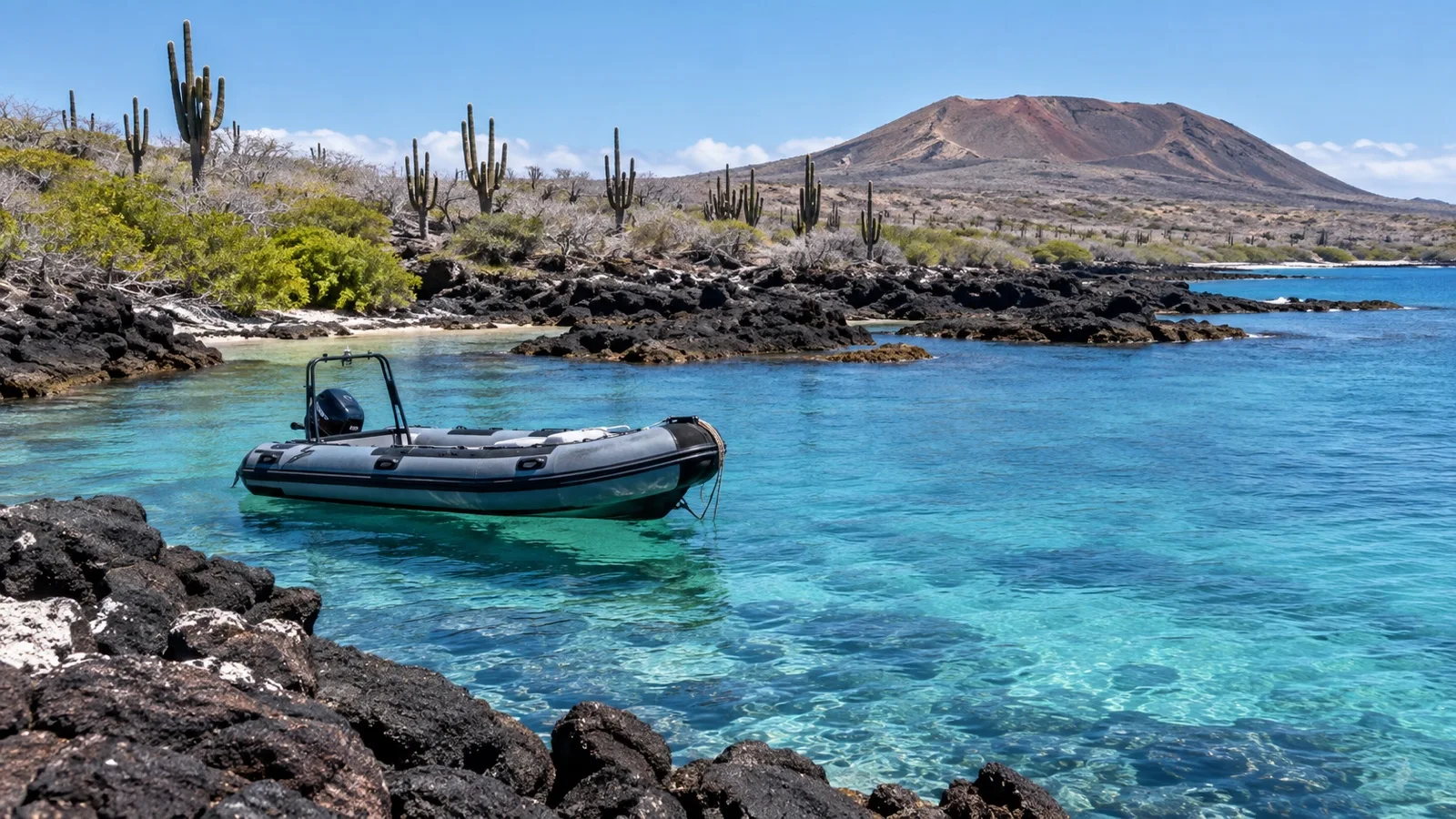
Galapagos days are run by the boat, not by you, which takes adjustment if you are used to independent port days. There is no wandering off, because there is nowhere to wander to.
A standard day is a landing after breakfast, a snorkel or panga ride before lunch, a siesta while the boat repositions, and a second landing late in the afternoon. Sunrise and sunset sit close to six o’clock all year at this latitude, so the schedule barely shifts between seasons.
If energy allows, the second landing can add different light, terrain, and wildlife behavior. Follow the guide’s plan and your own physical limits.
On embarkation and disembarkation days, expect to lose most of the day to logistics. If you add nights at either end, do it on the island your flight uses.
A realistic word on accessibility
Galapagos can be physically demanding even when it is marketed to mainstream cruise travelers. Ask for landing-by-landing accessibility details before booking.
Many visitor-site landings require stepping from a moving panga into shallow water or onto rock, while some are dry landings. Crew assistance helps, but transfers can still require balance and a controlled step onto an uneven surface.
Many trails cross lava, loose boulders, sand, or steep steps rather than smooth surfaces. Wheelchair and mobility-scooter access is highly limited, and operators set their own equipment and assistance policies.
If mobility is limited but short walks are possible, the right vessel and clear disclosure at booking may make parts of the trip workable. State your abilities in writing and consult the notes on wheelchair-friendly cruise ports.
When to go, and the weather
There is no bad season here, only trade-offs, and anyone selling you a single best month is guessing. The archipelago sits on the equator with cold currents running through it, which gives it two seasons that behave nothing like tropical seasons elsewhere.
The warm season runs roughly December to May, with hot humid air, sudden heavy showers, calmer seas and warmer water. Daytime highs at Puerto Ayora peak around 86 Fahrenheit in March.
The cool dry season, roughly June to November, brings the garua, a persistent gray drizzle over the highlands, along with rougher water and stronger currents. August is the coolest month, with highs near 79 Fahrenheit, and water cool enough that most boats carry wetsuits.
Choose dates around the wildlife and water conditions that matter most to you. Seasonal patterns vary by species and location, while the warm season generally brings warmer water and calmer seas.
Paperwork and arrival sequence
Fly to mainland Ecuador at least one night before the island flight, then use the airport and transfer assigned by your vessel. At Quito or Guayaquil, obtain the $20 Transit Control Card and complete the ABG biosecurity inspection before airline check-in; keep the card through departure.
On arrival at Baltra or San Cristóbal, the current protected-area fee is $200 for most foreign visitors age 12 and older, with different categories for children, CAN or Mercosur nationals, and Ecuador residents. Follow the park’s current payment instructions and carry clean US-dollar cash as a backup rather than assuming a card reader will work.
A panga is a local small boat and may be rigid or inflatable, while a wet landing means stepping into shallow water. Protected visitor sites require a licensed naturalist guide and an approved vessel itinerary, so there is no independent excursion or late return to arrange.
The so-called 14-day rule describes the park-approved rotation that prevents a vessel from repeating the same visitor site within its authorized cycle. It does not mean every ship follows the same exact 14-day program or that every seven-night cruise is built from identical four- and five-night halves, so compare the named sites on the actual itinerary.
Quick answers
How much is the Galapagos national park fee, and can I pay by card?
It is 200 US dollars for foreign adults aged 12 and over, collected at Baltra or San Cristobal airport on arrival.
Bring it in cash, because card acceptance at the desk is not something to rely on.
Which airport should I fly into for a Galapagos cruise?
Whichever one your vessel embarks from, which is set by its licensed itinerary.
Baltra serves boats working around Santa Cruz and the north, San Cristobal the eastern loops.
Why are Galapagos cruises sold as four and five night halves?
Because many vessels sell shorter segments within a longer park-approved rotation that avoids repeating a visitor site.
The exact segment lengths and turnaround day depend on the vessel’s licensed itinerary.
Do I really need a guide for everything?
Inside the national park, yes, and the guide must be licensed by the park directorate.
In Puerto Ayora and Puerto Baquerizo Moreno you can walk around unaccompanied.
What is a wet landing?
The panga runs its bow onto a beach and you swing your legs over into shallow water.
Wear something that can get soaked and carry your shoes.
The last word
Galapagos regulations protect sensitive habitats by controlling routes, group movements, and visitor access. Those limits are part of the experience rather than an inconvenience to work around.
Handle the paperwork before focusing on the wildlife. Follow current fee instructions, obtain the transit card before the island flight, check every restricted product against the ABG list, and reach mainland Ecuador at least a day early.
If inflatable transfers are a concern, the guide to how Zodiac landings actually work covers the technique, and it is the same skill in a panga. For the wider region, the Ecuador cruise ports guide puts the mainland call in context and the South America cruise ports overview covers the continent.
If you are adding nights on either side of the cruise, start with where you will sleep. The guide to hotels near the Baltra embarkation point exists for the traveler who has just discovered that Baltra has no town on it.
How this guide was researched: No firsthand Galapagos cruise is claimed. Fees, arrival procedure, visitor site counts, biosecurity, park rules, airport certification, and World Heritage details were checked against current official government, ABG, Galapagos National Park, Ecogal, Charles Darwin Foundation, and UNESCO sources.
Logistics and time-sensitive details were reviewed September 12, 2026. See our Editorial Policy.