Isabela Island Cruise Port: Puerto Villamil, Sierra Negra and the Wall of Tears
Isabela is the largest island in the Galápagos, but it is not one simple cruise port. Your itinerary may name Puerto Villamil, Tagus Cove, Urbina Bay, Punta Moreno, or another approved visitor site, and each one creates a very different day.
This guide focuses on Puerto Villamil calls, where Sierra Negra, Tintoreras, the Wall of Tears, and a relaxed beach town compete for limited time. Check the exact landing name before planning anything independently.
Isabela Island quick facts
- First thing to confirm: The named visitor site on your daily program, because not every Isabela landing includes access to Puerto Villamil.
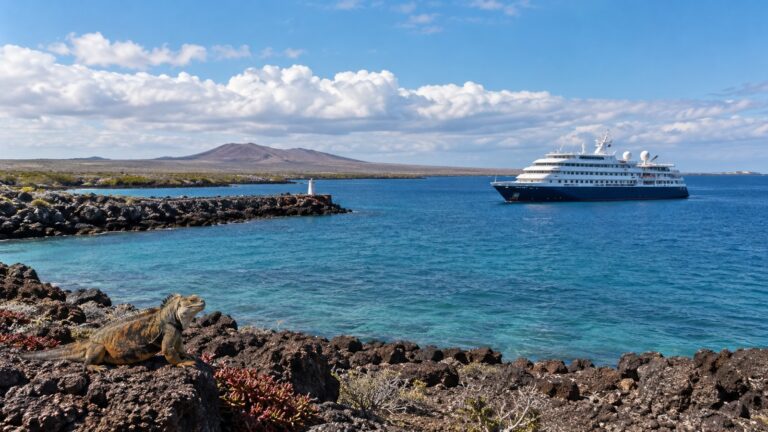
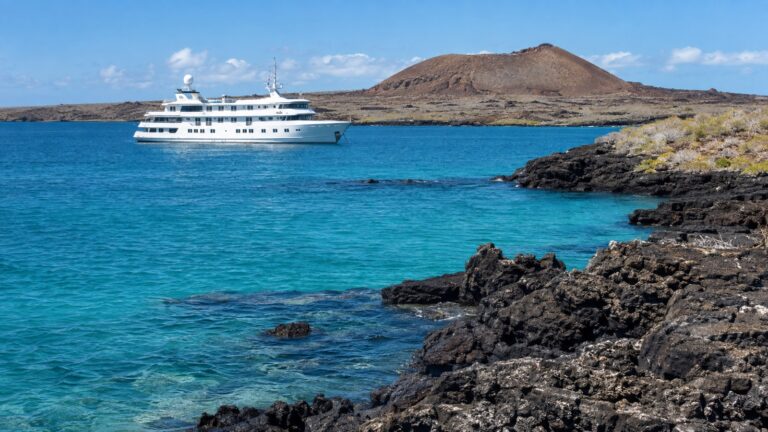
- Ship access: Expedition vessels anchor offshore and transfer guests by panga or Zodiac to an approved landing.
- Town layout: Puerto Villamil is compact and mostly flat, but sand, uneven surfaces, and limited shade affect walking.
- Signature choices: Sierra Negra for volcanic scenery, Tintoreras for a guided small boat outing, and the Wall of Tears for an active land route.
- Currency: Ecuador uses the US dollar, and small bills are useful where card connections are unreliable.
- Time zone: The Galápagos use UTC minus 6, one hour behind mainland Ecuador.
- Best planning rule: Choose one major outing and leave a firm buffer for the return boat.
Isabela is an island, not a single landing
The Galápagos National Park visitor site information distinguishes many authorized marine and terrestrial sites across the archipelago. Isabela alone has town based calls and remote expedition landings that cannot be planned as if they were interchangeable.
Puerto Villamil sits on the island’s southeastern coast and supports hotels, restaurants, roads, beaches, and locally operated excursions. Tagus Cove, Urbina Bay, and Punta Moreno are remote nature stops where the expedition team controls the entire visit.
If the itinerary only says “Isabela Island,” look for the detailed day by day program or ask the cruise line for the visitor site. That one answer determines whether town advice, cycling, or a volcano excursion is relevant at all.
How the transfer ashore works
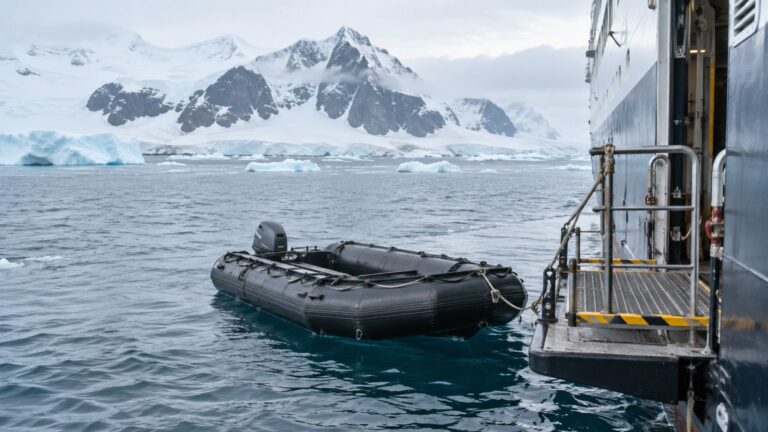
There is no deep water cruise berth at Puerto Villamil, so guests transfer from the ship in small craft. The expedition team may use a pier, beach, wet landing, or dry landing according to the approved site and conditions.
Listen closely to the briefing about footwear, bags, and camera handling. A low swell can still make the step between ship and boat awkward, and both hands should be available when crew members ask you to move.
Landing plans can change when wind, swell, or tide makes the intended operation unsafe. A delayed or canceled landing is disappointing, but it is a normal consequence of visiting a protected island by small craft rather than a failure of organization.
Getting oriented in Puerto Villamil
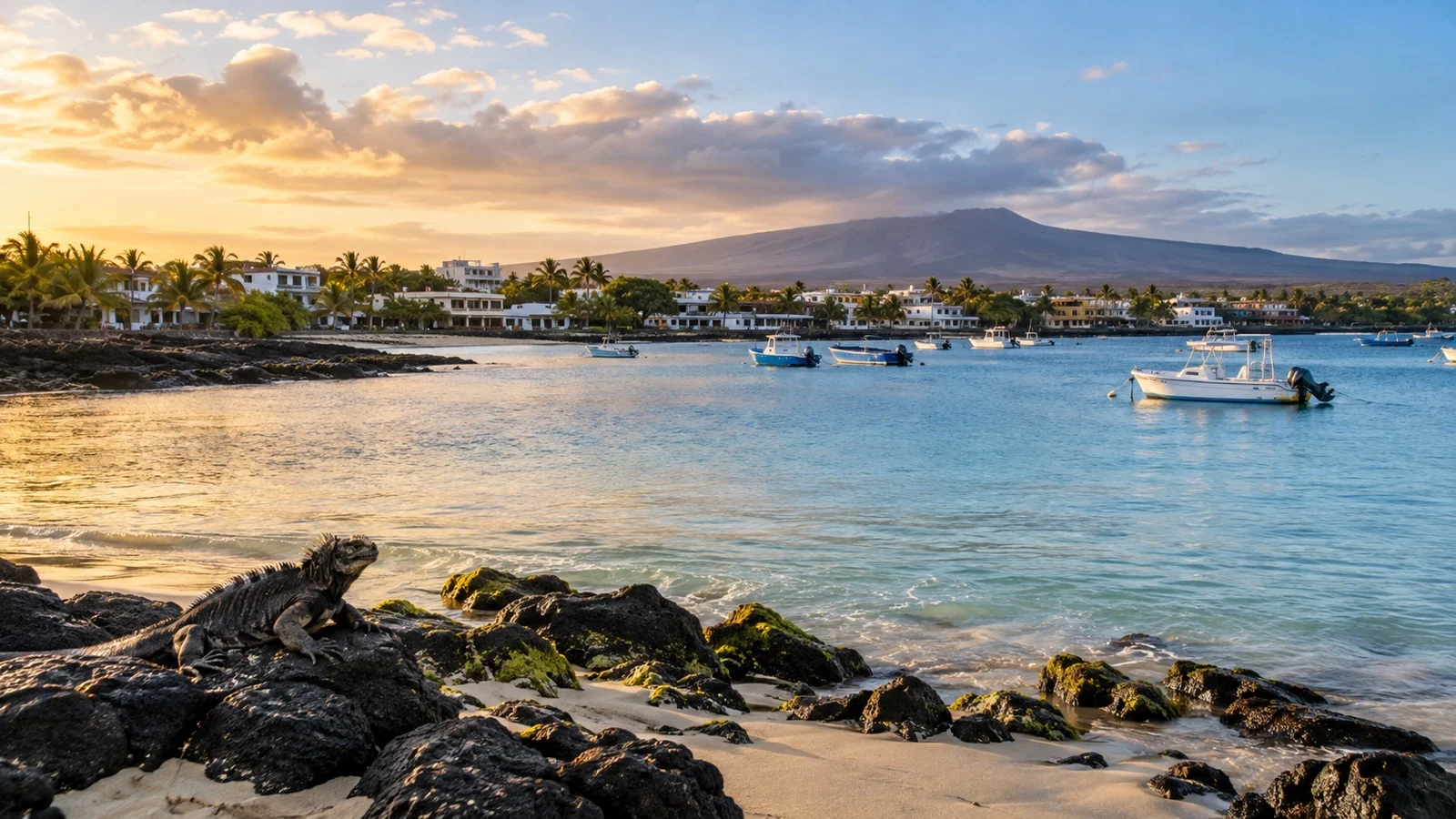
Puerto Villamil feels small, sandy, and easy to read. The passenger landing, town center, beach, and Concha de Perla area are close enough to combine when your ship allows free time ashore.
The larger attractions spread out from town in different directions. Sierra Negra needs a road transfer to its trailhead, Tintoreras begins with another boat ride, and the Wall of Tears lies west along an exposed route used by walkers and cyclists.
Taxis and local operators exist, but availability and access permissions should never be assumed on a cruise call. Ship rules and current National Park controls decide what independent movement is allowed.
Sierra Negra: the big active choice
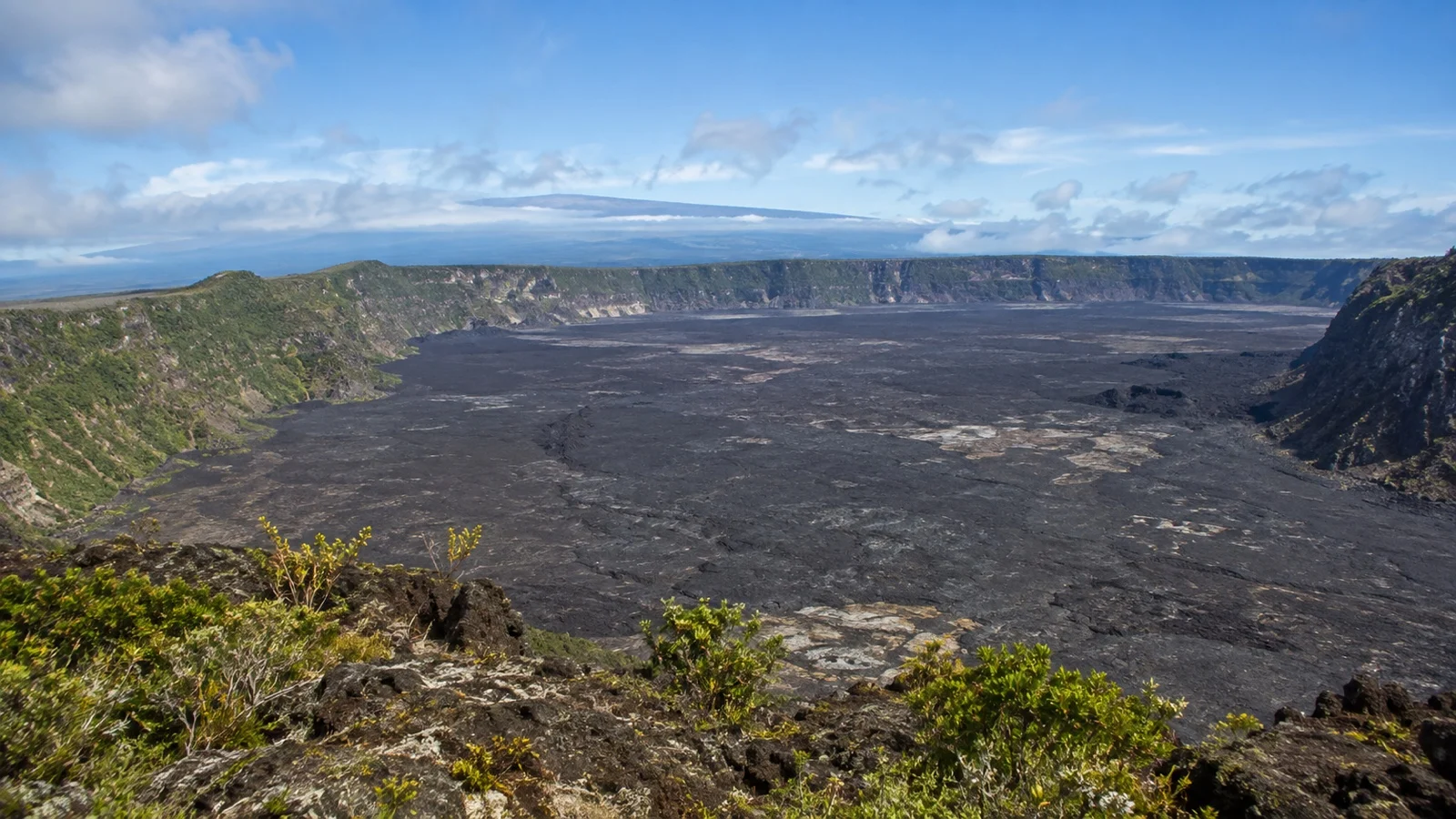
Sierra Negra is one of Isabela’s active volcanoes and has the largest caldera in the Galápagos. The Smithsonian Global Volcanism Program records its most recent eruption in 2018.
The excursion begins with a drive from Puerto Villamil and continues on foot over an exposed, unpaved route. Cloud, rain, heat, and mud can each alter the experience, so this is not a sightseeing transfer with a short photo stop.
Ask whether the advertised outing reaches only a caldera viewpoint or continues toward Volcán Chico. The longer version involves more distance and time, and the distinction matters when comparing fitness requirements.
Good footwear, water, sun protection, and a light rain layer all earn their place. If visibility closes in, the geological walk can still be interesting, but the sweeping view may disappear.
Tintoreras: wildlife from water and lava
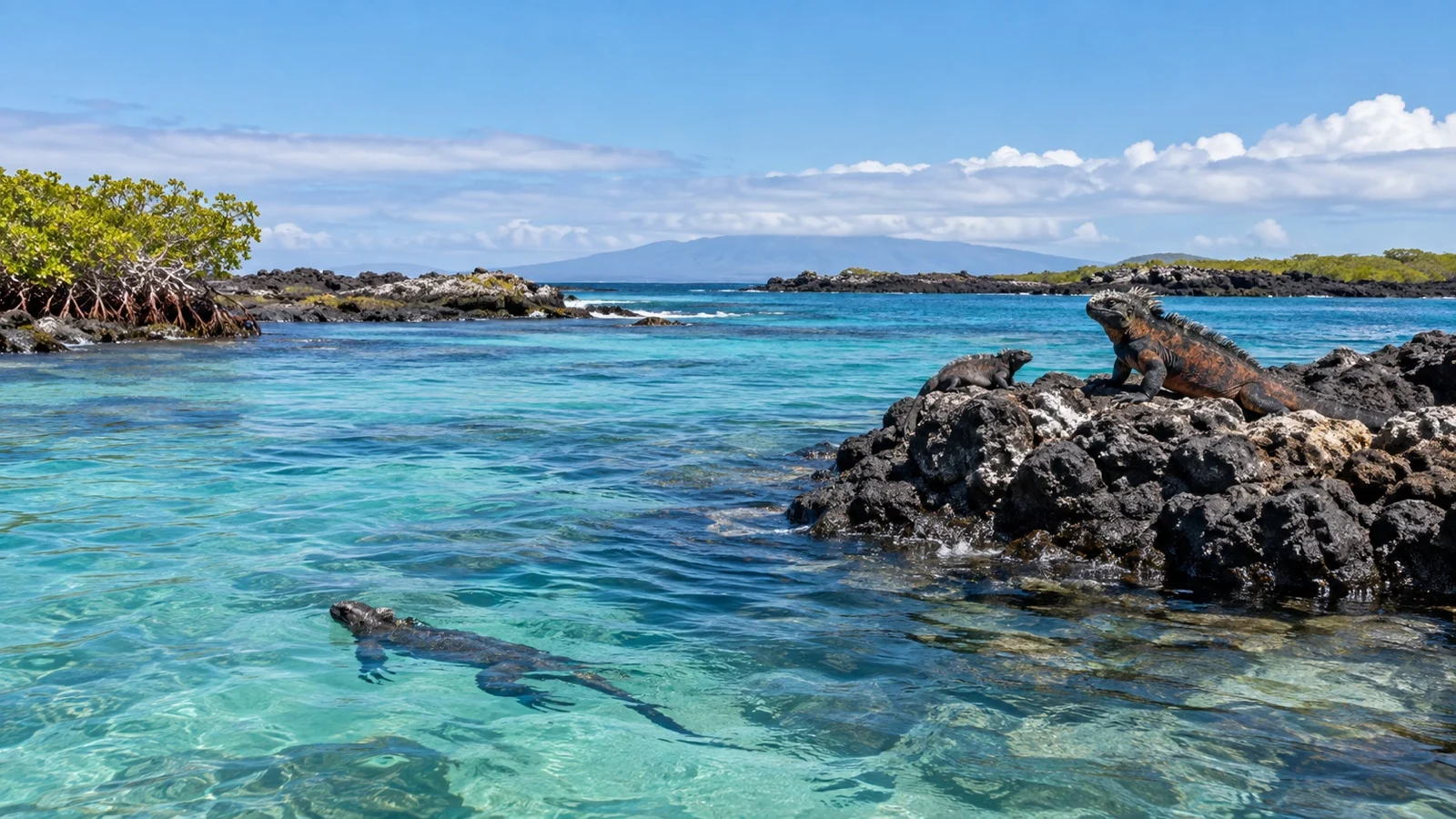
Las Tintoreras is a cluster of low lava islets near Puerto Villamil, usually visited on an organized boat outing. Depending on the authorized plan, a trip may combine a panga ride, a short guided walk, or snorkeling.
Marine iguanas, sea lions, birds, and white tipped reef sharks are associated with the area, but wildlife is never staged. Follow the guide’s directions and enjoy the behavior you actually see instead of chasing a checklist.
This choice often suits travelers who want a strong sense of Isabela without committing to the Sierra Negra hike. It still involves boat transfers, sun, uneven lava, and possibly a water entry, so read the activity description rather than treating it as effortless.
The Wall of Tears: history on an exposed route
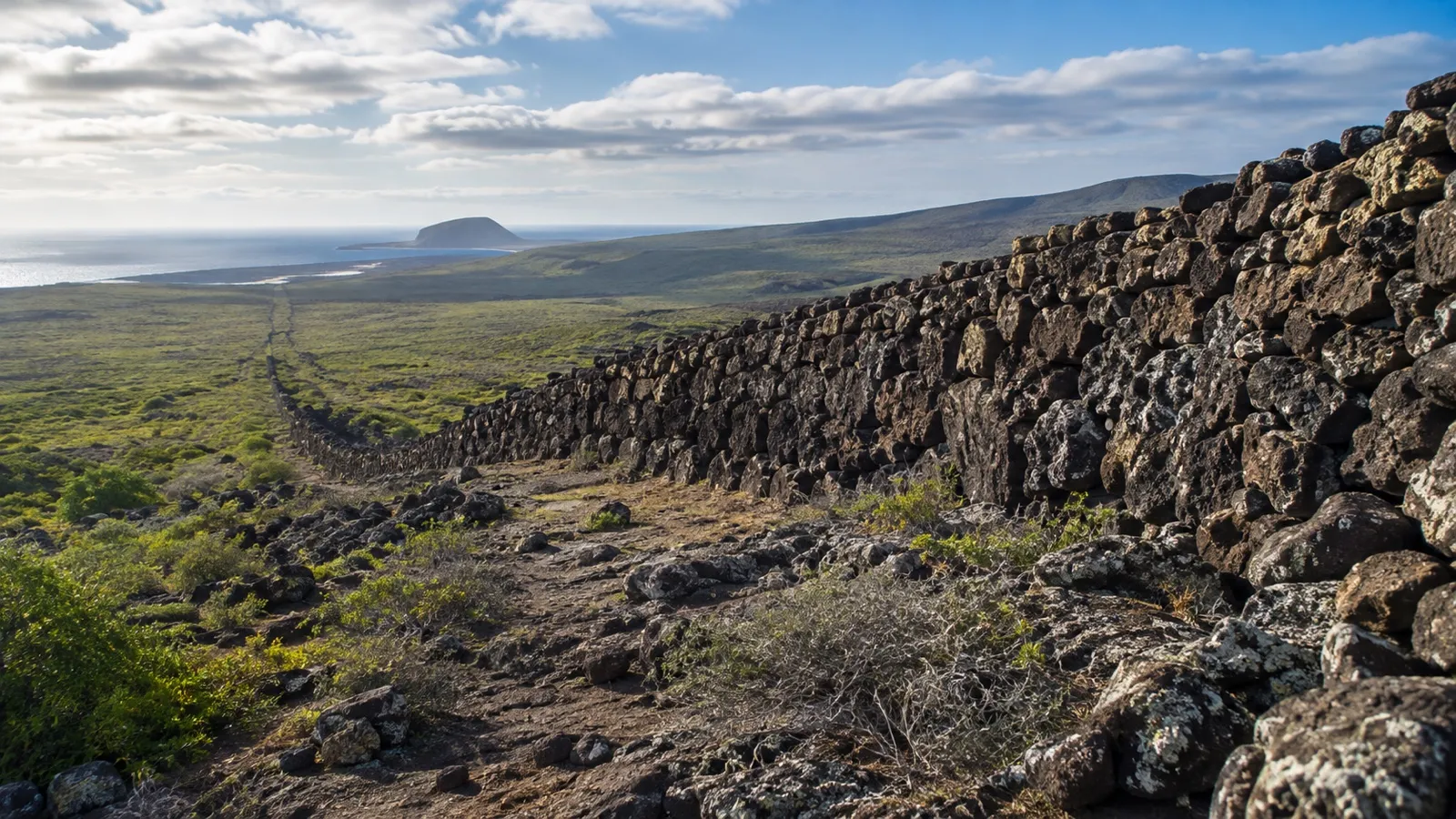
The Wall of Tears was built by prisoners during Isabela’s penal colony era in the mid twentieth century. Its heavy lava stones mark a difficult human history that contrasts sharply with the island’s wildlife focused reputation.
The route west from Puerto Villamil passes beaches, wetlands, and viewpoints before reaching the wall. It is commonly approached by bicycle or on foot, but the round trip is substantial enough that cruise passengers need to watch the clock.
Shade is limited and the equatorial sun can make the return feel harder than the outward trip. Turn around early enough to handle a flat tire, a slow section, or a changed boat time without drama.
Easy options close to town
Concha de Perla is reached along a boardwalk near the passenger landing and can be convenient when independent access is permitted. The water conditions, entry, current, and wildlife vary, so convenience should not be confused with guaranteed easy swimming.
The wetlands boardwalk offers a gentler way to see lagoons and coastal habitat. Flamingos may be present, but they are a possibility rather than a scheduled performance.
The Arnaldo Tupiza breeding center supports conservation of Isabela’s giant tortoises. Confirm current opening arrangements and whether your ship’s landing window leaves enough time before setting out.
Puerto Villamil itself is worth unhurried time if the schedule allows it. A beach walk, a simple meal, and a careful look at wildlife around town can make a satisfying call without adding another vehicle or boat.
How to choose one good plan
Choose Sierra Negra when volcanic landscape is the priority and you are comfortable with a real hike. Choose Tintoreras when guided wildlife viewing and a small boat outing sound more appealing.
Choose the Wall of Tears when you want an active, independent style route and have enough time for a cautious turnaround. Stay near Puerto Villamil when the call is short, the transfer ran late, or your energy is better spent on a slower day.
Trying to combine Sierra Negra, Tintoreras, and the Wall of Tears usually creates more transportation than experience. Isabela rewards attention, and one well matched outing is better than three rushed names.
Ship excursion or local operator?
A ship excursion is the cleanest logistical choice for Sierra Negra because transport, guiding, and return timing sit with the expedition program. It may also be the only option offered under the day’s operating plan.
A local operator can make sense when independent time is explicitly permitted and the activity requires an authorized guide. Verify authorization, meeting location, duration, cancellation terms, and the return buffer before paying.
Do not assume that a familiar attraction name guarantees access. The National Park manages permitted activities at visitor sites, and cruise schedules can impose tighter limits than those faced by hotel guests.
Accessibility and mobility
The ship to panga transfer is the first accessibility question. Ask about step height, crew assistance, seating, handholds, and whether the landing uses a stable pier or a beach.
Puerto Villamil is relatively flat, but sand, broken surfaces, curbs, and heat complicate wheeled mobility. A boardwalk may improve one section without making the entire route step free.
Sierra Negra adds vehicle access, uneven trail, changing weather, and sustained walking. The Wall of Tears route is long and exposed, while Tintoreras can include repeated boat movements and rough lava underfoot.
Ask the operator to describe the exact day’s terrain rather than relying on a broad difficulty label. A shorter alternative near town may preserve more independence and enjoyment than an outing that demands constant assistance.
Weather, sea conditions, and sun
Weather on Isabela can shift between sun, mist, rain, and cloud over the highlands. The volcano may be cool and wet while Puerto Villamil is bright and hot, so light layers work better than one fixed outfit.
The National Park’s inter island transport information notes that sea conditions are generally more stable from January through June than from July through December. That seasonal pattern does not predict the conditions on your particular landing day.
Equatorial sun can burn quickly even through cloud. Carry water, a hat, protective clothing, and reef conscious sunscreen that complies with current operator guidance.
Wildlife rules are part of the experience
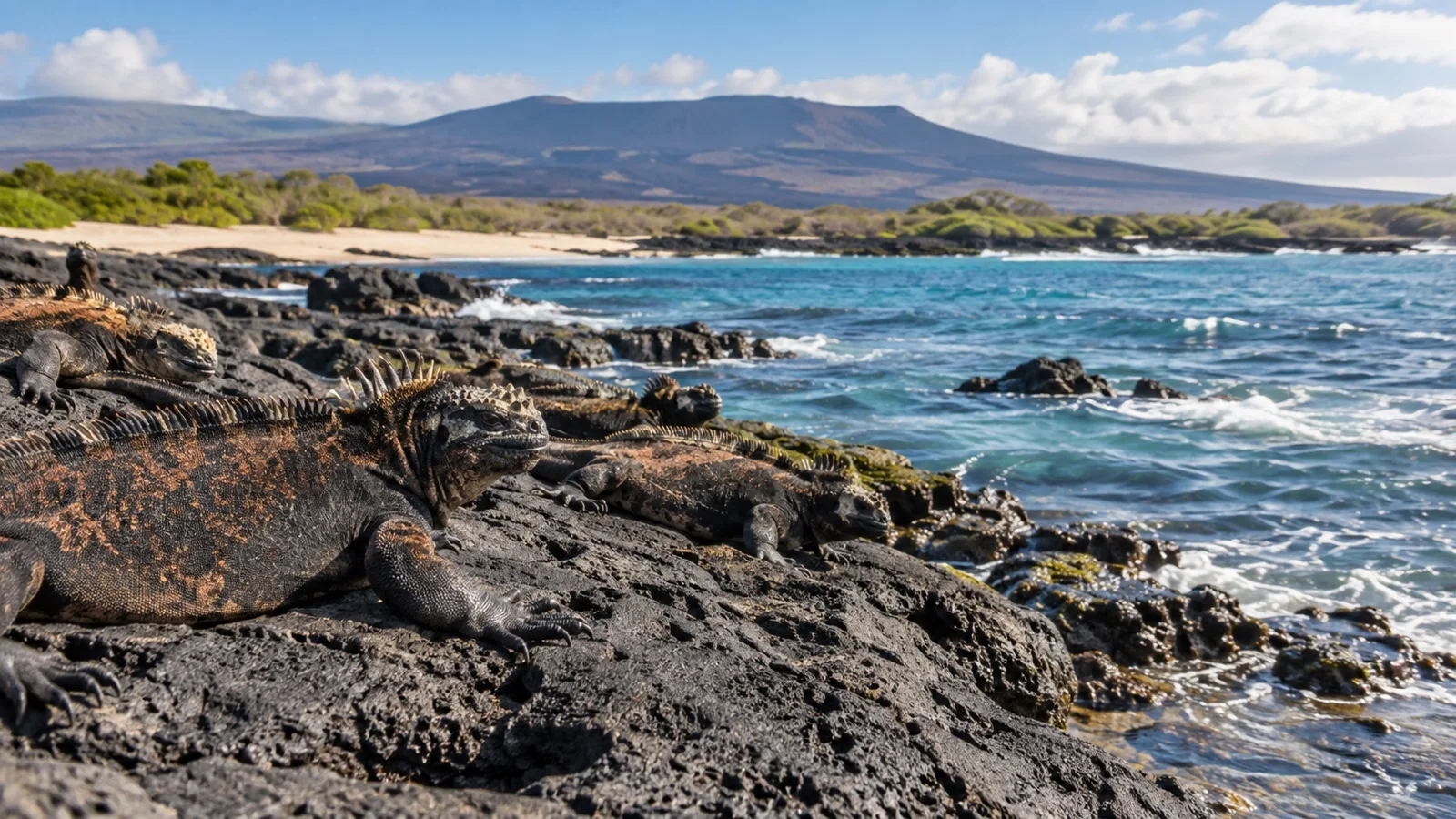
The Galápagos are protected because isolation, ocean currents, volcanism, and evolution produced an extraordinary living system. UNESCO describes the islands and marine reserve as a place where ongoing geological and biological processes remain visible.
Stay on marked routes, keep people and cameras at least two meters from wildlife, do not feed or touch animals, and follow your guide. The National Park’s visitor rules and the day’s briefing take priority over any photo idea.
Biosecurity matters between islands as well as before the cruise. Check shoes, bags, and clothing for seeds or debris, and never remove sand, shells, plants, or volcanic material.
Timing the return to your ship
The final panga time is an operational deadline. Arrive at the meeting point early and keep the ship’s contact instructions with you throughout any independent period.
Allow extra time after road trips, cycling, and locally arranged boat tours. Weather or a wildlife pause can affect transport, and the ship cannot treat a private booking as part of its own excursion program.
If the expedition team recalls guests because conditions are changing, return immediately. The window for safe small craft operations can close faster than the sky suggests.
Independent travel to Isabela
Travelers staying in the islands can reach Isabela by passenger boat from Santa Cruz or by small aircraft. The National Park states that passenger boats between populated islands carry limited numbers and that the crossing time depends on sea conditions.
This information is useful context, but it does not create a practical cruise day transfer from another island. A ship passenger should follow the vessel’s own landing plan rather than attempting an inter island connection.
How Isabela fits a Galápagos itinerary
Isabela often provides the strongest volcanic contrast in an itinerary that also includes more settled Santa Cruz or San Cristóbal. Remote sites on the island can also introduce flightless cormorants, marine iguanas, penguins, and dramatic lava landscapes, depending on season and route.
Use our Galápagos cruise ports guide to compare island stops before deciding what feels repetitive. Puerto Villamil is not a substitute for every other island, and another landing is not a substitute for its town access.
If your voyage begins near Baltra, our Baltra hotel guide can help with a precruise buffer. Travelers routing through San Cristóbal can use our San Cristóbal hotel guide for the same planning step.
Quick answers
Do cruise ships dock at Isabela?
No. Expedition ships anchor offshore and use small craft for transfers to approved visitor sites.
Can I walk from the Puerto Villamil landing into town?
Town is close to the passenger landing, but the exact route and free time depend on the ship’s operating plan. Expect sand, heat, and uneven surfaces rather than a polished cruise terminal walkway.
Is Sierra Negra suitable for everyone?
No. It requires an unpaved hike with exposure to changing weather, and longer versions continue toward Volcán Chico.
Can I combine Sierra Negra and Tintoreras?
Only some schedules may make that practical, and it can create a rushed day. Choose according to the exact excursion duration and your ship’s return deadline.
What money should I carry?
Carry US dollars in small denominations. Card acceptance and connectivity can be inconsistent in a small island town.
Why might a landing be canceled?
Wind, swell, tide, or another safety issue can make the boat transfer unsuitable. The captain and expedition team decide whether operations can proceed.
The last word
Isabela rewards travelers who plan for the specific landing rather than the island name. Confirm Puerto Villamil first, then choose one experience that matches your time, mobility, and interest.
Sierra Negra, Tintoreras, and the Wall of Tears are all worthy choices, but none improves when squeezed into an anxious race. Leave room for wildlife, weather, and the quiet strangeness of this volcanic coast.
How this guide was researched: This guide was checked on September 12, 2026, against current information from the Galápagos National Park, UNESCO, and the Smithsonian Global Volcanism Program. Access, weather, and visitor rules can change, so confirm the final plan with your expedition operator and see our Editorial Policy.
More on this topic: browse every guide on expedition and alternative cruises.