Endicott Arm Scenic Cruising: Dawes Glacier’s No-Dock Fjord
Endicott Arm has no dock, no town, and no excursion desk lines. Just thirty miles of fjord ending at a glacier that calves into the water while you watch.
I’ve routed clients here as Tracy Arm’s backup, and I’d pick it on its own merits too.
My quick take
Endicott Arm is one of two fjords that split off Holkham Bay, and it’s the one more ships can actually enter. If you’ve done a Glacier Bay scenic cruising day before, the format here will feel familiar.
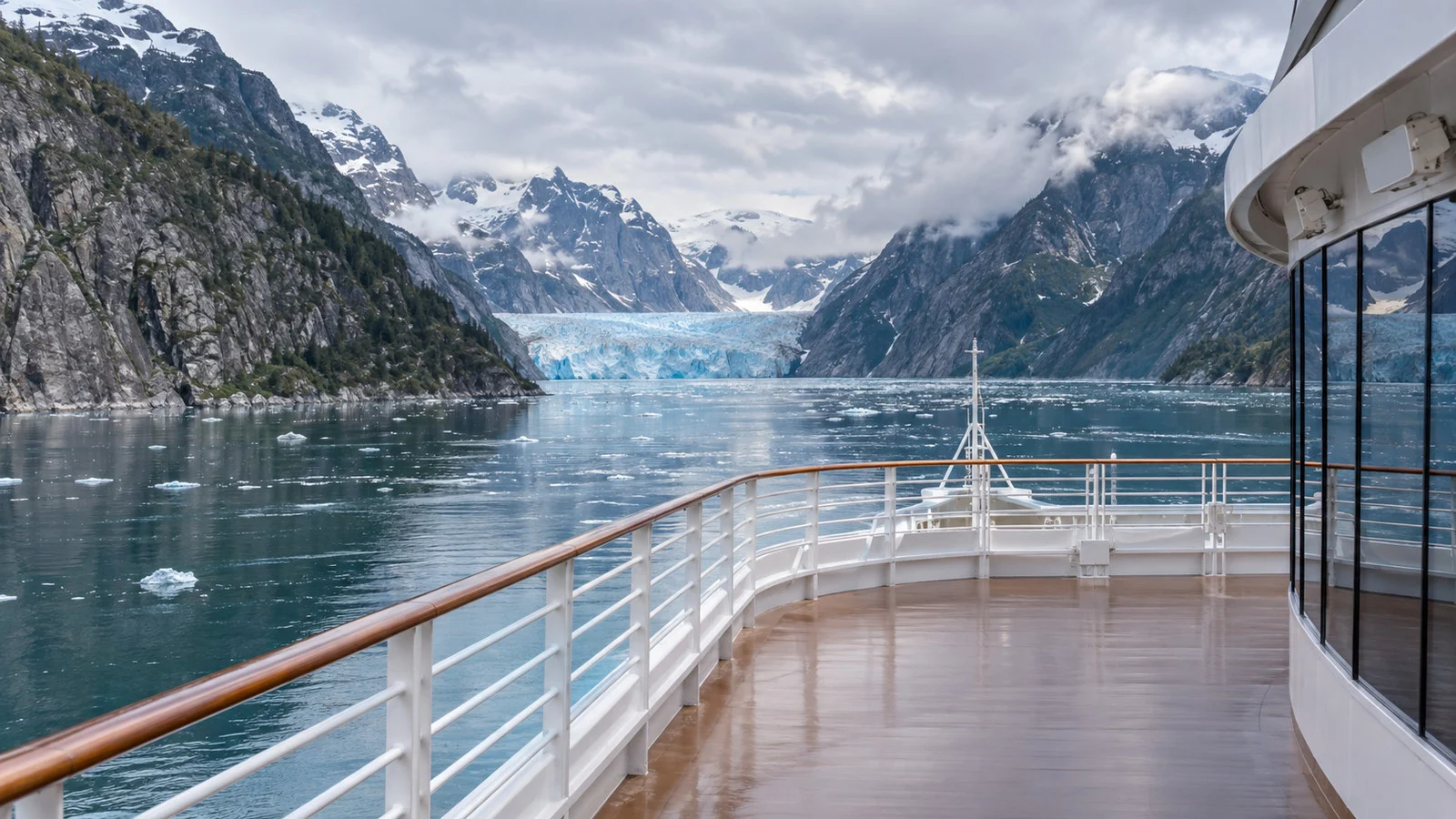
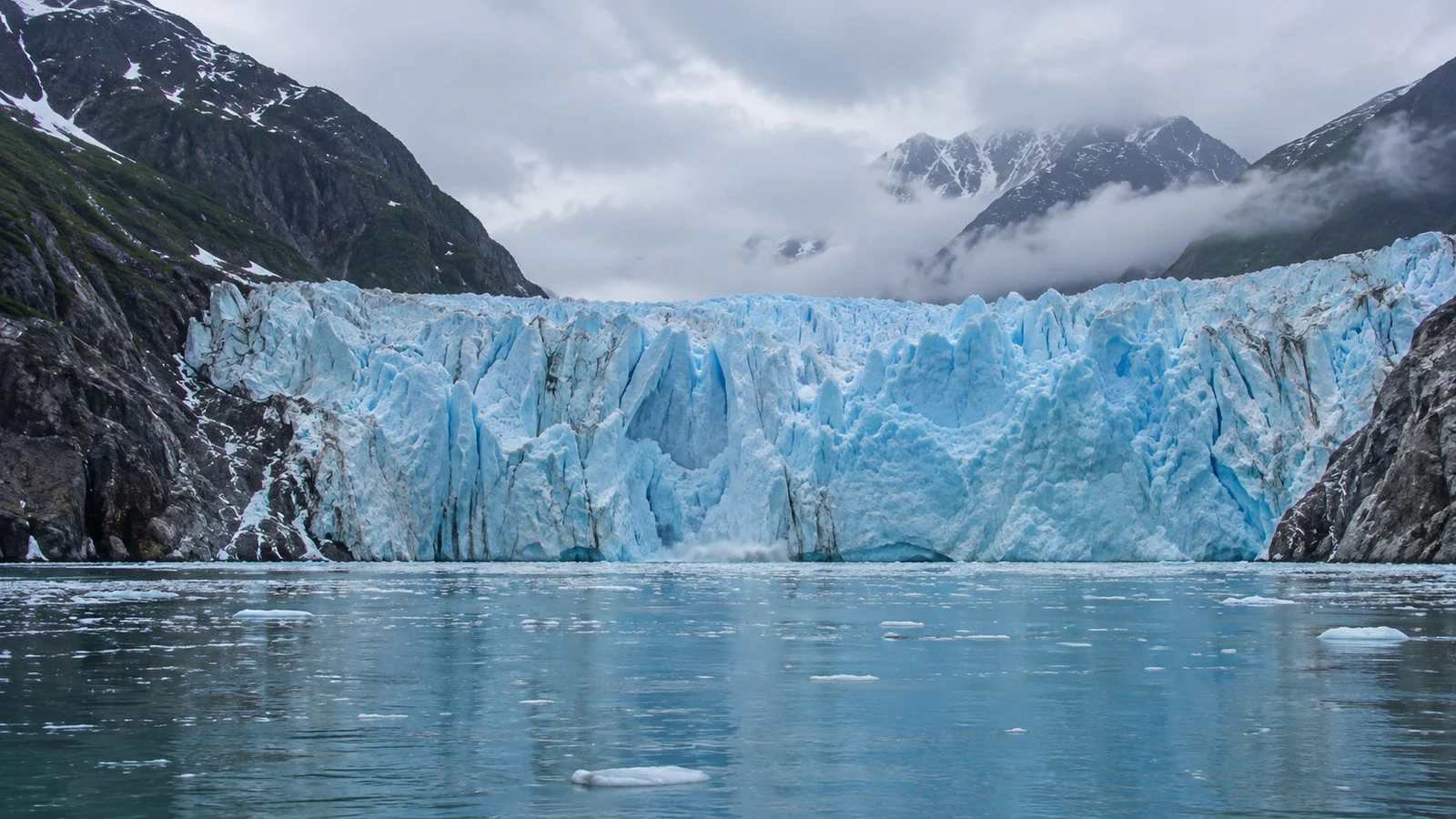
The draw is simple: a mile-wide river of ice at the end, Dawes Glacier, calving into water thick with seals riding the bergs. There’s no excursion to book and no tender ticket to grab, you just show up on deck.
I rate it above a lot of “included” Alaska scenery days because nobody’s trying to upsell you anything here. The ship simply parks and lets the glacier do the work.
Endicott Arm quick facts
- Docking: No dock here. Ships sail the fjord and idle near Dawes Glacier before turning around; nobody goes ashore from a mainline ship.
- Into town: There’s no town to reach, only the glacier itself. Ships treat the whole call as scenic viewing from the open decks.
- Currency: US dollars, since Endicott Arm sits entirely within Alaska. No currency exchange is ever needed on this stop.
- Time zone: Alaska Time (AKDT in summer, UTC-8), the same zone as Juneau, Skagway, and every other Southeast Alaska port.
- How often the call is missed: Low (5%): ships occasionally swap it for open water in heavy fog or thick ice, but skips are uncommon.
Getting into Endicott Arm: no dock, no berth
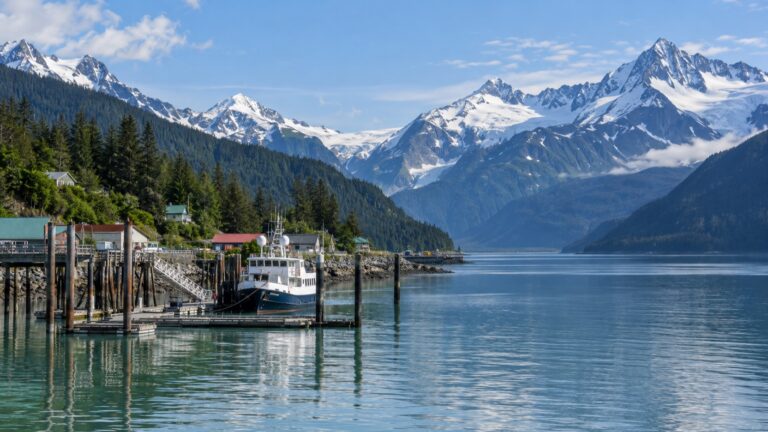
There’s no pier, no anchorage buoy, and no tender operation anywhere in Endicott Arm. Ships simply idle or slow-cruise past Dawes Glacier before reversing course back out through Holkham Bay.
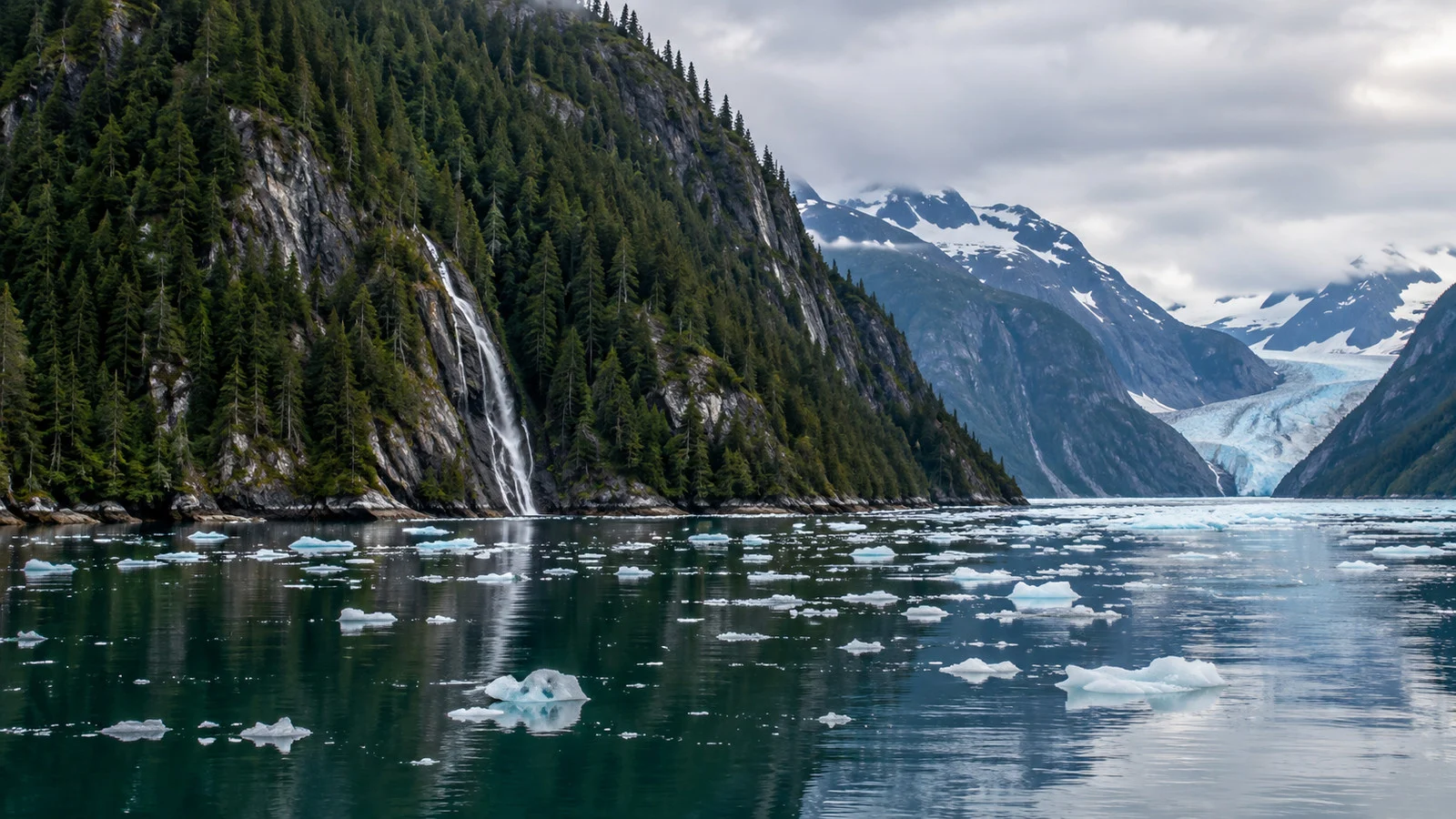
Entry is by Stephens Passage, and the fjord itself runs more than thirty miles from the entrance to the ice. Floating ice near the glacier can force a captain to stop short on a heavy-ice day, which happens more in early summer than late season.
This is federally managed wilderness, not a commercial port at all. The US Forest Service oversees the whole area as part of the Tongass National Forest, and the Tongass National Forest site covers the land-management side of the story.
Congress designated the surrounding Tracy Arm-Fords Terror Wilderness back in 1990, and it now covers more than 653,000 acres of Southeast Alaska. Roughly a fifth of Endicott Arm’s own surface is floating ice by late summer, which is a big part of why cruise ships never get closer than a respectful distance.
Outside of a cruise, the only other ways in are by private boat through Stephens Passage or by floatplane out of Juneau or Petersburg. Neither is a casual option, so a cruise ship deck is genuinely the easiest way most travelers will ever see this fjord.
What replaces going ashore
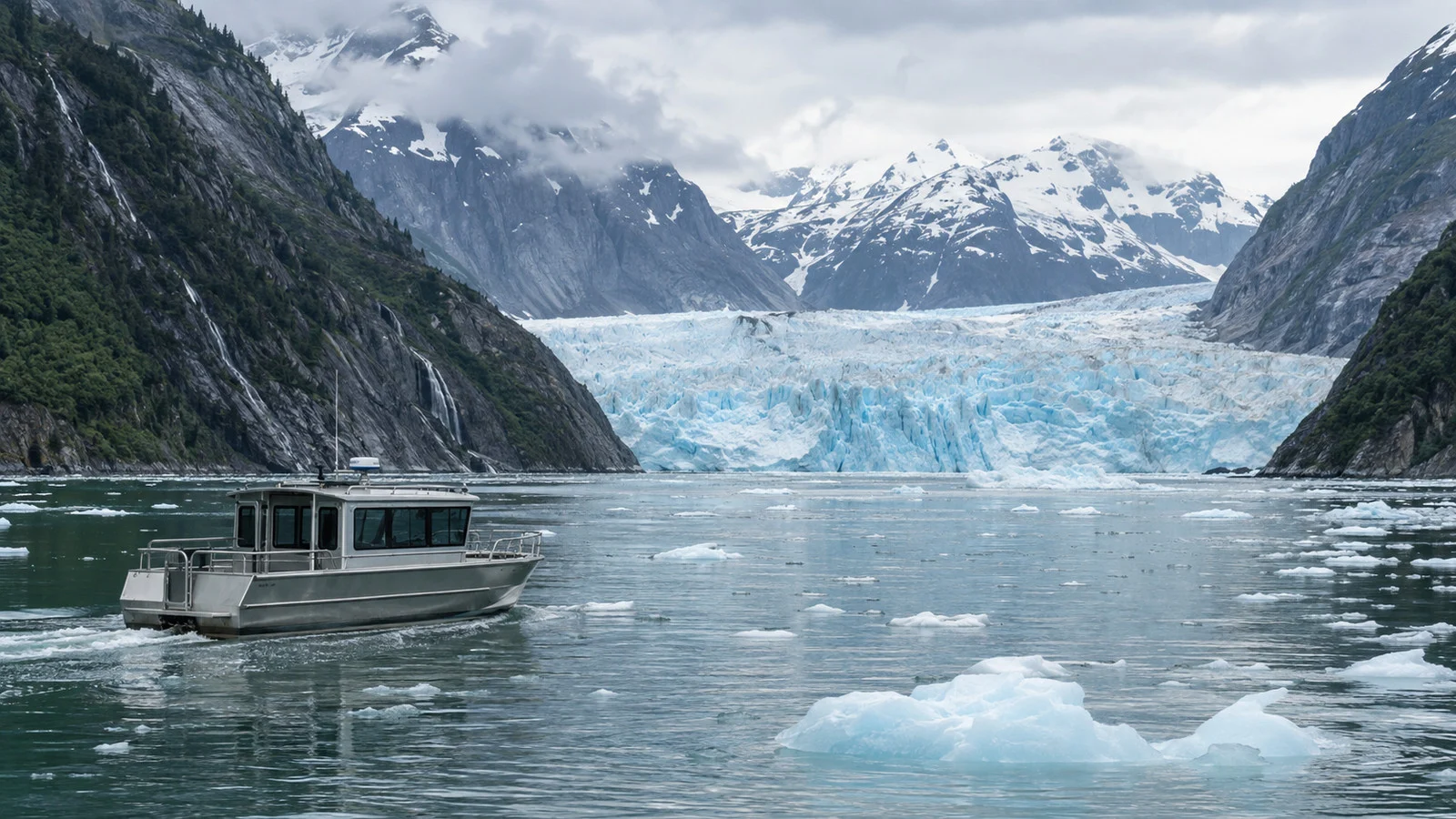
Since nobody disembarks, the entire visit happens from the ship. Expect open decks, a naturalist on the PA system, and a slow turn near the glacier face so both sides of the ship get a view.
A handful of small expedition ships anchor and send guests out in skiffs or sea kayaks instead of just sailing through. If your ship is one of the bigger mainstream lines, though, assume deck-and-balcony viewing is the whole program.
Dawes Glacier, the standout sight
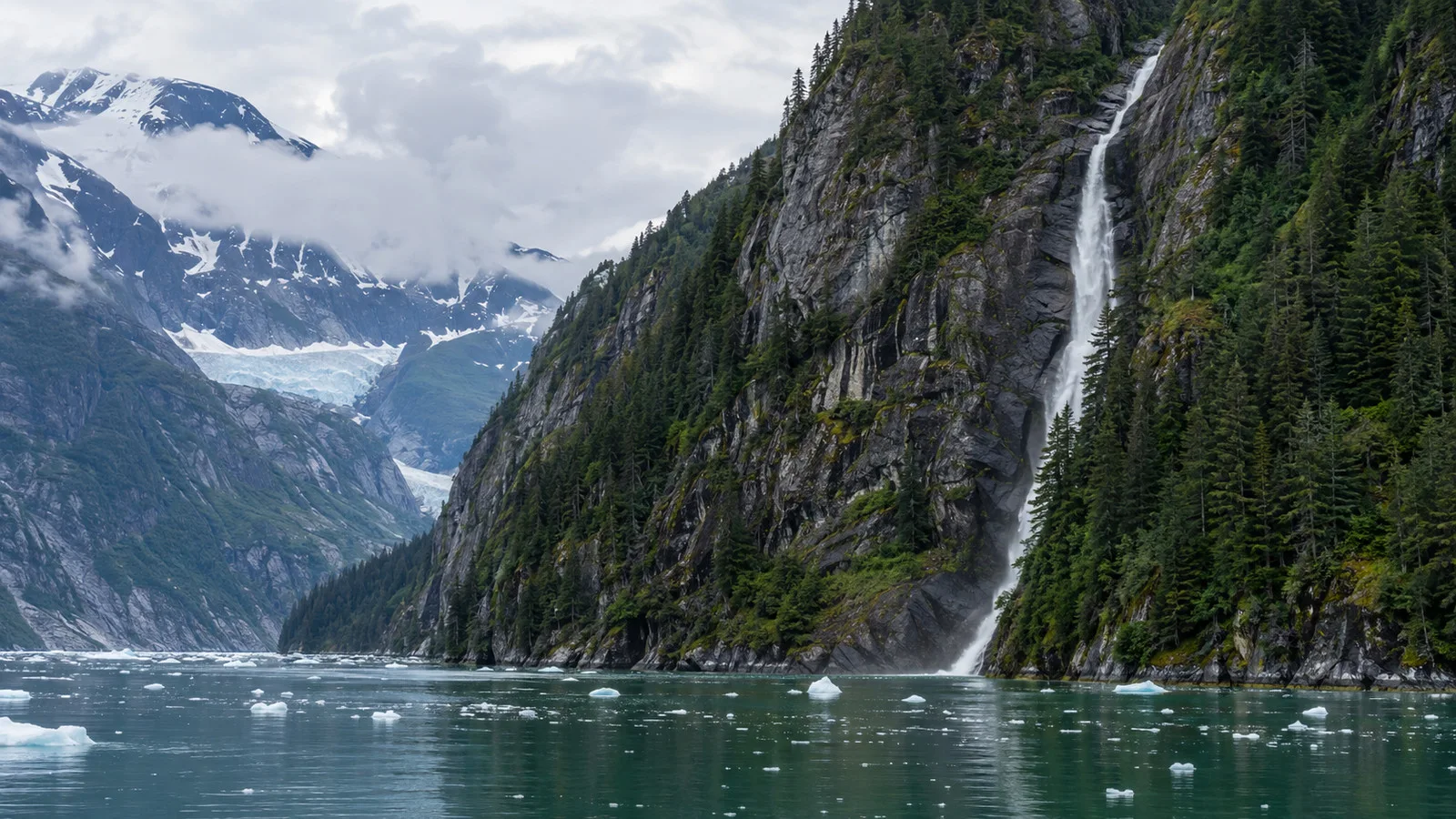
Dawes Glacier is actually a pair, North and South Dawes, both tidewater glaciers that end in calving ice cliffs at the head of the fjord. Chunks break off with a crack you feel before you hear it, and the resulting waves are why ships hold well back.
Harbor seals haul out on the floating ice to pup in early summer, and they’re easy to spot with binoculars against the blue-white bergs. Black bears and mountain goats show up on the steep granite walls closer to the entrance, less reliably than the seals.
Keep an eye out for pigeon guillemots and Arctic terns working the surface for fish, and listen for wolves on quieter mornings even though you’re unlikely to see one. Deer occasionally show up on the lower slopes too, though the glacier itself is what holds everyone’s attention.
Ship excursion or independent: your only real choices
There’s no independent option in the normal sense, you can’t book your own boat out to Endicott Arm. Your real choice is just which cruise line you picked and whether it schedules a scenic cruising day here at all.
Some lines pair it with a paid add-on, like a glacier-viewing brunch or an extra naturalist talk, but watching the ice itself is free and included. Skip the paid extras unless you specifically want the narration or a better table by the window.
Accessibility on a moving deck
This is one of the easier “excursions” in Alaska for anyone with mobility limits, since nothing requires leaving the ship. Wheelchair and scooter users can watch from any open deck or their own balcony, no tendering and no gangway involved.
The one catch is temperature: decks get cold and windy even in July, so dress warmer than the rest of the itinerary calls for. Indoor viewing lounges with windows are the easier call for anyone sensitive to cold.
Weather and safety
Southeast Alaska weather changes fast, and Endicott Arm sees more fog and low cloud than open-water days elsewhere on a typical itinerary. Rain gear beats an umbrella here, since wind off the ice makes umbrellas useless fast.
The bigger safety story is the 2025 rockslide that hit neighboring Tracy Arm and triggered a wave large enough to be called a megatsunami. No one was hurt because it struck outside visiting hours, but it’s part of why cruise lines now treat this whole wilderness area with more caution.
Endicott Arm wasn’t the fjord that slid, and its entrance is less constrained than Tracy Arm’s, which is part of the practical case for using it more. For official marine and weather conditions, the National Weather Service office in Juneau covers this whole stretch of coast.
None of this is a reason to worry about your own sailing, captains here are cautious by default and simply hold further back from any unstable-looking slope. It’s worth knowing the backstory mainly so the fjord swap on your itinerary makes sense.
If that is a concern on your sailing, Music Cruise Charter Guide goes into it properly.
Return timing
Because this is scenic cruising, not a shore stop, there’s no “be back by” deadline for passengers to worry about. The ship’s timing is set by the captain and the itinerary, not by anyone’s excursion schedule.
Ships typically spend two to four hours in the fjord depending on ice conditions and the day’s overall itinerary. Plan on an early wake-up call if your line schedules the glacier viewing for morning light, which most do.
How Endicott Arm fits an Alaska cruise
Most itineraries pair a scenic cruising day like this with real port calls at Juneau, Skagway, or Ketchikan earlier or later in the week. Think of Endicott Arm as the one day with no port fees, no shops, and nothing but the view.
It’s increasingly the understudy for Tracy Arm, which took the brunt of 2025’s landslide and has seen ships avoid it since. If your cruise line swapped fjords on your sailing, this is very likely why.
For the broader shape of an Alaska week, my Alaska cruise ports guide lays out how a scenic cruising day like this typically slots between the real ports.
Juneau is the practical gateway if you’re extending your trip before or after the cruise, and the official Travel Juneau site covers lodging and logistics for that side of the visit.
Quick answers
Can I go ashore at Endicott Arm?
No. There’s no dock and no beach landing for mainstream ships, and the entire visit happens from the water.
Is Endicott Arm the same as Tracy Arm?
No, they’re neighboring fjords off the same Holkham Bay entrance, each with its own glacier at the end. Endicott Arm ends at Dawes Glacier, Tracy Arm ends at the Sawyer Glaciers.
Why did my cruise line switch from Tracy Arm to Endicott Arm?
Most likely the 2025 landslide and tsunami event in Tracy Arm, which pushed several lines toward Endicott Arm’s wider, more consistent entrance. Ask your line directly if you want the specific reason for your sailing.
What should I wear on deck?
Layers, a waterproof outer shell, and a hat, since wind off the ice cuts through normal jackets fast. Gloves help too if you’re planning to stand outside for the whole approach.
Will I definitely see the glacier calve?
Not guaranteed. Calving is random, though the ship’s slow approach and long time in the fjord give you a good stretch of time to watch for it.
Do I need a special excursion booked?
No, scenic cruising here is included in the cruise fare, not a bookable shore excursion. Optional add-ons like a naturalist talk package are extras, not requirements.
The last word
Endicott Arm won’t give you a passport stamp or a t-shirt shop, and that’s exactly its appeal. It’s a rare cruise day built entirely around one glacier and nothing else.
Bring the warm layers, skip the paid extras unless you want the narration, and just watch.
How this guide was researched: Unless a first-hand visit is explicitly identified above, this guide is based on independent research using official port, tourism, transit, government, and attraction sources where available. Logistics and time-sensitive details were reviewed in August 2026. See our Editorial Policy.
More on this topic: browse every guide on expedition and alternative cruises.