Music Cruise Charter Guide: What Happens When Your Cruise Is Somebody Else’s Festival
You can book a cruise, turn up at the pier in Miami, and discover that every other person in the terminal owns the same band t-shirt. That is a music cruise charter, and it is a completely different animal from the cruise the brochure sold you.
A full-ship charter means somebody has bought the entire vessel from the cruise line and is running it as their own event. The line still sails the ship and cooks your dinner, but the programming, the pricing, the rules and the atmosphere belong to somebody else.
My quick take
Charters are the best value in cruising if you love the theme and the worst vacation of your life if you do not. There is no neutral ground on a ship where four thousand people came for the same reason.
My default position is that you should never book one accidentally, and you should never book one out of curiosity. If you cannot name three artists on the lineup, this is not your sailing.
If you do love the theme, the thing that surprises people is the access. Some charters add panels, trivia, artist-hosted activities, and other interactions beyond scheduled sets, making that closer access part of the product rather than a bonus.
The thing I would not do is treat a charter as a destination cruise. Ports are an afterthought on these itineraries, and if you booked hoping for Cozumel you have paid a festival premium for a beach you could have reached for half the money.
The quick facts
- What a charter is: a third party buys every cabin on a sailing and resells them under its own brand. The cruise line supplies the ship, crew, food and navigation; the charter company supplies the reason you are there.
- Who runs them: the biggest music charter operator is Sixthman, which lists Norwegian Cruise Line as its partner and runs its sailings almost entirely out of Miami. Signature Cruise Experiences, the company behind The Jazz Cruise, charters Celebrity Summit.
- The themes: far wider than rock. Sixthman’s published calendar alone covers country, metal, hip hop, EDM, Broadway, blues, comedy, chef showcases, professional wrestling and a Hallmark Christmas sailing.
- Typical ship size: mid-sized. Norwegian lists Norwegian Jewel at 2,368 guests at double occupancy and Norwegian Joy at 3,776, and Celebrity puts Summit at 2,218.
- Typical length: short. Most music charters run four to five nights, which is why the itineraries rarely stretch past the Bahamas, Cozumel, Jamaica or Grand Cayman.
- How they are sold: direct from the charter company, not the cruise line, usually with a small deposit and a monthly payment plan. Sixthman advertises a 100 dollar down option on The Rock Boat.
- Loyalty points: sometimes yes. Sixthman states that its guests earn Norwegian Latitudes Rewards points at one per night for interior through club balcony cabins and two per night for penthouse suites and above.
- The risk to non-charter passengers: real but compensated. Norwegian’s terms state that reservations are subject to change or cancellation in the event of a full-ship charter, with all passage money refunded.
What a music cruise charter actually is
The commercial logic is simple and slightly unromantic. A cruise line would rather sell 2,300 cabins once to one buyer than 2,300 times to individuals, so it discounts the whole ship and hands over the calendar.
The charter company then takes on all the risk. It has to fill every cabin, book every artist, build every stage and sell every ticket, which is why the marketing is so relentless and why loyal repeat guests get priority booking windows.
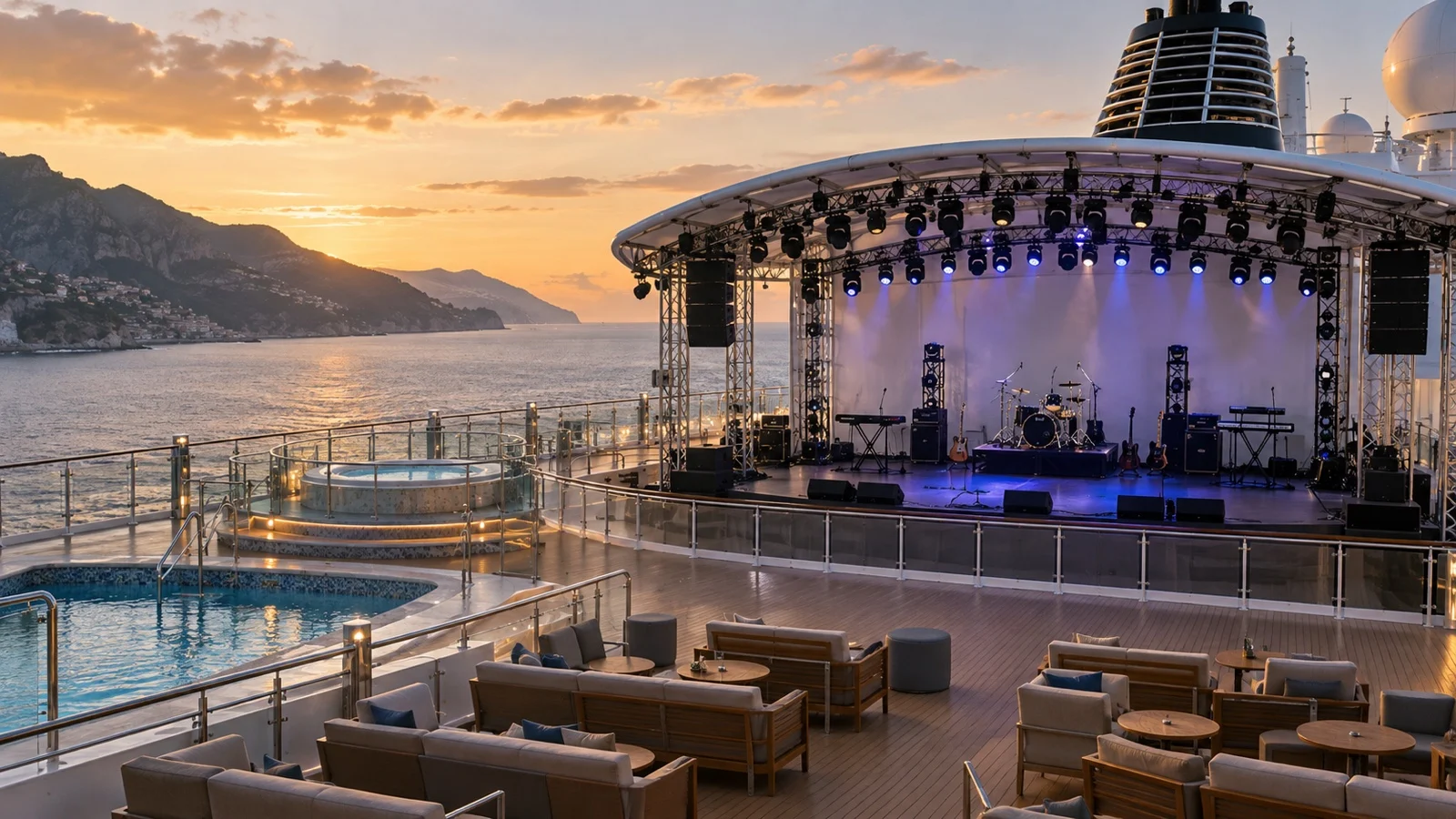
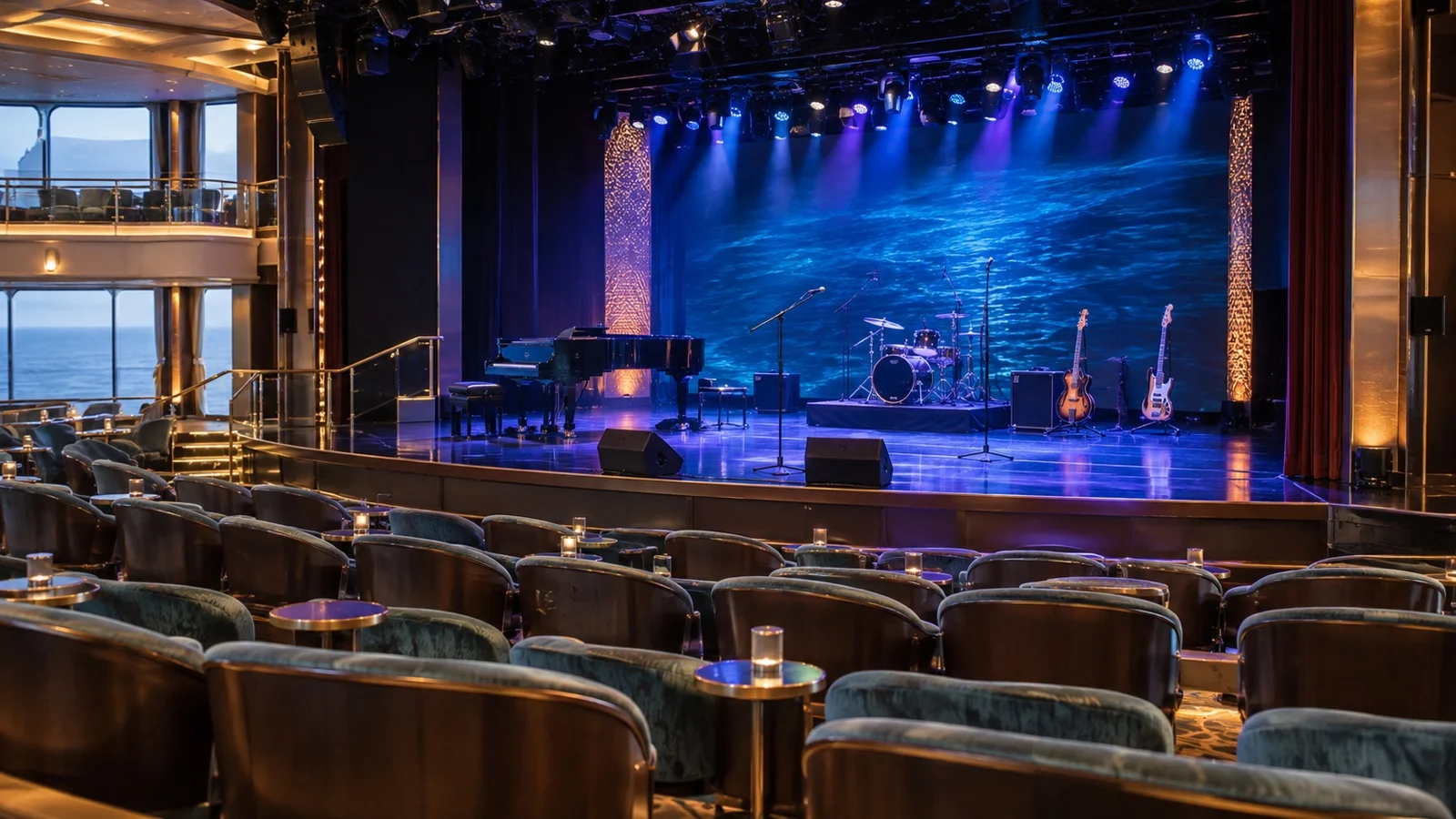
Venues get repurposed accordingly. The main theater, the atrium, the pool deck and often a covered outdoor deck all become stages, and the ship’s own production shows disappear entirely for the week.
Sixthman says it has served over 500,000 guests across more than 200 vacations since 2001, which gives you a sense of the scale of this niche. It is not a novelty any more; it is an industry with its own repeat customers and its own etiquette.
The other large category is lifestyle rather than music. Atlantis Events describes itself as the largest gay-owned company in the world and says it hosts more than 20,000 guests a year, chartering ships from Holland America, Royal Caribbean and Virgin Voyages.
What a chartered port day is actually like
Here is the part nobody warns you about. Several thousand people who all share one interest, and who have all been awake until three in the morning, do not disperse into a port the way a normal ship’s manifest does.
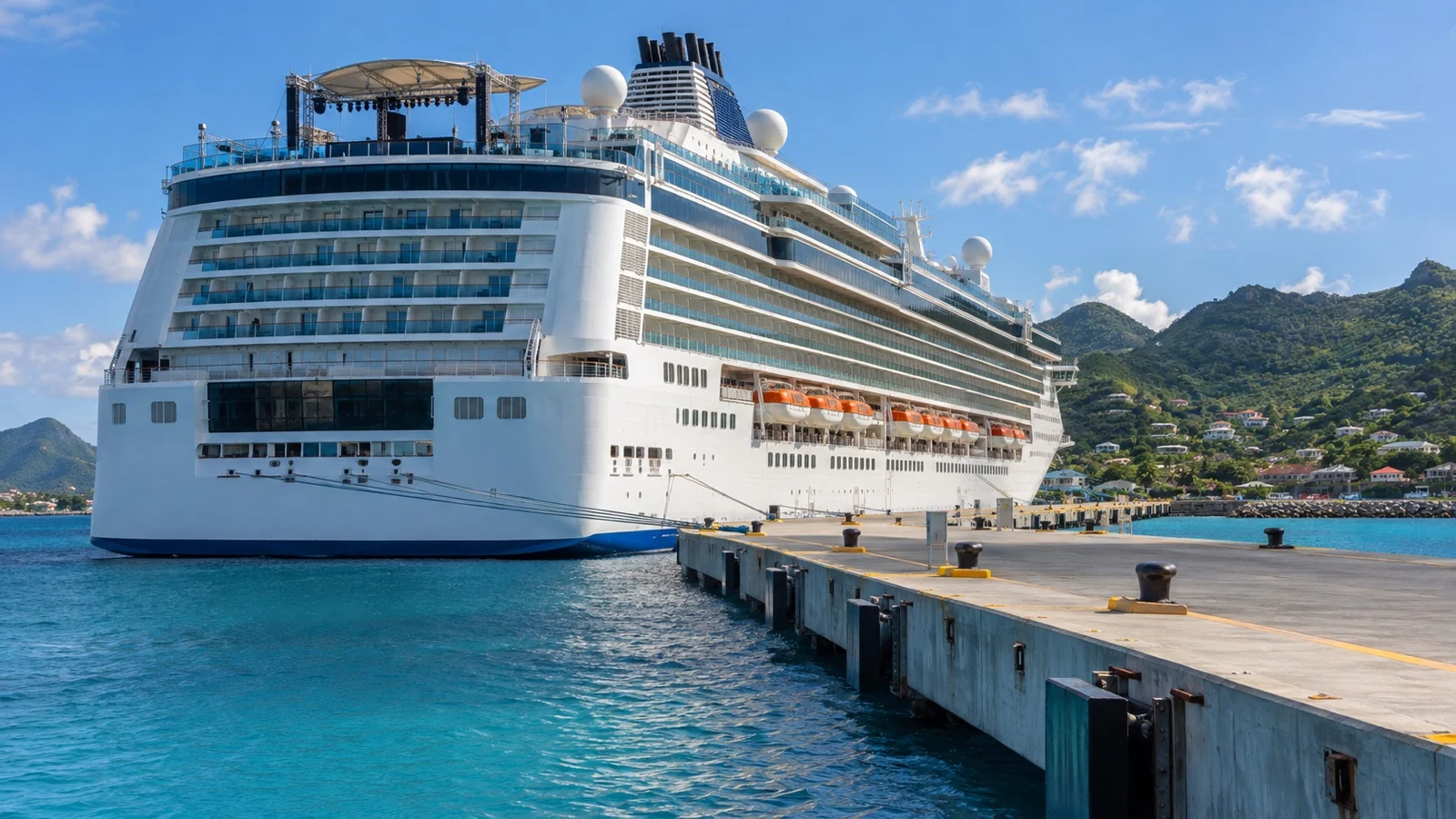
On small islands this is the whole story. Sixthman’s itineraries lean heavily on Norwegian’s private island, and a day at Great Stirrup Cay with a single charter aboard is essentially the festival relocated to a beach.
That can be excellent. There is usually a band playing on the sand, the crowd already knows each other by day three, and the island is not being shared with three other ships.
In a real town it is more complicated. A charter calling at Key West or Cozumel drops a very specific demographic onto Duval Street or the waterfront, and the locals notice.
My practical advice is to go early or go late. The middle of a charter port day is the worst version of it, and the first hour ashore is usually blissfully empty because half the ship is asleep.
Different rules, different dress codes, different everything
The safety rules never change. Muster, smoking areas, balcony rules, casino age limits and the ship’s alcohol policy are the cruise line’s, and the charter cannot override them.
Almost everything else can change. Dining room dress codes are usually relaxed to nothing, formal night vanishes, and the theme night calendar replaces it with costumes that would raise eyebrows on a normal sailing.
Age policy is the one to check hardest. Many charters are adults only or heavily adult-skewed, and some sell family cabins while making no attempt to run a kids club, so read the specific event’s policy rather than the cruise line’s.
Noise is the honest downside. If your cabin sits above or below a converted venue, you will hear it until two in the morning, and no amount of complaining will move a stage.
One more practical difference: your booking relationship is with the charter company, not the cruise line. Refunds, cabin changes, name changes and complaints all go through them, and cruise line customer service will politely decline to help.
The checks I would actually run before booking anything
- Search the cruise line’s own booking engine: pick the ship, open a twelve month view, and look for gaps. A week that simply does not exist for sale is usually a charter or a drydock.
- Check the charter operators directly: the calendars are public. Sixthman, Signature Cruise Experiences, Atlantis and VACAYA all publish ship names and exact dates well over a year ahead.
- Read the ticket contract before you assume you are safe: Norwegian’s terms reserve the right to cancel your booking for a full-ship charter and refund you. Other lines carry similar wording.
- Ask what is included: charters bundle the cruise fare, taxes and the entire music program, but rarely gratuities, drinks packages or wi-fi. Compare the total, not the headline.
- Look at the deck plan against the venue list: if you sleep badly, do not book directly above the atrium or below the pool deck. This is the single most common regret people report.
- Check the payment plan terms: monthly installments are standard, but the cancellation penalties often start earlier and bite harder than a normal cruise deposit.
- Confirm the port times, not just the ports: charter itineraries are written around the entertainment schedule. A published call can be six hours rather than the nine you would get on a regular sailing.
- Decide honestly about the theme: there is no opting out on a ship where every bar is programmed. If you want quiet, book a different week.
Fun fact: charter economics explain why so many of these sailings are four or five nights out of Miami, because short cruises are easier to fill and cheaper for a promoter to buy. Norwegian Cruise Line lists Norwegian Jewel at 2,368 guests at double occupancy, which is small enough that a mid-sized fanbase can genuinely sell it out.
How I would actually decide
Start with the lineup, not the itinerary. If the lineup alone would justify the price as a land festival plus a hotel, the ports are a free extra and the decision is easy.
If the lineup is a maybe, work out what you are paying above the same ship’s normal fare for that week. That gap is the ticket price, and you should judge it as one.
I would book the cheapest cabin I could tolerate and spend the difference on nothing at all. You will be in your cabin to sleep and change, and the balcony you paid for will go unused.
And if you are on the fence, the honest answer is usually no. Charters reward commitment, and a hesitant guest on a themed ship is the loneliest person at sea.
A realistic word on accessibility
The ship’s baseline accessibility provisions still apply, but they vary by vessel and itinerary. Ask the cruise line about an accessible cabin, routes between key venues, and whether mobility devices can be accommodated at any tender port.
The event layered on top is where it gets harder. Standing room shows, crowded atriums, lines that form ninety minutes early and pool deck stages with no seating are all genuinely difficult if you cannot stand for long.
Most established charter operators do run accessible seating areas for main stage shows, but they usually need advance notice and sometimes a wristband. Ask the charter company, not the cruise line, and ask before final payment rather than at check-in.
Accessible cabins are also finite and go first, so the booking window matters more than on a normal sailing. If a step-free route to the main venues is essential, get it confirmed in writing, and my broader guide to wheelchair-friendly cruise ports covers the shoreside half of the problem.
When to go, and the weather
The Caribbean charter calendar is concentrated between late October and early May. That is not an accident; it is the window either side of hurricane season, when short Miami itineraries are reliable and cheap for a promoter to buy.
The Atlantic hurricane season officially runs from June 1 to November 30 according to the National Hurricane Center. Late October and November charters sit inside the tail of it, so build in the possibility of a rerouted port day.
January to March often brings comfortable conditions, but temperatures, wind, and sea conditions vary by itinerary. Check the forecast for each port before you pack.
Pack for the venues rather than the destination. Ship air conditioning is aggressive, outdoor stages get cold after dark at sea, and a light layer matters more on these sailings than a third swimsuit.
The charter company is part of your contract
On a music charter, the cruise line runs the vessel while the charter producer often controls booking, performers, schedules, payments, and some cancellation terms. Read both sets of conditions because the normal cruise-line change policy may not govern the cabin you bought through the event.
Artist lineups, venues, ports, and performance times can change, and popular shows may use reservations or repeated sets. Buy the event for the overall theme rather than one artist, then learn the seating process before deciding that a premium cabin guarantees a premium concert view.
Cabin location matters more than usual because stages, rehearsals, late-night crowds, and deck parties can create noise well after midnight. I would choose a cabin between other cabin decks and request accessible seating, hearing support, or mobility assistance directly from the charter producer in writing.
The ship’s passport, visa, prohibited-item, safety, and all-aboard rules still apply, even when the festival schedule dominates the day. Protect independent flights and hotels with insurance that covers the risks you care about, especially during Atlantic hurricane season.
Quick answers
Can I book a charter cruise if I am not into the theme?
Usually yes, since almost all charters sell to the general public. I would still not do it, because there is nowhere on the ship to escape the programming.
How do I check if a ship is chartered on my dates?
Open the cruise line’s booking engine, filter to that ship, and look for a missing week. Then cross-check the charter operators’ public calendars, which list ship and dates by name.
What happens if my existing booking gets chartered out?
The cruise line follows its ticket contract and normally refunds the affected passage money, but independent travel and a replacement fare may not be covered. Any discount or alternative sailing depends on the line’s written offer rather than a universal rule.
Are charter cruises more expensive?
Per night, almost always yes, because you are buying the festival as well as the cabin. Against the cost of a multi-day land festival with a hotel, they often look reasonable.
Do I still earn cruise line loyalty points?
Sometimes. Sixthman guests earn Norwegian Latitudes points, at one per night for most cabin grades, but this varies by operator so confirm before booking.
The last word
A charter is a festival that happens to float, and judging it as a cruise will make you miserable in both directions. Fans get a week of access they could never buy ashore, and everyone else gets a very loud hotel with nowhere to hide.
If the appeal for you is the adults-only, everybody-here-chose-this atmosphere rather than the music specifically, my rundown of adults-only cruise ships is the calmer route to the same feeling. You keep the itinerary and lose the two in the morning drum solo.
And if you are sailing out of Florida either way, the terminal logistics are the same as any other week, so my guide to the Miami cruise port still applies. The only difference is the line is wearing band shirts.
Book the theme you actually love, at the cheapest cabin you can live with, on a deck nowhere near a stage. Everything else about a charter looks after itself, loudly.
How this guide was researched: This guide was checked against current official port, waterway, immigration, transit, attraction, operator, and weather information. Operational and time-sensitive details were reviewed September 12, 2026; confirm the live berth, daily program, entry rules, accessibility, and cancellation terms before travel.
See our Editorial Policy.
More on this topic: browse every guide on expedition and alternative cruises.