Tonle Sap Lake Cruise Guide: Seasonal Crossings and Floating Villages
Tonle Sap is not a cruise port with one berth, terminal, or downtown shuttle. It is a vast seasonal lake that may become a scenic passage, a small-boat excursion, or an overland transfer on a Cambodia river itinerary.
The exact experience depends on water level, vessel draft, route, weather, and the operator’s current plan. Read the itinerary for your departure instead of assuming that every Phnom Penh and Siem Reap cruise crosses the lake.
My quick take
I would treat Tonle Sap as a landscape and community visit rather than a checklist port. The lake’s seasonal flood cycle, flooded forest, fisheries, and villages are the story.
A well-run excursion can be memorable, but responsible operator choice matters. Look for clear safety practices, respectful community partnerships, and an itinerary that does not turn homes or children into tourist props.
Tonle Sap Lake quick facts
- What it is: Southeast Asia’s most extensive freshwater lake and the center of the Tonle Sap Biosphere Reserve.
- Cruise role: A seasonal passage or excursion area between the Mekong system and the Siem Reap region, not a fixed port.
- Water cycle: Mekong floodwaters expand the lake dramatically during the rainy season, with UNESCO noting growth of up to five times.
- Low-water plan: Operators may shorten navigation, use smaller boats, change the landing, or transfer guests by road.
- Currency: Cambodian riel is official; US dollars may be accepted, but clean notes and local currency are useful.
- Time zone: Indochina Time, UTC+7 throughout the year.
- Access: Expect steps, moving boats, narrow gangways, heat, and limited accessible infrastructure unless your operator confirms otherwise.
Why the lake changes so much
Tonle Sap is connected to the Mekong by the Tonle Sap River. As Mekong water rises during the rainy season, water moves toward the lake and spreads across floodplains and forests.
When regional water levels fall, the system drains back toward the Mekong. This annual pulse changes navigation, fishing, agriculture, wildlife habitat, shorelines, and daily life around the lake.
UNESCO’s Tonle Sap Biosphere Reserve profile describes a landscape of open lake, floodplains, freshwater swamps, rice fields, and grasslands. UNESCO also notes that rainfall-period overflow can expand the lake by up to five times.
The cycle is powerful but not identical every year. Rainfall timing, upstream flows, drought, infrastructure, and climate conditions can change the depth and duration of navigable water.
How the cruise passage works
Some itineraries navigate from the Mekong and Tonle Sap River into the lake when conditions permit. Others use the lake only for a local excursion near the Siem Reap side.
A river ship may transfer passengers to a smaller vessel, meet a coach at a changing landing, or skip lake navigation. There is no single offshore anchorage or standard tender process that applies to every departure.
Ask the operator whether the published itinerary describes a high-water plan, a low-water plan, or both. Also ask when the final decision is normally made and which costs or activities change after a route adjustment.
A road transfer is not necessarily a failure of the cruise. It may be the safest practical way to protect the Siem Reap program when the lake is too shallow for the vessel.
There is no single Tonle Sap port
The lake’s edge moves through the year, so landing locations and channels can look completely different between wet and dry seasons. A map pin may identify a community or boat station without functioning like a permanent cruise terminal.
Chong Kneas is close to Siem Reap and often appears in visitor plans. Kampong Phluk, Kampong Khleang, Kampong Luong, and other communities have different geography, travel times, structures, and tourism patterns.
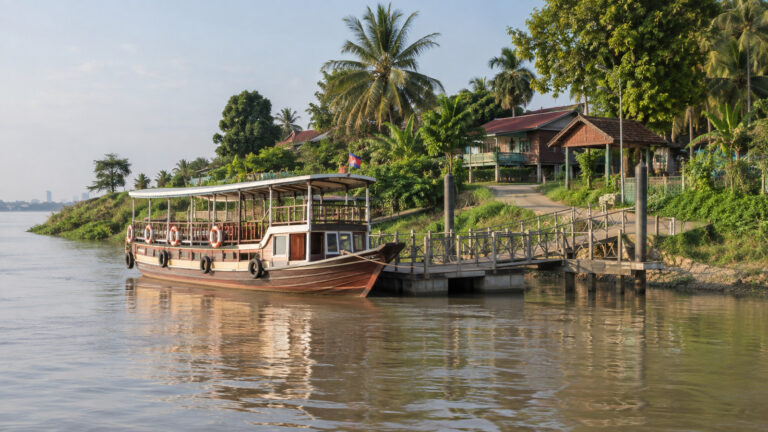
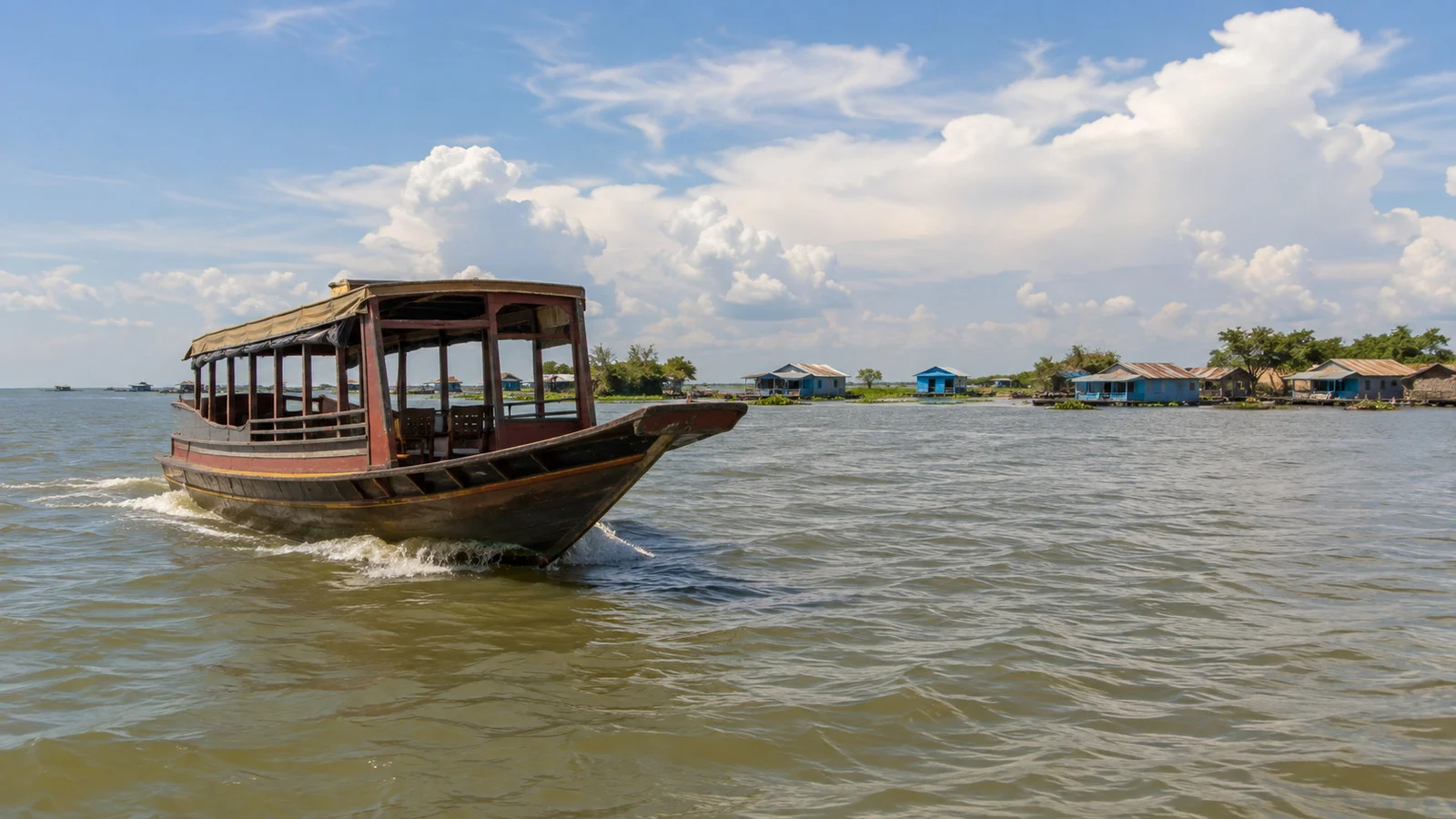
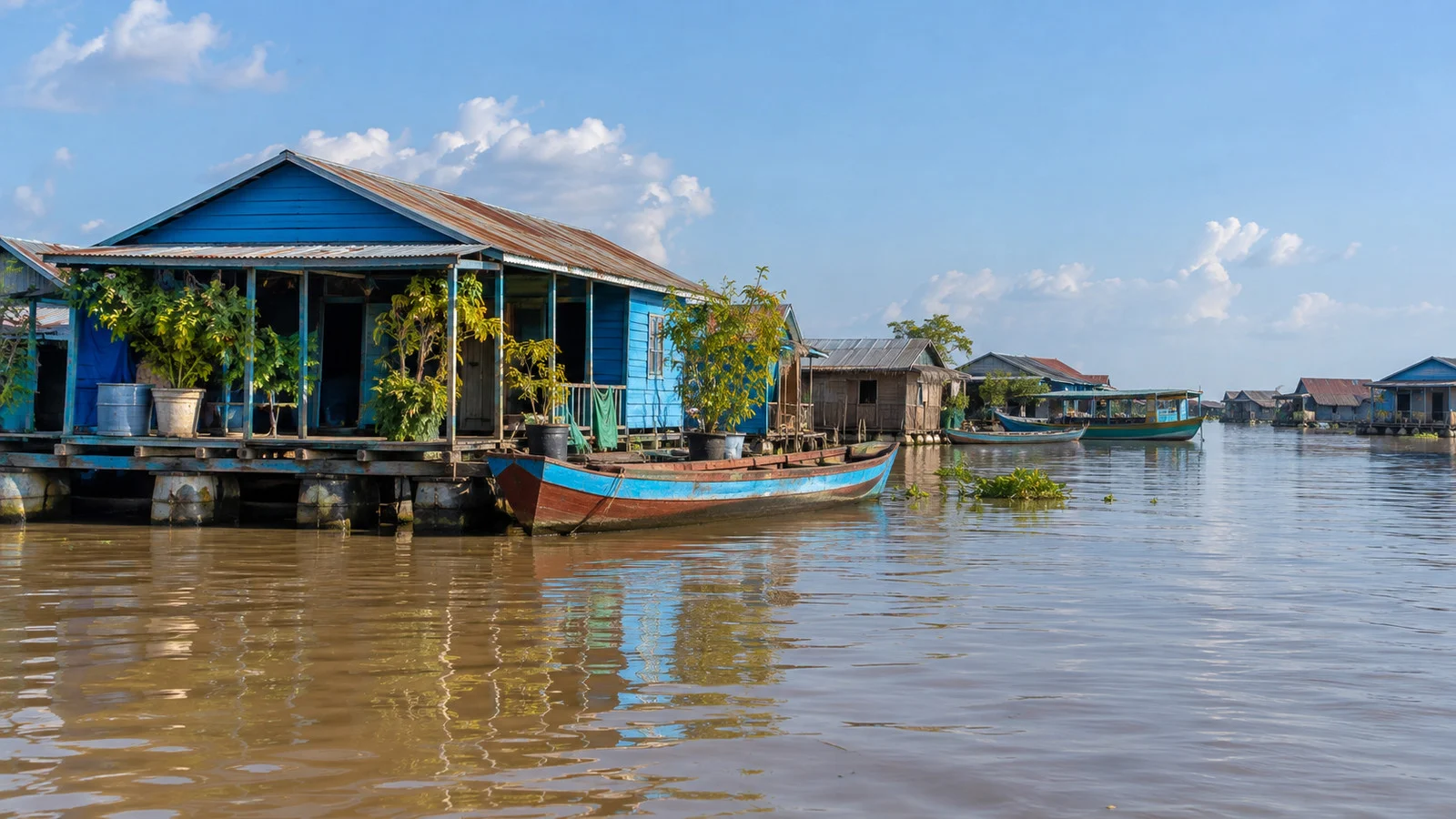
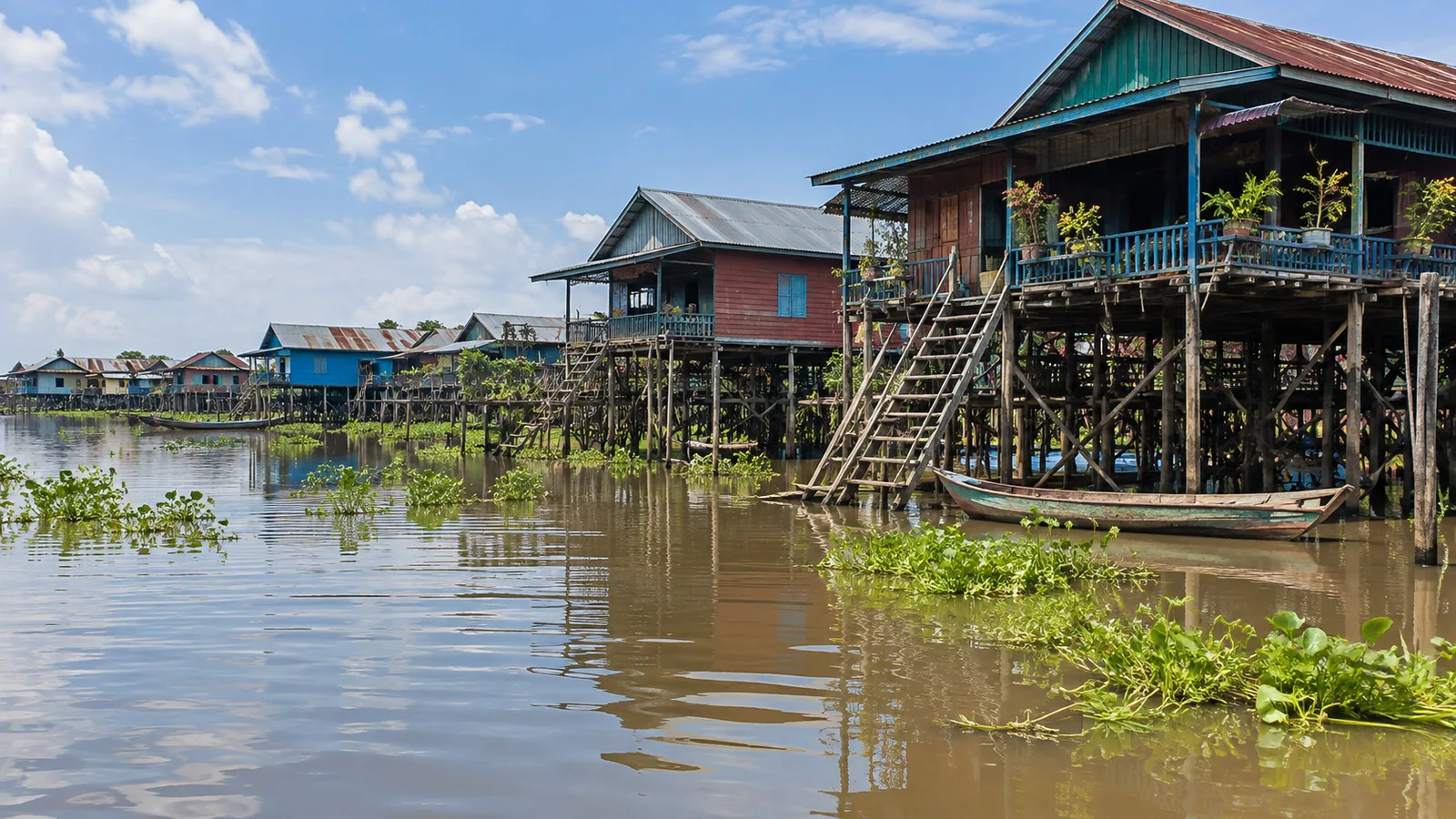
Some homes float, while others stand high on stilts and appear very different as water rises or retreats. Use precise language because floating village is not an accurate description of every settlement.
Your daily briefing should give the actual transfer sequence, expected walking, and boarding method. Photograph the assigned boat and meeting point if the excursion includes independent time.
Choosing a village excursion
A village visit should explain how water levels shape housing, transport, fishing, schools, markets, and religious life. It should not present residents as scenery.
Ask how local guides, boat owners, and community organizations benefit from the excursion. Transparent local participation is a better sign than a tour built around unplanned stops at shops or donation requests.
Avoid tours that encourage close photography without consent, direct gifts to children, captive wildlife encounters, or intrusive entry into homes. Support community-approved businesses and follow the guide’s photography rules.
The quietest village is not automatically the most ethical or authentic. Judge the operator by consent, safety, local benefit, and truthful interpretation rather than marketing labels.
The biosphere reserve and wildlife
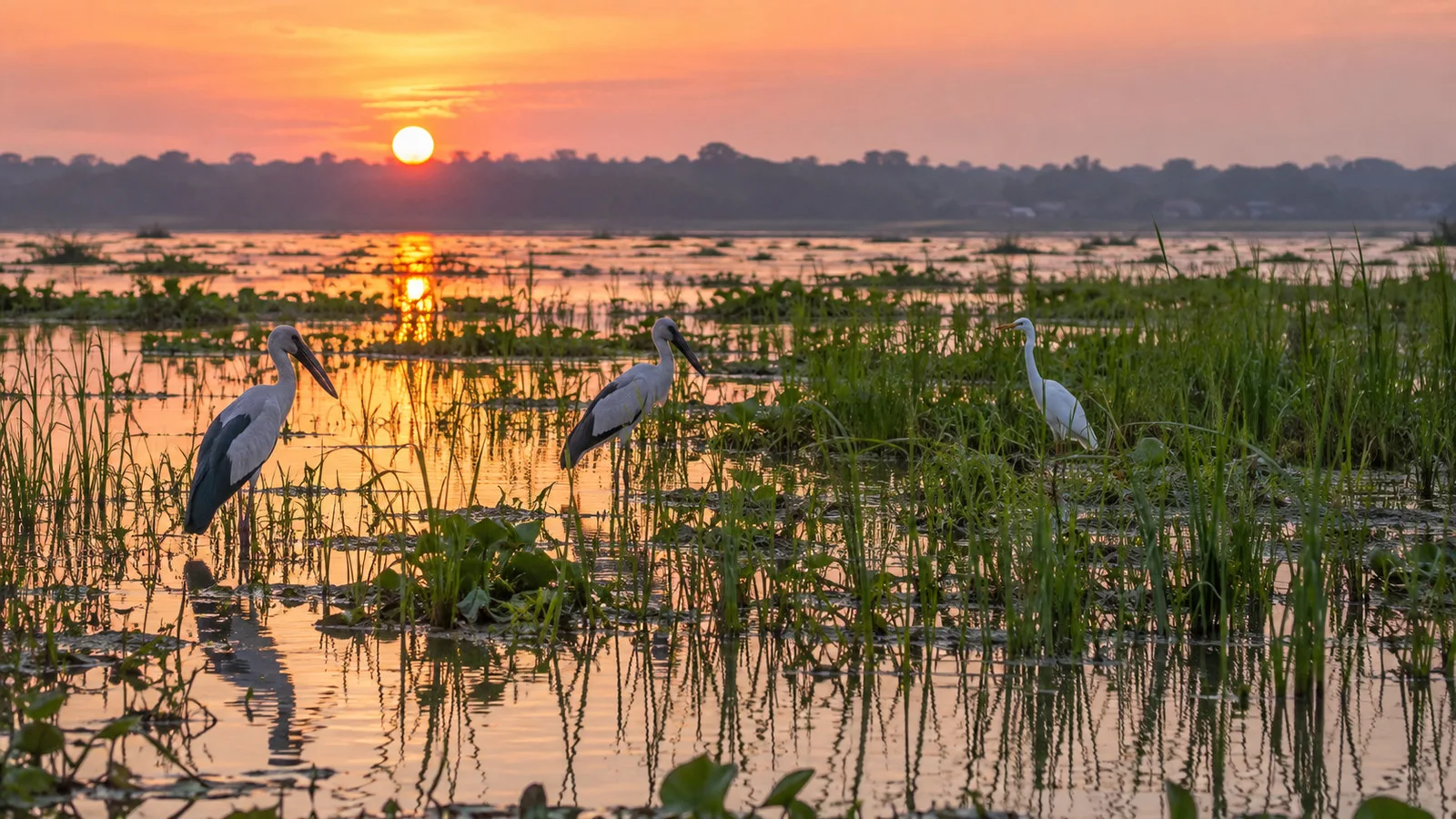
The Tonle Sap Biosphere Reserve was nominated to UNESCO’s network in 1997. Its flooded forest and wetlands support fish, birds, mammals, plants, and human communities tied closely to the seasonal water cycle.
UNESCO identifies fish as the reserve’s most species-rich vertebrate group and notes important habitat for globally threatened birds. Fisheries, aquaculture, and rice farming remain central economic activities.
Prek Toal is known for waterbirds and may appear on specialist nature itineraries. Reaching it can require substantial boat time, so it suits a dedicated excursion better than a rushed addition.
Wildlife sightings are never guaranteed. Season, water level, time of day, boat traffic, and local conditions all affect what visitors see.
What you may see from the water
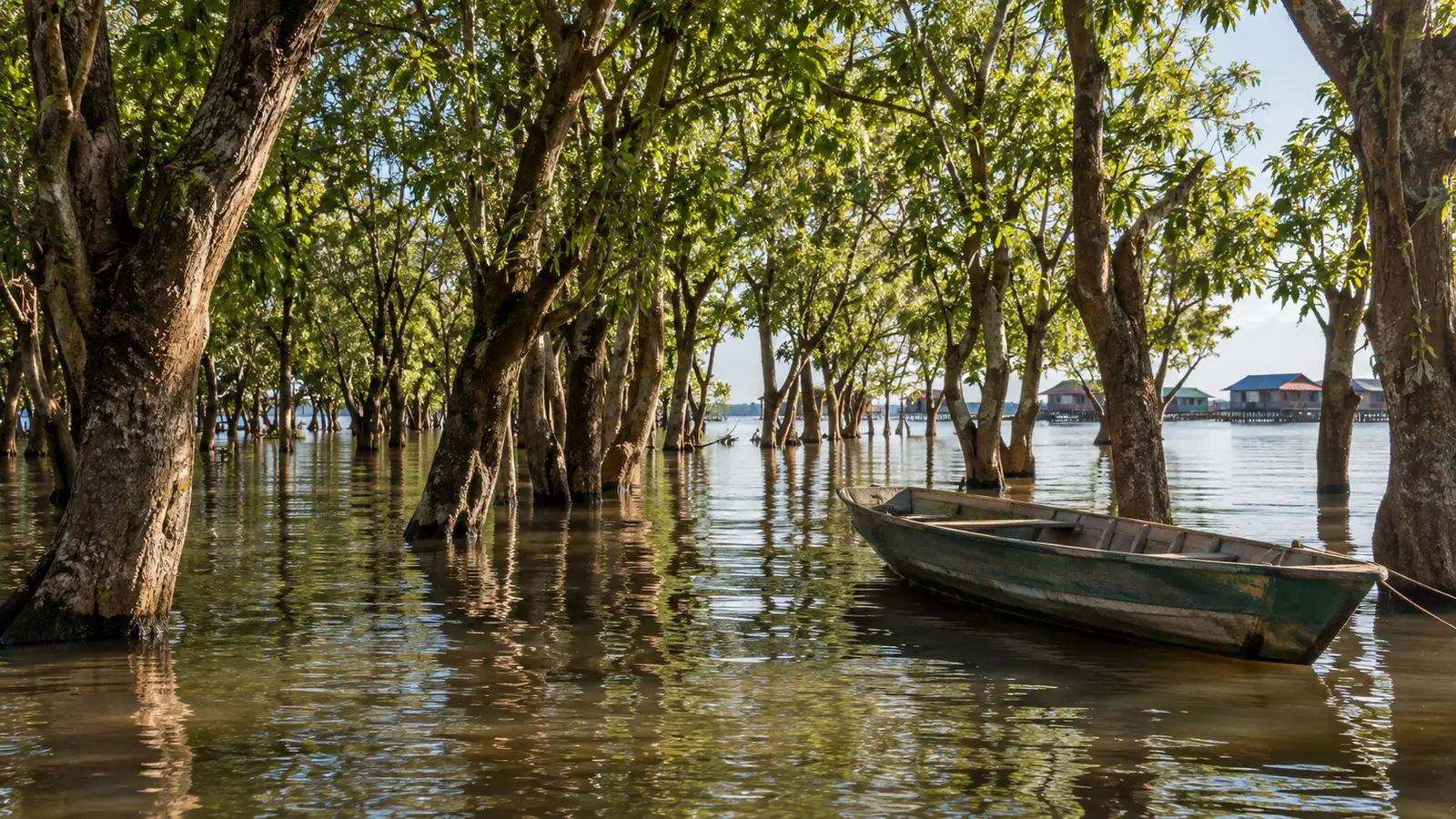
The lake experience may include fishing boats, fish traps, floating structures, stilt houses, flooded forest, schools, pagodas, markets, and broad open water. The scene changes with the season and the route selected for that day.
Low water can expose tall stilts, mudflats, and narrow channels. High water can bring boats closer to buildings and forest edges while making the lake feel almost horizonless.
Spend time watching how people move rather than chasing constant photographs. A slow passage often explains the lake better than a rushed series of staged stops.
Bring binoculars if wildlife matters to you. A zoom lens lets you photograph daily life with more distance and respect.
Ship excursion or independent boat
Use the cruise line’s excursion when it is part of a moving ship itinerary. The operator controls the main vessel, local boats, landing, luggage, and onward coach connection.
An independent tour makes more sense during a hotel stay in Siem Reap. It gives you time to compare community practices, safety equipment, route, vehicle transfer, and cancellation policy.
Do not leave a through-cruise group for an unverified local boat. Meeting a vessel at a seasonal landing is much harder than returning to a conventional pier.
Ask whether the quoted independent price includes road transport, boat, guide, fees, water, and return to your hotel. Unexpected transfers can turn a cheap-looking excursion into a complicated one.
Boat safety
Wear the life jacket provided on every small-boat transfer. Check that it fits before the boat leaves rather than discovering a broken buckle in rough water.
Keep hands clear when boats come alongside and wait for crew instructions before stepping. One person should move at a time when the transfer surface is narrow or unstable.
Use a dry bag or sealed pouch for passports, medicine, phones, and cameras. Spray and sudden rain can soak an open day bag quickly.
A reputable operator may delay, shorten, or cancel a boat trip when wind or storms make the route unsafe. Treat that choice as sound seamanship, not a missing attraction.
Accessibility and mobility
Tonle Sap can be difficult for travelers with limited mobility because the day may involve coach steps, rough ground, narrow gangways, and movement between boats. Accessible infrastructure varies widely by landing and local vessel.
Ask the cruise line for a transfer description specific to your departure. Useful details include step height, handrails, boarding surface, distance walked, toilet access, and whether a wheelchair can stay assembled.
Crew assistance does not make an unsafe lift acceptable. Discuss weight limits, balance, and emergency evacuation before booking the excursion.
Travelers who cannot make the village transfer should ask whether they can remain on the main vessel or take an alternate overland program. Confirm air conditioning, rest stops, and luggage handling on any road option.
Heat, rain, and what to pack
Cambodia stays warm, and open water intensifies sun exposure. Shade on local boats may be limited even when the main river vessel is comfortable.
Pack a hat, breathable clothing, water, sun protection, and a light rain shell. Closed shoes with grip are safer than loose sandals during boat transfers.
Rainy-season showers can arrive quickly, while dry-season heat can make exposed travel tiring. Protect medication from heat and water, and tell the guide before dehydration becomes a problem.
Insects can be active near flooded forest and shore. Use repellent and follow current travel-health guidance from your own public health authority.
Money, food, and practical details
Cambodian riel is the official currency, and US dollars may also circulate. Carry small, clean notes and accept change carefully because damaged foreign currency may be refused.
Do not count on an ATM, card terminal, or reliable mobile signal at a seasonal landing. Bring only the cash needed for approved purchases and keep it secure.
Drink sealed or properly treated water and be cautious with food storage on hot days. A cruise-provided meal or vetted restaurant is easier for travelers with allergies.
Toilet facilities on local boats and village routes can be basic or absent. Ask before departure and use the ship or hotel facilities when available.
Photography and respectful visits
Ask before photographing people at close range, especially children, schools, homes, ceremonies, and work. A guide can help translate consent, but a camera-friendly scene is not automatic permission.
Avoid geotagging sensitive wildlife locations or blocking narrow boat routes for a picture. Follow rules in protected areas and keep noise low around birds.
Buy directly from community-supported vendors when the stop is part of the agreed itinerary. Do not distribute candy, cash, school supplies, or medicine informally.
Responsible tourism is less dramatic than a staged encounter, but it leaves more control with residents. That is a better outcome for a place where daily life and visitor activity share the same water.
Timing and route changes
Through-cruise passengers should stay with the official transfer plan. The vessel and coaches may reposition while you are ashore, so an old meeting point can become irrelevant.
Listen for schedule updates at breakfast and again before disembarking. Water depth and weather may change the plan with little notice.
Keep your passport, cruise card, emergency number, and hotel or ship details with you. Save the information offline because mobile coverage cannot be guaranteed.
If the route becomes an overland transfer, ask how long the drive will take and where rest stops occur. Confirm whether checked luggage travels separately.
How Tonle Sap fits a Cambodia cruise
Tonle Sap forms the changing northern link between a Mekong cruise and the Siem Reap region. It may connect with the Phnom Penh river cruise port by water, road, or a combination.
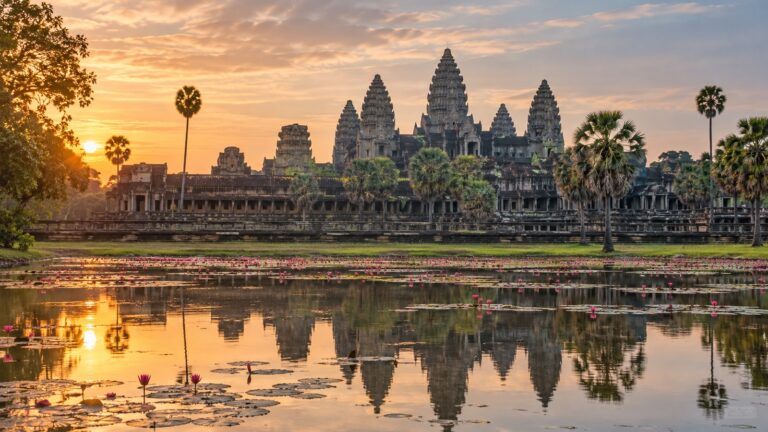
At the northern end, the Siem Reap guide explains the practical transition between river travel, lake landings, hotels, and Angkor excursions. Siem Reap itself is inland rather than a cruise port on the lake.
Our Mekong cruise ports guide places the lake within the wider regional route. Expect the most changeable logistics near the transition between river vessel and Siem Reap.
The lake should not be judged only by whether the main ship crosses it. A well-explained overland alternative can still include local history, landscape, and community context.
Quick answers
Do river cruise ships dock at Tonle Sap?
There is no single conventional cruise dock for the lake. Ships and local boats use routes and landings selected for current conditions.
Will my cruise cross the whole lake?
Only if the vessel, water level, weather, and itinerary permit it. Ask the operator for both the planned route and the low-water alternative.
Are all lake villages floating?
No. Some structures float, while others stand on tall stilts and change appearance as the water rises and falls.
What happens when water is too low?
The operator may change vessels, shorten navigation, use another landing, or move guests by road. The exact decision belongs to the cruise line and captain.
Can I visit from Siem Reap independently?
Yes, during a hotel stay with a vetted operator and a clearly described community partnership. Independent touring is less suitable during a tightly coordinated through-cruise transfer.
Is Tonle Sap accessible?
Many boat and landing arrangements are challenging for limited mobility. Request exact information for your departure before booking.
The last word
Tonle Sap is a changing water system, not a static port attraction. Its value comes from understanding how the flood pulse connects ecology, fisheries, communities, and Cambodia’s river routes.
Choose a responsible operator, stay flexible about the route, and take boat safety seriously. That approach makes the lake meaningful even when low water changes the original plan.
How this guide was researched: Unless a first-hand visit is explicitly identified above, this guide is based on independent research using official river, biosphere, government, tourism, and operator sources where available. Logistics and time-sensitive details were reviewed in September 2026; see our Editorial Policy.
More on this topic: browse every guide on expedition and alternative cruises.