Raja Ampat Liveaboard and Papua New Guinea Cruise Gateways
Most international travelers reach Raja Ampat through Sorong on the western tip of New Guinea. The liveaboard operator then controls the airport transfer, marina, and final embarkation details.
That gap between the brochure and the arrivals hall is the single most useful thing to understand before you book. Everything else, the permit, the season, the malaria tablets, follows from it.
Quick take
These are two distinct trip styles that share an expedition mindset. Raja Ampat is primarily a dive and snorkel vacation on a small vessel, while Papua New Guinea itineraries often emphasize village and cultural visits alongside reef time.
Build in a buffer night at the front end for both trips. Sorong and Port Moresby are not places where a missed connection can always be fixed by catching another flight two hours later.
Do not choose a boat on price alone. On a small vessel this far from major services, the crew, tenders, safety equipment, and emergency planning are central to the product.
The quick facts
- Where you land in Indonesia: Sorong, in Southwest Papua province, reached through Domine Eduard Osok Airport, code SOQ. Aqua Expeditions embarks guests at Sorong’s Star Marina after an airport transfer.
- Where you land in PNG: most expedition itineraries string together Alotau in Milne Bay, Rabaul and Kokopo in East New Britain, Madang on the north coast and Kavieng in New Ireland. The Papua New Guinea Tourism Promotion Authority describes cruising there as a circuit of ten main coastal ports.
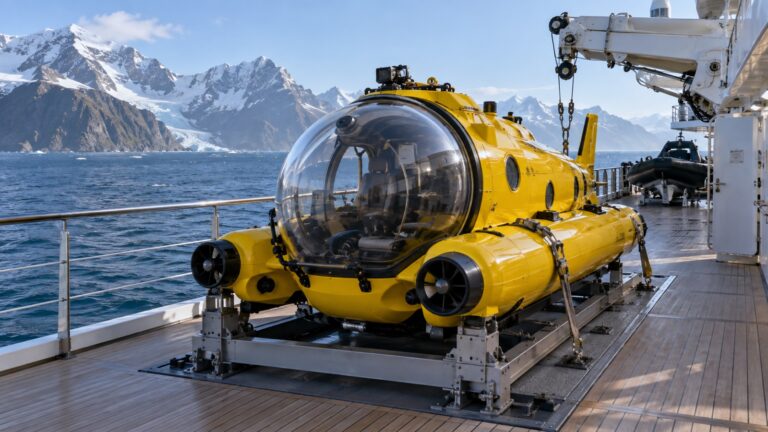
- How you get ashore: usually by Zodiac or panga at remote sites, with wet landings onto sand or coral rubble when conditions allow. Working ports and towns may use a dock, tender, or another arranged transfer. Sturdy sandals that can be soaked, and a dry bag for the camera, are not optional.
- The permit: Raja Ampat requires a compulsory marine park entry card before you dive or snorkel. Most liveaboards buy it for you and add it to the bill, so ask rather than assume.
- Currency and language: The rupiah and Bahasa Indonesia in Raja Ampat, the kina and Tok Pisin plus English in PNG.
- Time zone: Sorong runs on Eastern Indonesian Time, UTC+9, and Papua New Guinea is UTC+10.
- Health: malaria is present in both countries, and this is a doctor conversation. The NHS advises getting travel health advice at least four to six weeks before departure.
- How often the call is missed: Remote landings can be canceled when swell, current, rain, or local conditions make them unsafe. Sorong embarkation is less exposed, but flight and harbor logistics still deserve a buffer.
Sorong is a gateway, not a destination
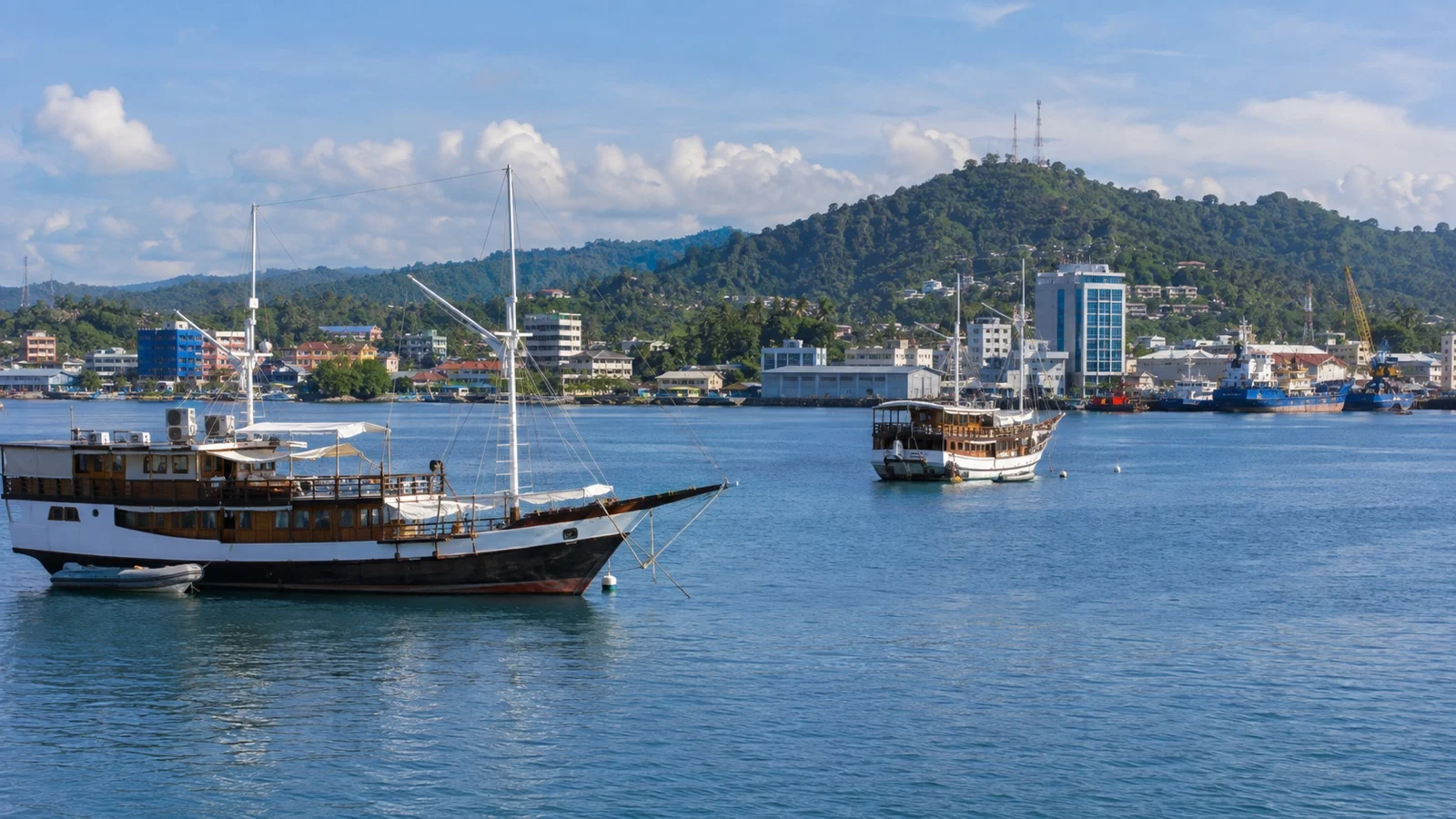
Sorong is a working oil, fishing, and freight city with busy port traffic and many motorbikes. Treat it mainly as the staging point unless a verified local plan gives you a reason to extend the stay.
The flights are the real issue. Sorong sees a modest number of domestic services a day, mostly connecting through Jakarta, Makassar or Manado, and the schedule has no depth.
If your inbound flight cancels, the next may not be until tomorrow, and your boat will have sailed. That is the whole argument for a buffer night in Sorong.
Build the same slack in reverse. Aqua Expeditions publishes a 6:30 morning disembarkation with an onward flight under two hours later, which works right up until it does not.
Phinisi, charters, and what a raja ampat liveaboard actually is
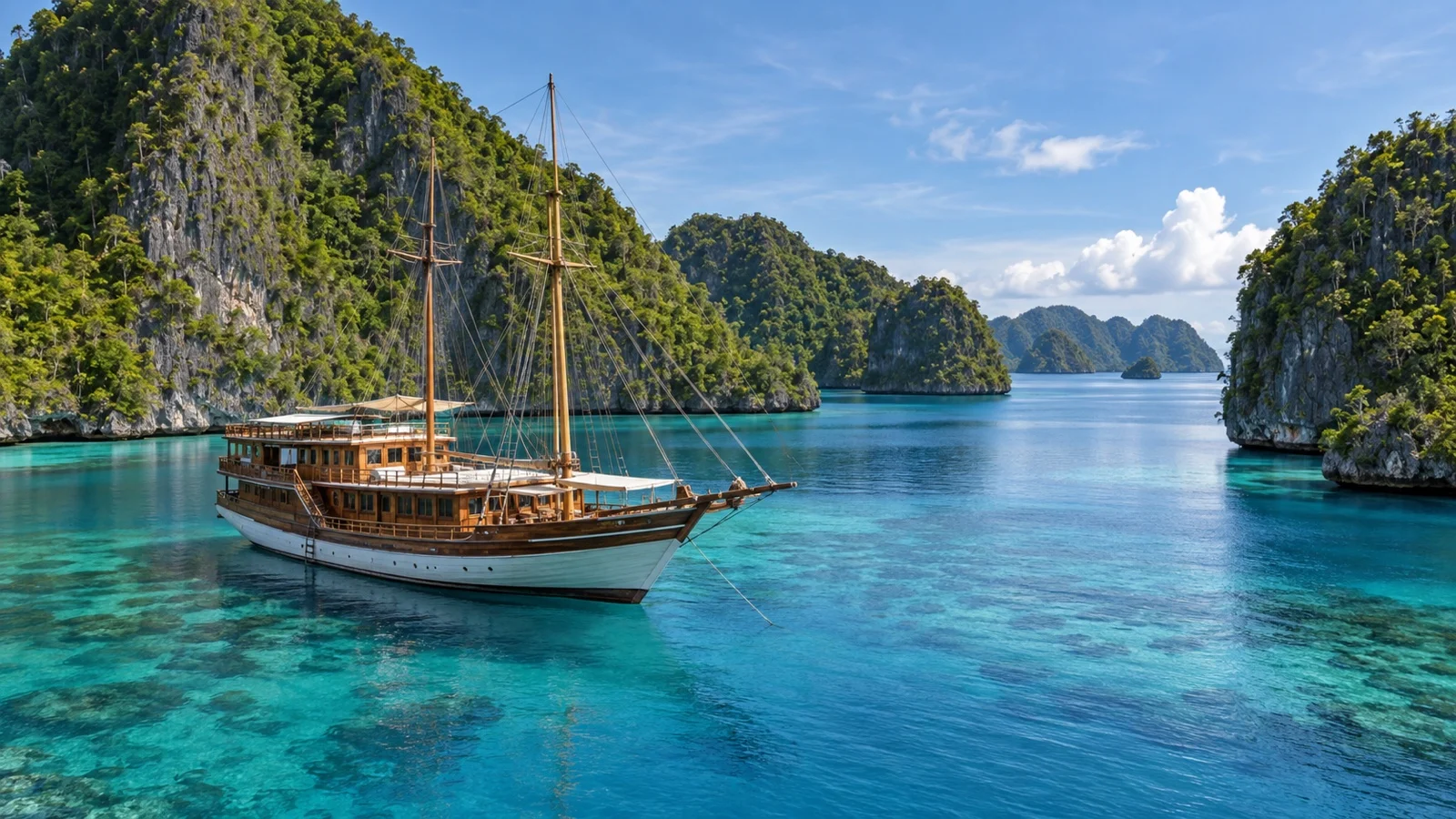
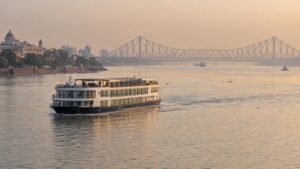
The classic boat here is the phinisi, a two-masted wooden vessel built in the tradition of the Bugis and Konjo shipwrights of South Sulawesi. Modern phinisi-style vessels combine South Sulawesi boatbuilding traditions with individual plans, machinery, safety systems, and passenger layouts that need vessel-by-vessel scrutiny.
Booking works two ways. You either take a cabin on a scheduled departure and share the boat with strangers, or you charter the whole vessel and set your own route within the limits of the season and the permits.
A full charter can become more realistic with six to ten people because the per-person cost may approach a cabin fare. It also gives the group more control over the dive schedule.
Ask three questions before you pay. How many guests per dive guide, how many tenders are carried, and whether nitrox, park fees and airport transfers sit inside the fare or outside it.
The permit, the season, and the Komodo shuffle
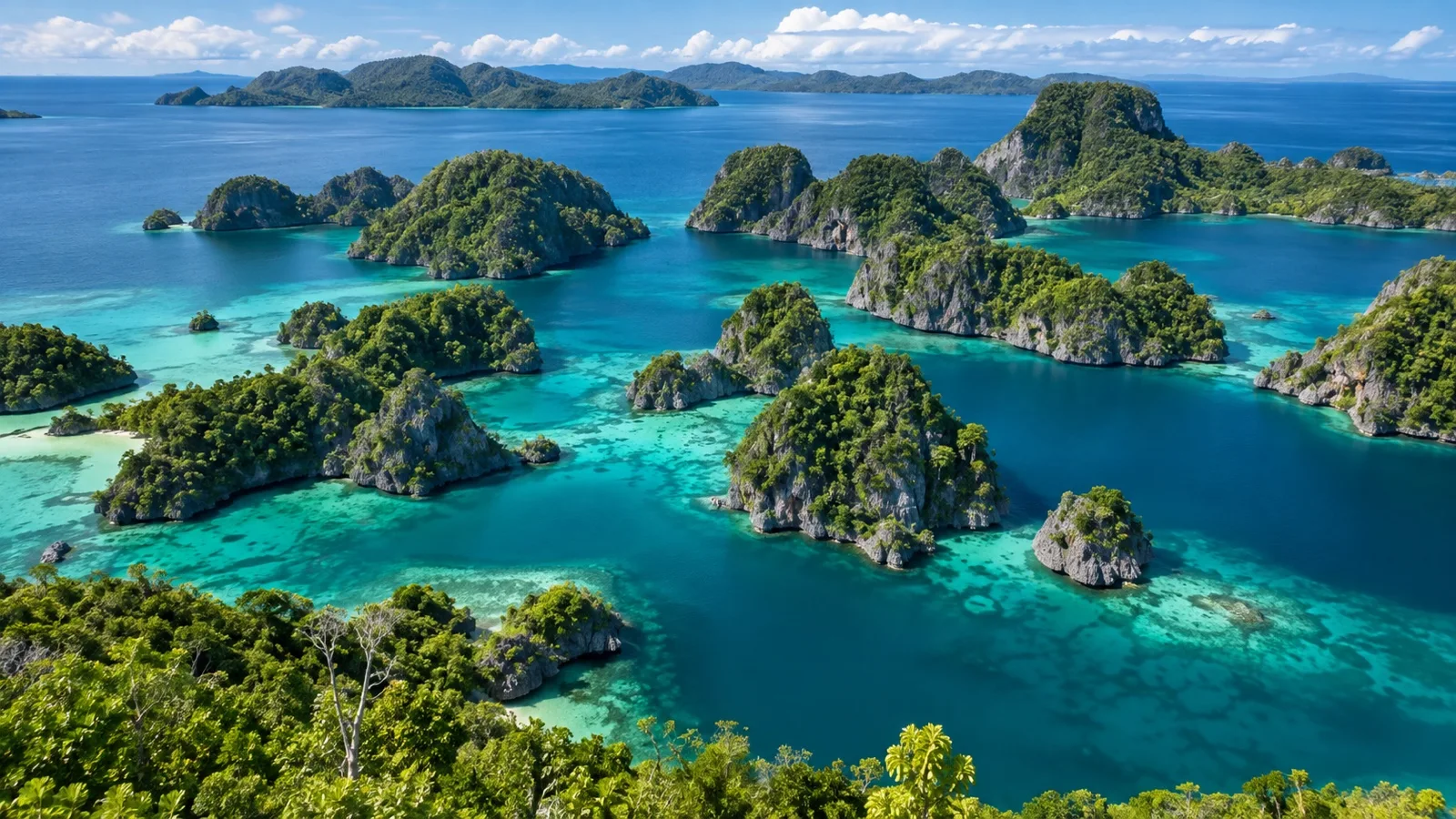
Raja Ampat charges a marine park entry fee, issued as a card and checked by rangers. It funds patrols and community payments, and diving without one is not a risk worth taking.
The tariff is set locally and has been revised more than once, so any figure quoted online may be stale by the time you sail. Get the current amount in writing from your operator.
The area is enormous. Indonesia’s own submission to the UNESCO World Heritage Centre tentative list describes roughly 1,500 islands across some 17,800 square miles, with Waigeo, Batanta, Salawati and Misool as the big four.
That is why so many boats vanish in the off months. They reposition to Komodo, where the pattern is the mirror image, and return for the following season.
Komodo is a genuinely good substitute rather than a consolation prize. UNESCO inscribed Komodo National Park in 1991, covering roughly 847 square miles and a dragon population of around 5,700, and the diving on Flores side is superb if colder and sharper on current.
Papua New Guinea: Zodiacs, sing-sings and honest caveats
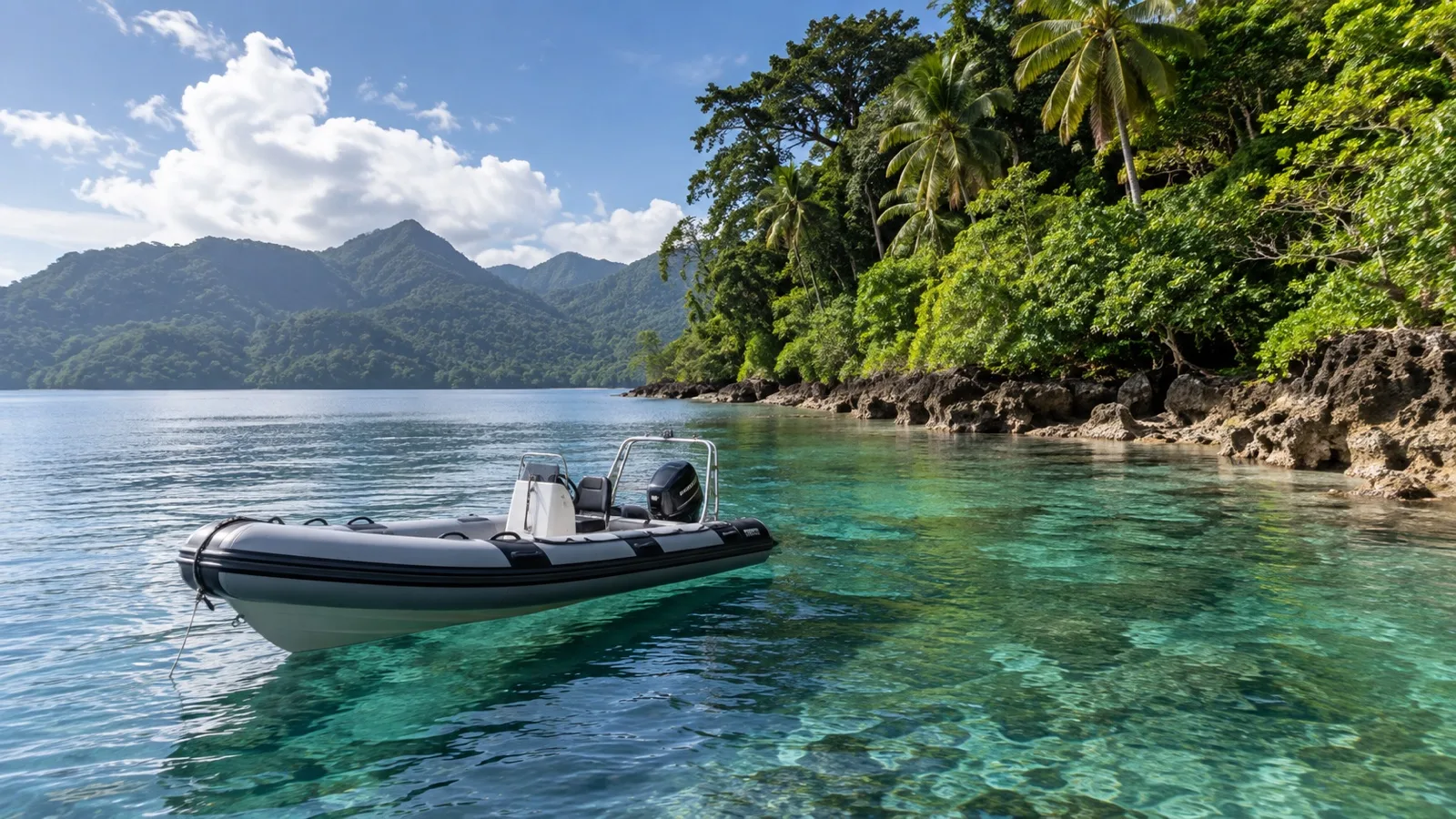
PNG expedition cruising runs on a different rhythm. You anchor off a village, the crew launch the Zodiacs, and the community meets you with a sing-sing, a mass performance of song, drumming and dance in full regional dress.
The cultural calendar is real too. The Papua New Guinea Tourism Promotion Authority lists the Goroka Show in the Eastern Highlands each September and the National Kenu and Kundu Festival in Milne Bay in November.
Now the caveat, because it would be dishonest to skip it. The UK Foreign, Commonwealth and Development Office advises against all but essential travel to parts of Papua New Guinea and warns of a high risk of serious crime in Port Moresby, Lae and Mount Hagen.
It also notes that outbreaks of tribal fighting are common across the country, including in tourist areas, though fighters do not normally target foreign visitors. Coastal expedition ports are not the Highlands, but read your own government’s current advisory before committing money.
Worthwhile stops
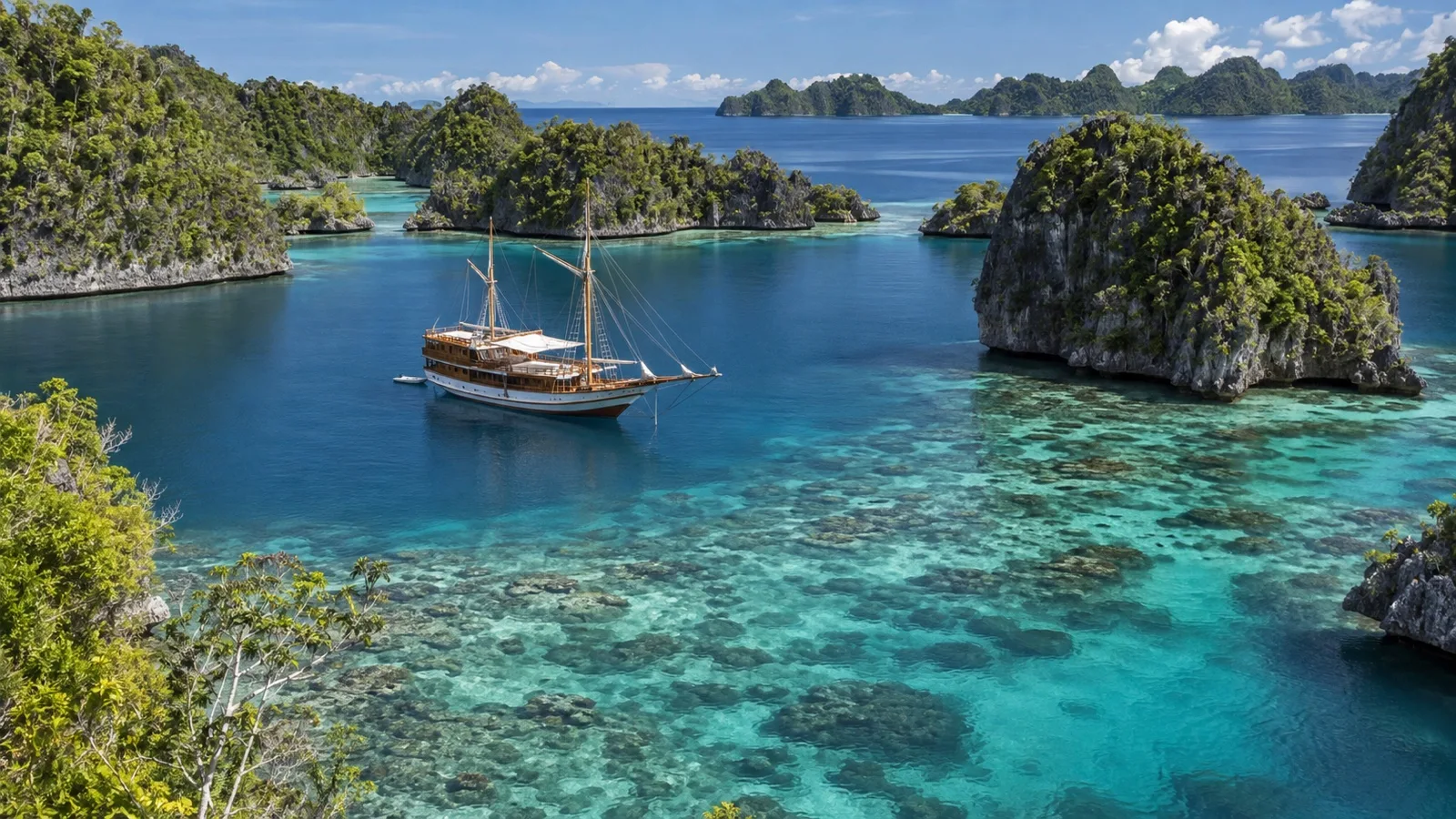
Roughly in the order they turn up on a combined Indonesia and PNG run. Honest, including where that disappoints.
- Cape Kri, Dampier Strait: the reef off Kri Island in the strait between Waigeo and Batanta, and the site most boats build a Raja Ampat itinerary around. Current is the whole point here, so it is a drift dive rather than a gentle potter.
- Wayag: the mushroom-shaped karst islets in the far north, and the view that sells the entire region. It is a long run from Sorong, so check it is actually on your route rather than assuming.
- Arborek: a small inhabited island in the Dampier Strait whose jetty is a snorkeling site in its own right. Buy from the village stalls; the visitor economy here is thin and direct.
- Aljui Bay: a deep inlet on western Waigeo with pearl farming and genuinely strange muck diving. If you like tiny weird animals more than big blue, this is your day.
- Alotau, Milne Bay: the gentlest introduction to PNG, and the base for the National Kenu and Kundu Festival. The bay carries heavy Second World War history that local guides know well.
- Rabaul and Kokopo: a caldera harbor ringed by active volcanoes, with the town’s center of gravity shifted to Kokopo since the 1994 eruption. Bita Paka War Cemetery, the Japanese submarine base and the Namanula Hill memorials are the standard circuit.
- Kavieng, New Ireland: the quietest of the four, with wreck diving offshore and carving traditions that predate contact. It rewards low expectations and a slow morning.
Fun fact: the Smithsonian’s Global Volcanism Program records that the 1994 eruption of Tavurvur and Vulcan sent an ash plume about 11 miles into the sky and forced more than 50,000 people out of Rabaul. Your ship anchors inside that same caldera, which is roughly 5 by 9 miles and flooded on its eastern side by Blanche Bay.
Planning the day
On a Raja Ampat boat the day is built around slack water rather than sunrise. Expect three or four dives, the first before breakfast, and a schedule that shifts by an hour overnight because the tide moved.
Snorkelers get a better deal here than almost anywhere, because the reef tops sit in just a few feet of water. If half your party does not dive, ask at booking how the tender rotation handles it.
In PNG the rhythm is village in the morning, reef in the afternoon. Shoulders and knees covered on shore is the safe default, and carry small kina notes because change is scarce.
The repeated mistake is treating either trip like a port-heavy Mediterranean itinerary. There is no town to walk into, so the ship and its tenders are your entire day, which is the argument for choosing a genuinely small ship.
A realistic word on accessibility
This is the honest section, and it is not encouraging. Both destinations rely on climbing into an inflatable boat that is moving relative to the platform you stand on.
Wet landings are harder still. You step off the bow into shin-deep water onto sand or rubble, and there is no handrail anywhere in that sequence.
Phinisi vessels are wooden boats with steep companionways, high door sills and no elevators, so mobility below deck is a real constraint rather than a formality. Larger expedition ships in PNG are better appointed, but the tender remains the bottleneck.
If mobility is limited but you still want the water, some operators may offer a supervised water activity when the site, sea state, equipment, and your mobility make it safe. Tell them before paying a deposit, not at the gangway, and read the guide to how Zodiac landings actually work.
When to go, and the weather
Both regions sit just south of the equator and have no cold season at all. Daytime air temperatures hover around 86 to 90 Fahrenheit essentially year round.
For Raja Ampat the practical window is roughly October to April, when the wind eases and the long crossings north become comfortable. Rain still falls, but usually as a heavy hour rather than a lost day.
Sea temperature sits close to 84 Fahrenheit. That sounds luxurious until your fourth dive of the day, so bring a thin wetsuit.
Papua New Guinea’s expedition season broadly favors the drier middle of the year, which is also when the big Highlands shows run. Cyclones are rare this close to the equator, but heavy rain, swell and river runoff can all flatten visibility without warning.
Borders, health, currents, and the real buffer
Sorong is the usual flight gateway for a Raja Ampat liveaboard, although limited local access can also involve Waisai’s Marinda Airport or public ferries. Arrive in Sorong a full day early and keep a night after the voyage because a delayed domestic flight, baggage problem, or changed harbor transfer can otherwise cost the whole sailing.
Check Indonesia’s official immigration portal for the visa that matches your passport, complete the current All Indonesia arrival declaration, and use only government web addresses. Papua New Guinea has separate visa rules and now requires its Digital Arrival Card for international arrivals, so a combined itinerary needs two complete document checks.
Confirm the current Raja Ampat marine-protected-area fee and who obtains it, then ask the operator to name every excluded charge. Shore visits, diving, and snorkeling are site- and operator-controlled; strong currents mean divers need the stated certification and experience, while a tender snorkel is not an automatic accessible substitute.
The CDC identifies malaria risk throughout Papua New Guinea below 6,500 feet and advises prescription prevention for relevant areas, while Indonesia’s advice varies by island. See a travel-health clinician, use bite protection, carry extra medicine, and buy evacuation cover because definitive treatment can be a long flight away.
Quick answers
Do I need the Raja Ampat marine park permit if I only snorkel?
Yes, the entry card covers use of the marine park rather than diving specifically.
Confirm with your operator whether the fee is inside your fare or collected separately in cash.
Can I fly into Raja Ampat directly?
Most international travelers fly domestically to Sorong and join the boat there, while limited local access may also involve Waisai’s airport or ferry.
Build in a buffer night, because same-day recovery from a canceled flight is not realistic.
Why do liveaboards leave Raja Ampat in the middle of the year?
The southeast monsoon makes the open crossings rough and unpleasant.
Most boats reposition to Komodo for those months and return for the calmer season.
Do I need malaria tablets for Papua New Guinea?
Malaria is present and this needs a prescriber, not an internet opinion.
See a travel clinic four to six weeks ahead and take the bite avoidance advice as seriously as the tablets.
Is Papua New Guinea safe for a cruise passenger?
The coastal expedition ports are a different proposition from the Highlands, but the FCDO advises against all but essential travel to parts of the country.
Stay with the ship’s arrangements, read the current advisory yourself, and buy insurance that covers medical evacuation.
The last word
Raja Ampat and Papua New Guinea are the two places in this part of the world where the logistics are genuinely harder than the vacation. That is precisely why they still feel like they do.
Get the boring parts right and the rest looks after itself. Buffer night in Sorong, permit confirmed in writing, doctor seen six weeks out, and insurance that names medical evacuation.
For a wider trip, the overview of Indonesia’s cruise ports sets Sorong in context, and the Papua New Guinea ports guide goes deeper on each landing. For the off-season alternative, start with Komodo, where many boats reposition.
Neither destination will hand you a walkable old town or a taxi stand. What they offer is a beach landing, wet feet, and access to exceptional reefs.
How this guide was researched: No firsthand sailing, landing, dive, or site visit is claimed. This guide was independently checked against the UNESCO World Heritage Centre listings for Raja Ampat and Komodo National Park, the Smithsonian Global Volcanism Program, current UK travel advice, CDC travel-health guidance, the Papua New Guinea Tourism Promotion Authority, and published operator itineraries.
Logistics and time-sensitive details were reviewed September 12, 2026. Confirm immigration forms, permits, health advice, flight schedules, embarkation details, and landing plans with official sources and the operator before travel. See our Editorial Policy.
More on this topic: browse every guide on expedition and alternative cruises.