Elfin Cove and Pelican Cruise Port Guide: Tiny Southeast Alaska Stops
Elfin Cove and Pelican show a side of Southeast Alaska that large cruise ports cannot reproduce. These tiny Chichagof Island communities are shaped by fishing, floatplanes, small boats, wet weather, and waterfront paths instead of cruise terminals.
If your itinerary names either place, treat the call as an expedition-style visit rather than a standard port day. The reward is an intimate look at working coastal Alaska, but services and independent options are extremely limited.
My quick take
These are memorable stops because they are small, not because they offer a long attraction list. A boardwalk walk, harbor views, conversations with residents when welcomed, and the journey through Cross Sound are the experience.
Pelican has the more defined town layout, with its mile-long Salmon Way boardwalk and a small collection of visitor businesses. Elfin Cove feels even quieter, with homes and seasonal fishing operations gathered around its protected harbor.
Go ashore with realistic expectations and follow the expedition team’s timing closely. If weather prevents a landing, the captain may substitute scenic cruising or another activity, so build flexibility into your expectations.
Elfin Cove and Pelican quick facts
- Port style: Expect a small-ship or expedition call with operator-specific landing arrangements, not a conventional cruise terminal.
- Layout: Pelican centers on the Salmon Way boardwalk, while Elfin Cove’s paths and harbor floats connect a much smaller settlement.
- Best for: Working-harbor atmosphere, photography, fishing culture, short walks, wildlife watching from the water, and quiet Southeast Alaska scenery.
- Currency: US dollars. Carry small bills because card service and connectivity can be unreliable at seasonal businesses.
- Time: Alaska Time, normally UTC-9 in winter and UTC-8 during daylight saving time. Always follow the ship’s stated time.
- Planning: Confirm the landing method, footwear guidance, and last boat aboard before leaving the ship.
Where are Elfin Cove and Pelican?
Both communities sit on the outer side of northern Chichagof Island, west of Juneau and near Cross Sound. This is a more exposed setting than the protected channels used for much of a conventional Inside Passage itinerary.
Pelican lies on Lisianski Inlet, while Elfin Cove is farther north near the entrance to Cross Sound. They are separate communities, so an itinerary naming one should not be read as a visit to both.
Travel Alaska describes Pelican as about 100 miles west of Juneau and 90 miles north of Sitka. Elfin Cove is likewise reached by water or air rather than by a road connection to another town.
This remote geography is central to the visit. It also explains why weather, sea state, and aircraft visibility have such a large effect on transportation.
How a cruise landing works
Neither community has a terminal designed for a large cruise ship. If your small ship schedules a call, the operator will explain whether guests transfer by skiff, inflatable boat, tender, or another small craft.
The exact landing point can vary with local operations and conditions. Do not rely on a generic online map when the expedition leader gives a different meeting place or return time.
Wear the footwear requested by the crew, keep both hands available during boarding, and wait for assistance before stepping between a moving boat and a float. A waterproof shell is useful even when rain is light because spray can reach passengers during the transfer.
A scheduled call can change at short notice if wind, swell, visibility, or local dock conditions are unsuitable. That is normal expedition cruising, not necessarily a sign of poor planning.
What to expect in Pelican
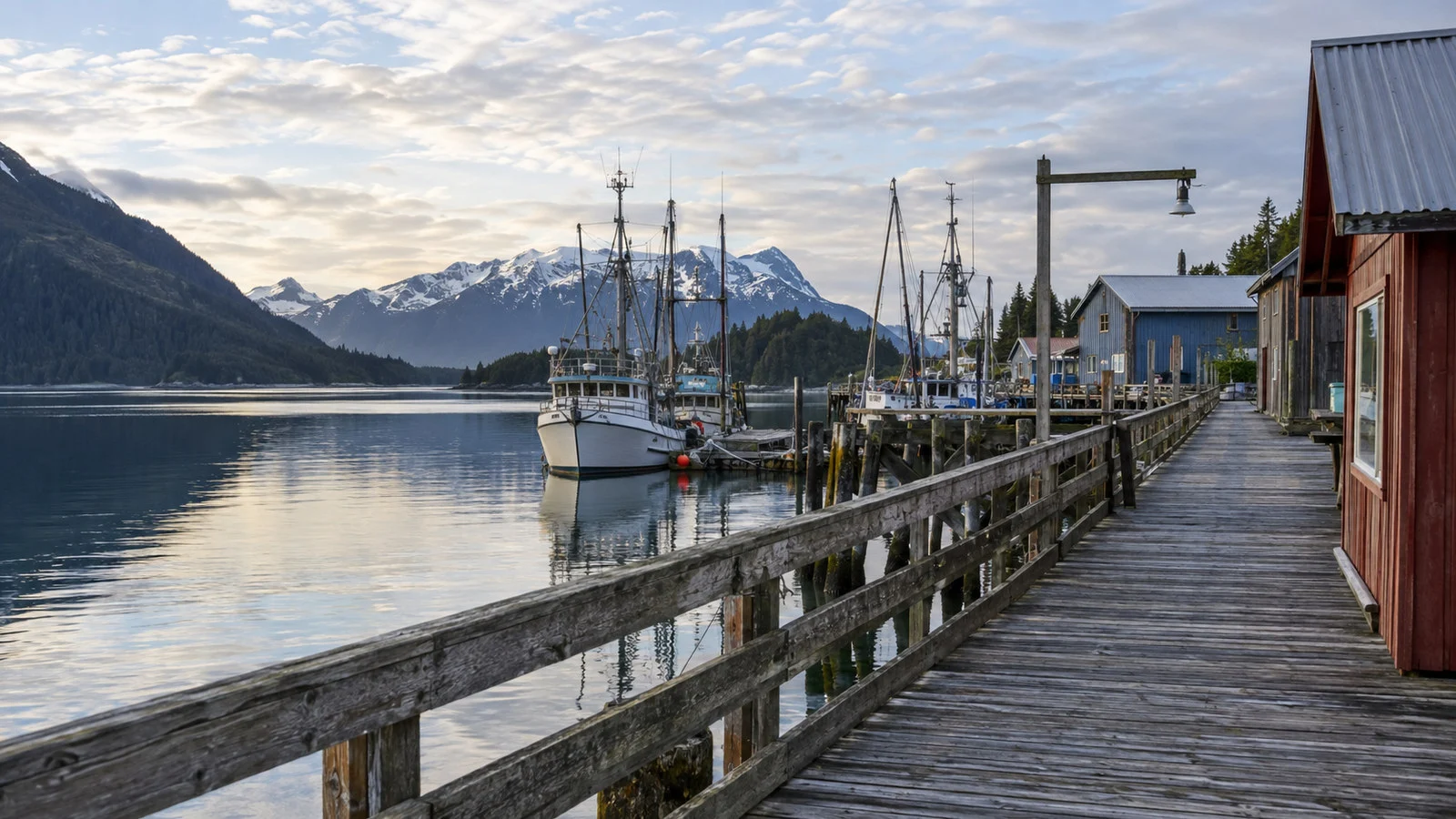
Pelican grew as a salmon-processing community and still uses the slogan “Closest to the Fish.” Its defining feature is Salmon Way, a mile-long boardwalk on pilings that links homes and businesses around the small-boat harbor.
Travel Alaska notes that two miles of rough gravel roads extend beyond the main boardwalk. For a short cruise call, most visitors will stay close to the harbor rather than trying to cover every possible route.
Rose’s Bar and Grill is a well-known local gathering place, but opening hours in a very small community can shift. Treat any meal, drink, or shopping stop as a welcome bonus rather than the foundation of your entire plan.
Fishing remains a major reason independent travelers visit Pelican. Charter outings need advance arrangements and usually do not fit a brief expedition landing unless they are part of the ship’s program.
White Sulfur Hot Springs is about 20 miles from Pelican by boat, according to Travel Alaska. It is not a casual walk from town, so only consider it when your ship or a confirmed operator offers a trip that safely fits the call.
What to expect in Elfin Cove
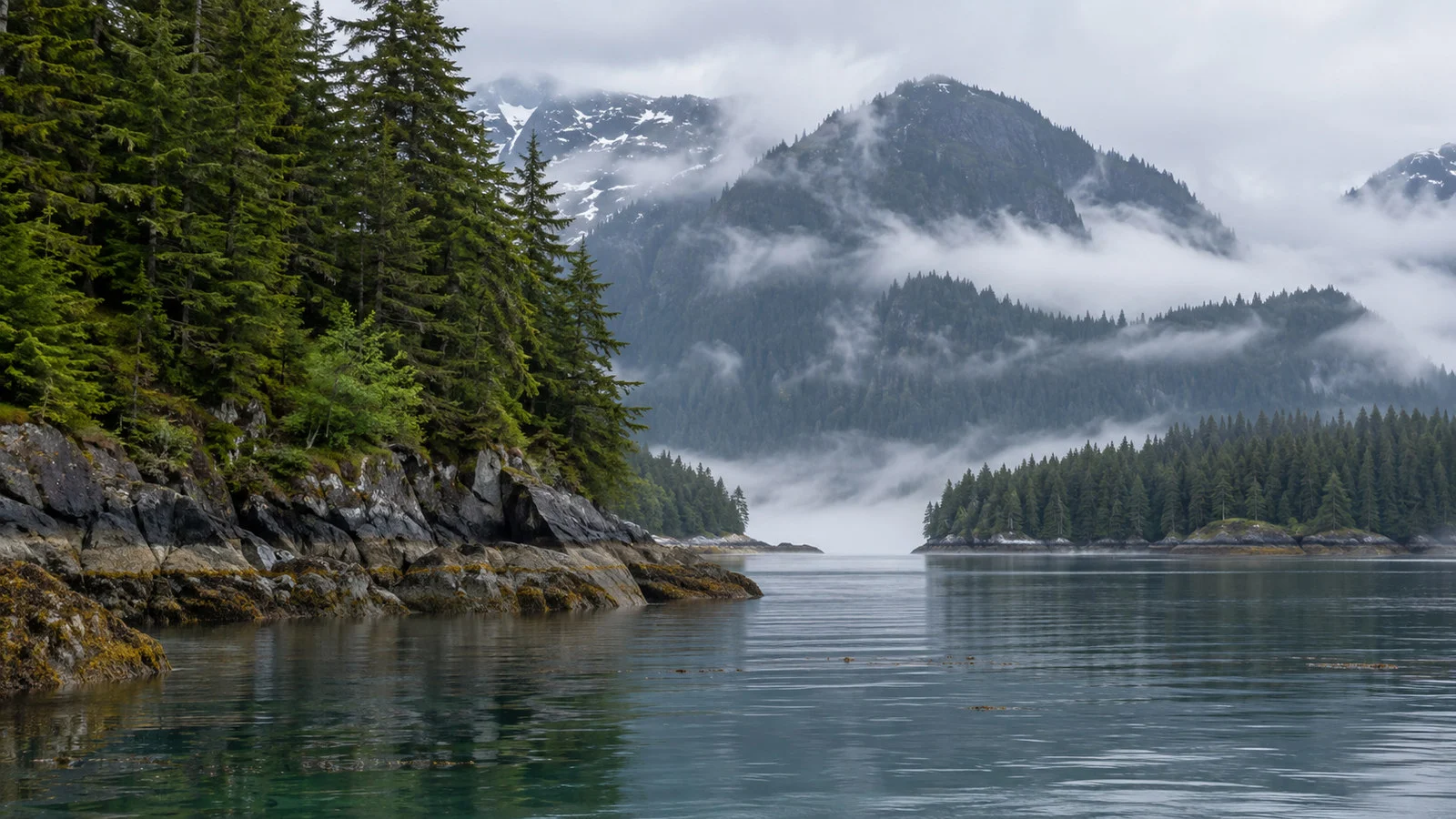
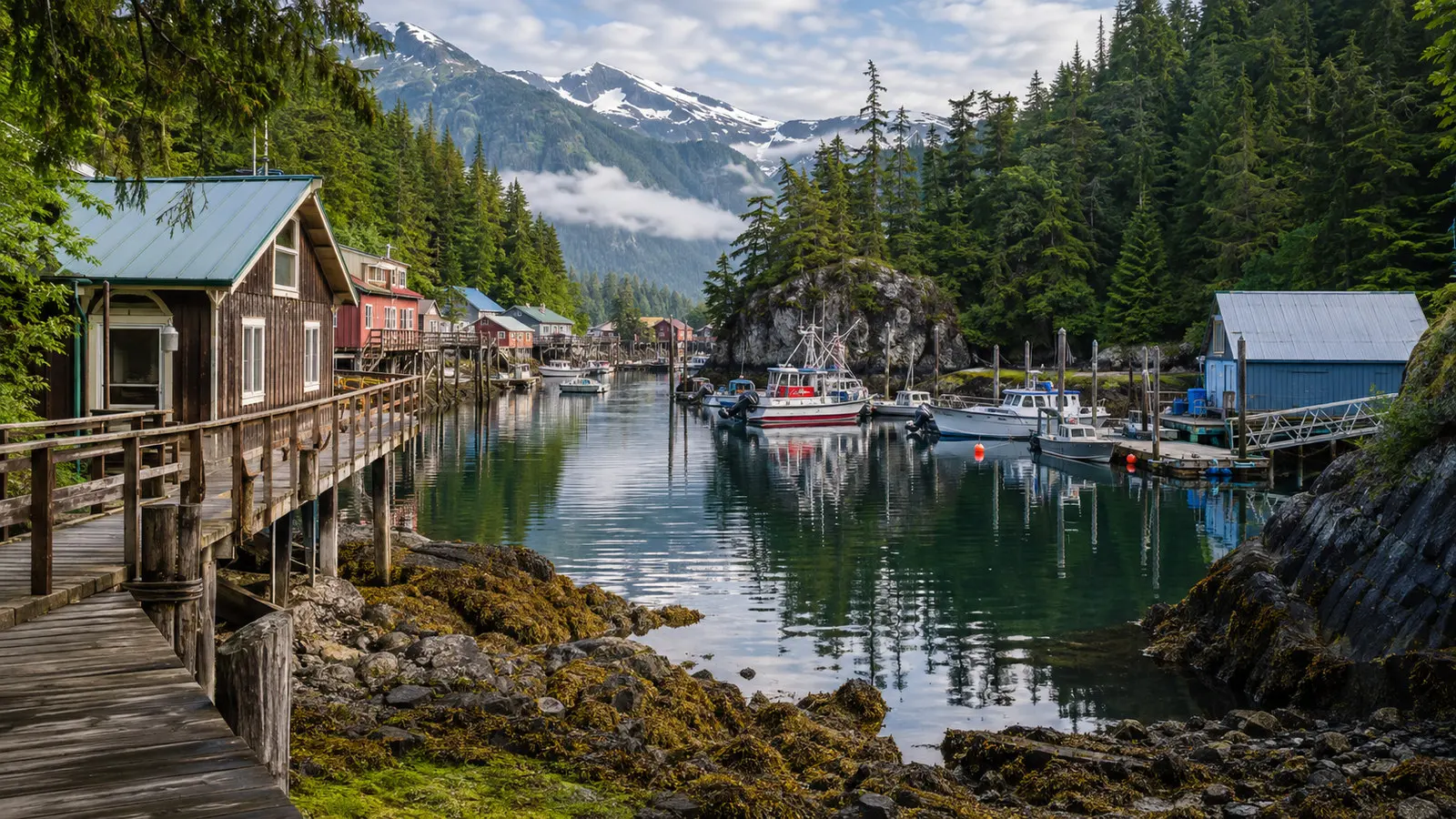
Elfin Cove is smaller and offers fewer conventional visitor services than Pelican. The settlement wraps around a sheltered harbor, with homes, docks, and sportfishing businesses connected by waterfront paths and boardwalks.
There is no downtown attraction circuit or row of souvenir shops. The appeal is the scale of the place, the boats in the harbor, the surrounding forest, and the chance to understand how a remote coastal community functions.
Respect private homes, lodge space, working docks, and equipment. A path that looks public may lead directly to someone’s door, so follow crew guidance and posted signs.
Independent visitors normally arrive by floatplane or boat, often in connection with fishing. Cruise guests should not expect to arrange a last-minute flight, charter, or wildlife tour after stepping ashore.
What you can do during a short call
A guided orientation walk is often the most useful option. It provides local context while keeping the group within the safe area and on the ship’s schedule.
Photographers will find working boats, pilings, forested slopes, reflections, weathered buildings, and changing light over the water. Ask before photographing people at close range or treating their workspace as a backdrop.
Watch the water during the approach and departure because Cross Sound and nearby passages support rich marine life. Humpback whales, sea otters, seals, sea lions, and seabirds may appear, but no wildlife encounter is guaranteed.
If the ship offers kayaking, skiff exploration, or naturalist-led cruising nearby, that activity may be more substantial than the town walk itself. Follow the expedition team’s assessment of wind, current, and wildlife distance.
For a call at Pelican, a simple plan might include Salmon Way, the harbor, and one open local business. For Elfin Cove, the best plan may be an even shorter walk followed by scenic time on the water.
Ship activity or independent exploring?
Use the ship’s included landing program when one is offered. Crew members coordinate boat movements and know how much time is genuinely available before conditions or the wider itinerary require departure.
Independent exploring works for a short walk within the area the crew identifies. It does not work well for spontaneous charters, distant hot springs trips, or transportation between the two communities.
If fishing is a priority, choose an itinerary or pre-cruise stay designed around fishing rather than hoping to build a charter into a brief port call. Lodges and boats have limited capacity, and weather can change the schedule.
Ask the expedition desk whether the town visit is guided, whether any business is expected to open, and whether the ship provides boots or flotation gear. Those details matter more here than advance lists of attractions.
Accessibility and mobility
The small-craft transfer is likely to be the biggest accessibility challenge. Boarding may involve steps, a moving platform, a low inflatable tube, or a transfer between boat and floating dock.
Ask your cruise line for ship-specific requirements because the answer can change with the vessel, equipment, and sea conditions. Even a traveler who can manage the shore path may not be able to complete the boat transfer safely.
Boardwalk surfaces can be wet, narrow, uneven, or interrupted by ramps and transitions. Pelican’s main route is more defined, but it should not be assumed to meet modern urban accessibility standards.
There is no dependable accessible shuttle or taxi network waiting at either landing. If you use a wheelchair, walker, or cane, discuss storage, assistance, restroom access, and evacuation procedures before the call.
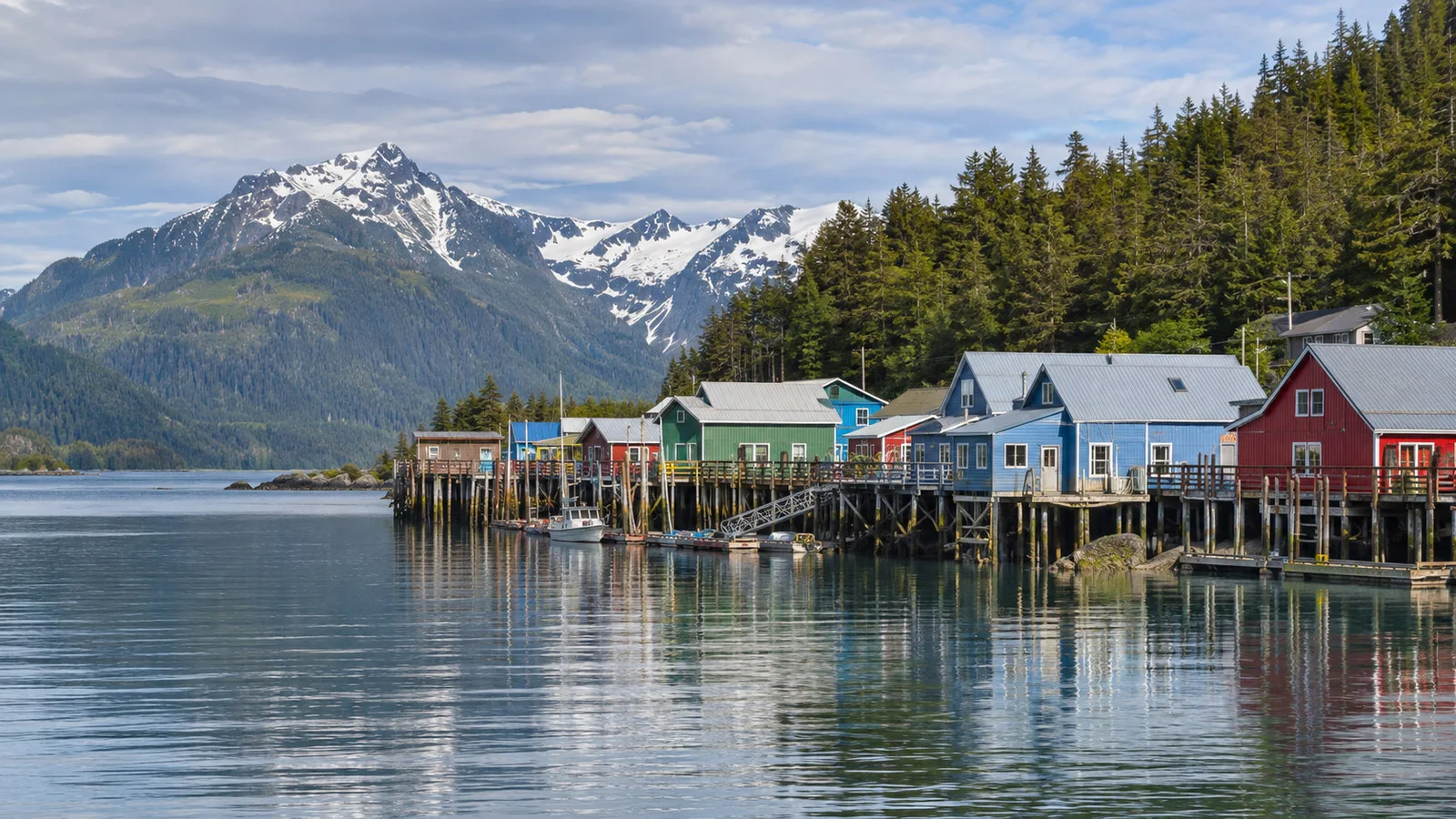
Weather and what to wear
Prepare for cool, wet, changeable weather even in summer. Conditions near the outer coast can feel colder on the water than the temperature shown for a nearby town.
Wear a waterproof jacket over insulating layers and choose shoes with good grip. A compact backpack or dry bag keeps a camera, medication, gloves, and an extra layer protected during the transfer.
Fog and low cloud can affect both marine operations and floatplane service. If your independent travel plans involve flying after the cruise, leave meaningful schedule flexibility rather than building a tight same-day connection.
Check the National Weather Service forecast before the call, then follow the ship’s local assessment. Expedition leaders have access to the conditions that matter for the actual route and landing.
Safety in a working coastal community
Harbor floats, ladders, lines, fish-cleaning areas, and loading zones are working infrastructure. Stay out of crew areas, give carts and equipment room, and do not step onto private boats.
Wet wood and metal ramps can be slippery, especially where marine growth collects near the tide line. Use handrails when available and slow down instead of trying to keep pace with a faster group.
Chichagof Island is brown bear country, though a town landing is not automatically a bear-viewing excursion. Do not walk into the forest alone, approach wildlife, or carry exposed food beyond the area recommended by your guide.
Cell service may be weak or unavailable, so save the ship’s instructions offline. Keep your ship card, identification, and emergency contact information in a waterproof pocket.
Food, money, and restrooms
Use the restroom aboard before leaving because public facilities can be limited or unavailable. The ship should tell you what, if anything, is open ashore for your specific call.
Carry a little cash in small US-dollar bills, but do not assume every business will be open or able to process a card. Connectivity interruptions can affect payment terminals even when a shop normally accepts cards.
Bring water and a small snack if permitted by the ship, while following rules about taking food ashore. Never leave food or wrappers where they could attract wildlife.
Pelican may offer a place to eat or drink during the visitor season, while Elfin Cove’s services are more closely tied to lodges and fishing activity. Confirm locally rather than relying on old reviews or social media posts.
Independent access and the Alaska Marine Highway
Travel Alaska lists scheduled air service to Pelican from Juneau and seasonal Alaska Marine Highway ferry visits. Ferry frequency and sailing dates change, so check the current official schedule before making any independent plan.
Elfin Cove relies on air and water access rather than a road connection. Weather delays are a normal risk, and travelers should allow buffer nights around flights or boat transfers.
The ferry is useful context for how Pelican connects with the region, but it is not a backup for missing your cruise ship’s last boat. Cruise passengers must return according to the ship’s instructions.
If you want to explore Southeast Alaska without a cruise, our Alaska ferry versus cruise guide explains the different planning tradeoffs. A ferry trip requires more schedule management but can offer a longer community stay.
Return timing
Photograph the final boat time before leaving the landing area and confirm whether the ship is using local time. Do not rely only on your phone because automatic time settings can be wrong or unavailable.
Stay within the area approved by the expedition team and return early. A delayed small craft, changing tide, or sudden squall can complicate the last transfer.
There is no taxi, highway, or easy alternate port if you miss the ship. The practical rule is simple: when crew members ask guests to gather, go immediately.
How these stops fit an Alaska cruise
Elfin Cove and Pelican belong on small-ship itineraries that value flexible landings, wildlife, and community scale. They are not substitutes for major ports such as Juneau, Sitka, or Ketchikan.
Nearby Icy Strait Point offers developed visitor facilities and a much larger shore program. These Chichagof communities offer the opposite experience, with little separation between the waterfront and everyday local life.
A regional itinerary may also include Glacier Bay, the Inian Islands, or other wilderness-focused areas. Read our small-ship cruise guide if you are deciding whether that flexible style suits you.
For the national picture, the United States cruise ports guide connects Alaska’s communities with other domestic cruise regions. Elfin Cove and Pelican remain unusual even within Alaska because of their small scale and outer-coast setting.
Quick answers
Do large cruise ships visit Elfin Cove or Pelican?
These are primarily small-ship and expedition-style destinations, not conventional large-ship ports. If either appears on your itinerary, follow the operator’s specific landing instructions.
Can I walk around on my own?
Usually, a short walk near the landing is practical if the expedition team permits it. Respect private property and return well before the stated departure.
Can I visit both communities in one call?
Not unless the ship explicitly schedules both. They are separate places connected by water or air, not neighboring stops on a road.
Is Pelican’s White Sulfur Hot Springs walkable?
No. Travel Alaska places it about 20 miles from Pelican on the outer coast, and reaching it requires an arranged boat trip.
Are these good ports for wheelchair users?
The small-craft transfer and wet, uneven boardwalks can create significant barriers. Ask the cruise line for an individual assessment before deciding whether to go ashore.
What should I bring?
Bring waterproof layers, grippy shoes, a protected phone or camera, any essential medication, and a little cash. Keep your load light so your hands are free during the boat transfer.
The last word
Elfin Cove and Pelican are not attraction-heavy ports, and that is their strength. They offer a rare, close view of communities where the harbor, weather, and fishing economy still set the rhythm of the day.
Step ashore if conditions allow, tread respectfully, and let the expedition team handle the logistics. An hour on a quiet boardwalk can become one of the most distinctive memories of an Alaska cruise.
How this guide was researched: This guide uses current information from Travel Alaska, the Alaska Marine Highway System, the Tongass National Forest, weather authorities, and cruise operator guidance. Logistics and time-sensitive details were reviewed in September 2026. See our Editorial Policy.
More on this topic: browse every guide on expedition and alternative cruises.