Bremerton Cruise Port Guide: Waterfront, Ferries and Navy History
Bremerton gives cruise travelers a compact Puget Sound waterfront with ferries, naval history, public art, and downtown stops close together. It is a practical port day for anyone who wants to explore without spending hours on a bus.
The key is to confirm exactly where your vessel will berth or land, because Bremerton is not a conventional large-ship cruise terminal. Once ashore near downtown, most of the useful sights are within a short walk of the ferry and marina area.
My quick take
Stay in Bremerton if you want an easy day built around the USS Turner Joy, the Puget Sound Navy Museum, the boardwalk, and lunch. Consider Seattle only when your call is long enough to absorb two ferry crossings and still leave a generous return buffer.
Bremerton is not a substitute for every Seattle attraction, but it does not need to be. Its strength is a calmer waterfront where you can make decisions as you go instead of committing the whole day to transportation.
For another Puget Sound comparison, the Tacoma cruise port guide covers a larger city south of Seattle with a different mix of museums and transport needs.
Bremerton quick facts
- Port setup: No standard large-ship cruise terminal, so use your cruise line’s instructions for the assigned berth, gangway, or landing point.
- Downtown layout: The marina, boardwalk, ferries, museums, restaurants, and parks cluster near the waterfront.
- Seattle fast ferry: Kitsap Transit’s passenger-only service takes about 30 minutes each way and does not operate every day year-round.
- Currency: US dollar, with cards widely accepted and some ferry payments requiring exact cash if you do not use a card or transit pass.
- Time zone: Pacific Time, with daylight saving time observed.
- Best for: Naval history, waterfront walking, ferry views, public art, and a low-stress independent day.
- Planning rule: Check live ferry schedules and service alerts before attempting a Seattle round trip.
Where your ship may arrive
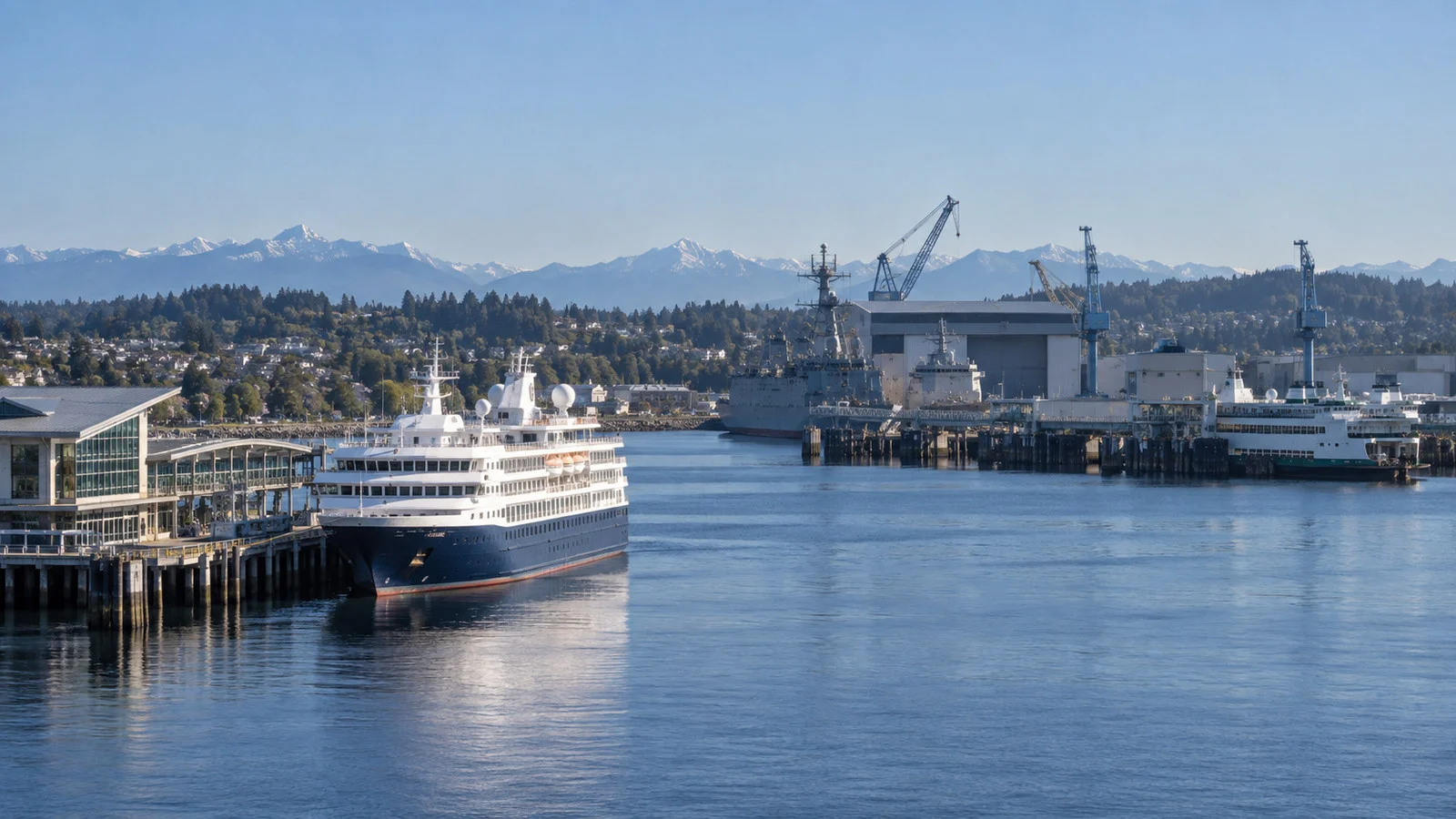
Bremerton Marina sits downtown on Puget Sound and welcomes overnight visitors and day-use boaters. The official Port of Bremerton page lists more than 80 visitor spaces, but it does not describe the marina as a regular terminal for large cruise vessels.
That distinction matters because an itinerary label alone does not identify your gangway. Your ship may use a berth, marina arrangement, or other locally coordinated landing, so rely on the cruise line’s daily program rather than a generic online map.
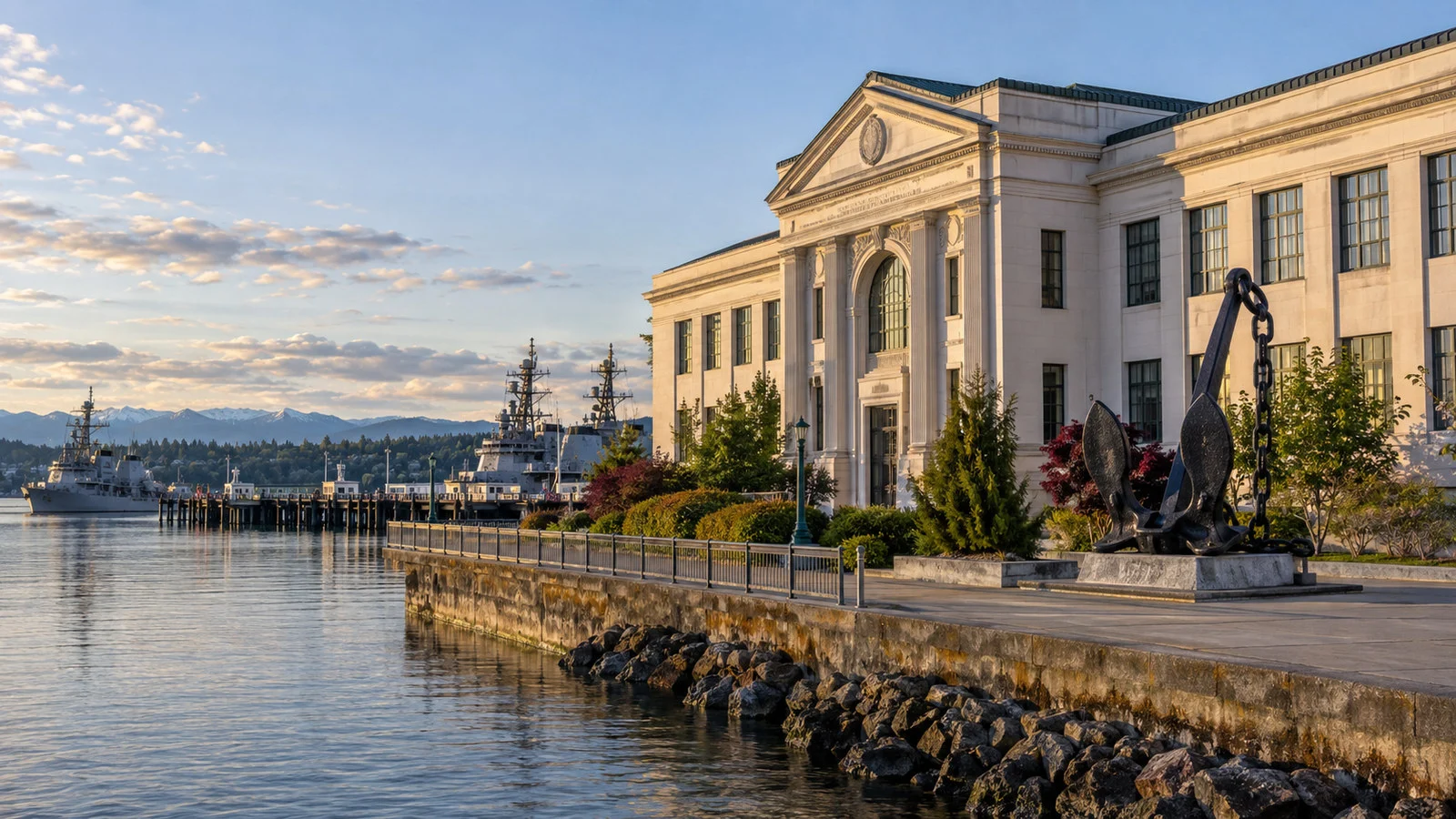
If you arrive near the central waterfront, downtown begins almost immediately. The Bremerton Transportation Center, boardwalk, marina, USS Turner Joy, and Navy museum all sit in the same general waterfront district.
Ask onboard whether the ship will operate a shuttle and whether identification is required to reenter any controlled area. The neighboring Puget Sound Naval Shipyard is an active military installation, so stay within public waterfront spaces and follow posted photography rules.
Walking around downtown Bremerton
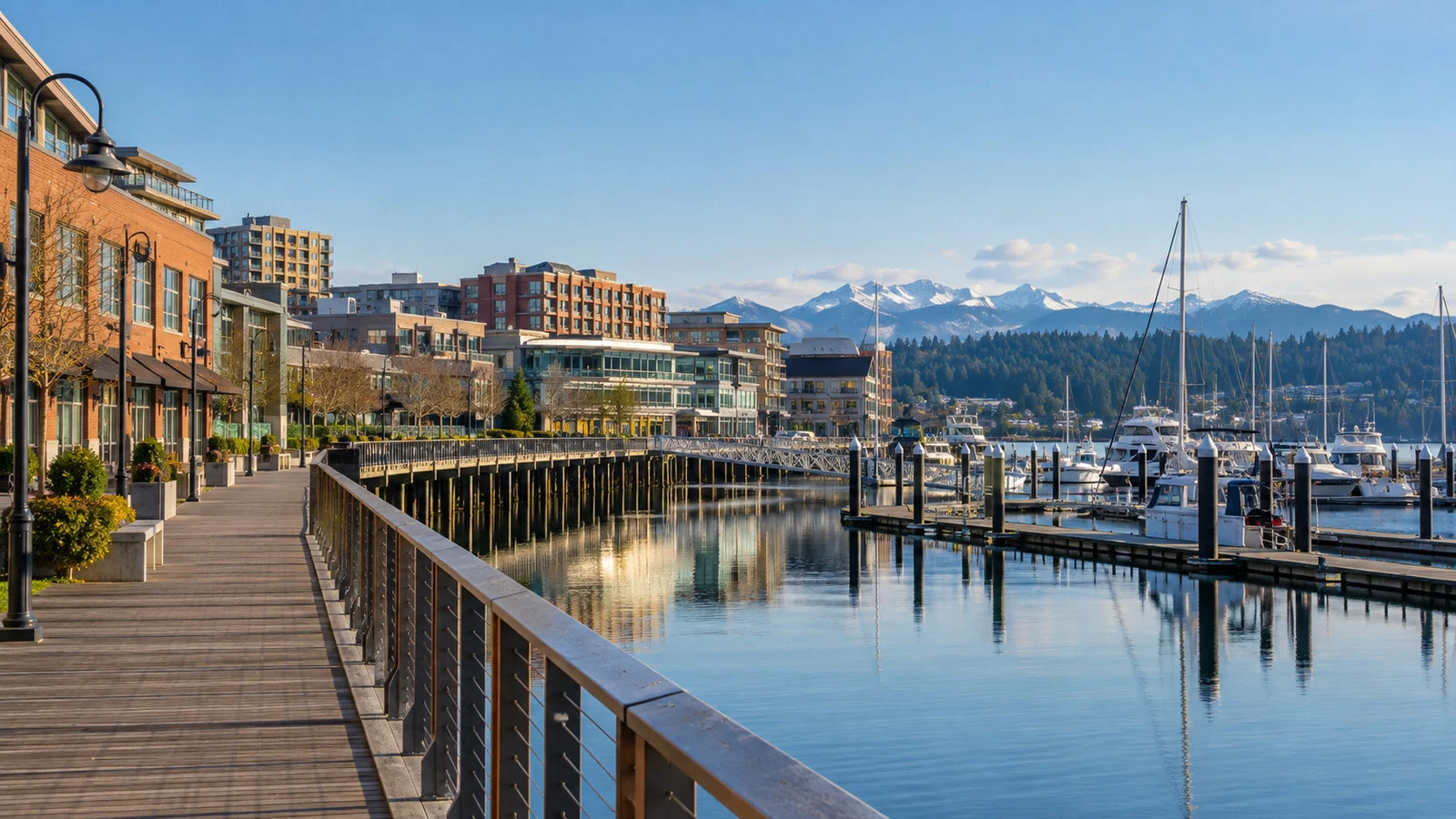
Downtown Bremerton is manageable on foot, especially if you focus on the waterfront. The boardwalk, Harborside Fountain Park, ferry terminal, museums, and nearby restaurants make a logical loop without a car.
Harborside Fountain Park is a useful pause between transportation and museums. Its water features, landscaping, and views make it worth a short visit, although maintenance or seasonal operations can affect the fountains.
Fourth Street and the blocks behind the waterfront add cafes, shops, art, and the Admiral Theatre. Check hours on the day because small businesses may open later or close on quieter weekdays.
The terrain near the waterfront is easier than a steep hill town, but curb cuts, construction, and occasional grade changes still matter. Comfortable shoes and a light rain layer make the day simpler.
USS Turner Joy
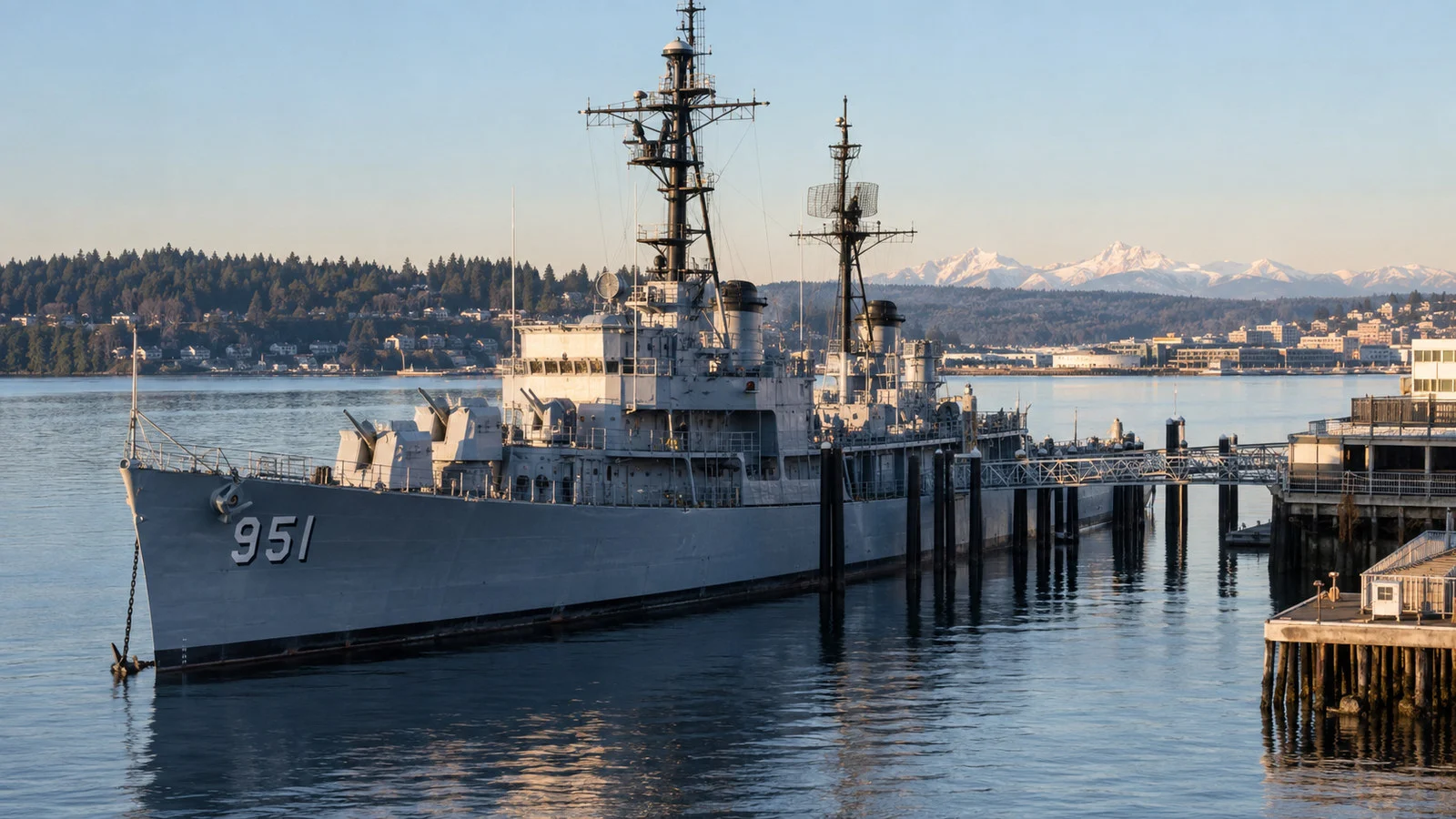
The USS Turner Joy is a preserved DD-951 naval destroyer moored on the Bremerton Boardwalk. Its official visitor information places it within an easy walk of the ferry terminal and recommends allowing about one to two hours for a tour.
This is the most distinctive paid attraction downtown. Expect authentic ship spaces, narrow routes, overhead hazards, and steep ladders rather than a fully modernized museum interior.
The museum advises flat or rubber-soled shoes and says visitors should keep both hands free for ladder climbing. Strollers cannot be used aboard, and families should supervise children closely.
Hours change by season, and ticket sales stop before closing. Check the official USS Turner Joy hours shortly before your call instead of relying on an old cruise guide.
Puget Sound Navy Museum
The Puget Sound Navy Museum interprets naval history in the region and the story of the nearby shipyard. It is a strong indoor choice for a rainy day and pairs naturally with the Turner Joy.
Admission policies, security procedures, hours, and exhibits can change. Check the museum’s official information before your visit, especially around federal holidays or temporary closures.
Allow enough time to enjoy the exhibits without turning the day into a museum sprint. Travelers with only a short call can choose either the Navy museum or the Turner Joy, then add a waterfront walk.
The two attractions are different experiences. The museum is a conventional indoor venue, while the Turner Joy places you inside a preserved ship with much tighter physical constraints.
Taking the fast ferry to Seattle
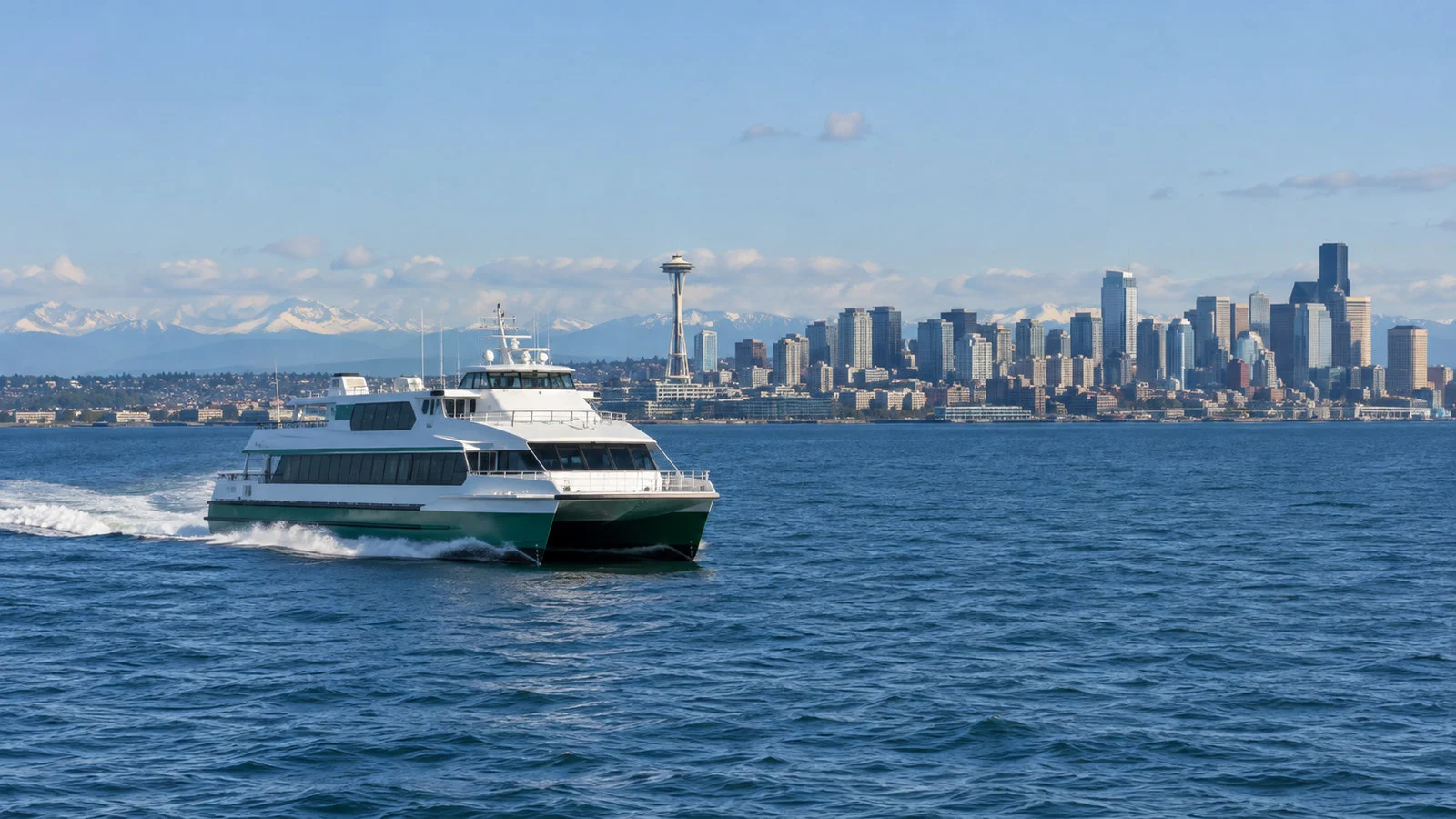
Kitsap Transit operates a passenger-only fast ferry between the Bremerton Transportation Center and Seattle’s Pier 50. The agency lists an approximate crossing time of 30 minutes, which makes Seattle tempting on a long port call.
The timetable is the catch. Bremerton fast ferry service runs Monday through Friday, with Saturday service operating from May through September, so it is not a dependable option for every cruise date.
Schedules can also change and sailings can be canceled. Check the official Bremerton fast ferry page for the current timetable, rider alerts, fares, and boarding rules before leaving the ship.
A 30-minute crossing does not mean a 30-minute transfer. Add walking, early arrival, boarding, possible queues, and the wait for your chosen return sailing.
If the schedule gives you only one realistic return ferry, Seattle is too risky for an independent cruise day. Stay in Bremerton or choose a ship-organized excursion instead.
Washington State Ferries option
Washington State Ferries also serves the Seattle to Bremerton route with larger vessels and a crossing of about an hour. This can provide another option, but schedules, vessel assignments, and service disruptions still need a same-day check.
The larger ferry can be attractive when you want a slower scenic ride or need an alternative after a fast ferry cancellation. It also consumes more of a limited port day, so compare the full door-to-door timing rather than the sailing time alone.
Never assume the next ferry will leave immediately or arrive exactly on schedule. Build a return plan with at least one backup sailing that still reaches Bremerton before the ship’s all-aboard time.
Ship excursion or independent day
Bremerton’s downtown sights suit independent travelers because they are close together and easy to rearrange. A self-guided day also lets you respond to rain, museum hours, and ferry disruptions without losing a prepaid tour.
A ship excursion makes more sense for destinations outside the central waterfront or for a tightly timed Seattle visit. The main advantage is coordinated transportation and return planning, not access to downtown Bremerton itself.
Do not rent a car just to see the central sights. Parking, pickup time, and navigation add work to a day that is simpler on foot.
If your excursion travels farther into Kitsap County, ask how much time will be spent in the vehicle. Distances that look short on a map can take longer because of traffic, bridges, and ferry connections.
Accessibility
Kitsap Transit says its ferries and gangways are wheelchair friendly, with crew assistance available. It also notes that mobility-device spaces can be limited and boarding ramps may require help, so review the route’s current accessibility details before travel.
The Bremerton ferry dock is reached from the transportation center by elevator and boardwalk connections. Elevators can occasionally be unavailable, making a live service check important for anyone who cannot use stairs.
The USS Turner Joy is accessible on and in part of the main deck, but much of the ship involves steep ladders and narrow passages. Its official site says wheelchairs are available on request, yet visitors should contact the museum directly about the route that fits their needs.
Public restrooms are available along the Bremerton boardwalk, and Kitsap Transit says its fast-ferry vessels have accessible restrooms. Downtown conditions can still vary, so travelers who need guaranteed facilities should confirm opening times.
Weather and what to wear
Puget Sound weather can be cool, damp, breezy, and changeable even during the main visitor season. Dress in layers and bring a water-resistant jacket rather than relying only on an umbrella.
Summer often brings the most comfortable walking conditions, but warm sunshine is never guaranteed. Spring and fall calls can feel chilly near the water, particularly on an open ferry deck.
Wet boardwalks and ship decks can be slippery. Shoes with traction are useful for the Turner Joy, ferry ramps, and waterfront paths.
Fog, wind, mechanical issues, or staffing can affect ferry service even when the city itself feels calm. Treat service alerts as part of the weather check if you plan to leave Bremerton.
Money, phones, and practical details
Bremerton uses US dollars, and cards are common in downtown businesses. Carrying a small amount of cash is still helpful for transit or a business with a temporary card problem.
Kitsap Transit accepts several fare methods, including contactless cards on the fast ferry. Exact-cash rules apply when paying cash, so check the current fare page before boarding.
Cell service is generally available downtown, but do not depend on a connection for your only copy of the ship’s schedule. Screenshot the all-aboard time, berth location, and emergency contact information before leaving.
Restrooms, seating, and food are easiest to find around the transportation center and central waterfront. Hours can be limited early in the morning, late at night, or on holidays.
Timing your return to the ship
A downtown-only day has a simple return because you remain near the waterfront. Confirm the exact gangway location and be back before the cruise line’s stated all-aboard time.
A Seattle trip requires a much larger buffer. Choose a planned return sailing and identify an earlier backup rather than depending on the final ferry that could possibly work.
Remember that a ferry cancellation can send many passengers toward the same alternative. A backup on paper may still involve a wait, so leave room for disruption.
Ship instructions always outrank online schedules. If the vessel changes its departure, berth, or boarding procedures, adjust your plan immediately.
How Bremerton fits a Pacific Northwest cruise
Bremerton is more likely to appear on a regional or small-ship itinerary than on a mainstream Alaska sailing. It works as a local-history and Puget Sound stop rather than a gateway to a single blockbuster attraction.
The closest comparison is another working waterfront with enough to do near the landing. The Port Angeles cruise port guide covers a similar independent-day decision farther northwest on the Olympic Peninsula.
Bremerton also shows why ferry schedules shape travel around the region. If that appeals to you, the Inside Passage ferry guide explains how scheduled ferry travel differs from a cruise farther north.
Quick answers
Is Bremerton a major cruise port?
No, Bremerton does not operate like Seattle’s large cruise terminals. Follow your cruise line’s instructions for the exact berth or landing used on your call.
Can I walk from the waterfront to the main sights?
Yes, the USS Turner Joy, Navy museum, boardwalk, marina, ferries, and downtown businesses cluster near the central waterfront. Your exact walking distance depends on the ship’s assigned landing.
How long is the fast ferry to Seattle?
Kitsap Transit lists an approximate crossing time of 30 minutes. Add boarding, waiting, and walking time at both ends when deciding whether the round trip fits.
Does the fast ferry operate every day?
No, service days vary by season and current timetable. Check the official schedule and alerts for your specific date.
Is the USS Turner Joy fully accessible?
No, only part of the main deck is accessible, while other areas involve steep ladders and narrow passages. Contact the museum before visiting if you need a step-free route.
What is the best rainy-day plan?
Start with the Puget Sound Navy Museum, then add the Turner Joy if its physical route suits you. Keep a waterfront cafe as a flexible stop between attractions.
The last word
Bremerton makes a good cruise day when you use its compact scale instead of racing away from it. Naval history, ferries, waterfront views, and a flexible downtown route can fill the call without complicated transportation.
Seattle is possible on the right schedule, but it should be a carefully timed choice rather than an automatic plan. When the ferry margin looks thin, Bremerton itself is the smarter and more relaxing answer.
How this guide was researched: Unless a first-hand visit is explicitly identified above, this guide is based on independent research using official port, transit, government, and attraction sources where available. See our Editorial Policy.