Mackinac Island Cruise Port: Arrival, Fort, Carriages, and Fudge
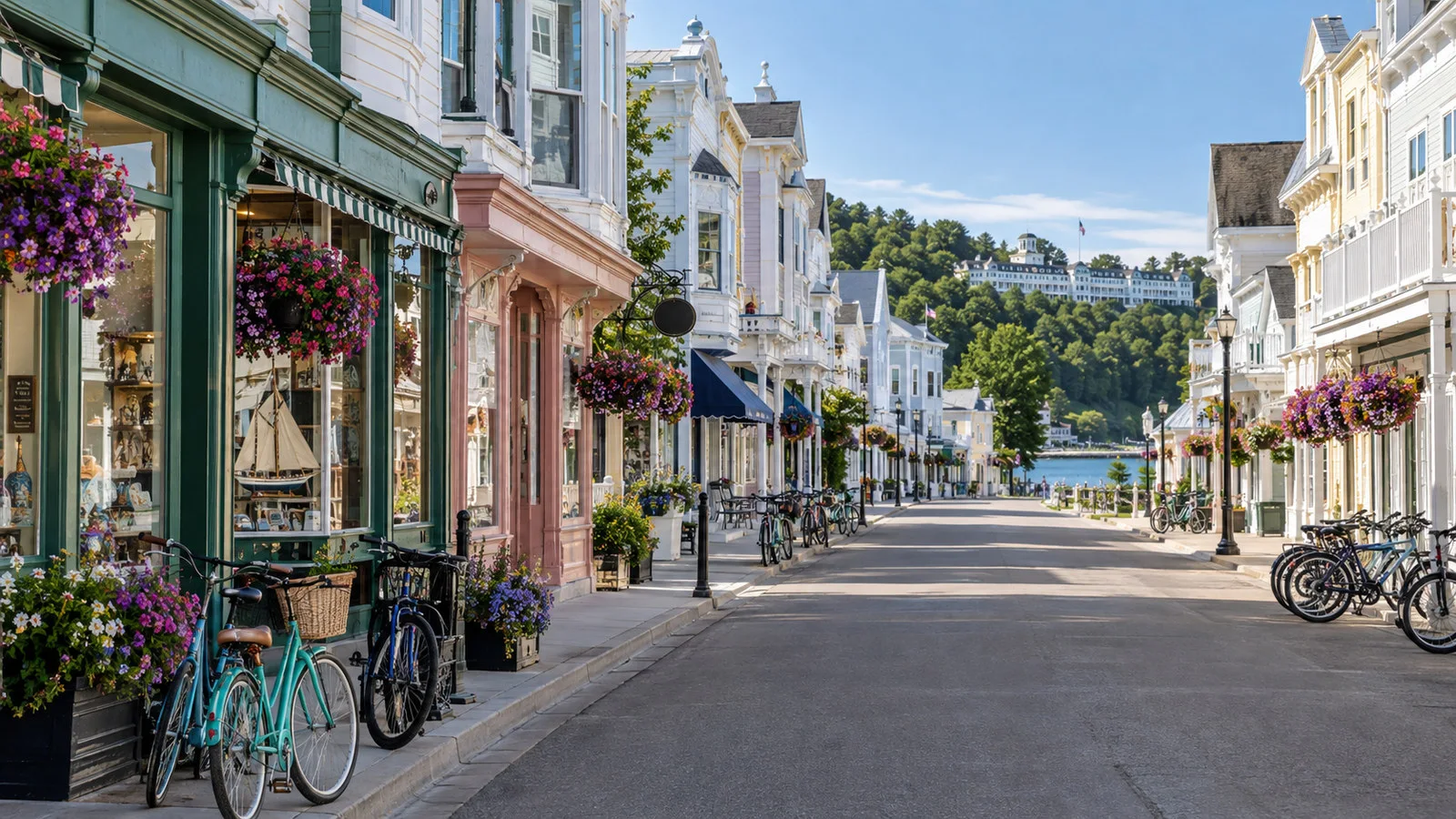
Mackinac Island is wonderfully easy to enjoy once you stop trying to do all of it. Downtown, Fort Mackinac, carriage rides, bicycle rentals, and fudge shops compete for a port day that can disappear faster than a warm sample on Main Street.
The island is car-free, but it is not effort-free. Hills rise quickly behind the waterfront, horses and bicycles share busy streets, and your ship’s exact arrival and return procedure controls the day.
Mackinac Island cruise port quick facts
- Arrival: Follow the ship’s daily instructions for its assigned dock, landing, or boat transfer; arrangements vary by vessel and conditions.
- Town access: Downtown begins at the harbor, so most independent exploring starts on foot.
- Best short-call plan: Downtown plus Fort Mackinac, or downtown plus a carriage tour.
- Getting around: Walking, bicycles, horse-drawn carriages, and horse-drawn taxis.
- Terrain: The waterfront and perimeter road are relatively level, while interior attractions sit on hills and bluffs.
- Return rule: Use the ship’s stated meeting point and all-aboard time, with extra margin for queues and changing lake conditions.
Where cruise passengers arrive
Mackinac Island is a Great Lakes port of call, but there is no arrival method that applies to every ship. Confirm whether your sailing uses a dock, a local transfer boat, or another arrangement in the daily program.
Do not substitute public ferry schedules for the ship’s return instructions. Mainland ferries serve ordinary visitors from Mackinaw City and Saint Ignace, while cruise passengers must follow the process arranged for their vessel.
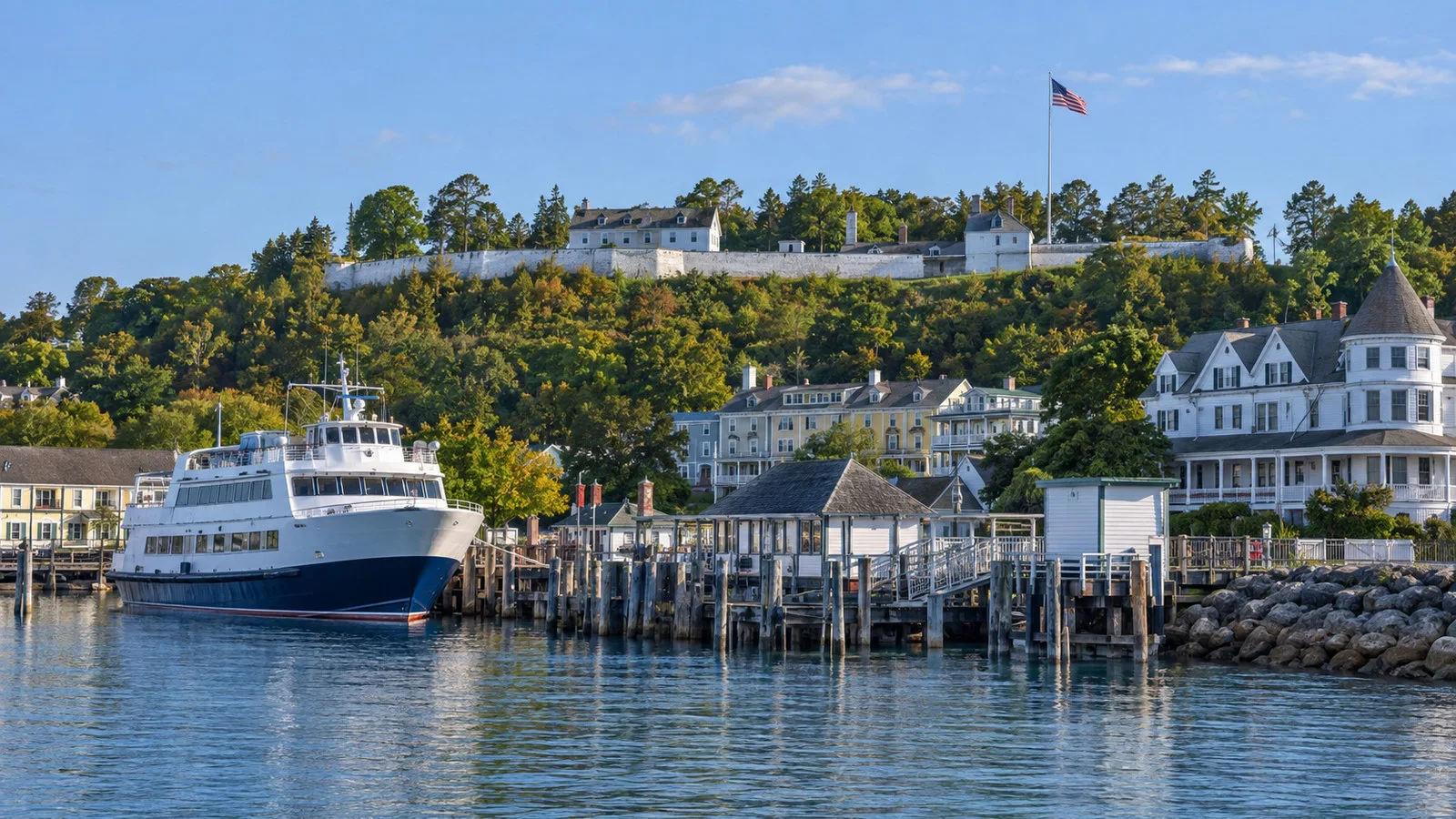
The official Mackinac Island arrival guide places the visitor docks in the heart of downtown. Once ashore, shops, restaurants, and the waterfront are close at hand.
A practical first hour ashore
Orient yourself at the waterfront, photograph the ship’s meeting-point information, and note the walking time back. Main Street is compact, but crowds, bicycles, and horses can slow a hurried return.
If Fort Mackinac is the priority, go there early and choose the most suitable entrance for your mobility. If a carriage tour is the priority, confirm the departure point and next available time before wandering through the shops.
Save fudge shopping for later unless you have a specific store in mind. The town makes impulse buying unusually easy, which is charming right up until your sightseeing clock starts scowling.
Fort Mackinac on a short call

Fort Mackinac sits above downtown and contains restored buildings, exhibits, programs, and commanding harbor views. Check current dates, admission, last entry, and daily programming on the Mackinac State Historic Parks website.
The direct approach is steep, so the route matters as much as the distance. Visitors using wheelchairs or scooters should review the fort’s current accessible-entry guidance before leaving the waterfront.
Allow enough time to see the exhibits you care about instead of racing through every building. A carriage itinerary that includes a fort stop can simplify the climb, but verify what admission and return transportation are included.
Grand Hotel without guesswork

Grand Hotel is one of the island’s visual landmarks, but it is not simply an unrestricted public shortcut. Day-visitor access, fees, dining reservations, dress rules, and seasonal hours can change.
Check the Grand Hotel website before planning to enter the hotel or use its facilities. If time is short, decide whether the hotel itself is the goal or whether a carriage tour and downtown walk offer better value.

Walking, bicycles, and horse-drawn transportation
Mackinac Island has been car-free for more than a century, so normal city transport assumptions do not apply. The official getting-around guide covers walking, bicycle rentals, carriage tours, and horse-drawn taxis.
Walking
Downtown and the waterfront are the simplest walking zone. Fort Mackinac, Grand Hotel, Arch Rock, and interior routes introduce hills, so compare the terrain with the energy you want to spend.
Bicycles
The island perimeter route is about 8.2 miles and mostly flat, but a complete circuit still needs rental time, photo stops, and a repair or delay buffer. Ride predictably, keep right, watch for horses and pedestrians, and follow posted bicycle-parking rules.
Electric bicycle use is regulated, so confirm eligibility and current local rules before renting one. Do not assume every device advertised elsewhere is permitted on the island.
Carriage tours and taxis
A narrated carriage tour is a practical way to see more without cycling, although the route, stops, duration, and accessibility should be confirmed at booking. Horse-drawn taxis are dispatched rather than hailed from the street.
Tour seats and the island’s accessible carriage are limited resources. Travelers with specific mobility needs should arrange details early and verify whether the service returns to the waterfront or ends elsewhere.
Accessibility and mobility planning
The official island accessibility guide says the 8.2-mile perimeter and downtown are mostly flat, while interior attractions sit on hills and bluffs. It also notes that some historic storefronts have steps or narrow doorways.
Ask your cruise line about the full route from ship to shore, including gangway slope, steps, boat transfer, wheelchair handling, and the exact landing. Public ferry accessibility does not automatically describe your cruise ship’s arrangement.
Manual wheelchairs and mobility scooters are available from some island vendors, and advance reservations are recommended for scooters. The island has one accessible horse-drawn carriage in rotation, so availability should never be assumed.
Three good port-day plans
Easygoing: downtown and waterfront
Browse Main Street, sample fudge, have lunch, and enjoy the harbor. This plan minimizes hills and leaves the largest return buffer.
Classic: Fort Mackinac and downtown
Visit the fort first, descend to town, then leave shopping for the final part of the call. Confirm the accessible route or carriage option if the uphill approach is a concern.
See more: carriage tour plus one anchor
Book a carriage tour, then choose either Fort Mackinac, Grand Hotel access, or focused downtown time. Trying to bolt a full bicycle circuit onto the same short call can turn a pleasant day into a stopwatch exercise.
Weather and lake conditions
Great Lakes weather can change quickly, even when the morning looks friendly. Bring a light rain layer, sun protection, and a warmer layer than the mainland forecast seems to require.
Wind, fog, storms, and operational decisions may change the ship’s arrival or return process. Treat instructions from the captain and local crew as controlling, and avoid building an independent plan around a precise transfer time.
Shared streets require attention in any weather. Give horses space, listen for bicycles, use sidewalks where available, and expect wet pavement or fallen leaves to be slippery.
Getting back to the ship
Photograph the posted meeting point and carry the ship’s contact number. A dock name alone may be insufficient when several waterfront operations are active.
Return earlier than the minimum estimate if your route involves a carriage, rental return, steep descent, or crowded downtown street. The ship’s all-aboard time is the deadline, not the time to join the line.
If the ship changes its landing or transfer plan, follow the onboard announcement rather than an old screenshot or public ferry timetable. Crew instructions should settle any conflict.
How Mackinac Island fits a Great Lakes cruise
Mackinac Island sits where Lake Michigan and Lake Huron meet, making it a natural call on many regional itineraries. The exact sequence and time ashore vary, so compare the stop with the other ports on your specific sailing.
For a broader view of route planning, see our Great Lakes cruise ports guide. Mackinac Island’s car-free rhythm makes it distinct from larger urban calls.
Frequently asked questions
Do cruise ships tender at Mackinac Island?
Some sailings may use a boat transfer, while others may have different docking arrangements. Your cruise line’s daily instructions are the only reliable answer for your ship and date.
Can I walk into town from the cruise landing?
Downtown begins at the harbor, and many central shops and restaurants are close to the visitor docks. The precise walk depends on the landing assigned to your vessel.
Is Fort Mackinac worth it on a short call?
Yes, if history and harbor views are priorities and the uphill access works for you. Check current hours and choose an entrance before committing.
Can I bicycle around the island during a port call?
Often yes, provided the weather, rental availability, and time ashore are suitable. Budget for fitting the bicycle, stops, traffic, and returning the rental before heading to the ship.
Do I need cash?
Cards are widely useful, but a small backup amount can help with tips or a temporary payment issue. Confirm payment methods for any specific taxi, vendor, or tour.
Is Mackinac Island accessible?
Downtown and the perimeter are the easier areas, while hills and historic buildings create limitations. Coordinate ship transfer details and any accessible carriage or scooter needs in advance.
Schedules, prices, access rules, and cruise arrival procedures can change. Confirm current details with your cruise line and the official island, park, hotel, and operator websites before travel.