Ganges River Cruise Ports: Kolkata to Varanasi
Many itineraries marketed as Ganges cruises focus on the Hooghly, a distributary of the Ganges system that passes Kolkata. The exact route may continue toward Farakka or farther upstream, so check the day-by-day itinerary.
River depth, silt, tides, fog, and landing conditions can change the schedule. Treat published timing as a plan and follow the captain’s live instructions.
My quick take
A Ganges river cruise is the least European river cruise I know of, and I mean that as a compliment. Forget the Danube model of a quay, a bollard and a five minute walk to a cathedral.
Book a Kolkata to Mayapur or Kolkata to Farakka itinerary if you want the Bengal terracotta temples and the brass workshops. Book the full Kolkata to Varanasi run only if you have the days and the tolerance for a slow, unpredictable river.
The thing I would not do is treat the itinerary as a contract. On this river the captain moves the day around the tide, and the good operators tell you that in the brochure rather than at the gangway.
The quick facts
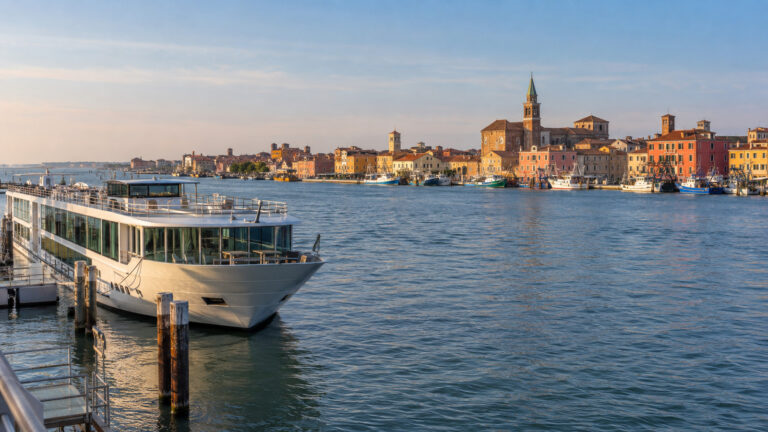
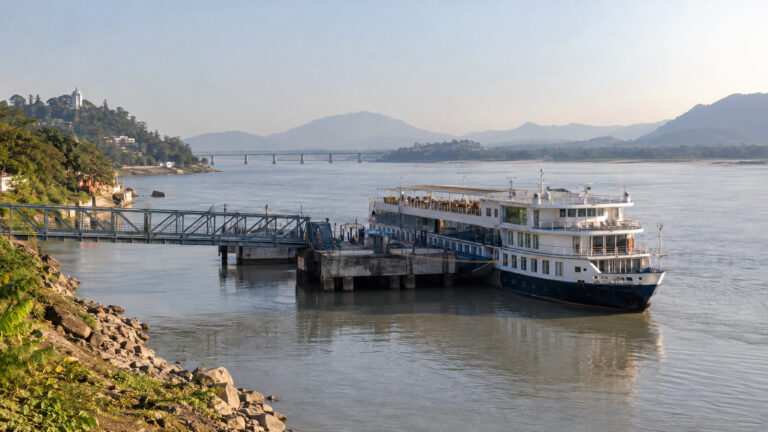
- Where you land: Kolkata itineraries may use city jetties, while upriver calls can use steps, ghats, pontoons, or prepared banks. The operator and pilot choose safe landing points for current conditions.
- How you get ashore: Access may involve a gangplank, ghat steps, a pontoon, or a prepared bank. Gangway angle, mud, rafting, and small craft transfers vary by location and water level.
- Into town: Some Bengal stops may begin with a short guided walk or cycle rickshaw ride, while larger cities and inland sites usually need arranged transportation. Ask the operator for the current landing and transfer plan.
- Currency and language: The Indian rupee, and Bengali in West Bengal, Hindi and Bhojpuri through Bihar and eastern Uttar Pradesh.
- Getting around cost: Many shore movements are arranged by the ship because landings can be remote. Carry small rupee notes for tips, temple donations, and market stalls, but do not assume every stop accepts or rejects cards.
- Time zone: India Standard Time, UTC+5:30, with no daylight saving.
- How often the call is missed: No reliable route-wide percentage is published. Fog, water level, channel conditions, landing safety, and local restrictions can alter a call or transfer.
- Season: Many leisure itineraries are scheduled from roughly October to March, outside the main monsoon period. Exact sailing months vary by route, vessel, and operator.
Why a Ganges river cruise usually means the Hooghly
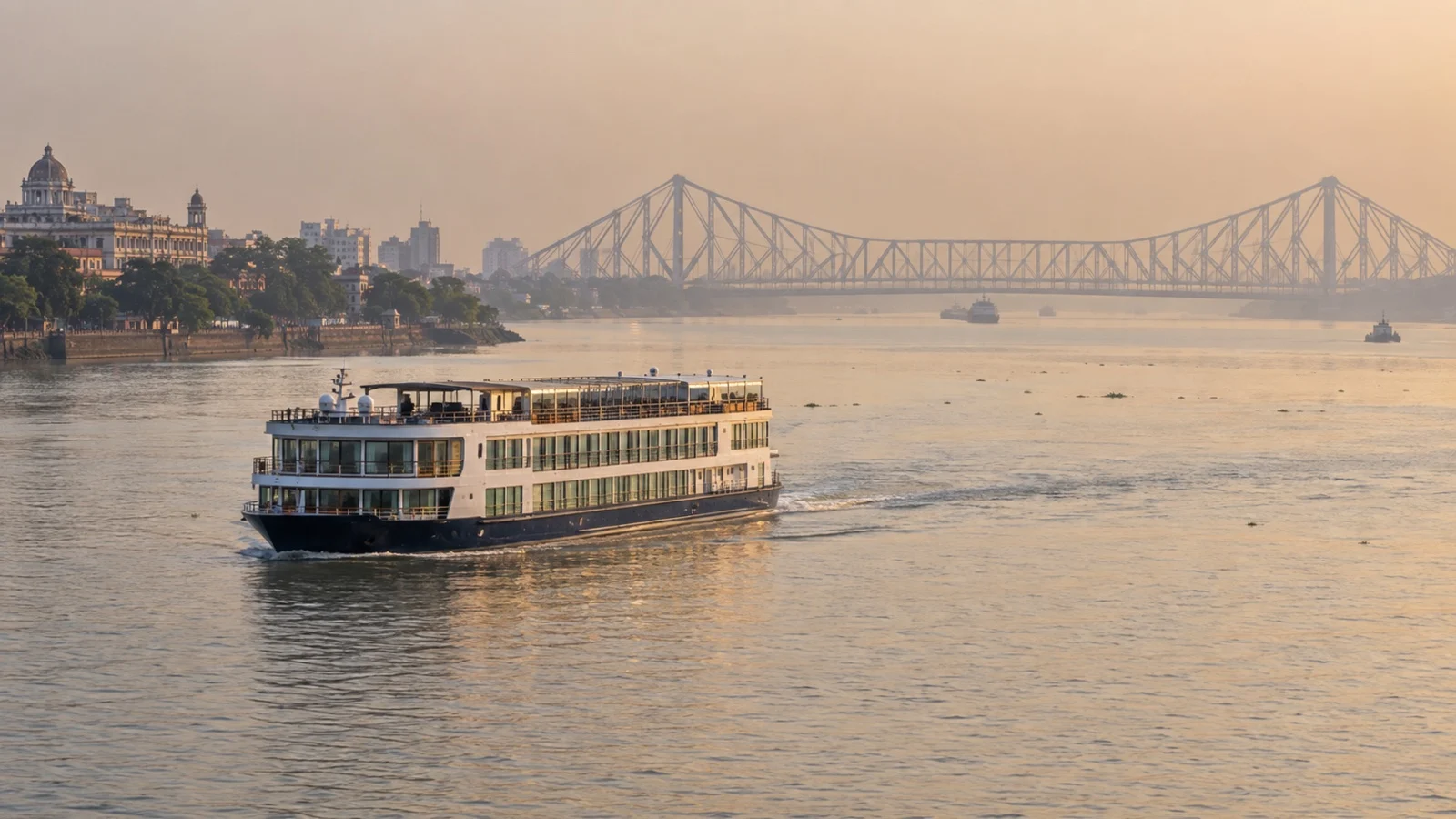
The Ganga splits in West Bengal. One arm continues east into Bangladesh as the Padma, and the other runs south past Kolkata as the Bhagirathi and then the Hooghly.
The Farakka Barrage and its feeder canal influence water movement toward the Bhagirathi and Hooghly system. Navigation and river management are operational matters, so avoid treating the barrage as a simple guarantee of depth or passage.
For a cruise passenger, Farakka is the gate. Ships moving between the Hooghly and the main Ganga pass through the navigation lock there, and that transit is the hinge of any Kolkata to Varanasi itinerary.
Many programs remain within Bengal rather than continuing beyond Farakka. Antara Cruises publishes current routes, durations, and vessel assignments, which should be checked for the specific departure.
Longer cruises reaching Varanasi or traveling beyond Farakka are less common and may involve navigation constraints, border formalities, or overland transfers. Confirm whether the booked vessel travels the entire advertised route.
Silt, tide and sandbars set your schedule
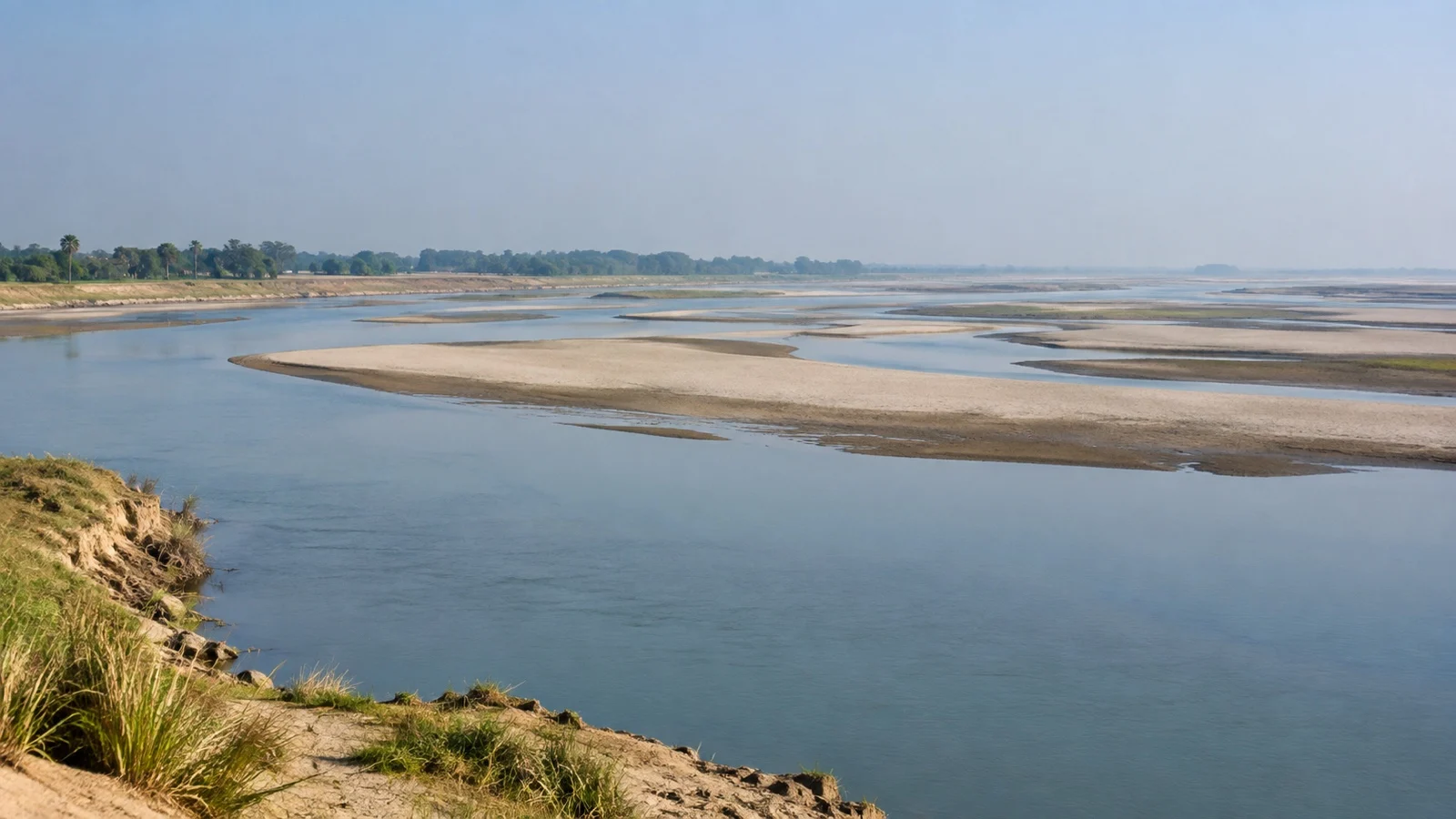
The Ganga carries an enormous sediment load and dumps most of it across the Bengal plain. The channel therefore moves, sometimes within a single season.
River vessels use designs and local navigation knowledge suited to changing depth and channels. If a channel or landing becomes unsafe, the operator may pause, reroute, or adjust the shore plan.
The lower Hooghly is tidal, so some sailing windows depend on the tide as well as traffic and local restrictions. Departure times can shift, and the evening briefing is more reliable than a saved schedule.
Your ship may therefore run at night, sit still all morning, or reverse the order of two villages. None of that is bad seamanship, it is the only way the river can be worked.
Ask the cruise director each evening for the next day’s plan and treat the answer as provisional. If a fixed appointment ashore matters to you, this is not the river for it.
If the idea of depth dictating your itinerary is new, my explainer on how low water actually affects a river cruise covers the European version of the same problem. The Ganges version is the same physics with far less infrastructure to soften it.
The gangplank landing, honestly described
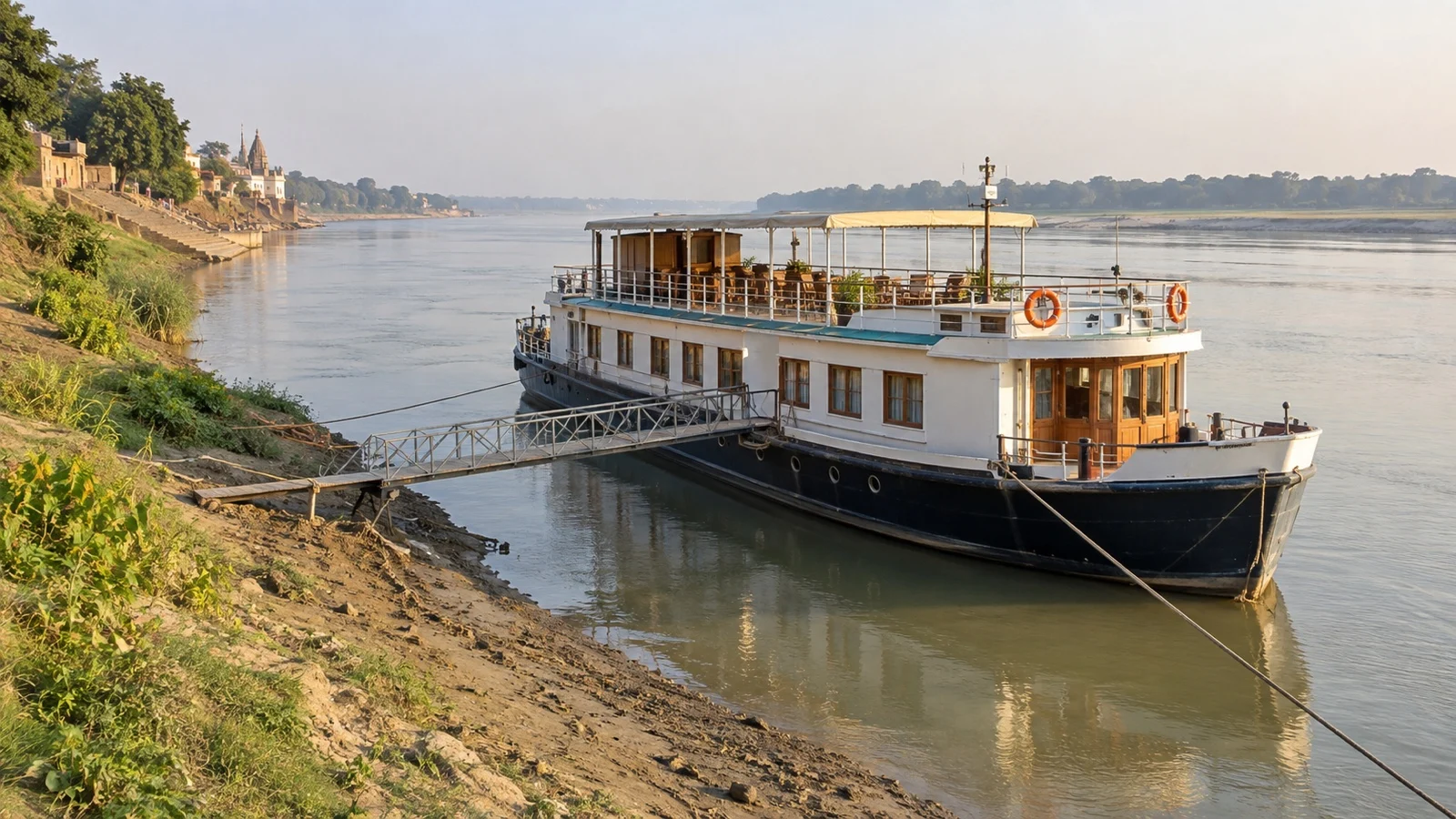
On a European river you step from a gangway onto a concrete quay. On the Hooghly you frequently walk down a plank onto a bank of wet silt, and then up that bank on a path cut by villagers.
Operators may provide crew assistance, handrails, matting, or another landing arrangement, but the setup varies. Ask what support will be available at each stop.
Wear shoes you can rinse and nothing you would mind losing to the mud. Sandals with a heel strap beat both flip flops and heavy boots.
Many religious sites require visitors to remove shoes and follow local dress or photography rules. Choose secure footwear that is easy to remove without rushing.
The Brahmaputra as the Assam alternative
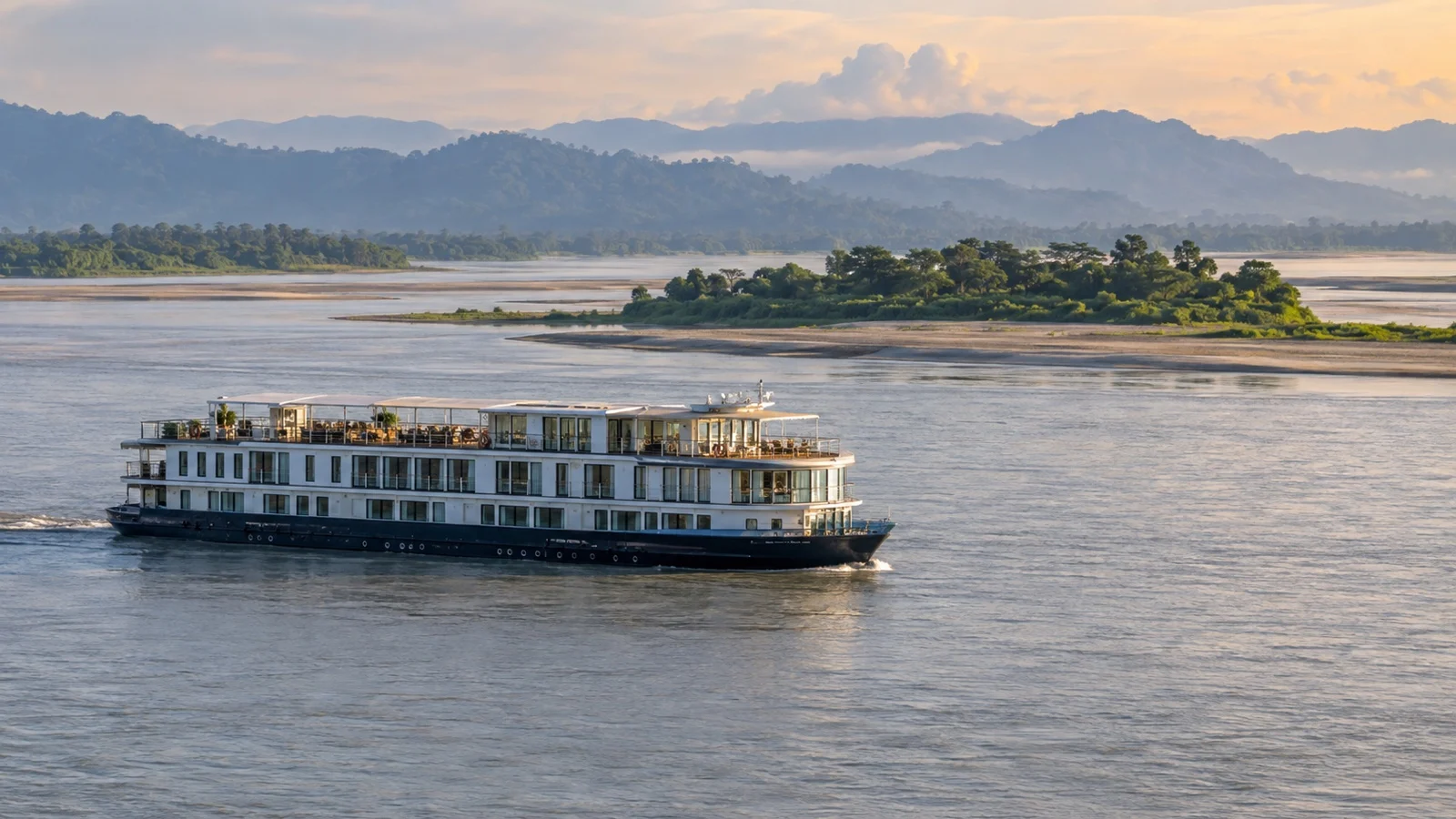
If you like the river but not the temple circuit, the Brahmaputra in Assam is the other Indian option. It is wider, braided, emptier of traffic, and the draw is wildlife rather than architecture.
The Brahmaputra has braided channels, seasonal water changes, and sandbars that shape navigation. Many leisure sailings are scheduled in the cooler, drier part of the year.
Operators are specialized, and schedules can be published well ahead of departure. Check Assam Bengal Navigation and other operators directly for the current ship, route, and season.
Kaziranga National Park is commonly reached by road from a river landing in Assam, while Majuli is known for its Vaishnavite cultural institutions. These calls emphasize wildlife and regional culture more than a typical Bengal temple itinerary.
The stops I would actually spend time on
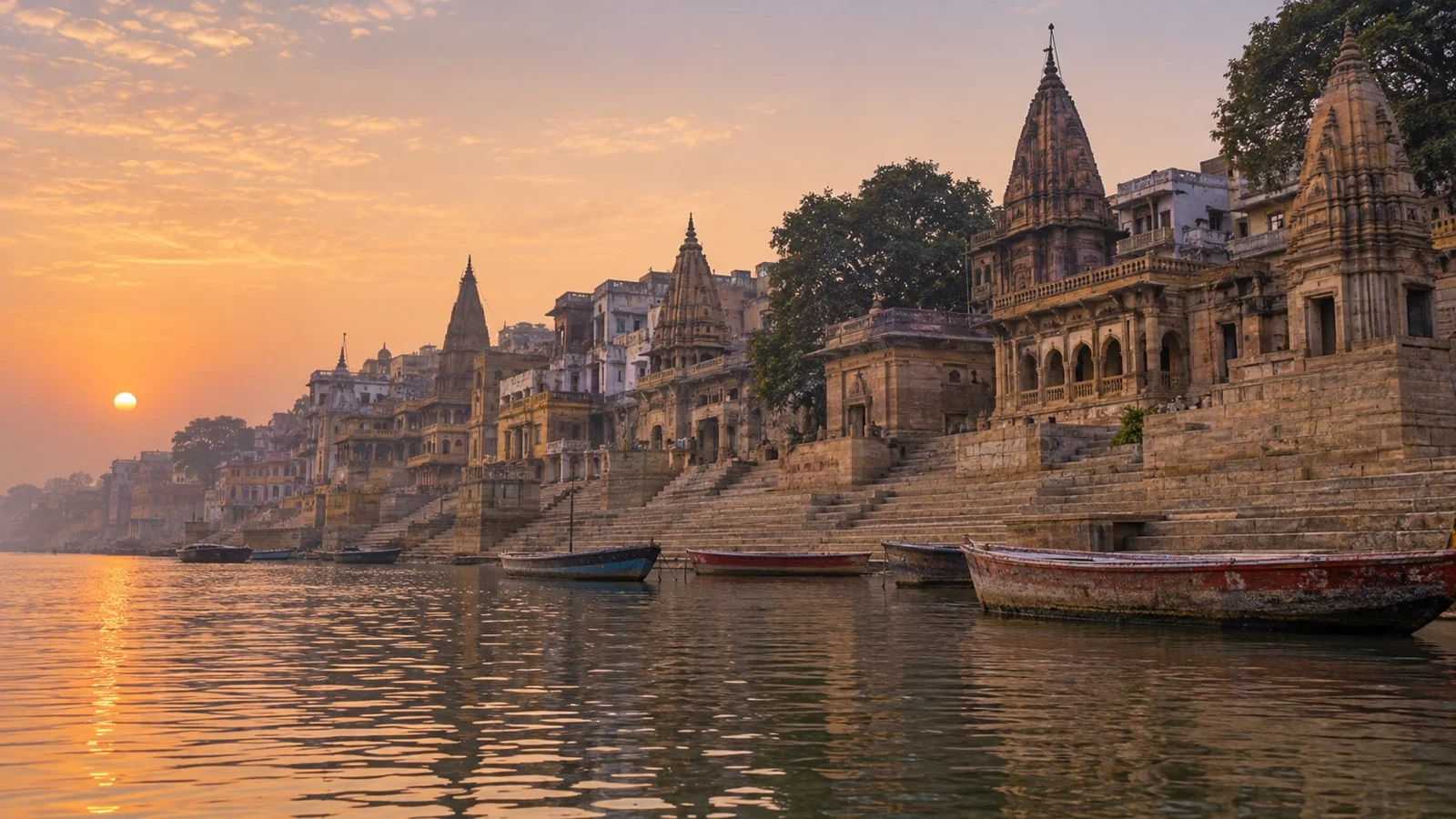
This is the Bengal and Bihar sequence most itineraries draw from, going upstream. No ship calls at all of them.
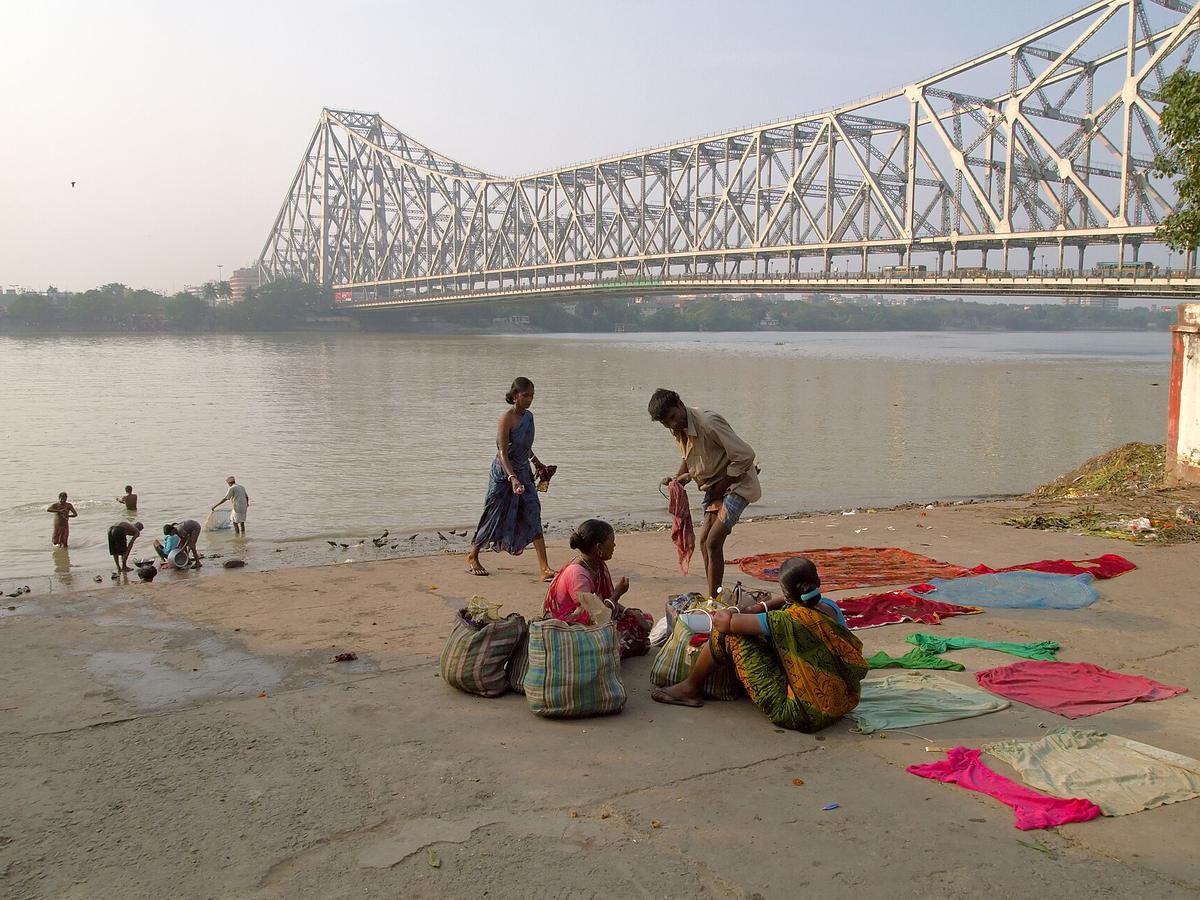
- Kolkata: the downstream base and the best city on the route, with the Victoria Memorial, the flower market under Howrah Bridge and a colonial street grid that rewards walking. Give it two nights on land, because a ship day here is not enough.
- Kalna: the temple town, and the one Bengal stop I would not skip. The Rajbari complex and the ring of small Shiva temples are extraordinary, and you see them by cycle rickshaw from the landing.
- Matiari: a village that works brass and bell metal by hand, audible before you reach the first workshop. It is a working trade rather than a demonstration, which makes it one of the better village calls anywhere.
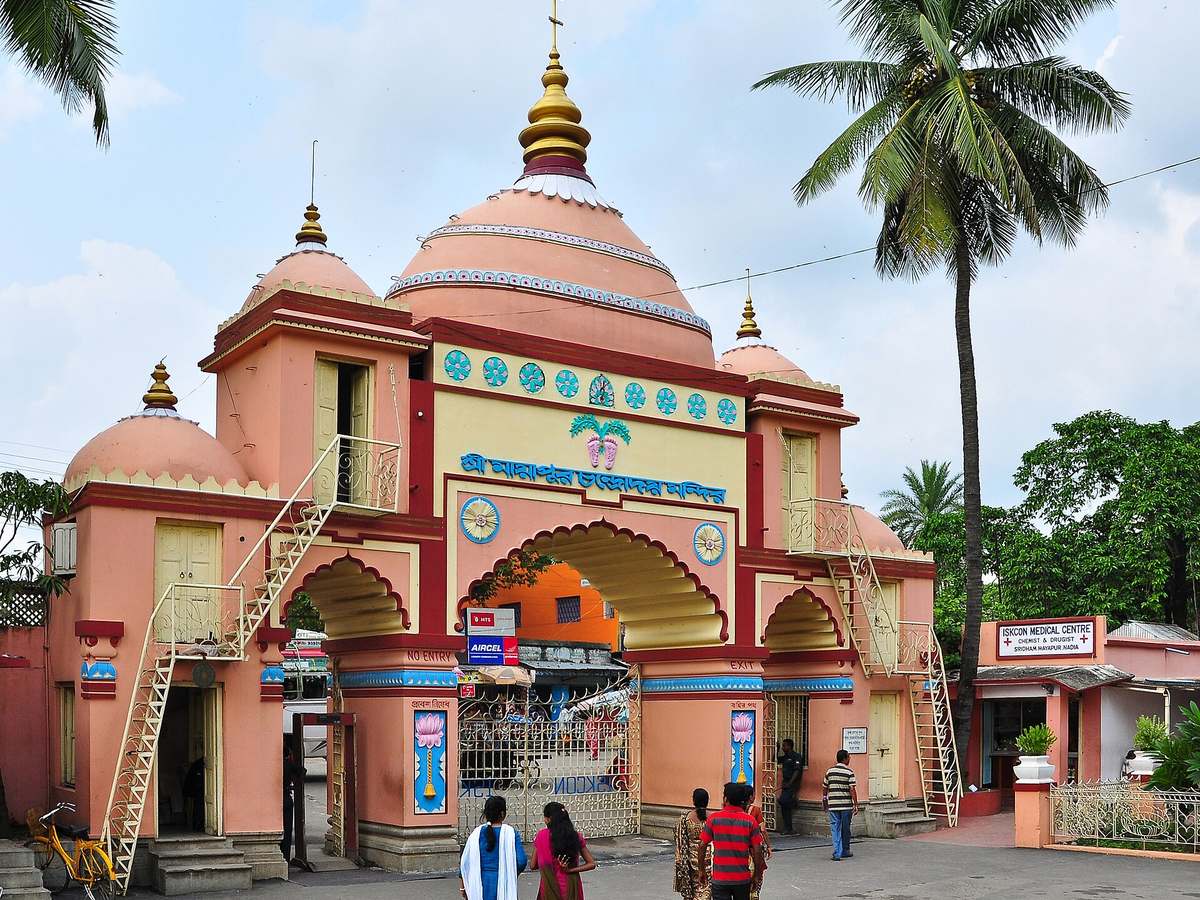
- Mayapur: headquarters of the Hare Krishna movement, with a temple complex that is startlingly large and still growing. Worth seeing whatever you think of the theology, and dress conservatively.
- Murshidabad: the old Nawabi capital, with the Hazarduari Palace and a scattering of tombs and mosques along the Bhagirathi. This is where Bengal’s eighteenth century history happened.
- Patna: the Bihar capital, and a springboard rather than a destination. The reason to go ashore is the UNESCO listed site of Nalanda Mahavihara, inscribed in 2016, where a monastic university ran for roughly 800 years.
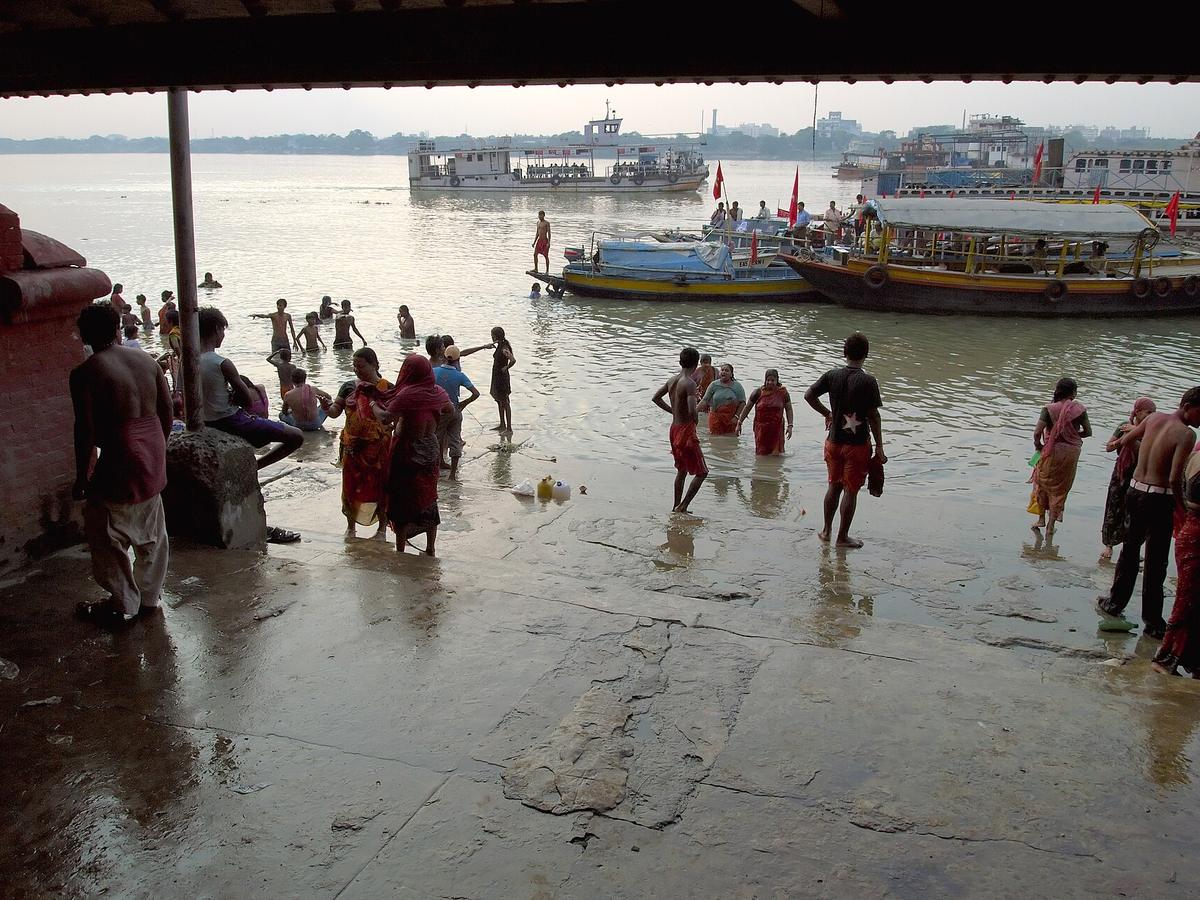
- Varanasi: the reason many people book at all, and the one stop that fully justifies the trip. Incredible India singles out Dashashwamedh Ghat for the evening Ganga aarti and Assi Ghat for the sunrise gatherings, and both are worth the early start.
Wildlife note: UNESCO lists Kaziranga National Park for its floodplain habitat and important population of the Indian one-horned rhinoceros. Wildlife sightings, including river dolphins, are never guaranteed and should be treated as a bonus rather than an itinerary promise.
How I would plan the day
Take the ship’s excursion here rather than improvising. Independent travel from a mud bank in rural Bihar is not the same proposition as walking off a quay in Cologne.
In Varanasi I would do the sunrise boat along the ghats and the evening aarti as two separate outings. They are different cities in the same place, and the middle of the day is the worst part of both.
Build in a spare day at each end, because a river that runs late will not wait for your connection.
If you are stitching this into a wider trip, my overview of India’s cruise ports covers how the ocean calls at Mumbai, Goa and Cochin fit alongside the river options. The two circuits rarely overlap in one vacation.
A realistic word on accessibility
This can be a difficult river cruise region for travelers with limited mobility. Landing conditions and vessel design matter as much as crew assistance.
Some bank landings may not offer a step-free route. Ghat steps, mud, uneven ground, and the distance to transportation can create significant barriers.
Some ships have elevators between decks and some do not, and the smaller wooden vessels certainly do not. If you use a wheelchair or a walker, ask the operator for a landing by landing answer in writing before you pay a deposit.
What can work is a Kolkata based itinerary with more sailing and fewer village calls, enjoyed from the deck. For the contrast, my guide to wheelchair-friendly cruise ports covers where this is handled well.
When to go, and the weather
Many river itineraries run roughly from October to March, when conditions are generally cooler and outside the main monsoon period. Confirm the operator’s actual sailing season because routes and vessels differ.
October and March sit at the hot ends. Daytime highs in Kolkata and Varanasi commonly reach the low 90s Fahrenheit, and the humidity in October has not fully broken.
December and January are the comfortable months on deck, with Kolkata afternoons usually in the high 70s Fahrenheit and nights that drop to the mid 50s Fahrenheit. Varanasi runs several degrees cooler at night and can feel genuinely cold before sunrise, so pack a fleece.
The winter catch is fog. Dense morning fog across the Gangetic plain in December and January delays sailings and, more annoyingly, delays the domestic flights and trains you booked around the cruise.
The practical checks I would make before a Ganges sailing
Get every planned embarkation point, landing, and hotel transfer in writing because Kolkata, Farakka, Patna, and Varanasi do not have one standardized passenger terminal. A seasonal pontoon or bank landing can move with water and silt, so the operator’s live instructions matter more than a saved map pin.
Gangplanks can be steep, narrow, or set onto uneven ground, while rafting may mean crossing another vessel. Ask for the worst boarding gradient, handrails, crew assistance, village surfaces, restroom access, and any small-boat transfer before paying a nonrefundable deposit.
Monsoon levels, winter fog, heat, and river closures can change sailing and road connections, and temple or archaeological sites may restrict shoes, bags, photography, or entry. Check India’s official entry rules, keep documents and medication with you, and follow the operator’s stated meeting and departure times.
Quick answers
Can you cruise all the way from Kolkata to Varanasi:
Some operators publish longer journeys linking Kolkata and Varanasi, but vessel movements, Farakka operations, and overland segments vary. Check the day-by-day route and confirm whether one vessel travels the full distance.
Who operates Ganges river cruises:
Antara Cruises, Assam Bengal Navigation, and international cruise brands may publish Indian river programs. Vessel charters, route names, and trip lengths change, so verify the current operator and ship before booking.
Do the ships dock or tender:
Some calls use a jetty or pontoon, while others use a gangplank to steps or a prepared bank. Small craft may also be used for particular transfers or excursions, so ask about each landing.
Is a Ganges cruise suitable for a nervous traveler:
Ask the operator about medical support, food and water procedures, landing assistance, security, and emergency plans. Schedule variability is common, and no guide can guarantee personal safety or health outcomes.
Do I need a visa:
Requirements depend on nationality, passport, itinerary, and the immigration checkpoints used. Check the official Indian government eVisa portal and your cruise line well before travel.
The last word
This trip suits travelers who want the river itself to be central to the experience. Anyone who needs a fixed quay, easy walking, or a highly predictable schedule should compare the landing and accessibility details carefully before booking.
The closest comparison is Southeast Asia, where the same mix of shallow water, village landings and shifting channels applies. My guide to the Mekong cruise ports is the sister piece, and the packing advice transfers unchanged.
Choose your operator on the specific route and ship, not on the word Ganges in the title. Ask which landings are ghats and which are banks, and whether the itinerary crosses Farakka at all.
Then let it go. The river has been rearranging itself for a few thousand years and it is not going to start consulting your daily program now.
How this guide was researched: This guide was desk-researched on September 12, 2026 using the Inland Waterways Authority of India, the Archaeological Survey of India, the official Indian eVisa portal, UNESCO, and current operator information. It does not claim a personal sailing, landing inspection, excursion, or attraction visit.
Reconfirm the berth, vessel, transfer, attraction access, weather, waterway status, entry rules, accessibility, costs, and all-aboard time because live operations can change. See our Editorial Policy.