Luang Prabang River Cruise Port: UNESCO Old Town and Landing Guide
Luang Prabang brings gilded temples, traditional Lao houses, colonial-era buildings, markets, and two rivers into one remarkably compact historic town. It is an Upper Mekong stop where slowing down delivers far more than treating the day as a race between landmarks.
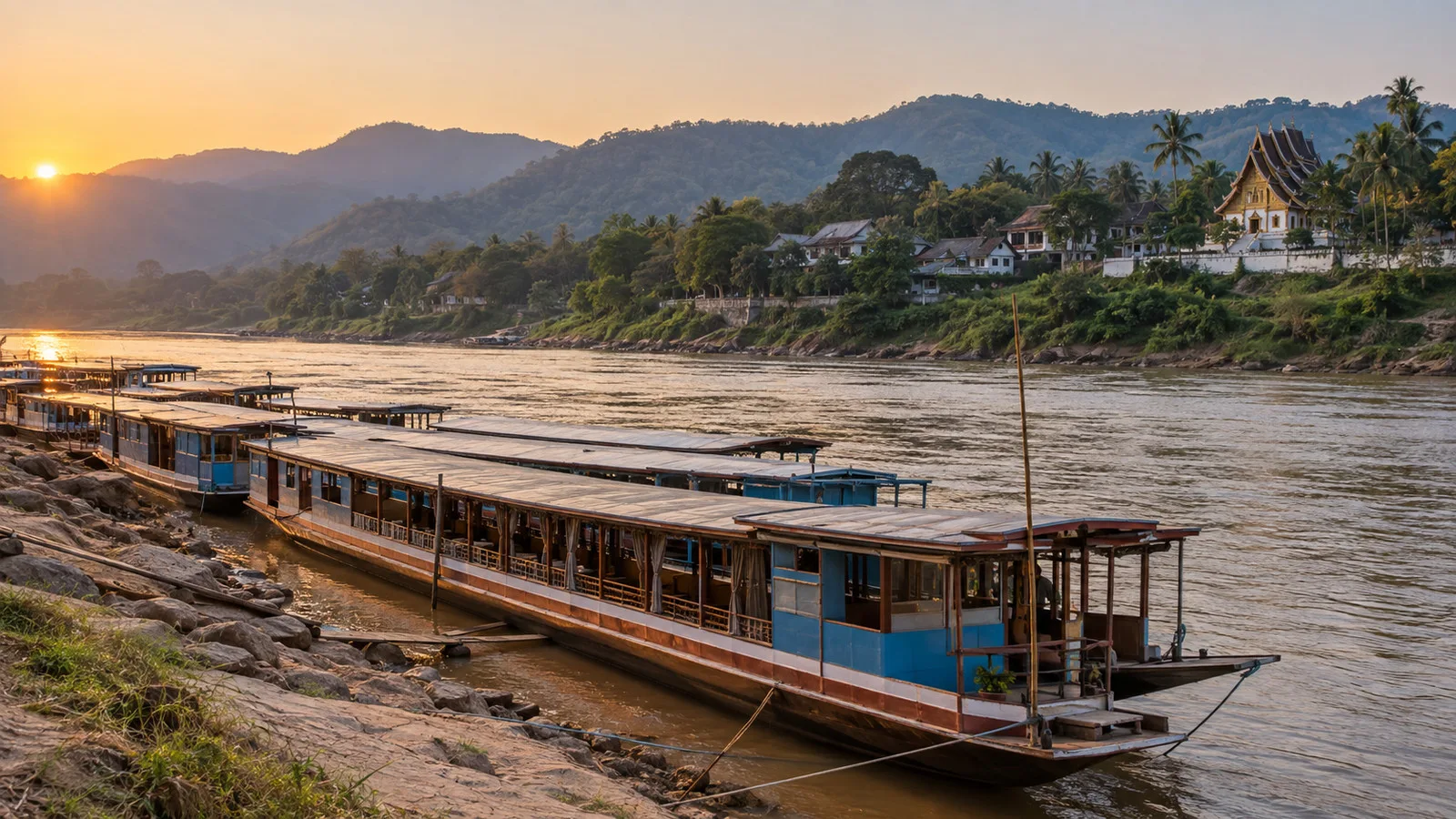
The only untidy part is the word “port.” River vessels use different landings according to the operator, water level, and local conditions, so your first job is to confirm the exact bank and return point.
Quick Facts
- Country: Laos
- River setting: A peninsula between the Mekong and Nam Khan rivers
- Port arrangement: Multiple river landings rather than one universal cruise terminal
- Main sights: Wat Xieng Thong, the historic peninsula, Royal Palace museum complex, Mount Phousi, and local markets
- Best short-call plan: Wat Xieng Thong and a relaxed Old Town walk
- Major excursion: Kuang Si Waterfall, about 30 kilometers from town
- Currency: Lao kip
- Language: Lao, with some English in visitor businesses
- Time zone: Indochina Time, UTC+7, with no daylight saving time
- Accessibility note: Riverbank steps, gangways, broken paving, temple stairs, and heat can be significant
Where River Cruises Land
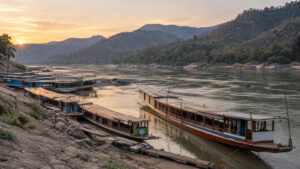
Luang Prabang has no single landing used by every river cruise. Operators choose Mekong-side piers, banks, or transfer points according to the vessel, river stage, itinerary, and local availability.
A central landing may put the UNESCO area within a short walk, while an opposite-bank or more distant location can require a tuk-tuk, shuttle, or local boat. Published instructions for one ship are useful only for that operator and sailing.
Before leaving, ask the cruise director for the landing name, street access, return instructions, and all-aboard time. Save an offline map pin and photograph any temporary operator sign because many riverbank stairways look surprisingly similar later.
The walk up from the water may be more demanding than the distance suggests. Low water can expose a steep bank, while high water may cover familiar steps or move the safe landing elsewhere.
Why Luang Prabang Is a UNESCO Site
UNESCO inscribed the Town of Luang Prabang in 1995 for its exceptional fusion of traditional Lao architecture and urban form with buildings introduced during the European colonial period. The protected place is a living town rather than a gated attraction.
The peninsula is the historic political and religious heart, with royal residences, monasteries, traditional wooden homes, brick colonial buildings, streets, ponds, and riverbanks forming one cultural landscape. Mount Phousi rises at its center, while the Mekong and Nam Khan define its edges.
Families still live in the old neighborhoods and monks continue religious practice in the temples. Conservation barriers, ceremonies, and local routines deserve respect, even when they change the route you expected from a guidebook.
A Practical Old Town Walk
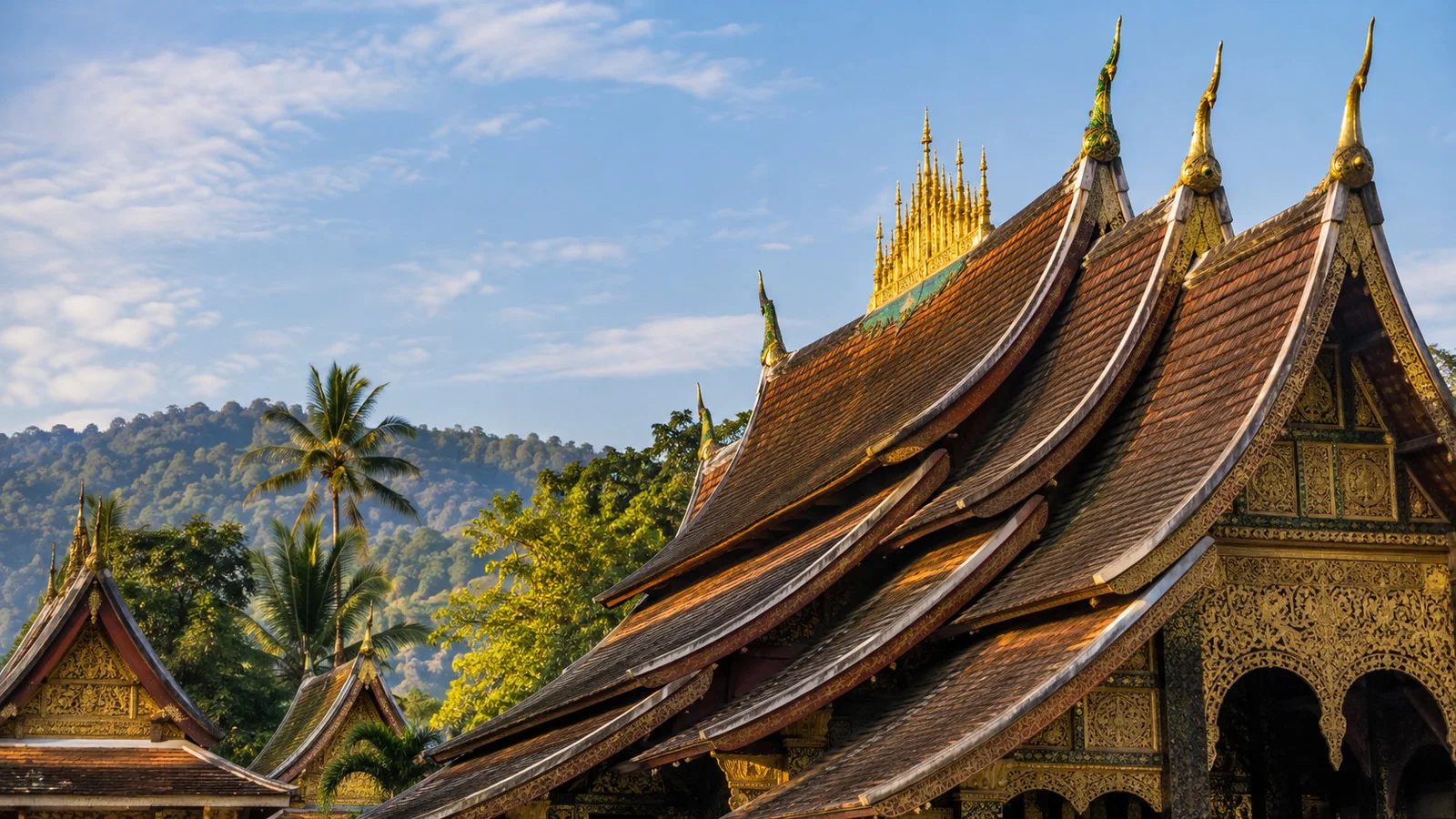
Wat Xieng Thong makes an excellent starting point near the tip of the peninsula. The sixteenth-century complex is among the city’s most important monasteries and rewards time for its sweeping rooflines, mosaics, carved details, and surrounding chapels.
Cover shoulders and knees, remove shoes where directed, keep voices low, and never treat a worshipper as part of the décor. Opening and access can change for ceremonies, restoration, or religious needs, so check locally on the day.
From Wat Xieng Thong, follow the peninsula’s main street toward the former Royal Palace complex. Side streets reveal wooden houses, shaded monastery grounds, small cafés, craft shops, and glimpses of both rivers without requiring a complicated route.
The National Museum in the former palace adds royal history and the revered Prabang image when its galleries are open. Dress rules, bag storage, photography restrictions, and daily hours can change, so read the entrance notice before buying a ticket.
Add the morning market if your ship arrives early, or the night market if it stays into the evening. At either market, ask before photographing people and avoid wildlife products or antiques whose origin and legality are unclear.
Two to three hours can cover Wat Xieng Thong, the main street, and one museum or market at a comfortable pace. Add time for heat, temple clothing, café stops, and the return from your actual landing.
Mount Phousi
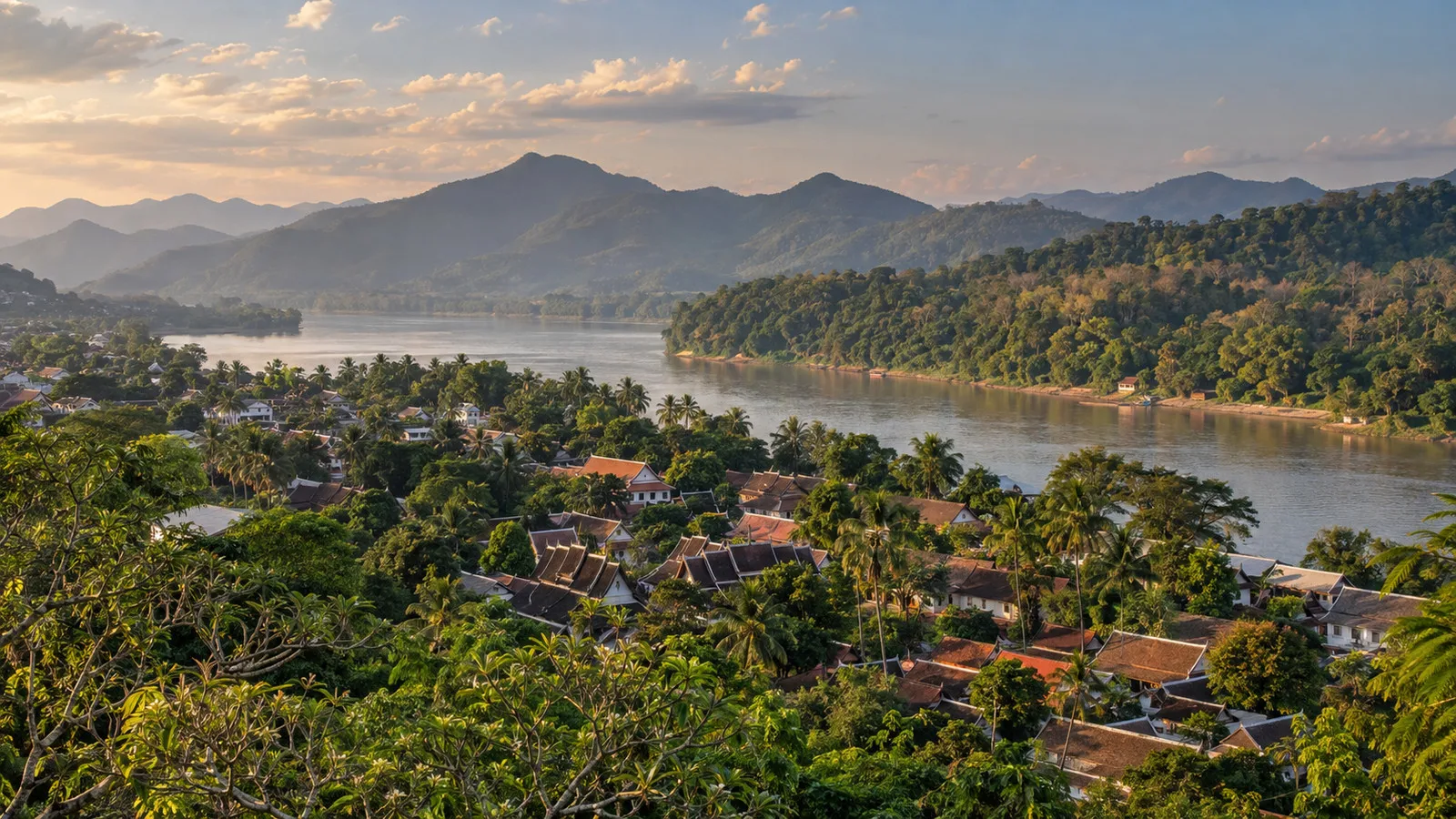
Mount Phousi rises directly from the center and offers broad views over tiled roofs, rivers, and surrounding hills. The climb involves many stairs, and the narrow summit can become crowded around sunset.
Choose the climb only when your mobility, footwear, weather, and schedule all support it. A view is not worth a rushed descent or a late return to a vessel waiting at an unfamiliar riverbank.
For a short daytime call, the temples and streets usually provide more cultural value than spending a large share of the visit on the hill. Sunset works best for an overnight stay with a confirmed route back.
Kuang Si Waterfall
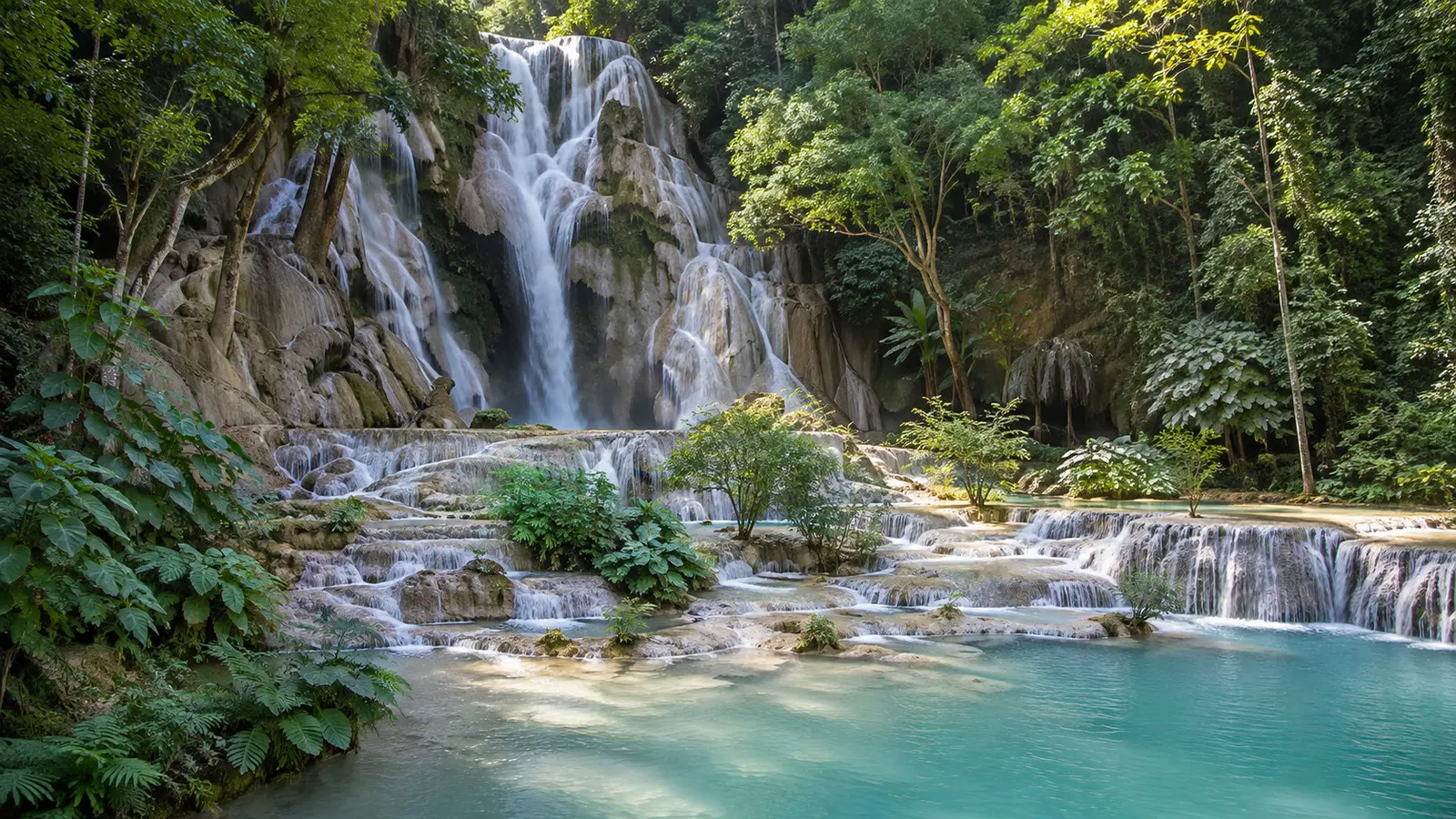
Kuang Si is a beautiful excursion, but it is not part of the walkable historic center. The official Luang Prabang tourism site places the falls about 30 kilometers away and lists shared tuk-tuks or vans as well as private transportation.
Confirm current opening hours and admission with the official tourism office or your cruise operator before departure. Prices, access and operating arrangements can change.
Allow generous road time in both directions and agree on the fare, waiting arrangement, and return point before setting out. A ship excursion reduces the risk of a traffic delay becoming your problem alone.
At the falls, follow signs for swimming pools and changing areas, respect local standards for swimwear, and keep a shirt on away from the water. Paths and pool edges can be slippery, while upper viewpoints add uneven trails and steps.
The on-site bear rescue center can be part of the same visit. Choose Kuang Si for a long call or overnight stay, while a short call is better spent in the historic town.
Pak Ou Caves
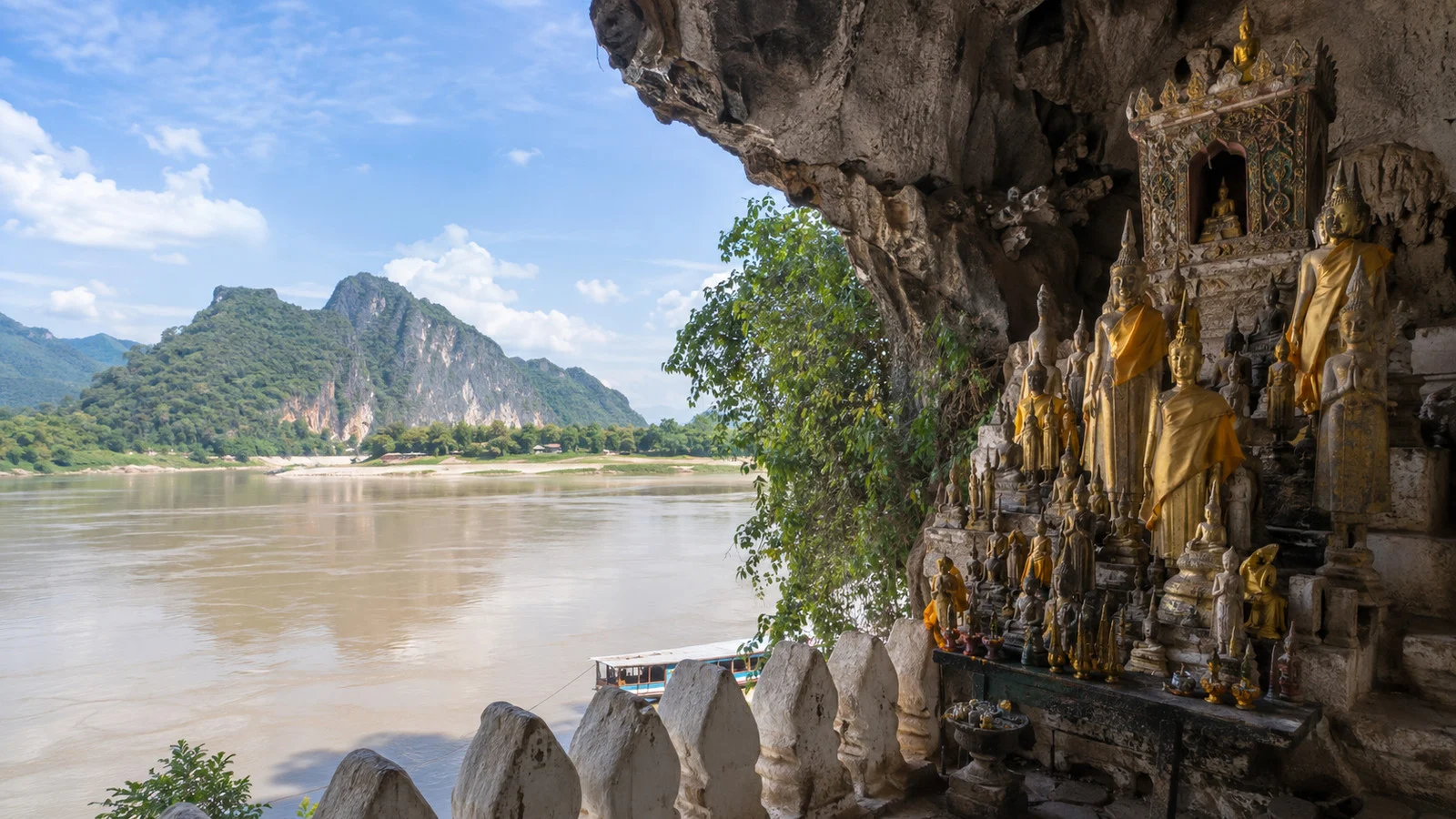
Pak Ou Caves sit upriver where the Nam Ou meets the Mekong and contain thousands of Buddha images. The journey is part of the experience, but it requires a boat or a combined road and river arrangement rather than a casual walk from town.
Many Upper Mekong itineraries include the caves before or after Luang Prabang. Check the cruise schedule before purchasing a separate tour that repeats an included stop.
Cave access involves steps, smaller boats, and variable landing conditions. Travelers with limited mobility should ask exactly which cave level is included and how passengers transfer between vessels and shore.
Morning Alms and Temple Etiquette
The dawn alms procession is a living religious practice, not a performance scheduled for visitors. Watch quietly from a respectful distance, avoid flash, never block the route, and participate only when you understand the appropriate food and behavior.
Do not buy an improvised offering solely because someone promises a better photograph. If you wish to participate, ask your cruise director, hotel, or a responsible local guide to explain the custom first.
Inside monasteries, point feet away from Buddha images and people, avoid touching monks, and ask before taking close photographs. Women should be particularly mindful not to make physical contact with monks or hand objects directly to them.
Food, Coffee, and Markets
Luang Prabang’s food is reason enough not to overfill the schedule. Look for sticky rice, river fish, herb-rich stews, grilled dishes, and local specialties such as or lam, then choose a busy, clean establishment with food cooked hot.
French influence remains visible in baguettes, pastries, and café culture. A coffee beside a shaded street can be a better use of 30 minutes than forcing one more temple into an already crowded route.
Carry kip for small purchases, although some visitor-oriented businesses may quote other currencies. Use an ATM from a recognized bank, count change carefully, and confirm whether a card payment adds a fee.
Water Levels and Changing Plans
Upper Mekong navigation is shaped by changing depth, current, rocks, weather, and the vessel’s draft. A different landing or slower arrival does not necessarily cancel the Luang Prabang visit, but it can alter the walking and transfer plan.
Low water may lengthen the climb from shore, while high water can strengthen current and cover preferred steps. The captain and local crew decide whether a particular landing is safe, so their same-day instructions outrank any online map.
Rafting beside another vessel is also possible. If passengers must cross a neighboring ship, expect additional steps, narrow passages, and a route through public rooms before reaching shore.
Accessibility and Heat
The heritage center is compact, but riverbank stairs, steep gangways, high curbs, broken paving, and temple thresholds complicate an otherwise simple map. Ask about the exact landing rather than accepting a general claim that the town is walkable.
A tuk-tuk can reduce distance, though boarding height and available space vary. Travelers who use wheelchairs or walkers should request specific photos or measurements from the operator where possible.
Heat and humidity can be as limiting as stairs. Carry water, use sun protection, take shaded breaks, and keep lightweight temple clothing in the day bag instead of returning to the ship to change.
Kuang Si adds road transfers, slippery surfaces, and uneven paths. Ask which pools and facilities are reachable without climbing to the upper viewpoints.
Three Sensible Port Plans
A Short Call
Confirm the landing, visit Wat Xieng Thong, stroll the main peninsula street, and add one market or café. Keep the return simple and skip the waterfall.
A Full Day
Choose either a morning Old Town walk followed by Kuang Si or a deeper cultural day in town with museums, temples, food, and Mount Phousi. One substantial extension is enough.
An Overnight Stay
Use the first day for Kuang Si or Pak Ou, then enjoy the night market and a relaxed dinner. Reserve the next morning for the alms tradition only if you can observe respectfully, followed by temples before the heat builds.
Common Questions
Do ships dock beside Old Town?
Some vessels use central Mekong landings near the historic area, but there is no universal pier. Other assignments require a tuk-tuk, shuttle, or local boat transfer.
Can I explore independently?
Yes, once you confirm the landing and return deadline. The peninsula’s main temples, palace complex, markets, and cafés form a coherent walking day.
How far is Kuang Si?
The official tourism site describes a 30-kilometer trip from Luang Prabang. Road time varies, so arrange a reliable round trip and preserve a generous ship buffer.
Is every UNESCO building always open?
No, because Luang Prabang is a living town rather than an open-air museum. Temples, galleries, and historic buildings may close for ceremonies, restoration, holidays, or official activity.
What should a short call prioritize?
Choose Wat Xieng Thong and the historic peninsula. Save Kuang Si for a long call or overnight stay with reliable transportation.
Research Note
This guide was desk-researched on September 12, 2026 using the UNESCO World Heritage Centre, official Luang Prabang tourism and National Museum information, and current local visitor guidance. It does not claim a personal sailing, landing inspection, temple visit or excursion.
Landings, river transfers, attraction access and operating details can change. Confirm the live landing, excursion timing, entry requirements and all-aboard instructions with your operator.
Final Take
Luang Prabang becomes easy once you solve the landing. Give one monastery proper attention, leave room for the streets and food, and let the town feel inhabited rather than reduced to a collection of lovely roofs.
Details can change with river conditions, ceremonies, and local operations, so verify critical plans with your cruise line and official sources. This guide supports general planning and does not replace same-day instructions from the vessel or local authorities.