Honfleur Cruise Port: The Sea Lock That Is Not Your Problem
Honfleur’s sea lock serves the inner basins, not the Seine-front cruise berths. Your real planning questions are whether the ship docks or tenders, whether Honfleur is only a coach excursion, and how you will cover the final mile into town.
The practical take
Honfleur is compact enough for a relaxed day focused on the historic center. Before planning, confirm whether the ship will berth, tender or use a coach transfer from another port.
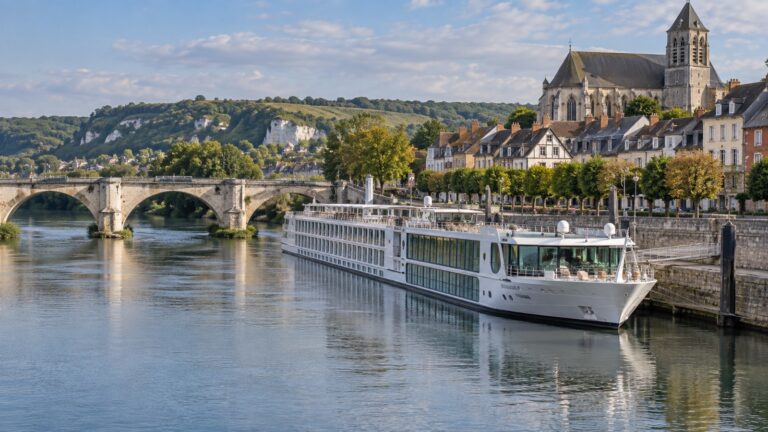
From an alongside Seine berth, walking into the historic center can take about twenty minutes, but the route and public access depend on the assigned quay. Use the port shuttle or a vehicle when it is offered and when distance, weather, luggage, or mobility makes the walk a poor choice.
Check one thing before you book: whether your ship ties up at Honfleur or whether Honfleur is a bus trip from Rouen or Le Havre. Some Seine itineraries visit Honfleur by coach from another port.
The quick facts
- Where you land: the maritime port on the Seine, at one of two cruise berths. The Honfleur Tourist Office lists Quai en Seine #3 at up to about 853 feet and Quai en Seine #1 at up to about 591 feet, both with a maximum draft close to 30 feet.
- How you get ashore: Smaller ships may berth alongside at a Seine-front quay, while larger or operationally constrained calls may anchor and use tenders. Some river itineraries also visit Honfleur by coach from another port, so the cruise documents control the arrival method.
- Into town: The terminal at Quai en Seine #3 sits about a mile from the historic center, and the tourist office publishes a walking map.
- Currency and language: Euros and French.
- Getting around cost: walking can be free from an accessible berth route, while shuttles and taxis vary by call. The Musée Eugène Boudin currently lists full adult admission at 9 euros; verify other attraction and boat-tour prices before visiting.
- Time zone: Central European Time, UTC+1 in winter and UTC+2 in summer.
- How often the call is missed: no reliable portwide percentage is published. Weather, berth availability and tender conditions can change or cancel a call.
The lock, the tide, and what really gates a Honfleur cruise port call
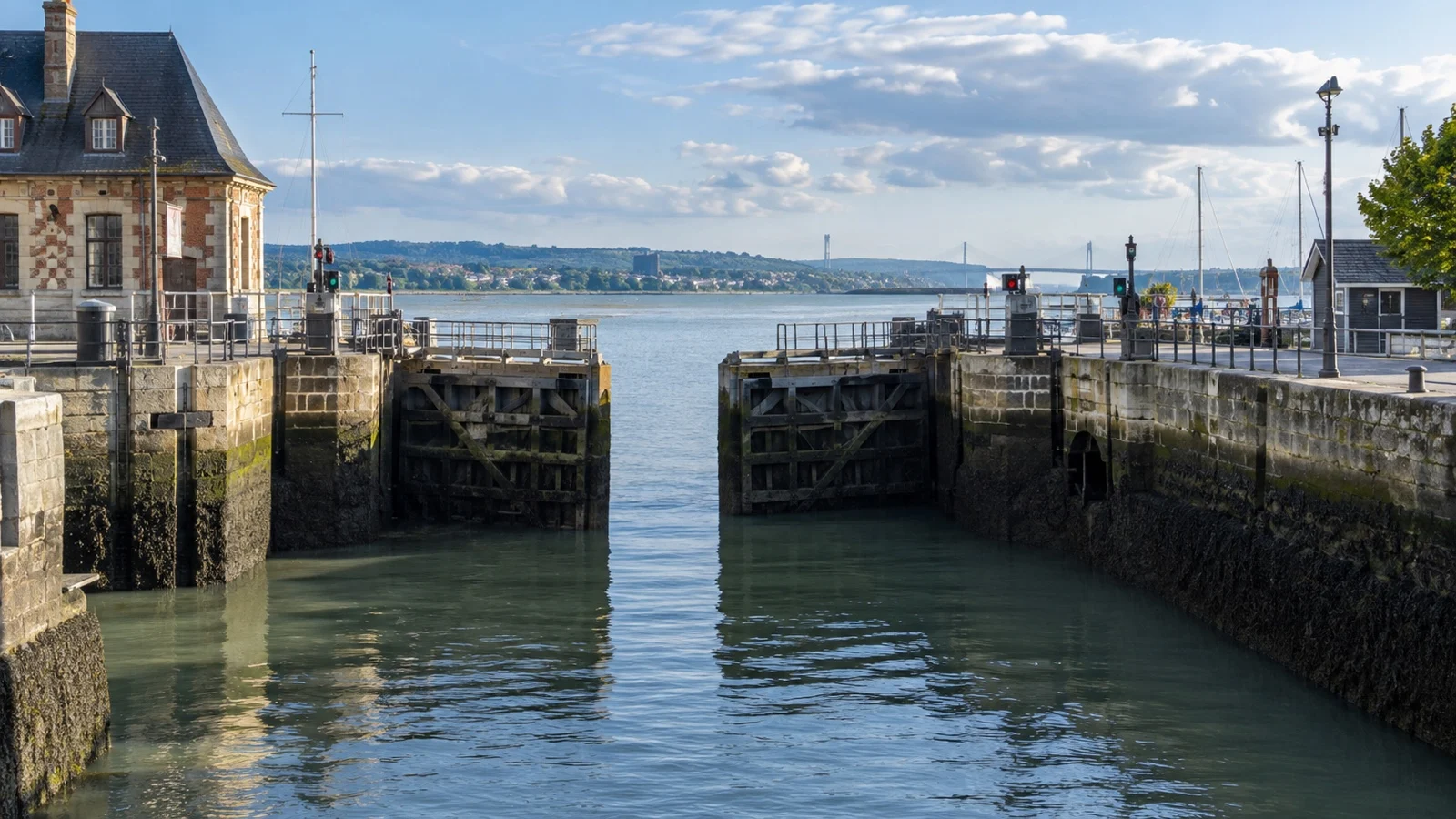
The geography explains the lock question. The avant-port, Quai de la Quarantaine and the Seine-front cruise berths sit outside the inner-basin lock.
Inside it sit the Bassin de l’Est, the Bassin Carnot and the Vieux Bassin, which is the harbor in every photograph of Honfleur ever taken. The inner basins and riverfront berths have different access arrangements.
The sea lock controls the inner basins, not the Seine-front maritime cruise berths. It does not decide an alongside call there, although tide, wind, berth availability, and tender safety can still change or cancel a Honfleur visit.
Ships assigned to the Seine-front berths remain on the river side of the lock. The assigned berth and current port instructions determine access.
Local operators advertise harbor and estuary boat trips that can include views of the basins, lock and Normandy Bridge. Check the current schedule, route and fare because these services are seasonal.
The walk from the quay
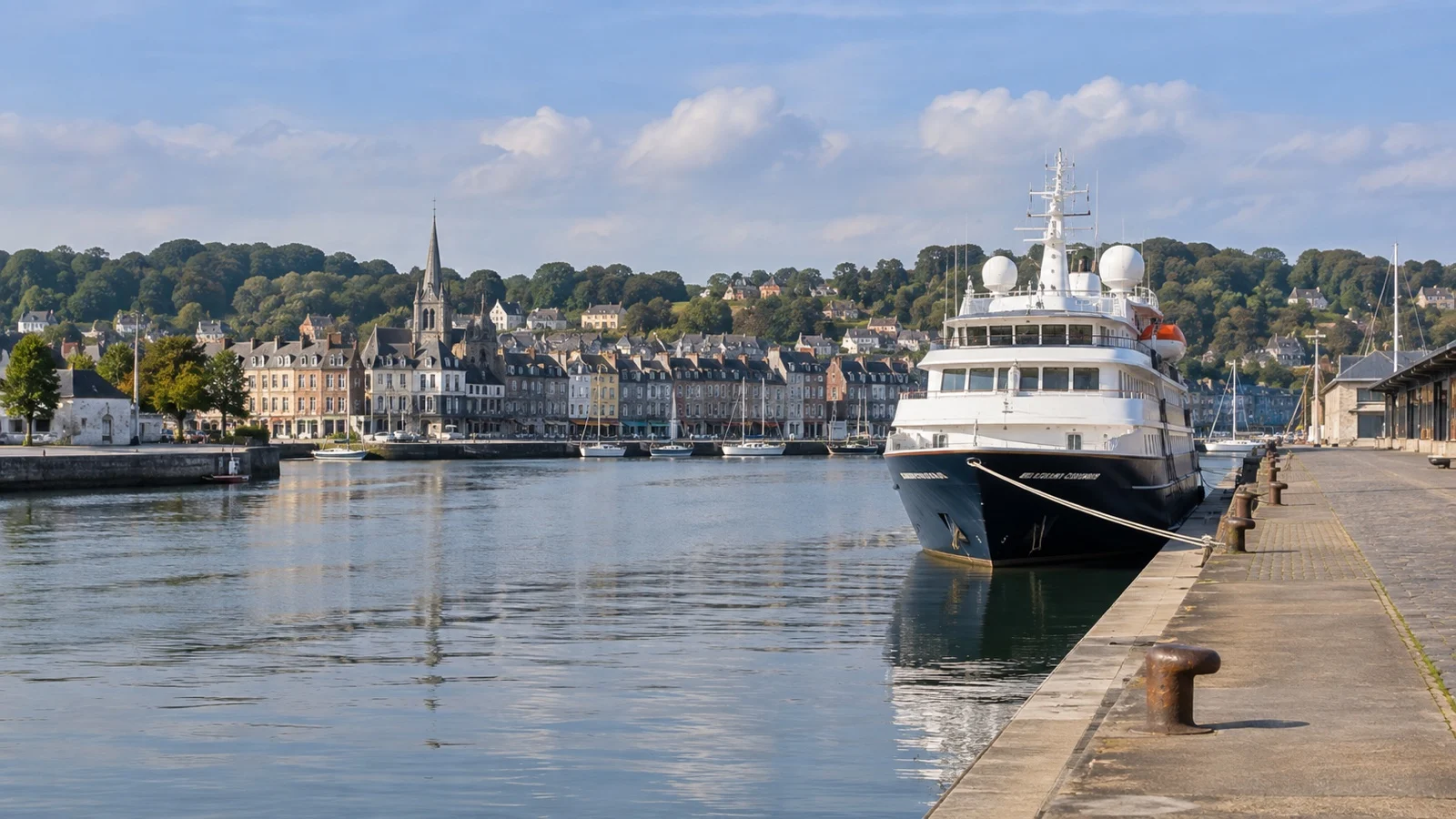
From an accessible Seine berth route, follow the waterfront toward the historic center. Use the official port map and any shuttle instructions provided for the call.
The terminal has customs, tourist information, a shop and restrooms, and published port information includes a walking map. The one real climb in Honfleur is the Côte de Grâce, the wooded hill above the town, and that is where the estuary view lives.
Sainte-Catherine, the church the shipwrights built
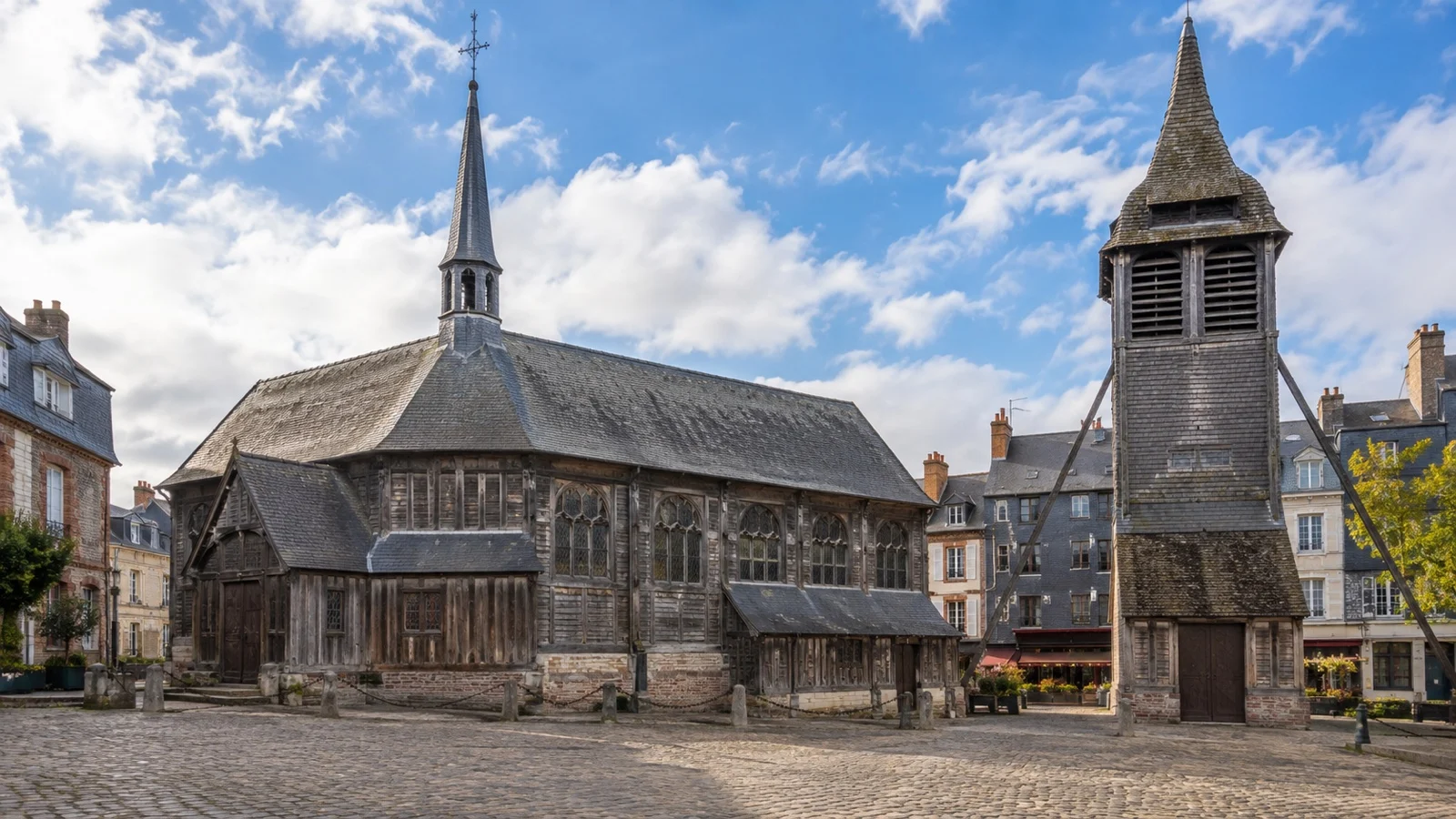
The stone church that stood here was destroyed during the Hundred Years War, and when the English left the townspeople rebuilt in the second half of the 15th century using timber from the Touques forest and the shipbuilding skills they had in quantity. The Honfleur Tourist Office calls the result the largest wooden church in France with a separate bell tower, listed as a Monument Historique in 1879.
The bell tower stands across the square rather than on the church, and that is deliberate. A wooden church with a tall wooden spire on top is a lightning fire waiting to happen, so the builders moved the risk somewhere it could burn on its own.
The tower dates from the 15th and 16th centuries and now holds a display of religious objects. Both it and the church are free to enter, which in a town this heavily visited is worth saying out loud.
Boudin, the Impressionists, and the drinks cabinet
Honfleur’s claim on Impressionism is not marketing. Eugène Boudin was born here, painted the estuary skies obsessively, and taught a teenage Claude Monet to work outdoors.
The Musées de Honfleur run the Musée Eugène Boudin on rue de l’Homme de Bois, built around the drawings and paintings Boudin left to his home town in 1898. The collection also includes works by artists associated with Normandy and an ethnographic section.
The museum currently lists full adult admission at 9 euros and reduced admission at 7 euros. Check official opening days and current combination passes before the visit, especially for the Maisons Satie.
Honfleur sits in the Pays d’Auge, and the tourist office lists calvados producers in the region. Tours, opening hours and transportation should be confirmed directly with the producer.
Cider is the everyday version and calvados is the apple brandy distilled from it. Buy from a distillery or a proper cave rather than a souvenir window, and check your line’s alcohol policy before carrying bottles up the gangway.
Check the arrival method before planning the town
Look for an exact Honfleur berth or an explicit tender instruction in the daily program, not just the destination name. If the itinerary uses Rouen or Le Havre, Honfleur becomes a coach excursion with a fixed departure and return rather than an independent walk from the ship.
For an independent day from an alongside berth, start back 60 to 90 minutes before all aboard and add more time if a shuttle is required. Tender passengers should use the ship’s last-tender time, because a harbor boat ticket or taxi cannot replace the cruise tender after it closes.
Stops worth your time
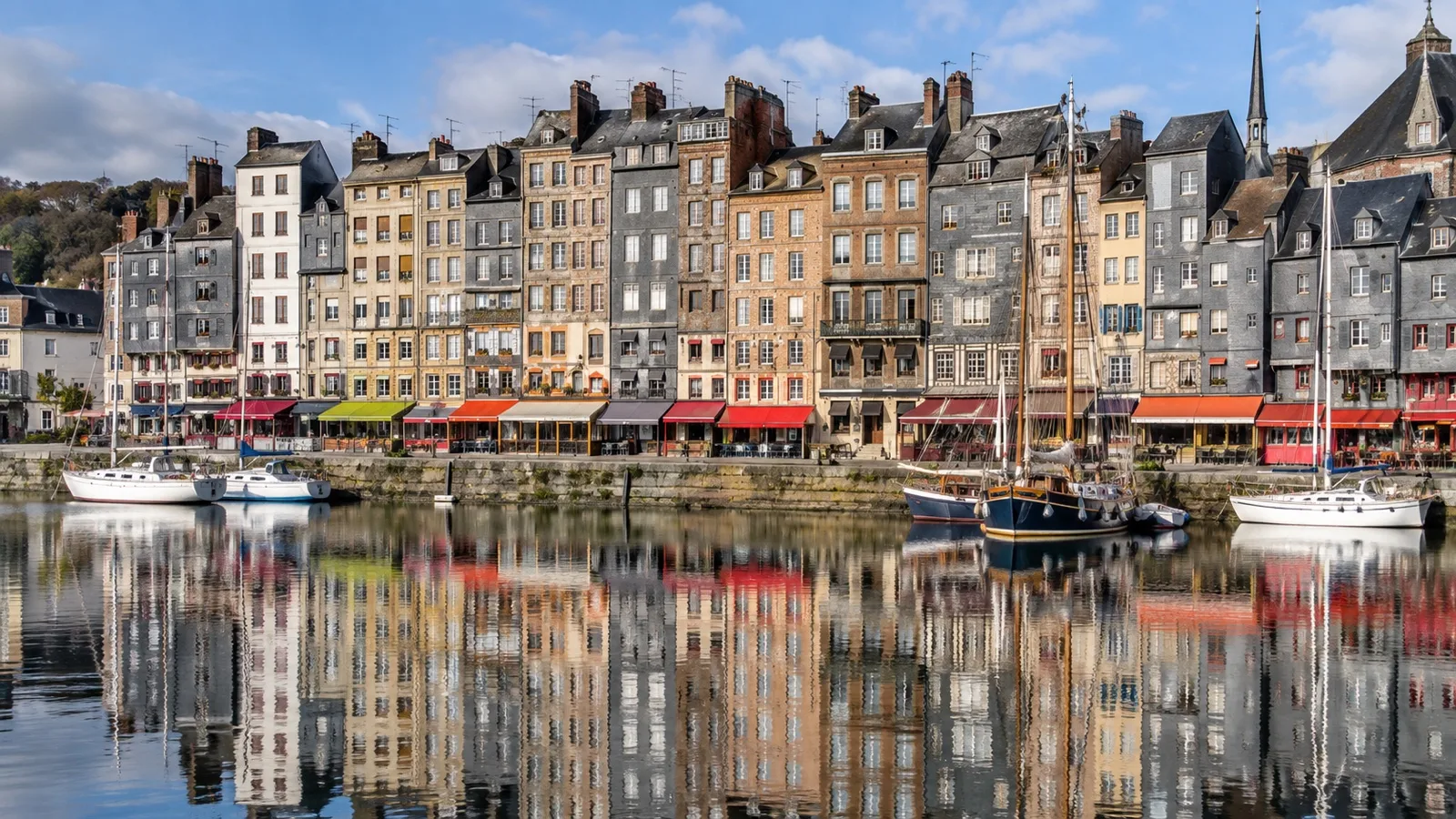
Honfleur is compact enough that you can do most of this list on one call. Roughly in the order they fall as you walk in from the port.
- The Vieux Bassin: the enclosed harbor, dug in 1681 on the orders of Colbert, ringed by narrow slate-fronted houses of the 17th and 18th centuries. It is one of the town’s central landmarks.
- La Lieutenance: the last surviving piece of the fortifications that once enclosed the port, now an interpretation center for Honfleur’s maritime heritage. The terraces give a 360 degree view over the basin.
- Église Sainte-Catherine: the timber church, free to enter, with a nave that looks like two upturned hulls. The bell tower across the square is also free and takes five minutes.
- Musée Eugène Boudin: an hour to ninety minutes, audio guides in French and English, closed Tuesdays. The Boudin skies are the point, and the estuary you just sailed into is in most of them.
- Maisons Satie: not a conventional museum and not to everyone’s taste, but the most memorable 7 euros in town. It is not wheelchair accessible, so ask before committing.
- Chapelle Notre-Dame-de-Grâce: a 17th century sailors’ chapel up on Mont Joli, hung with ship models and paintings left as votive offerings. The esplanade looks out over the estuary, the port of Le Havre and the Pont de Normandie, and entry is free.
Fun fact: the church is older than the harbor it overlooks, by a couple of centuries. Sainte-Catherine went up in the second half of the 15th century, while the Vieux Bassin was only dug in 1681 under Colbert, according to the Honfleur Tourist Office.
How I would plan the day
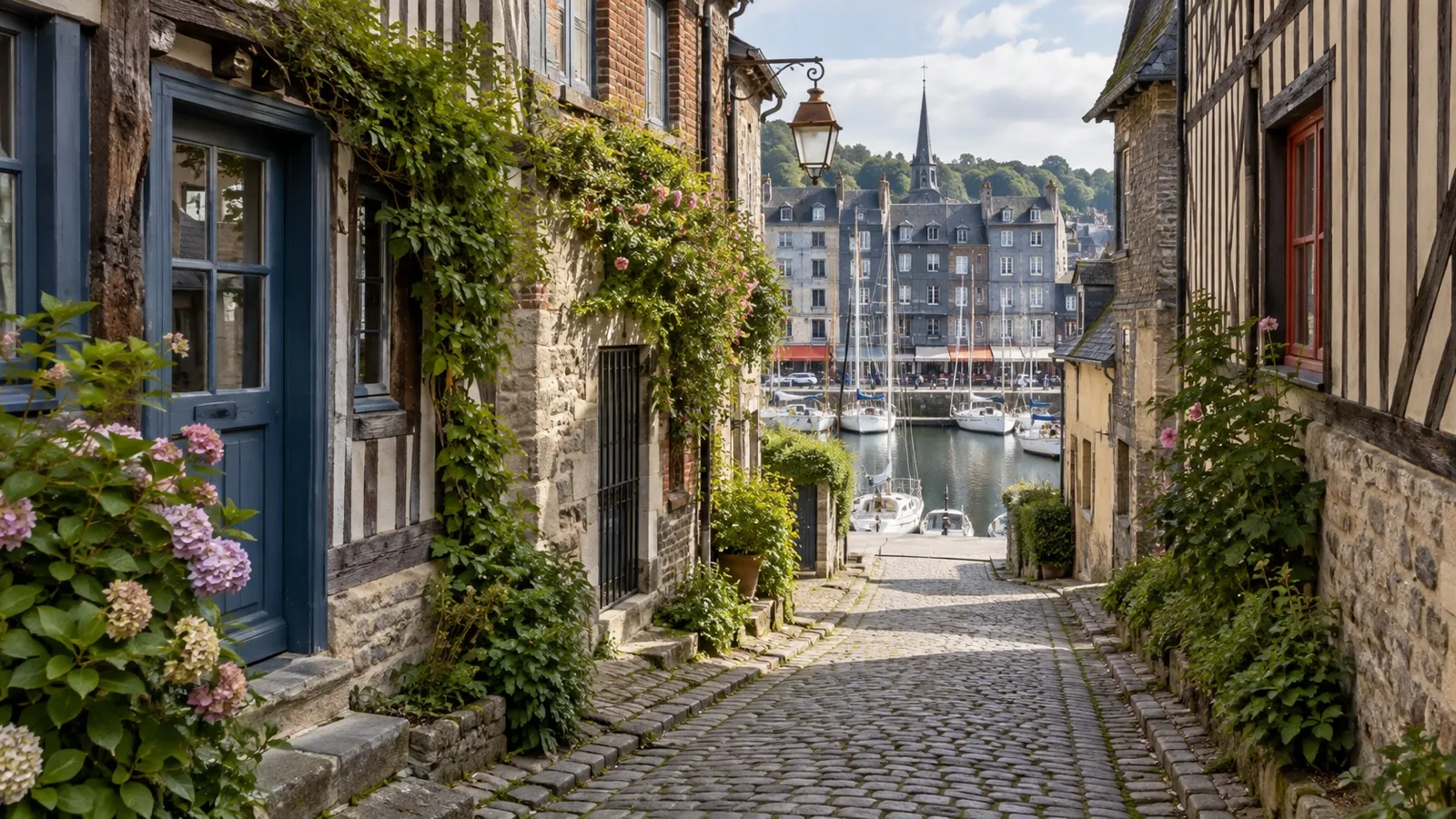
Off the ship early, walk in, and go straight past the Vieux Bassin to Sainte-Catherine while it is quiet. The harbor will still be there in two hours.
Then the Boudin museum, coffee on the quay, and with a longer call the climb to Notre-Dame-de-Grâce in the afternoon. That is the only part of the day that requires any effort.
If you leave town, keep it short. The tourist office puts Deauville at about 9 miles and Beuvron-en-Auge in the Pays d’Auge at roughly 28 miles, and both work as half days.
Long-distance excursions use a large share of a port day. Rouen is roughly 56 miles, Arromanches and the D-Day beaches about 62 miles, Giverny about 84 miles, Mont Saint-Michel about 118 miles and Paris about 124 miles at roughly two and a half hours each way, per the Honfleur Tourist Office excursion list.
A realistic word on accessibility
An alongside quay can be level and the terminal may have accessible facilities, but the ship’s gangway slope and the route through a working port vary. A tender call adds boat steps, motion, and transfer rules that may exclude a wheelchair or scooter even when the town itself is manageable.
The historic center can be the harder half of an accessible visit. Expect cobbles, cambered surfaces, narrow sidewalks and older doorways.
The tourist office lists Sainte-Catherine and its bell tower as accessible to wheelchairs and strollers, but conditions can change. The Maisons Satie is explicitly not accessible, and the Côte de Grâce is a hill, so rule both in or out in advance.
The mile from the terminal is the decision point for most people. If self-propelling a mile on uneven surfaces is not realistic, ask your excursion desk about the shuttle in writing before the day, and read the guide to wheelchair-friendly cruise ports for comparison with the rest of the European circuit.
When to go, and the weather
Normandy is mild, damp and changeable. The 1991 to 2020 normals from Météo-France for Caen-Carpiquet, the nearest long-record station, give an annual average maximum of about 59°F and a minimum close to 41°F.
The same normals record roughly 46 inches of precipitation across about 130 days a year. Pack a light waterproof layer in any season.
Summer often brings milder walking weather and heavier visitor traffic. Check monthly climate normals and the ship schedule rather than assuming a shoulder month will be quiet.
Fall and winter can bring shorter attraction hours and colder conditions on the quay. Confirm seasonal schedules before choosing a long walk or museum plan.
Quick answers
Can you walk into Honfleur from an alongside berth? Often, but the distance and public route depend on the assigned quay, and a tender or coach call has a different starting point.
Use the day’s port instructions and choose the shuttle when the walk is unsuitable.
Does the lock at Honfleur stop a ship assigned to a Seine-front berth? No, because that berth is outside the inner-basin lock.
Tide, wind, berth availability, and tender safety remain separate operational limits.
How big a ship can berth at Honfleur? The published dimensions for Quai en Seine #3 reach about 853 feet with a draft limit close to 30 feet, but length and draft are not the only operating limits.
Larger or differently configured ships may anchor, tender, or call elsewhere.
Is Honfleur a docking port or an excursion?
It is both, depending on your itinerary. Some ships tie up here and some lines sell Honfleur as a motorcoach morning from Le Havre or Rouen, so confirm which one you have bought.
What should I actually buy in Honfleur?
Cider or calvados from a distillery or a real cave rather than a quayside souvenir shop. Check what your line allows you to carry aboard before you commit to bottles.
The last word
Honfleur works well as a compact port day centered on the historic harbor. The actual walk and available time depend on whether the ship berths, tenders or visits by coach.
The inner-basin lock does not control a ship assigned to a Seine-front cruise berth. Your real risks are estuary weather and the chance your line never intended to dock, which is the same question behind how a Le Havre call becomes a Normandy motorcoach day.
If you are still building the itinerary, it helps to see where Honfleur sits among the other stops on the river, and the overview of Seine river cruise ports covers that route. The natural pairing is with Rouen, which is the big cathedral city upstream and a completely different sort of day.
Honfleur may be walkable from an alongside berth, but the assigned quay, port access and mobility needs matter. Compare it with the guide to walkable cruise ports before deciding whether to use a shuttle.
How this guide was researched: This guide is based on independent research, not a first-hand Honfleur port call. Official port, tourism, museum and weather sources were used where available. Berth dimensions, terminal facilities and excursion distances come from the Honfleur Tourist Office’s cruise pages, museum details from Musées de Honfleur, and climate normals from Météo-France’s 1991 to 2020 records for Caen-Carpiquet.
Logistics and time-sensitive details were reviewed on September 12, 2026. See our Editorial Policy.