Seine River Cruise Ports: Vernon and Les Andelys for Giverny and Chateau Gaillard
Vernon is the Seine berth for Giverny, while Les Andelys is the stop for the steep Chateau Gaillard climb. Both days work best when you plan the first-mile transfer, attraction access, mobility limits, and return buffer before leaving the ship.
The practical take
Giverny can be crowded, so an early timed entry is useful when the ship’s schedule allows it. Confirm whether the excursion includes admission and transportation.
At Les Andelys, the riverfront and Chateau Gaillard require different plans. The castle stands above the town at the end of a steep, uneven climb.
Choose Giverny for Monet’s house and gardens, or Les Andelys for the castle and elevated Seine views. Attraction hours, mobility and transfer time matter more than the distance between the ports.
The quick facts
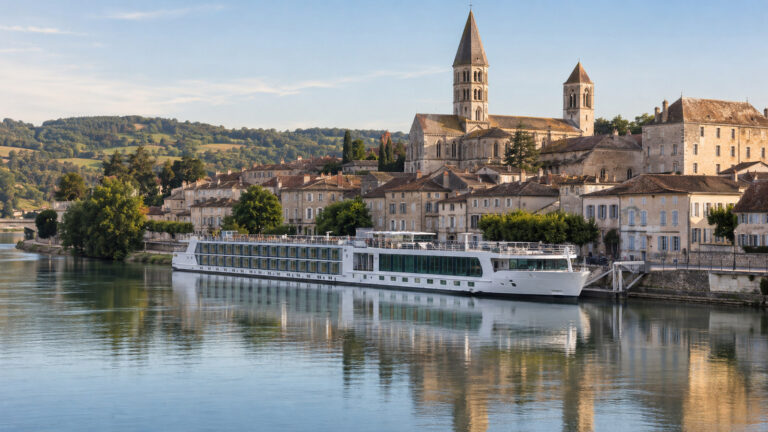
- Where you land: public river quays, not cruise terminals. Both Vernon and Les Andelys put you on a plain stretch of riverbank with a road behind it.
- How you get ashore: European river ships normally use a gangway to a public quay, sometimes through a rafted vessel. The gangway slope, deck alignment, and berth surface vary with the day’s assignment, and neither Vernon nor Les Andelys has an ocean-style passenger terminal.
- Into town: Les Andelys and Conflans are walk-off ports in the literal sense, with the old town starting within a few hundred feet of the gangway.
- Giverny opening season: the Fondation Claude Monet opens 1 April to 1 November, daily, 10am to 6pm with last admission at 5.30pm. It is shut for the whole winter, so Christmas market Seine sailings do not include it.
- Currency and language: The euro, and French; English is fine at Giverny and patchy elsewhere, so learn bonjour and use it before every sentence.
- Getting around cost: the seasonal Giverny shuttle links Vernon-Giverny station and the village on published operating dates. Ship coach inclusion varies by fare and itinerary, so check before buying separate transportation.
- Time zone: Central European Time, UTC+1, moving to UTC+2 for summer time across nearly all of the Seine season.
- How often the call is missed: no reliable portwide percentage is published. River level, berth, lock and operating conditions can change or replace a call.
Vernon, and the Giverny timing problem
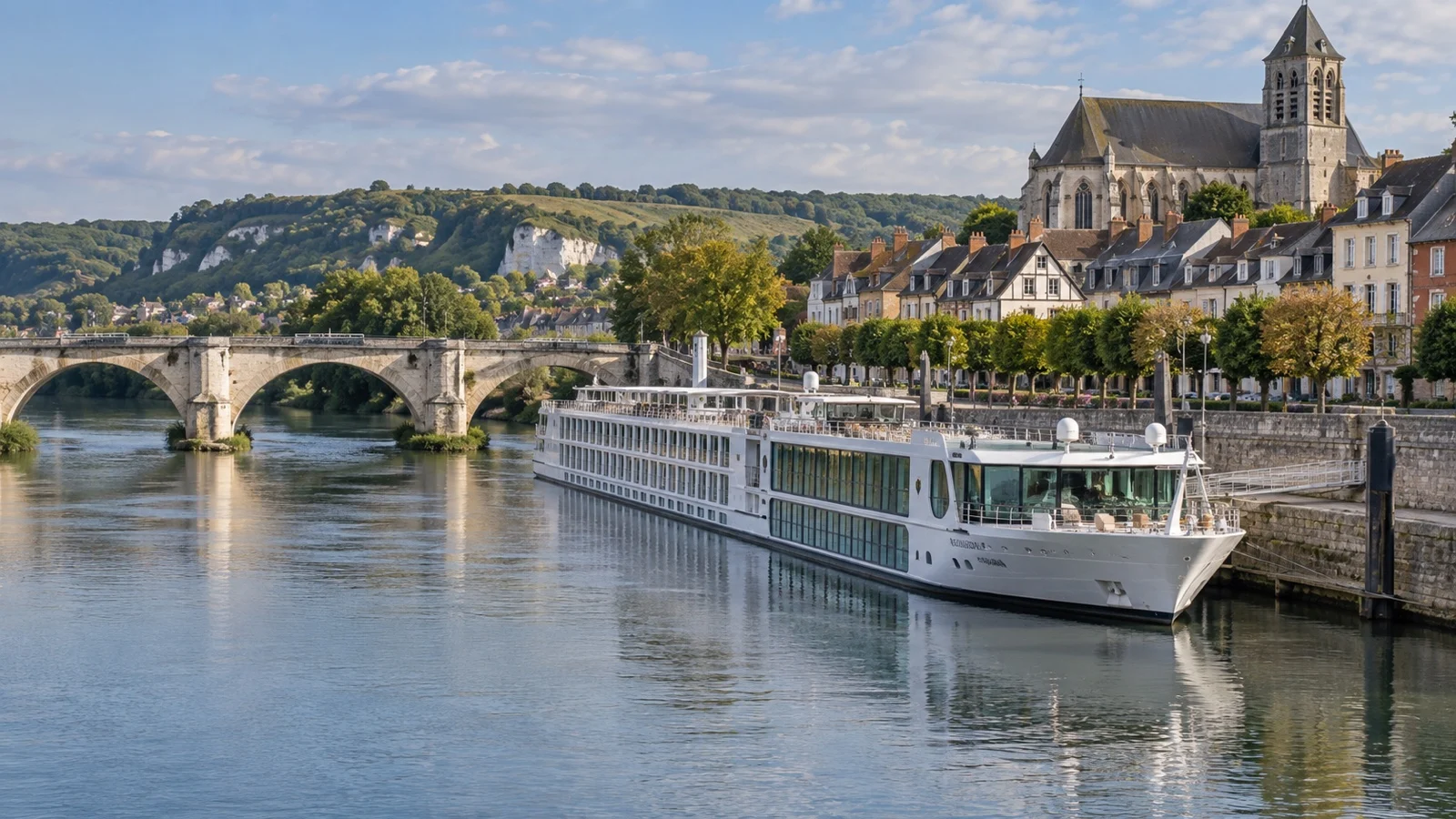
Vernon is a market town with a medieval mill standing on old bridge piers. Many cruise schedules use it as the transfer point for Giverny, but the old town can fill spare time around an excursion.
Giverny sits about 4 miles east of Vernon on the far bank. The Fondation Claude Monet gives its season as 1 April to 1 November and its hours as 10am to 6pm, with the last admission at 5.30pm.
The published season matters when comparing itineraries. Confirm the current dates directly with the Fondation because winter Seine sailings may not include the house and gardens.
The Fondation strongly recommends booking online in advance, and it is explicit that once the online allocation is full you should expect long lines at the gate. A ship excursion normally handles admission and transportation, while independent visitors must coordinate both.
If you do go independently, the seasonal SNgo Giverny shuttle runs from April to November between the Vernon-Giverny train station and the village, with intermediate stops in Vernon. It carries people on a first come basis within the capacity of the bus, so it is not a guarantee.
Les Andelys and the climb to Chateau Gaillard
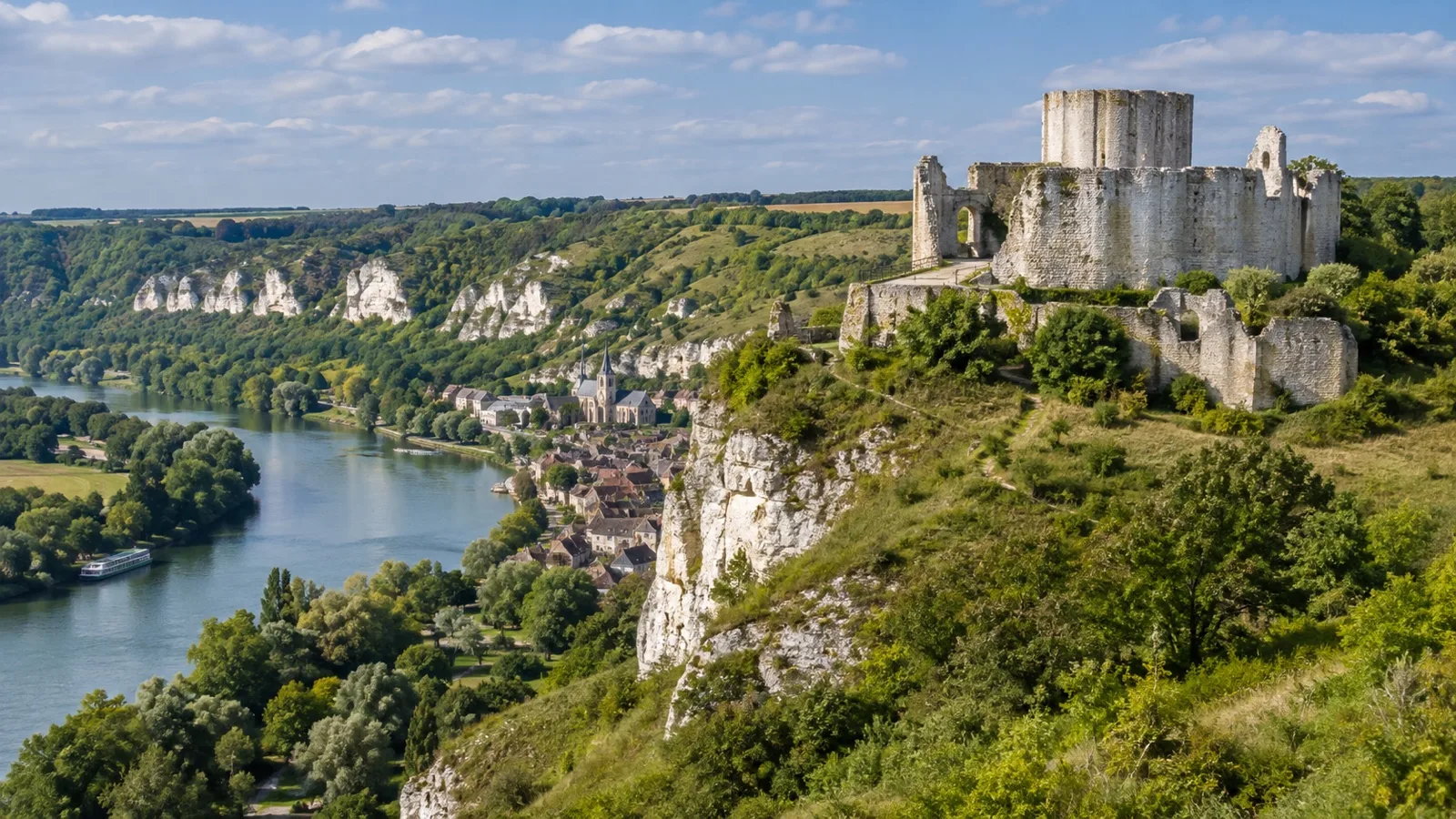
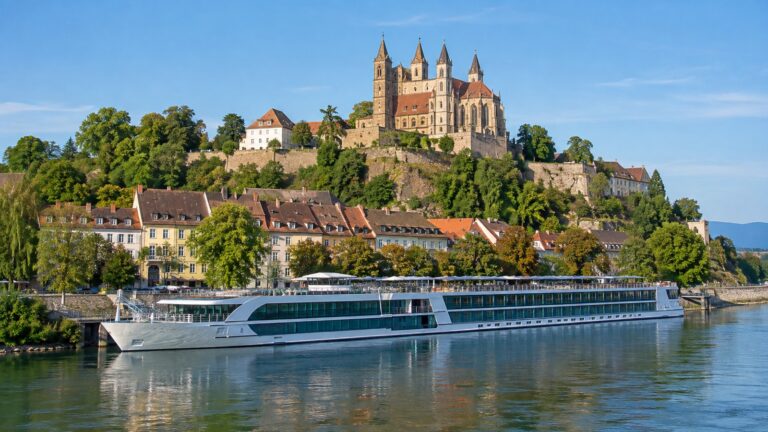
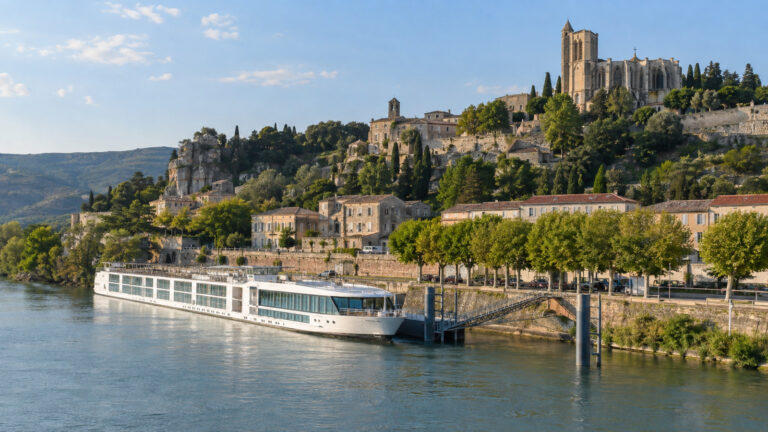
Les Andelys is two villages stitched together. Petit Andely is the riverside half where the ship berths, and Grand Andely sits about 0.6 mile inland.
Above both of them, on a spur of white chalk, sits Chateau Gaillard, the castle Richard the Lionheart threw up to hold the Seine against the French king. Normandie Tourisme dates the construction to 1198 and the fall of the castle to Philip Augustus to 1204.
The climb from the riverfront is the main practical issue at this port. It is a proper hill climb on uneven, rocky ground, and Normandie Tourisme states plainly that the site is not accessible to people with reduced mobility or to strollers.
Two details catch people out. The keep and inner courtyard have a season, roughly late March to 1 November, and they close on Mondays and Tuesdays even in high summer, while the outer lower courtyard stays open year round.
Check current admission, opening days and seasonal access before starting the climb. If the keep is closed, verify whether the lower courtyard and viewpoint remain accessible.
Conflans-Sainte-Honorine and Caudebec-en-Caux
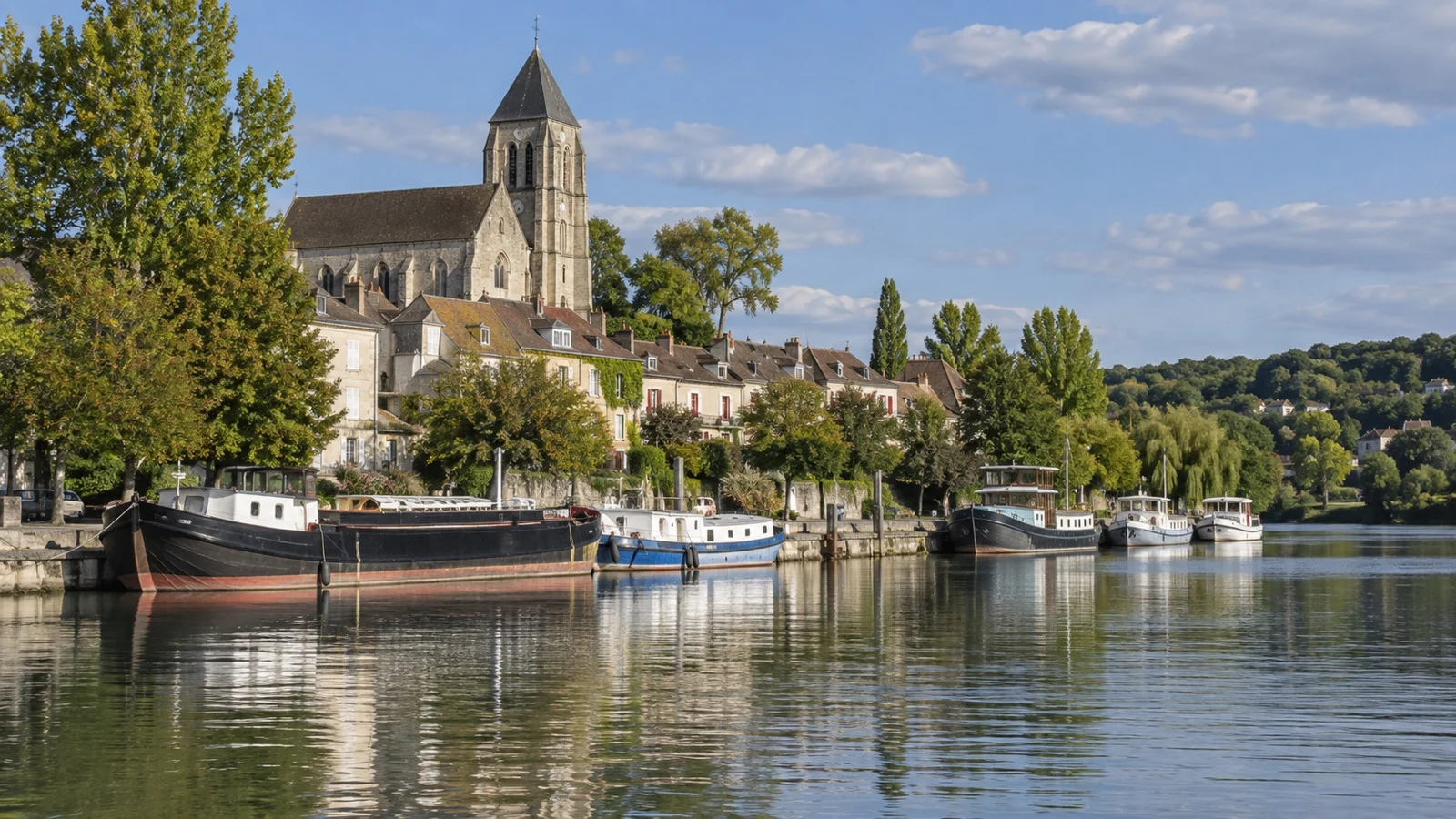
Conflans-Sainte-Honorine sits where the Oise joins the Seine, northwest of Paris. The town presents itself as a center of French inland-waterway history.
Barge families have moored here for generations, and the town’s Musee de la Batellerie is a museum of working river life rather than of scenery. There is a hill with the Tour Montjoie and the Chateau du Prieure on it, and a short, steep old town below.
Caudebec-en-Caux, now part of the commune of Rives-en-Seine, is the downstream equivalent. It is a small Seine-side town with a very good flamboyant Gothic church and a bridge over the river that dominates every photograph.
The reason ships stop here is what is nearby rather than what is in it. The Benedictine Abbaye Saint-Wandrille is a few miles away in the same commune and is a living monastery with a working schedule of offices, not a ruin.
The lock groups between Paris and the sea
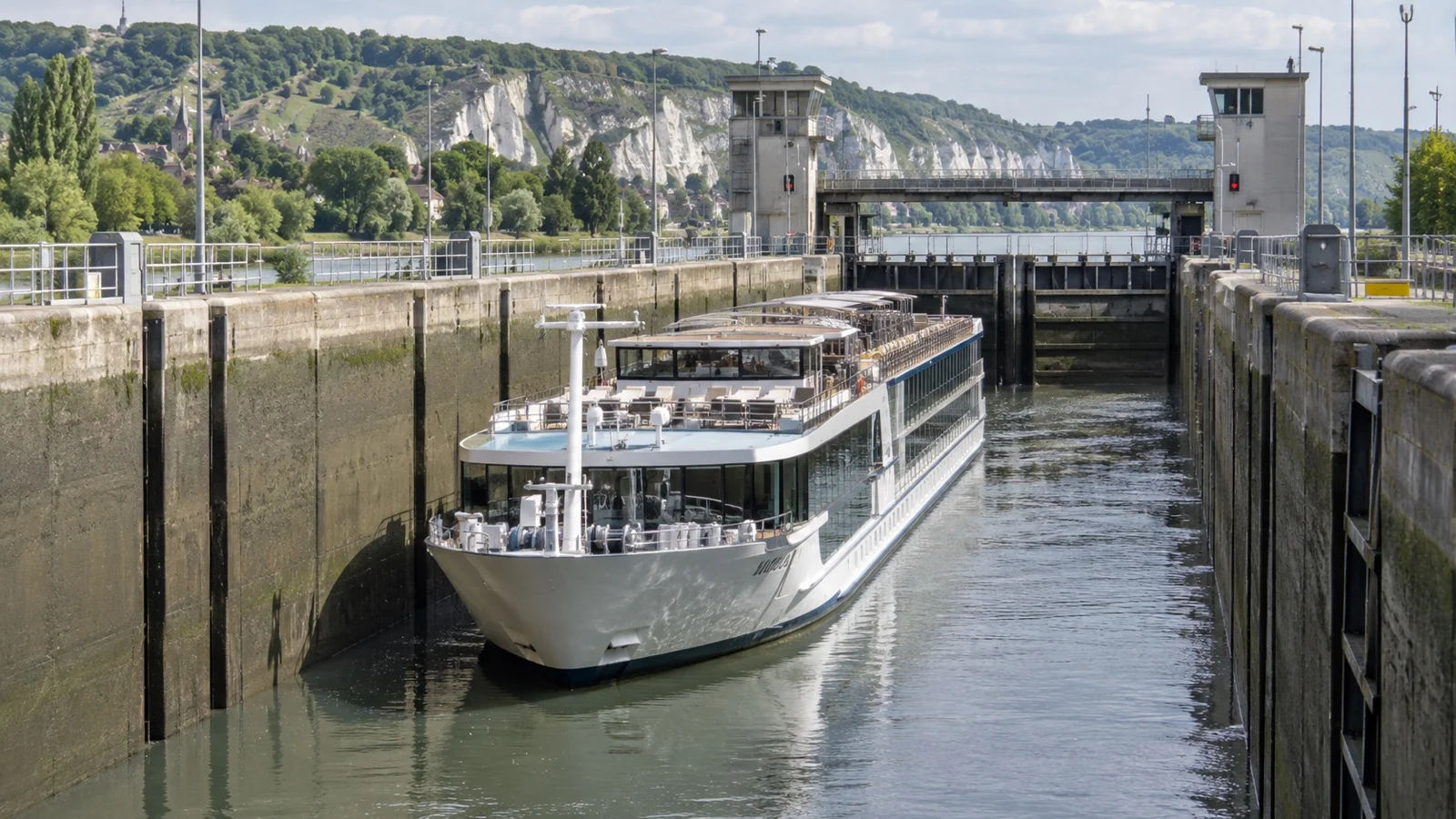
The Seine below Paris is a canalized river, held at navigable depth by a series of dams with lock chambers alongside them. Your ship will pass through several of these on a Paris to Normandy round trip.
Lock sites may have parallel chambers serving vessels of different sizes. Waiting time still depends on traffic, operations and maintenance.
The last of them is at Poses, near Rouen, where the dam, the locks and a fish viewing gallery called the Seinoscope sit together. Below that point the river is tidal, and HAROPA PORT publishes live tide times for Rouen exactly as it would for a coastal harbor.
Locks are also the reason Seine ships are shaped the way they are, and the guide to how European river locks work explains the mechanics. The short version is that the chamber sets the ship size, and the ship size sets your cabin.
Build the bus and return into the plan
Vernon is the river berth for Giverny, not the garden entrance, so the day needs a ship coach, seasonal public shuttle, taxi, or prearranged driver. The public shuttle can fill, and an outbound taxi does not guarantee a return car when several groups leave together.
For an independent visit, reserve the timed attraction ticket and transport, then plan a generous return margin before all aboard. Use extra time for a bus connection or weekend traffic, because the ship cannot wait for an independent Giverny visitor.
At Les Andelys, the riverside old town is manageable for many visitors but Chateau Gaillard is a steep, rocky excursion with no reduced-mobility route. Choose a lower-town walk or viewpoint reached by suitable transport if the climb, heat, rain, or loose footing is unsafe.
Stops worth your time
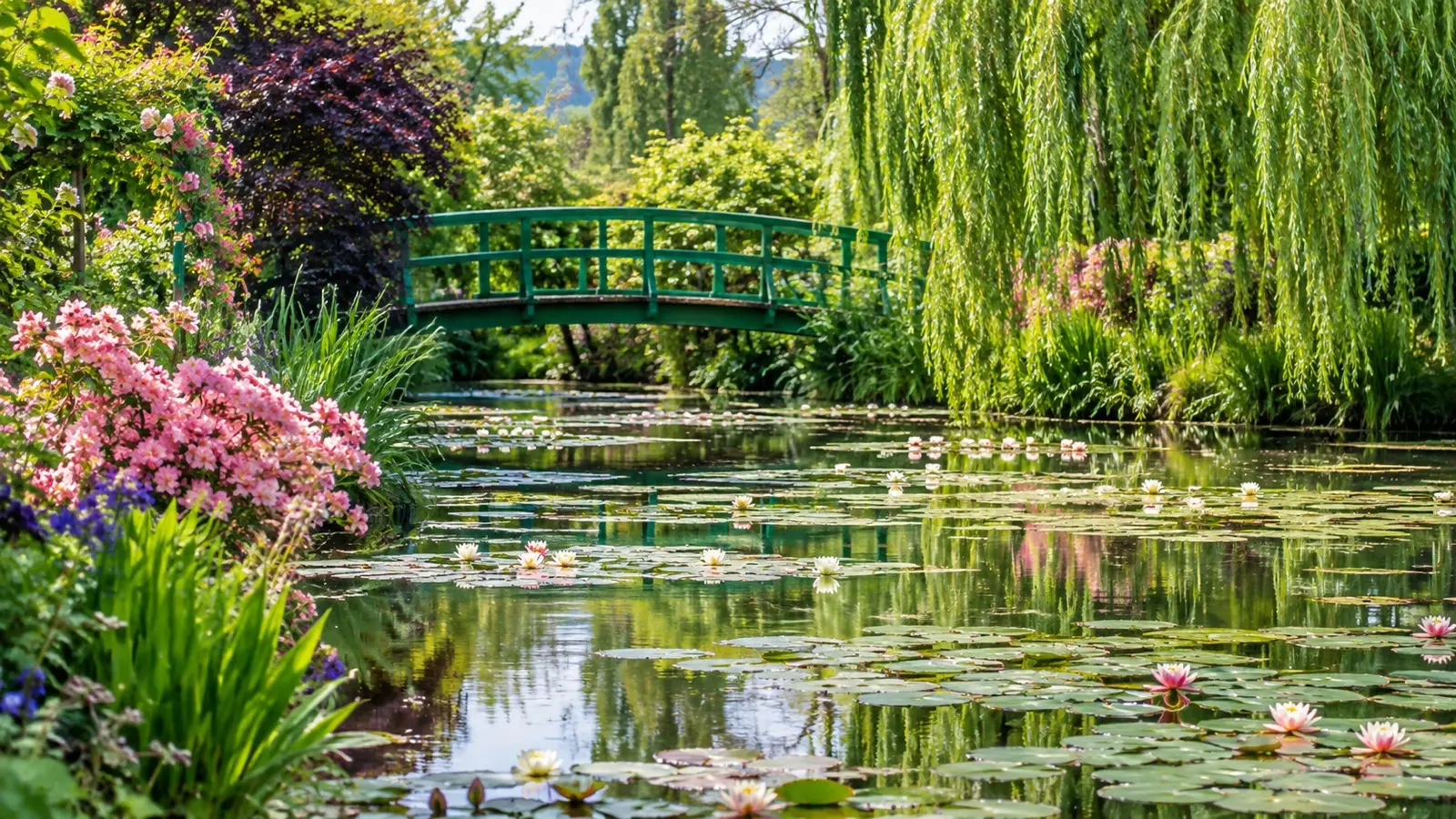
- Monet’s house and gardens, Giverny: the Clos Normand flower garden, the pink house, and the water garden with its lily pond. Earlier entry can reduce crowding, but timed capacity varies by date.
- The Musee des impressionnismes, Giverny: a short walk from the Fondation and almost always emptier. Normandie Tourisme lists its season as late March to 1 November with adult tickets from around 12 euros.
- The keep at Chateau Gaillard: the keep and viewpoint overlook a broad bend in the Seine. Check the day of the week first, because it is closed on Mondays and Tuesdays and shut entirely in winter.
- Petit Andely riverfront: half timbered houses and the old Saint-Jacques hospital, five minutes from the gangway. The low effort version of this port if the climb is not happening.
- Vernon old town: the Collegiale Notre-Dame and the Vieux Moulin perched on the ruined bridge piers. An hour, no more, slotted around the Giverny motorcoach.
- Musee de la Batellerie, Conflans: models, tools and photographs of the barge trade that built the town. Small and specialized, and the right use of a spare morning.
- Abbaye Saint-Wandrille, Rives-en-Seine: a working Benedictine community near Caudebec with a shop selling what the monks make. Times are built around the offices rather than around visitors, so check before you set out.
Fun fact: Richard the Lionheart is supposed to have looked at his new fortress and said “how beautiful she is, my one-year-old daughter”, according to Normandie Tourisme, which dates the castle to 1198. It fell to the French king in 1204, so the most expensive castle in Normandy held out for about six years.
How to plan the day
At Vernon, use an early Giverny excursion slot when one is available. Leave enough time for the transfer, timed admission and return to the ship.
At Les Andelys, consider an earlier climb in warm weather and allow time for uneven footing. Check the keep’s opening day before setting out.
At Conflans and Caudebec, a simple local walk can work well around the ship’s schedule. Check museum or abbey hours before committing to a longer outing.
A realistic word on accessibility
Giverny has mostly gravel and garden paths, but the complete route includes gates, slopes, a road or underpass connection, and crowded narrow sections. The house’s upper floor is not wheelchair accessible, so check the Fondation Claude Monet’s current access route and assistance before buying an independent ticket.
Chateau Gaillard has a clear accessibility limitation. Normandie Tourisme states that the site is not accessible to people with reduced mobility or to strollers, and the approach is loose rock on a gradient rather than a path.
The quays themselves are the hidden difficulty on the Seine. These are working riverbanks with sloping ramps, occasional steps, and gangway angles that change with the water level, and rafting alongside another ship adds a crossing that may involve steps nobody can remove.
Say what you need at booking and again at check in, and describe the steps, surfaces and assistance you need. The guide to wheelchair-friendly cruise ports covers useful questions to ask before paying.
When to go, and the weather
The Seine season is shaped by Giverny more than by weather, because the Fondation Claude Monet opens on 1 April and closes on 1 November. Sail outside those dates and you have a Seine itinerary without its headline attraction.
Garden conditions and crowds vary through May and June. Check the local forecast and pack a light waterproof layer.
July and August can bring warmer weather and heavier crowds. An early timed entry and an earlier castle climb may be more comfortable.
September and October bring cooler, shorter days and changing garden conditions. Confirm seasonal attraction hours and check the forecast close to the call.
Quick answers
Which port do I get off at for Giverny?
Vernon, on the Seine about 4 miles from the village. Some lines print the call as Vernon-Giverny, which is the train station name rather than a separate berth.
Is Giverny open all year?
No. The Fondation Claude Monet runs from 1 April to 1 November and is closed for the winter, which rules it out on Christmas market and early spring sailings.
How hard is the walk up to Chateau Gaillard?
Hard enough to matter. It is a steady climb on uneven, rocky ground of about thirty minutes, and the official tourist board says the site is not suitable for reduced mobility or strollers.
Do I need to book Giverny tickets myself?
Only if you are going independently, in which case book online well ahead. On a ship excursion the tickets are handled for you, which is the main practical reason to take it.
The Seine is a managed commercial waterway and is less exposed to low-water disruption than some European rivers, but it is not immune to change. High water, flooding, lock or bridge restrictions, maintenance, tide, and berth conditions can still reorder or replace a call.
The last word
Vernon is mainly the transfer point for Giverny, while Les Andelys combines a riverside town with a steep castle climb. Knowing that distinction makes each call easier to plan.
Book Giverny admission and transportation together, and assess the Chateau Gaillard climb honestly. Leave a clear return margin at both ports.
These calls only make sense as part of the bigger run, and the two ends do the heavy lifting. The guides to Paris river cruise berths and docking at Rouen cover the larger endpoints.
And if you are weighing a Seine sailing against something salty, the France cruise ports overview puts these little quays next to Marseille and Le Havre. The smaller river quays offer a very different day from the large coastal ports.
How this guide was researched: This guide is based on independent research, not a first-hand Seine sailing or port call. Official attraction, tourism, transit, port and waterway sources were used where available. Opening seasons and prices were checked against the Fondation Claude Monet’s own site and Normandie Tourisme’s listings for Chateau Gaillard and the Musee des impressionnismes, shuttle details against the SNgo network, tidal information against HAROPA PORT, and abbey visiting times against Abbaye Saint-Wandrille.
Logistics and time-sensitive details were reviewed on September 12, 2026. See our Editorial Policy.