Paris River Cruise Port: Grenelle, Javel Bas and the Le Pecq Problem
A Paris river cruise can feel like the easiest city break in Europe, but the berth decides how easy it really is. A ship tied up near the Eiffel Tower gives you Paris at the gangway, while an assignment at Le Pecq turns each city day into a suburban rail journey.
That difference matters because many Seine itineraries use Paris as an overnight base rather than a quick daytime stop. Ask for the planned quay before you book, check it again before departure, and expect the final position to remain subject to port operations and river conditions.
Quick Facts
- River: Seine
- Common Paris-area berths: Grenelle, Javel Bas, and Le Pecq, with assignments able to change
- Shore access: Gangway to the quay, sometimes after crossing another rafted river ship
- Best transport from Grenelle: RER C, Metro line 6, buses, taxis, or walking
- Best transport from Javel: RER C, Metro line 10, buses, or taxis
- Best transport from Le Pecq: RER A from Le Vésinet Le Pecq, a taxi, or an included transfer
- Currency: Euro
- Planning priority: Get the exact berth address and ship contact before traveling independently
- Main disruption risk: High or low water, navigation restrictions, closures, strikes, and berth reassignment
Why the Paris Berth Matters So Much
Paris does not have one river cruise terminal with a single address. Operators use assigned stretches of quay, and the location shown in an early itinerary may move because of river height, construction, security, events, or another vessel’s schedule.
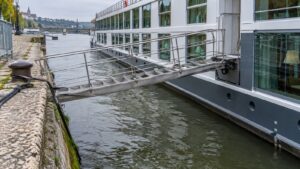
River ships also raft side by side when space is tight. Your gangway may lead through another vessel’s lobby or across a stepped connection, which is normal but important for anyone traveling with a wheelchair, walker, or limited balance.
Ask the cruise line for the quay name, nearest street entrance, and ship phone number rather than accepting “Paris” as the location. Repeat the check shortly before embarkation because a driver sent to yesterday’s berth can leave you on the wrong bank with luggage.
Port de Grenelle
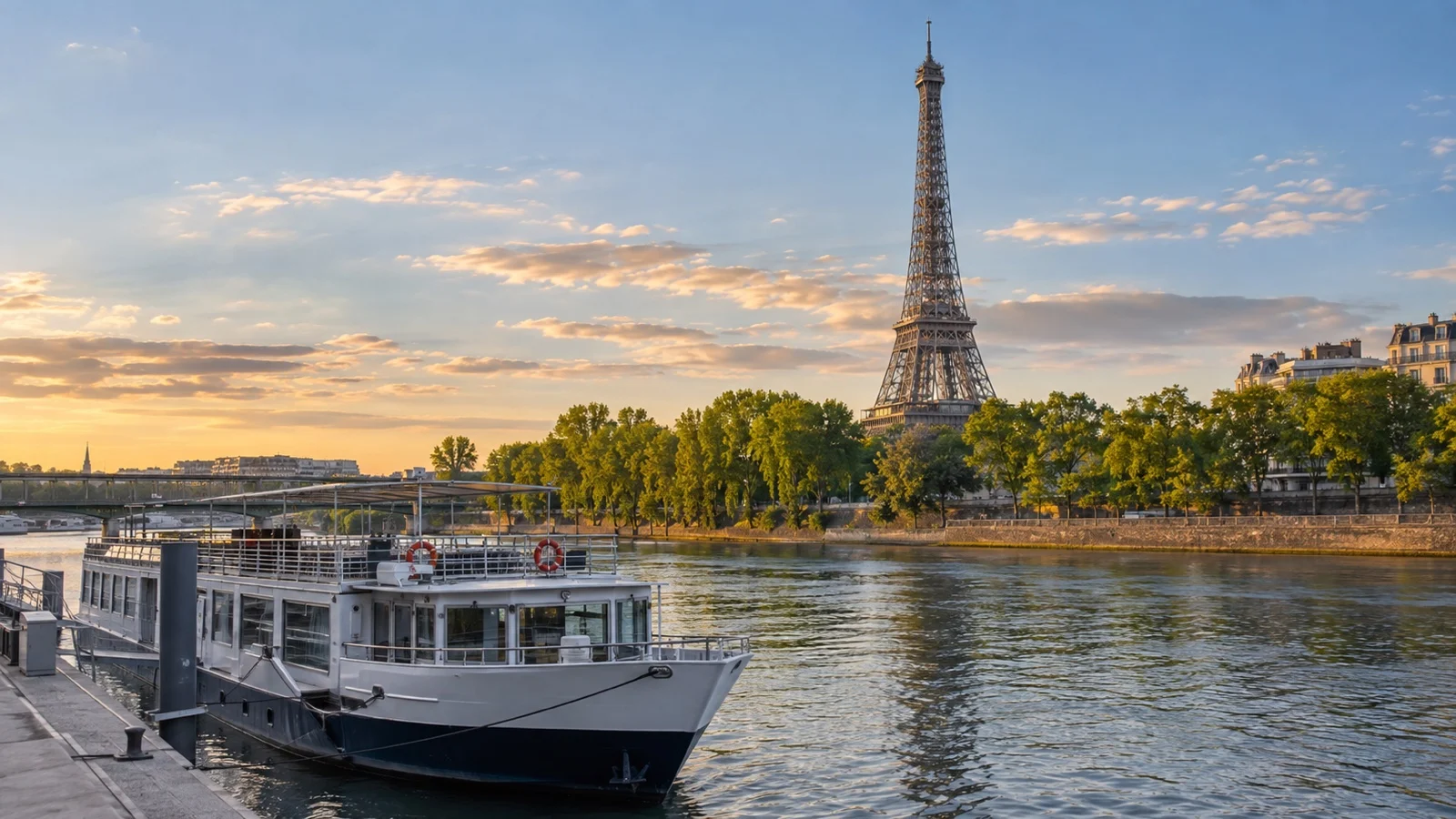
Grenelle is the berth passengers hope to receive. It lies on the Left Bank beside Île aux Cygnes, with the Eiffel Tower, Champ de Mars, Bir Hakeim, and useful public transportation close enough to make independent exploring straightforward.
The precise ship position affects the walk, but the area generally gives you a strong start. The RER C at Champ de Mars Tour Eiffel follows the river toward Invalides, Musée d’Orsay, and Saint Michel Notre Dame, while elevated Metro line 6 provides one of the city’s best moving Eiffel Tower views.
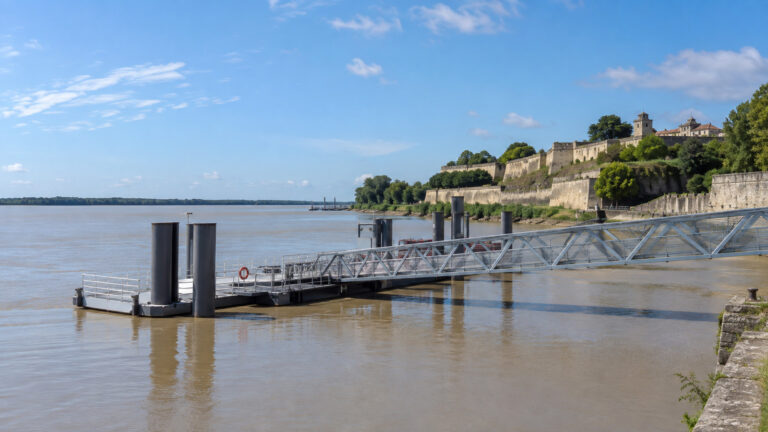
Grenelle is still an open quay rather than a resort terminal. Expect city pavement, variable gangway angles, limited shelter at the ship entrance, and occasional changes to pedestrian routing.
Port de Javel Bas
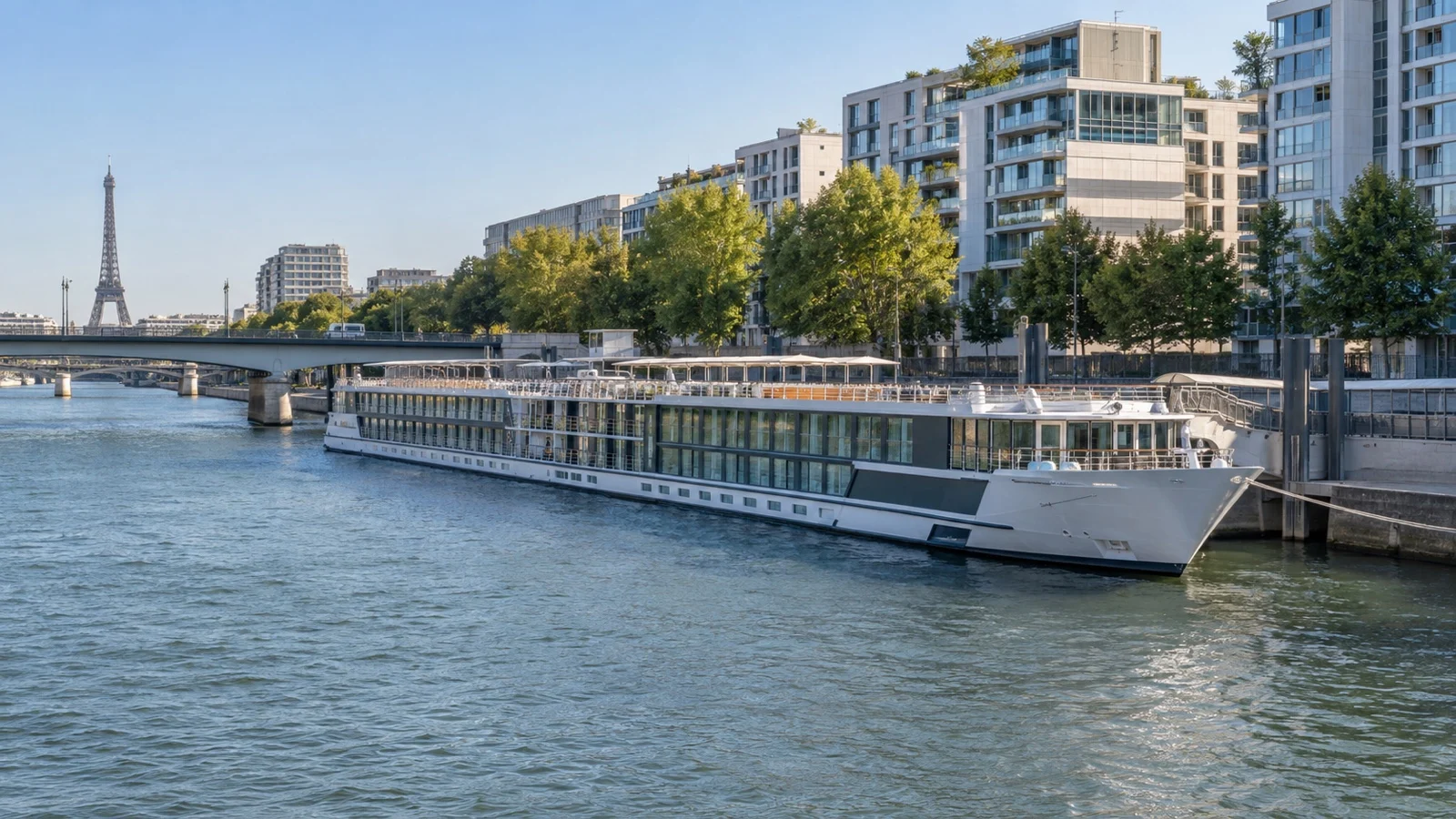
Javel Bas sits farther downstream in the fifteenth arrondissement, near Parc André Citroën and a modern residential waterfront. It lacks Grenelle’s dramatic Eiffel Tower setting, but it remains within Paris and has practical connections.
RER C from Javel is usually the quickest rail choice for sights along the Seine, and Javel André Citroën on Metro line 10 opens other routes. Check the exact gangway position before judging the walk, since a long quay can make a nearby station feel much farther with luggage.
Javel works well for a relaxed first afternoon around the Eiffel Tower or western Paris. It also makes an easy launch point for a taxi when several people can share the fare.
Le Pecq and the Suburban Commute
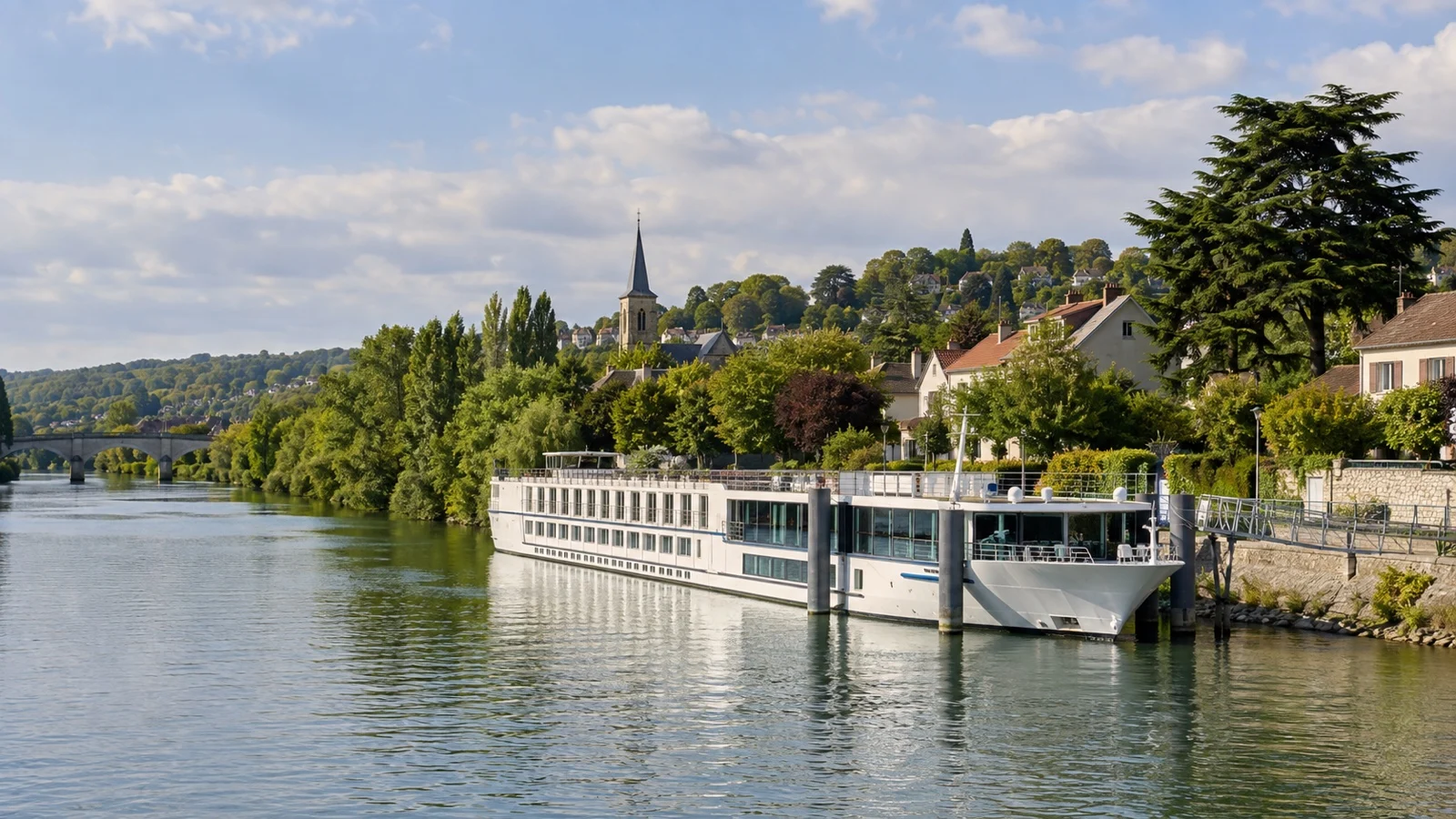
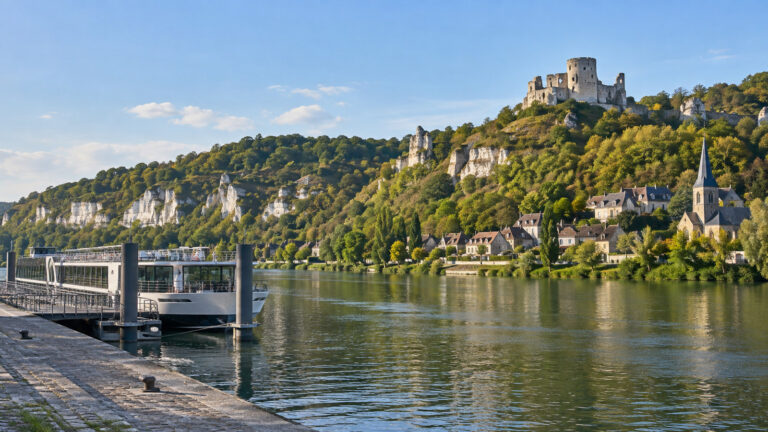
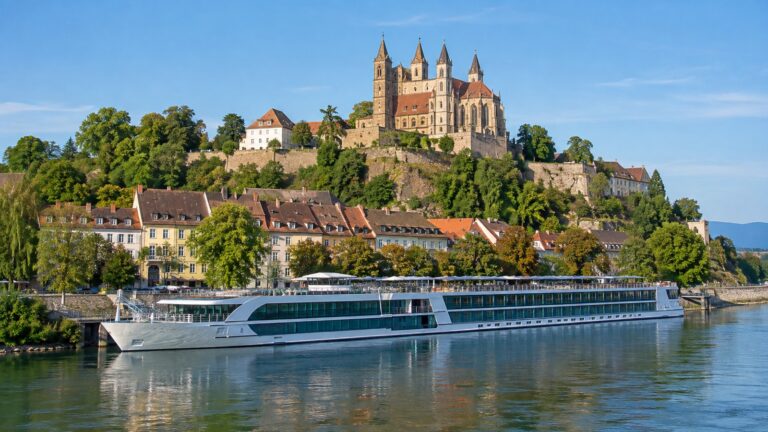
Le Pecq is a pleasant Seine-side community west of central Paris, close to Saint-Germain-en-Laye. It is a legitimate Paris-area base, but it is not a central Paris berth and should shape the way you plan each day.
The nearest useful rapid-transit connection is generally the RER A at Le Vésinet-Le Pecq. Trains run toward major hubs such as Charles de Gaulle Étoile, Auber, and Châtelet Les Halles, but you must also allow time between the ship and station.
An included cruise-line transfer can be easier than building your own route, though its fixed return may limit evening plans. If you travel independently, screenshot the route, note the last practical train, and leave central Paris much earlier than you would for Grenelle or Javel.
Le Pecq can also be an opportunity rather than a disappointment. Saint-Germain-en-Laye has a handsome historic center, a château, terraces, restaurants, and far fewer first-time visitors rushing between landmarks.
Public Transportation Without the Guesswork
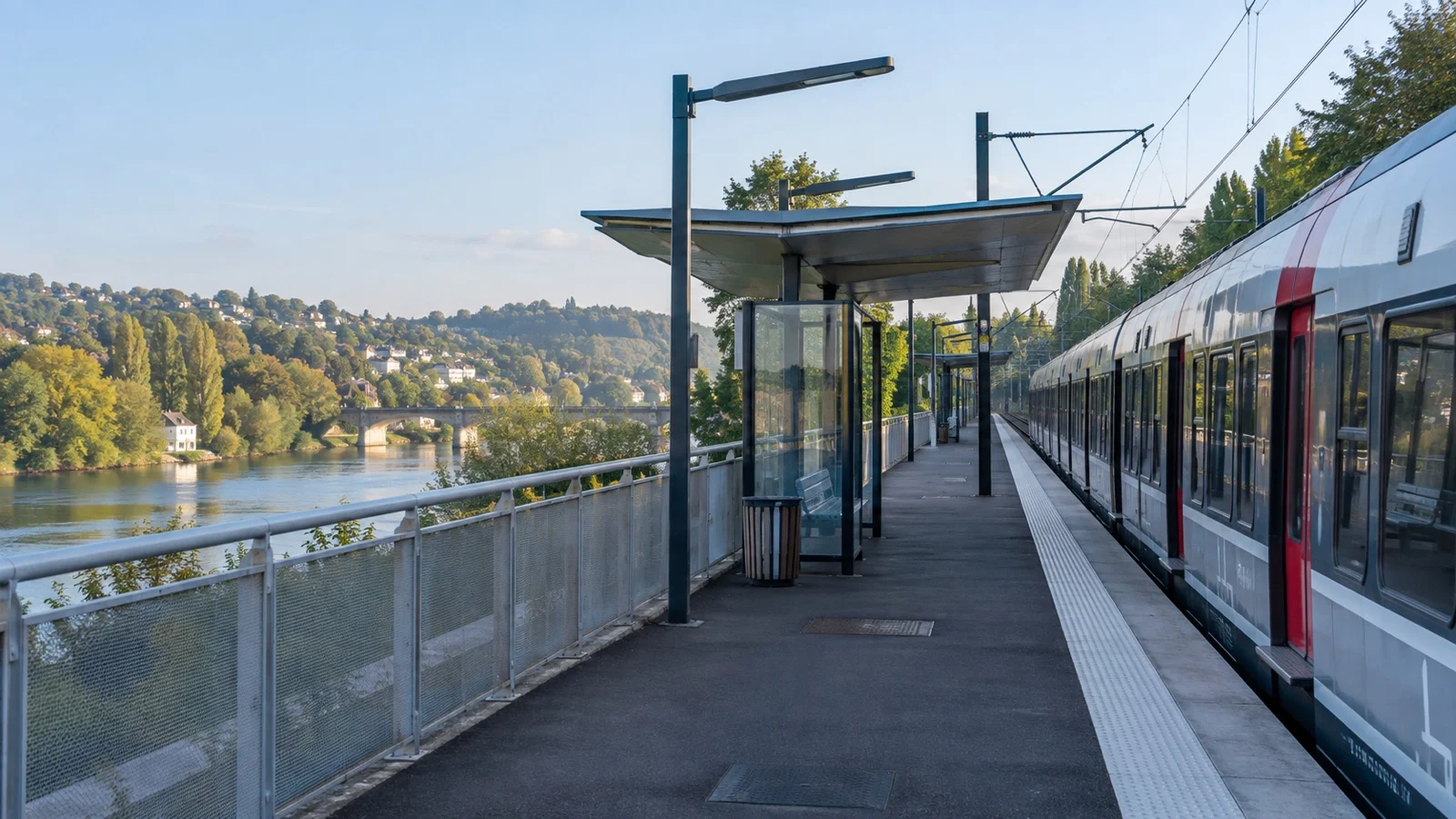
Île-de-France Mobilités is the official source for routes, service changes, accessibility, and current fares. Its network includes Metro, RER, suburban trains, buses, and trams, but one ticket product does not necessarily suit every passenger or airport journey.
At the time of review, the agency lists separate flat fares for Metro, train, and RER trips and for bus and tram trips, along with daily and weekly Navigo products. Prices and accepted media can change, so use the official app or ticket machine for the live choice rather than budgeting from an old guide.
A day pass makes sense when you expect several rides, while pay-as-you-go travel can be better for a mostly walkable day from Grenelle. A weekly pass follows its own validity rules, so confirm the dates before assuming it covers a rolling seven-day stay.
Keep your validated ticket or loaded device until you have fully exited the system. Stations sometimes require it at the final gate, and inspectors can ask for proof during the journey.
Plan Paris by Neighborhood, Not Landmark
The fastest way to exhaust yourself is to bounce across Paris for individual icons. Group nearby sights, reserve anything timed, and leave enough unstructured space for a café, market, garden, or street that catches your attention.
A Left Bank day can join the Eiffel Tower, Invalides, Musée d’Orsay, and a walk along the Seine, although all four would be too much if you explore them properly. An island and Marais day can combine Notre Dame, Sainte Chapelle, the exterior of the Conciergerie, and streets east of Hôtel de Ville.
The Louvre deserves a focused reservation rather than a hurried gap between other stops. Its scale defeats checklist sightseeing, so choose a few departments or works and accept that the rest will still be there on another trip.
Montmartre works best as a separate early morning or evening outing. The hill, Sacré Coeur, lanes, and views feel more generous when you are not racing to a museum reservation across town.
Timed Tickets and Opening Days
Paris rewards advance reservations, especially for the Eiffel Tower, Louvre, and popular temporary exhibitions. Book only through official venue sites, read the entry instructions, and allow for security lines even when your ticket has a time.
The Eiffel Tower sells several access types, including elevators or stairs to different levels, and the official site warns that some routes are unsuitable for visitors with limited mobility. Choose the product carefully because a summit ticket and a second-floor ticket are not interchangeable.
Museum closing days can dismantle an otherwise elegant plan. Verify each attraction directly, then keep a nearby alternative such as a garden, church, neighborhood walk, or smaller museum.
A Realistic Accessibility Plan
The hardest barrier may appear before you reach the city. Gangway slope changes with river level, ship elevators may not serve every deck, and rafting can add another vessel with steps or narrow thresholds.
Discuss the entire ship-to-street route with the cruise line, not just whether the vessel has an elevator. Ask what happens if your ship is outside the raft and whether staff can handle your specific mobility device safely.
Much of the historic Metro was built without step-free access, so an ordinary route planner may suggest stations you cannot use. Île de France Mobilités provides accessibility information, and Paris buses or an accessible taxi can be more practical than the shortest rail route.
Major museums usually publish detailed accessibility pages and entrance instructions. Save those instructions before leaving the ship because the accessible entrance may be on another side of a very large building.
River Levels and Schedule Changes
River conditions affect more than whether a ship can tie up. High water reduces clearance beneath bridges, low water can limit navigation, and both situations may alter sailing times, embarkation points, or coach transfers.
France’s Vigicrues service publishes official flood-risk information for monitored waterways, but passengers should still follow the cruise line’s operational notice. A green public map does not promise that every bridge, quay, or vessel movement will operate exactly as scheduled.
If the operator changes the berth, focus first on the new address and transportation rather than the reason. Save the revised map offline and tell any private driver or hotel immediately.
Weather and What to Carry
Paris weather is changeable enough that layers beat one perfect outfit. Spring and fall can move from cool rain to warm sun in a few hours, summer heat can be intense, and winter brings short days and damp cold.
Bring comfortable walking shoes, a compact rain layer, water, sun protection, and a small bag that closes securely. Check Météo-France before leaving the ship, then adjust the day instead of carrying an entire cabin’s worth of backup clothing.
Keep your phone charged because tickets, maps, translations, and service alerts may all live on it. A small power bank is especially useful when the ship is at Le Pecq and your return depends on a longer chain of navigation.
Embarkation and Disembarkation
On embarkation day, give a taxi driver the exact quay entrance and ship name, but do not rely on the ship name alone. Several vessels can be rafted together, and road access may be separated from the visible riverfront by barriers or one-way streets.
Arrive within the cruise line’s stated window and keep its emergency contact handy. If the vessel is sailing before dinner, a late flight or train leaves far less recovery time than an overnight hotel check-in.
For disembarkation, confirm when luggage must be outside the cabin and how long you may remain aboard. Prebook an accessible or larger vehicle when needed, since the quay may not have a permanent taxi line.
Three Smart Ways to Use Your Paris Stay
The First-Time Paris Plan
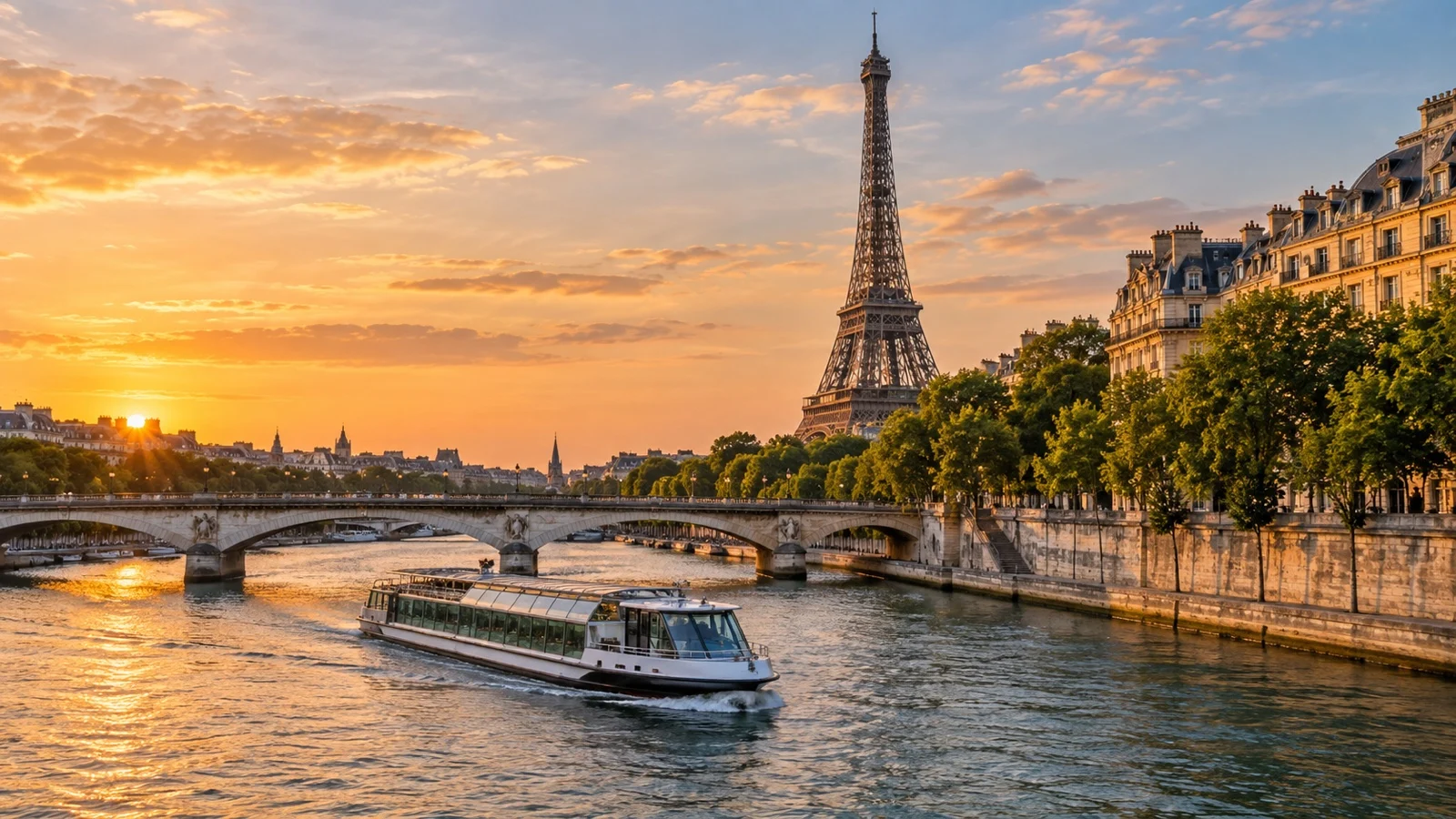
Reserve one major sight each day, then explore its surrounding neighborhood on foot. This gives the Eiffel Tower, Louvre, Notre Dame area, and Montmartre room to feel like places rather than transportation problems.
The Low-Stress Plan
Choose one direct public-transportation corridor from the berth and make only one major reservation. Return to the ship before the commuter rush, then enjoy dinner or an evening walk close to the quay.
The Le Pecq Plan
Make fewer, longer trips into central Paris and avoid returning to the ship between activities. Give another half day to Saint-Germain-en-Laye or the western suburbs, where the berth’s location becomes an advantage.
Final Take
The best Paris river cruise port strategy begins with one unglamorous question: where exactly is the ship? Grenelle and Javel keep the city close, while Le Pecq requires a commuter’s discipline and a larger time buffer.
Once you understand the berth, Paris becomes wonderfully manageable across several days. Group sights by neighborhood, book only the timed entries that matter, and leave enough space to enjoy the city you came to see.
How this guide was researched: Unless a first-hand visit is explicitly identified above, this guide is based on independent research using official port, transportation, flood-monitoring, weather, and attraction sources where available. Logistics and time-sensitive details were reviewed on September 12, 2026, under our Editorial Policy.