Tournus River Cruise Port: Saint-Philibert and Saône Logistics
Tournus is a small Burgundy town on the Saône, known above all for the Abbey of Saint-Philibert and an old center that is easy to explore from the river. It makes a gentle contrast to busier calls such as Lyon.
Most passengers can enjoy the central sights independently, but the exact mooring and gangway setup vary by vessel and river conditions. Start by noting the ship’s location because more than one boat may be alongside.
My quick take
Give the abbey real time, then wander the old lanes and riverfront without overplanning the day. Tournus is at its best when you let architecture, food, and small-town detail set the pace.
Use an organized excursion only when it takes you beyond town, such as to Cluny or a winery. The historic center itself does not require a bus tour for most travelers.
Tournus quick facts
- Country: France
- Region: Bourgogne-Franche-Comté
- Department: Saône-et-Loire
- River: Saône
- Typical cruise access: Direct river mooring, sometimes with ships rafted together
- Main sight: Abbey of Saint-Philibert
- Currency: Euro
- Independent transport: Walking for the center, arranged vehicle for Cluny or vineyards
- Terrain: Mostly gentle near the river, with cobbles and uneven paving
- Best first check: Mooring position, gangway arrangement, abbey access, and all-aboard time
Mooring on the Saône
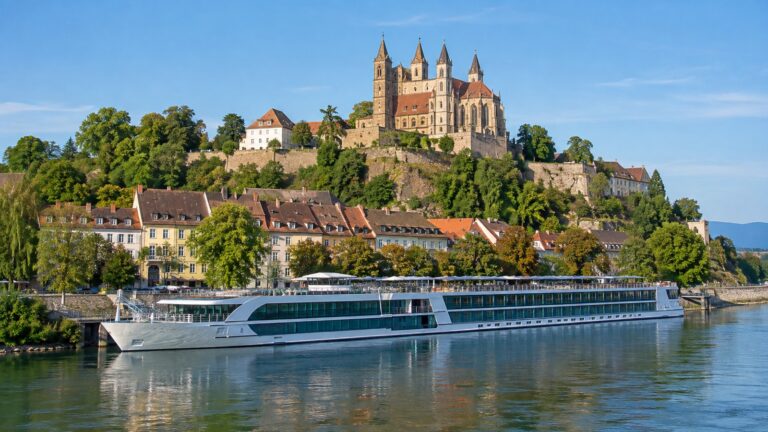
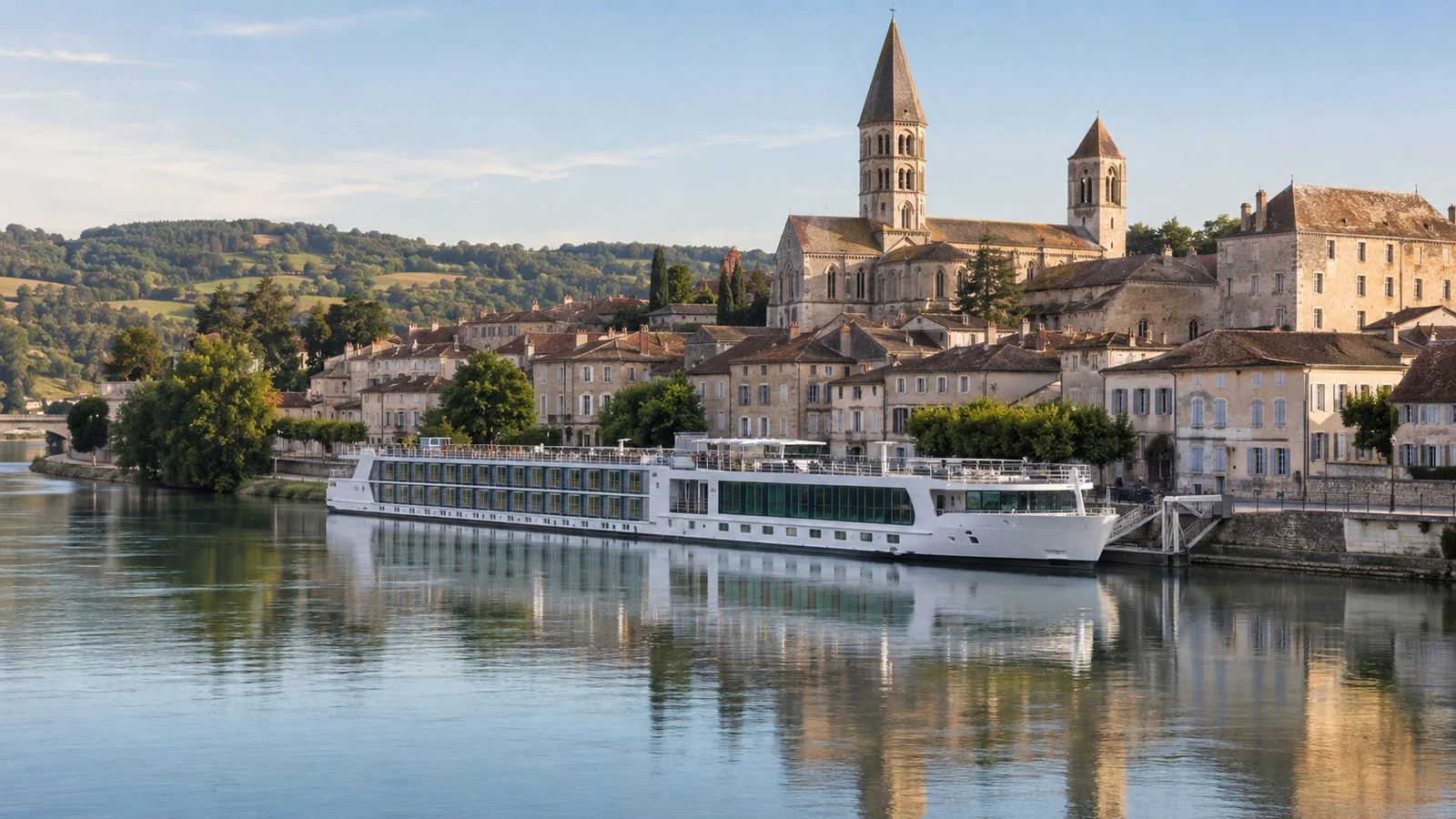
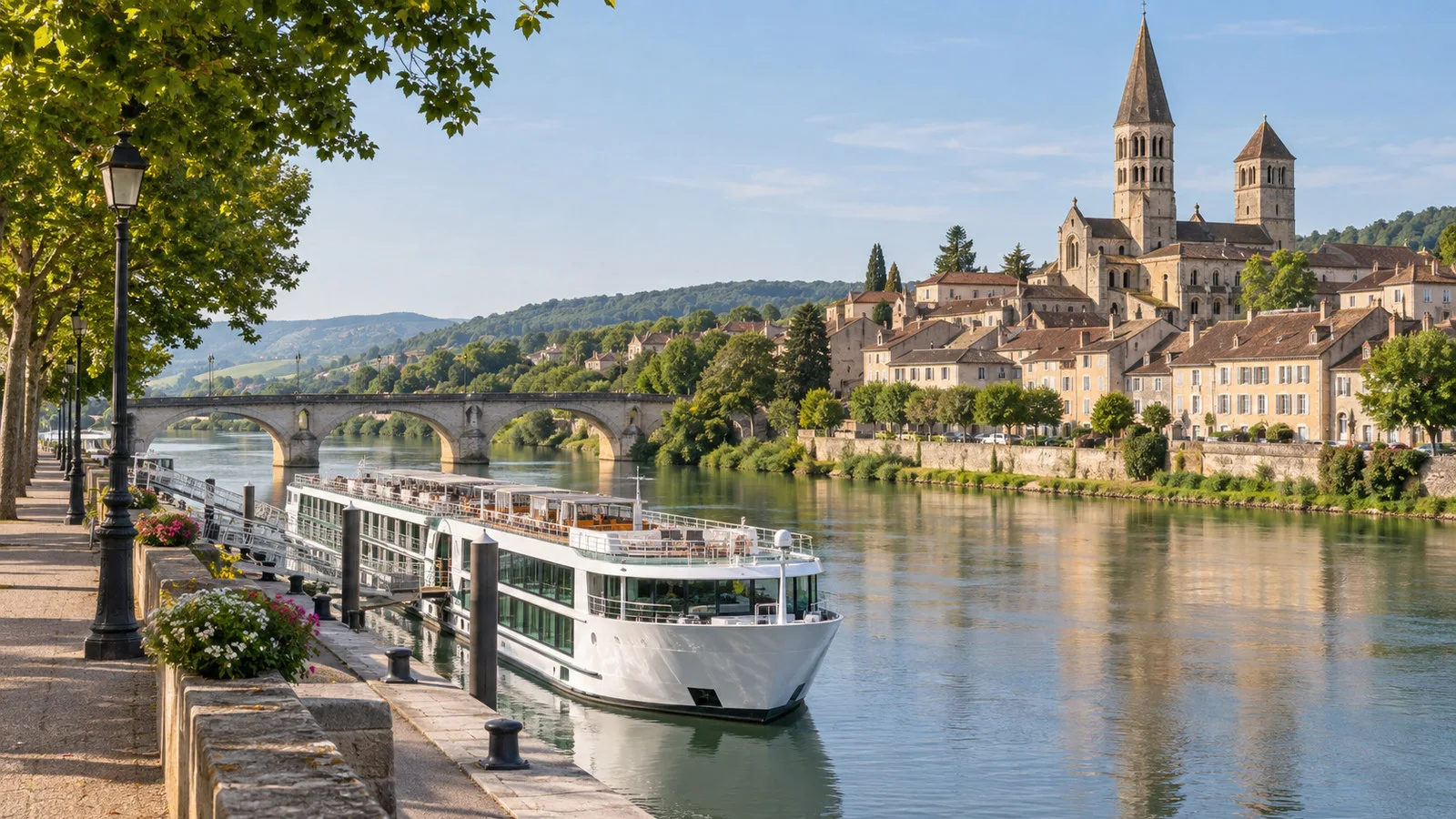
River ships normally moor directly in or near Tournus rather than tendering. The walking distance to the abbey depends on the assigned position and whether another vessel is occupying the nearest berth.
Ships may raft side by side when the quay is busy. In that case, passengers walk through or across another vessel, which can add steps and narrow transitions.
The gangway angle changes with river level and the ship’s position. Travelers with mobility concerns should ask the crew about the actual arrangement before leaving.
Tournus sits within the French inland waterway network, and Voies navigables de France publishes network information for navigation. High water, low water, maintenance, and operational decisions can alter an itinerary even when the town itself has pleasant weather.
Photograph the ship and nearby landmarks before walking away. Similar-looking river vessels can be moored close together, and the ship may change position during the call.
Walking into the old town
The central route is compact and straightforward for most visitors. Expect a mix of smooth sidewalks, cobbled lanes, curbs, and occasional traffic rather than a fully pedestrianized zone.
The official Tournus Sud Bourgogne tourism office is beside the abbey and provides current maps, guided-visit information, and local event details. Check opening hours rather than assuming the office will match the ship’s call.
A relaxed loop can connect the abbey precinct, Rue de la République, smaller historic streets, the Hôtel-Dieu area, and the riverfront. Keep the route flexible because church services, market activity, or closures may affect access.
Tournus has enough cafés and shops for a short independent break, but small businesses may close around lunch or on particular weekdays. If a specific restaurant matters, reserve or verify hours.
Abbey of Saint-Philibert
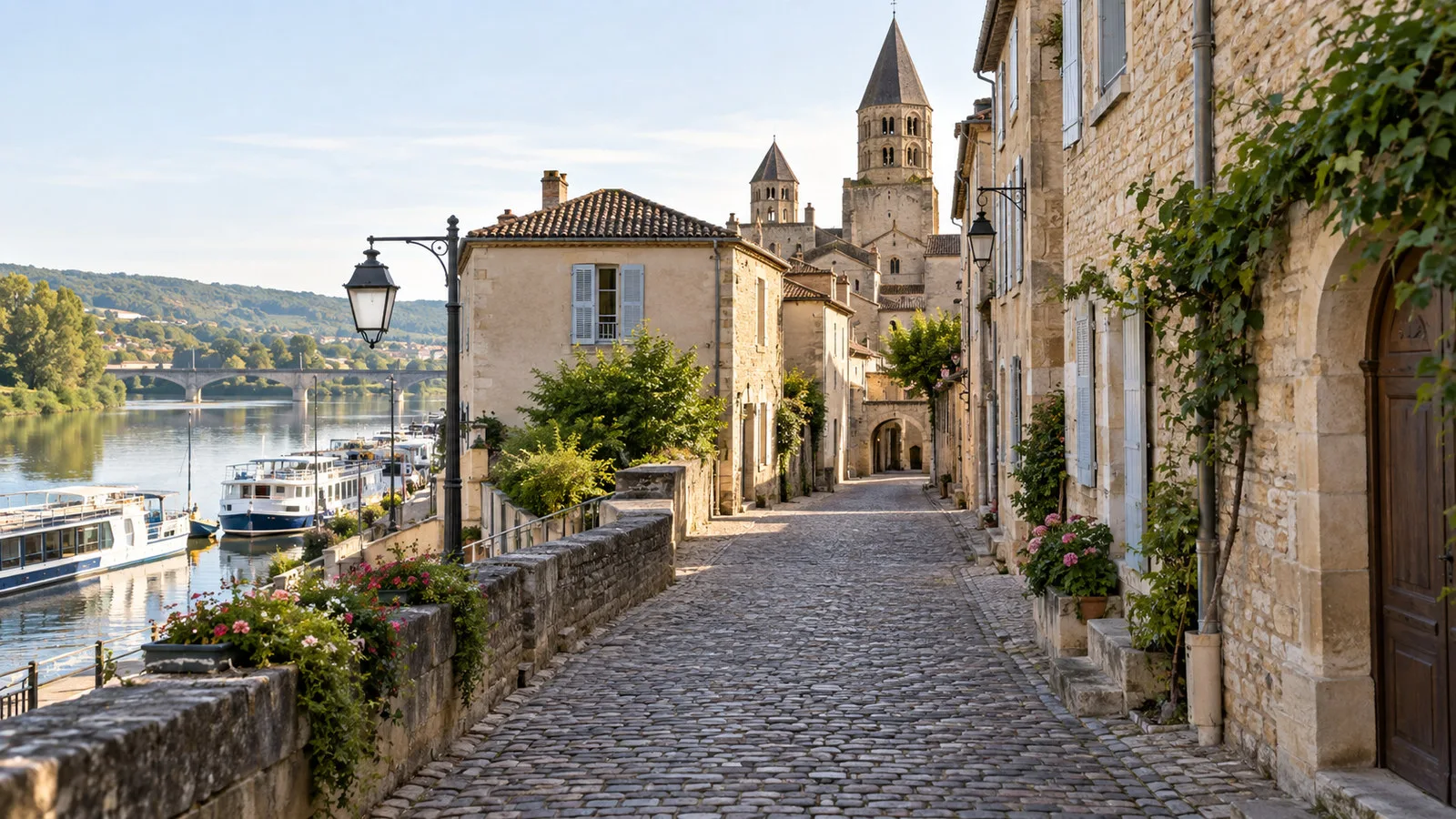
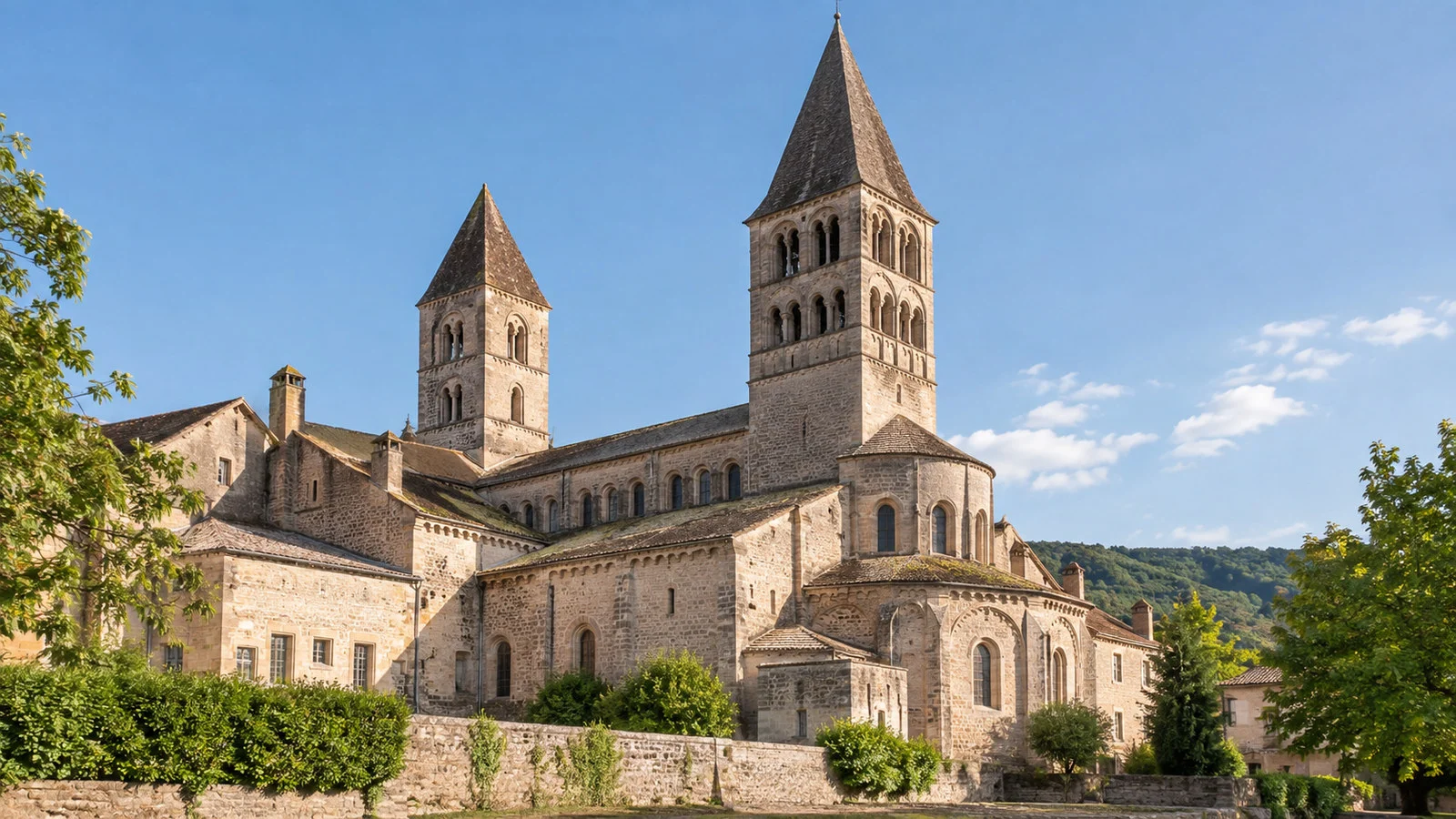
The abbey church is the essential stop in Tournus and a major Romanesque monument. Its architecture developed over several phases, so look beyond the façade and notice how the narthex, nave, towers, choir, and crypt differ.
The distinctive transverse barrel vaults over the nave create a rhythm unlike a single continuous vault. Stone color and changing light make the interior feel warmer than many early medieval churches.
The western entrance area, often described as the narthex, deserves time before you move into the nave. Looking upward reveals how mass, arches, and support systems shape the building.
Visit quietly because this remains a religious site rather than only a monument. Services, funerals, concerts, or parish needs can temporarily restrict tourist access.
The crypt and other lower or peripheral areas may involve steps, uneven floors, or limited access. Ask locally if anyone in your group needs a step-free route.
Guided visits listed by the tourism office can add historical context, but an independent visit is still worthwhile. Use any posted material and allow at least 30 to 45 minutes if architecture is a priority.
Do not use flash, tripods, or loud audio without permission. Dress and behavior should suit an active church even when admission is free.
Why Saint Philibert is here
The monastic community associated with Saint Philibert moved inland over time with relics that had been protected during periods of insecurity. Tournus became the enduring center of that history.
The resulting abbey complex shaped the town’s identity and street pattern. Its scale feels especially powerful because the surrounding settlement remains compact.
Architecture labels can become technical quickly, but visitors do not need specialist knowledge to appreciate the building. Compare the heavy entrance spaces with the lighter rhythm of the nave and the quiet of the crypt.
Hôtel-Dieu and Musée Greuze
Tournus also has the historic Hôtel-Dieu and Musée Greuze, which add hospital heritage, pharmacy interiors, art, and local history to the day. Opening dates and hours can be seasonal, so check the official tourism listing.
This is a useful second stop for passengers who have already seen many European churches. It also provides more structured indoor time during rain or heat.
Do not assume every part of the historic complex is accessible. Older thresholds, floors, and room layouts may require a tailored route.
Markets, food, and Burgundy pace
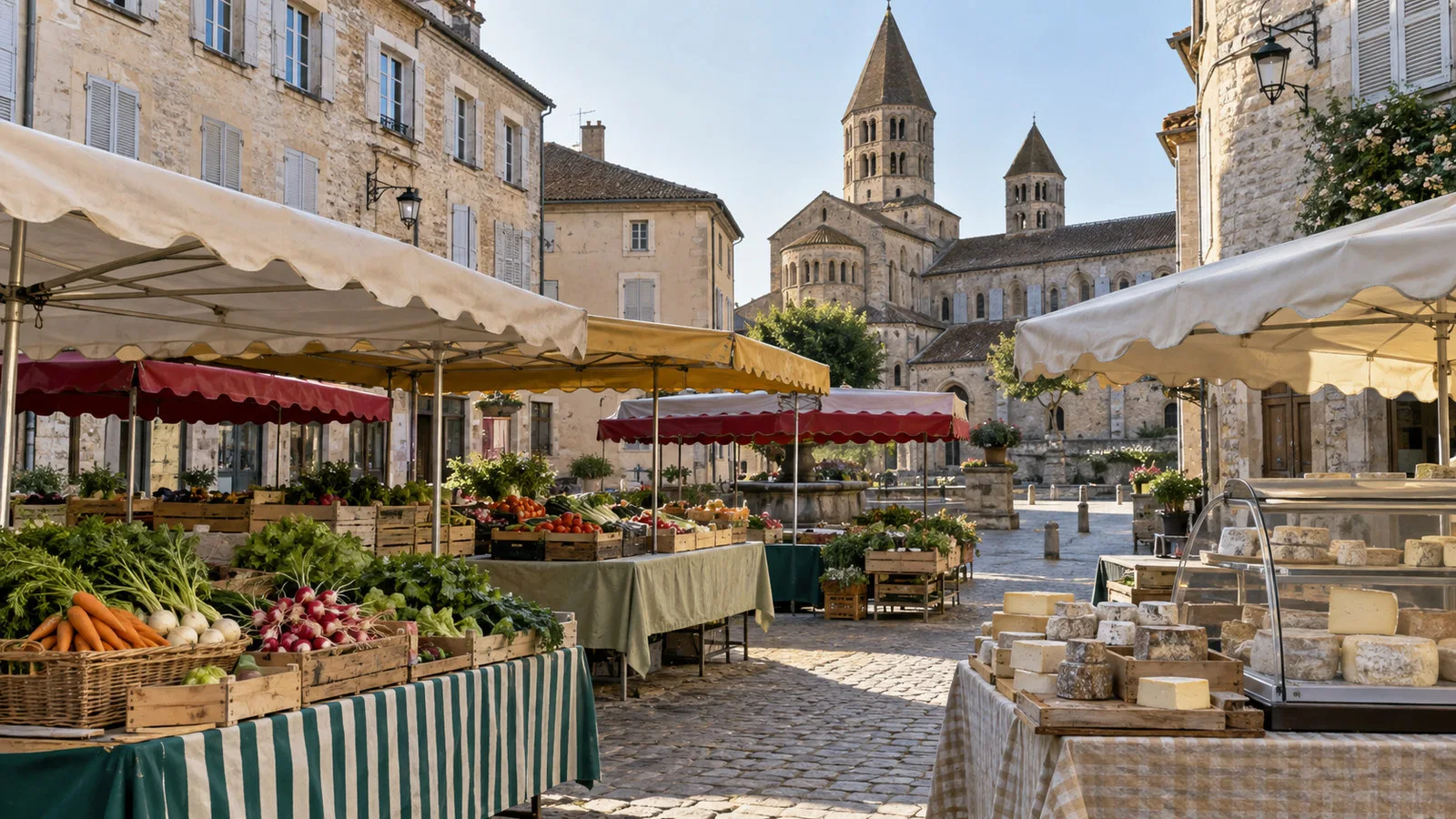
Local markets can bring produce, cheese, prepared foods, and everyday town life into the center. Market days and locations can change around holidays or events, so verify the calendar.
Tournus has a strong culinary reputation for a town of its size. A full restaurant meal can take longer than cruise passengers expect, particularly at a destination restaurant.
Tell the restaurant your required departure time before ordering. Choose a simpler lunch if the ship sails soon or if service has just become busy.
Burgundy wine is part of the regional identity, but Tournus is not itself a substitute for a structured vineyard visit. Taste moderately and remember that the ship may require a narrow gangway on return.
Carry some euros for small purchases even when cards are widely accepted. A market stall or small business may have a minimum charge or a temporary connection problem.
Cluny as an excursion
Cluny is a common regional excursion because its medieval abbey once held extraordinary influence and scale. Much of the great church was lost after the French Revolution, so interpretation is essential to understand what survives.
Road time and the guided schedule make Cluny different from a simple walk in Tournus. A ship excursion provides the cleanest return protection when the vessel is sailing shortly after the tour.
An independent taxi should be booked in both directions, not found casually at the quay. Confirm the fare, waiting arrangement, meeting point, and buffer before leaving.
Cluny and Saint-Philibert tell different stories, so visiting one does not make the other redundant. Cluny emphasizes a vast former monastic center, while Tournus offers a remarkably coherent Romanesque church in its town setting.
Wine-country excursions
The Mâconnais vineyards lie within practical road reach, and excursions may focus on appellations, cellar work, or village landscapes. The exact producer and tasting format can change by sailing.
Ask whether the route involves steps, gravel, cellar humidity, or standing for long periods. Winery accessibility varies widely, even when the coach itself is comfortable.
Do not plan to drive after a tasting. If you go independently, use a designated driver or a professional transfer arranged in advance.
A wine tour is most valuable when it includes clear regional explanation rather than only several pours. Passengers who prefer town history may get more from the abbey, museum, and a good lunch.
Ship excursion or explore independently?
Explore independently if your priorities are Saint-Philibert, the old streets, local shops, and the riverfront. The compact center makes this one of the easier Burgundy calls to manage on foot.
Choose the ship excursion for Cluny, a winery, or a broader countryside route. These plans require road transportation and create more return risk.
Read the excursion description for walking distance, steps, standing time, and free time. A coach tour labeled panoramic may still include uneven monastery or cellar surfaces.
If navigation changes shorten the call, prioritize the abbey and skip the ambitious road trip. Tournus still delivers a worthwhile visit without leaving town.
Accessibility and mobility
The central town is relatively level, but cobbles and uneven paving are the main challenges. Wheelchair users may prefer the smoother riverfront and main approaches over narrow side lanes.
Gangway conditions are controlled by the ship and river level, not by the town. Ask whether another vessel must be crossed and whether crew assistance is available.
The abbey’s principal space may be easier than the crypt or peripheral areas, but current arrangements should be confirmed locally. Historic buildings often have partial rather than complete accessibility.
Public restrooms may be limited or have restricted hours. Use the ship’s facilities before a long walk and ask the tourism office for the closest accessible option.
Travelers who need reliable step-free transport should prearrange any vehicle. Do not count on an accessible taxi waiting near a small river quay.
Weather and river conditions
Spring and fall can bring cool mornings, rain, and damp stone. Summer may be warm or hot, with limited shade in some streets and open quayside areas.
Wear shoes with grip because cobbles and church floors become slippery when wet. A compact rain layer is useful even when the forecast looks settled.
River conditions can disrupt schedules after rain upstream, while low water may also affect navigation in dry periods. The cruise line, captain, and VNF notices are the practical authorities for itinerary changes.
Use sun protection and carry water during warmer calls. Stone streets and courtyards can feel hotter than the shaded river deck.
Safety and practical etiquette
Tournus is generally calm, but ordinary precautions still apply in shops, markets, and crowded church entrances. Keep valuables secure and watch for bicycles and local traffic.
Stay back from the quay edge and follow crew instructions around ropes and gangways. Working river equipment can move without much warning.
In churches, silence phones and avoid blocking worshippers or guided groups. Ask before photographing people, services, or protected objects.
France uses the euro, and emergency number 112 works across the European Union. Carry the ship’s contact information and exact mooring details.
Return timing
The short walk makes return straightforward, but all-aboard time still matters. River ships may depart promptly to meet locks, bridges, and downstream schedules.
Allow extra time if ships are rafted or if the gangway route changes. Returning passengers can create a brief queue at a narrow crossing.
For Cluny, vineyards, or another road excursion, keep a much wider buffer. Traffic incidents and slow rural roads can erase an optimistic estimate.
Do not assume the ship will remain at the same part of the quay. Read notices, listen to announcements, and photograph any written relocation instructions.
How Tournus fits a Burgundy river cruise
Tournus often appears on Saône itineraries linking Mâcon, Chalon-sur-Saône, and Lyon. Longer programs may continue onto the Rhône.
The town’s role is quieter than Lyon’s and more focused than a regional coach hub. Its strength is putting a major Romanesque church within an easy walk of the river.
Travelers who enjoy architecture and small-town France may rank Tournus above more famous stops. Those seeking shopping or nightlife should adjust expectations.
Quick answers
Do river ships dock in Tournus?
They normally use direct moorings on the Saône rather than tenders. The exact berth, walking distance, and possibility of rafting vary by call.
Can I visit independently?
Yes. The abbey and central streets are close enough for most passengers to explore on foot.
What is the one essential sight?
The Abbey of Saint-Philibert is the clear priority. Spend time inside rather than treating it as a quick exterior photo.
Is Cluny possible during the call?
Yes, when the itinerary includes enough time and confirmed road transportation. A ship excursion offers the strongest return protection.
Is Tournus wheelchair accessible?
Parts of the central route are manageable, but cobbles, older buildings, and variable gangways create barriers. Ask the ship and individual attractions about the exact route.
What should I do on a short call?
Walk to Saint-Philibert, explore a few old streets, and return along the riverfront. Add another museum or a meal only after checking hours and departure time.
The last word
Tournus does not need a complicated plan. Let the abbey anchor the visit, enjoy the old center at a slow pace, and use excursions only for places genuinely beyond walking range.
Current instructions from the ship, mooring staff, tourism office, and attraction staff always take priority. If access changes after your call, our editorial policy explains how to send a correction.