Mâcon River Cruise Port Guide: Saône Quays, Wine and Solutré
Mâcon is an easygoing Saône stop where the riverfront and historic center sit close enough to explore without a complicated transfer. The town offers handsome architecture, a good museum, local markets, and a direct introduction to the white wines of southern Burgundy.
The only real decision is whether to stay in town or use the call for vineyards, Cluny, or Roche de Solutré. I would explore independently for a short visit and choose an organized excursion when the countryside is the main goal.
Where river ships berth in Mâcon
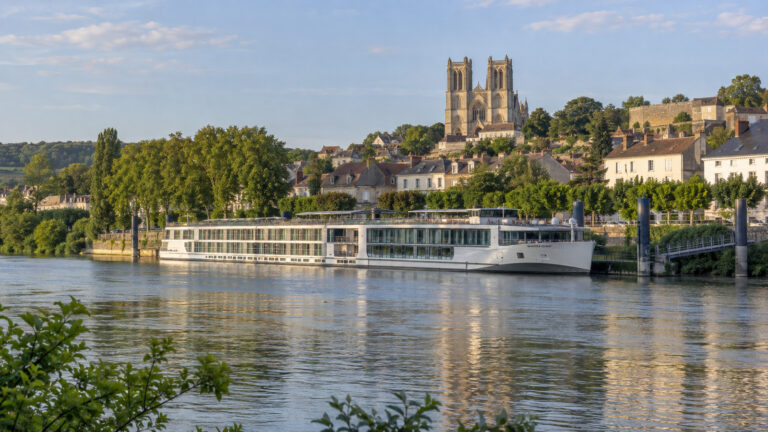
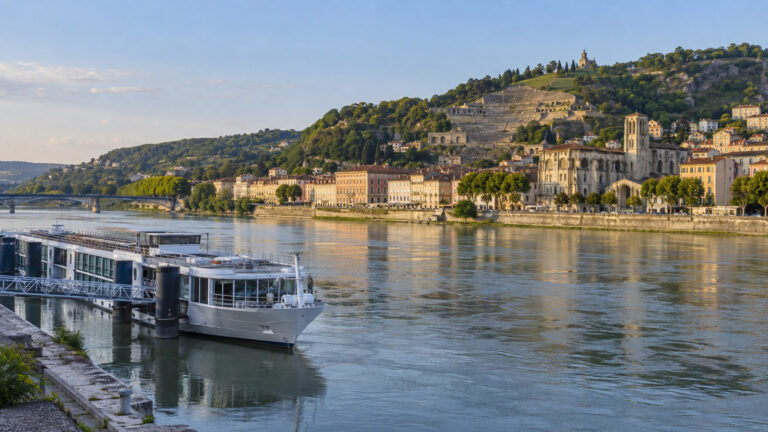
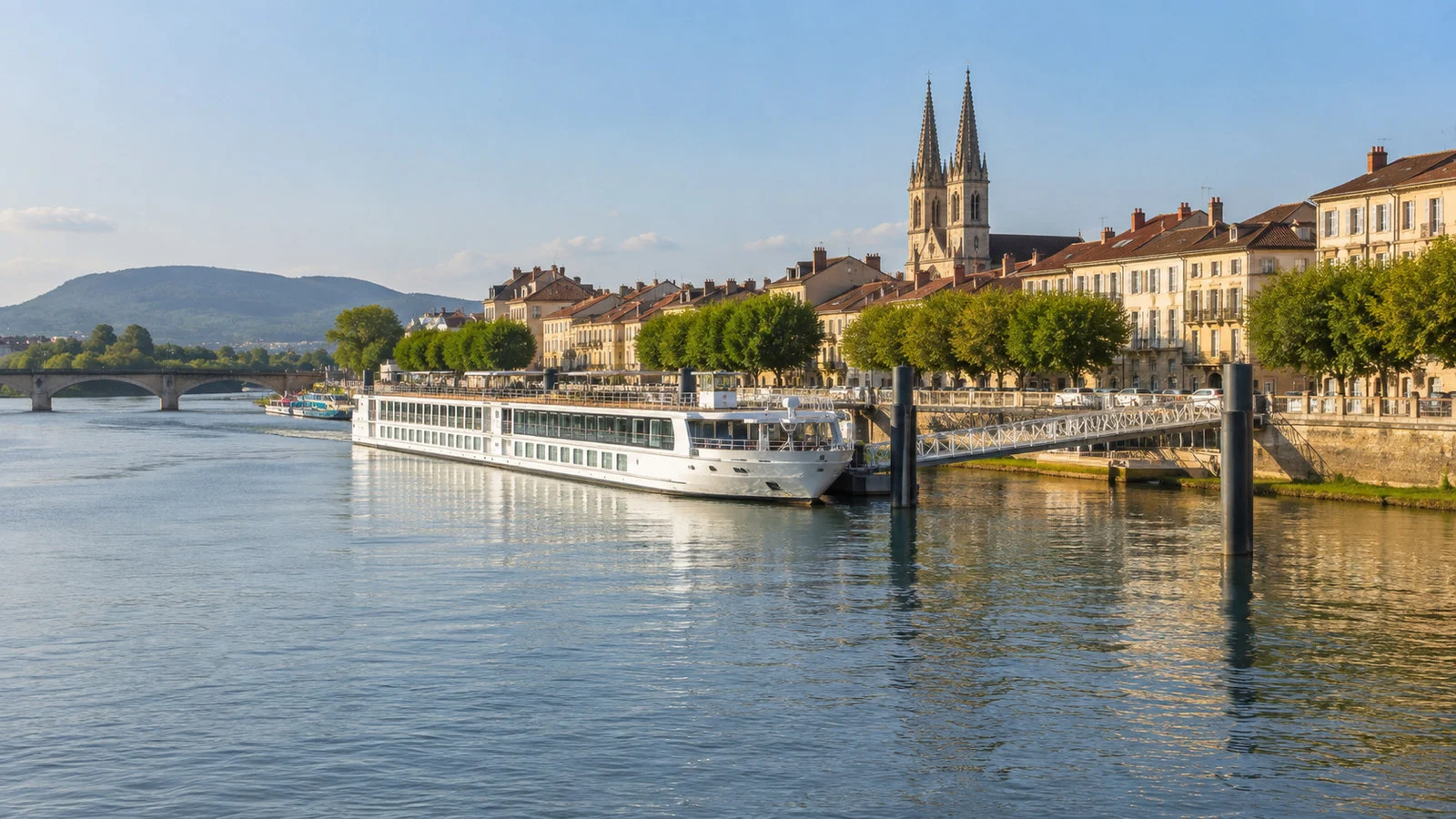
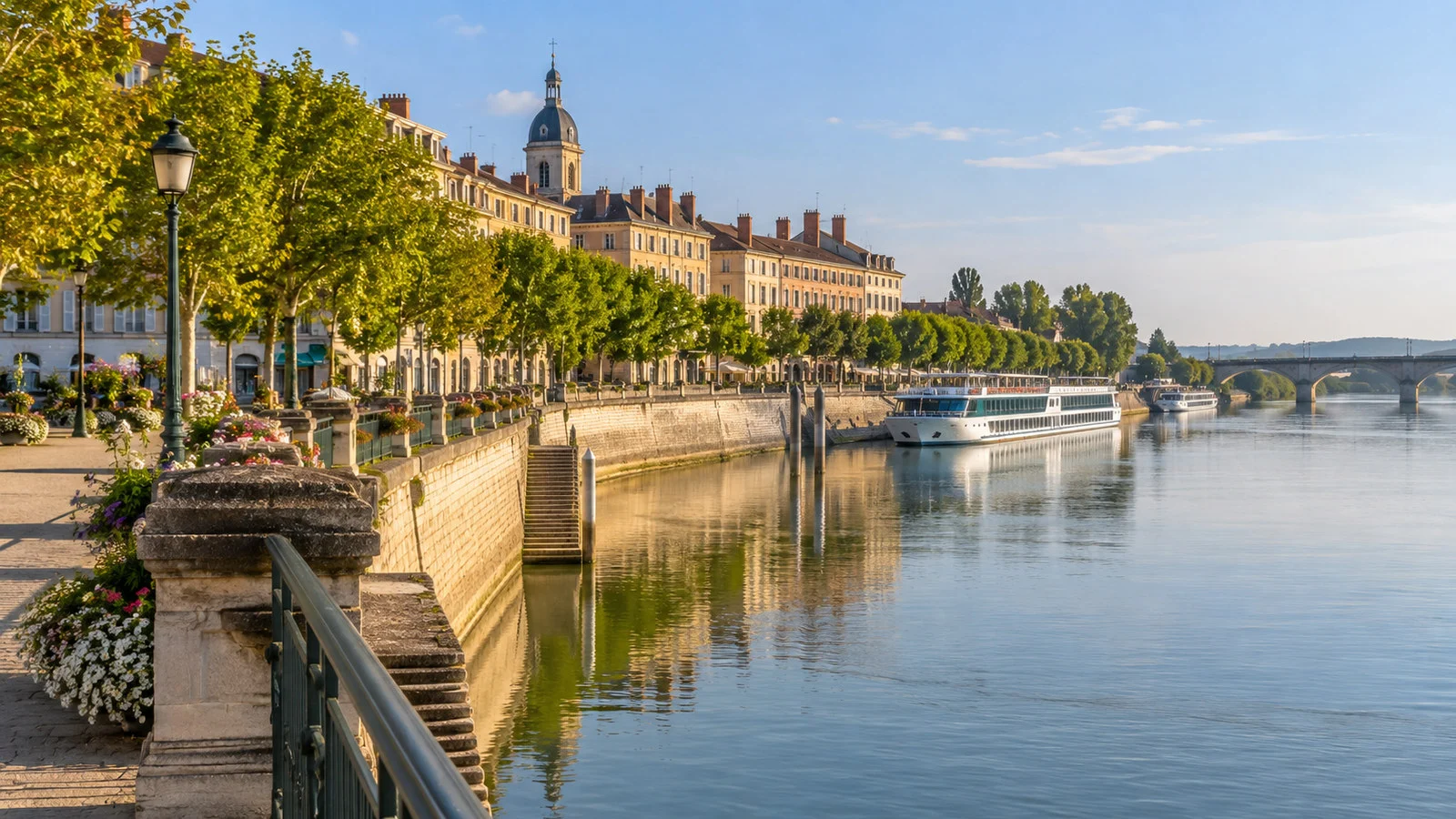
River vessels use Saône quays close to central Mâcon, with assignments determined by the operator and local conditions. Most passengers can expect an alongside arrival rather than a tender, but the exact gangway location can change.
Quai Lamartine is the most recognizable riverfront reference for visitors, while neighboring quay areas may also appear in cruise information. Check the daily program before leaving because another ship or a river-operation change can shift the berth.
From a central berth, the old town is reached on foot without a shuttle. The first part of the route follows a broad riverside setting, though gangway angle and temporary mooring arrangements depend on water level.
Ships sometimes raft side by side at busy river stops, which can require crossing another vessel. Follow crew instructions, keep noise low in neighboring reception areas, and never assume the same walking route will remain open when you return.
Quick Facts
- River: Saône
- Arrival: Normally alongside at a central quay
- Town access: Old-town sights are generally walkable from the riverfront
- Best local plan: Quai Lamartine, old Mâcon, Saint-Pierre, and the Musée des Ursulines
- Best countryside plan: A Mâconnais wine visit or Roche de Solutré
- Longer excursion: Cluny and its abbey heritage
- Currency: Euro
- Emergency number: 112
Walking into the center
Mâcon rewards a simple approach: leave the quay, orient yourself with the river, and walk into the compact center. The route is not entirely obstacle-free, but it is less demanding than the steep medieval streets found at many European river stops.
Save the berth location on an offline map before moving inland. Historic lanes and similar quay names can create confusion at the end of the day, especially if several vessels are moored nearby.
The Mâcon tourism office can confirm current opening hours, market activity, accessible routes, and temporary closures. Asking one focused question there can save more time than following an old itinerary copied across travel sites.
No organized tour is necessary for a riverfront stroll, church exteriors, shops, and a cafe. Keep the day compact and allow the town’s slower pace to be part of the attraction.
Quai Lamartine and the riverfront
Quai Lamartine is named for Alphonse de Lamartine, the poet and politician born in Mâcon. The waterfront gives you the clearest sense of how the town relates to the Saône and makes an easy first or final walk.
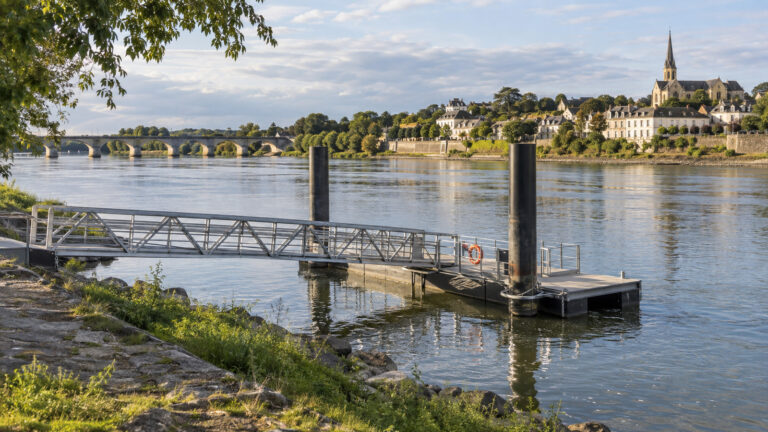
Look across the water toward Saint-Laurent-sur-Saône and the bridge linking the two banks. Morning light, working river traffic, and the reflections of the town make this one of the most photogenic parts of a low-key call.
The quay is also useful for pacing because benches and open views offer natural breaks. Travelers with limited stamina can enjoy a satisfying visit without moving far from the vessel.
Old Mâcon and the wooden house
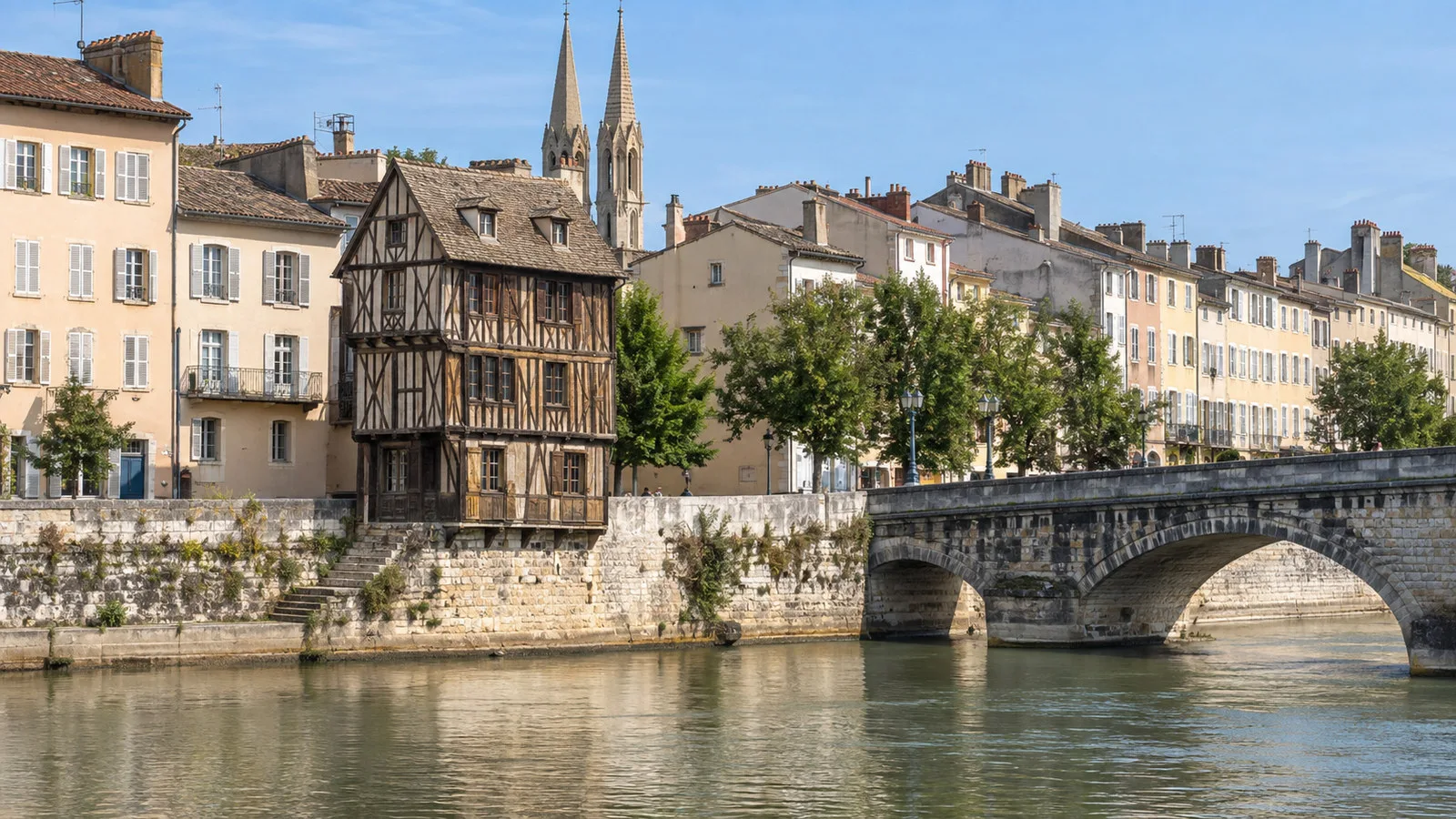
A few streets back from the river, the center mixes shopping streets with traces of older Mâcon. The Maison de Bois is the best-known facade, distinguished by carved wooden figures that reward a closer look.
Do not expect a vast preserved medieval district. The appeal comes from finding individual buildings, small squares, churches, and market life within a town that still functions for residents.
Allow time to look up, because much of the architectural detail sits above storefront level. Narrow sidewalks and street activity make it safer to stop at the side before taking photographs.
Saint-Pierre and Vieux Saint-Vincent
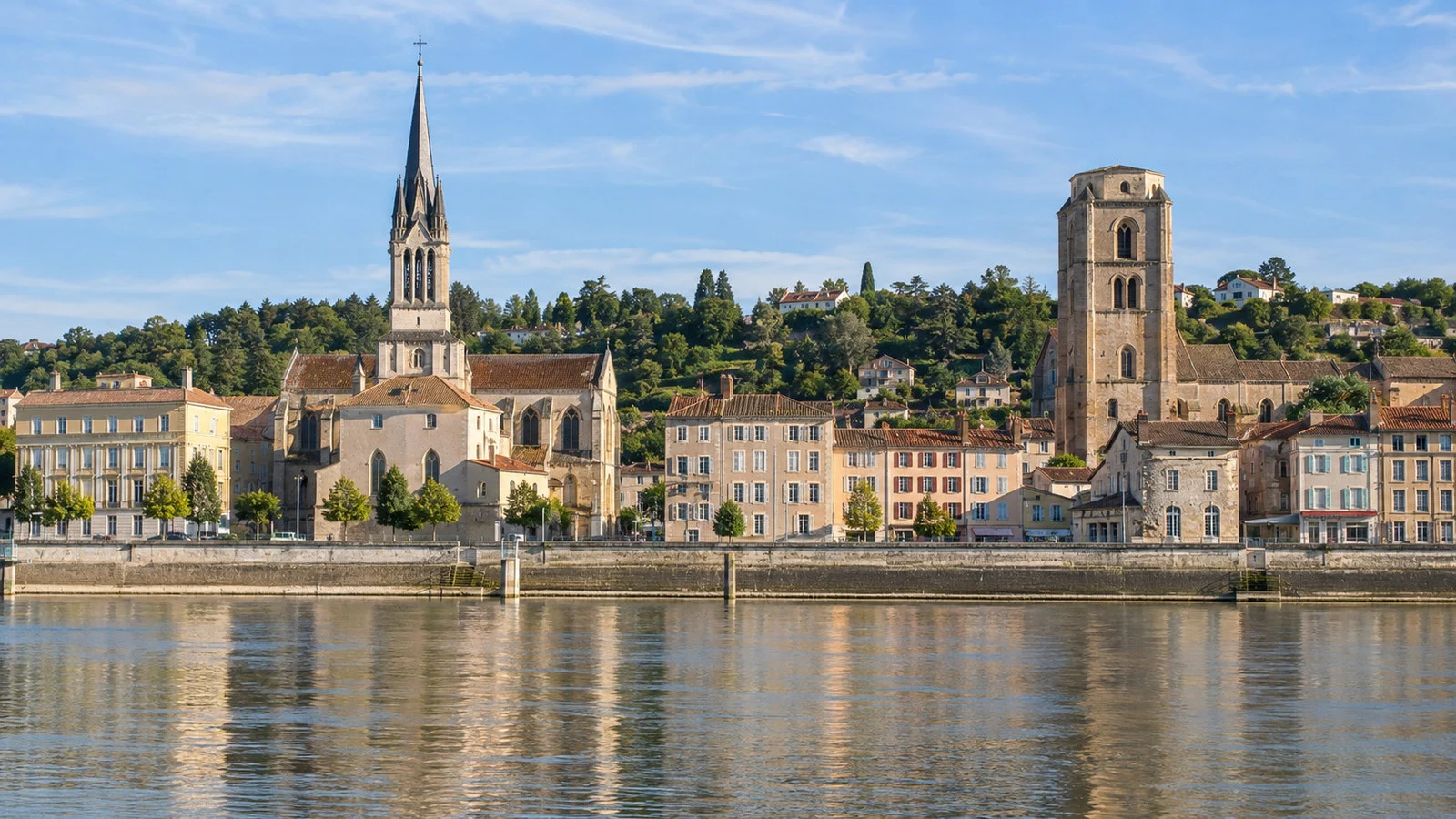
The Church of Saint-Pierre is one of central Mâcon’s most prominent nineteenth-century landmarks. Its towers and interior provide a strong contrast with the much older remains of Vieux Saint-Vincent.
Vieux Saint-Vincent preserves parts of Mâcon’s former cathedral and offers a glimpse of the city’s medieval religious history. Access and hours can be limited, so treat an interior visit as a bonus rather than the sole reason for the walk.
Both sites are active or sensitive heritage spaces, which calls for quiet behavior and respectful dress. Photography rules may differ between interiors, exhibitions, and services.
Musée des Ursulines
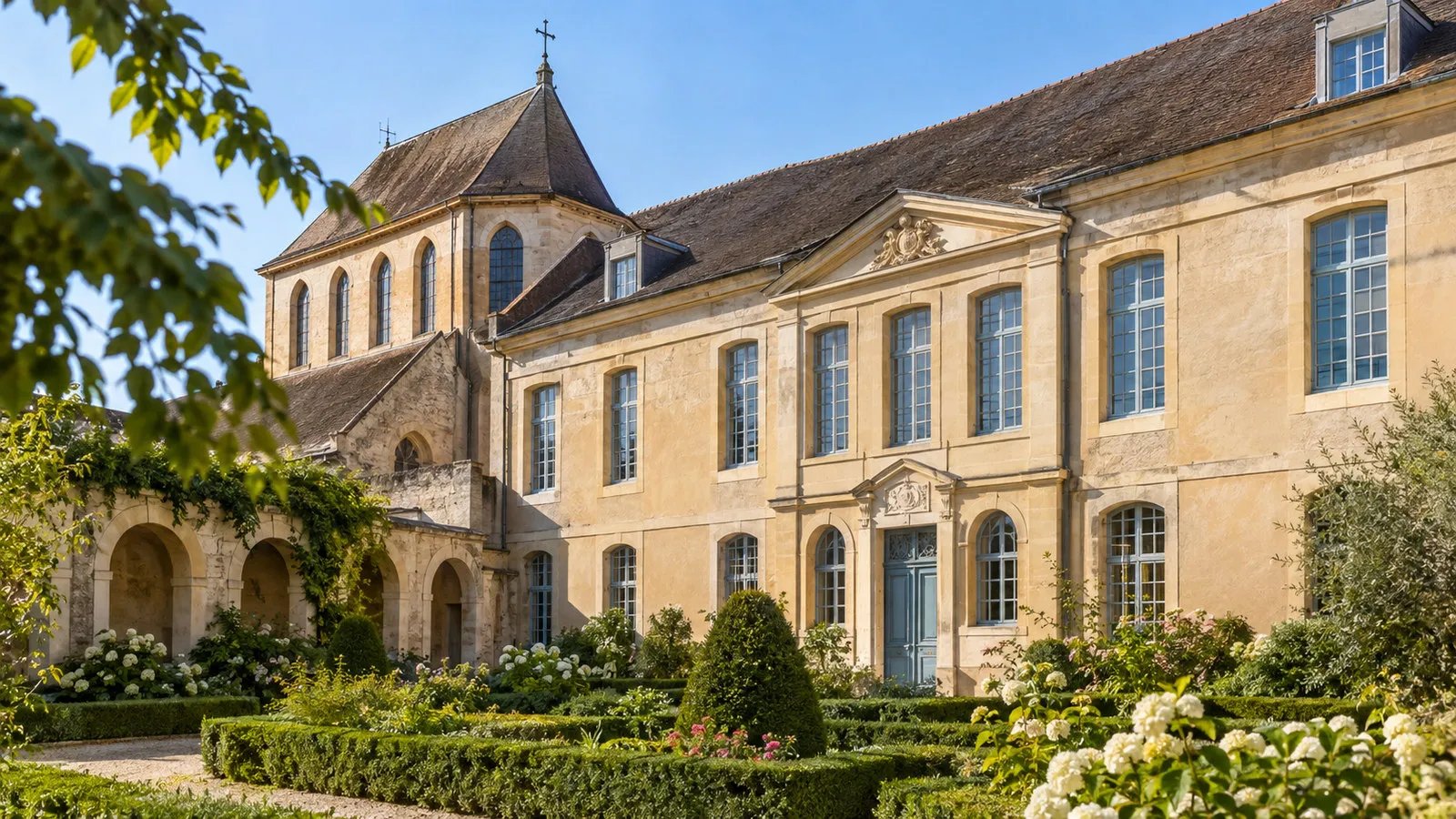
The Musée des Ursulines occupies a former convent and covers local archaeology, history, and fine arts. It is the best indoor choice when weather turns or when you want more context than a self-guided street walk provides.
Check the museum’s current page for hours, prices, exhibitions, and accessibility. Municipal museums often close on particular weekdays or between exhibitions, so a schedule saved months earlier may be wrong.
An hour can give the collection proper attention without consuming the full port call. I would pair it with the old center and riverfront rather than rushing from the museum straight onto a distant excursion.
Why wine matters here
Mâcon sits in the Mâconnais, the southern part of Burgundy’s wine country. Chardonnay is the essential white grape, and the surrounding names include Mâcon and village-designated wines as well as appellations such as Pouilly-Fuissé, Saint-Véran, and Viré-Clessé.
A tasting is most useful when someone explains site, soil, exposure, producer style, and appellation rules. It should reveal why neighboring bottles taste different rather than becoming a race through small pours.
Wine bars in town suit travelers who want flexibility and no countryside transfer. A producer visit offers deeper context but usually requires an appointment and transportation.
Do not assume every cellar accepts walk-ins, English-language visitors, or large cruise groups. Confirm the time, tasting fee, accessibility, purchase expectations, and return arrangement before leaving the quay.
If you drink, keep the pace moderate and eat something during the day. French alcohol limits and cruise-line policies still apply even when wine is the theme of the excursion.
Roche de Solutré
Roche de Solutré rises west of Mâcon above a landscape of vineyards and villages. The limestone escarpment is linked with major prehistoric archaeology and forms part of the Grand Site de France at Solutré Pouilly Vergisson.
The visit can combine the landscape, an archaeological museum, and a climb or lower-level walk depending on time and ability. Do not treat the summit as automatic, because trail condition, heat, footwear, and personal stamina all matter.
The upper path is uneven and involves real elevation, making it unsuitable for many mobility devices. Travelers who cannot climb can still enjoy the setting, museum, village, or vineyard views from lower areas when the excursion is planned appropriately.
Use a ship excursion or prearranged driver unless you have carefully confirmed local transportation. The challenge is not simply reaching the site but having a reliable return within the ship’s schedule.
Bring water, sun protection, and shoes with grip. Wind and exposed rock can change how the hill feels even on a pleasant day in town.
Cluny as a longer excursion
Cluny Abbey appeals to travelers interested in medieval Europe and monastic history. Its abbey was once a center of enormous religious influence, although much of the great church was lost after the French Revolution.
The surviving buildings and interpretation still justify the journey, but the outing will take a substantial portion of the call. Choose it because Cluny is a priority, not because the old town of Mâcon lacks things to do.
An organized excursion simplifies transport and timed admission. Independent visitors should confirm train or bus limitations, a return option, and opening hours before committing.
Ship excursion or independent day
Explore independently when you want the riverfront, old center, churches, museum, market, and lunch. The compact plan gives you control and makes it easy to return if the weather changes.
Choose a ship excursion for wineries, Roche de Solutré, Cluny, or a combination that depends on appointments and rural roads. Transportation is the main value, with interpretation and return coordination close behind.
A private driver can be worthwhile for two or more people who want a particular producer. Put pickup, waiting time, route, final return, and price in writing.
I would not rely on finding a taxi at a rural winery for the ride back. Reserve the complete round-trip ride before tasting begins.
A practical half-day in town
Start with the riverfront so you understand the quay and can save the correct return point. Continue into the center for the Maison de Bois, Saint-Pierre, and the surviving old cathedral area.
Choose the Musée des Ursulines if it is open and local history interests you. Otherwise, use the time for the market, shops, or a longer walk through central streets.
Finish with lunch or a glass of Mâconnais wine within a comfortable walk of the ship. Ask for the bill early enough that French lunch service does not collide with all aboard.
This route remains worthwhile when one church or museum is closed. It depends on the town as a whole rather than a single ticketed attraction.
Food to look for
Menus may feature Bresse poultry, Charolais beef, local cheeses, snails, charcuterie, and seasonal produce from the wider region. Choose one regional dish and let the server suggest a local glass rather than attempting a full Burgundy survey at lunch.
Market days bring additional energy and can affect which streets feel busiest. Check the current schedule locally because holiday changes and special events can alter normal trading patterns.
Restaurants may not move at shipboard speed, particularly during a proper midday service. Tell the server when you need to leave and request the bill with a generous buffer.
Accessibility and mobility
The riverside is generally the easiest part of Mâcon, but gangway slope can change with the river. Rafting alongside another vessel may also add thresholds or interior passages before reaching shore.
Central streets include curbs, older paving, narrow sidewalks, and occasional steps into heritage buildings. Wheelchair users should ask the tourist office for a current accessible route rather than assuming every historic doorway is practical.
The Musée des Ursulines and other attractions should be contacted directly for current access details. Renovation, exhibitions, or equipment outages can change the route through an older building.
Roche de Solutré requires special care because the summit trail is not a smooth urban path. Ask whether an excursion includes a lower viewpoint, museum visit, accessible vehicle, and enough seating for travelers who skip the climb.
Use taxis to save energy even when distances in town look modest. A short ride can preserve stamina for the museum or tasting that matters most.
Weather and river conditions
Summer can be warm, sunny, and occasionally stormy, while spring and fall bring cooler walking weather and variable rain. Winter is quieter and can feel damp beside the river.
Pack a light rain layer, comfortable shoes, sun protection, and a small bottle of water. Countryside excursions need more preparation because a vineyard or limestone hill offers less shelter than the old town.
High or low water anywhere along the Saône and Rhône itinerary can alter sailing times, berths, or excursions. Follow the cruise director’s update rather than treating Mâcon’s original schedule as fixed.
A changed berth does not necessarily mean the town has become inaccessible. Ask for the new walking distance and shuttle arrangement before deciding whether to stay aboard.
Safety and practical details
Mâcon calls for normal town awareness around phones, wallets, road crossings, and crowded markets. The European emergency number is 112, with French services also using 15 for medical emergencies, 17 for police, and 18 for fire.
Carry the ship’s contact details and a photo of the daily schedule. If the vessel changes berth while you are away, the cruise line’s instructions are more useful than returning to a remembered gangway.
Wine purchases should be packed according to the ship’s rules and later airline limits. Ask whether the vessel stores alcohol bought ashore before carrying several bottles back.
Getting back to the ship
For an in-town day, begin returning before the official deadline and verify the vessel’s name if several ships are rafted together. Allow time to cross any neighboring ship and complete reboarding checks.
From a winery, Cluny, or Roche de Solutré, keep a much larger buffer for traffic and delayed departures. Agree with the driver or guide on the final leaving time at the beginning of the excursion.
Ship time and local phone time are usually aligned here, but you should never assume. Use the clock specified in the daily program for all aboard.
How Mâcon fits a Saône cruise
Mâcon often appears on itineraries connecting Burgundy with Lyon and the Rhône Valley. Its smaller scale makes it a useful contrast to Lyon’s museums, food halls, and larger-city energy.
The stop also introduces the southern Burgundy landscape before or after visits farther north. Wine styles, river scenery, and rural excursions help explain how the Saône links distinct parts of the region.
Some itineraries use Mâcon mainly as a departure point for countryside touring, while others allow real free time in town. Read the daily plan closely so you know whether the riverfront is the destination or merely the meeting place.
Is Mâcon worth the stop?
Yes, especially if you enjoy compact towns, wine culture, and a day that does not require a coach. Mâcon is not trying to compete with Paris or Lyon, and its value comes from being manageable.
My first-visit plan would stay local for the riverfront, museum, architecture, and lunch unless wine is a major interest. I would book the countryside when a well-chosen producer or Roche de Solutré makes the transfer worthwhile.
The town rewards curiosity more than a checklist. Give yourself time to notice the Saône, old facades, local glass, and everyday market rhythm between the cruise’s larger headline stops.
Before you walk ashore
Confirm the berth, rafting arrangement, all-aboard time, museum opening, and countryside transportation. Bring grippy shoes, a rain layer, sun protection, small cash, and the ship’s contact details.
Then choose one clear version of the day: an independent town walk or a coordinated journey into the Mâconnais. Mâcon becomes easy as soon as you stop trying to do both at once.
How this guide was researched: This guide was checked against current information from Mâcon South Burgundy Tourism, the City of Mâcon, the Grand Site de France Solutré Pouilly Vergisson, and the Centre des Monuments Nationaux. Time-sensitive details were reviewed in September 2026; see our Editorial Policy.