Sete Cruise Port: Quai d’Alger, Canals and Oysters
Sète is a Mediterranean port with the soul of a working fishing town. Canals cut through the center, boats sit below cafe terraces, and Mont Saint-Clair rises behind it all with the Thau lagoon shimmering on the other side.
The experience begins with the daily berth assignment because a central quay, a commercial position, and an anchorage create different first steps. Check the ship’s program before deciding that the town begins at the gangway.
Quick Facts
- Port: Port of Sète, owned by the Occitanie Region.
- Main cruise facility: Gare du Maroc at Quai d’Alger.
- Berth capacity: The port lists three positions for ships up to 250 meters in optimal conditions.
- Arrival type: Ships may use an assigned berth or roadstead arrangements, so follow the cruise line’s final instructions.
- Town access: Quai d’Alger is central, while another assignment may require a shuttle, tender, or longer walk.
- Main local sights: The canals, Les Halles market, Mont Saint-Clair, museums, and the maritime cemetery.
- Signature food: Tielle sétoise and oysters from the Thau lagoon.
- Currency: Euro.
- Language: French.
- Time zone: Central European Time in winter and Central European Summer Time during the seasonal clock change.
Where cruise ships arrive in Sète
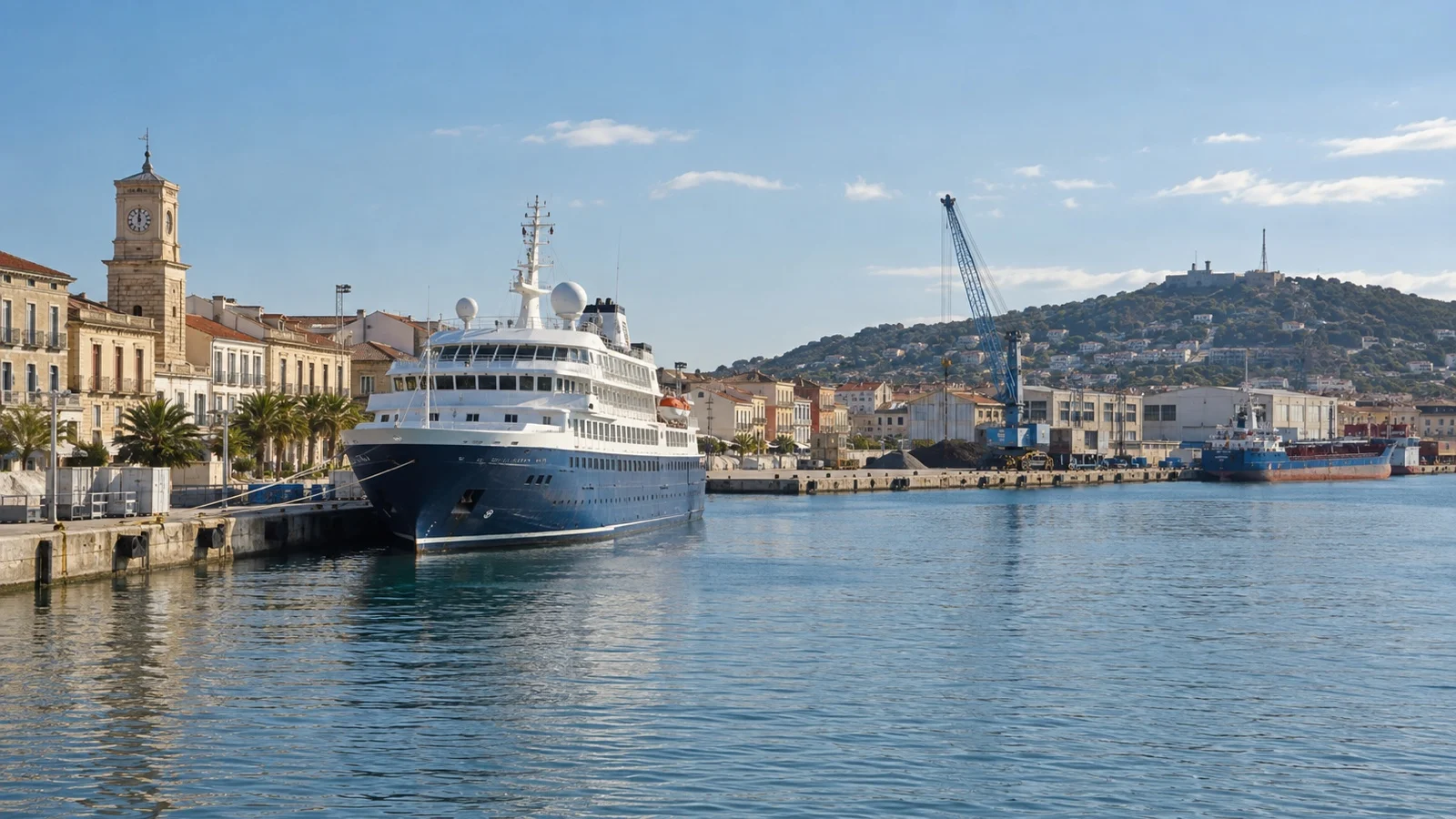
The Port of Sète identifies Gare du Maroc at Quai d’Alger as its cruise passenger facility. Gare Orsetti at Place Mangeot serves ferry passengers, so the two names should not be treated as interchangeable.
Quai d’Alger lies close to the canals and center, creating one of the easiest arrivals on the French Mediterranean coast. Smaller ships can step from the working quay into town with very little transport.
The port also operates commercial infrastructure, and an assigned berth can sit farther from the visitor core. Some calls may use an anchorage and tender arrangements, which changes accessibility, timing, and the final return.
Read the daily program for the berth name, shuttle details, tender cutoff, and port gate. A description written for Quai d’Alger should never be applied automatically to every ship.
Why Sète favors smaller ships
The port’s official cruise strategy emphasizes a human-scale destination and medium-sized vessels. It lists three berths capable of receiving ships up to 250 meters under optimal conditions.
That focus preserves the intimacy of a call where passengers can disperse into local streets instead of overwhelming a purpose-built terminal district. It also means the largest ships may face different operational arrangements or skip Sète entirely.
The same port page highlights Quai d’Alger in the heart of the city for smaller vessels and describes ongoing environmental investment. Treat shore-power status and exact vessel compatibility as live operational details rather than permanent promises.
Walking from Quai d’Alger
From the central cruise facility, the canal district begins within minutes. The route is largely level along the waterfront, although old paving, curbs, bollards, and busy road crossings deserve attention.
Begin around the Canal Royal, then follow the quays toward Les Halles and the central shopping streets. Fishing boats, pleasure craft, bridges, and reflections provide the scenery without requiring a formal attraction ticket.
Sète is compact enough for an improvised local day, but the hill behind town changes the effort quickly. Save Mont Saint-Clair for a taxi, local bus, or a deliberate climb rather than drifting uphill without a plan.
Mont Saint-Clair
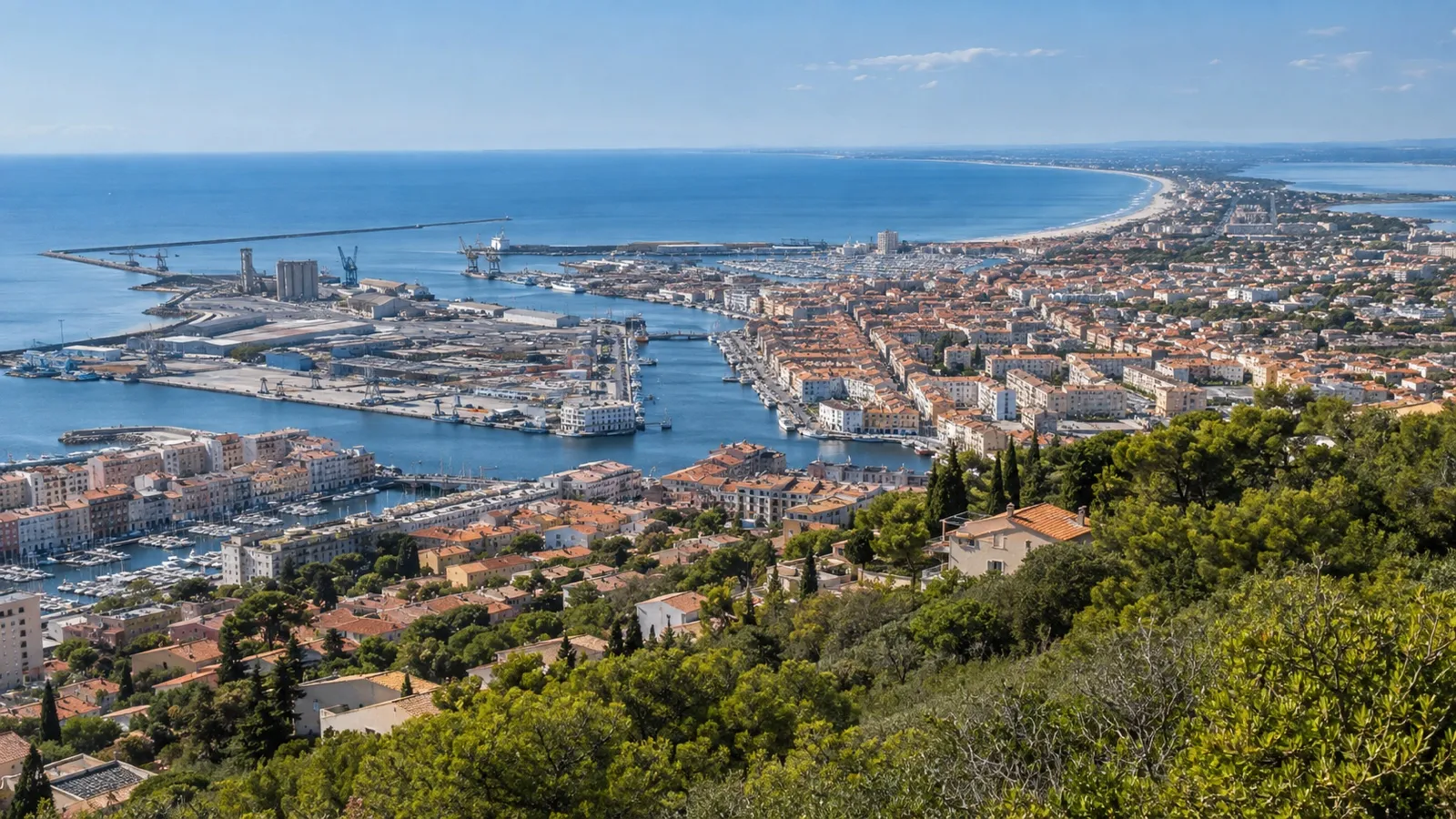
Mont Saint-Clair rises directly behind Sète and offers the clearest explanation of the landscape. From above, the Mediterranean, port, canals, narrow sand strip, and broad Thau lagoon fit into one view.
The climb is steep and exposed, especially in warm weather. A taxi or local bus uphill followed by a downhill walk is a more comfortable plan for many visitors.
At the summit, viewpoints and the chapel area reward time even when haze softens the horizon. Wind can be strong, so secure hats and carry a layer outside midsummer.
Walking down still involves sustained slopes and may be hard on knees. Travelers with limited mobility should confirm a round-trip vehicle rather than expecting to find an immediate taxi at the top.
The canals and maritime character
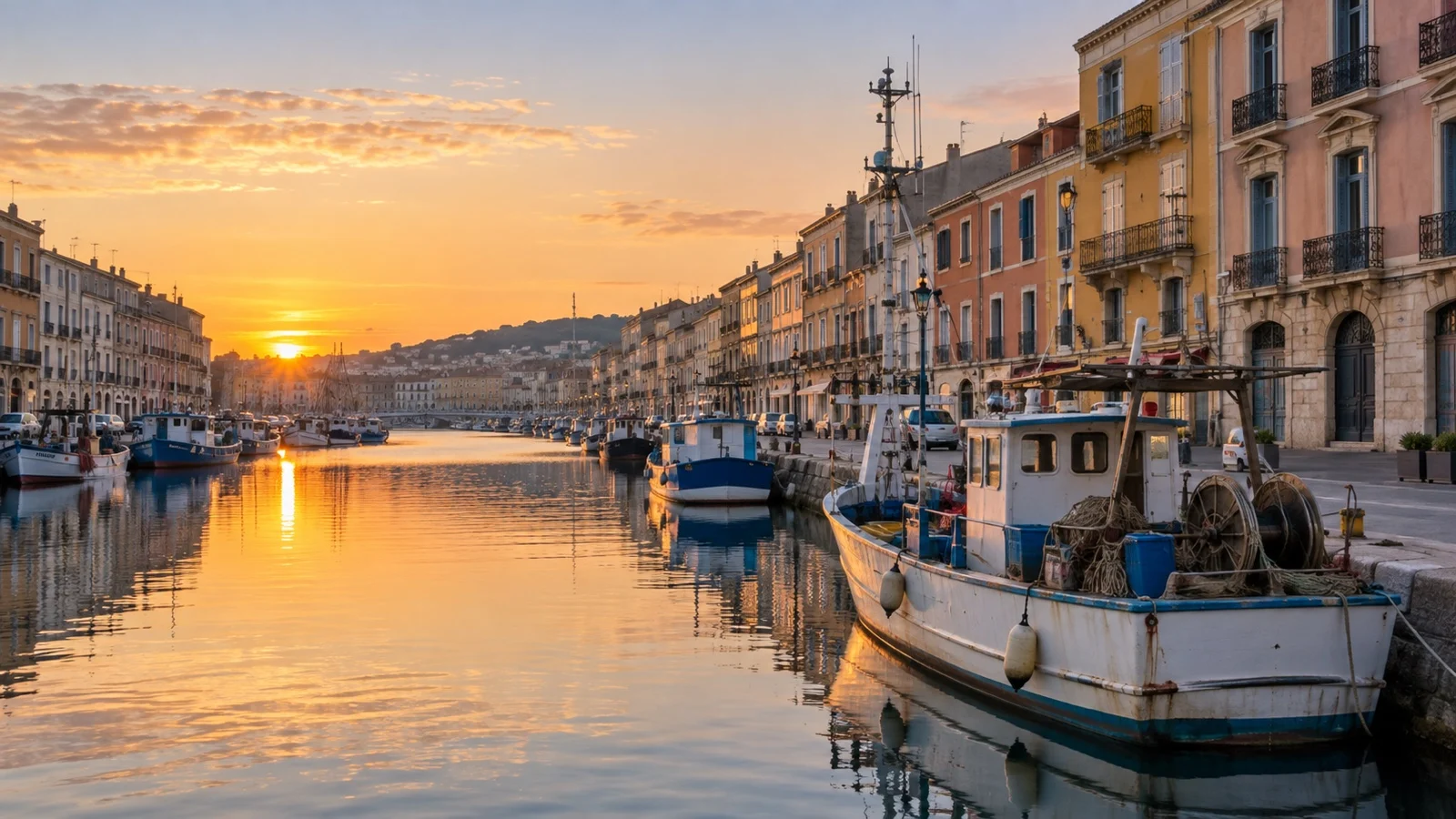
Sète is sometimes compared with Venice because water crosses the city, but its canals belong to fishing, commerce, and daily life rather than a romantic stage set. That working quality is the reason the waterfront feels so specific.
The Canal Royal is the main urban waterway and the traditional setting for water jousting. Event days can bring crowds and temporary route changes, so allow more time when barriers or grandstands appear.
Boat tours may operate through the canals and toward the lagoon during the visitor season. Check the route, language, boarding point, duration, and return time directly before buying.
A simple walk along both banks is just as satisfying when no tour fits. Bridges make it easy to change sides, while cafes provide natural pauses without pulling you far from the ship.
Les Halles and what to eat
Les Halles de Sète is the covered market at the center of the city’s food life. Fish, shellfish, produce, cheese, bread, and prepared dishes make it a far better introduction than a generic waterfront menu.
Look for tielle sétoise, a savory pie filled with octopus or squid in a spiced tomato sauce. It travels well enough for a quick lunch but tastes best before the market begins winding down.
Oysters and mussels from the Étang de Thau are another local signature. Confirm whether a stall serves food on-site or only sells ingredients before building lunch around it.
Markets are strongest in the morning, and individual stalls keep their own days and hours. Go early if food matters, then continue to museums or the hill afterward.
MIAM and Sète’s museums
MIAM, the Musée International des Arts Modestes, explores popular objects, everyday creativity, collections, and visual culture with a playful seriousness. It is a refreshing alternative to the predictable regional museum and a good choice in heat or rain.
Exhibitions and hours change, and older guides often preserve schedules long after they expire. Check the museum’s official information before walking across town, especially on Monday or a public holiday.
The Musée Paul Valéry stands higher on the slope near the maritime cemetery and combines art with views. Reaching it adds a climb, so pair it with that side of town rather than crossing back and forth.
The Centre Régional d’Art Contemporain occupies a waterfront setting closer to the flatter central area. Its exhibition schedule can make it either a highlight or a quick visit, depending on current programming.
Théâtre de la Mer and the maritime cemetery
The open-air Théâtre de la Mer faces the Mediterranean from a former fort near the southern waterfront. Concert preparation and events can limit casual entry, but the surrounding walk remains worthwhile.
Above it, the Cimetière Marin is associated with poet Paul Valéry and overlooks the sea. This is an active cemetery, so quiet behavior matters more than completing a sightseeing checklist.
The slope is substantial, surfaces vary, and shade can be limited. Combine the cemetery with the Paul Valéry museum or Mont Saint-Clair only when energy and time make sense.
Bouzigues and the Thau lagoon
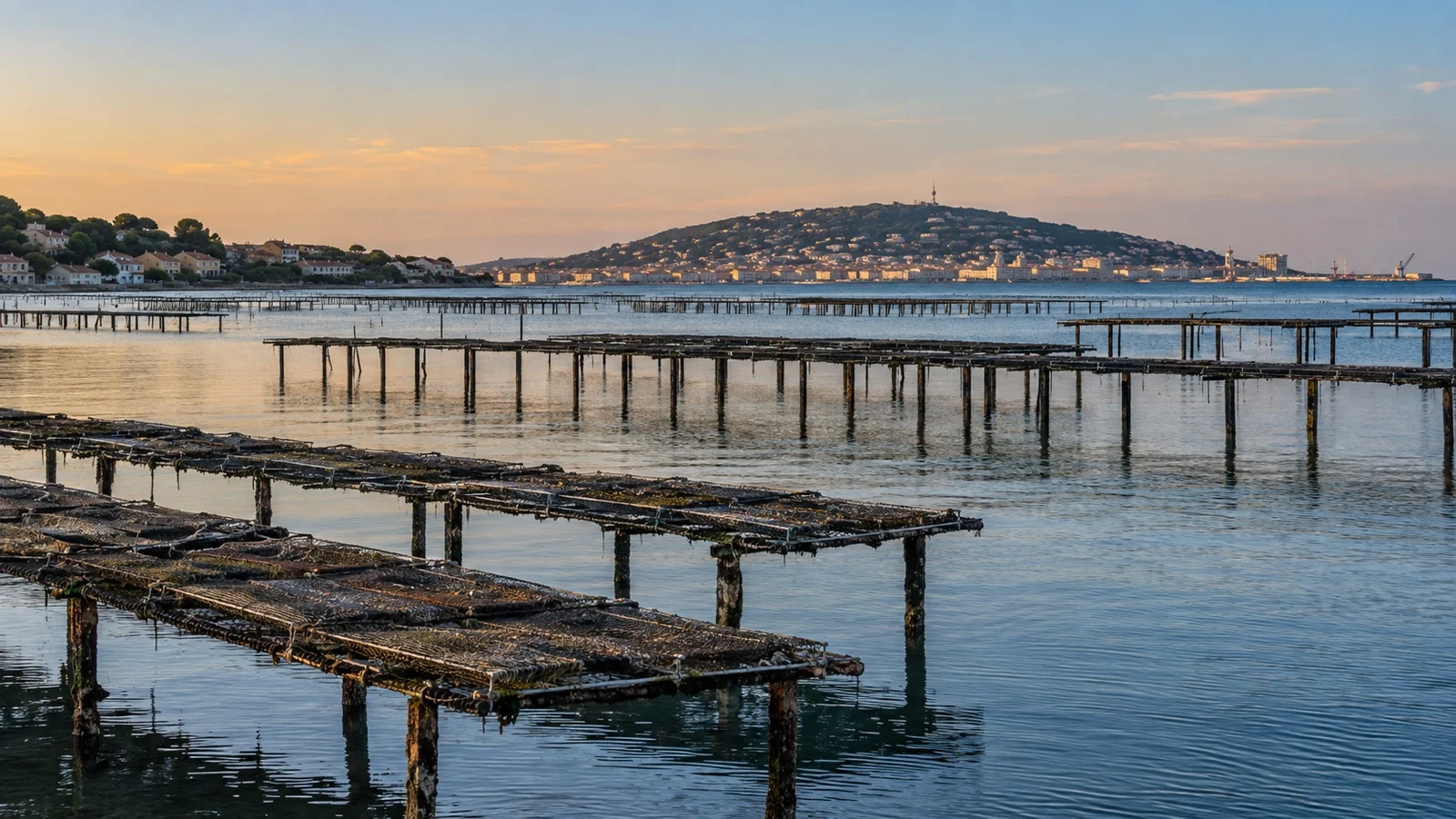
Bouzigues sits across the Étang de Thau and is closely associated with the lagoon’s shellfish farming. Oyster tables stretch across the water, creating a landscape that is productive as well as beautiful.
Reaching the village requires a regional bus, taxi, private driver, or organized excursion around the lagoon. Public transport may work, but both directions must be checked through the current regional timetable.
Use the official destination information for current museum, boat-trip, tasting, and producer hours. A village known for oysters does not guarantee that a particular farm or visitor site is open during the ship’s call.
Bouzigues works best as the day’s main excursion rather than a quick addition after Montpellier. Arrange the return first and leave enough margin for road traffic.
Montpellier by train
Montpellier is feasible on a long call using regional rail, but the complete journey includes travel from the quay to Sète station. It also includes waiting, the train ride, and local movement after arrival.
The historic Écusson district, Place de la Comédie, museums, and tram network can fill several days. A rushed cruise excursion only samples them, so decide whether leaving distinctive Sète is worth the transport.
Check trains and coaches through liO Occitanie, including live traffic notices. Never make the final workable train your planned return.
If your ship is tendering or using a distant berth, add that transfer at both ends of the day. A generous rail plan from Quai d’Alger can become tight when a last tender controls the deadline.
The Canal du Midi connection
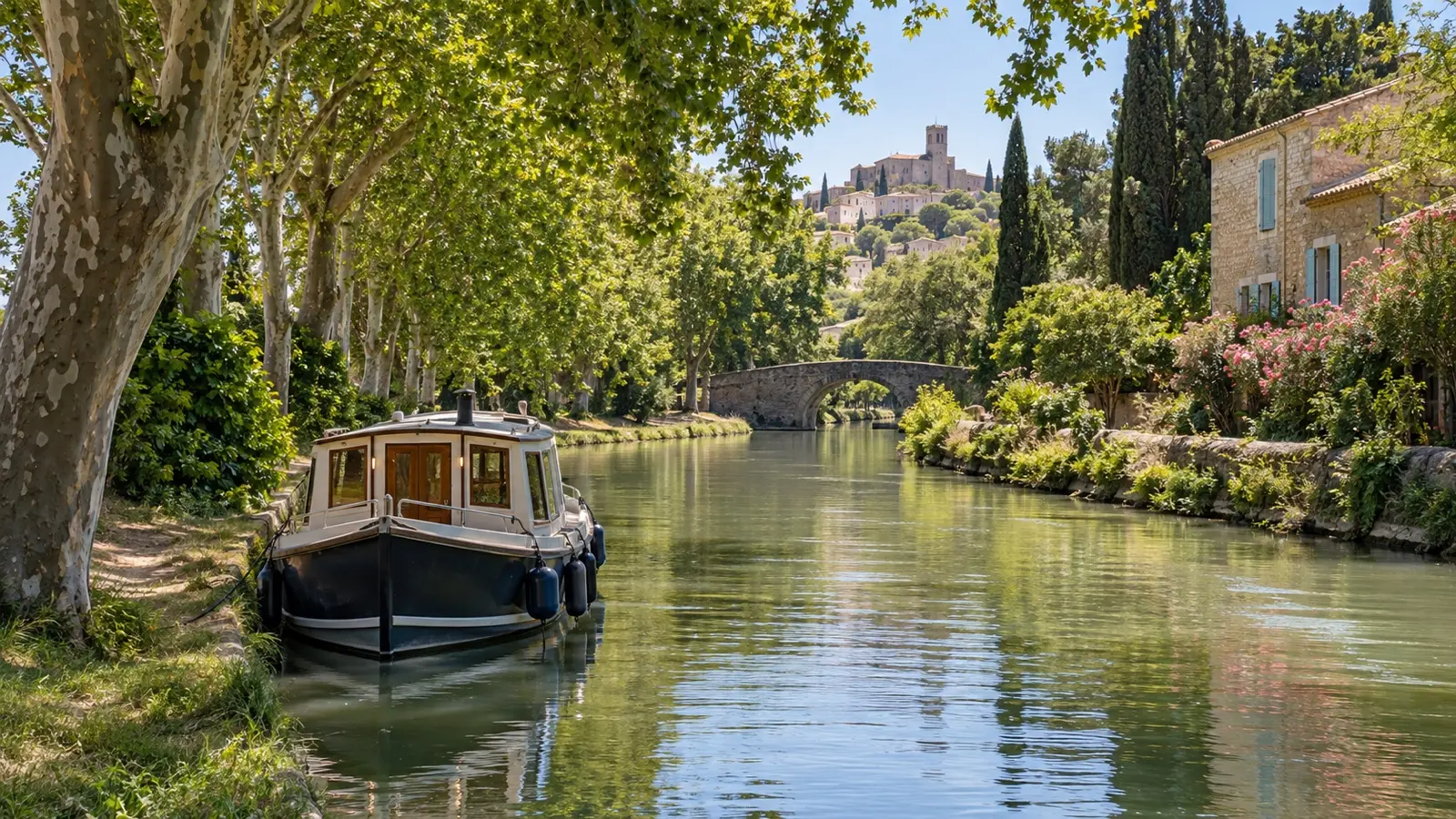
The Thau lagoon connects Sète’s maritime landscape with the great canal system running inland. UNESCO describes the Canal du Midi as a 360-kilometer network linking the Mediterranean and Atlantic through 328 engineering structures.
Built between 1667 and 1694 under Pierre-Paul Riquet, the system combines technical ambition with designed landscape. Its main section reaches the Étang de Thau at Marseillan rather than ending as a monument in central Sète.
A cruise call offers only a glimpse of this wider geography, not a full canal journey. The view from Mont Saint-Clair helps make the relationship visible in a single glance.
Accessibility at the port and in town
A central alongside berth offers the easiest version of Sète, with a short route to level canal-side streets. The ship’s gangway can still be steep or stepped, so arrange cruise line assistance in advance.
A roadstead call adds a tender boat, which may not be available to every traveler or mobility device. The captain and crew make the final decision based on equipment, sea state, and safe transfer conditions.
The lower center is mostly manageable, but historic paving, curbs, bridges, and crowd barriers create obstacles. Mont Saint-Clair, the maritime cemetery, and upper museums add sustained slopes.
Confirm shuttle accessibility separately because a port bus is not automatically lift-equipped. A taxi reserved both ways may provide the most dependable solution for the hill.
Weather and wind
Sète has a Mediterranean climate with warm, dry summers and cooler, wetter periods outside the main season. The waterfront and hill can feel very different on the same day.
Wind is the variable that deserves the most attention because it can affect berthing, tenders, boat trips, and exposed viewpoints. A clear sky does not guarantee calm water.
Carry sun protection, water, and a light wind-resistant layer. Comfortable shoes should handle smooth quays, old paving, and steep streets if Mont Saint-Clair is included.
In rain, museums and Les Halles create an easy local alternative. In strong wind, stay off exposed breakwaters and follow any closure signs around the harbor.
Three realistic port-day plans
The easiest plan stays central with Les Halles, the Canal Royal, MIAM or another open museum, and a waterfront lunch. It works especially well from Quai d’Alger and leaves a strong return margin.
The classic plan begins with a taxi or bus to Mont Saint-Clair, then descends toward the maritime cemetery and canal district. Put the hill first before heat and fatigue make it less appealing.
The excursion plan chooses either Bouzigues or Montpellier and treats it as the main event. Confirm both outward and return transportation before leaving the ship.
Do not combine a train excursion, lagoon village, museum circuit, and hill climb just because the map looks compact. Sète is most enjoyable when the schedule leaves room to stop beside the water.
The best way to approach Sète
Start with the berth assignment, then decide whether the city or lagoon deserves the day. A central call rewards walking, while a remote berth or tender requires more disciplined timing.
Sète offers enough character to justify staying local, from the market and canals to Mont Saint-Clair and a plate of oysters. Montpellier is available, but it does not need to replace the port town beneath your gangway.
Travelers continuing along the coast can compare this call with our Marseille cruise port guide and wider guide to French cruise ports. Sète belongs among the Mediterranean’s most rewarding small-ship arrivals.
How this guide was researched: No firsthand Sète port visit is claimed. This guide was checked against current official port, regional tourism, transit, museum, and UNESCO information on September 12, 2026; confirm the berth or tender, port transfer, transportation, opening hours, accessibility, weather, and all-aboard time before travel, and see our Editorial Policy.