Bourg-sur-Gironde River Cruise Port: Pontoons, Hill and Wine Guide
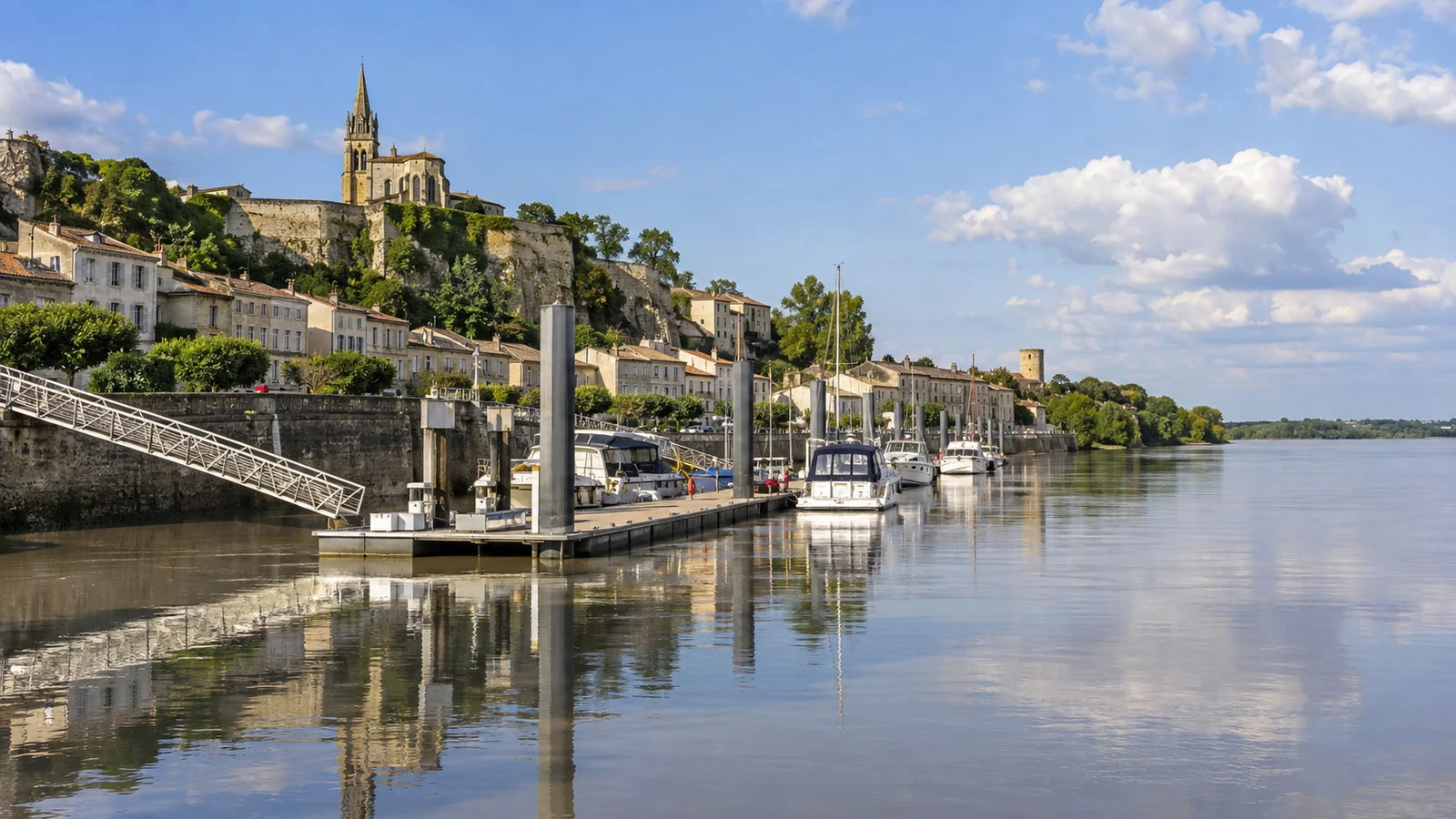
Bourg-sur-Gironde performs a neat little trick before passengers even leave the ship. The port sits at water level on the Dordogne, while the old town poses above it on a limestone outcrop as if someone arranged the village for maximum drama.
The result is a rewarding Bordeaux-region call with medieval lanes, river views, local wine, and a genuine climb between lower and upper town. It is also tide-sensitive, berth-sensitive, and sometimes used as an operational alternative to Libourne, so precision matters more here than a cheerful map pin.
Bourg-sur-Gironde River Cruise Port Quick Facts
Into Town: River cruise ships use community pontoons at Quai Jean-Bart in the lower port. Upper-town sights require a steep 10- to 25-minute climb.
Currency and Language: Euro. French is official; English is limited outside organized tourism, so a translation app helps.
Time Zone: Central European Time, UTC+1; Central European Summer Time, UTC+2, from the last Sunday in March through the last Sunday in October.
Operational Note: Tides, berth availability, river flow, fog, wind, or other operating conditions can shift Bourg, Libourne, or Blaye calls. Confirm the day’s landing and return point with the ship.
Is Bourg-sur-Gironde an Active River Cruise Port?
Yes. The official Bordeaux cruise directory currently lists Bourg among its river terminals, and the municipality says the community pontoons at Quai Jean-Bart receive river cruise vessels.
Uniworld’s official 2026 itinerary pairs Blaye and Bourg on Day 4 and offers a Bourg stroll through the upper town and medieval lanes. The operator notes that its daily schedule can change.
Together, the port directory, municipal landing information, and current cruise itinerary confirm Bourg as an active river destination. They do not make it a large embarkation terminal.
This is not a major embarkation terminal with baggage halls and permanent check-in counters. It is a small, active stop within the tidal Bordeaux river system.
For broader itinerary context, our European cruise ports guide connects Bourg with Bordeaux, Libourne, Blaye, Pauillac, and other French calls.
Is Bourg on the Dordogne or Gironde?
Despite the familiar name Bourg-sur-Gironde, the passenger landing is on the right bank of the Dordogne. The Garonne and Dordogne meet several miles downstream around Bec d’Ambès to form the Gironde estuary.
That is why responsible sources may describe Bourg as part of the Gironde estuary destination while still locating its port on the Dordogne. Both statements can make regional sense, but the river touching the gangway at Bourg is the Dordogne.
The water remains tidal because Atlantic tides travel through the Gironde and into both rivers. A ship can therefore visit a river named Dordogne while its timing is governed by an estuary many miles from the sea.
Where Do River Cruises Dock in Bourg?
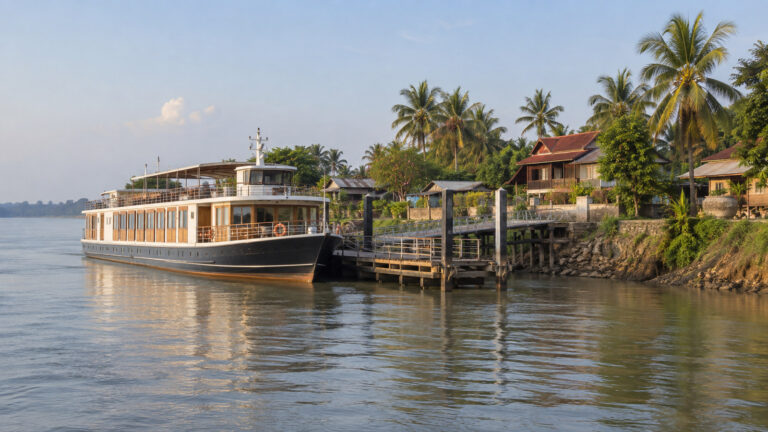
The municipality identifies the community pontoons at Quai Jean-Bart as the facilities for river-cruise ships. Gironde Tourism further says the river stop has two piers, one reserved for river cruisers and the other for day-cruise vessels.
This distinction prevents an easy mistake. The municipal visitor pontoon at Quai des Verreries is only about 66 feet long, while small-craft facilities are limited to boats under about 39 feet and are not the hotel-ship landing.
Use Quai Jean-Bart and the lower port as the reliable orientation area, not a promise that every vessel will use the same end of one pontoon. Tide, vessel length, another ship, day-boat movements, maintenance, and local instructions can alter the precise setup.
A gangway may connect directly from your ship or require a different arrangement based on water level. Follow the crew’s location and return directions rather than relying on a photo from another sailing.
Photograph the ship, pontoon, and nearest quay sign before climbing into town. From the ramparts, every river vessel looks close enough to identify until it is time to identify yours.
Lower Town Versus Upper Town
Bourg is physically divided between the lower port and upper historic town. The municipality’s 2025 welcome map identifies five stairways linking them: Escaliers du Roy, de la Goutinière, de la Source, des Salargues, and des Charpentiers.
The climb is not an incidental curb. Bourg’s current planning study measures nearly 115 feet of elevation difference between the port and Allées Daleau near the upper center.
Allow about 10 to 25 minutes from Quai Jean-Bart to the main upper-town sights, an editorial estimate depending on pontoon position, chosen stairs or road, pace, and stops. A fit walker taking the direct steps will be faster than a traveler seeking a less abrupt grade.
The same planning document notes steep slopes, many stairs, narrow or difficult sidewalks, and weak integration for people with reduced mobility. Any guide calling Bourg a universally easy walk-off port has met the map but not the contour lines.
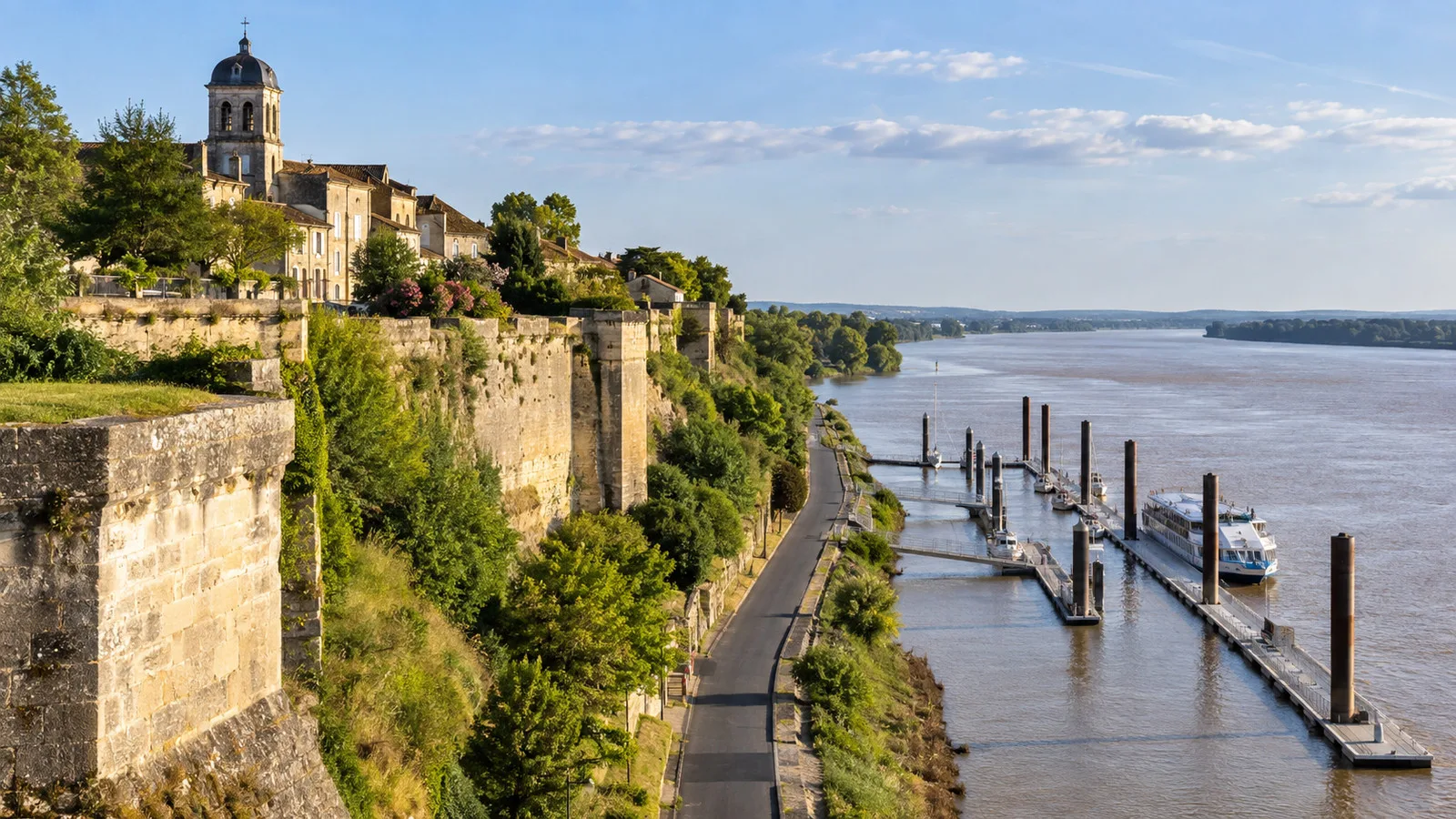
What to See in the Lower Port
The port district sits beneath the ramparts and preserves Bourg’s working relationship with the river. Old stone buildings, former glassworks, a marina atmosphere, and views up to the fortified ridge make it worth exploring even if the climb is not practical.
The covered washhouse dates from 1828 and sits near a spring below the old town. It offers a memorable glimpse of daily life without asking visitors to commit to a museum schedule.
Parc de l’Esconge lies near the foot of the cliffs with water, picnic areas, and views. Do not assume the route from the port is step-free, and check current access with the tourist office before setting out.
A lower-town circuit can fill 45 to 75 minutes at a relaxed pace, an editorial planning range. It is a sensible alternative when heat, rain, mobility, or a short call makes the upper town unwise.
What to See in the Upper Town
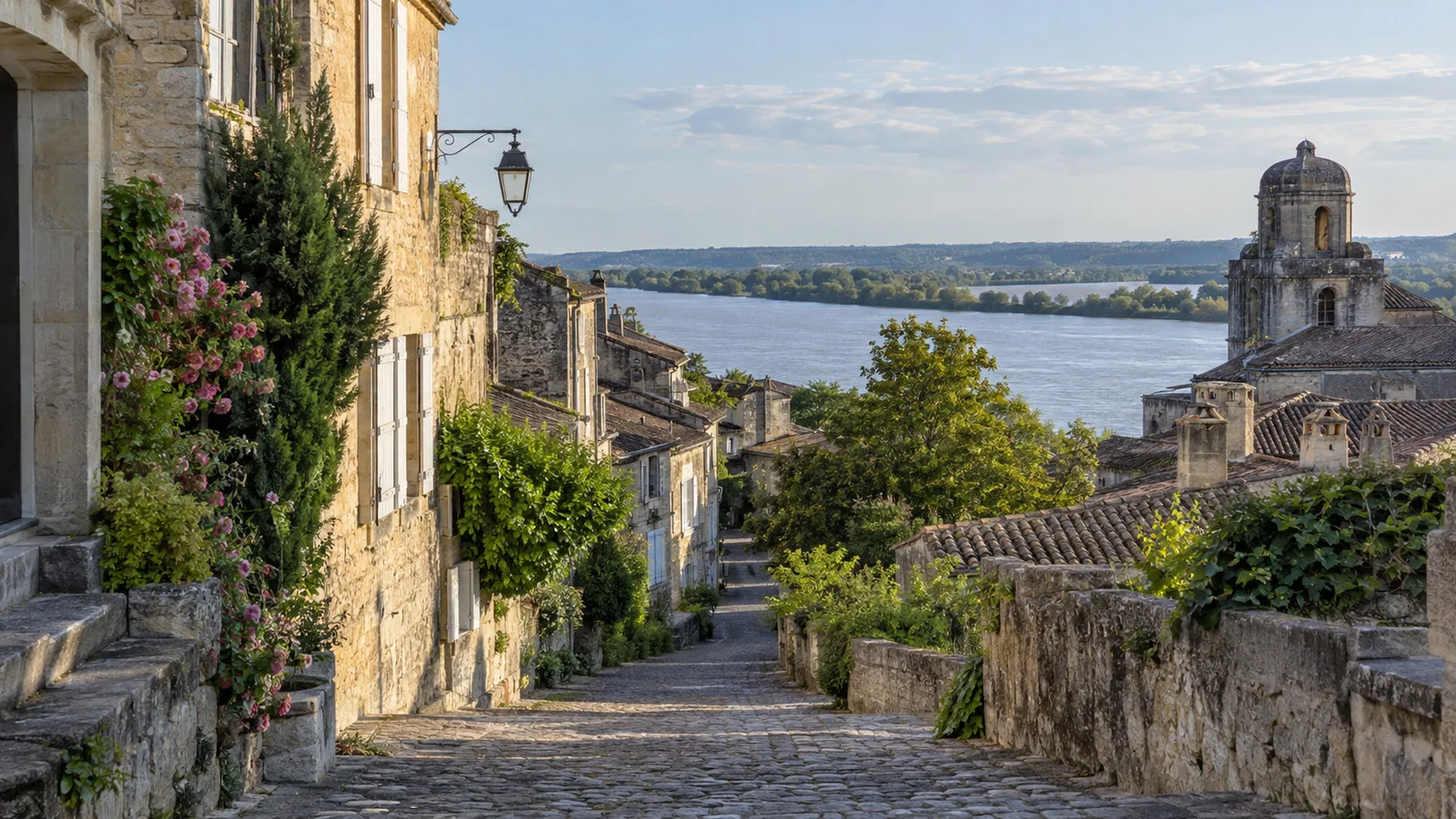
Ramparts and Viewpoints
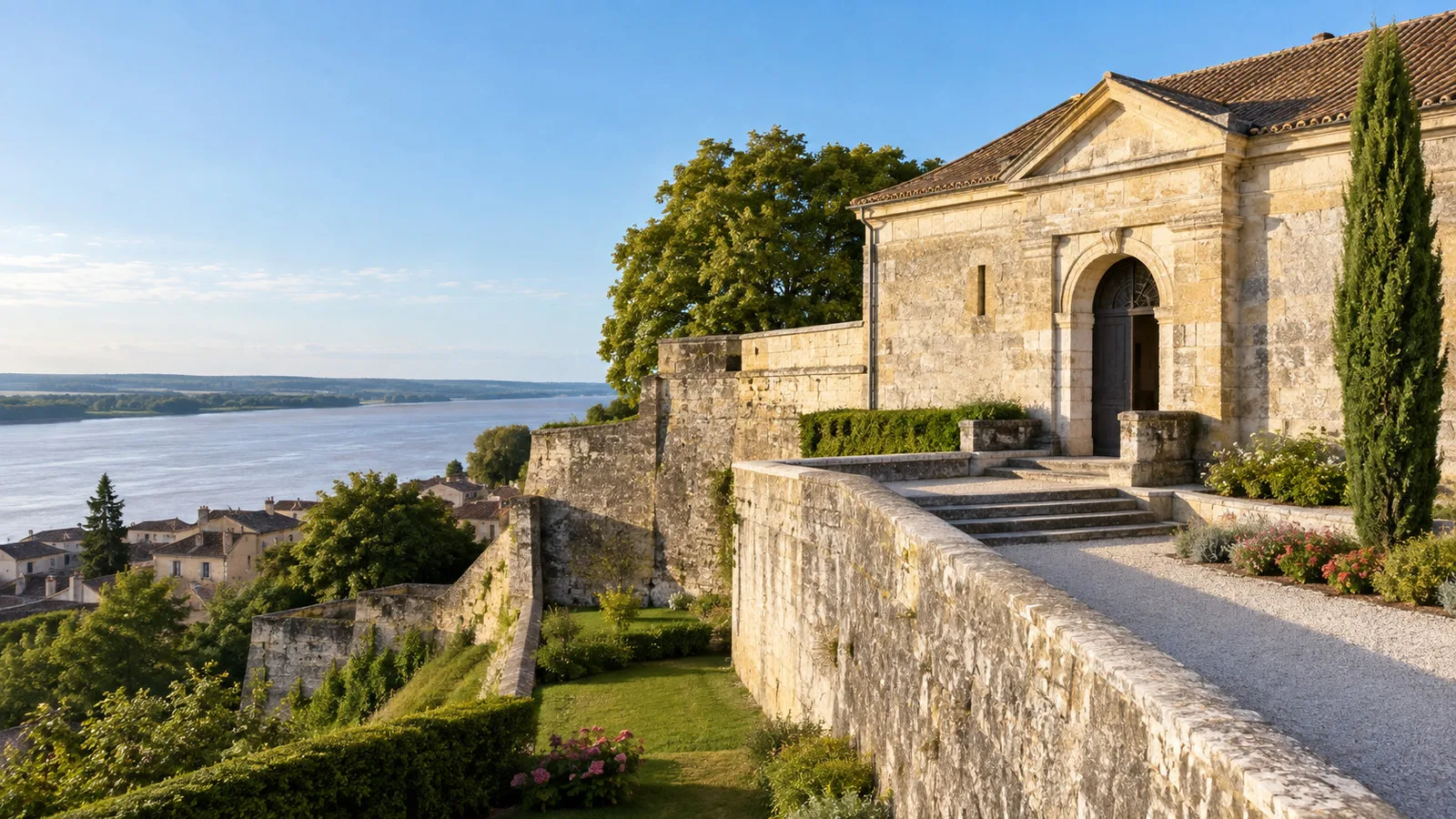
The upper town’s reward is its view over the Dordogne, islands, lowlands, and Entre-deux-Mers landscape. The municipal map marks panoramic viewpoints at the Citadel, District, Porte de la Mer, and Éperon.
These outdoor stops suit a short call because they do not depend on admission hours. Wind and sun can be stronger on the exposed edge, and historic surfaces require secure shoes.
Market Hall, Streets, and Church
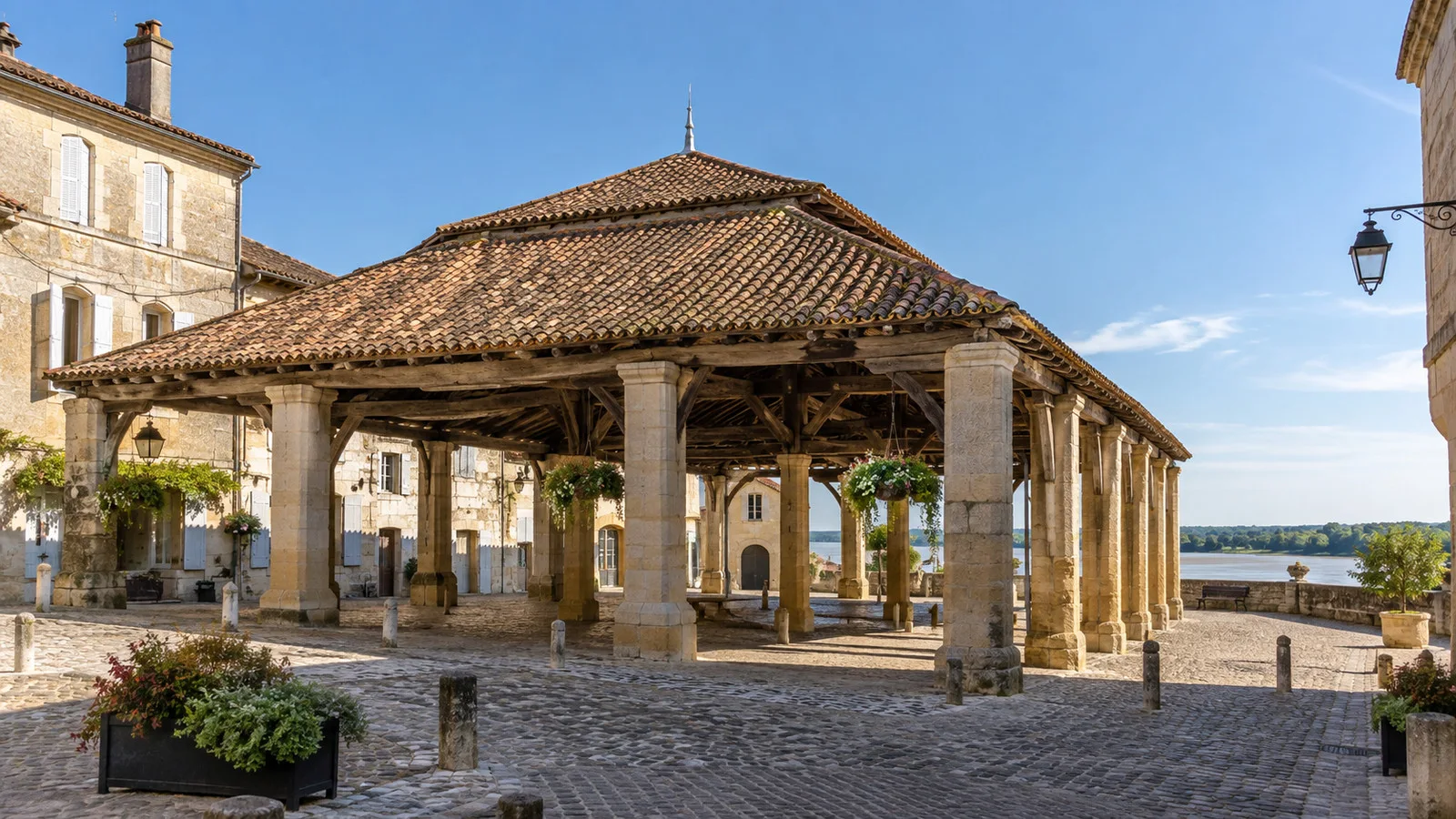
The present market hall dates from 1867 and hosts the Sunday market. Around it, limestone houses, carved faces, narrow lanes, gates, and Saint-Géronce Church create the village’s most appealing self-guided walk.
Interior access to the church or civic buildings can vary with services, events, and local operations. Enjoy the street architecture first, then treat any open door as a useful bonus.
Citadel Museum
The town’s official Citadel Museum page describes a 75-minute guided visit covering carriage collections, a sixteenth-century underground passage, and one of seven World War II fuel tanks below the cliff. Current standard departures are listed at 10 a.m., 11:30 a.m., 2 p.m., 3:30 p.m., and 5 p.m., with Sunday timing reserved differently for cruise groups.
The museum operates daily from June through September and on weekends and holidays in March, April, May, and October, subject to staffing. Reserve or confirm because a cruise call and a public tour do not automatically align.
Stairs, underground spaces, slopes, and the 75-minute duration make this a poor spontaneous choice for some mobility needs. A reduced price for visitors with reduced mobility does not prove that every component of the route is step-free.
Côtes de Bourg Wine Experiences
Bourg gives its name to the Côtes de Bourg appellation, a rolling vineyard district known mainly for red Bordeaux blends and some white wine. The upper town’s Maison des Vins provides a practical introduction without requiring a countryside transfer.
The official Maison des Vins boutique page says its vaulted limestone cellar presents about 170 appellation wines and hosts tastings. Current hours are 10 a.m. to 12:30 p.m. and 2 p.m. to 7 p.m. in July and August, with a 6 p.m. closing and Monday-morning closure during the rest of the year.
Those hours include a midday closure that can swallow a short call whole. Weekend and holiday staffing is provided by affiliated growers, and the organization warns that exceptional closure remains possible.
Country wine estates are spread through hilly terrain and generally require a motorcoach, bicycle, or reserved vehicle. Book appointments rather than appearing at a château gate with confidence and no transportation home.
Ship excursions may include a producer meeting, tasting, or private reception coordinated with the sailing. If wine is the priority, that organized option removes the appointment and return-time puzzle.
Tasting is optional, and spitting is normal in professional wine culture. The hill back to the ship is downward, but that is not a medical plan.
Bourg, Libourne, and Blaye Are Different Calls
Libourne lies farther upstream at the meeting of the Dordogne and Isle and is the usual gateway for Saint-Émilion. Blaye lies downstream on the Gironde estuary and is known for its Vauban citadel.
Bourg sits between their itinerary roles, geographically and operationally. Cruise lines may visit it on a separate day, pair it with Blaye by motorcoach or bicycle, or use it when a Libourne berth is unavailable.
Some Bordeaux itineraries may use Bourg in place of Libourne when mooring availability changes, and the tidal system can shift arrival times. Confirm the final port and reboarding point each day.
That substitution does not place the ship near Saint-Émilion. A Bourg landing needs different motorcoach logistics, so independent plans built around walking from Libourne’s quay will not survive the change.
Blaye is often a paired destination rather than a one-for-one substitute. Uniworld, AmaWaterways, and other programs may combine Blaye activities with sailing, cycling, or touring toward Bourg, but guests must follow the exact reboarding instructions.
Never assume the ship waits in Bourg while an excursion continues to Blaye. It may move between ports while passengers travel overland.
Tides and Navigation
The Garonne, Dordogne, and Gironde cruise system is strongly tidal. Water level and current change throughout the day, and captains schedule sailings around safe passage, berth access, under-keel clearance, and onward operations.
A high tide is not automatically good and a low tide is not automatically bad. The useful window depends on the vessel, berth, current, river flow, weather, and next destination.
Tides can make gangways steeper, shift arrival hours, shorten a visit, or encourage an alternate landing. Strong river flow after heavy rain and low freshwater flow during dry weather can each add different constraints.
The Bordeaux system can also experience the mascaret, a tidal bore that travels upriver under particular tidal and flow conditions. It is a natural phenomenon, not a guaranteed show scheduled for the sun deck.
Listen carefully to daily briefings because printed itinerary times may change after the cruise begins. A captain adjusting for tide is doing navigation, not attacking your lunch reservation personally.
Accessibility at Bourg River Cruise Port
Ship-to-pontoon access depends on the day’s tide, gangway, vessel position, and whether another ship affects the route. Ask the cruise line specifically about Bourg rather than relying on a general ship-accessibility statement.
Our river-cruise accessibility guide explains why a vessel, floating landing, town route, and excursion require separate checks. Crew assistance also varies by company policy and conditions.
The lower port is the most realistic independent area for many wheelchair users, but surfaces, curbs, traffic, and temporary closures still matter. The official planning study makes clear that the 115-foot link to upper town has steep grades, stairs, and poor pedestrian accessibility.
A motorcoach transfer to the upper town may solve the climb if the vehicle and stops meet the traveler’s needs. Confirm lift or step configuration, wheelchair securement, and distance from drop-off to the actual attraction.
Do not infer full museum access from a reduced mobility admission price. The Citadel visit includes an underground passage and facilities at different levels, so contact the museum before committing.
Getting to Bourg Independently
Bourg does not have a central passenger railway station. The nearest useful rail and road connections are around Saint-André-de-Cubzac, followed by a local vehicle transfer.
Bordeaux is roughly 25 miles away by road, and a car commonly needs about 45 to 70 minutes depending on traffic and route. That is an editorial estimate, not a protected transfer time.
Taxis and ride-hail supply can be limited in a small town, especially when a ship releases a crowd at once. Prebook any independent vehicle and confirm whether pickup is at Quai Jean-Bart or in upper town.
Bourg is usually a call rather than the main embarkation point, so luggage facilities should not be assumed. Follow operator documents if a special charter names Bourg for joining or leaving the ship.
Weather, Food, and Safety
Summers can be hot on the climb and exposed ramparts, while spring and fall bring rain, wind, and slick stone. Carry water, sun protection, a light rain layer, and shoes that grip both gangway and stairs.
Restaurants and shops are limited compared with Bordeaux or Libourne, and many observe specific days or a midday pause. A Sunday market can enliven the upper town while also adding crowds and slower movement.
Normal small-town precautions apply. Watch vehicles in narrow lower-port roads, protect valuables in tour groups, stay behind quay barriers, and never enter closed cliff, tunnel, or river-edge areas.
France’s emergency number is 112, with 15 for medical emergencies, 17 for police, and 18 for fire and rescue. Carry the ship contact number because a late return is serious but not necessarily a reason to call emergency services.
A Sensible Two-Hour Plan
Confirm the pontoon and all-aboard time, then choose one direct stair route to upper town if mobility permits. See the market hall, lanes, rampart view, and Maison des Vins if it is open.
Descend with at least 30 minutes in reserve because stone steps, photos, and gangway lines all consume time. Skip the Citadel Museum unless a scheduled visit fits comfortably within the call.
For a step-conscious plan, stay in the lower port for the washhouse, riverfront, and nearby park approach after checking current route status. A quiet Dordogne view is still a valid port day, even when the village insists on living upstairs.
Final Verdict
Bourg-sur-Gironde is a memorable small port because its river, limestone ridge, wine culture, and medieval fabric all meet within a compact area. The dedicated Quai Jean-Bart cruise pontoons make the call real, while the climb gives it character and a genuine access challenge.
Expect tide-led timing, treat Libourne and Blaye as separate operational possibilities, and verify the gangway and upper-town plan. With those details respected, Bourg delivers one of the Bordeaux system’s most distinctive walk-off experiences.
Practical checks before Bourg-sur-Gironde
Ask for the Quai Jean-Bart pontoon, rafting position, and final pickup because Bourg can replace Libourne or sit within a moving-ship Bordeaux program. The landing is in the lower port, while the historic center is a genuine uphill walk rather than an extension of the quay.
Choose the upper town and Citadel Museum or a reserved Côtes de Bourg wine visit, not both when the call is short. Use the ship’s transport for a rural estate and keep at least 60 minutes before the stated return time for an independent trip back to a fixed Bourg pontoon.
Check France and Schengen entry rules, museum and tasting fees, opening days, and tide notices. Steep lanes, old paving, raft crossings, limited local transport, heat, rain, and river changes all need a separate accessible fallback.
How this guide was researched: Unless a first-hand visit is explicitly identified above, this guide is based on independent research using official port, municipal, museum, wine-region, government, and cruise-line sources where available. Logistics and time-sensitive details were reviewed on September 12, 2026, under our Editorial Policy.