Pak Beng River Cruise Port: Overnight Stop and Landing Guide
Pak Beng is the classic Upper Mekong overnight stop, with the boat landing below the guesthouses, restaurants, and market. The useful part of town is usually uphill.
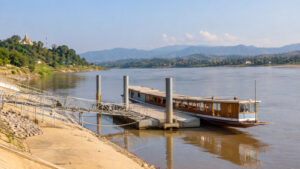
Your arrival may use a simple pier, steep steps, packed earth, or a smaller transfer boat. Confirm whether the hotel collects you and your luggage before attempting the climb.
Quick Facts
- Arrival: A variable Mekong riverbank landing below town
- Walk into town: An estimated 5 to 20 minutes uphill, depending on the landing and pace
- Currency: Lao kip
- Language: Lao, with some English in cruise-facing hotels and restaurants
- Time zone: Indochina Time, UTC+7 year-round
- Best for: An Upper Mekong overnight, market browsing, temple visits, and river views
- Planning priority: Confirm luggage handling, hotel pickup, and the next departure point
- Call reliability: No official cancellation rate is published, and water or bank conditions can change the landing or timing
A changed landing, transfer, or shore program is not automatically a canceled Pak Beng stop. Follow the operator’s live instructions because water levels and vessel traffic can alter access.
My quick take
Pak Beng is an overnight transfer stop first and an independent sightseeing port second. If your itinerary puts you in a lodge, confirm who moves the luggage, whether dinner is included and exactly where tomorrow’s pickup begins.
The town is small enough for a wander once you reach the road, but the climb from the water deserves more attention than the distance on a map. Closed shoes, a light day bag and accepting the offered hotel vehicle can improve the evening considerably.
Where is Pak Beng?
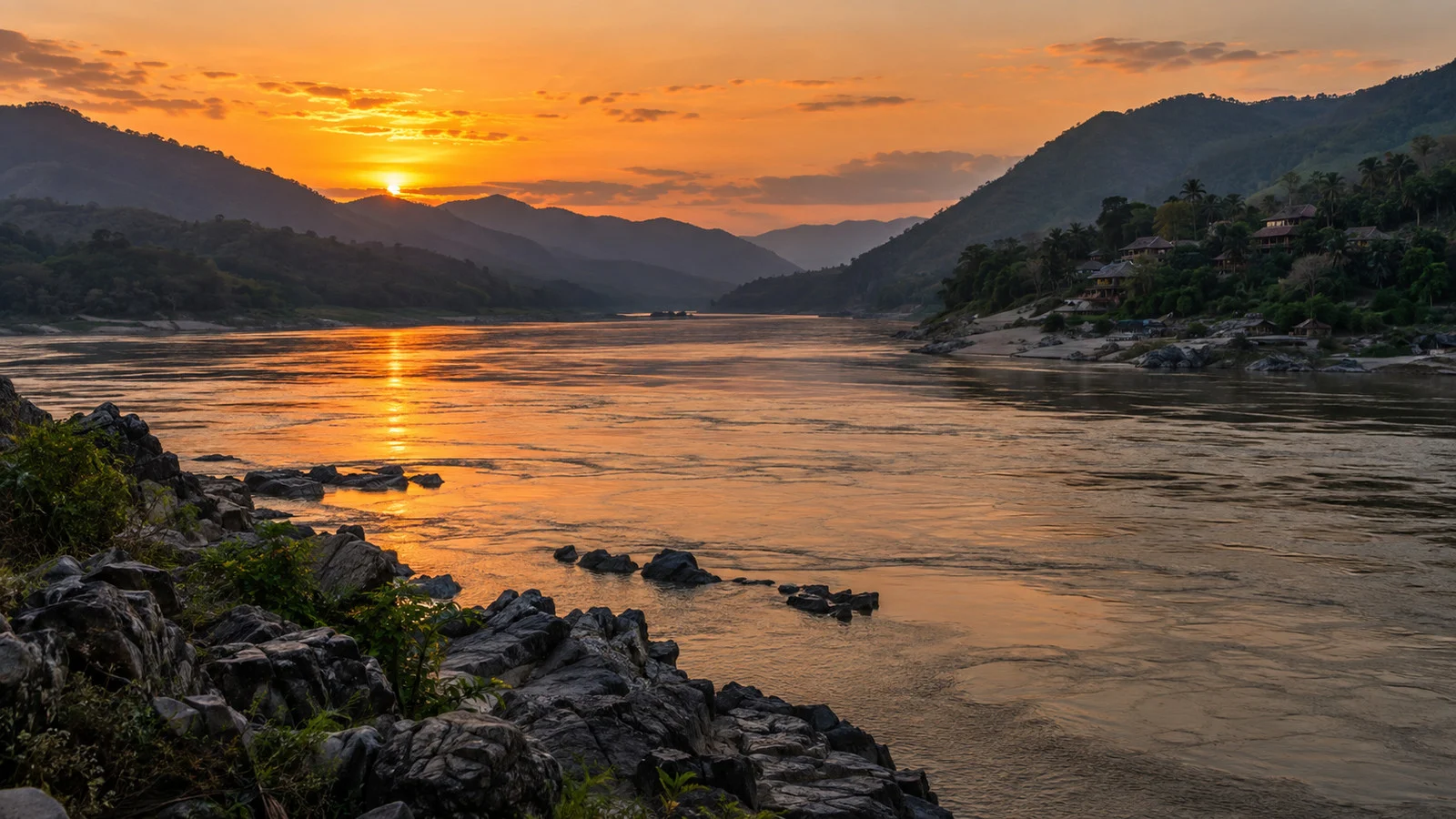
Pak Beng sits in Oudomxay Province at the meeting of the Beng and Mekong rivers. It is roughly the natural overnight break on the two-day boat journey between Huay Xai and Luang Prabang.
Official Laos tourism information describes it as a popular place to rest after a long Mekong voyage, with hotels, guesthouses, restaurants, a market and temples. The page also notes a tourism office near the boat landing, although hours and staffing should be confirmed locally.
Some boats stop only long enough to put passengers ashore for the night. Longer expedition vessels may remain the hotel and use Pak Beng as a daytime call, so two travelers saying “we cruised through Pak Beng” can mean very different beds.
What the landing is really like
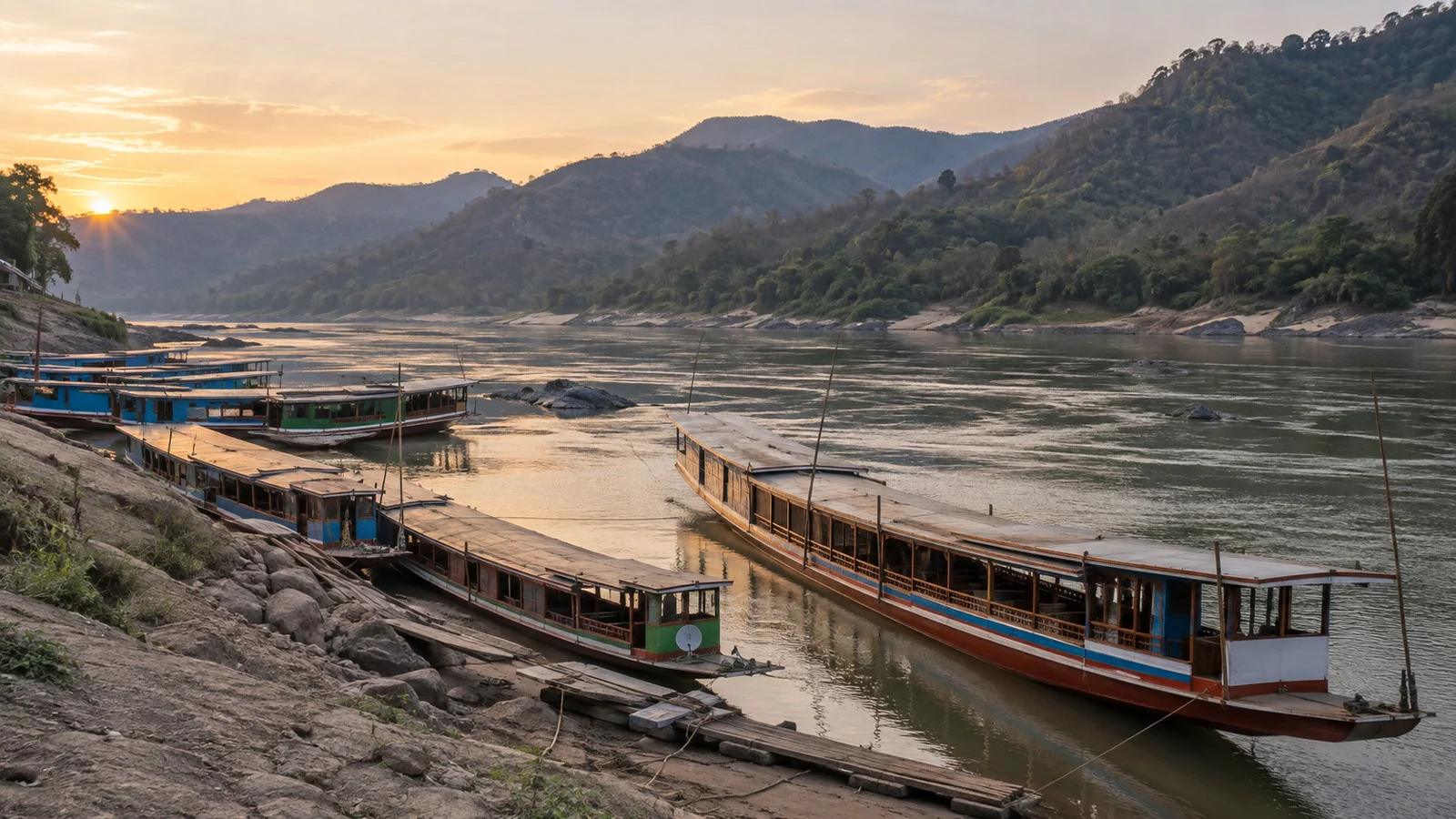
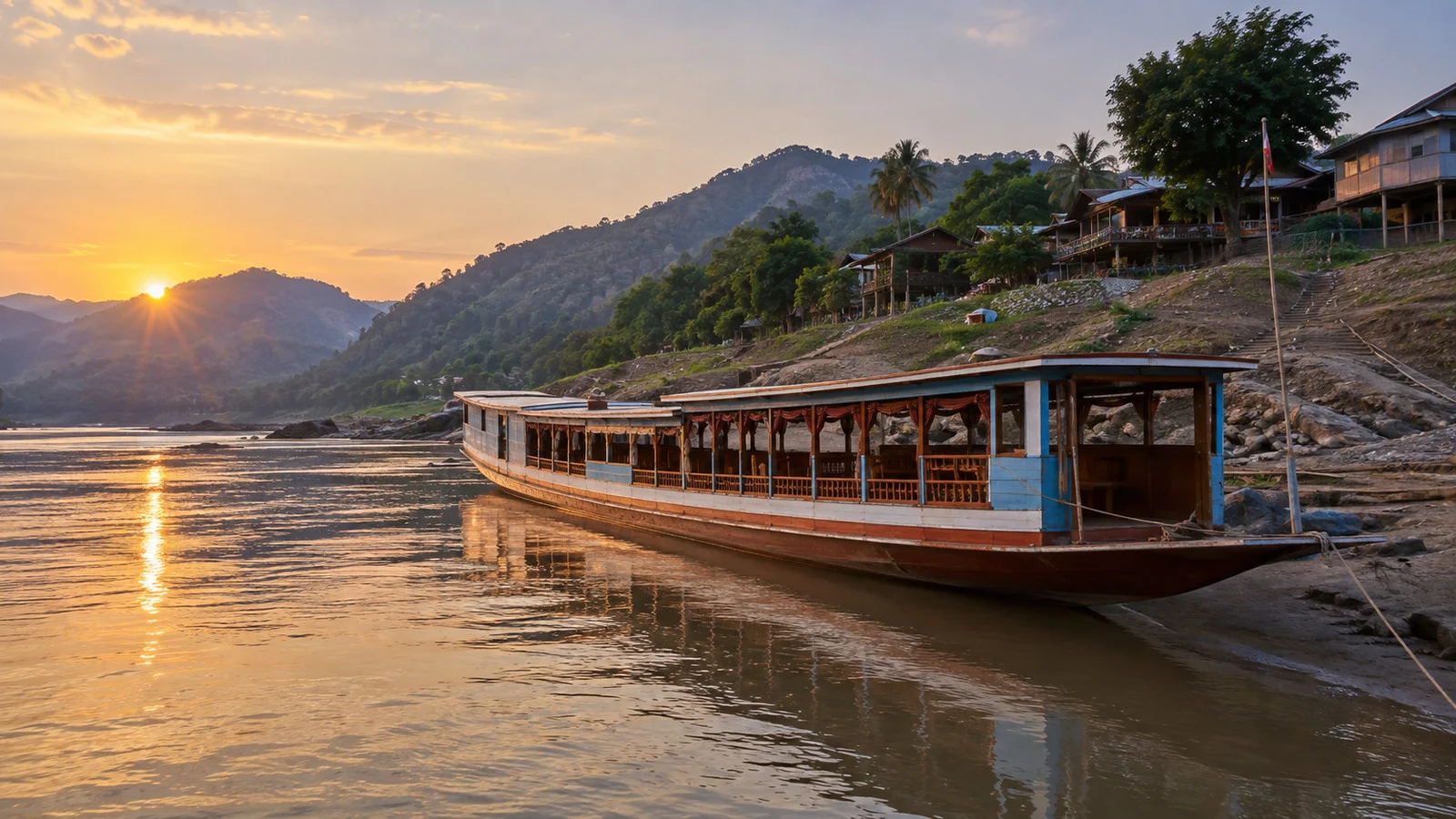
There is no single airport-style terminal used by every passenger vessel. The landing point and gangway angle depend on the operator, vessel draft, river stage and whether another boat occupies the preferred access.
At lower water, more of the bank appears and the climb can grow longer or steeper. At higher water, the current and covered edges may push the captain toward another set of steps or a different bank access.
The Mekong River Commission says navigation conditions vary greatly along the river. Its work highlights physical obstacles, turbulent sections, suitable shallow-draft vessels, and the importance of experienced skippers.
Expect crew or porters to organize the handoff rather than a conveyor belt appearing from the forest. Keep both hands free, follow instructions and do not step onto a narrow gangway until the crew says it is secure.
If the ship rafts beside another vessel, reaching shore may require crossing a neighboring deck or lobby. The site’s guide to river-cruise rafting and double docking explains the steps and privacy etiquette involved.
How far is town from the boat?
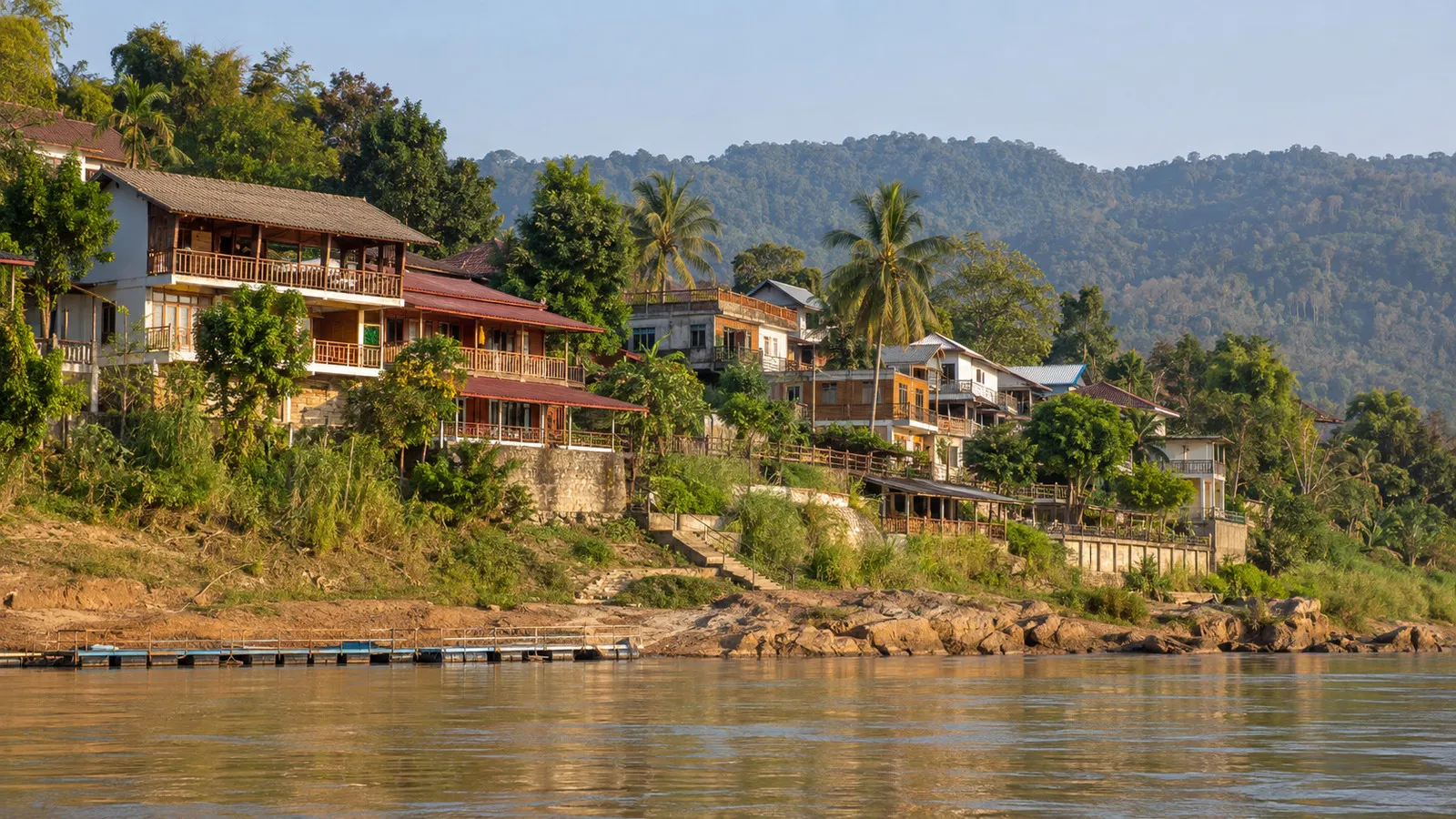
The useful answer is “up.” From a typical landing, the main road, market or hotel may be an estimated 5 to 20 minutes away on foot, depending on the exact bank access and your pace.
A short distance can include steep stairs, rough paving and loose soil. Rain adds slipperiness, while heat and luggage make the same climb feel as if Pak Beng has quietly installed another floor.
Many hotels and lodges collect guests near the landing using a pickup truck, van or similar vehicle. Confirm the meeting place with the property or cruise operator rather than accepting an unsolicited ride based only on a confidently repeated hotel name.
Travelers staying aboard may receive an organized town walk or excursion instead. Ask whether the return is on foot, by vehicle or by local boat, because the route downhill is not automatically the route back to the ship.
Will I sleep on the ship or in a hotel?
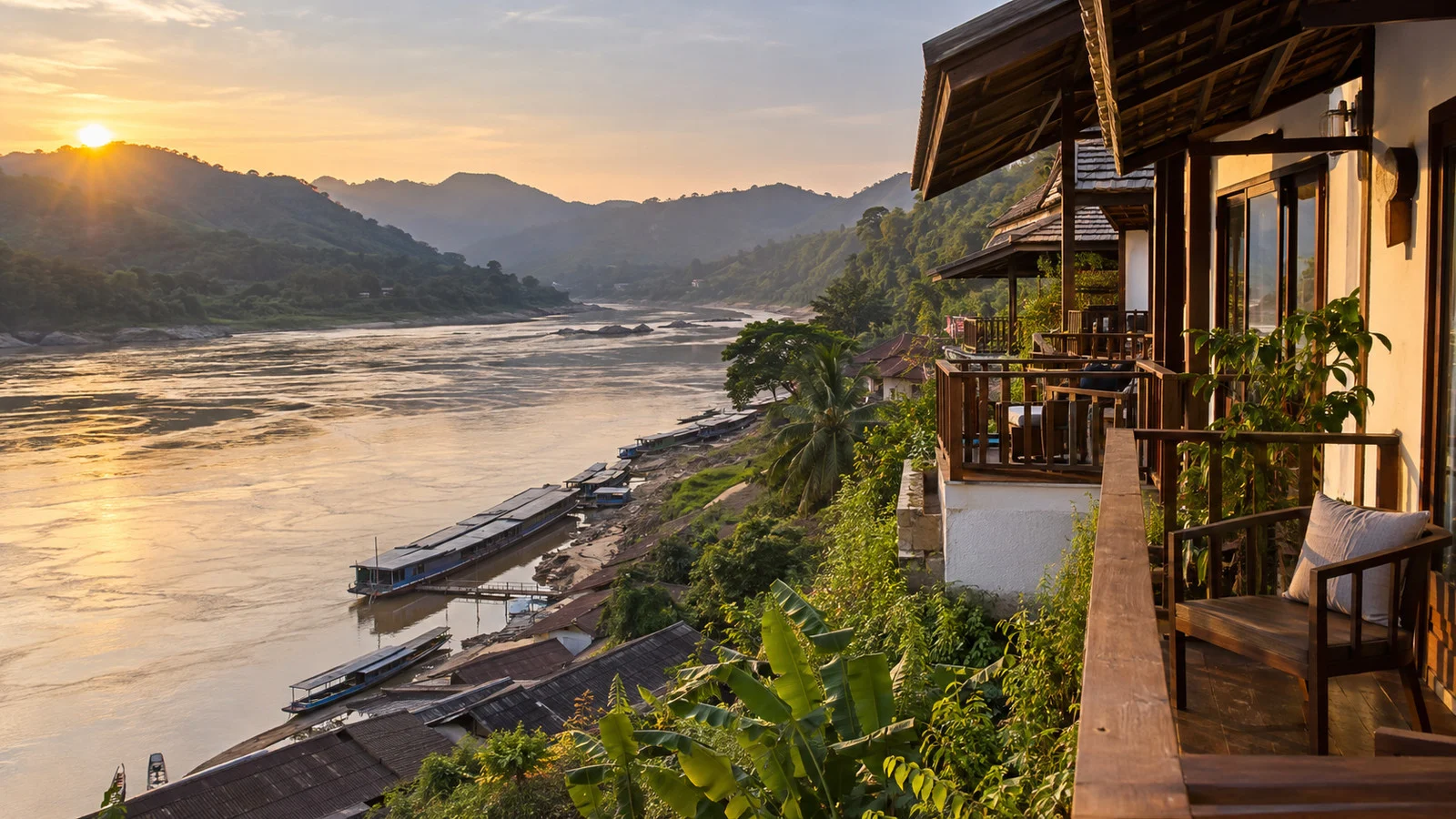
Both arrangements exist. Many traditional Huay Xai-to-Luang Prabang journeys put passengers in a Pak Beng guesthouse or lodge, while upscale expedition ships may keep guests in their cabins and treat the town as one call in a longer voyage.
Mekong Cruises publishes a representative two-day route with an overnight in Pak Beng. By contrast, Heritage Line’s expedition itinerary includes onboard accommodation and a Pak Beng call within a longer cruise.
Read the inclusions for your exact product. “Accommodation included” should identify the property or cabin, meals covered, room category, luggage plan and whether the morning vehicle returns you to the same landing.
If your large suitcase stays with the operator, prepare a small overnight bag with medication, sleepwear, documents and charging equipment. Do not pack tonight’s essentials beneath tomorrow’s river cargo and then begin an archaeological dig on the dock.
What can you do in Pak Beng?
The town works best as a gentle evening or morning, not a trophy hunt. Walk the main street, browse the market, visit a temple if open and watch river traffic from a restaurant or lodge terrace.
Market activity is generally livelier earlier in the day, while opening times are informal. Ask your guide or hotel for the current pattern rather than building the visit around an online pin with ambitions of permanence.
Dress with shoulders and knees covered at temples, remove shoes where requested and photograph people only with permission. Pak Beng is a working transport town, so the most respectful visit spends locally without turning daily life into a backdrop.
Some itineraries offer an elephant sanctuary visit across or near the river. Welfare standards deserve direct questions about riding, bathing, performances, restraint and whether visitor contact is controlled for the animals rather than designed for photographs.
Should you explore independently?
Yes, for the main road, market and nearby temples when your operator confirms enough time. Stay with the organized plan when the call uses a local boat, a remote sanctuary or a landing that will not remain staffed.
Carry the ship or hotel name in Lao, a contact number and the all-aboard time. The site’s overview of walkable cruise ports is helpful, but Pak Beng’s walkability begins only after the steep transition from river to road.
Luggage, money and practical details
Lao kip is the official currency. Some tourism businesses may quote or accept other currencies, but exchange rates and change can be unfavorable, so carry small kip notes and do not depend on cards.
Keep prescriptions, passport, insurance details and valuables in your day bag during hotel transfers. Label checked luggage clearly, because multiple boats can unload passengers and bags within a short period.
Accessibility reality
Pak Beng is challenging for travelers who cannot manage steep steps, uneven surfaces or assisted boat transfers. A hotel pickup may remove the hill but cannot eliminate the initial gangway or bank.
Ask for the full chain in writing: ship to landing, landing to vehicle, vehicle to room and the reverse the next morning. The river-cruise accessibility guide lists vessel-specific questions worth sending before payment.
Request recent photographs of the usual landing and ask what happens if water levels require a substitute. Travelers using wheelchairs or scooters need explicit confirmation that the transfer vehicle, room and boat access all work together.
What changes when the river rises or falls?
The MRC’s near-real-time monitoring system shows regional water-level data. It provides useful context, but a gauge cannot tell you whether today’s gangway will meet stone steps, dirt or another boat.
Follow the captain and local crew on the day. They can read the channel, current and bank more usefully than a traveler comparing the view with a photo taken six months earlier.
Quick answers
Is Pak Beng a real cruise port?
It is a regular passenger-boat stop, but not a standardized terminal. Exact riverbank access varies by operator, vessel and water level.
How many nights do cruises spend in Pak Beng?
Many two-day journeys spend one night in town. Longer expedition itineraries may visit during the day or keep passengers aboard, so check the precise program.
Are there steep stairs at Pak Beng?
Often, yes. The estimated 5- to 20-minute route into town may include steep steps, a sloped bank or rough ground, although hotel transport can reduce the climb.
Does the hotel collect luggage?
Many properties or cruise operators arrange porters and vehicles, but the system is not universal. Confirm whether the main suitcase goes to the hotel or remains with the boat.
Can I explore Pak Beng without a tour?
Usually yes for the center when time permits. Confirm the current landing, return transport and meeting time before setting off.
The last word
Pak Beng is not the glamorous headline of an Upper Mekong itinerary, and that is part of its usefulness. It breaks a long river journey into human proportions, adds a market and hillside town, and gives the boat crew a natural point to reset.
Pack one light bag, confirm the hotel pickup and believe the word “steep” when it appears in the embarkation notes. The view from the top is better when your large suitcase got there by vehicle.
How this guide was researched: Unless a first-hand visit is explicitly identified above, this guide is based on independent research using official tourism, waterway, and cruise-operator sources where available. Logistics and time-sensitive details were reviewed on September 12, 2026, under our Editorial Policy.