Langkawi Cruise Port: SkyCab, Geopark & Duty Free Buys
Langkawi is a duty free island with a cable car that finishes over 2,300 feet up a mountain and a mangrove river patrolled by eagles. Almost none of it is within walking distance of your ship.
So this is a port where you pick one thing and commit, because the good stuff is scattered across 99 islands. Kuah town will happily sell you chocolate, but it is not why you came.
My quick take
Langkawi asks you for exactly one big decision, and the candidates are the SkyCab cable car in the northwest or a mangrove boat trip through Kilim in the northeast. They sit on opposite corners of the island, and trying to have both is how people spend a port day looking at road.
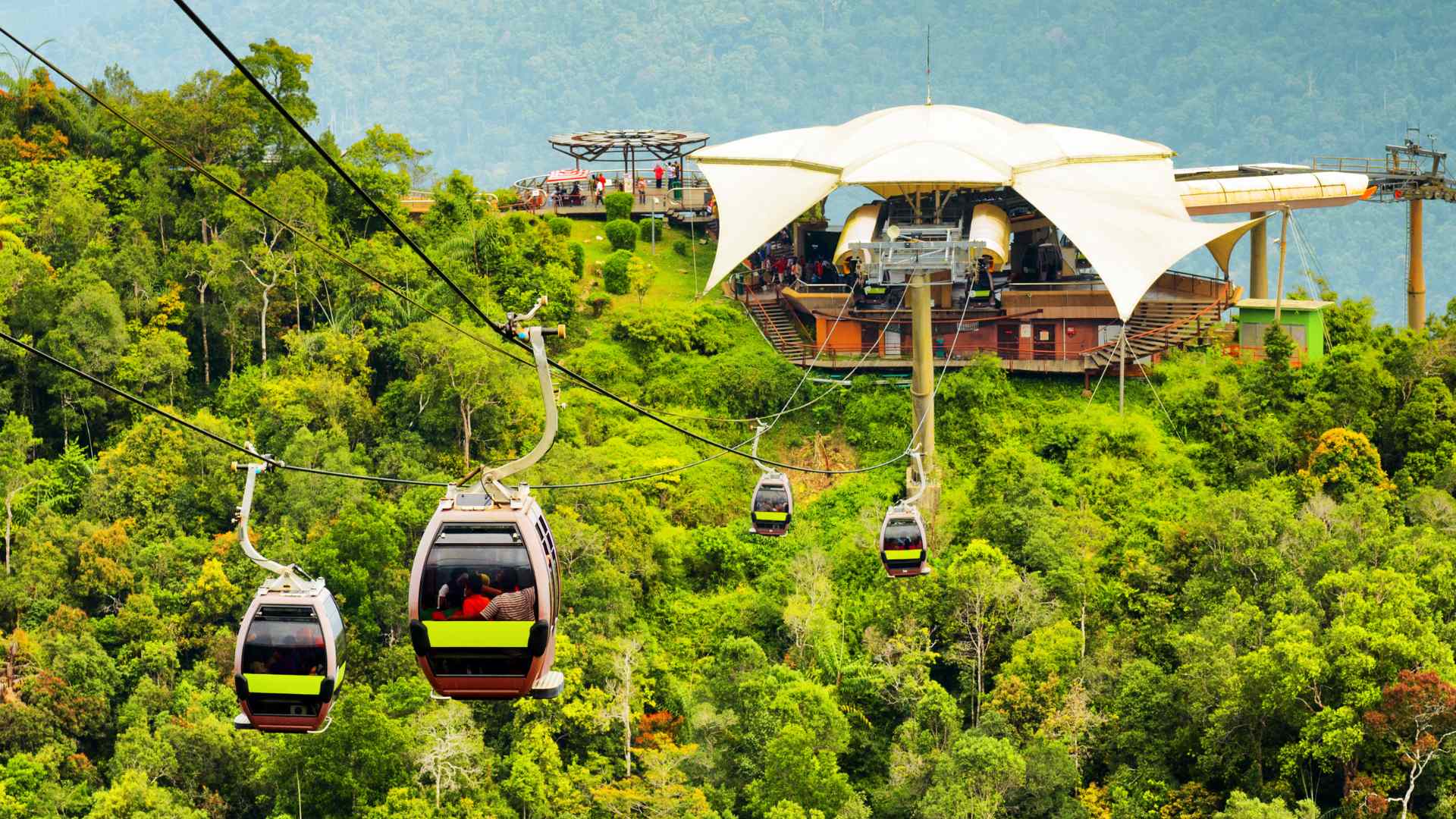
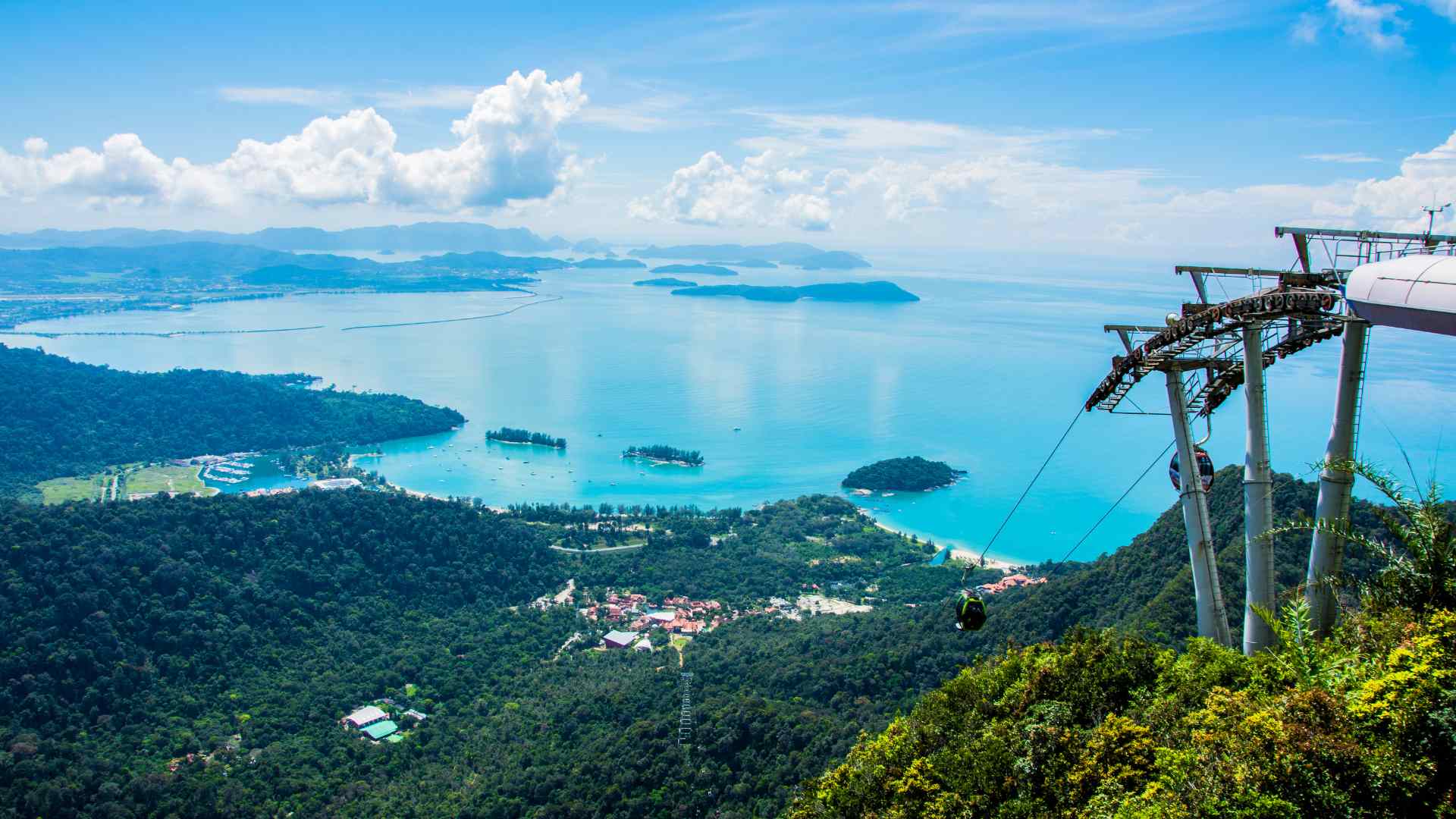
If it is your first call here, I would take the cable car. The top station sits at 2,323 feet on Gunung Machinchang, and on a clear morning you get the Andaman Sea, a scatter of islands, and southern Thailand on the horizon.
If you have been before, or you would rather see wildlife than wait in line, Kilim wins. Sea eagles, monkeys, a bat cave, and limestone that has been standing there since long before anything had a spine.
Malaysia’s other big cruise call is a completely different animal, and my Penang cruise port guide covers the one where you walk off the ship and are immediately somewhere. Langkawi is the nature day, Penang is the city day.
Quick Facts
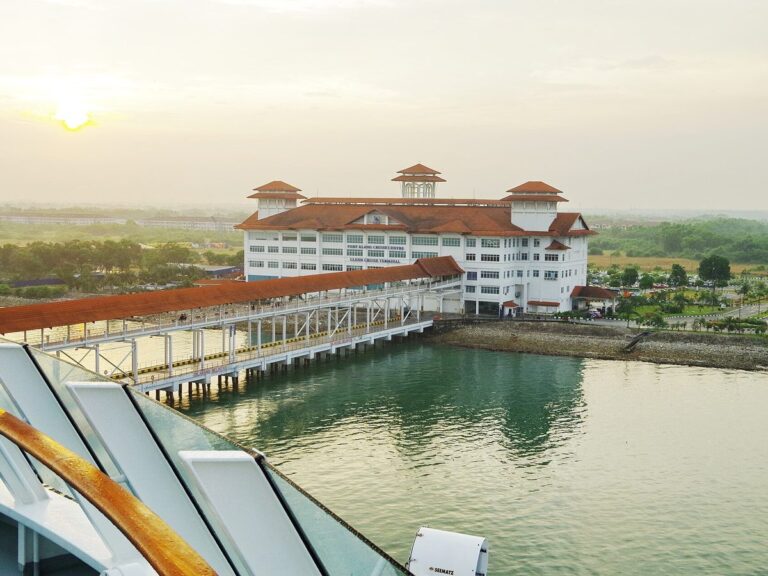
- Where you land: Langkawi Cruise Centre is at Tanjung Malai on the island’s south coast, near Resorts World Langkawi and well outside Kuah. An itinerary can still use an anchorage and tender, so confirm the day’s landing before arranging a driver.
- Dock or tender: Dock or tender, though it is normally a dock call and you walk off.
- Into town: The cruise center is not in Kuah and has no useful town center within a quick walk. Kuah, Pantai Cenang, SkyCab, and Kilim each require a vehicle transfer.
- Currency and language: The Malaysian ringgit (MYR), and Malay, with English widely spoken.
- Time zone: Malaysia Time (MYT, UTC+8).
- Schedule risk: No official public cancellation rate is available. Wind, thunderstorms, sea conditions, berth changes, and ship operations can still alter the call.
The berth, the taxi stand, and the drive to everything good
Langkawi Cruise Centre sits at Tanjung Malai on the south coast, near the resort and marina rather than beside Kuah. SkyCab is northwest, Kilim is northeast, and Kuah is east, so the wrong route can turn the day into a windshield tour.
There is no train or metro, and public transport is not practical for a short cruise call. Taxis and prearranged drivers are the useful options, so confirm the destination, total fare, waiting time, and return plan before the doors close.
Ship excursions exist for exactly this reason, and on a short call they are genuinely worth the markup. A driver who does not come back is a much bigger problem here than in a walkable European port.
If the cable car is your plan, check the operator’s official Langkawi SkyCab page before you sail. It runs to an operations calendar and closes for weather and maintenance, which is not a thing you want to learn at the base station.
Kuah is a separate drive east for duty-free shopping rather than the neighborhood outside the ship. Give it the final hour only when it fits the chosen geographic loop and the driver is waiting.
Getting around
Taxis are the simplest independent transport, and availability can tighten when several groups leave at once. Ask for the total fare to your destination, clarify whether waiting time is included, and keep the driver’s contact details.
Hiring a driver for the whole day is the sensible move if you want more than one stop. The value depends on your route and group size, but a confirmed return removes the quiet fear of standing in an empty parking lot late in the afternoon.
Boats are the other way to travel here, and island hopping trips leave from jetties rather than from the cruise berth. The standard route takes in the Lake of the Pregnant Maiden on Dayang Bunting, an eagle watching stop, and a beach.
A rental car gives flexibility, but collecting it, learning an unfamiliar vehicle, driving on the left, and parking all consume port time. I would use a driver for a single call and save the rental for a longer island stay.
Walking is useful after a driver drops you in Kuah or Pantai Cenang, but it is not a transport plan from Tanjung Malai. Keep the same vehicle for the return.
The stops I would actually spend time on
Langkawi’s attraction list looks longer than it is, because half of it is other people’s beach clubs. These are the ones I would build a day around.
Langkawi SkyCab: Three stations up Gunung Machinchang, with a top station at 2,323 feet and a ride of roughly fifteen minutes. Go early, because the line and the cloud both build through the morning.
The SkyBridge: A curved pedestrian suspension bridge about 410 feet long, hung from a single pylon over a gorge. It is not the place to discover you have opinions about heights.
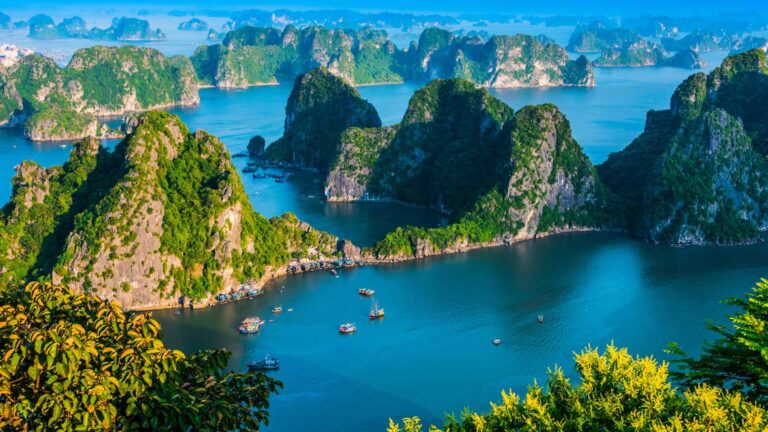
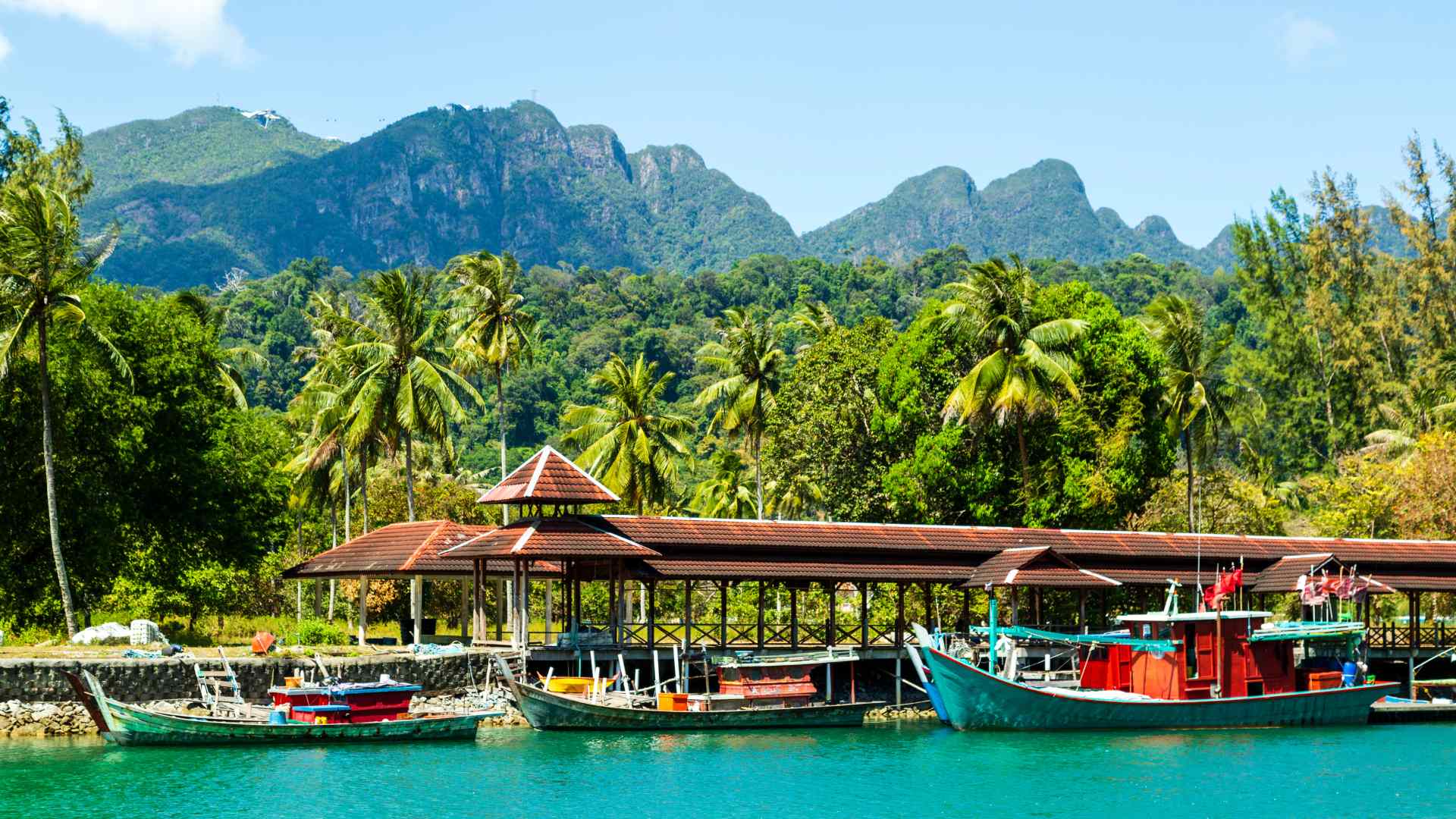
Kilim Karst Geoforest Park: Boat trips wind through mangroves and limestone cliffs, with a bat cave, macaques, and sea eagles among the usual highlights. Confirm the operator’s departure and return time because boat schedules can change.
Dayang Bunting Marble Geoforest Park: The Lake of the Pregnant Maiden, a freshwater lake sitting in a collapsed cave inside marble close to 300 million years old. Almost every island hopping boat stops here.
Pantai Cenang: The main beach strip, with sand, bars, parasailing, and the highest concentration of people selling you something. Good for a swim and a cold drink, less good for solitude.
Kuah and the duty-free shops: Chocolate, perfume, kitchenware, and alcohol draw bargain hunters, but Kuah requires a dedicated vehicle stop from the cruise center. Compare allowances and prices before buying, because duty-free status does not make every item cheaper than home.
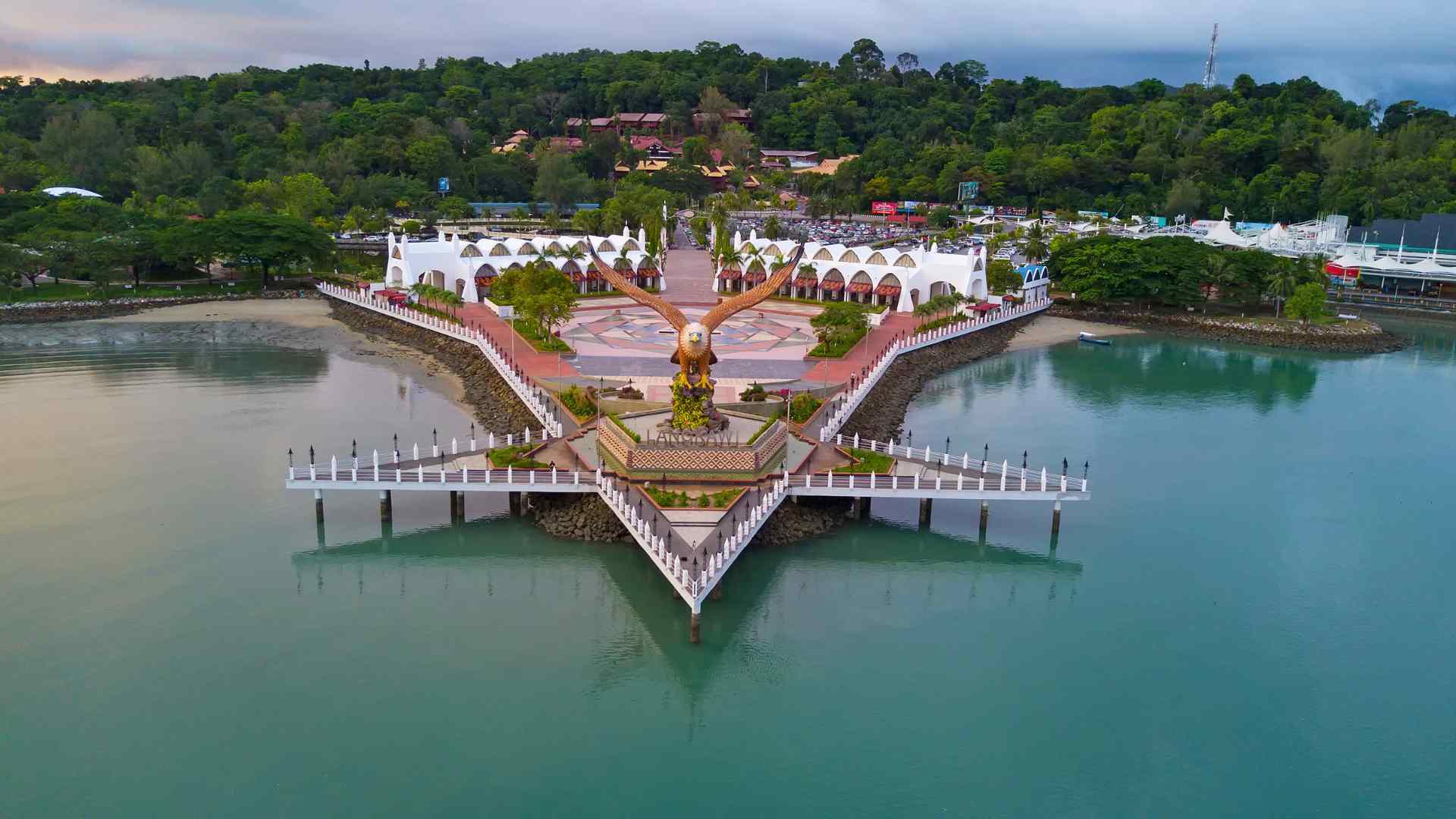
Eagle Square: The enormous eagle statue on the Kuah waterfront, known locally as Dataran Lang. It is a brief photo stop near Kuah, not a walk from the cruise berth.
Telaga Tujuh: The Seven Wells waterfall near Oriental Village, reached by a staircase that counts as exercise. Worth it after rain, disappointing in a dry spell.
Kubang Badak BioGeoTrail: A quieter mangrove and geology route in the northwest for people who found Kilim too busy. It suits a full day rather than a rushed one.
Fun fact: Langkawi was the first Global Geopark in Southeast Asia, and the rocks on Machinchang are more than 550 million years old, which makes them some of the oldest exposed rock in the region. The official listing lives on the UNESCO Langkawi Global Geopark page.
Choose one geographic loop and keep the driver
SkyCab pairs naturally with Pantai Cenang on a west-side loop, while Kilim pairs more logically with Kuah on the east side. Trying to combine both headline attractions adds cross-island driving and leaves no useful recovery if the cable car closes or a boat runs late.
Reserve a licensed driver for the full outing, confirm the total price and waiting time, and plan to reach Tanjung Malai 60 to 90 minutes before all aboard. A ship excursion costs more but is worth considering for a short call, a tender day, or the last available SkyCab slot.
Malaysia entry and digital-arrival requirements depend on nationality and cruise clearance. Follow the ship’s instructions and, if an MDAC is required, use the official Malaysian Immigration portal.
How I would plan the day
On a full day I would go straight to the cable car first thing, before the cloud settles on Machinchang and before the motorcoaches arrive. The line at nine and the line at noon are different species.
Then I would drop back down for a late lunch at Pantai Cenang, which is broadly on the way home, and finish with an hour in Kuah. That is one loop instead of two, which matters when an island is this spread out.
On a short call, stay south with Pantai Cenang or a reserved driver loop rather than crossing the island for both headline attractions. Choose Kilim only when the boat, road transfer, and return are confirmed as one timed excursion.
If it rains, and at some point it will, the mangrove boats usually keep going while the cable car may not. Rain in a boat is merely wet, rain at the top station is just white.
Whatever you choose, build a buffer into the drive back. Traffic, a delayed boat, a weather closure, or a slow attraction queue can all eat the margin faster than your nerves would like.
A realistic word on accessibility
The ship end of the day is the easy part, with a flat pier and taxis waiting rather than a tender to negotiate. After that, Langkawi gets harder quickly.
The cable car base station is reached by road and the gondolas load from a platform, but the SkyBridge, the waterfall staircase, and the mangrove boats all involve steps, gaps, or both. Contact the operator directly rather than hoping on the day.
Taxis are ordinary sedans, and an accessible vehicle is not something you can count on appearing at the pier. For how this compares with easier calls, see my roundup of wheelchair-friendly cruise ports.
When to go, and the weather
Langkawi is tropical and hot all year, with daytime highs usually in the upper 80s to low 90s Fahrenheit. The humidity is the number that actually shapes your day.
The drier, calmer stretch runs roughly from November into March, which is also when most cruise itineraries turn up. That is not a coincidence.
From about May to October the southwest monsoon brings heavier rain and proper afternoon downpours. They usually pass within the hour, but they can close the cable car while they do it.
Pack light layers, a rain jacket that squashes into a bag, and shoes you do not mind getting wet in a boat. Tourism Malaysia’s official Langkawi page is a reasonable place to check what is open before you go.
Quick answers
Do you tender at Langkawi?
Usually not, because many calls use Langkawi Cruise Centre at Tanjung Malai and guests walk off. An itinerary can still use an anchorage and tender, so confirm the landing arrangement in the daily program.
Is Langkawi genuinely duty free?
Yes, the island has duty free status and Kuah is where the shops cluster. Chocolate, alcohol, and perfume are the classic buys, and your home allowance is the real limit.
Cable car or mangroves?
Cable car for the view, mangroves for wildlife and for a better bet in bad weather. Doing both in one port day mostly means seeing a lot of road.
Do I need cash?
Bring ringgit for taxis, boat operators, and small stalls. The larger attractions and duty free shops take cards without fuss.
The last word
Langkawi is a genuinely lovely island that is slightly awkward to visit from a ship, and pretending otherwise helps nobody. Accept that you will do some driving and it turns into a very good day.
If you are stitching together a Southeast Asia itinerary, my Phuket and Singapore guides cover the ports that usually sit either side of this one.
And if your cruise also touches mainland Malaysia, my Kuala Lumpur cruise port guide explains the long transfer in from Port Klang. It is the opposite of Langkawi in every way that matters.
How this guide was researched: This guide uses current information from Panorama Langkawi, UNESCO, Tourism Malaysia, Malaysian Immigration, and available cruise-terminal guidance. Berth assumptions, attraction operations, entry guidance, transport advice, and timing were reviewed on September 11, 2026; see our Editorial Policy.