Koblenz River Cruise Port: Deutsches Eck, the Cable Car and the Moselle Turn
Koblenz is the river cruise stop where two famous waterways become one view. Your ship usually arrives along the Moselle bank, close to the Deutsches Eck, while Ehrenbreitstein Fortress rises across the Rhine.
That geography makes the city unusually easy to enjoy in a half day. Start with the cable car if it is operating, walk the confluence, and let the old town fill whatever time remains.
Koblenz river cruise port quick facts
- Country: Germany
- State: Rhineland-Palatinate
- Rivers: Rhine and Moselle
- Main river cruise moorings: Peter-Altmeier-Ufer along the Moselle
- How you go ashore: Gangway to the quay, sometimes after walking through rafted vessels
- Old town access: Close to the main Moselle moorings
- Signature sight: Deutsches Eck at the river confluence
- Best elevated view: Koblenz Cable Car and Ehrenbreitstein Fortress
- Currency: Euro
- Operational risk: High or low river levels can alter mooring, timing, or the itinerary
My quick take
The cable car and fortress are my priority when the schedule and weather cooperate. The ride gives you the clearest possible explanation of Koblenz, with the Moselle, Rhine, Deutsches Eck, old town, bridges, and vineyards spread below.
On a very short call, stay at river level and combine Deutsches Eck with the old town. Do not spend precious time crossing the city for a secondary castle unless the ship’s excursion is designed around it.
Where river cruise ships dock
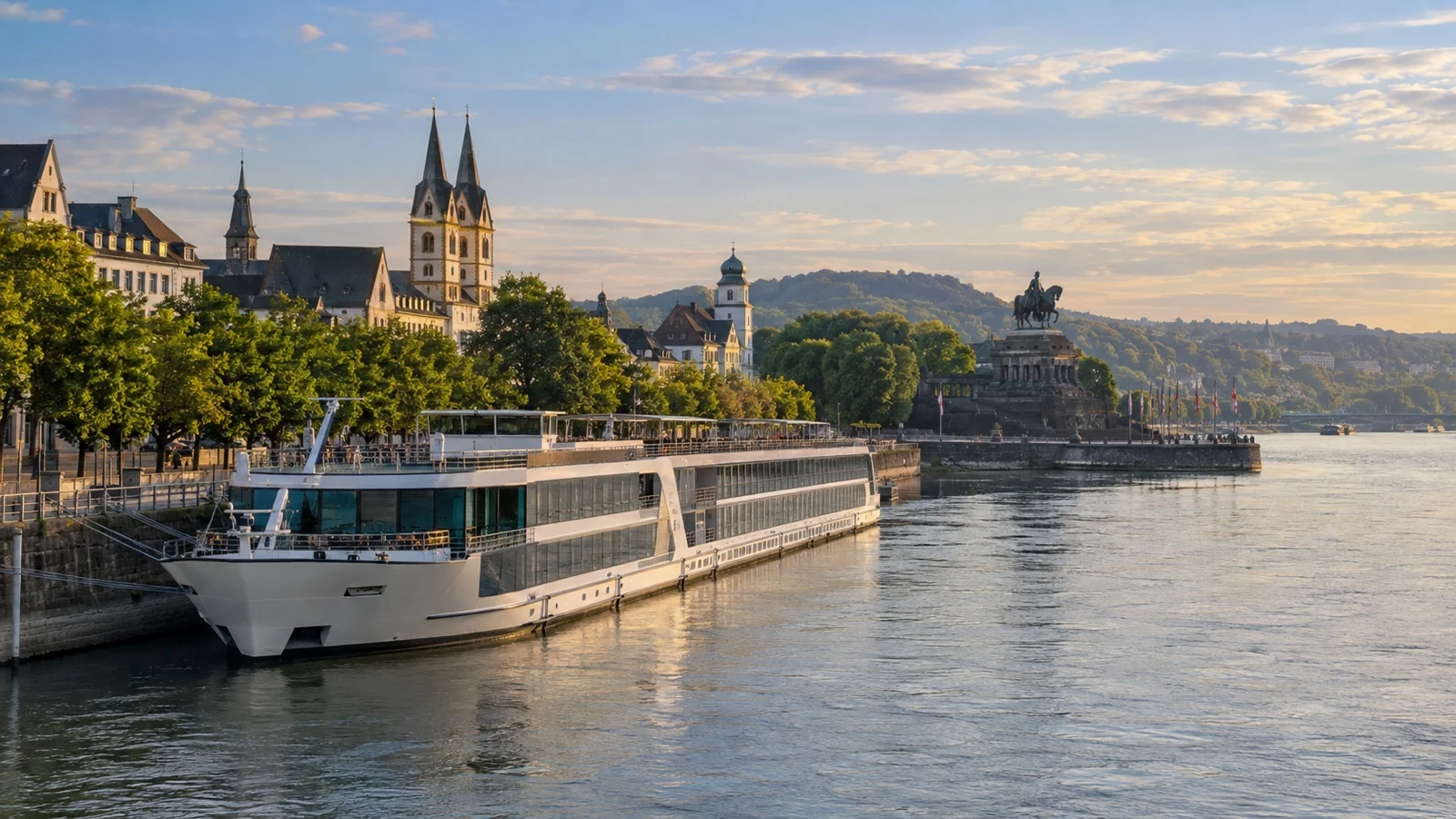
Koblenz-Touristik manages hotel-ship moorings along the Peter-Altmeier-Ufer between Moselle river kilometer 0.580 and the Balduin Bridge. The location places the primary berth area beside the old town and upstream from the Deutsches Eck.
Your vessel may use a different position because of traffic, river conditions, berth availability, or an itinerary change. Check the daily program or reception desk before assuming which side of the ship will meet the quay.
What rafting means
Busy river ports often place two or more vessels side by side, a normal practice called rafting. Passengers on the outer ship may walk through the lobbies or over the decks of the inside vessels to reach land.
Steps, thresholds, and temporary gangways can make a rafted landing less accessible than a direct berth. Move quietly through neighboring ships, follow crew directions, and remember that their passengers may be resting.
Views from your cabin can disappear when another vessel ties alongside. Close the curtains when privacy matters, and enjoy open-air views from the sun deck if it remains available.
Deutsches Eck
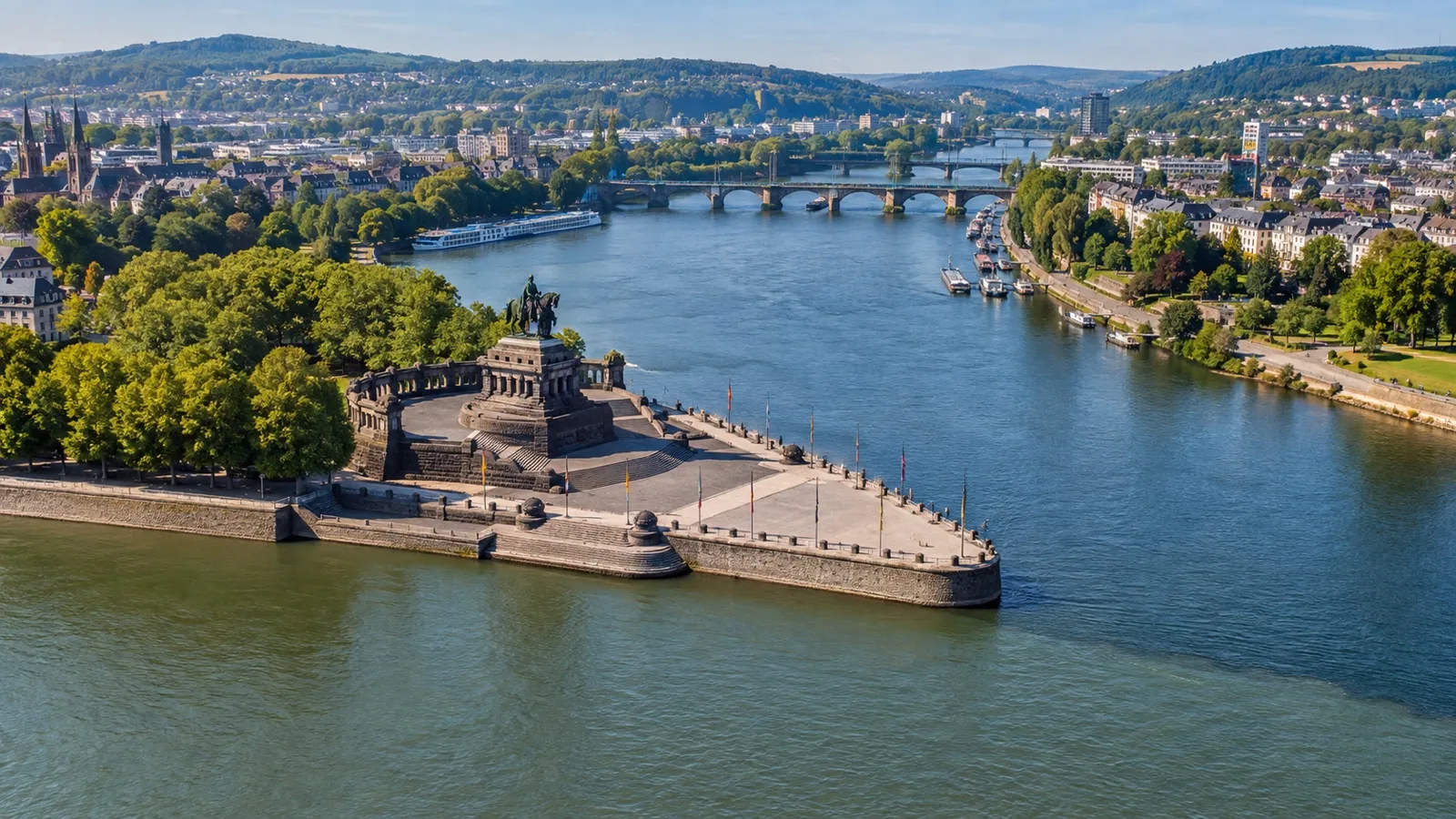
The Deutsches Eck is the pointed headland where the Moselle flows into the Rhine. A monumental equestrian statue of Emperor Wilhelm I dominates the site, but the meeting of the rivers is the real reason to come.
Look for the contrast in current, color, and traffic as excursion boats, barges, and river ships move around the confluence. The promenade is broad and mostly level, making this one of the easiest major sights from the ship.
The monument and flag-lined plaza can become busy when several vessels arrive together. Visit early or late in the call for clearer views, then follow the Rhine promenade toward the cable-car station.
Koblenz Cable Car
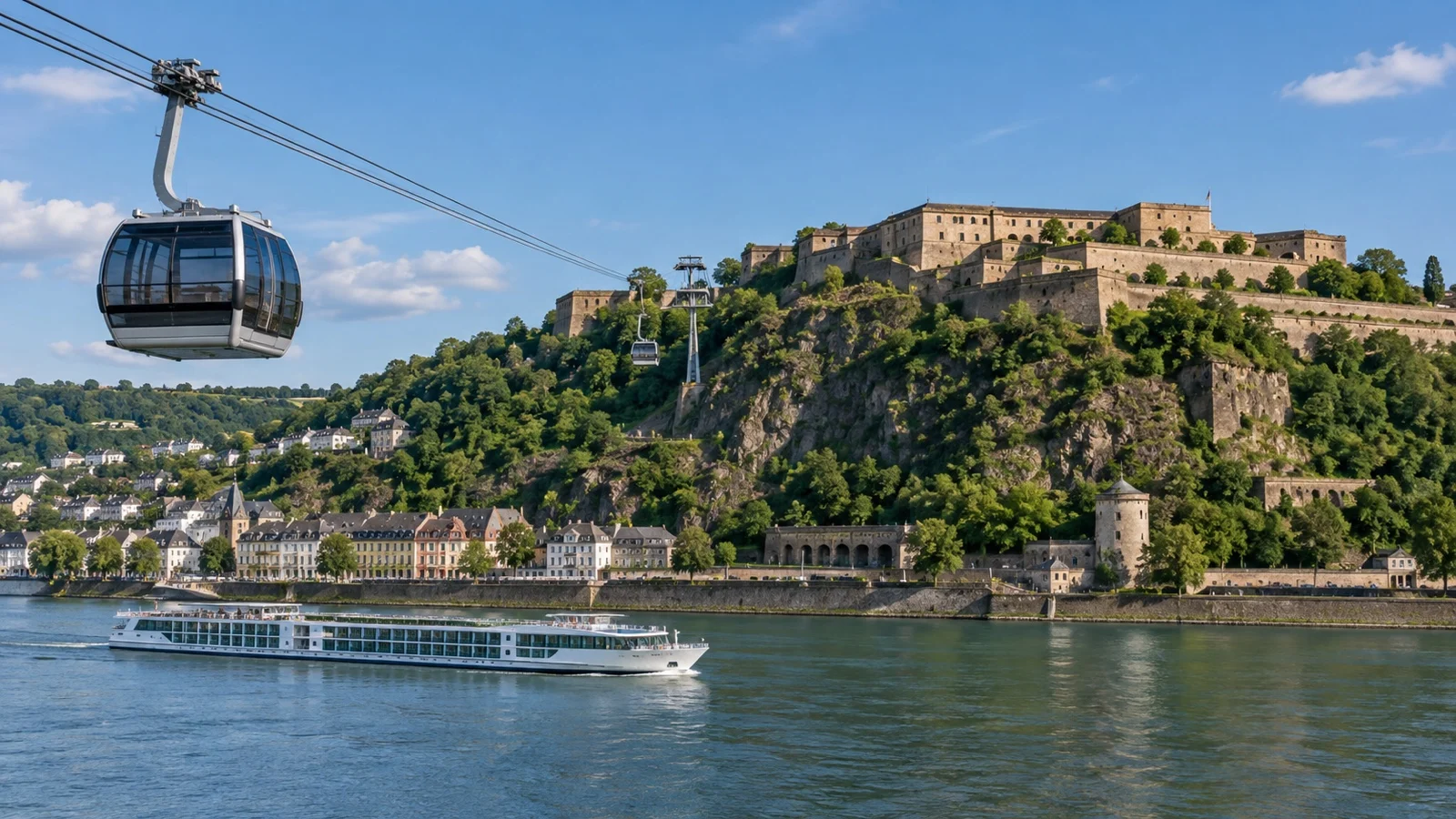
The cable car crosses the Rhine between the riverside near Deutsches Eck and the plateau below Ehrenbreitstein Fortress. Panoramic cabins climb more than 100 meters, turning a transport link into the city’s best short attraction.
Operating days, first and final rides, maintenance closures, and ticket prices change by season. Check the official cable-car website for your exact date and do not rely on a fare copied months earlier.
Combination tickets may bundle the round trip with fortress admission, but compare what is open and how much time you have. A simple cable-car ride and viewpoint visit can be better than rushing through paid exhibitions.
Queues and timing
Cruise groups can create a sudden queue at the lower station. Go early if the cable car is your priority, or wait until organized groups have moved through when your call is long enough.
Leave the fortress plateau with more buffer than the ride itself appears to require. Boarding lines, weather pauses, and the walk from the lower station to your actual ship can consume the margin.
Ehrenbreitstein Fortress
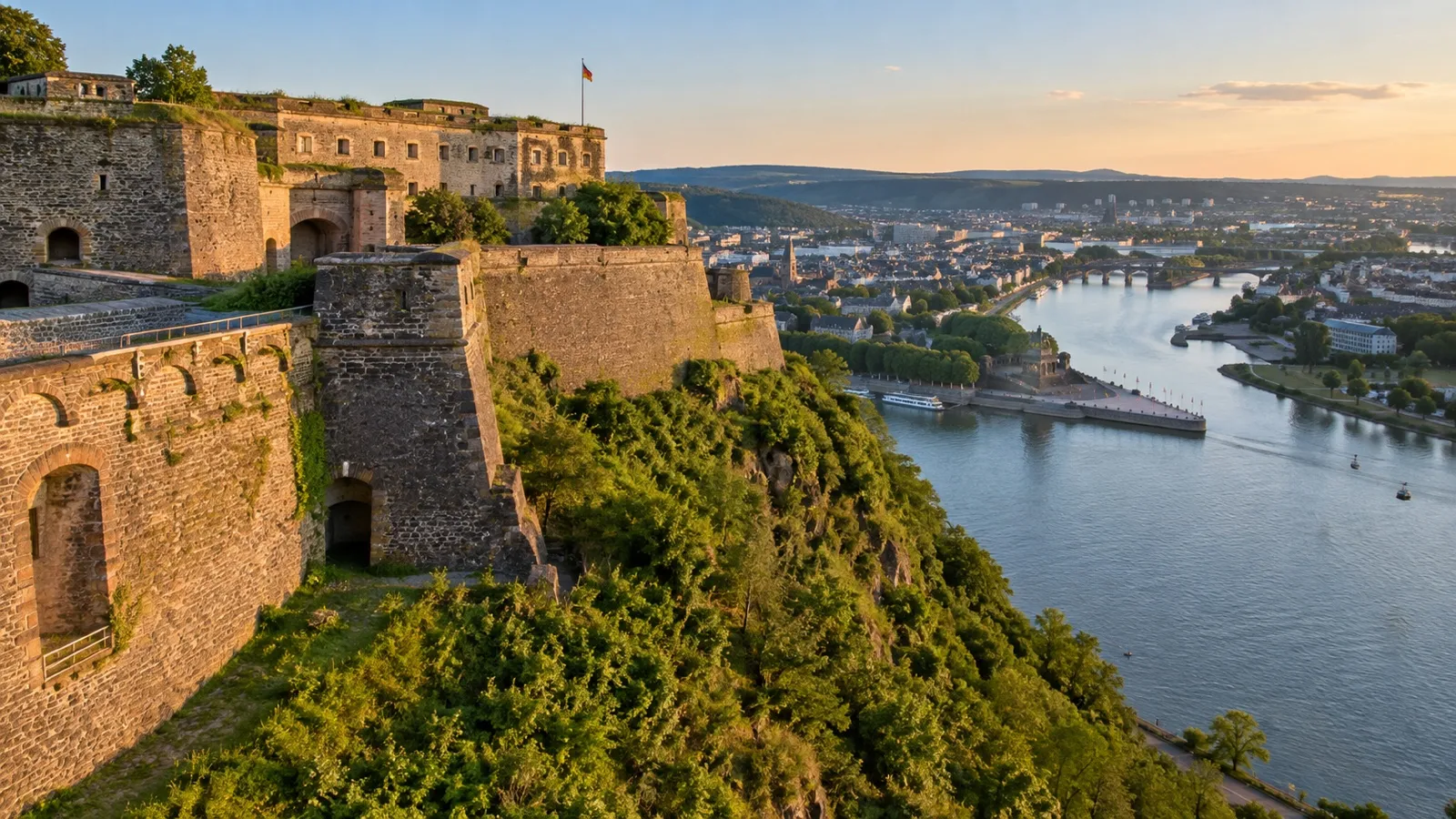
Ehrenbreitstein Fortress crowns the rock on the Rhine’s right bank and gives Koblenz its dramatic skyline. The present Prussian complex contains ramparts, courtyards, museums, exhibitions, memorials, and viewpoints.
Use the official fortress website for current opening, admission, events, and access notices. Not every exhibition or exterior route follows the same seasonal hours.
The complex is much larger than it looks from below. Decide whether you want the panorama, military architecture, or museum interiors, then spend your limited time accordingly.
A cable-car closure does not make the fortress impossible, but road or public transport takes more planning. On a short cruise call, treat the alternative journey as a separate excursion rather than an improvised replacement.
Koblenz old town
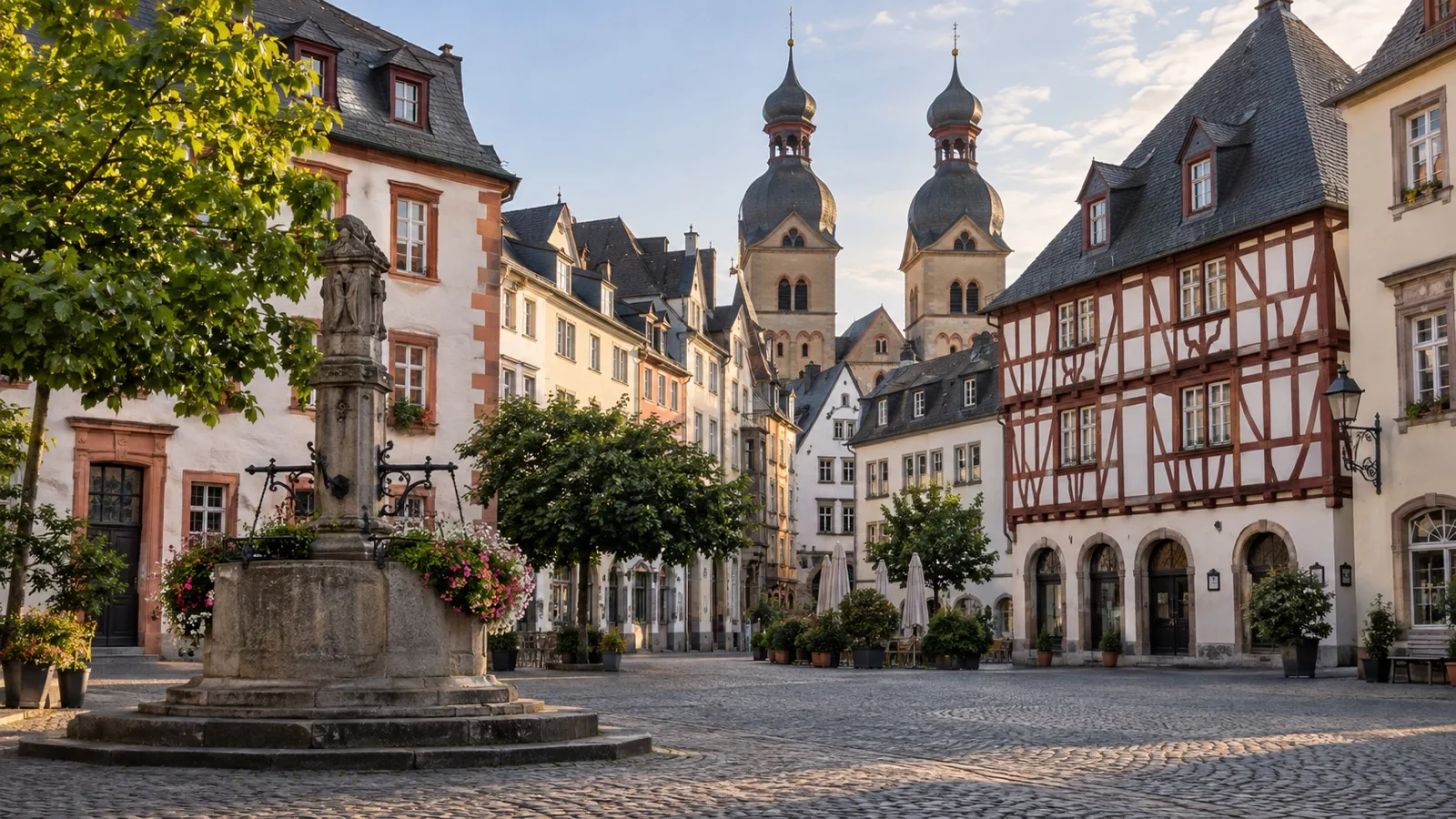
The Altstadt begins close to the Moselle moorings and folds around small squares, fountains, churches, cafés, and narrow streets. It is compact enough to wander without turning the walk into a navigation exercise.
Liebfrauenkirche and Florinsmarkt
The twin towers of the Church of Our Lady help orient the old town, while Florinsmarkt brings together historic buildings and one of the city’s most attractive squares. Church access depends on services and events, so enter quietly when open.
A river call rarely needs a rigid route here. Let the spires, squares, and pedestrian lanes lead you back toward the Moselle.
Jesuitenplatz and Schängel Fountain
Jesuitenplatz is another handsome old-town space near the city hall and Jesuit church. The playful Schängel Fountain nearby periodically spits water, a local joke best appreciated from outside its range.
These sights take minutes rather than hours and fit naturally between the berth and the cable car. They are useful additions when the call is too short for a museum.
Forum Confluentes
Forum Confluentes is the modern cultural building at Zentralplatz, housing the tourist information office and city collections. It provides an indoor option when rain or winter weather makes the riverfront less appealing.
Check which galleries are open and whether the visit suits your remaining time. The tourist office can also confirm local events, transit, and last-minute closures.
River promenades and wine
Walking the Moselle and Rhine embankments is the simplest way to understand Koblenz. Each side has a different mood, with hotel ships and old-town access along the Moselle and the fortress panorama dominating the Rhine.
Koblenz sits between the Moselle and Middle Rhine wine regions, so local Riesling is an obvious taste of place. Wine taverns and restaurants may open later than a morning cruise call, making a café or bakery the more reliable early option.
If you order wine, remember that river days often include gangways and cobblestones. Enjoy the tasting, eat something with it, and keep the return walk comfortable.
Stolzenfels Castle
Stolzenfels Castle stands south of central Koblenz above the Rhine, rebuilt in the nineteenth-century Romantic style. Its setting and interiors can be rewarding, but reaching it and climbing from the village take a meaningful share of a short call.
Choose a ship excursion, taxi, or carefully checked local transport if the castle is a priority. Verify opening, tour access, and the uphill approach before leaving the center.
I would not combine a full fortress visit, old town, and Stolzenfels in a half day. Pick one elevated castle experience and give yourself time to enjoy it.
Public transportation
The Verkehrsverbund Rhein-Mosel, or VRM, coordinates regional buses and trains around Koblenz. Most central cruise sights require no transit, but the network is useful for the main station, Stolzenfels, and locations beyond the old town.
Use the VRM journey planner for current routes, fares, and service changes. Buy and validate the correct ticket before travel, following the instructions for the vehicle or station.
Koblenz Hauptbahnhof is not beside the primary river moorings. Allow for the journey to the station and the walk back through town if planning an independent regional train.
River levels and itinerary changes
River cruising depends on water that is neither too high nor too low. High water can restrict bridge clearance and close landing areas, while low water can limit the ship’s draft or require itinerary changes.
A line may move passengers by coach, swap vessels, shorten the call, or use a different landing without declaring the whole voyage canceled. Follow the cruise director’s updates and keep independent bookings refundable.
There is no honest fixed percentage for whether Koblenz will be missed. River levels develop across an entire watershed, and the ship’s dimensions and onward route matter as much as conditions at the local quay.
Weather and what to wear
Koblenz can be warm on summer promenades, chilly on the fortress plateau, and wet in any season. Wear layers and shoes with grip for cobblestones, ramps, and historic paving.
Check the German Weather Service for official forecasts and warnings. Wind can pause cable-car service even when walking conditions remain comfortable.
The cable-car cabin can be warm in sun, while the fortress feels exposed. Carry water and a light shell rather than dressing only for the sheltered berth.
Accessibility
A direct river berth can be convenient, but rafting, gangway angle, steps, and river level determine the actual route ashore. Ask the cruise line for a same-day access assessment.
The Deutsches Eck promenade is among the easier central areas, while old-town cobbles and fortress surfaces require more care. The cable car publishes accessibility information and can be a practical way to avoid the steep climb.
Some historic fortress passages and exhibitions may not be step-free. Contact the site about the exact route and accessible bathroom locations when those details determine your visit.
Three practical Koblenz plans
A two-hour walk
Walk downstream along the Moselle to Deutsches Eck, continue to the lower cable-car area for the fortress view, then cross the old town back toward your berth. Add coffee only after completing the confluence loop.
This plan avoids timed transport and works even when the cable car is closed. It also adapts easily to a changed mooring.
A fortress half day
Go directly to the cable car, ride to Ehrenbreitstein, choose the viewpoints and one focused section of the fortress, then descend for Deutsches Eck. Use the remaining time for a short old-town loop.
Check the final downward ride and ship departure before entering exhibitions. The panoramic view is the part I would protect if time starts to tighten.
A relaxed city day
Visit Deutsches Eck, wander the old-town squares, stop for lunch or wine, and add Forum Confluentes or the cable car according to weather. Keep Stolzenfels for another visit unless your call is unusually long.
This plan suits repeat visitors and anyone who prefers atmosphere to a timed attraction. It also keeps you near the vessel if river conditions cause an early departure.
Common Koblenz river cruise questions
Do ships dock on the Rhine or Moselle?
The main hotel-ship moorings managed by Koblenz-Touristik are on the Moselle along Peter-Altmeier-Ufer. Your operator can assign another landing when traffic or river conditions require it.
Will I have to walk through another ship?
Possibly, because rafting is common at busy river berths. Follow crew directions and expect thresholds or temporary gangways between vessels.
Is the cable car always open?
No, it follows a published operating calendar and can close for maintenance or weather. Check the official site for your exact call.
Can I walk to Deutsches Eck?
Yes, from the main Moselle moorings it is a straightforward waterfront walk for most passengers. Your actual distance depends on where along the berth line your ship is placed.
Can high or low water cancel the stop?
Either can alter docking, sailing, or the wider itinerary. The cruise line may adjust by bus, berth, schedule, or ship swap rather than simply canceling.
What should I confirm that morning?
Check the mooring, rafting route, all-aboard time, cable-car calendar, fortress access, and weather. If the call shortens, keep Deutsches Eck and the old town as the reliable core.
The last word
Koblenz gives river cruisers an unusually clear sense of place: two rivers, one sharp confluence, a fortress above, and the old town immediately behind the quay. The city does not require a complicated excursion to become memorable.
Start with the cable car if it is your priority, keep Deutsches Eck nonnegotiable, and let the old town absorb the remaining time. That simple order works beautifully in a port where geography is already on your side.
How this guide was researched: This guide was desk-researched on September 12, 2026 using current official Koblenz port, cable car, fortress, public transit, and weather sources. It does not claim a personal ship call, berth inspection, cable car ride, or fortress visit.
About the author: Ellie writes practical river port guides for travelers who want clear choices, realistic timing, and room to enjoy the place.
Moorings, river levels, and attraction operations can change, so confirm the landing and all-aboard time with your cruise line.