Skagen Cruise Port: Piers, Grenen and the Walk
Skagen feels like the edge of the map in the best possible way. Denmark narrows to a sandy point here, the fishing harbor stays busy, and the famous northern light sharpens every yellow wall and red roof.
The cruise piers sit inside a working port rather than beside the pedestrian center, but the distance is manageable for many travelers. Plan the trip to Grenen first, then let the town’s museums, galleries, and harbor fill whatever time remains.
Quick Facts
- Port: Port of Skagen, on the northeastern side of Denmark’s Jutland peninsula.
- Arrival type: Cruise ships normally berth alongside at one of three cruise piers.
- Largest ship capacity: The port lists a maximum vessel length of 400 meters and water depths up to 13 meters.
- Town access: The center is a flat walk from the cruise area, with the exact distance depending on the assigned pier.
- Main attraction: Grenen, the sandy point where waves from the Skagerrak and Kattegat meet.
- Currency: Danish krone.
- Language: Danish, with English widely understood in visitor businesses.
- Time zone: Central European Time in winter and Central European Summer Time during the seasonal clock change.
- Best independent plan: Visit Grenen early, then explore central Skagen and the harbor on foot.
- Weather note: Wind at the exposed tip can be much stronger and cooler than it feels in town.
Where cruise ships dock in Skagen
The Port of Skagen lists three cruise piers within its commercial harbor. Its longest cruise berth is 500 meters, with capacity for ships up to 400 meters long and a stated water depth of 12 meters.
A secondary pier added in 2021 is 295 meters long, accommodates ships up to 300 meters, and has a stated depth of 13 meters. The assigned position matters because the walking distance to town is not identical from every gangway.
Reception facilities are available at all three cruise piers, and the port advertises free Wi-Fi at Piers 9 and 10. Expect useful arrival support rather than a grand enclosed cruise terminal filled with shops.
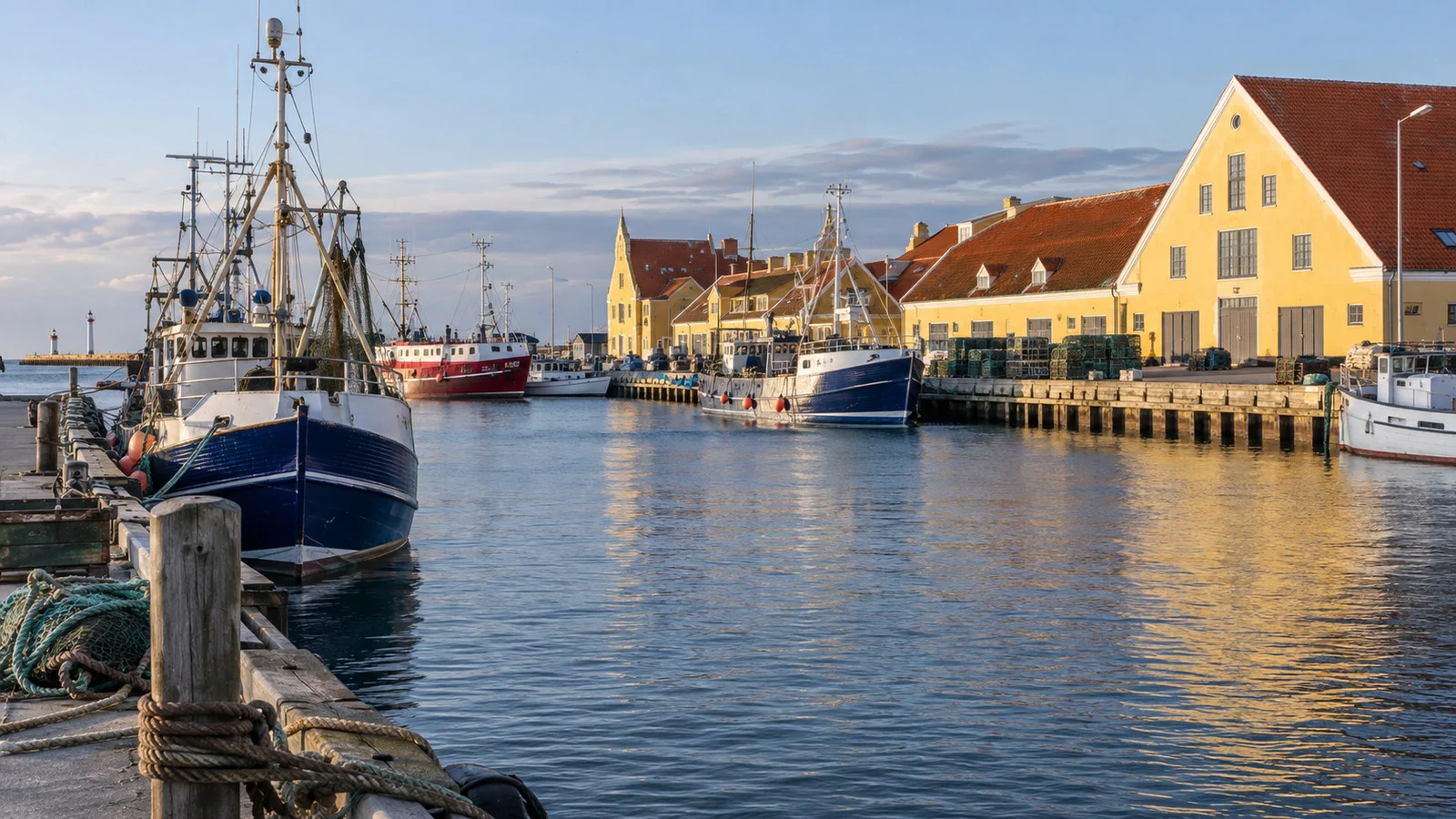
The immediate scene is an active fishing and industrial harbor, complete with trawlers, warehouses, and the daily business of seafood. It is not the prettiest part of Skagen, but it gives the destination an honesty that a purpose-built resort pier never could.
Walking into central Skagen
The route from the cruise area to central Skagen is flat and generally straightforward, though the first portion passes working port facilities. Allow roughly 20 to 30 minutes for a comfortable walk, then adjust that estimate for your berth, pace, and mobility.
Some cruise lines arrange paid or complimentary shuttles, but that is a ship service rather than a universal port promise. Check the daily program for the pickup point, operating hours, accessibility, and final return.
Taxis are useful for Grenen or for travelers who cannot manage the walk, yet supply is limited when several ships or tour groups arrive together. If you take a taxi outward, ask how to arrange the return instead of assuming another car will be waiting.
Bicycles suit Skagen’s level terrain and can connect the port, town, and Grenen area efficiently. Reserve ahead on a busy summer call and ask the rental shop for a lock, helmet, route advice, and a realistic return cutoff.
Grenen and the meeting seas
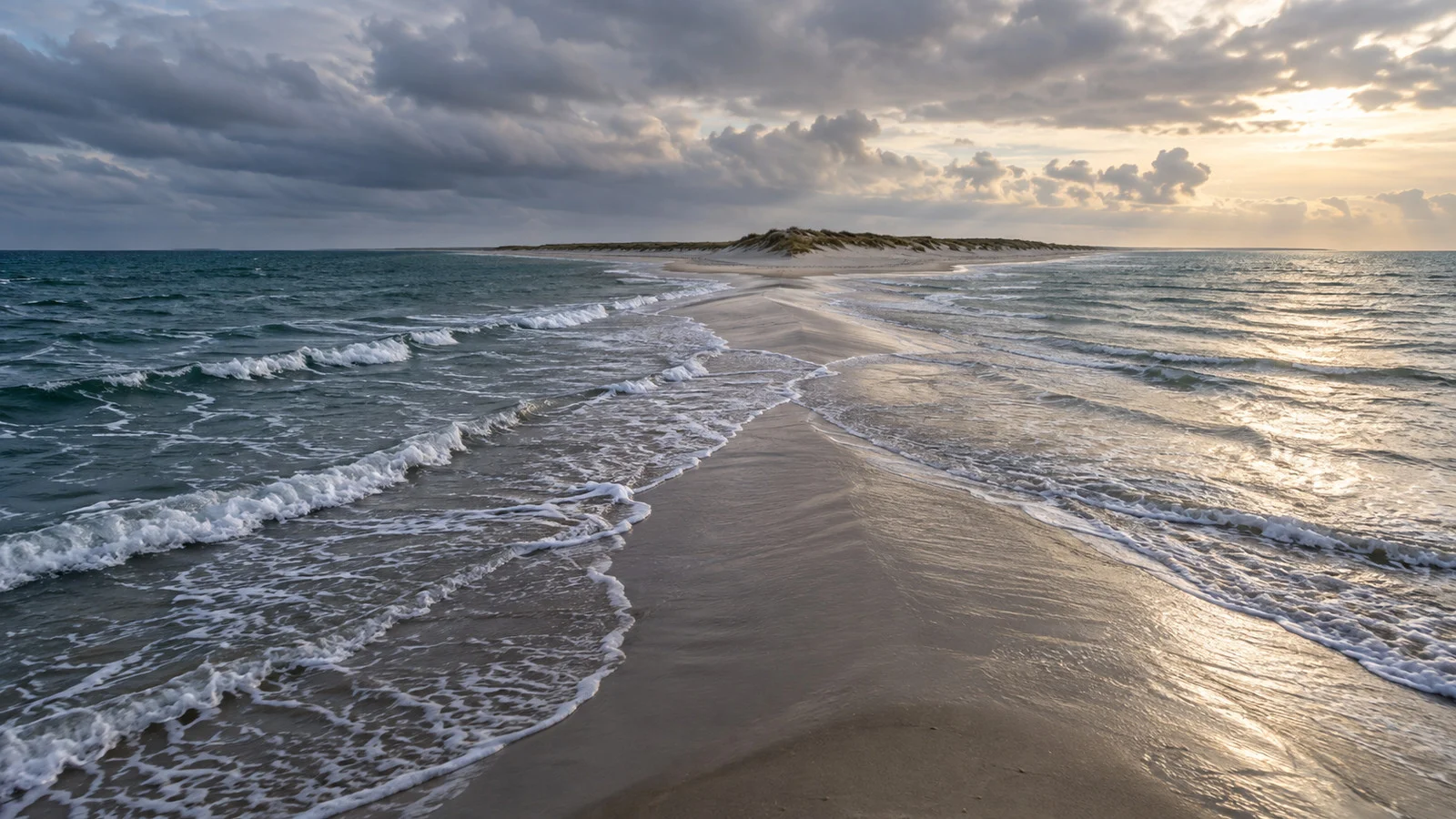
Grenen is the sandy point north of town where waves from the Skagerrak and Kattegat push toward each other from different directions. The visible seam changes with wind, current, and tide, so the experience is about movement and landscape rather than a fixed line on the beach.
The attraction begins at the large visitor and parking area on Fyrvej, about 3 kilometers from the town center according to the Sandormen operator. From there, travelers continue across the sand either on foot or aboard the tractor-drawn passenger vehicle.
Do not enter the water at the tip, even when the shallows look calm and other visitors crowd close to the surf. Conflicting currents make swimming unsafe, and an attractive photograph is not worth ignoring the official safety guidance.
Grenen is exposed, with little protection from wind, sun, or sudden rain. Bring a secure hat, a wind-resistant outer layer, and shoes that tolerate sand.
Riding the Sandormen
The Sandormen carries passengers from the Grenen parking area toward the tip during its operating season. Service is frequent at busy times, but the published season, daily hours, and intervals can change with conditions.
The operator says tickets are sold for cash aboard the vehicles, while card purchases are made in advance at the ticket machine by the pickup point. MobilePay is not accepted because coverage can be weak, so arrive with a working payment option.
This is a tractor and passenger trailer traveling over sand, not a city bus with standardized level boarding. Travelers with limited mobility should ask the operator about steps, assistance, seating, and mobility-device accommodation.
Families should note that the operator does not recommend strollers because loose sand often makes them impractical. A child carrier may work better, but the wind and open beach still deserve serious consideration.
The Gray Lighthouse
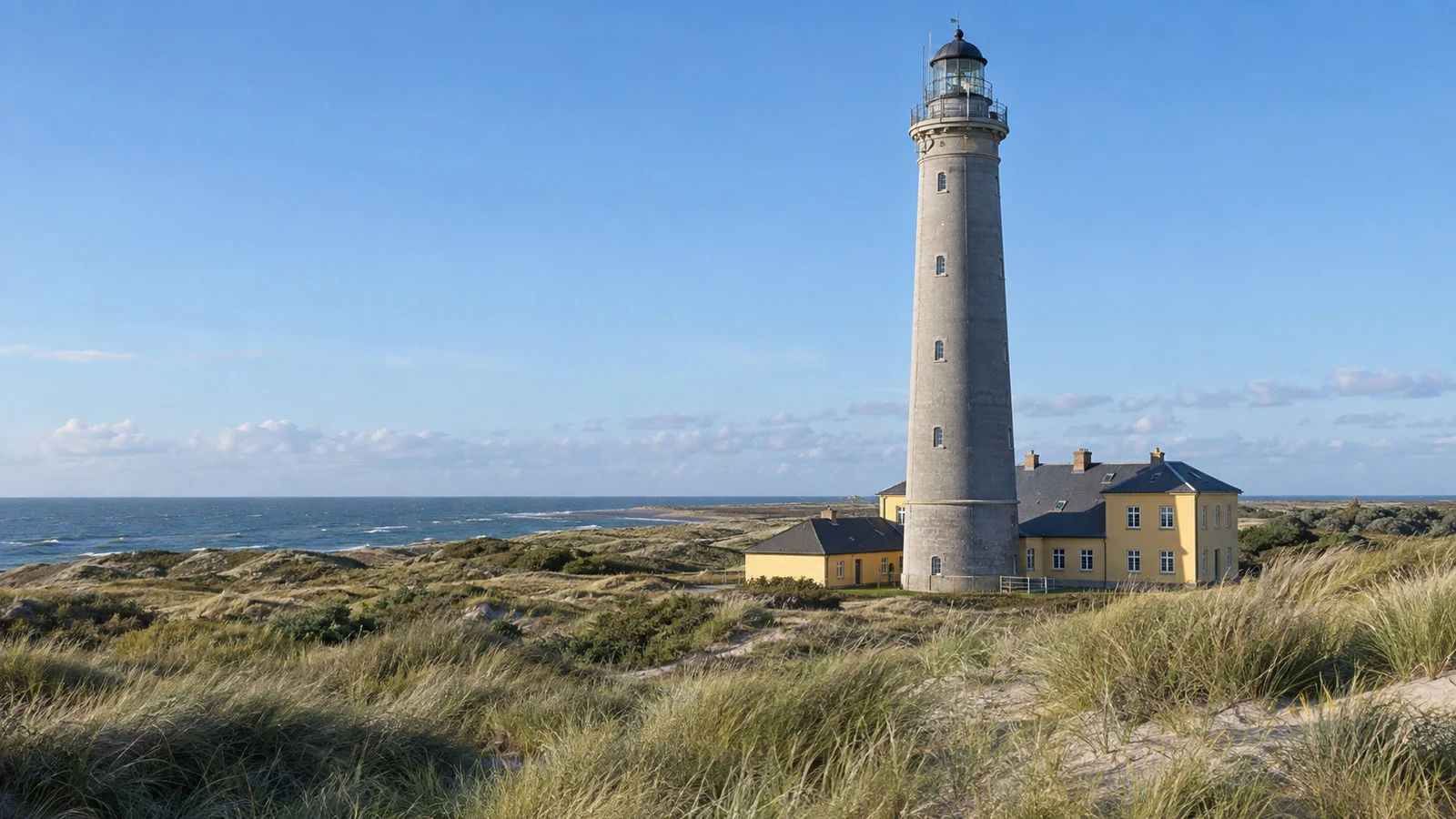
Det Grå Fyr, the Gray Lighthouse, stands near the route to Grenen and adds an excellent second stop. Its height provides a dramatic view over the thin peninsula, dunes, sea, and shifting coastline when the tower is open.
The surrounding nature center focuses on bird migration, which is especially important at this geographic funnel between Scandinavia and continental Europe. Spring and fall bring serious birdwatchers as well as casual visitors looking for the landscape.
Climbing the lighthouse requires many steps, and access can be affected by opening hours or weather. Check the official destination information for Det Grå Fyr before building your day around the climb.
Grenen and the lighthouse fit naturally together because they share the same northern end of town. Combining them is far more efficient than returning to central Skagen between the two.
Skagen town and its yellow houses
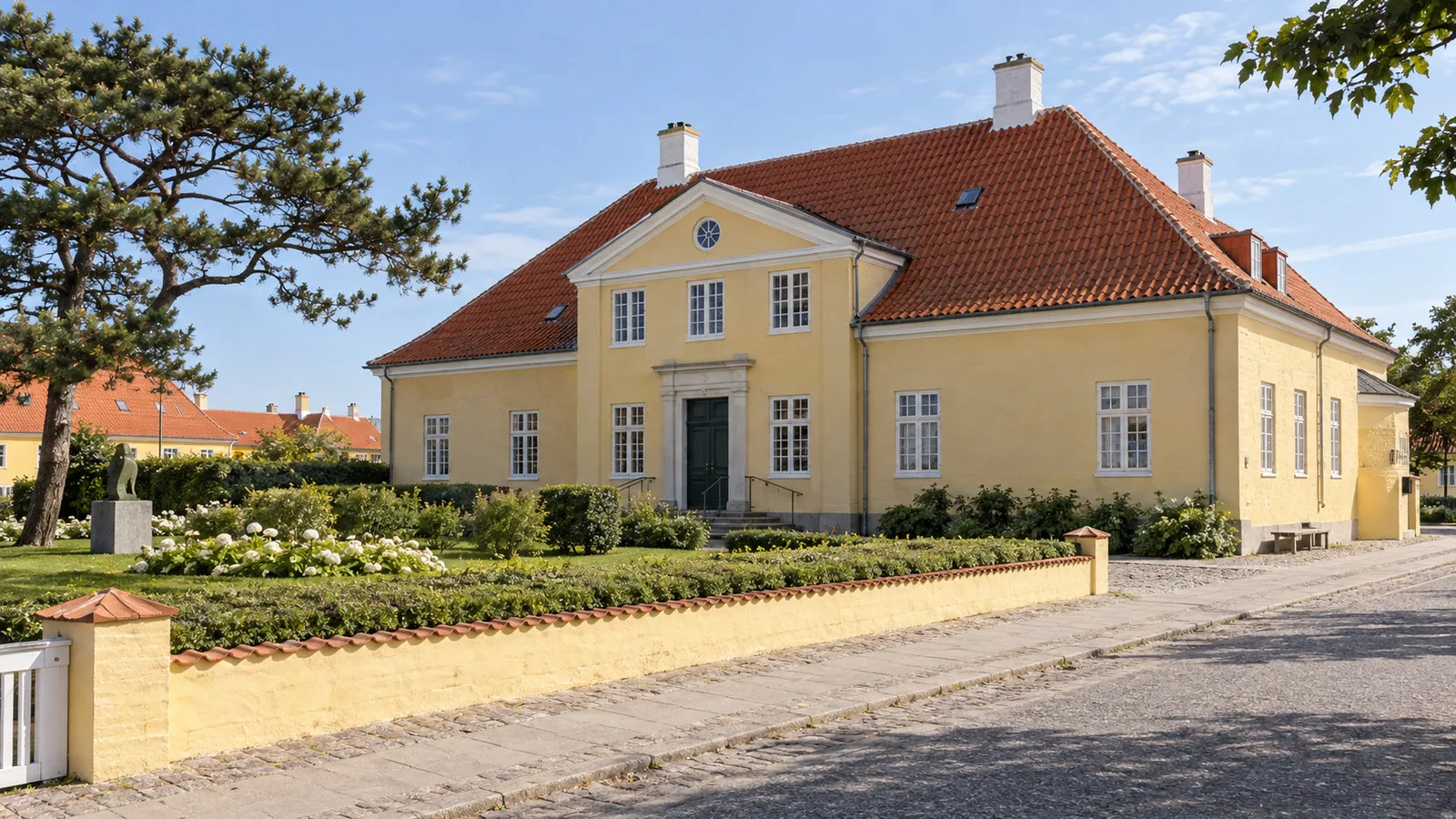
Central Skagen is compact, handsome, and easy to explore without a rigid route. Yellow-painted houses, red tile roofs, white roof details, galleries, bakeries, and small shops give the town a coherent look without making it feel staged.
Sankt Laurentii Vej is the main pedestrian spine, while the harbor restaurants gather closer to the marina. The two areas are near enough to combine, though summer crowds can slow the short walk.
The harbor is known for seafood, especially local fish and shrimp, but waterfront prices reflect Skagen’s popularity. Menus are usually posted outside, and card payment is standard in most established restaurants.
Denmark uses the krone, not the euro. Cards cover most cruise-day purchases, yet a little cash can help with small operators whose payment arrangements are limited.
Skagens Museum and the artists
Skagens Museum tells the story of the artists who gathered here in the late nineteenth and early twentieth centuries. Anna Ancher, Michael Ancher, P S Krøyer, and their circle found subjects in local fishermen, family interiors, beach gatherings, and the northern light.
This is not a token local gallery but a substantial collection tied directly to the place outside its doors. Travelers who enjoy art can easily spend more time here than expected, so visit after Grenen if the natural landmark is the priority.
Opening hours, exhibitions, ticket arrangements, and access vary through the year. Use the museum’s official information shortly before arrival and allow time to store large bags if its visitor rules require it.
Anchers Hus and other museum properties may operate on schedules different from the main collection. Treat each building as a separate visit rather than assuming one opening time covers everything.
The Sand-Covered Church
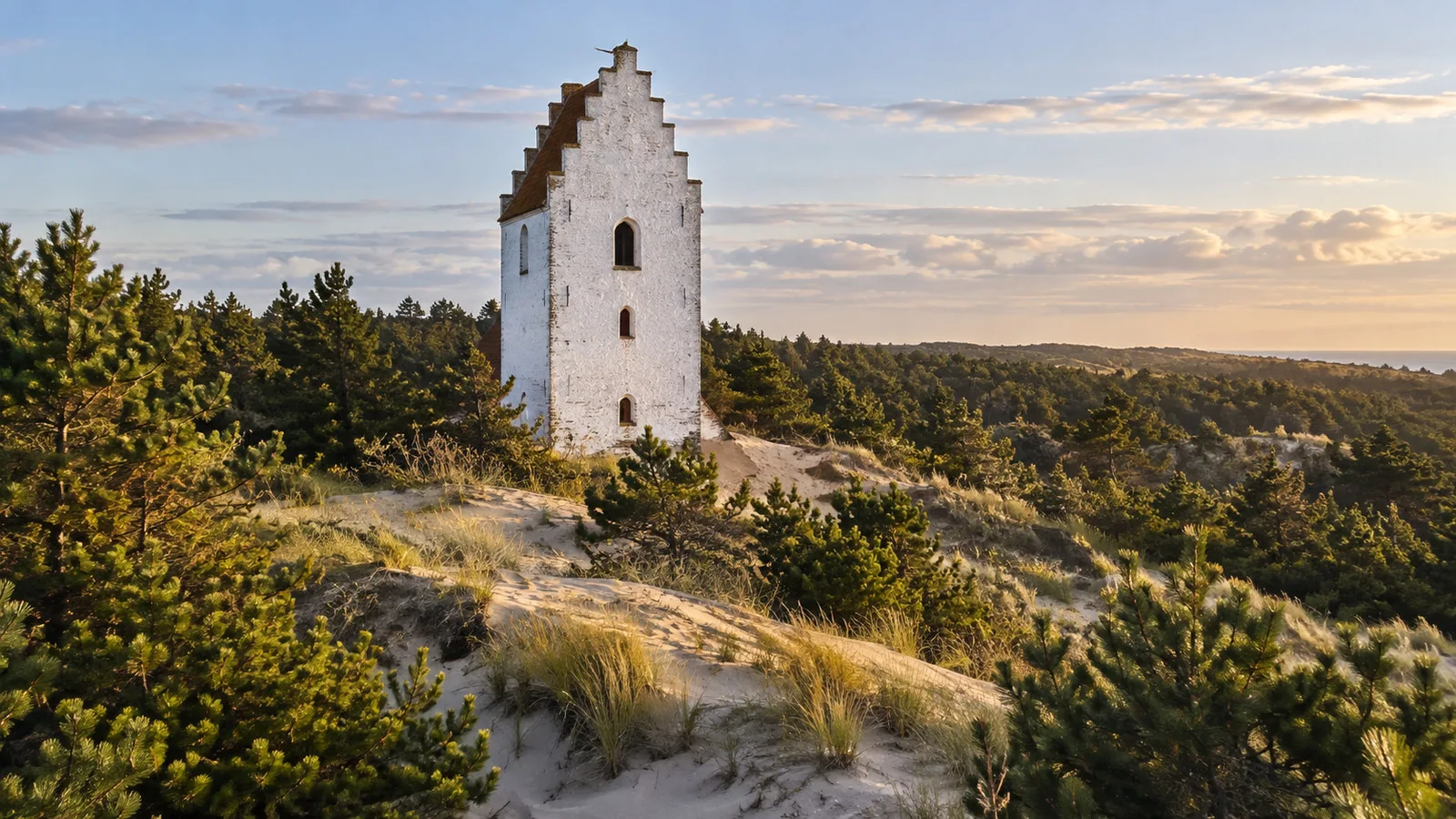
Den Tilsandede Kirke, often called the Sand-Covered Church, lies southwest of central Skagen. Drifting sand gradually overwhelmed the medieval church, and today its white tower remains above the dunes.
The church is compelling because the empty landscape tells the story almost instantly. Reaching it still involves transport from town and a walk through sandy terrain, so it is not the best addition for every short call.
A bicycle or taxi makes the outing more practical, while a ship excursion may combine it with other regional sights. Check current access conditions, especially after heavy rain or strong wind.
Choose the church instead of Grenen only if cultural history matters more to you than the meeting seas. Trying to do both plus a serious museum visit can make a relaxed port unnecessarily rushed.
Råbjerg Mile
Råbjerg Mile is a vast migrating dune south of Skagen and one of the region’s most striking landscapes. Wind continues to move the sand across northern Jutland, creating a place that feels far more remote than its road access suggests.
The dune is not a casual extension of a walk around town because it requires a separate transport plan and time on soft sand. It works best on a long call with prearranged transport, or as part of an organized excursion that protects the return.
Strong sun, blowing sand, and limited shelter can make a brief visit more demanding than expected. Carry water and keep phones or cameras protected when the wind rises.
For a standard call, Grenen delivers the more distinctive Skagen experience with fewer logistical links. Save Råbjerg Mile for a second visit unless the ship’s schedule is generous.
Accessibility in Skagen
The modern cruise quays are flat, but the ship’s gangway angle changes with berth conditions and vessel design. Ask the cruise line about gangway assistance and any shuttle before sailing.
Central Skagen is generally level, though distance, paving transitions, crowds, and wind still matter. A shuttle or taxi can conserve energy for the pedestrian center and museum.
Grenen presents the harder challenge because loose sand lies beyond the parking area and the Sandormen is a specialized tractor vehicle. Confirm current boarding arrangements directly and do not assume the final approach suits every wheelchair or mobility aid.
The Gray Lighthouse adds a stair climb, while the Sand-Covered Church and Råbjerg Mile involve sandy outdoor routes. Skagens Museum and a town-center loop usually create the most adaptable independent plan.
Weather and seasonal planning
Skagen’s location between two bodies of water makes wind the defining weather factor. A forecast that looks mild in town can feel sharply cooler at Grenen, especially when clouds arrive.
Bring a lightweight waterproof layer even in summer and avoid an umbrella as your only rain protection. Shoes should handle both pavement and loose sand if Grenen is on the plan.
Long northern daylight is a gift during the main cruise season, but attraction hours remain more limited than the available light. Check museum, lighthouse, Sandormen, and shuttle schedules independently rather than assuming they all follow the ship.
In poor weather, Skagens Museum, shops, and a harbor meal create an easy alternative to the exposed point. Safety is a better souvenir than forcing a beach trip in severe wind.
Two realistic port-day plans
For a first visit, travel directly to the Grenen area, use the Sandormen or walk according to conditions, and add the Gray Lighthouse if timing allows. Return to central Skagen for lunch, the harbor, and a gentle walk toward the ship.
For an art-focused day, walk or shuttle into town, spend the morning at Skagens Museum, and follow with the harbor and pedestrian streets. Add Grenen only if transport is immediate and a generous margin remains before all aboard.
A long-call regional day could substitute the Sand-Covered Church or Råbjerg Mile, but not every attraction at once. Waiting for taxis and crossing soft sand quietly consume the schedule.
Whatever you choose, aim to be back in the central port area well before the ship’s cutoff. A strong headwind can slow the walk from town, and a shuttle line should never become your only plan.
The best way to approach Skagen
Skagen is friendly to independent exploration because its signature landscape and central sights sit close together. The trick is to respect the exposed setting and avoid packing a quiet destination with too many moving parts.
Visit Grenen early when that is your priority, carry a layer for the wind, and use live information for every seasonal service. The town then becomes the easy half of the day, full of art, seafood, and harbor views.
Skagen often appears alongside larger calls covered in our guide to Denmark’s cruise ports. Travelers continuing through the region can compare the more urban planning required for Copenhagen and Aarhus.
How this guide was researched: No firsthand visit is claimed. This guide was independently checked September 12, 2026, against current official information from the Port of Skagen, Sandormen, Det Grå Fyr, and local destination authorities.
Confirm the assigned berth, shuttle, Sandormen service, opening hours, accessibility, weather, and all-aboard time before travel.
See our Editorial Policy.