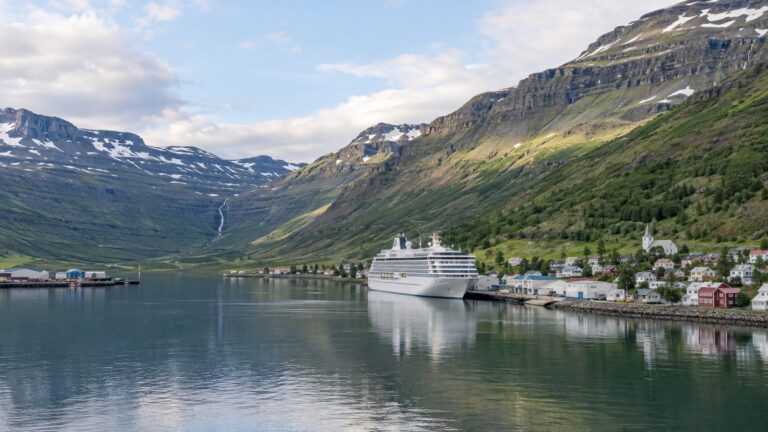
Havøysund Cruise Port: Quay, Scenic Route & Bird Cliffs
Havøysund is about as far from a cruise-brochure town as Norway’s coastal calls get: a fishing village of under a thousand people on a wind-scoured island in Finnmark. It sits on the Hurtigruten Coastal Express route between Hammerfest and Honningsvåg, and it rewards you more if you came for the quiet than for a checklist of sights.
A quay on an exposed edge of the map
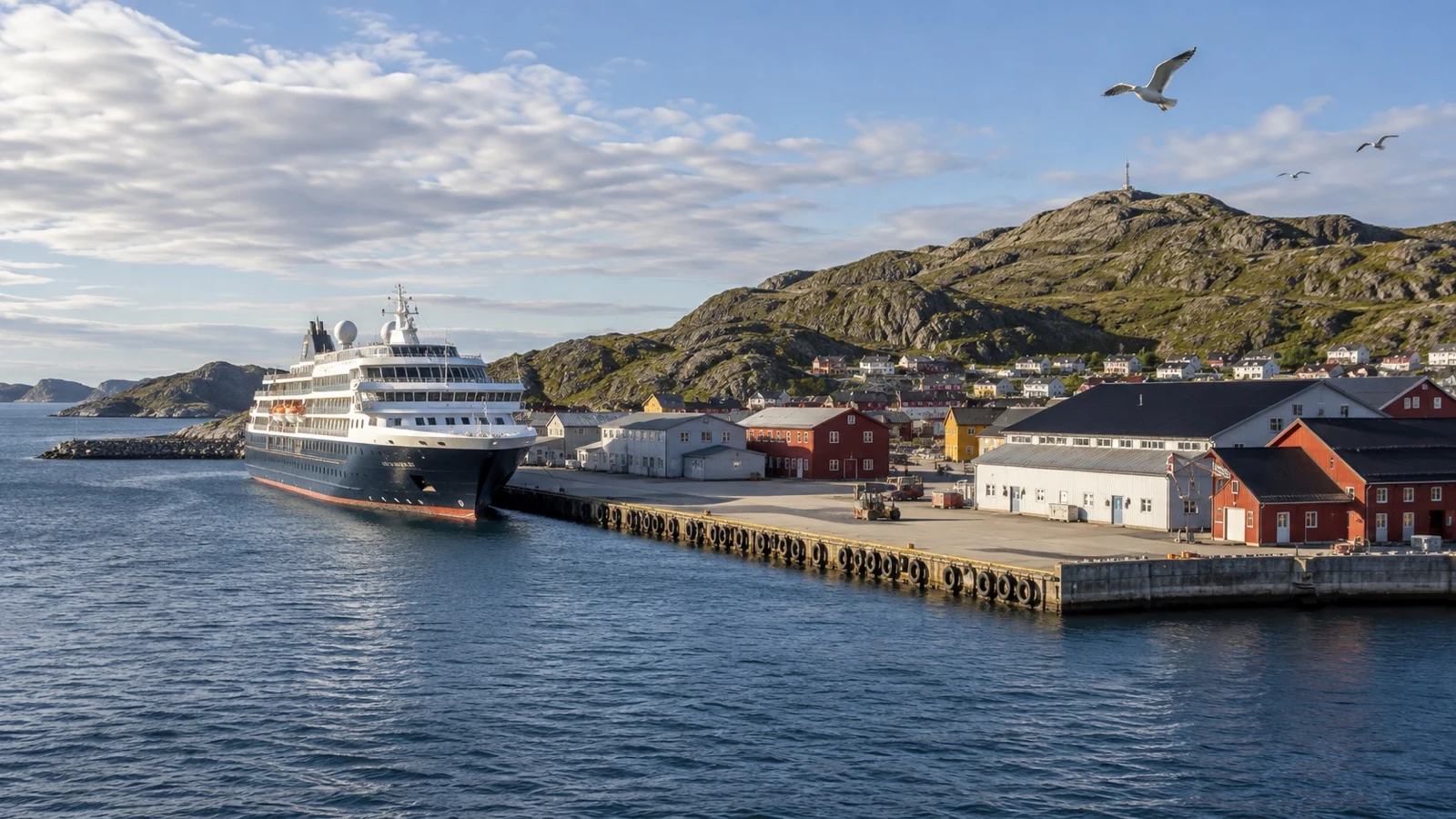
The Havøysund port address is Strandgt. 85 A, right in the village center on Havøya island.
Havøya itself only joined the mainland road network in 1986, when the Havøysund Bridge opened across the sound. Before that, the sea was the only way in or out, which says something about how this whole village still runs.
Regular Hurtigruten classic-fleet ships call here, including MS Nordkapp, MS Nordlys, MS Polarlys, MS Richard With, MS Nordnorge and MS Kong Harald. The call sits directly on the open Barents Sea coast, not tucked inside a fjord like many of Norway’s more sheltered stops, and that exposure is the honest headline fact about Havøysund.
Havøysund cruise port quick facts
- Where you land: The town quay on Havøya island in central Havøysund, Måsøy municipality, Finnmark.
- Dock or tender: Alongside at the town quay by gangway, like nearly every Coastal Express stop; no tendering required here.
- Into town: You’re already there. Havøysund is under 0.4 square mile, with the church, museum and shops a short walk from the quay.
- Currency: The Norwegian krone (NOK); cards are accepted almost everywhere and English is widely spoken alongside Norwegian.
- Time zone: Central European Summer Time (CEST, UTC+2) in the cruise season; CET (UTC+1) applies in winter.
- Schedule changes: No reliable public missed-call percentage is available. Open-coast weather can still shorten or cancel a call, so follow the operator’s live instructions.
Finding your bearings in a village this small
Havøysund had roughly 915 residents at the last count, making it one of the smallest calls on the whole Coastal Express run. It is also the administrative center of Måsøy municipality, so it carries more civic weight than its size suggests.
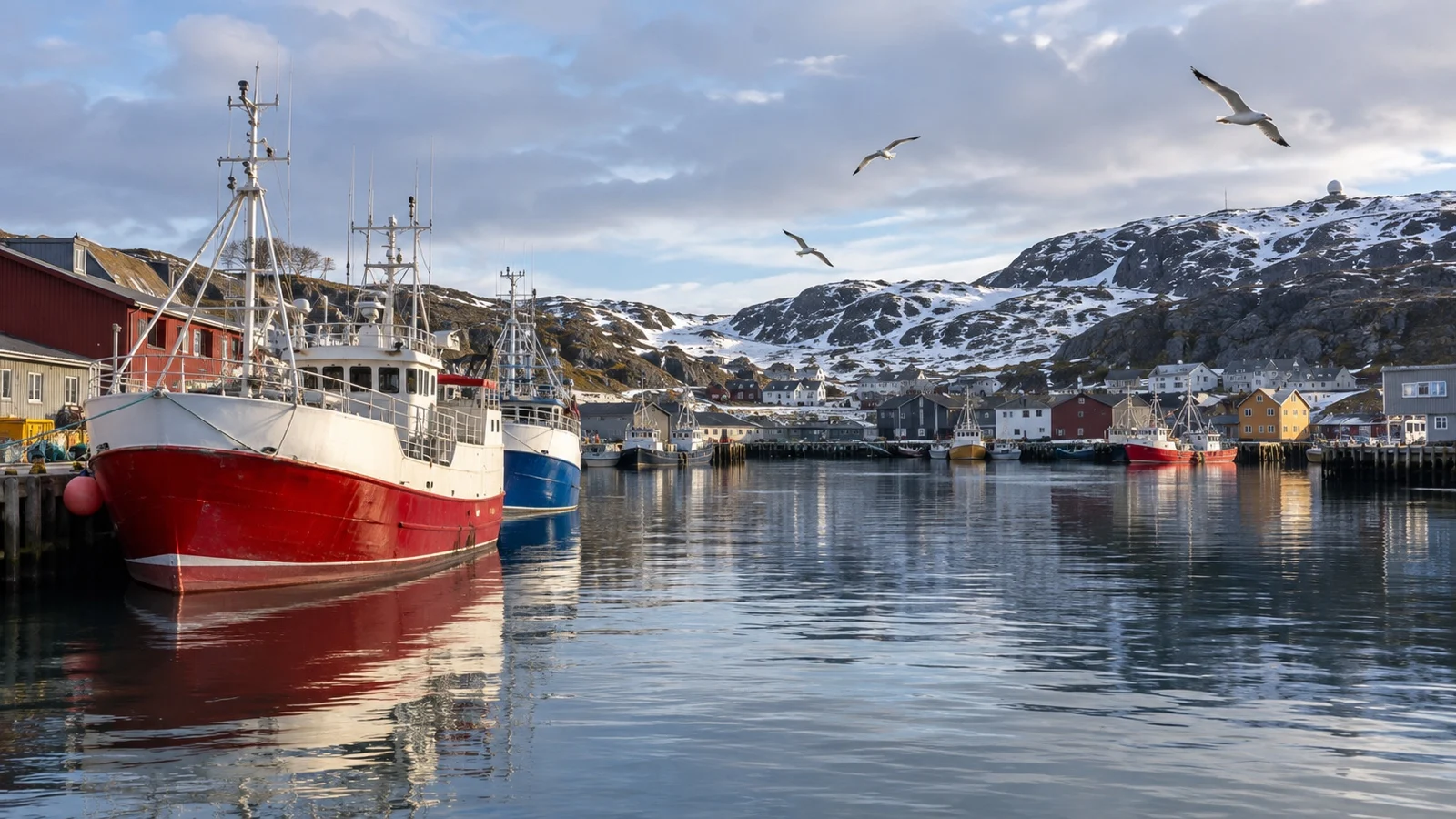
Walk from the quay and you will pass fish processing plants, a boatyard and a Coop Prix supermarket before you have gone very far. Much of what you see was rebuilt after the Second World War, when retreating German forces destroyed most of Finnmark in a scorched-earth withdrawal, the same history behind the reconstruction architecture in Hammerfest further down this coast.
Havøysund Church and the Måsøy Museum, housed in a red-painted former rectory, are the two fixed points worth aiming for. The museum’s focus is local coastal and fishing heritage, which is really the whole story of this place.
Look uphill and you will likely spot the wind farm on the plateau above town, fifteen turbines that have become part of the skyline. The nearest airport, Lakselv Banak, is 65 miles away, which is a useful reminder of how remote this village actually is.
The Havøysund Scenic Route, the reason to linger
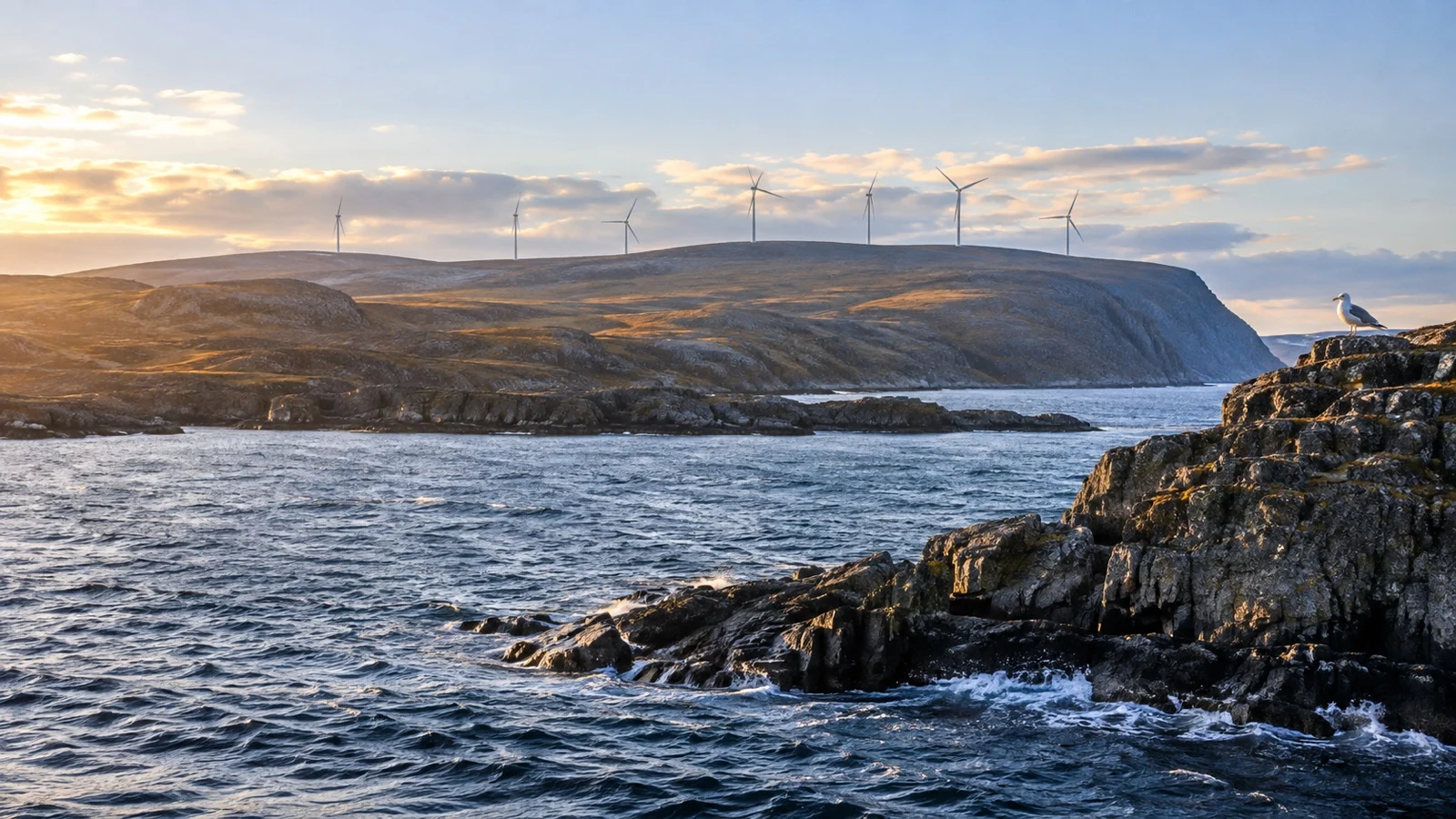
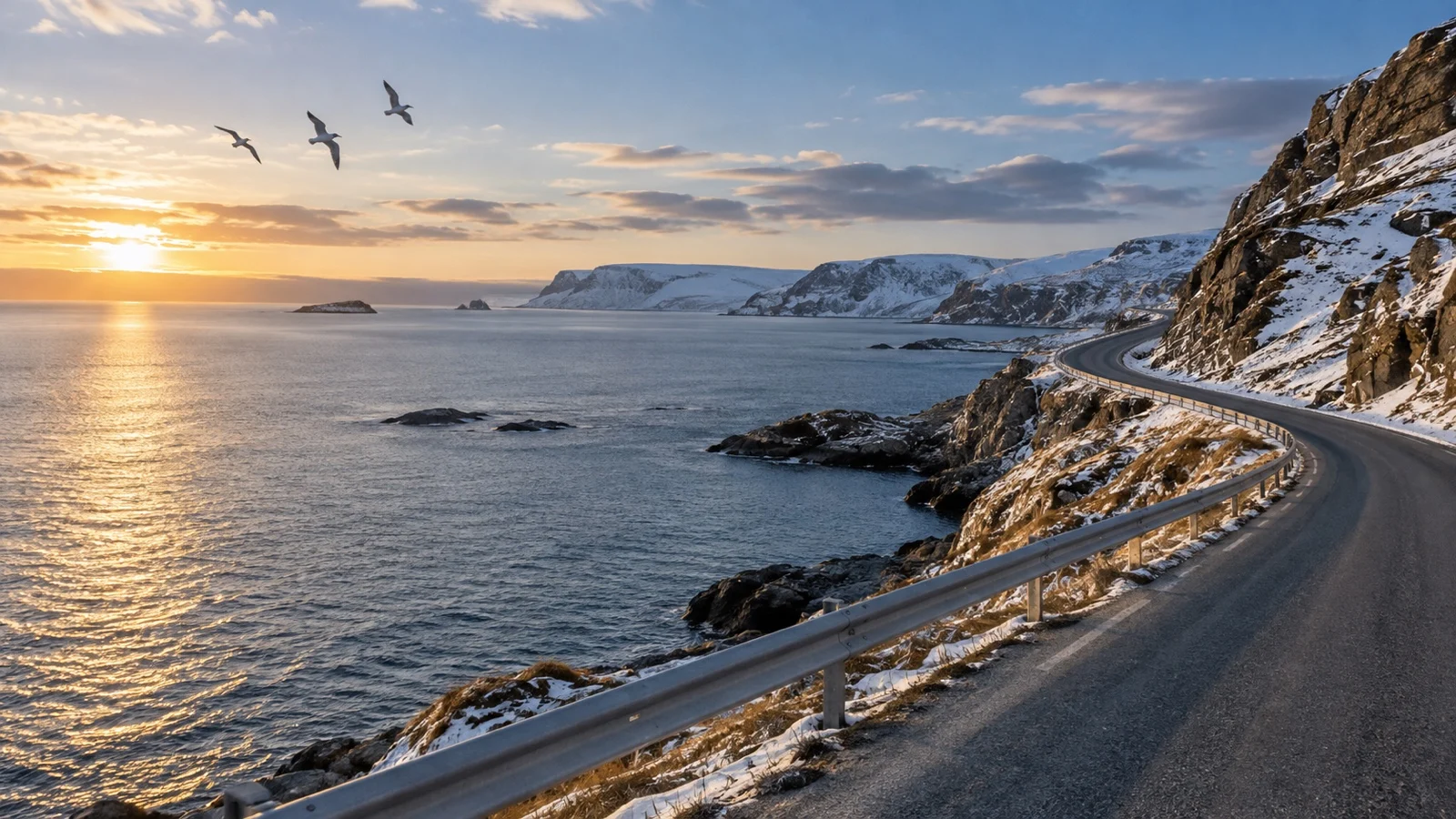
Havøysund gives its name to one of Norway’s official National Tourist Routes, a 42-mile road that runs from Kokelv to the village, maintained under the Norwegian Public Roads Administration’s Nasjonale Turistveger program. From a ship you only see the very end of it, but it explains why anyone drives out here at all.
Along the way are the Kokelv Coastal Sámi Museum, the Storberget viewpoint over the Arctic Ocean, and Selvika, a rest area built around concrete sculptures beside a stretch of coast with archaeological traces going back some 6,000 years. Havøygavlen, the island’s highest point, is the payoff view over the Barents Sea.
None of this connects by road to the North Cape. Havøysund sits on its own peninsula off the E6, and Nordkapp is a separate detour from Honningsvåg on Magerøya, so do not expect one to lead into the other.
If your ship gives you real time ashore, a short taxi or arranged transfer partway along this road is the single best use of a Havøysund afternoon. If it does not, you will still have watched the approach from the rail, which is most of what this route is about anyway.
Hjelmsøya, one of the coast’s great seabird cliffs
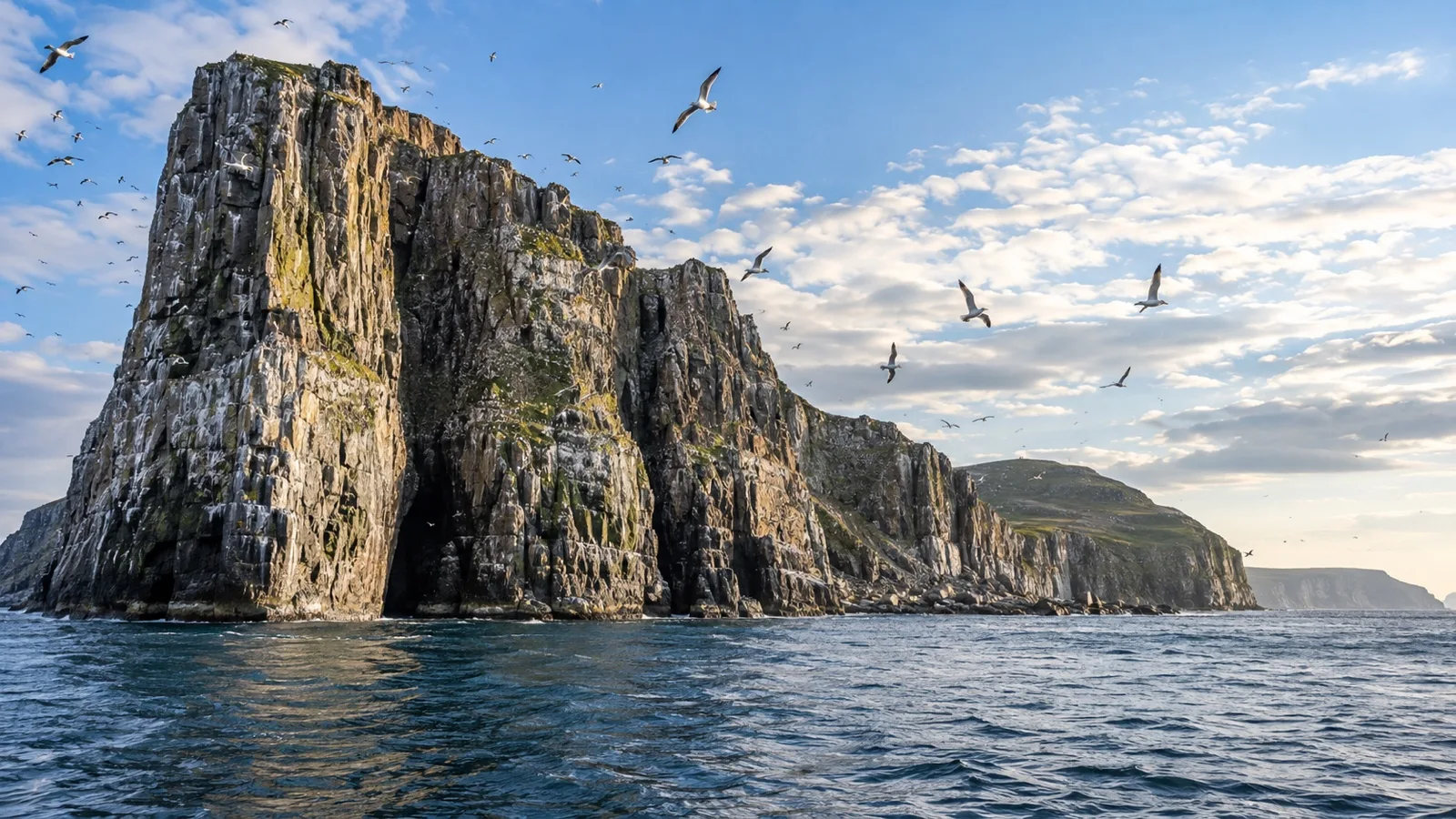
Out to sea from Havøysund sits Hjelmsøya, home to one of the largest seabird colonies in Europe. Roughly 20 seabird species have been tracked here since 1984, including a colony of more than 80,000 puffin pairs at Staurfjellet.
The cliffs are protected as a nature reserve, and getting there is a genuine undertaking. The crossing takes one to two hours by small boat over open, exposed water, and unlike Gjesvær near Honningsvåg, Hjelmsøya has not developed an established tourist bird-safari trade.
Sea eagles do turn up along this coast, with a chance of spotting one from the scenic road. Treat that as a possibility to watch for rather than a booked excursion, because I could not verify a running sea-eagle safari operating out of Havøysund itself.
The more realistic way to see the outer islands is the Måsøyekspressen, the local boat service that also carries fishing tourists. If a shore excursion to the islands is offered on your specific sailing, confirm the departure point and return time with the operator before you commit the day to it.
Land, village, or sea
Land: Take the scenic road as far as your call allows, even a short stretch toward Storberget. This is the one experience here that a photograph from the ship cannot replace.
Village: Stay in Havøysund itself, walk to the church and the Måsøy Museum, and let the working harbor be the rest of the entertainment. It is a low-effort, low-risk plan that suits a short or uncertain-weather call.
Sea: If an organized boat trip toward Hjelmsøya or the wider islands is running on your sailing, and conditions are good, it is the most memorable option on paper. Just go in with realistic expectations about how developed that particular trade actually is here.
Getting around without much to get around
The town quay puts you close to flat ground immediately, which helps in a village with limited infrastructure. Gangway angle still depends on tide and the specific ship, so ask your cruise line about the setup for your sailing.
Central Havøysund is compact and mostly level, and the church, museum and shops sit within an easy, flat walk. Surfaces are ordinary small-town Norwegian streets rather than a purpose-built pedestrian zone, so expect normal curbs and the occasional icy patch outside summer.
The scenic road out toward Kokelv is a real highway drive, not a walking route, and any excursion along it needs a vehicle with confirmed accessibility. A Hjelmsøya boat trip is a harder call again, given the open-water crossing and the informal state of that particular excursion market.
If mobility is a concern, contact your cruise line before sailing rather than assuming a village this small has made specific accommodations. Havøysund is genuinely tiny, and its tourism infrastructure reflects that.
Weather on an open Arctic coast
Havøysund sits above 70 degrees north directly on the Barents Sea, with no fjord or headland to soften the weather coming off the ocean. Wind, sudden squalls and quick shifts between sun and sleet are normal even in summer.
Winter adds polar night and ice underfoot to the mix, and this is exactly the kind of open-coast call that can be skipped or shortened when a system comes through. Layers, a genuine waterproof shell and shoes with grip are not optional extras here.
The village itself is safe and quiet, with the usual working-harbor courtesies applying near boats and fish plants. Norway’s emergency numbers are 112 for police, 113 for medical emergencies, and 110 for fire.
Return timing
Because the quay sits in the village center, getting back to the ship from town is a matter of minutes, not a factor most passengers need to plan around. The real timing risk here is weather, not distance.
If you take the scenic road any real distance toward Kokelv or Storberget, build in a wide buffer. It is a single road with no shortcuts back, and Arctic weather can slow a return far faster than it would in a sheltered fjord town.
A boat excursion toward Hjelmsøya or the outer islands deserves the largest margin of all. Confirm the return time directly with whoever runs it, and treat any independent, non-ship-coordinated departure with real caution on an exposed open-water crossing.
How Havøysund fits a Norway cruise
Havøysund is one of the small Finnmark villages the Hurtigruten Coastal Express calls at while running between Hammerfest and Honningsvåg. That guide explains why a dozen of these calls happen at strange hours and how the northbound and southbound schedules differ.
If your itinerary is really built around Nordkapp, my Honningsvåg guide covers that call in detail, and my wider Norway cruise ports overview compares the fjord towns in the south against the Arctic stops up here. Havøysund is not a headline port, but it is an honest look at the villages that keep this coast running between the famous ones.
The practical checks I would make before Havøysund
Confirm the assigned quay, direction, and exact departure minute because Havøysund is an alongside working-port call with little recovery time. Cargo activity or weather can change the usable walking window even when the ship docks normally.
The village and first section of the scenic route are the dependable local choice, while Hjelmsøya bird cliffs require an authorized boat, suitable sea conditions, and a long enough call. The North Cape is not a sensible independent excursion from Havøysund, and any farther tour should state the protected reboarding point.
Check Norway and Schengen entry rules, wildlife restrictions, boat cancellation terms, and official weather warnings. Wind, cold water, slippery quays, small craft, bird-cliff exposure, coach steps, and gangway slope each need separate accessibility review.
Havøysund cruise port FAQs
Do cruise ships dock right in Havøysund, or do they tender?
They dock. Coastal Express ships berth alongside the town quay on Havøya island, using a gangway rather than a tender, the same as almost every stop on this route.
Is there an organized sea eagle or bird-cliff safari at Havøysund?
Not that I could verify. Hjelmsøya has a major protected seabird colony, but unlike Gjesvær near Honningsvåg it has not developed an established bird-watching tour trade, so treat any wildlife sighting along the scenic road as a possibility rather than a booked activity.
Can I visit the North Cape from Havøysund?
No, not directly. Havøysund and the North Cape sit on separate peninsulas with no connecting road, and Nordkapp is reached from Honningsvåg on Magerøya, a different call entirely.
What is the one thing worth doing in Havøysund itself?
The Måsøy Museum and Havøysund Church, both an easy walk from the quay, give you the fishing-village history in about the time a short call allows. If your sailing gives you longer, the start of the Havøysund Scenic Route toward Storberget is the more memorable option.
A small port, and no apology for it
Havøysund will never be the port that sells a Norway cruise. It is one of the small, working villages that make the Coastal Express what it is, an unglamorous stop between two more famous ones that happens to sit beside one of Europe’s great seabird cliffs.
Go in with village-sized expectations, dress for open-coast weather, and let the Scenic Route or the church and museum fill whatever time you get. That is an honest way to spend a call here, and honestly, it is enough.
How this guide was researched: This guide was checked against current information from Hurtigruten, Norwegian Scenic Routes, and SEAPOP. Time-sensitive port, route, access, wildlife, and weather details were reviewed on September 12, 2026, but live operator instructions remain final.