Krems River Cruise Port Guide: Stein, Art, Wine, and Göttweig
Krems an der Donau offers three distinctly different cruise days: historic Stein and nearby art museums, the larger old center of Krems, or a transportation-dependent trip to Göttweig Abbey. The best choice begins with your numbered landing and the time available.
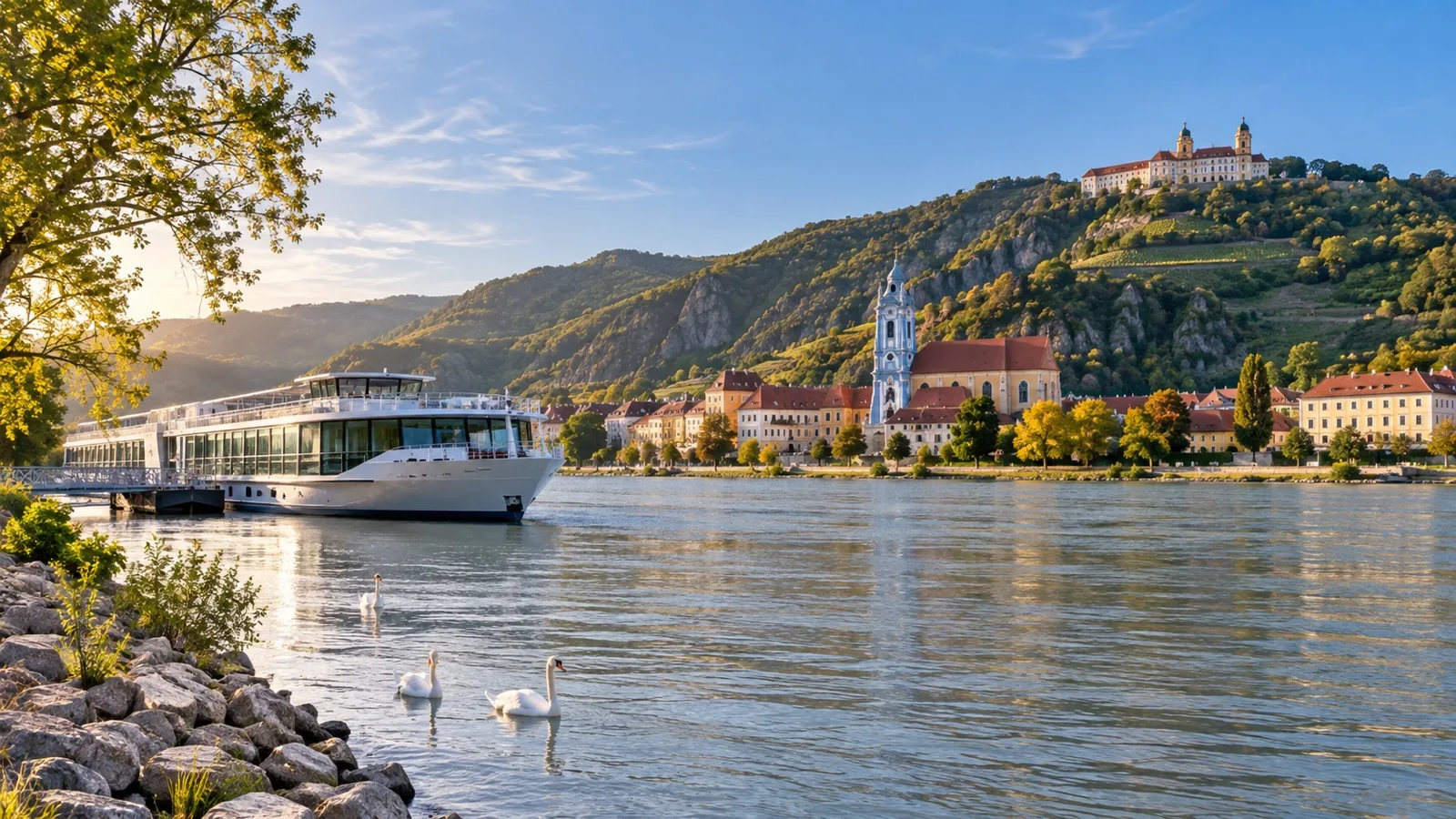
The passenger pontoons sit along the Stein waterfront at the eastern end of the Wachau. That makes art and old lanes easy, while the abbey, wineries, and farther parts of town require more planning.
My quick take
For a short call, I would pair Stein with one Kunstmeile museum and stop there. The official museum district says its main venues are only about a four-minute walk from the Krems-Stein boat station.
For a longer call, continue east toward central Krems and Steiner Tor after checking your return time. Göttweig deserves a ship excursion or a reserved ride because the abbey’s hilltop setting is the whole point and the whole logistical problem.
Wine lovers should book a tasting with an address, confirmed hours, and a realistic duration. Being in the Wachau does not guarantee that the nearest cellar is open for drop-ins when your ship arrives.
Krems quick facts
- Docking: DonauStationen lists numbered landings 23, 24, 25, 33, and 39 in Krems; confirm the station in the ship’s daily program.
- Closest area: Historic Stein and the Kunstmeile museums sit nearest the passenger landings.
- Central Krems: The main old center and Steiner Tor lie farther east, so allow more time than a Stein loop requires.
- Göttweig Abbey: The monastery stands across the Danube on a hill and needs an excursion, taxi, or carefully planned public transportation.
- 2026 bridge change: Kunstmeile reports that the Stein-Mautern bridge is closed to motorized traffic from May 18, 2026, while pedestrians and cyclists may continue to cross.
- Currency: Austria uses the euro, with cards common but a little cash useful for small purchases.
- Language: German is the local language, while English is common at major visitor attractions.
- Accessibility: Gangways, cobbles, slopes, museum routes, and the historic abbey each need separate checks.
- Emergency number: Call 112 for the European emergency number in Austria.
Where river ships dock in Krems
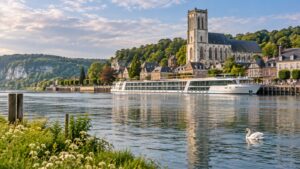
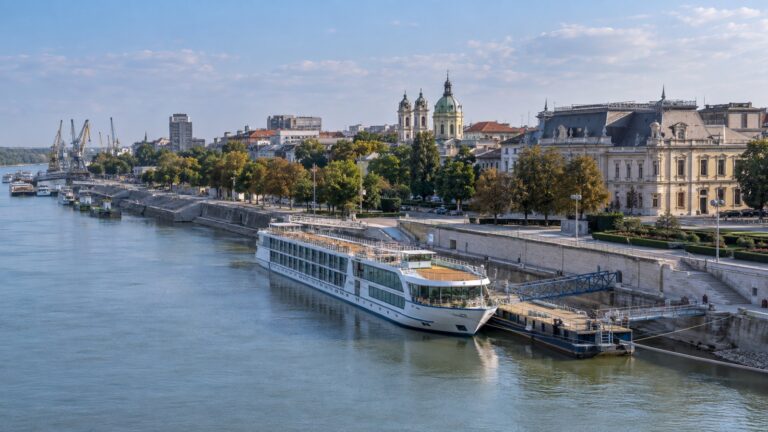
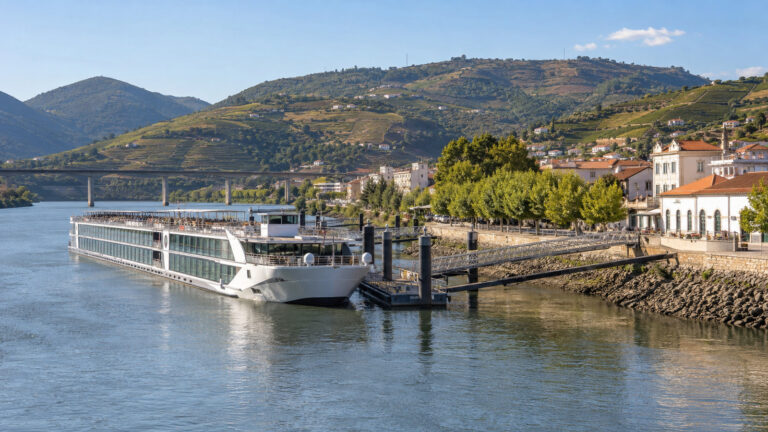
The official DonauStationen network lists Krems landings 23, 24, 25, 33, and 39 on the left bank. These numbered pontoons stretch along the Stein side of the waterfront rather than one single terminal building.
Your ship may use a different station than another vessel on the same day. Water level, ship length, traffic, scheduled boats, bus access, and port operations all influence the assignment.
Write down the station number before leaving the gangway and photograph its sign. A broad map label for Krems-Stein is less useful when several ships are moored along the same riverbank.
Passengers normally step ashore by gangway, but the route is not automatically level. River height, ship position, pontoon movement, and rafting between vessels can create slopes, steps, or narrow passages.
Follow crew directions to the public road rather than crossing service areas. The shortest legal route can change with the exact pontoon and temporary work along the bank.
Stein and Krems are connected but distinct
Stein is a historic district within the city of Krems an der Donau. Its lanes begin close to the river landings, making it the natural independent choice for a short call.
Central Krems lies farther east and has the larger commercial old center, pedestrian streets, and Steiner Tor. The name Steiner Tor confuses some visitors, but the gate belongs to central Krems rather than marking the riverfront district of Stein.
A walk linking both areas is reasonable for many travelers, but it is not a two-minute extension. Save enough energy and time for the return, especially after a museum or lunch.
Use a current city map instead of wandering only by church towers. Historic lanes curve, riverside routes meet underpasses, and the quickest return may not be the most scenic route out.
A short-call plan in Stein
Start with the old lanes behind the waterfront and let the district unfold slowly. Facades, courtyards, church views, and glimpses of the Danube make a satisfying loop without a ticket or reservation.
Stein works because the plan can expand or contract. If the ship shortens the call or rain arrives, you can turn back without abandoning a prepaid excursion.
Small churches and local businesses may keep limited or seasonal hours. Treat an open interior as a bonus rather than building the whole day around a door that might be closed.
Cobbles, curb edges, and old thresholds appear even on a compact route. Travelers with limited stamina should pick one turning point and return before the walk becomes uncomfortable.
Kunstmeile Krems
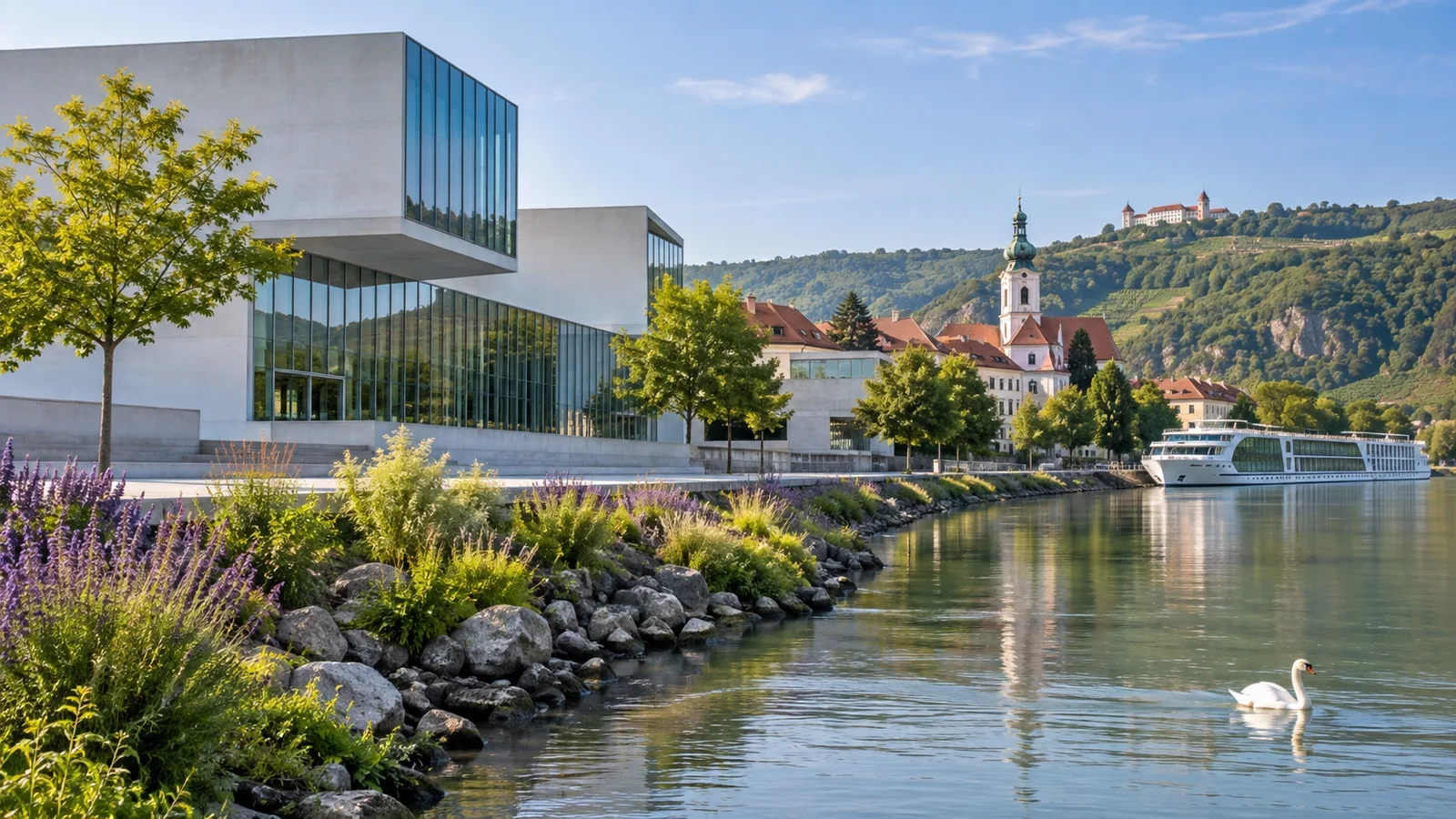
The Kunstmeile visitor page says Landesgalerie Niederösterreich, Kunsthalle Krems, and Karikaturmuseum Krems are about a four-minute walk from the Krems-Stein boat station. That is unusually convenient for a river port.
The museums are separate institutions with different programs and schedules. Choose by the current exhibition rather than trying to collect entrances to all of them.
Kunsthalle Krems and Landesgalerie currently list Tuesday through Sunday hours from 10 AM to 5 PM, with Monday opening only on public holidays. Karikaturmuseum currently lists daily hours from 10 AM to 5 PM, subject to holiday closures.
Forum Frohner opens on a narrower schedule, and special exhibitions elsewhere in the district may follow their own dates. Check the official opening-hours page on the morning of your visit.
One thoughtful museum visit is enough for a port day. Leave time for Stein outside, because the contrast between contemporary art and medieval streets is what makes this stop feel distinctive.
Central Krems and Steiner Tor
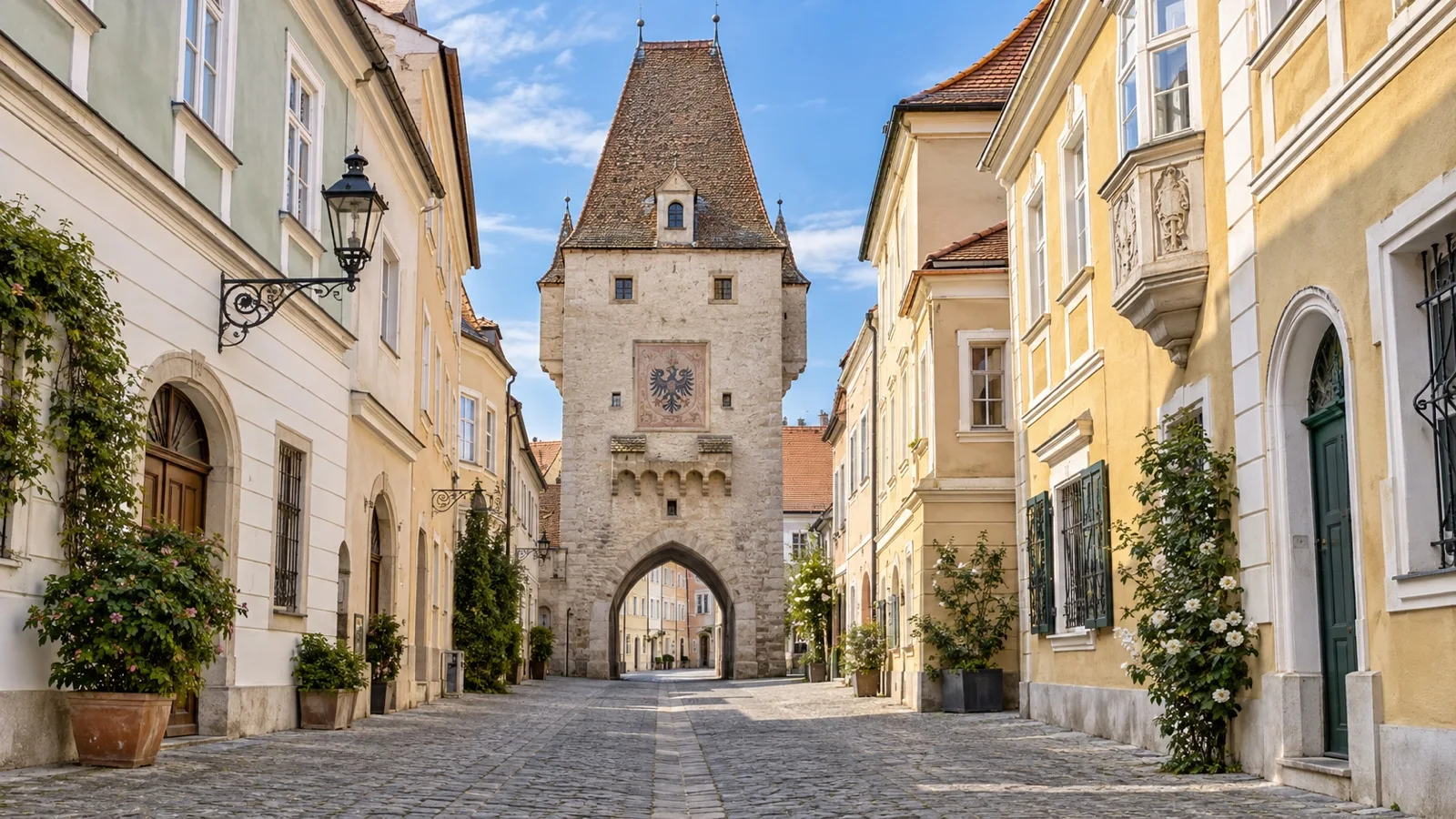
Continue toward central Krems when shopping, cafes, pedestrian streets, and a broader old-town walk matter more than another museum. Steiner Tor provides a memorable landmark near the western approach to the center.
The city rewards attention to ordinary details such as painted facades, shop signs, passages, and courtyards. It is more pleasant as a wander than as a race between named monuments.
Museumkrems and church interiors can add context when they are open. Confirm hours because a Monday, holiday, service, or seasonal schedule may change what is available.
A cafe stop is easy to fit when you know the walk back to the landing. Order promptly, tell staff if time is limited, and avoid using your final return buffer for the bill.
Wine tasting in the Kremstal and Wachau
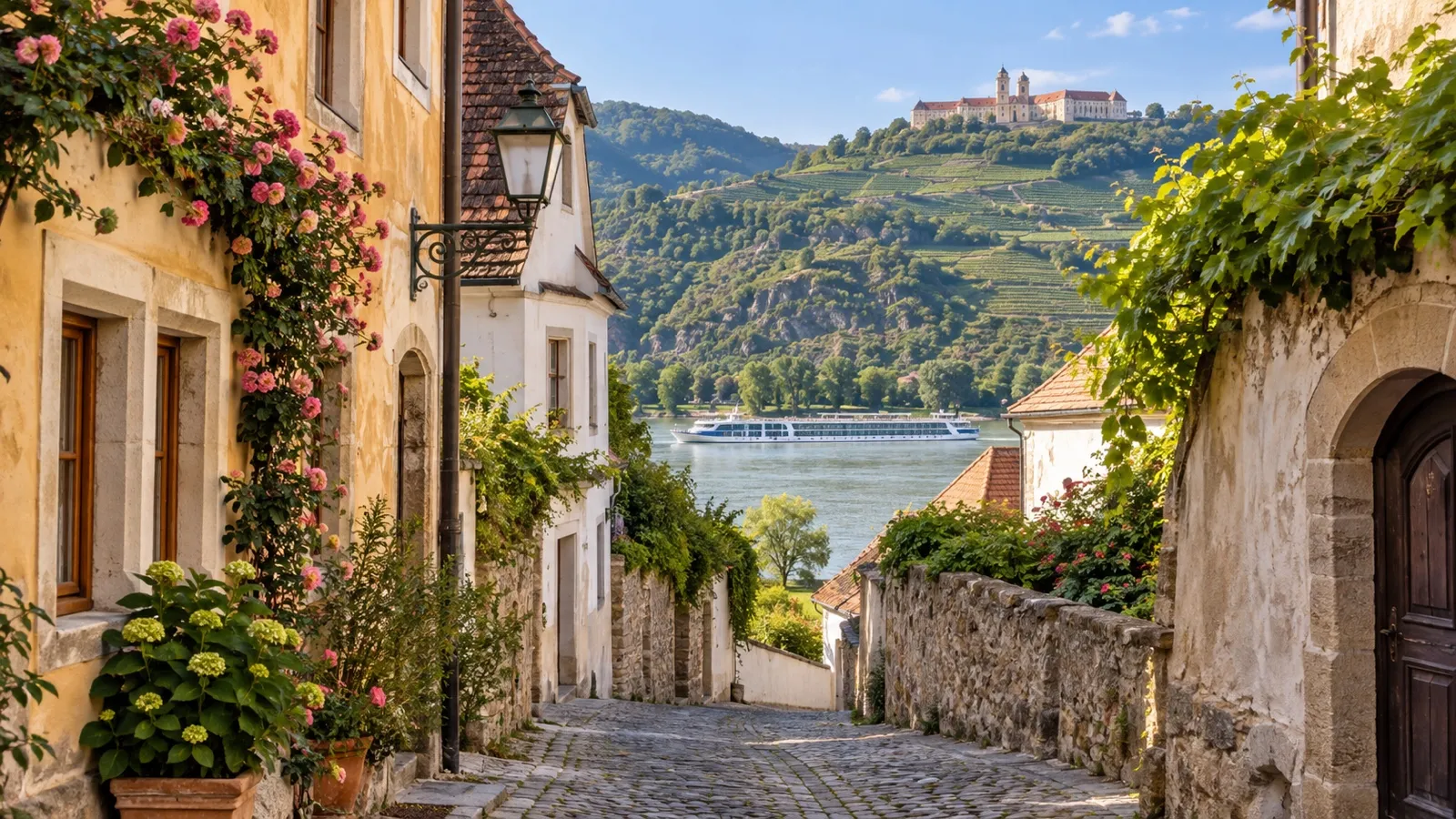
Krems sits beside famous wine landscapes associated with Grüner Veltliner and Riesling. The setting is ideal for tasting, but producers vary widely in location, opening style, and whether advance appointments are required.
Choose a winery or tasting room from an official regional listing and confirm the exact address. A business described as Krems may sit well outside the walkable center or among vineyards that require a taxi.
Ask whether English guidance is available, how long the tasting lasts, what food is included, and how you will return. A clear end time matters more on a cruise call than the number of wines poured.
Heuriger wine taverns can open on rotating calendars rather than daily schedules. A recommendation from last season is not proof that a particular tavern will be serving on your date.
Drink modestly if you will cross cobbles and a moving gangway afterward. Water and food turn a tasting into part of the day rather than the reason the return becomes difficult.
Göttweig Abbey is a separate excursion
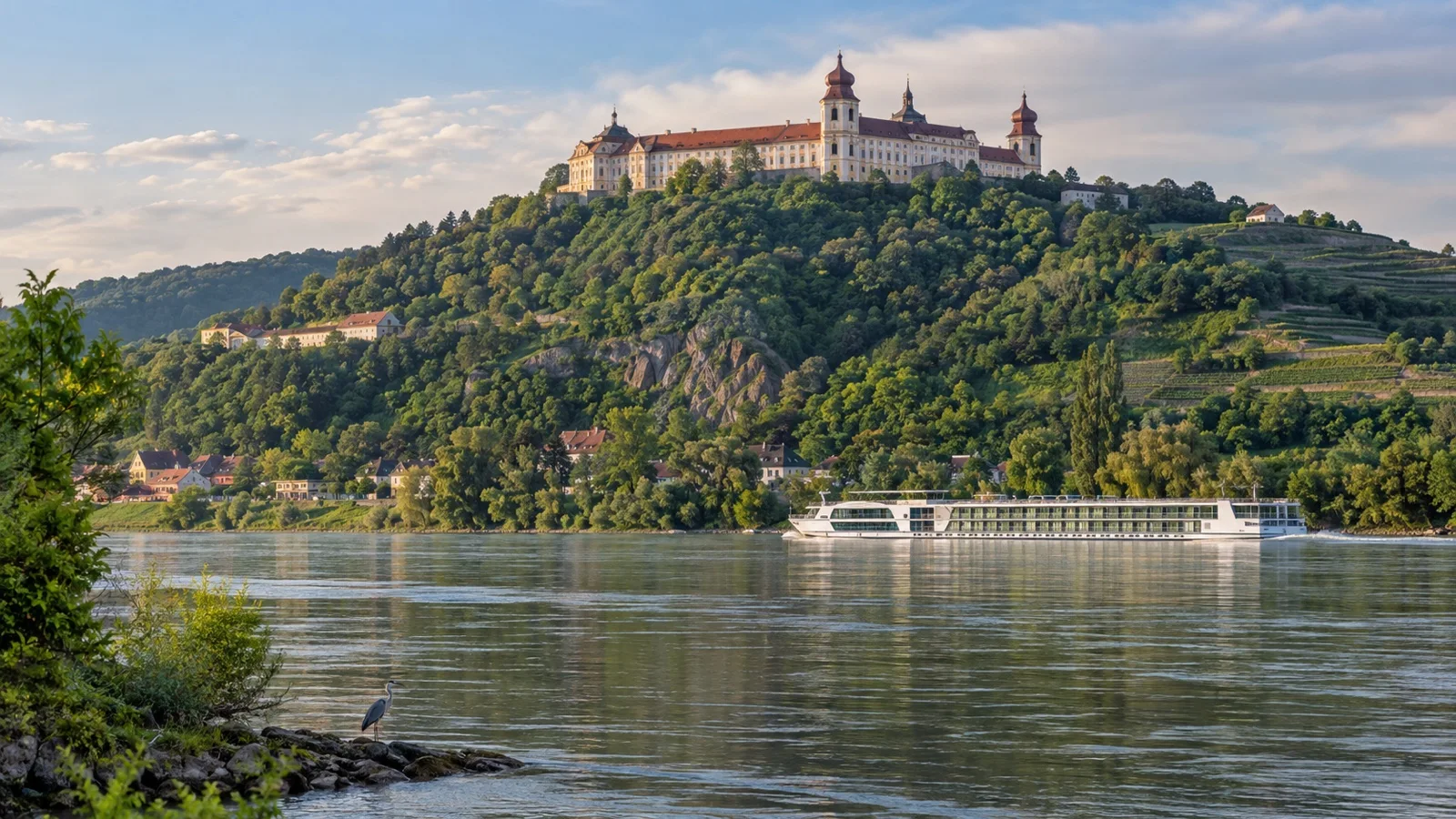
Benedictine Göttweig Abbey rises across the Danube near Furth bei Göttweig. Its church, terraces, museum, and views make a compelling outing, but none of them sits within the simple riverside walking loop.
The abbey’s official directions describe a steep final approach from the community below. Walking from local transit involves real climbing, so a taxi, coach, or ship excursion is the practical cruise-day choice.
Book both directions when using a private ride. Do not assume another taxi will wait at the hilltop or that a bus connection will align with your all-aboard time.
The abbey currently lists daily church hours from 8 AM to 6 PM, while its museum, restaurant, reception, and store can follow different seasonal schedules. Check the official visitor page close to the call because events and winter breaks affect access.
Historic architecture limits step-free circulation. Contact the abbey directly when wheelchair access, an elevator, seating, or a specific room is essential to the visit.
The 2026 Stein-Mautern bridge closure
Kunstmeile’s current travel notice says the Stein-Mautern Danube bridge closed to motorized traffic on May 18, 2026. Motor vehicles are rerouted via the B37 and Saint Pölten bridge in Krems.
Pedestrians and cyclists may continue using the Stein-Mautern crossing under the published arrangement. That distinction matters because an online driving time created before the closure may understate a taxi or coach journey.
The closure can affect road trips toward Mautern, Furth, and Göttweig even when walking around Stein remains normal. Confirm the current pickup side and route with any independent driver.
Construction plans evolve, so treat this as time-sensitive rather than permanent advice. The ship, local transport operator, and attraction should have the latest practical routing.
Three realistic port-day choices
Short call: Stein and one museum
Confirm the landing, walk through Stein, and choose one Kunstmeile venue that is open. Return by the same route with enough time to identify your numbered pontoon.
Longer call: Stein to central Krems
Begin at the water, pass the museum district, and continue toward Steiner Tor only after checking the clock. A cafe or one interior is enough to make the longer walk feel complete.
Excursion call: abbey or winery
Choose one transportation-dependent destination and reserve it properly. Combining Göttweig, an outlying cellar, and both old-town districts creates too many moving parts for most calls.
Ship excursion or independent exploring?
Stein and Kunstmeile are excellent independent choices because they sit close to the landing and allow a flexible turnaround. The city provides enough substance without requiring a guide.
A ship excursion makes more sense for Göttweig, an island-wide wine route, or any plan using multiple roads and appointments. The value lies in coordinated transportation and a return linked to the ship.
A private guide can be worthwhile for wine, art, or architecture when the meeting point is exact. Confirm whether pickup means your numbered landing, the museum district, the rail station, or central Krems.
Read descriptions for the words panoramic, exterior, tasting, free time, and walking. Those terms reveal whether you will enter the abbey, tour a cellar, or mostly view the region through a coach window.
Local buses, trains, taxis, and bicycles
Kunstmeile currently lists city bus 1 from Monday through Saturday and VOR bus 717 daily between Krems station and Stein/Donau Museumsplatz. Use the VOR journey planner for the current schedule and alerts.
The museum district says walking from Krems rail station takes about 15 to 20 minutes. From the boat station, the major Kunstmeile venues are much closer, so a bus may add waiting rather than save time.
Nextbike stations are listed at Krems rail station, Landesgalerie, and the Krems-Stein ship station. A rental bike only makes sense when you are comfortable with local traffic, app setup, return rules, and the day’s weather.
Do not depend on an unreserved taxi appearing at the pontoon. Prearrange both legs when the destination or return time cannot tolerate a wait.
Accessibility
Ask the cruise line about the exact gangway, step-over height, assistance policy, and possible rafting between ships. A floating pontoon is not a promise of level boarding.
Kunstmeile publishes accessibility information for its venues, including elevators, ramps, accessible toilets, and loan wheelchairs at selected museums. Contact the chosen museum for the entrance that best matches your needs.
Old streets in Stein and Krems include cobbles, slopes, curbs, and thresholds. A focused museum-and-waterfront plan may be easier than pushing all the way to central Krems.
Göttweig requires the most caution because the hill approach and historic interior create barriers. Ask about the church, terraces, restaurant, and museum separately rather than accepting one broad claim that the abbey is accessible.
Accessible transportation must also survive the 2026 road detour. Confirm that the vehicle can use the planned route and that the driver knows the correct side for pickup.
Weather, safety, and practical details
Danube weather can turn cool, wet, or windy even after a bright morning. Wear layers, carry a compact rain shell, and choose shoes with grip for stone streets and gangways.
Summer sun reflects from water and pale stone, while shoulder-season shade can feel chilly. Carry water and adjust the plan before fatigue makes the return walk harder.
Call 112 for urgent police, fire, or medical help in Austria. Keep the ship’s contact number, station number, and all-aboard time available offline.
Krems generally calls for ordinary travel awareness. Watch belongings in busy areas, use marked crossings, and stay out of operational riverfront zones.
Never drink from a fountain unless it is clearly marked as potable. Restaurants and cafes can refill water or sell a bottle without turning safety into guesswork.
Getting back to the correct ship
Your destination is the numbered station, not merely the Krems waterfront. Several ships can look similar from the path, and vessels may be rafted side by side.
Set a return deadline from your farthest point and add time for the walk, bus, taxi, underpass, and gangway. Göttweig and outlying wineries need much more margin than a museum beside the landing.
If a berth changes while passengers are ashore, follow the cruise line’s instructions and port contacts. An old map or photo cannot tell you where the vessel moved.
I would rather spend the final twenty minutes watching the Danube from aboard than testing whether a taxi can beat a detour. The Wachau is too beautiful to remember only as a race.
How Krems fits a Wachau cruise
UNESCO defines the Wachau Cultural Landscape as the Danube valley between Melk and Krems. Krems forms the eastern end of that protected cultural landscape rather than serving as an interchangeable village.
Itineraries may combine Krems with scenic cruising or nearby calls such as Dürnstein, Weißenkirchen, and Melk. Our Wachau ports guide explains what each stop does best.
River levels and navigation can still alter the order, landing, or transportation plan. Judge the day by what is safely available rather than the exact sequence printed months earlier.
Quick answers
Do river ships tender in Krems?
No. Ships normally use numbered pontoon landings in Krems-Stein, though the exact gangway and rafting arrangement varies.
What is closest to the landing?
Historic Stein and the Kunstmeile museums are closest. Kunstmeile says its main venues are about a four-minute walk from the boat station.
Is central Krems the same as Stein?
No. Stein is a historic district within Krems, while the larger central old town and Steiner Tor lie farther east.
Can I walk to Göttweig Abbey?
It is not a sensible walk from the ship for most cruise passengers. The final approach is steep, and transportation is the safer port-day plan.
Are the art museums open on Monday?
Schedules differ. Karikaturmuseum currently lists daily opening, while Kunsthalle and Landesgalerie generally open Mondays only on public holidays.
Does the 2026 bridge closure stop pedestrians?
The current Kunstmeile notice says pedestrians and cyclists may continue to use the Stein-Mautern bridge. Motorized traffic is rerouted.
Do I need cash?
Cards are common, but a modest euro backup is useful for small purchases. Check the payment policy before a tasting or taxi ride.
The last word
Krems works beautifully when you choose one lane: Stein and art on foot, central Krems as a longer walk, or Göttweig and wine with transportation. The mistake is trying to turn all three into one rushed afternoon.
Confirm the numbered station, respect the 2026 road changes, and protect your return margin. The Wachau atmosphere will take care of the rest.
How this guide was researched: This guide uses current information from DonauStationen, Kunstmeile Krems, Göttweig Abbey, VOR, and UNESCO. Time-sensitive details were reviewed on September 12, 2026; always follow the ship’s landing instructions and see our Editorial Policy.