Weißenkirchen River Cruise Port: Wachau Wine and Docking Guide
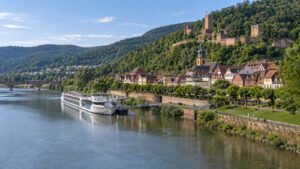
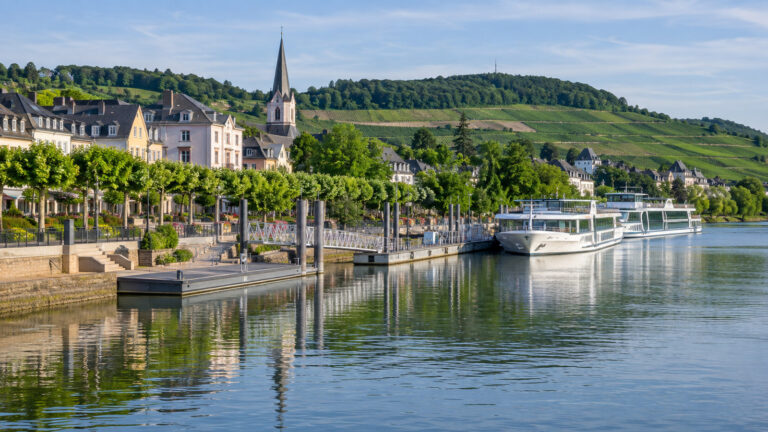
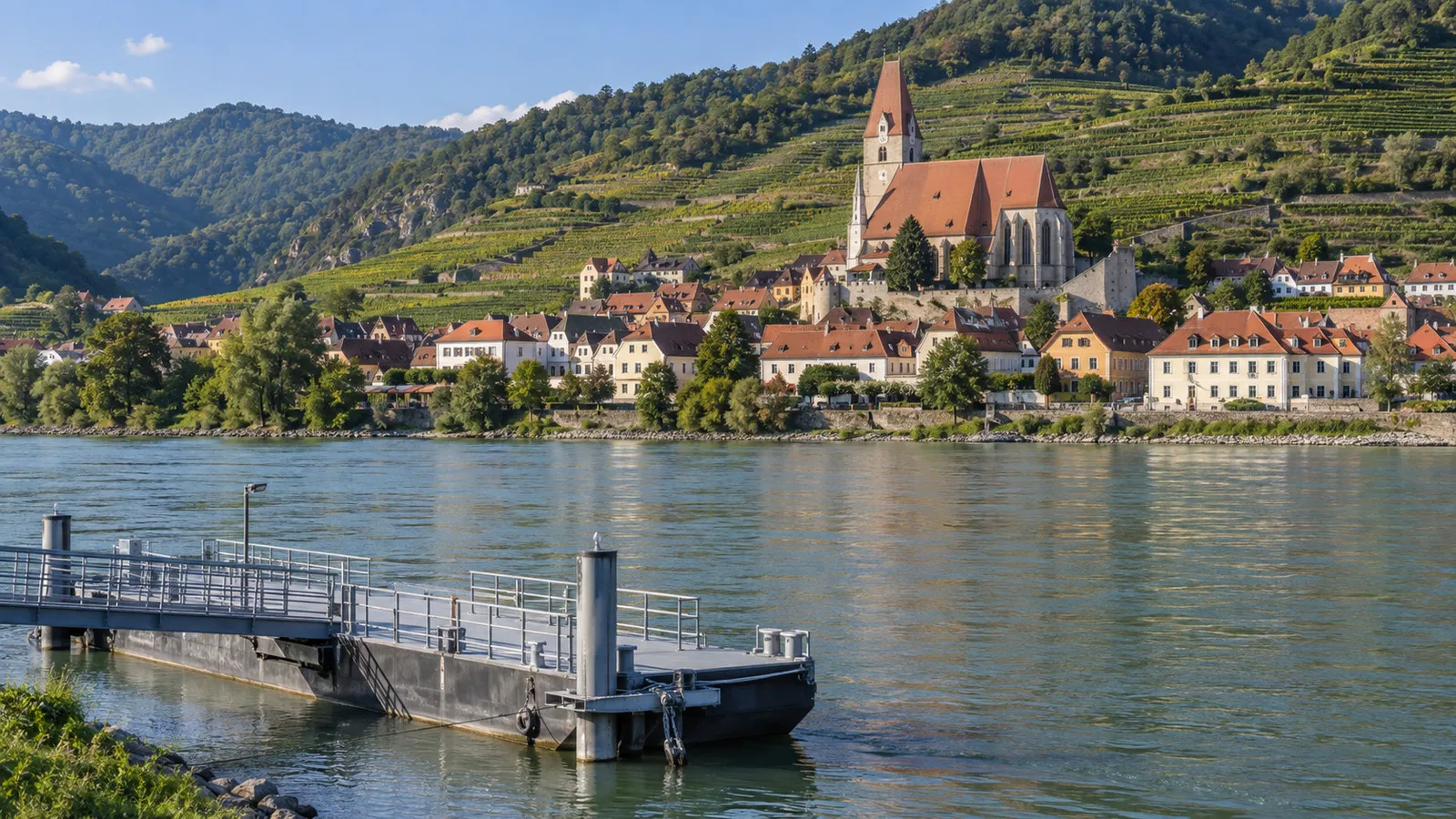
Weißenkirchen is the Wachau village people imagine when a river-cruise brochure says “vineyards.” Stone lanes climb from the Danube toward a fortified white church, while terraces stack up the hills with almost suspicious neatness.
It is also a real passenger-ship landing, not merely a pretty excursion stop borrowed from nearby Dürnstein. Two numbered Danube stations serve Weißenkirchen, and their operating rules specifically account for cabin ships.
The village is compact, but the details remain seasonal: church access changes in winter, the small museum opens only on selected days and local wine taverns rotate their weeks. A good plan checks the calendar before assuming every charming door will swing open on command.
Weißenkirchen river cruise port quick facts
- Into Town: Danube Stations 17 and 18 sit on Weißenkirchen’s bank; the fortified church and village lanes begin about five to ten minutes away.
- Currency and Language: Euro (EUR). German is official; English is common in tourism, but small taverns may have limited English service.
- Time Zone: Central European Time, UTC+1 in winter and UTC+2 during daylight saving time.
- Operational Notes: Seasonal programs, berth conflicts, water levels and nearby Wachau substitutions can change the assigned landing or day plan.
No landing operator or cruise line publishes an audited Weißenkirchen missed-call rate. A move to another Wachau landing with a motorcoach visit to Weißenkirchen is an altered call, not necessarily a missed village visit.
My quick take
For a first visit, walk straight to the fortified Parish Church of the Assumption, then descend through the lanes to Teisenhoferhof and a confirmed Heuriger. This simple loop delivers the view, the village fabric and the wine culture without pretending a vacation requires a summit attempt.
Choose a vineyard walk only with good shoes, moderate temperatures and a generous call. Choose Dürnstein as a separate excursion, not as something to “pop over to” before lunch.
If the ship docks elsewhere and motorcoaches you into Weißenkirchen, use the guide or village drop point as your new starting line. The church remains above town whether you arrive by gangway or motorcoach, which is reassuringly consistent of it.
Is Weißenkirchen an active river cruise port?
Yes. TUI River Cruises currently maintains a dedicated Weißenkirchen port page, and published 2026 programs from other operators include the village as a Danube call.
Local scheduled passenger service also stops here in season. DDSG Blue Danube’s 2026 Wachau schedule identifies Weißenkirchen as its new landing at Danube Station 18, with selected peak-season calls between Krems, Dürnstein, Spitz and Melk.
That sightseeing schedule is evidence of an active public landing, not the schedule for your hotel ship. Cabin ships book through the Danube station system and may use either local station according to assignment and operating rules.
Where river cruises dock in Weißenkirchen
Danube Stations 17 and 18 lie close together on the left bank at approximately river kilometer 2013.4 and 2013.3. The left-bank description is a navigation term looking downstream, and it is the same side as Weißenkirchen village.
The official Danube Stations directory lists both Weißenkirchen facilities. The company manages moorings rather than operating cruises, so a listing confirms infrastructure but not your ship’s reservation.
DDSG currently publishes Station 18 as its scheduled-service stop, near the Rollfährestraße riverfront. A cabin ship may instead use Station 17, double-bank with another vessel or arrive after the local service has departed.
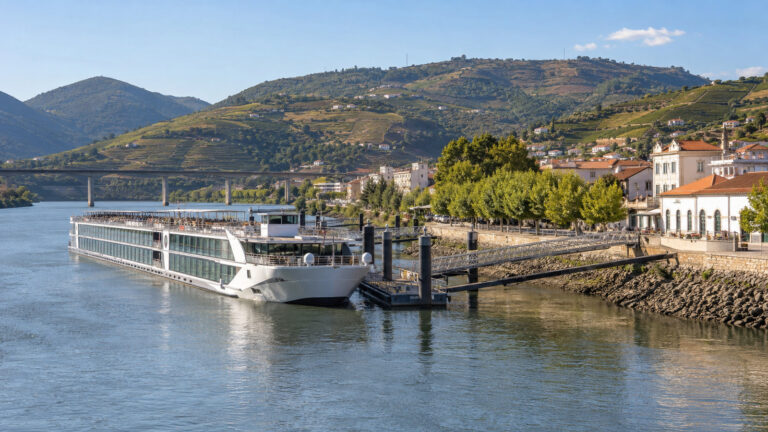
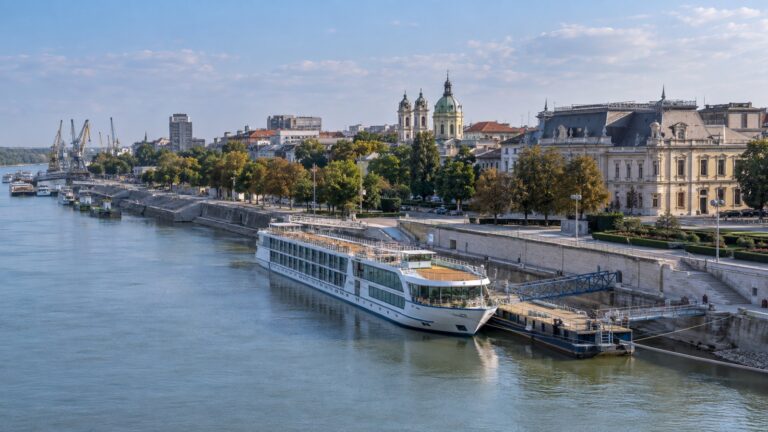
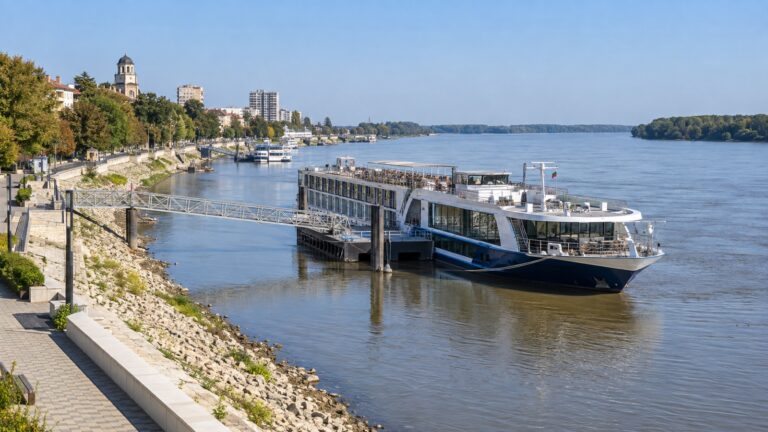
There is no ocean-style terminal with a baggage hall and indoor waiting lounge. Expect a gangway onto the riverfront path, then follow crew signs rather than wandering along the bank in search of a more photogenic exit.
Why there are two stations
The published mooring rules call Station 17 the upper facility and Station 18 the lower facility. Cabin ships arriving before the final scheduled passenger boat generally use the lower station, then move to the upper position when it becomes free before the evening cutoff.
The same rules bar cabin ships from remaining at the lower facility between 6 p.m. and 8 a.m. They also restrict overnight maneuvers and outdoor parties, which explains why an evening position can differ from the gangway you saw after lunch.
Passengers do not need to manage these movements, but they do need to listen for gangway announcements. Returning to Station 18 because the morning map said 18 is not clever if the ship moved to 17 while you were tasting Grüner Veltliner.
Walking into Weißenkirchen village
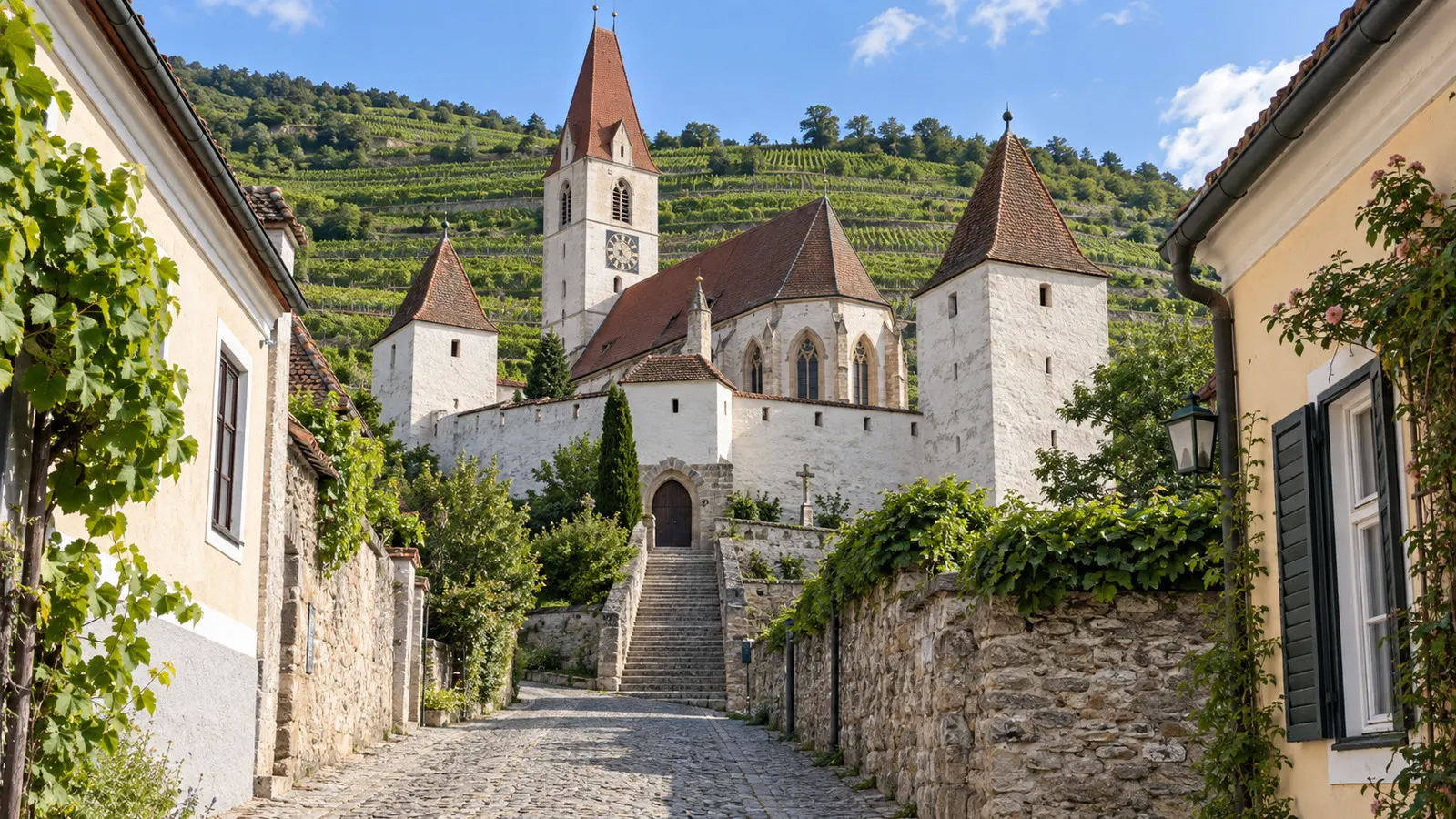
From either station, the historic core begins across the riverside corridor and slightly uphill. Allow roughly five to ten minutes to reach the lower lanes and 10 to 20 minutes to reach the church entrance, editorial ranges that depend on the exact gangway and pace.
The riverfront portion is relatively level, while the old village introduces cobbles, inclines and steps. Traffic on the B3 road is the practical interruption between water and wine-country dream sequence, so use designated crossings.
The church tower makes orientation easy, and the river makes the return direction obvious. Save your station number in a photo because two similar gangways can look even more similar after a leisurely tavern stop.
Why the Wachau looks this way
Weißenkirchen lies within the UNESCO-listed Wachau Cultural Landscape between Melk and Krems. UNESCO’s official listing emphasizes the long relationship among river, settlements, monasteries, castles, vineyards and apricot cultivation.
The terraces are agricultural infrastructure, not decorative landscaping installed for river passengers. Generations of growers shaped walls, paths and slopes around climate, soils and the demands of handwork.
That living-landscape status is why a respectful visit matters. Stay off working vineyard rows unless a marked path or guide permits access, and do not treat a stone wall as a convenient tasting-room bench.
The fortified church is the essential sight
The Parish Church of the Assumption rises above Weißenkirchen behind defensive walls and a covered stair approach. Its architecture developed over centuries, combining a late Gothic church with fortifications that made the religious complex a visual and practical refuge.
The municipality’s current church-access page lists visiting from 9 a.m. to 6 p.m. between March and October. Worship, concerts and private ceremonies take priority, so enter quietly and accept a closed section without conducting an architectural negotiation.
The climb is short but includes grade and steps, while the churchyard area provides the classic roof-and-river perspective. Allow 30 to 45 minutes, an editorial range for the approach, interior and view.
Teisenhoferhof and the Wachau Museum
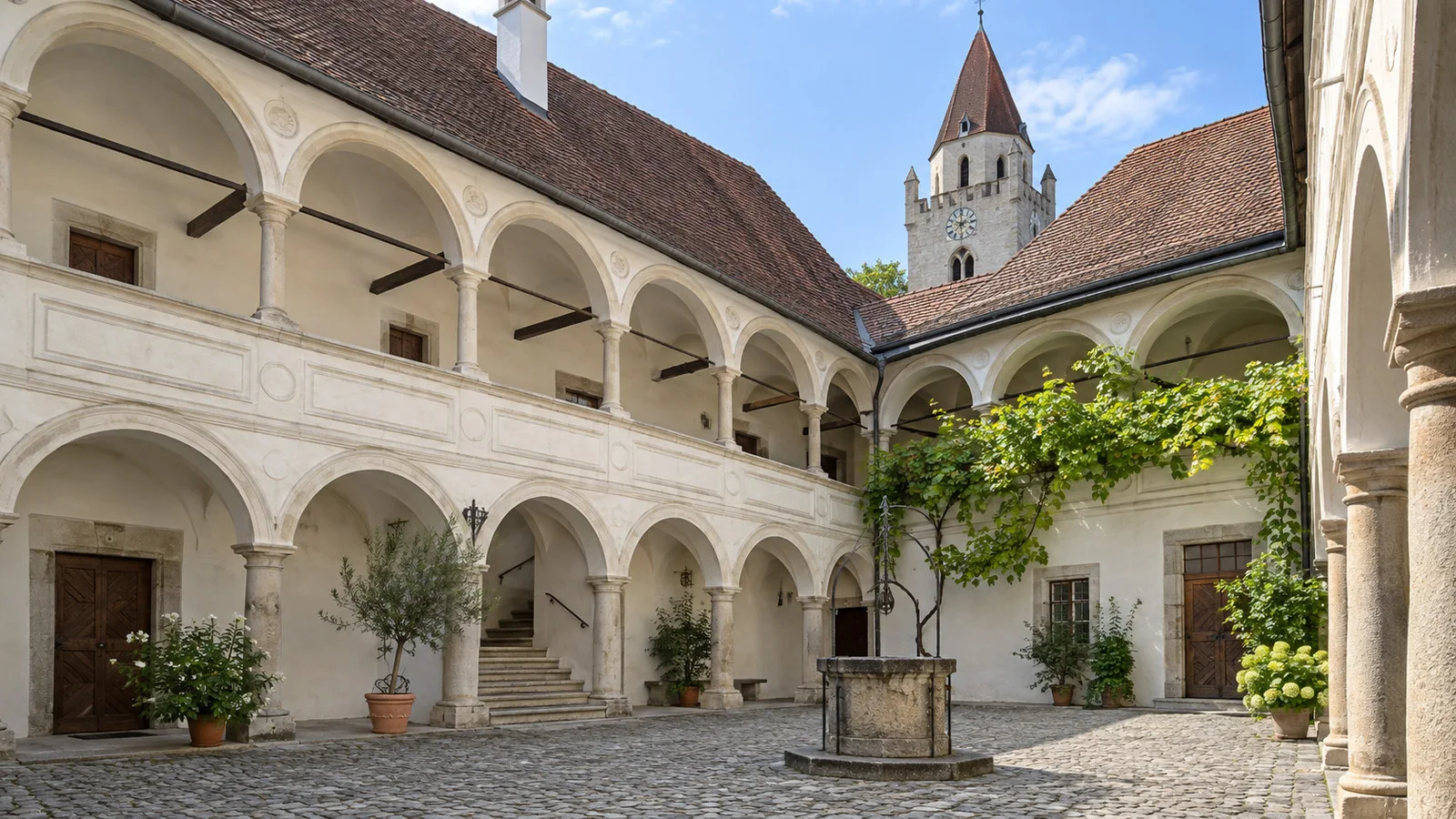
Teisenhoferhof is a medieval and Renaissance courtyard complex near the market square, used for the Wachau Museum, exhibitions and cultural events. Its timber, stone and steep roofs make the building itself part of the visit.
The municipality’s current museum page lists opening from late March to early November on Fridays, Saturdays, Sundays and public holidays. Hours are 10 a.m. to 12:30 p.m. and 1 to 5 p.m.
That limited pattern matters because many cruise calls fall Monday through Thursday. The courtyard may still reward a look when accessible, but do not promise yourself a museum visit on a closed day.
Allow 45 to 75 minutes for the galleries, an editorial estimate. Pair it with the church rather than rushing toward another village just because the map offers names.
How a Heuriger actually works
A Heuriger is a winegrower’s tavern serving its own wine, usually with cold dishes and regional snacks. In the Wachau, individual families open on rotating dates rather than all maintaining identical daily hours.
Use the regional official Heuriger calendar for your call date, then confirm directly when timing matters. A pine branch or “Ausg’steckt” sign traditionally indicates an open tavern, but a website checked before breakfast is kinder to your schedule.
Many local Heuriger open around noon or midafternoon, which can miss a morning-only port call. Some accept cards, but carrying euros avoids turning a rustic lunch into a search for payment infrastructure.
Allow at least an hour for a relaxed stop and keep the tasting modest. The path back to the Danube is downhill, but the gangway may still be sloped and your ship remains stubbornly punctual.
What to taste in Weißenkirchen
Grüner Veltliner and Riesling dominate the conversation, with vineyard names such as Achleiten appearing on serious bottles. Ask for a small regional comparison rather than requesting “the sweetest white,” unless sweetness is genuinely what you enjoy.
Wachau apricots also matter, appearing fresh in season and year-round as jam, dumplings, liqueur and pastry fillings. “Marille” is the Austrian German word to recognize, and it is responsible for many excellent decisions.
Wine shops and producers may offer tastings by appointment even when no Heuriger is open. Contact them ahead, disclose the ship’s departure time and ask whether English commentary is available.
A vineyard walk without overcommitting
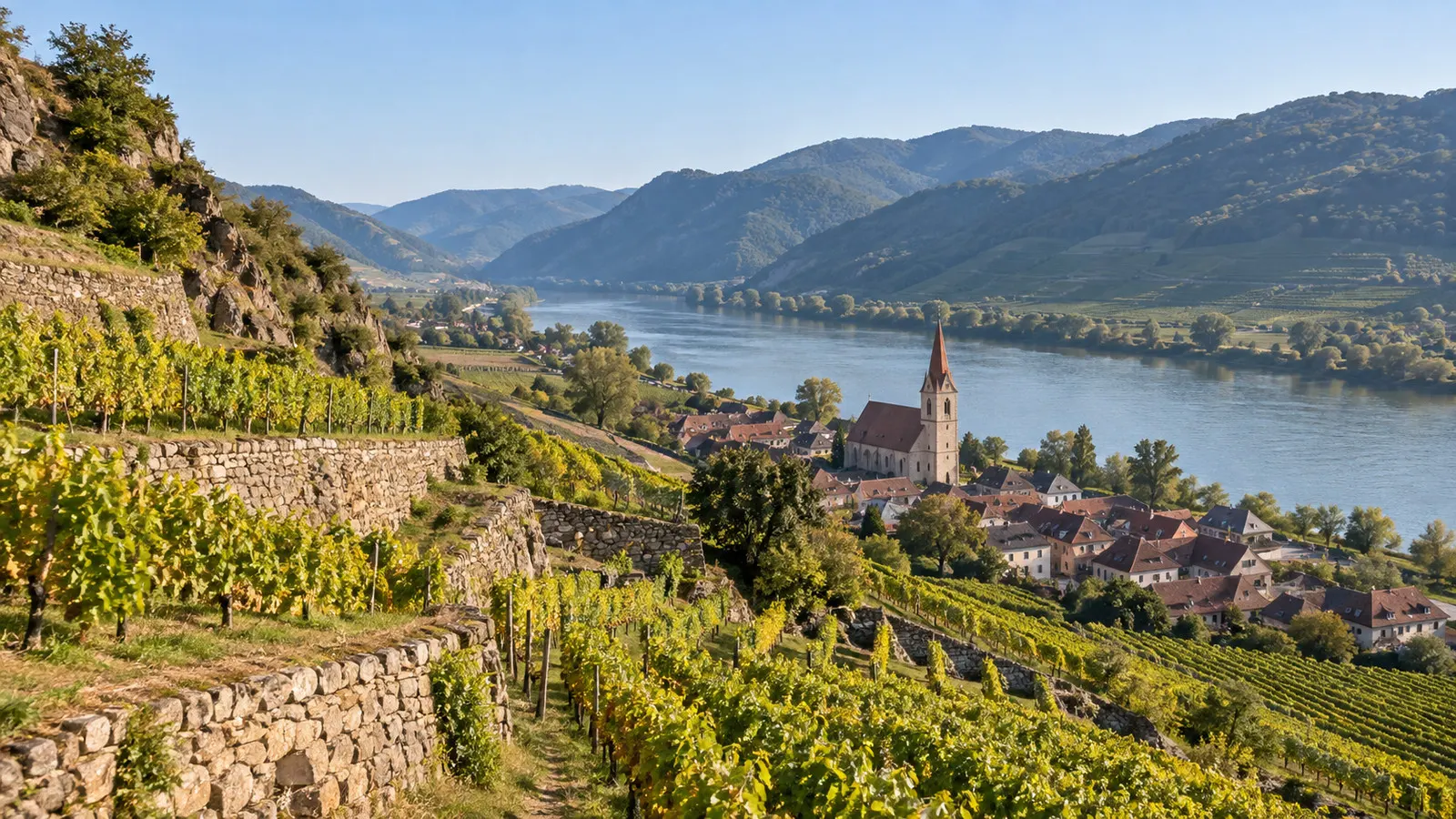
Marked paths climb above the village into the terraces, quickly trading shade and level ground for sun and elevation. Even a short walk can deliver broad views, but it should remain a timed out-and-back rather than an improvised expedition.
The regional Wachau hiking material describes an Achleiten panoramic route from the market square at roughly 90 minutes. Treat that duration as a trail baseline, then add time from and to the gangway, photos, heat and route finding.
Carry water, use sun protection and wear shoes with grip. During harvest or active vineyard work, yield to growers and equipment because the vines are at work even when you are not.
The ferry to St. Lorenz
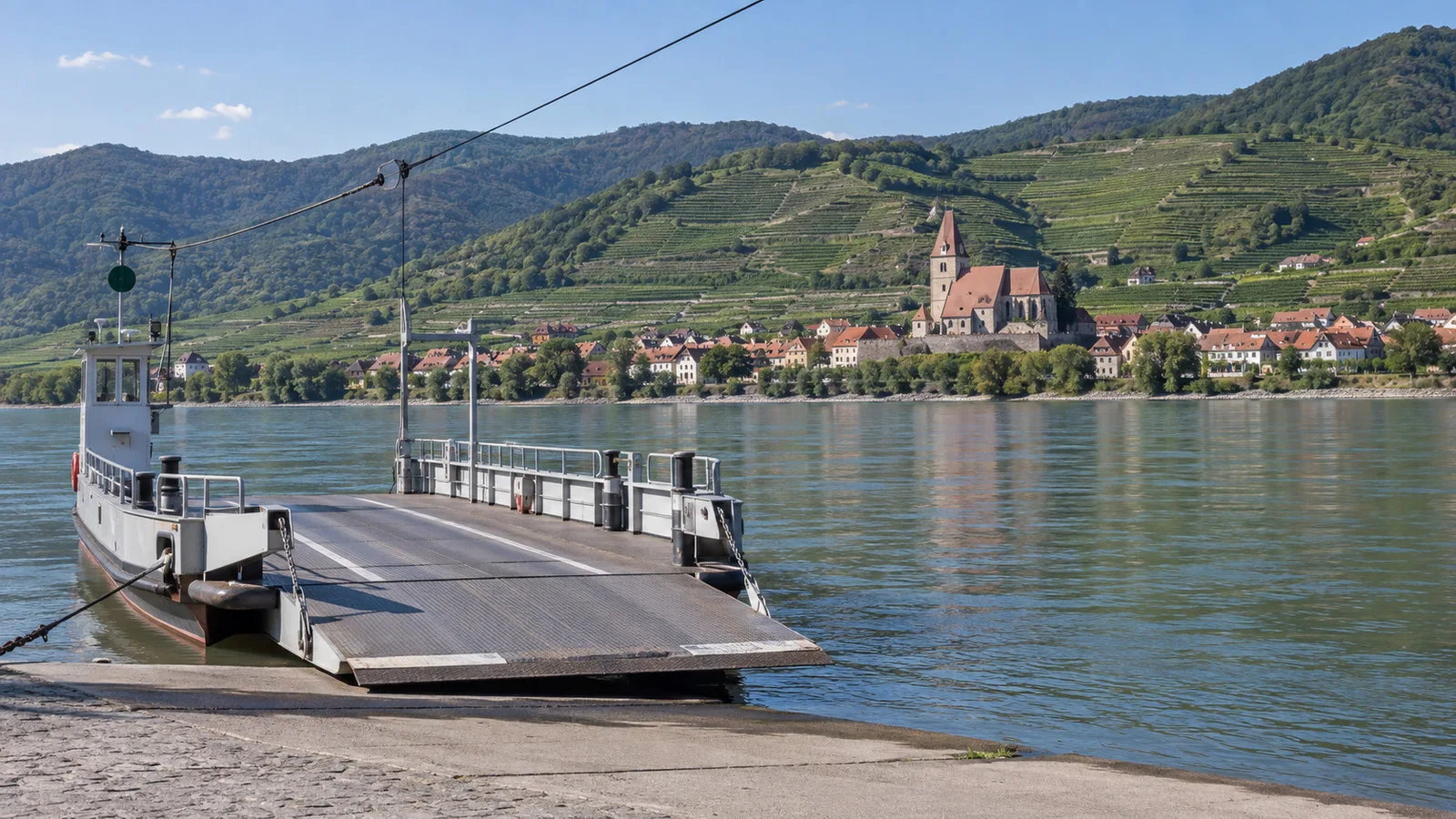
Weißenkirchen’s cable ferry crosses to St. Lorenz on the opposite Danube bank, carrying pedestrians, bicycles and, under suitable conditions, vehicles. The crossing provides a fine view back toward the church and vineyards.
The municipal ferry page publishes the seasonal 2026 operating windows and midday pause. Service stops or restricts vehicles during unsuitable water, wind or storm conditions, and current low water has already affected vehicle carriage.
Do not cross merely because the ferry is charming. Confirm the last return before boarding and keep a wide margin, since the ship will not wait on one side while you admire it from the other.
Weißenkirchen is not Dürnstein
Dürnstein lies several miles downstream with its own numbered Danube stations, blue abbey tower, medieval center and castle-ruin climb. It is a separate port call even though both villages belong to the same compact Wachau itinerary zone.
Operators may substitute one landing, use a motorcoach between them or label an excursion broadly as “Wachau” when berth capacity or water conditions change. Final documents should say whether Weißenkirchen is the ship berth, a motorcoach stop or absent from the revised day.
Current low water provides a useful caution: DDSG’s reduced August 2026 service cruises a Weißenkirchen loop but does not make its normal stop there, while Dürnstein still receives a landing. That is a sightseeing-boat adjustment, not proof that every cruise line follows the same substitution.
Do not walk to Dürnstein during a normal port call unless the operator has specifically organized a guided route and return. The riverside distance, road exposure and timing make an independent dash a poor sequel to a peaceful village morning.
A realistic independent Weißenkirchen plan
Photograph the station number, cross into the village and climb first to the fortified church. Descend to Teisenhoferhof, checking whether the museum is open, then use the same-day Heuriger calendar for lunch or a small tasting.
If no tavern is operating, enjoy a café or reserved winery and add a short terrace walk. Return to the riverfront at least 45 minutes before all-aboard, increasing the margin if the ship announces a station move.
On a short call, skip Dürnstein, the ferry and the full vineyard circuit. Weißenkirchen does not need to become four destinations to justify the stop.
Accessibility at Weißenkirchen river cruise port
The landing and riverfront path can be relatively level, but gangway slope changes with Danube level and double-banking may require passage through another ship. The church approach, old lanes and vineyard paths add cobbles, incline and steps.
Ask the line for the assigned station, double-docking plan, step-free village route and accessible excursion vehicle. Teisenhoferhof has undergone access improvements, but confirm the galleries and event configuration available on the actual date.
The site’s river cruise accessibility guide provides a useful checklist. A five-minute map distance is not an accessibility measurement.
Water levels and call reliability
The Danube’s water level affects gangway angle, double-docking, vessel draft and whether scheduled boats can maintain every landing. High water, current, wind, berth conflicts and lock delays can also change the day.
No public audited series was found for Weißenkirchen cabin-ship cancellations. Check the live station and daily program because a nearby landing change or motorcoach transfer may preserve the village visit.
The site’s river cruise water-level guide explains how lines use alternate berths, ship swaps and motorcoaches. A changed docking point can preserve the village visit, but a scenic sail-past is not the same as time ashore.
Let the station number and ferry clock decide the walk
Weißenkirchen uses Danube Stations 17 and 18 on the village bank, and the final stage or rafting arrangement can vary. Take the station number and ship contact ashore because the two landings are close enough to confuse and far enough to matter when the gangway is closing.
The cable ferry to St. Lorenz is seasonal, pauses during part of the day, and can restrict or stop for low water, wind, or storms. Cross only after confirming the live return, then leave a wide margin because the cruise ship has no obligation to wait for the ferry.
The fortified church, village lanes, and one scheduled Heuriger make the strongest compact plan. Check the official tavern calendar and museum hours because family businesses can be closed even when vineyards and brochure photographs look fully operational.
Austria is in the Schengen Area, while high or low Danube water can move the call to Dürnstein or another landing. Vineyard grades, cobbles, ferry ramps, rafted ships, and gangway slopes require separate accessibility checks, so stay on the village bank when a reliable step-free return matters.
Quick answers
Where do river cruises dock in Weißenkirchen?
At Danube Stations 17 or 18 on the village bank; scheduled DDSG service currently advertises Station 18, while cabin assignments vary.
Can I walk into the village?
Yes; the lower lanes are roughly five to ten minutes away, with additional uphill time for the fortified church.
Is a Heuriger always open?
No; winegrowers rotate opening periods, so check the official date-specific calendar and confirm directly.
Can I visit Dürnstein from Weißenkirchen?
Use an organized excursion or confirmed transport; it is a separate village and landing, not part of a quick independent stroll.
What if my itinerary now says Dürnstein?
Check whether Weißenkirchen remains a motorcoach visit, has been replaced entirely or is only part of scenic cruising.
Research note
This guide was desk-researched and rechecked on September 12, 2026 using Donau Schiffsstationen, DDSG Blue Danube, Weißenkirchen municipality, Lower Austria tourism, UNESCO and current cruise-operator sources. It does not claim a personal sailing, tavern meal or firsthand landing inspection.
Berth behavior and walking times are attributed facts or clearly labeled editorial estimates; no missed-call percentage is presented without audited data. Verify the station, museum day, Heuriger calendar and all-aboard time for your sailing, and see the Editorial Policy for sourcing and corrections.
How this guide was researched: This guide was checked against current official port, waterway, immigration, transit, attraction, operator, and weather information. Operational and time-sensitive details were reviewed September 12, 2026; confirm the live berth, daily program, entry rules, accessibility, and cancellation terms before travel.
See our Editorial Policy.