Rives-en-Seine River Cruise Port Guide: Caudebec and the Abbeys
Rives-en-Seine is the modern commune name that river-cruise travelers may see for a call at Caudebec-en-Caux. The stop is small and peaceful, with the Seine at the doorstep and several excellent Normandy heritage sites within a short drive.
The best plan depends on whether your ship offers Saint-Wandrille or Jumièges. I would explore Caudebec independently when time is short and use an organized excursion for either abbey.
Understanding the destination name
Rives-en-Seine was formed from Caudebec-en-Caux, Saint-Wandrille-Rançon, and Villequier. Cruise schedules may use the umbrella name or identify Caudebec, which is the historic riverside center most relevant to a ship arrival.
This naming can make independent map searches confusing because the attractions spread across the larger commune. Save the actual berth and excursion meeting point instead of searching only for Rives-en-Seine.
The call is not guaranteed on every Seine itinerary. Some programs allocate more time to Rouen, Honfleur, Normandy battlefields, or the Paris region, so check the dated day-by-day schedule for your departure.
Quick Facts
- Primary cruise location: Caudebec-en-Caux within Rives-en-Seine
- River: Seine
- Arrival: Normally an alongside river berth, with the exact quay assigned locally
- Best local sights: Notre-Dame Church, MuséoSeine, riverfront, and old streets
- Best nearby excursion: Saint-Wandrille Abbey or Jumièges Abbey
- Literary stop: Musée Victor Hugo in Villequier
- Currency: Euro
- Emergency number: 112
Where the ship berths
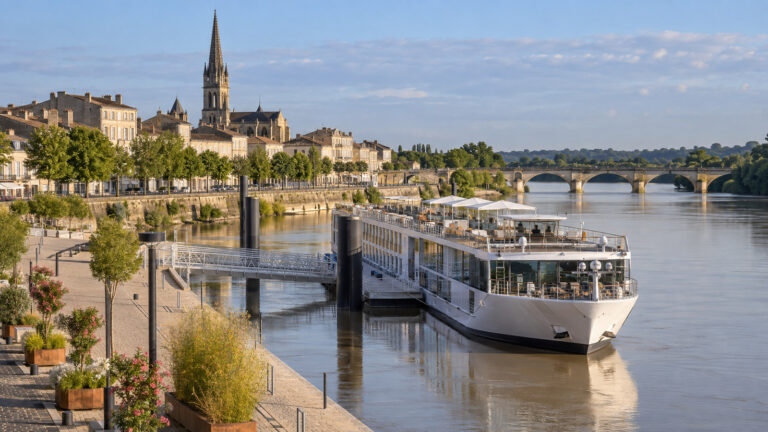
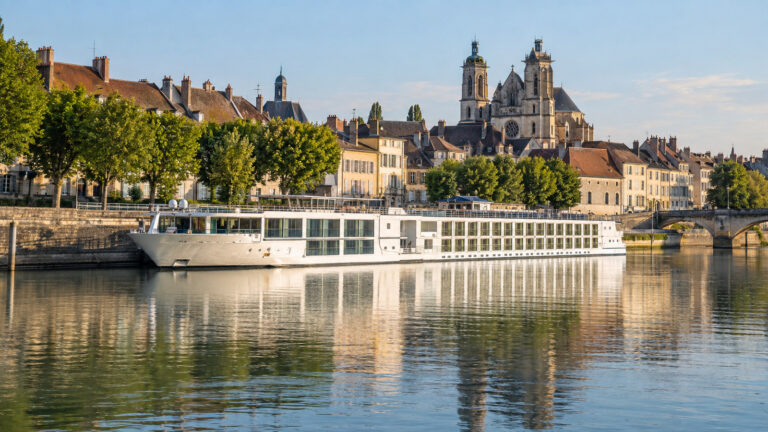
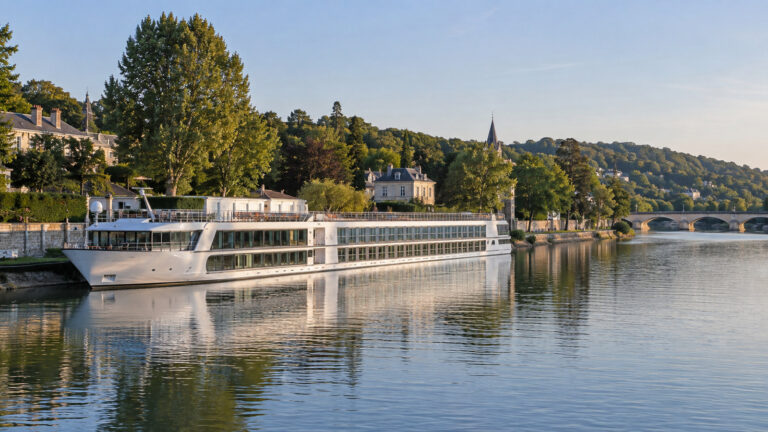
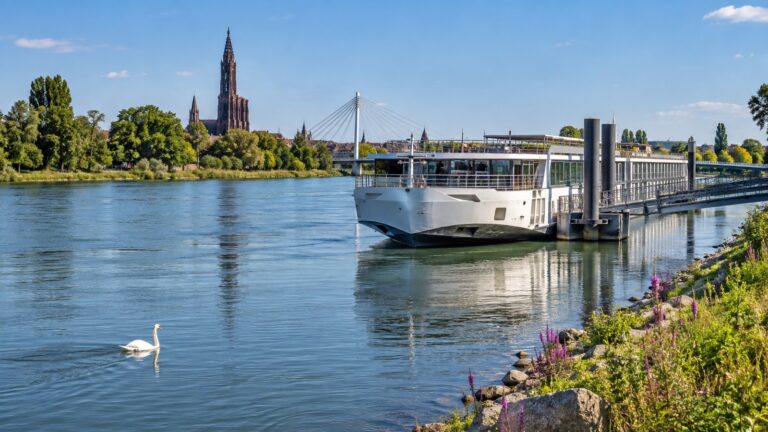
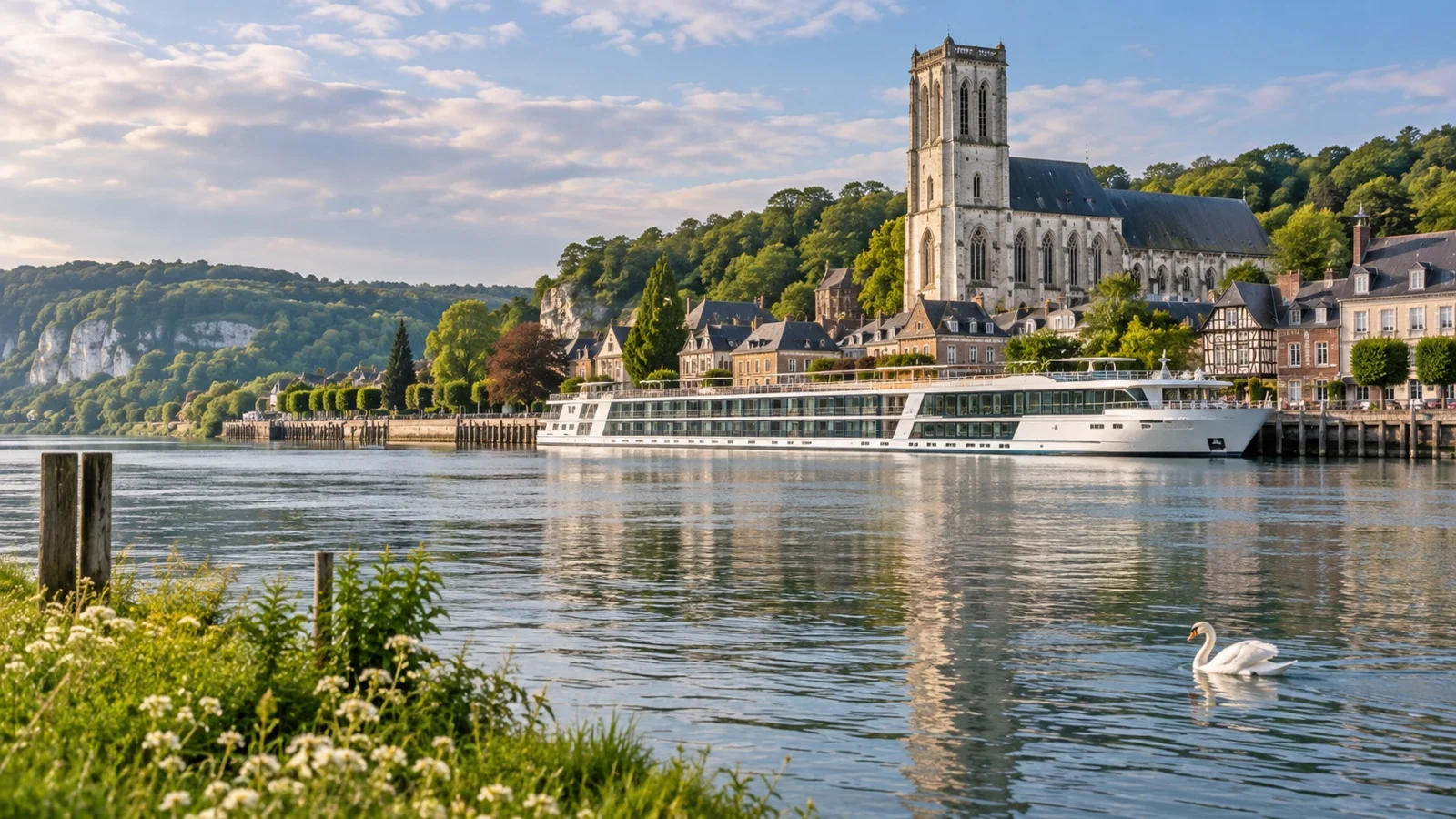
River vessels calling at Caudebec use a town-side Seine mooring rather than an ocean terminal. Passengers normally step ashore without a tender, although gangway angle and the exact access route depend on berth and river level.
The center is close enough that no shuttle is usually needed for local sightseeing. Walk only along the authorized route because working quay areas, temporary barriers, and other moored vessels can change the obvious-looking path.
Rafting beside another river ship may require crossing its reception area or deck. Keep noise low, hold handrails, and check whether the same route will be used for the return.
Save the vessel’s position on an offline map and photograph the daily schedule. River ships can move berths while guests are away, which makes the cruise director’s instructions more reliable than memory.
Walking Caudebec-en-Caux
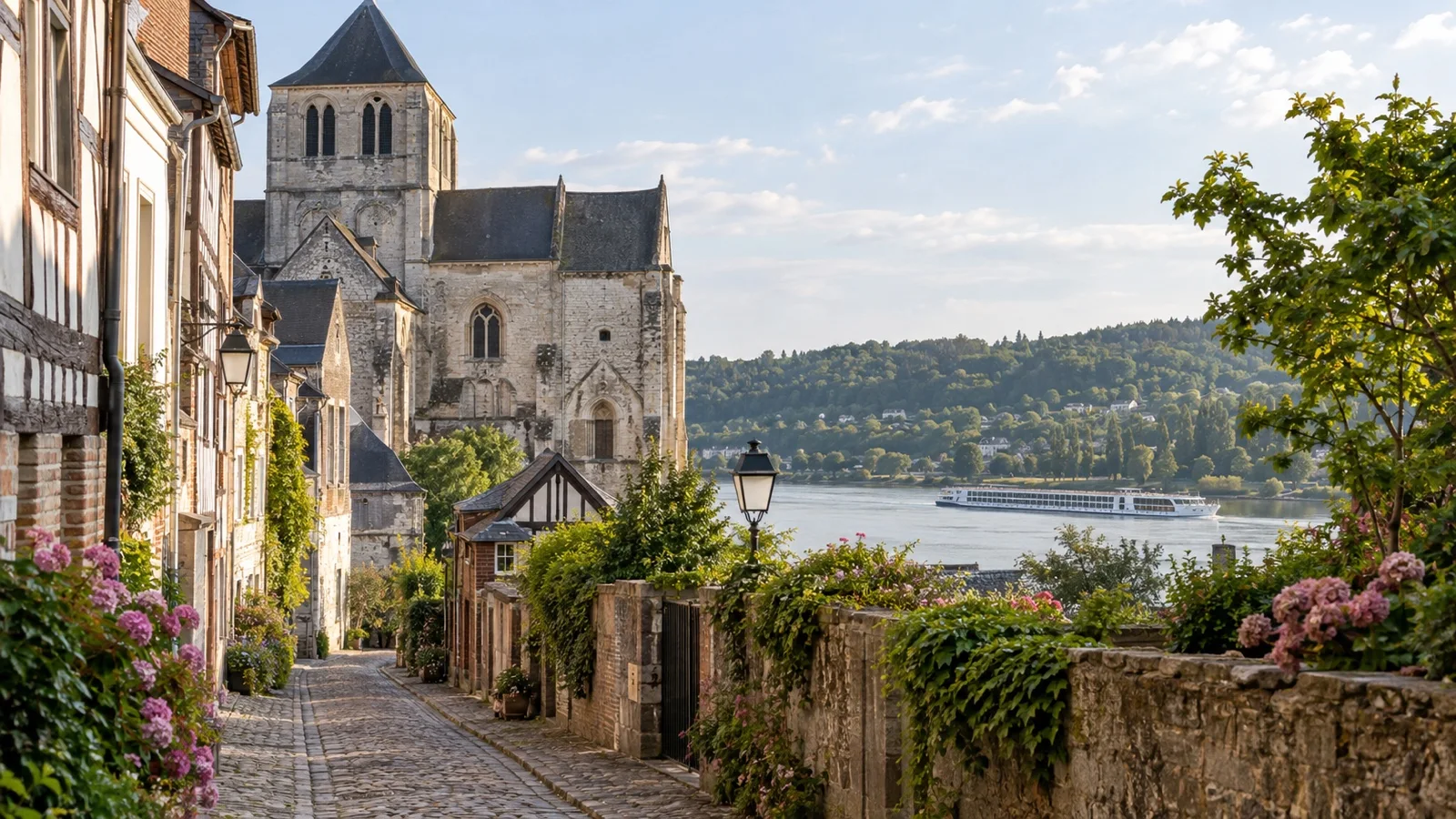
Caudebec is compact enough for an independent stroll that combines the waterfront, church, museum, and central streets. The town is better approached as a quiet river place than as a checklist of major monuments.
Begin along the Seine so you understand the quay and can watch river traffic. The scale of the waterway and nearby Pont de Brotonne help explain why maritime and river history matter so much here.
Continue toward Notre-Dame Church and the older streets around it. Leave time for a cafe or bakery rather than filling every minute with movement.
The municipality’s current calendar is useful because markets, festivals, construction, and heritage events can change what is open. The official town site has recently carried updates on riverbank work and local access, which shows why dated advice needs checking.
Notre-Dame Church
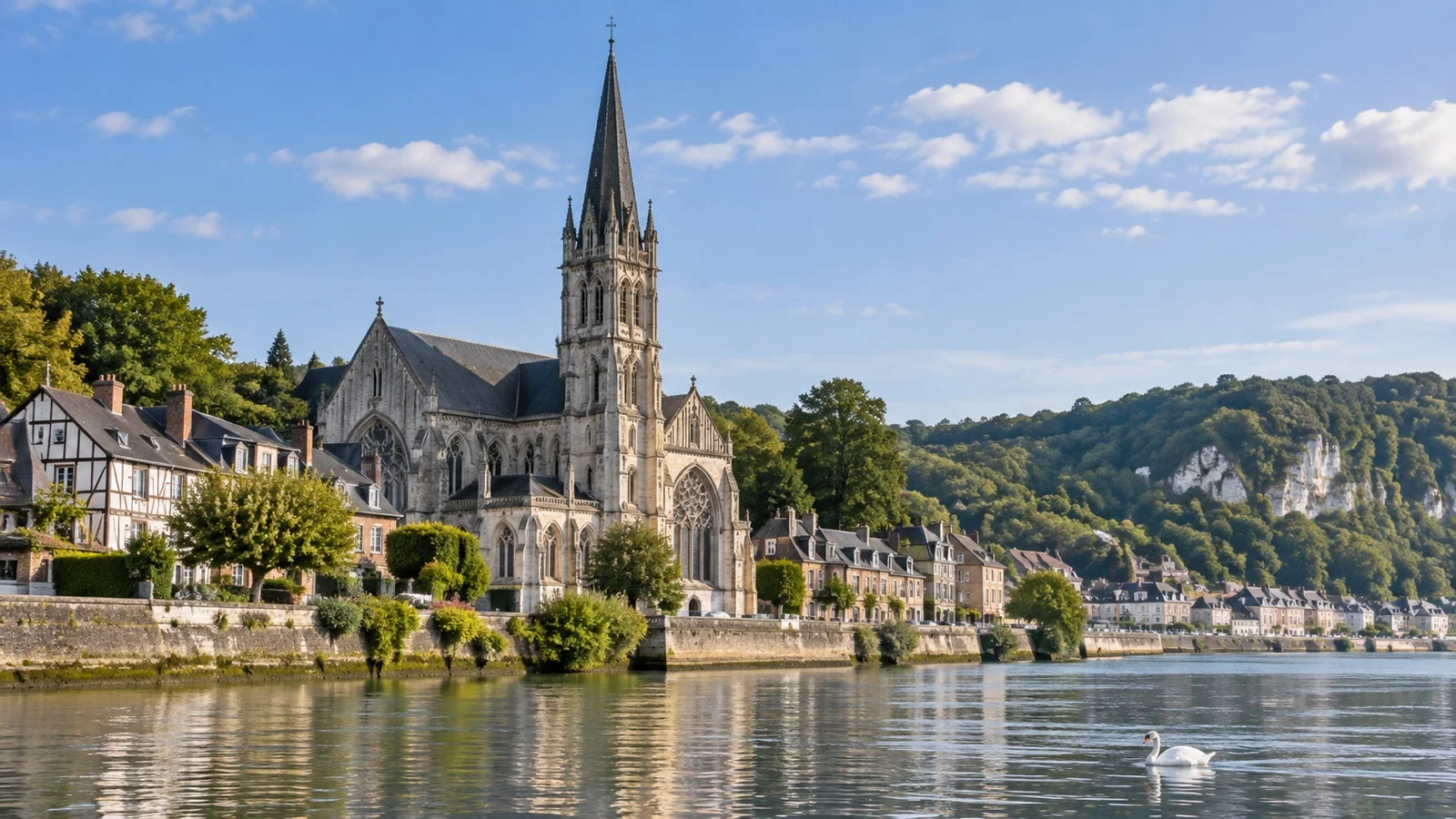
Notre-Dame de Caudebec is a striking example of late Gothic architecture, with elaborate stonework that looks unusually ambitious for a small town. The exterior alone justifies the short walk from the river.
The building is a religious and heritage site, not simply an attraction. Enter quietly, respect services, follow photography signs, and accept that restoration may limit access.
Look carefully at the facade, tower, and decorative details before going inside. The church rewards a slow circuit more than a quick doorway photograph.
MuséoSeine
MuséoSeine tells the story of the river, its people, navigation, work, and changing relationship with nearby communities. It is the most relevant museum for travelers who want to understand the waterway their ship is using.
The museum’s official site publishes hours, prices, access details, temporary exhibitions, and dedicated disability information. Check it shortly before the call because seasonal schedules and special events can alter normal visiting times.
Allow about an hour for a focused visit, then step back outside and look at the Seine with new context. The museum works especially well when weather makes a long outdoor walk less appealing.
Families may find it more engaging than another abbey or church. Interactive interpretation and river stories can break up a history-heavy itinerary.
Saint-Wandrille Abbey
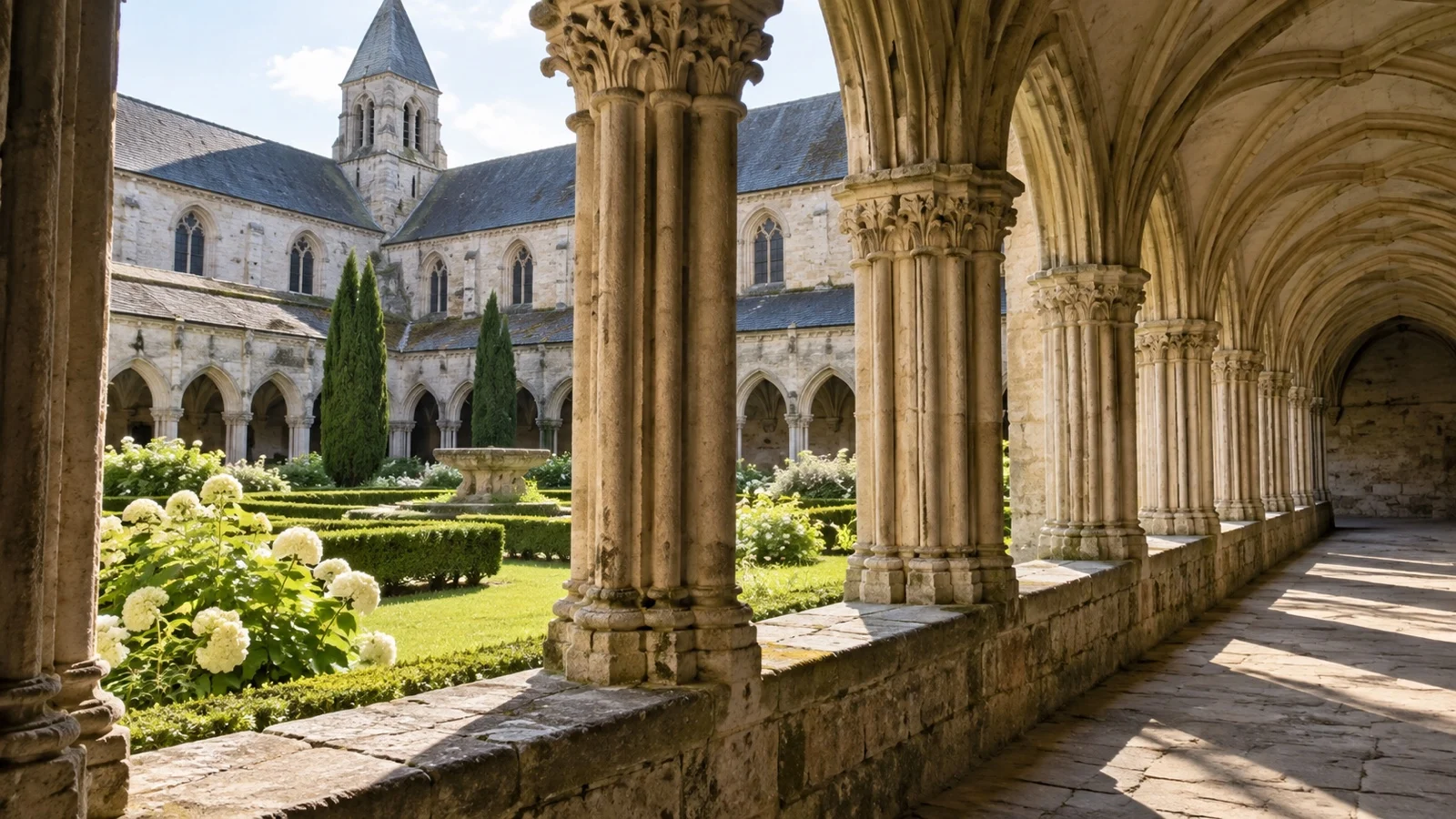
Saint-Wandrille is a working Benedictine abbey within the wider Rives-en-Seine area. Its long monastic history, ruins, active community, and worship make it fundamentally different from a standard museum.
Visits must respect the rhythm of the monastery. Guided access, services, shops, and open areas can follow specific times, so confirm the abbey’s official schedule or use the ship excursion.
Dress modestly, silence phones, and avoid treating monks or worshippers as photo subjects. If Gregorian chant or a service is included, arrive ready to listen rather than move around for a better picture.
The abbey is close by road but not a sensible casual walk from the river berth for most cruisers. A coach, prearranged car, or cruise excursion keeps the visit within the vessel’s timing.
Ask whether the outing includes the entire historical complex or only selected areas. A working monastery can restrict visitor access without reducing the significance of the visit.
Jumièges Abbey
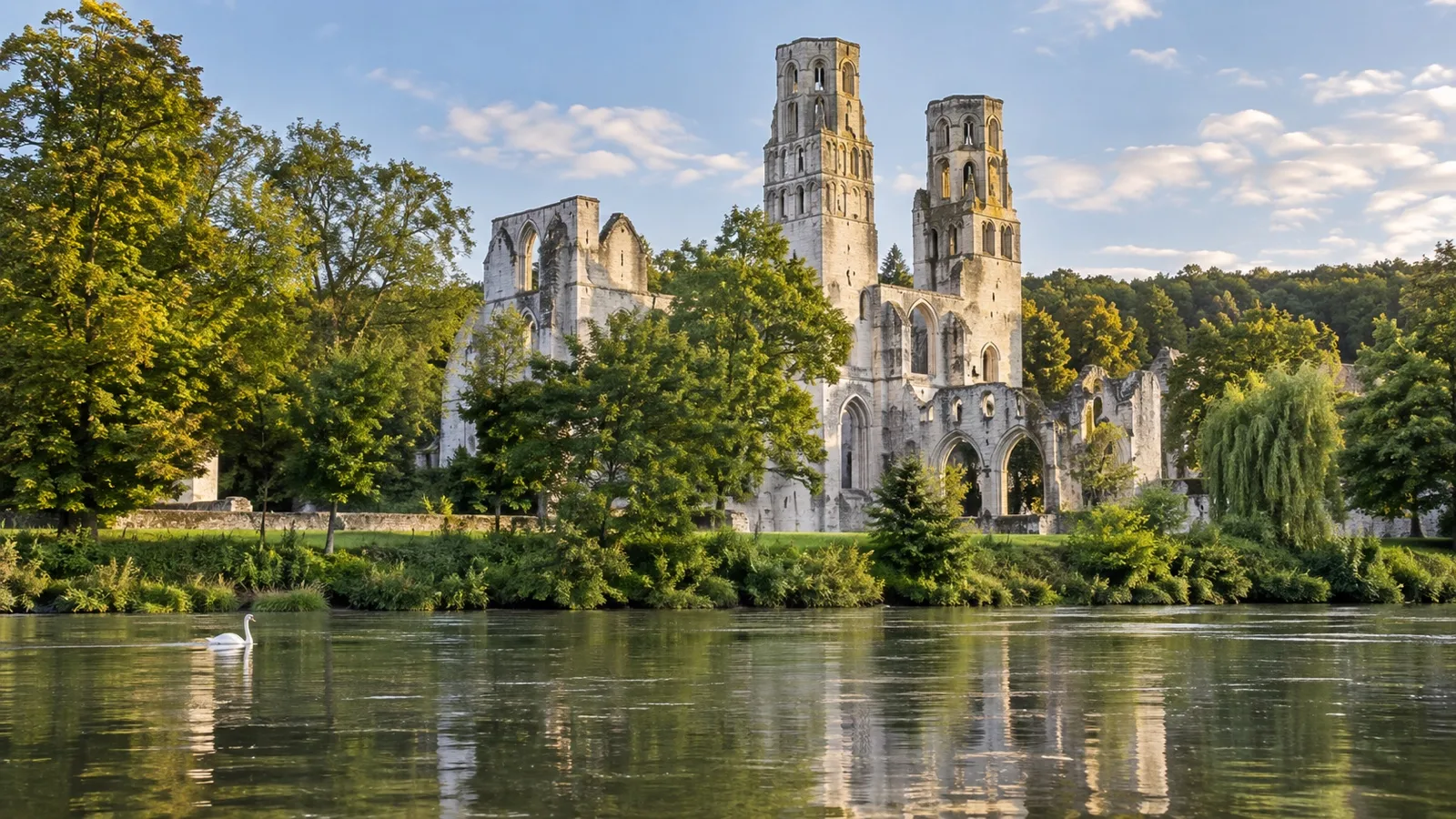
Jumièges presents a different experience: vast roofless ruins set in a green landscape. The twin towers and open nave make the former abbey one of Normandy’s most memorable romantic ruins.
The site traces monastic history through surviving architecture and interpretation rather than an active religious community. Outdoor surfaces, weather, exhibitions, and conservation work all shape what visitors can see.
Check the official Jumièges Abbey site for current hours, tickets, events, and accessibility before arranging an independent visit. Do not assume a coach can wait without prior agreement or that return transportation will be easy to find.
An organized excursion is the most practical choice for a cruise call. It removes the transportation problem and gives the ruins enough historical context to be more than an atmospheric photograph.
Bring a waterproof layer and shoes that handle damp grass or gravel. The open site can feel colder and windier than sheltered streets in Caudebec.
Villequier and Victor Hugo
Villequier is closely associated with the Hugo and Vacquerie families. Victor Hugo’s daughter Léopoldine and her husband Charles Vacquerie drowned in the Seine here in 1843, a tragedy that deeply affected the writer’s work.
The Musée Victor Hugo occupies a family house and explores the literary and personal history connected with the place. It is a thoughtful choice for travelers who already care about Hugo, French literature, or the emotional history behind the landscape.
Opening times can be seasonal, so confirm through the official Seine-Maritime museum information before making the trip. Villequier should be treated as a short transfer rather than a guaranteed walk from the gangway.
The riverside context gives the story unusual immediacy. Approach the site quietly and avoid turning a family tragedy into a casual photo caption.
Pont de Brotonne
The cable-stayed Pont de Brotonne is impossible to miss from the river near Caudebec. It is not a separate excursion, but it creates one of the most distinctive modern views during arrival or departure.
Ask the crew when the vessel is expected to pass beneath or near the bridge. The best view may come from the ship’s open deck rather than the town.
Wind on deck can be stronger than at street level. Secure hats and phones before leaning into a photograph.
Ship excursion or independent day
Explore independently when you want Caudebec’s church, riverfront, MuséoSeine, shops, and a relaxed meal. The sights are compact enough that a guide is optional.
Choose a ship excursion for Saint-Wandrille or Jumièges. The abbeys require transport and have operating details that are easier to manage through a scheduled group.
A private car can work if it is booked for the complete round trip. Put the pickup point, waiting time, route, final return, and price in writing.
I would not attempt to combine both abbeys independently during a short call. One well-paced abbey plus Caudebec is more satisfying than racing between sites and watching the clock.
A practical local route
Start with the quay and mark the vessel’s current position. Walk to Notre-Dame Church, explore the surrounding streets, and then choose MuséoSeine if its schedule fits.
After the museum, pause for coffee, bread, pastry, or a simple Norman lunch near the return route. Allow service time rather than sitting down with only a few minutes to spare.
Finish along the river and check whether the ship has shifted berth. This route remains worthwhile even when a church interior or museum is closed because the town and waterfront still form a coherent visit.
Food and local flavor
Normandy is associated with apples, cider, dairy, soft cheeses, seafood, and rich sauces. Choose a regional dish or pastry without trying to turn a short port call into a complete survey of Norman cuisine.
Small restaurants may serve lunch on a traditional schedule and close outside meal hours. Check opening times and tell the server when you must leave.
Cards are common, but a small amount of euro cash helps at markets and independent counters. Do not depend on breaking a large note for one coffee.
Accessibility and mobility
The Caudebec riverfront is generally the least demanding part of the call, but gangway slope changes with the Seine. Rafting through another ship can add thresholds, ramps, or narrow interior passages.
Historic streets include uneven paving, curbs, and occasional stepped entrances. MuséoSeine publishes specific disability-access information, making it a useful first choice for planning a more predictable visit.
Saint-Wandrille includes historic grounds and areas governed by monastic access. Ask about gravel, steps, seating, accessible restrooms, and how much of the guided route is available without stairs.
Jumièges has outdoor grass and gravel around extensive ruins. Confirm the accessible route, distance from coach parking, wheelchair availability, and weather contingency before booking.
A mobility-friendly day may be better spent in Caudebec than forcing an abbey excursion. The river museum, church exterior, and waterfront can still deliver the character of the stop.
Weather and river conditions
Normandy weather is mild, changeable, and often damp. Pack a waterproof jacket, layers, and shoes with grip even when the morning forecast looks calm.
Rain makes grass, gravel, gangways, and old paving more difficult. Slow down on the abbey grounds and keep both hands available during reboarding.
High water, low water, fog, traffic, and berth availability can reshape a Seine itinerary. The cruise director may shorten, swap, or move a call for operational reasons.
A schedule change does not necessarily mean the destination is closed. Ask what replacement transport or revised walking time applies before making an independent plan.
Safety and practical habits
Rives-en-Seine needs normal small-town precautions around traffic, valuables, wet paving, and river edges. Keep children close near the quay and follow barriers around working moorings.
France uses 112 as the general European emergency number, with 15 for medical emergencies, 17 for police, and 18 for fire. Save the ship and port-agent contacts offline as well.
Do not walk along an unlit rural road to reach an abbey because a map shows a manageable distance. Local driving speeds, narrow shoulders, and changing weather make organized transport much safer.
Getting back to the vessel
For a town walk, begin returning before the posted all-aboard time and verify the vessel’s name if several ships are present. Leave room for security, rafting, and a changed gangway.
From an abbey or Villequier, use a much larger buffer and agree on the departure time before the visit begins. A rural driver who arrives late can affect the ship’s navigation schedule, not merely dinner.
Use the time standard stated onboard rather than assuming your phone updated correctly. The crew’s daily program controls the deadline.
How the stop fits a Seine cruise
Rives-en-Seine offers a quiet contrast to Rouen’s cathedral, museums, and larger-city streets. It also provides an abbey-focused alternative to the gardens, castles, and Paris excursions found farther upstream.
The river itself is more visible here as a working landscape rather than a backdrop. MuséoSeine, the quay, bridge, and small communities help explain the lower Seine between Rouen and the estuary.
Some sailings visit only as a short daytime call, while others use the area as an excursion point. Check how many genuine free hours remain after any included tour.
Is Rives-en-Seine worth the stop?
Yes, especially for travelers who enjoy smaller towns and monastic history. The destination does not need a famous skyline because the combination of river, church, museum, and abbeys gives it a clear identity.
My first choice would be a Saint-Wandrille or Jumièges excursion followed by free time in Caudebec. If mobility or weather makes the abbeys impractical, I would stay local and give MuséoSeine proper attention.
The stop works best when allowed to remain quiet. Treat it as a close look at Normandy’s river communities rather than a race to manufacture a headline day.
Before you walk ashore
Confirm the berth, ship movement, all-aboard time, abbey access, museum schedule, transportation, and mobility details. Bring a waterproof layer, grippy shoes, small euro notes, and the ship’s contact information.
Then choose one version of the call and enjoy it fully. Rives-en-Seine rewards travelers who give a small place enough time to reveal why the ship stopped.
Research note: This guide was checked against current information from MuséoSeine, Saint-Wandrille Abbey, Jumièges Abbey, and official local tourism sources. Opening, access, transport, and river details were reviewed on September 12, 2026, but your ship’s berth and all-aboard instructions remain final.