Oksfjord Cruise Port Guide: Øksfjord Village and Glacier Planning
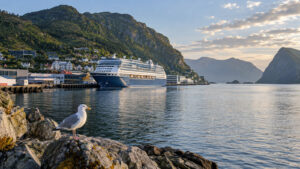
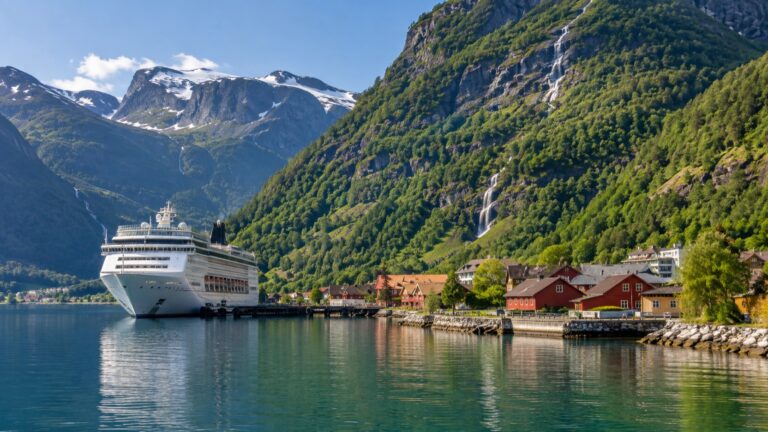
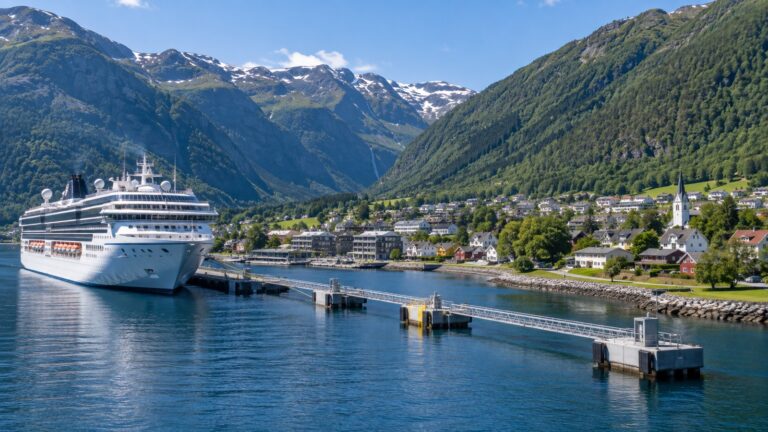
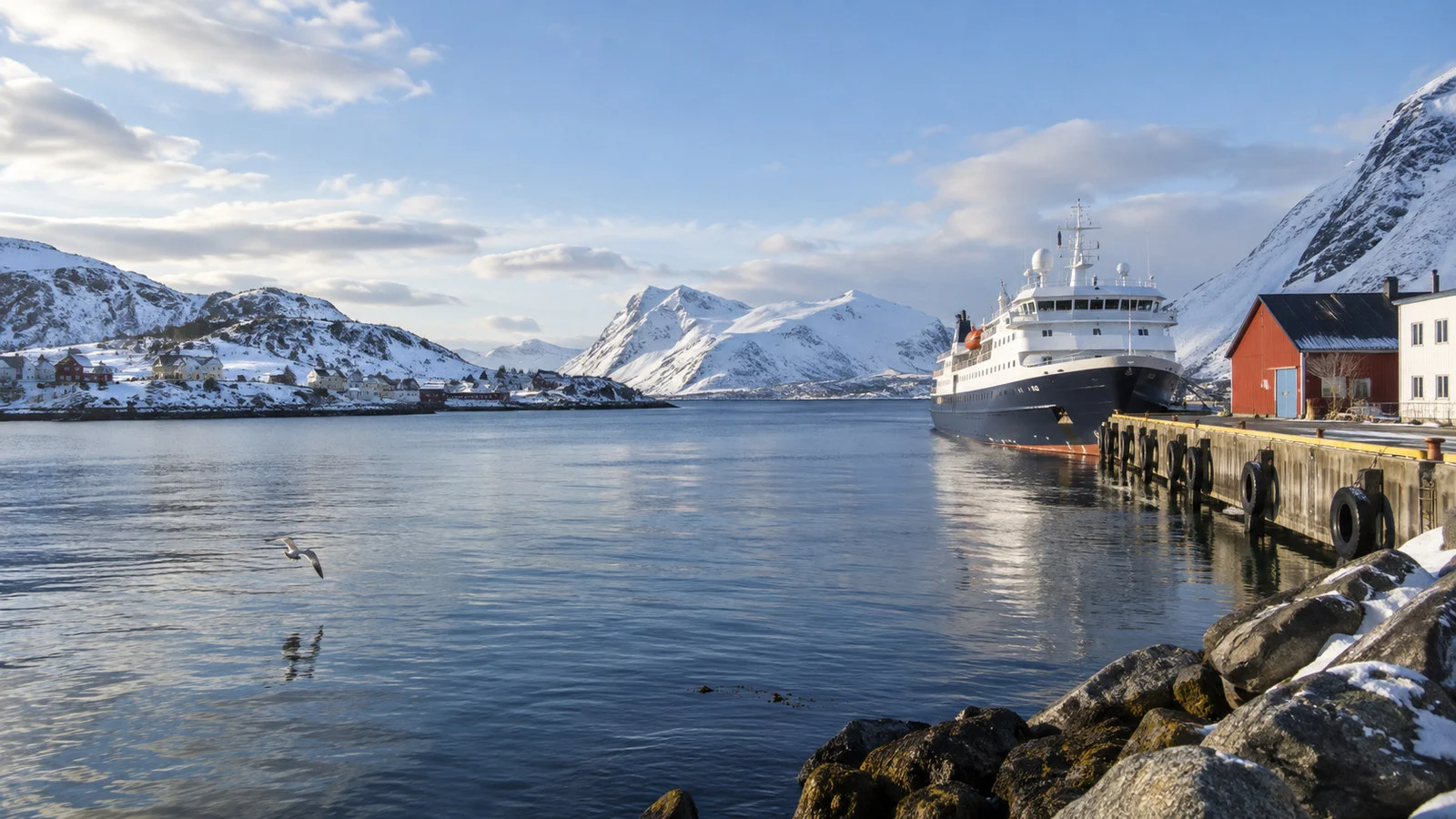
Øksfjord is a working Arctic village on Norway’s coastal route, not a conventional cruise port built around sightseeing. Ships call at a quay in the village, often for a short operational stop that also serves local passengers and cargo.
The surrounding mountains and Øksfjordjøkelen icefield give the place its drama. The sea-calving arm lies on the Jøkelfjord side of the glacier, so seeing it properly requires more than stepping off the gangway.
My quick take
I would treat Øksfjord as a view from the ship plus a short village walk unless the cruise line offers a clearly timed boat excursion. The stop’s appeal is its real coastal life, not a long menu of attractions.
Do not leave the ship assuming the glacier front sits around the next corner. Hurtigruten describes the icefield beyond the peaks and the calving Jøkelfjordbreen arm in another fjord.
When time is short, fresh air, the waterfront, and the church area are enough. The ship’s arrival and departure through the fjord may provide the most memorable views of the call.
Oksfjord quick facts
- Official spelling: The Norwegian place name is Øksfjord, while Oksfjord is the common unaccented form used in English search and URLs.
- Port address: Hurtigruten lists Njordveien 20-27, 9550 Øksfjord.
- Docking: Coastal ships normally berth alongside, with no routine tender operation.
- Into the village: The quay is in the settlement, but the useful walking time depends on the ship’s short call and gangway schedule.
- Glacier: Øksfjordjøkelen is a large plateau glacier; its sea-reaching Jøkelfjordbreen arm lies in Jøkelfjord, not at the village quay.
- Best independent plan: Take a short waterfront walk, look toward Øksfjordfjellet, visit the church area if time allows, and return early.
- Currency: Norway uses the Norwegian krone, though cards are the normal payment method in most staffed businesses.
- Weather: Conditions can be cold, wet, windy, snowy, or icy depending on season, even when the ship’s deck feels sheltered.
- Accessibility: Ask about the gangway, snow or ice, road surfaces, and any small-boat boarding before committing to go ashore.
- Emergency numbers: Call 110 for fire, 112 for police, and 113 for urgent medical help in Norway.
Where the ship docks
Hurtigruten’s official Øksfjord port page lists the address as Njordveien 20-27, 9550 Øksfjord. The quay sits within the settlement rather than at a remote cruise terminal.
Coastal route ships normally come alongside and use a gangway. The slope, steps, and exact exit can still vary with vessel, tide, weather, snow, and quay operations.
This is a functional port call on a transport network that connects small communities. Local passengers, vehicles, freight, mail, and supplies may matter as much as sightseeing guests during the stop.
Follow crew directions and remain outside marked working zones. A small quay can become busy quickly when unloading, loading, and village traffic all meet the same narrow space.
The address identifies the port, but it does not promise a staffed passenger terminal or a waiting line of tour vehicles. Plan around what the voyage operator confirms for your sailing.
How much time will you have?
Short coastal calls can be measured in minutes rather than the hours expected at a traditional cruise port. Exact timing varies by direction, season, operator, sailing plan, weather, and schedule recovery.
Read the daily program before reaching Øksfjord and listen for any announcement about the gangway. The vessel may open the shore exit briefly, revise the stop, or keep passengers aboard if operations require it.
A published sailing plan is useful for understanding the route but not for setting your watch weeks in advance. The onboard time and crew instructions control the actual call.
If the stop is very short, enjoy it from an open deck or panoramic lounge. Watching a working coastal arrival can be more rewarding than hurrying down the gangway for a photograph of the ship.
Walking through Øksfjord village
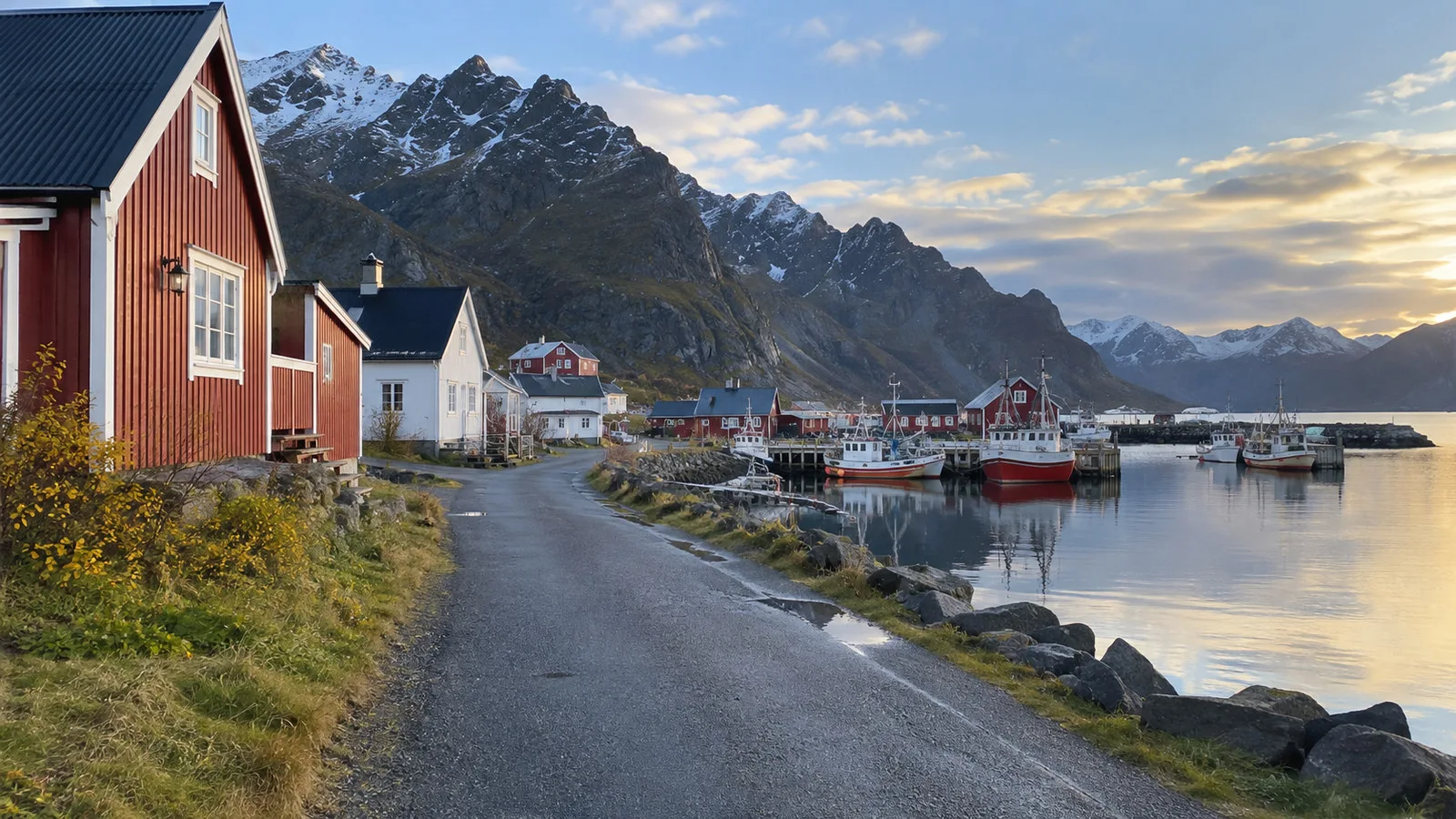
The village follows the waterfront beneath steep mountain terrain, with municipal services and homes spread around the harbor. It feels like a place people live rather than a preserved attraction.
The Loppa municipal site lists its public office at Parkveien 1/3 in Øksfjord, with current weekday hours from 9 AM to 3 PM. This is a government office rather than a visitor attraction, so do not build a short call around going inside.
A short walk can take in the harbor, residential streets, church area, and views back toward the ship. Choose a simple out-and-back route so the return remains obvious.
Shops and cafes may keep limited schedules, especially early, late, on weekends, or outside summer. Bring anything essential from the ship rather than counting on a purchase during a brief call.
Respect private homes, driveways, boats, and work areas when taking photographs. The quiet atmosphere depends on visitors treating the village as a community rather than a set.
What you can see from the ship
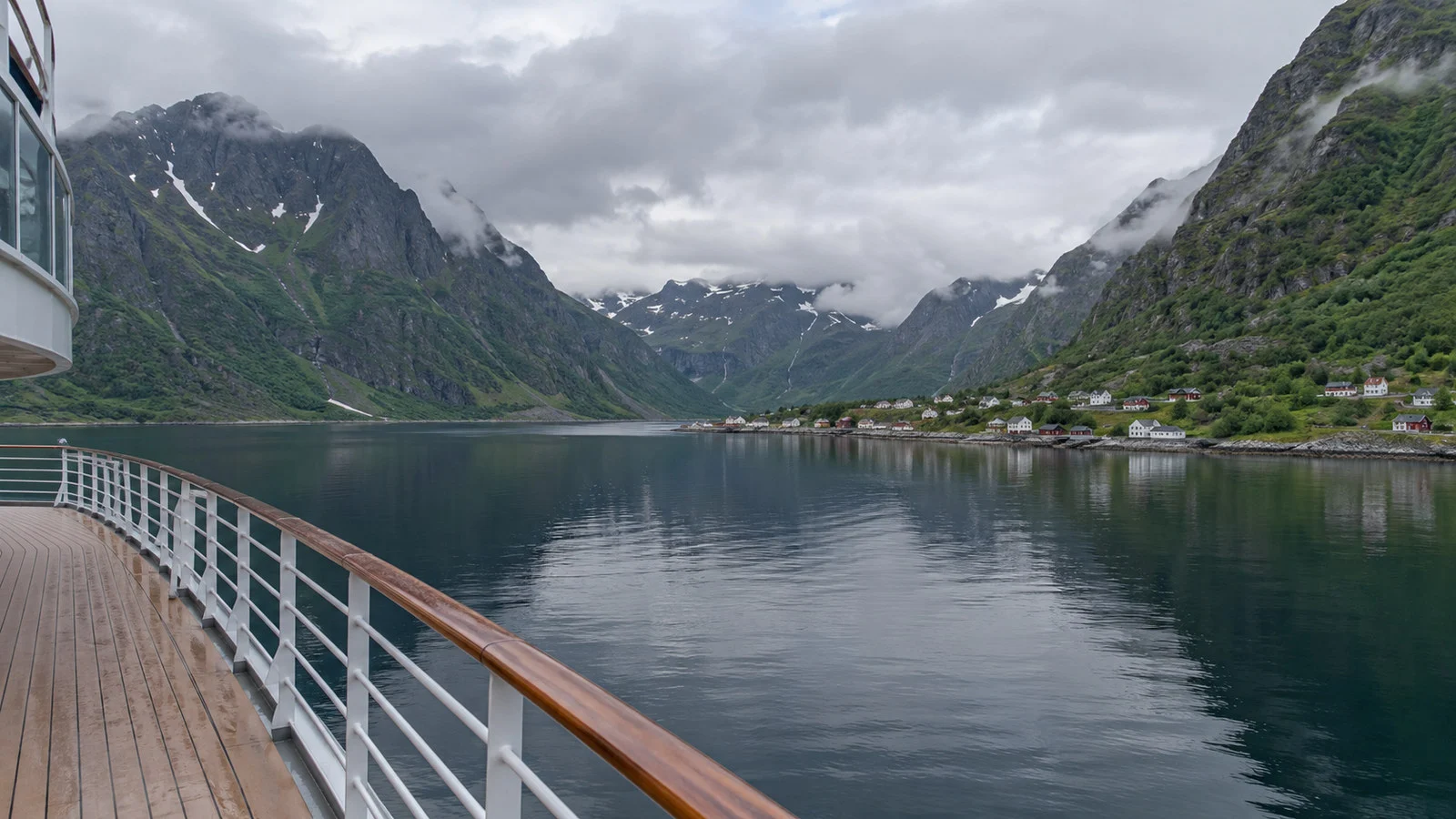
Øksfjordfjellet rises sharply behind the settlement and gives the arrival its strongest visual anchor. Hurtigruten notes that the Øksfjordjøkelen icefield lies beyond the peaks on the other side of the fjord.
That wording matters because a glimpse of distant ice is not the same as reaching a glacier terminus. Cloud, snow, season, and angle can make the icefield clearer or hide it completely.
The sail in and out can reveal changing mountain layers that are difficult to appreciate from the quay. Move between sides of the ship when safe, because the best view may shift quickly as the vessel turns.
Winter darkness can make village lights the highlight, while summer brings long daylight and the midnight-sun season. Weather and latitude shape the mood more strongly than any single landmark.
Øksfjordjøkelen and Jøkelfjordbreen
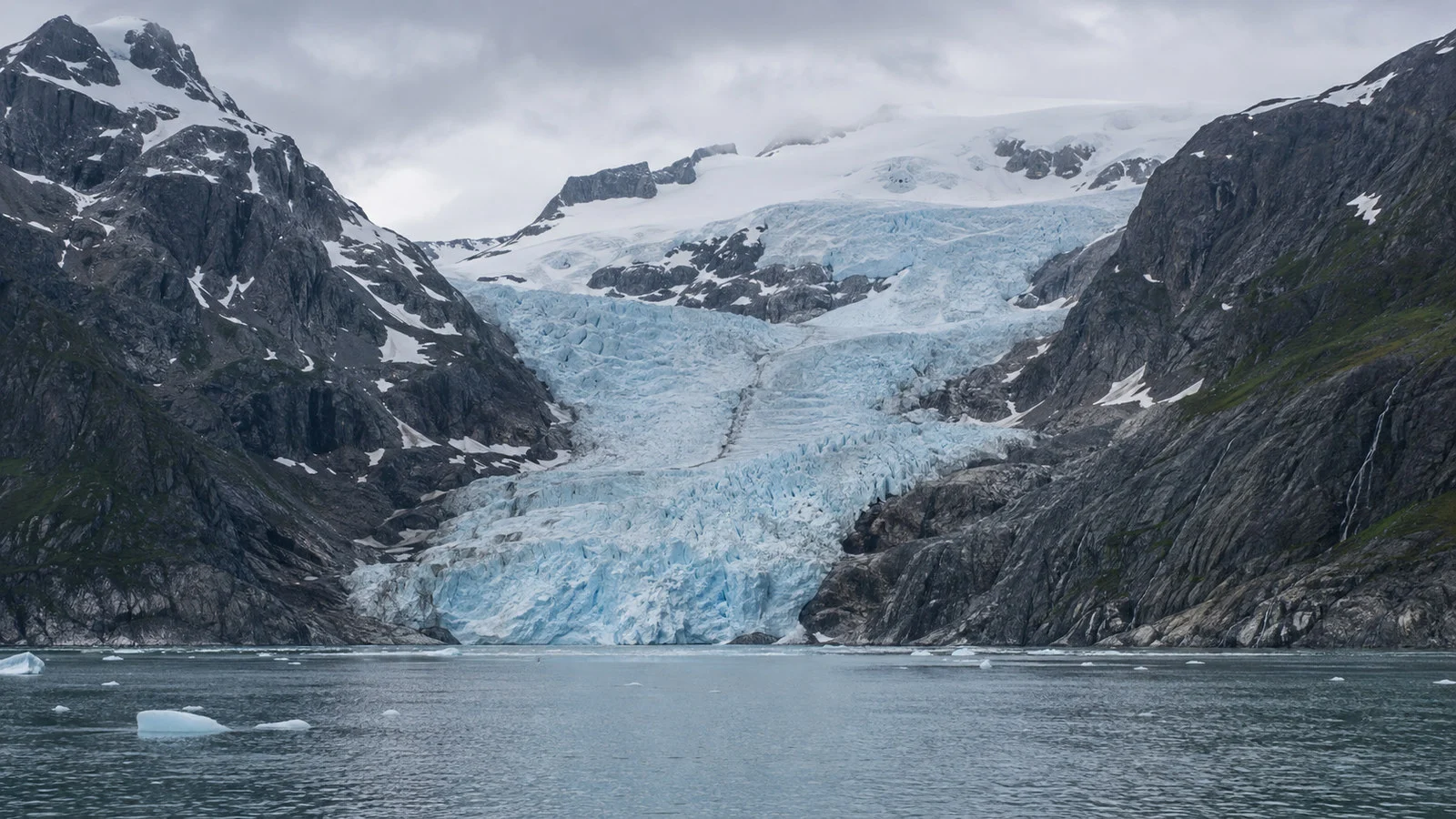
Øksfjordjøkelen is one of mainland Norway’s large glaciers and spreads across a plateau behind the coastal mountains. Hurtigruten calls it Norway’s ninth-largest glacier and identifies its sea-reaching arm as Jøkelfjordbreen.
Jøkelfjordbreen lies at the head of Jøkelfjord, on the other side of the glacier from Øksfjord village. You cannot walk from the quay to the calving front during a coastal ship call.
Hurtigruten describes kayaking or RIB travel toward the sea-reaching arm, but that is destination context rather than a guarantee that your sailing offers the trip. Check the exact excursion catalog, date, direction, duration, and physical requirements.
Glacier conditions change, and a calving event is never promised. Operators decide how close a boat may approach based on ice, waves, weather, wildlife, visibility, and current safety guidance.
Never arrange an informal ride that cannot explain its equipment, communications, operating permission, and return plan. Arctic water is cold enough to make a small problem serious very quickly.
Should you book a small-boat excursion?
A properly organized boat trip is the only realistic way for a cruise passenger to seek a closer look at Jøkelfjordbreen during limited time. It also adds exposure to cold, spray, motion, and a more demanding boarding process.
Read the excursion description for the actual fjord rather than relying on the word glacier. A scenic RIB ride, a transfer to Jøkelfjord, and a close approach to an ice front are not automatically the same product.
Ask how guests board, whether they must step across moving surfaces, and what protective clothing is supplied. Also confirm height, age, health, mobility, and pregnancy restrictions before paying.
The operator should explain what happens if weather or ice changes the route. A safe substitution or cancellation is better than forcing the original plan in marginal conditions.
Ship-sold excursions usually provide the strongest return coordination for a short call. An independent trip is only sensible when the operator explicitly works with the vessel’s schedule and names the backup plan.
Independent transportation is not a port-day shortcut
Øksfjord connects with regional roads, ferries, and local transport, but those services support community travel rather than a brief cruise excursion. Timetables may not create a useful round trip within the ship’s call.
Do not board a bus or ferry without verifying the return departure, stop location, seasonal schedule, and whether the ship will still be present. One missed connection can leave you far beyond walking distance from the quay.
A taxi should be reserved if it is essential, because a small village may not have vehicles waiting. Confirm both pickup and return rather than planning to call for a ride later.
The simplest independent experience remains the village itself. That is not settling for less, because everyday coastal life is precisely what distinguishes Øksfjord from larger tourist ports.
Accessibility and mobility
Ask the voyage operator about the gangway before deciding to disembark. Width, slope, handrails, thresholds, weather, and the ship’s assistance policy can all affect whether a wheelchair or walker can be used safely.
The quay area may be paved, but snow, ice, slush, gravel, and uneven edges can change the route by season. A level-looking village map says nothing about the surface on the day.
A short walk can still include limited curb cuts or narrow shoulders. Stay where drivers expect pedestrians and turn back before fatigue or deteriorating conditions become a problem.
Small inflatable boats are much more demanding than the main ship. Boarding may require balance, steps, straddling a tube, or transferring without a mechanical lift.
Ask whether an excursion can secure a folded mobility aid and whether an accessible restroom exists. If the answer is vague, enjoy the scenery from the larger vessel rather than gambling with the transfer.
Arctic weather and what to wear
Hurtigruten’s climate chart shows average maximum temperatures around 13 degrees Celsius in July and far below freezing in winter. Those averages do not describe the wind, spray, snow, or sudden changes you may meet during one call.
Dress in layers with a windproof and waterproof outer shell. Gloves, a warm hat, and shoes with grip can matter even when you expect to stay ashore for only twenty minutes.
In winter, traction devices may help on icy surfaces if the cruise line and local rules allow them. Remove sharp spikes before walking on indoor floors or ship surfaces where they can slip or cause damage.
In summer, carry eye protection and a secure hat because wind and long daylight can be tiring. Sunscreen still matters at high latitude when bright conditions reflect from water and snow.
Keep a dry layer and medication in a small bag rather than leaving everything in the cabin. A boat excursion can feel much colder than the sheltered quay.
Northern lights and midnight sun
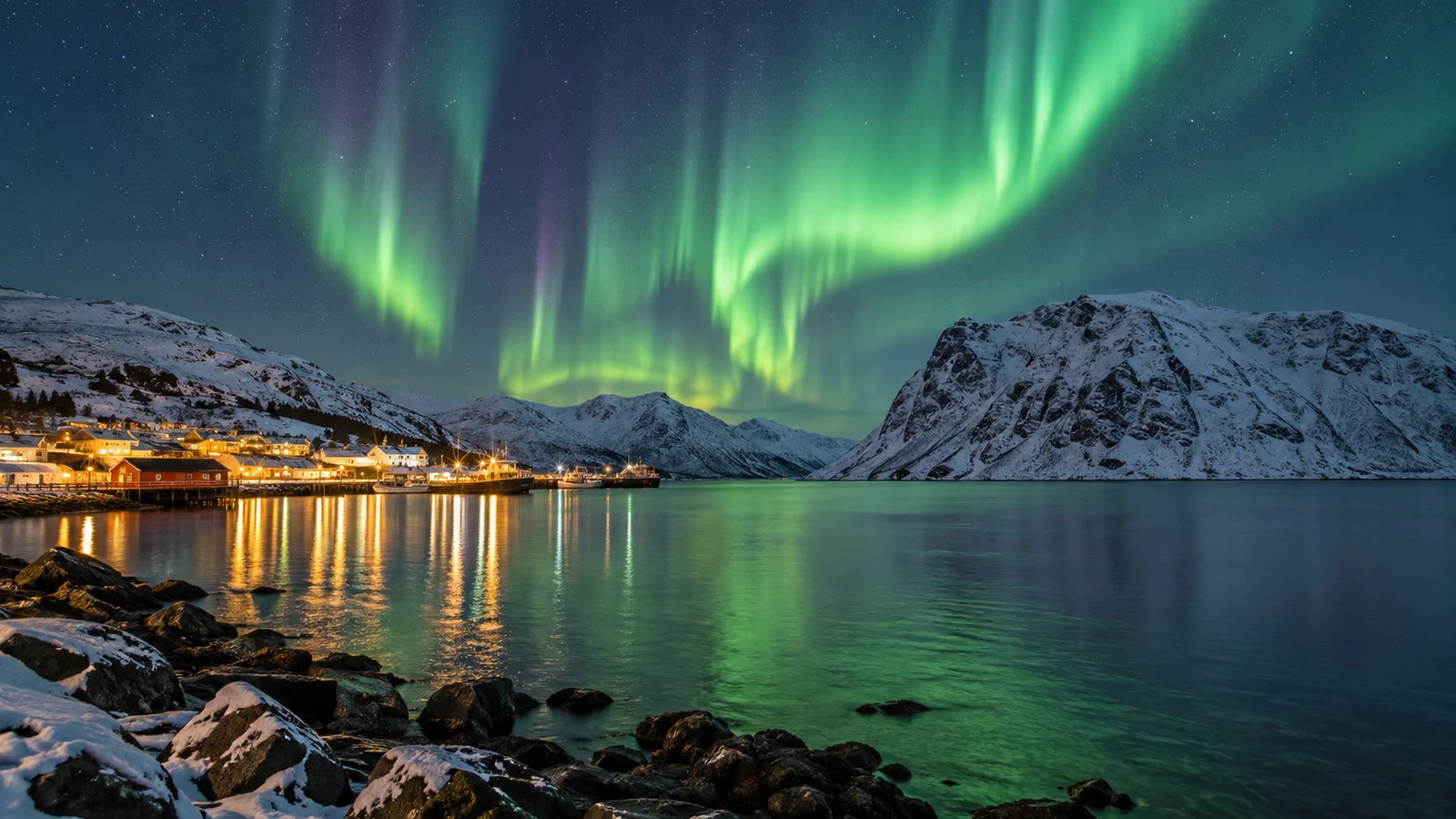
The dark season gives Øksfjord real northern-lights potential, but cloud cover and solar activity control what appears. No guide or forecast can guarantee an aurora during a short port stop.
Use the ship’s open decks when conditions are safe and follow lighting rules intended to preserve night vision. A camera may reveal color that looks faint to the eye, but the experience is still weather-dependent.
Summer brings extremely long daylight and a period of midnight sun at this latitude. Even a late or early call can feel bright enough for mountain views and village photographs.
Pack an eye mask for sleep during summer voyages. The same light that makes the coastal scenery magical can make a cabin feel like afternoon at midnight.
Safety and emergency information
Norway uses 110 for fire, 112 for police, and 113 for urgent medical help. The Norwegian Communications Authority publishes the national emergency-number guidance.
Cell service may be available in the village, but coverage can weaken in remote fjords and behind mountains. Save the ship’s contact details and sailing information offline.
Stay back from quay edges, working ropes, loading equipment, and vehicle paths. Snow and darkness can make hazards harder to see even when the distance from the gangway is short.
Do not hike beyond the settlement on a brief call without a route, equipment, daylight plan, and local advice. Steep terrain and Arctic weather begin immediately outside town.
If conditions change, return to the ship early. A shortened walk is a minor disappointment compared with missing a coastal vessel in a remote community.
Returning to the ship on time
Use the ship’s departure time and gangway deadline, not a generic online timetable. Coastal-route vessels maintain a network schedule and may leave promptly after local operations finish.
Keep the ship in sight during a very short independent walk whenever practical. Turn back with enough time for a crossing, slippery surface, queue, or security check.
If you join a ship excursion, follow the guide’s movement and return instructions exactly. Do not separate from the group for a photograph unless the guide confirms where and when to rejoin.
Missing the vessel can require complicated travel across Finnmark at your own expense. Øksfjord is a lovely place for a brief visit and a difficult place to improvise a cruise catch-up.
How Oksfjord fits the coastal route
Hurtigruten currently includes Øksfjord among the communities on its Coastal Express itineraries between Bergen and Kirkenes. The route exists to connect the coast as well as to show it to visitors.
That purpose explains why small calls can be short, scheduled at unusual hours, or focused on loading rather than excursions. It also gives passengers a more honest view of northern Norway than a cruise-only harbor could offer.
Nearby ports such as Hammerfest and Skjervøy provide different combinations of time and services. Our Norway Coastal Express guide puts the sequence into context.
Do not judge Øksfjord by the number of attractions you can enter. The point is the scale of the mountains, the working quay, and the feeling of being connected to a very remote coastline.
Quick answers
Is Oksfjord a tender port?
Normally no. Coastal ships berth alongside at the village quay, though the gangway arrangement varies.
Can I walk into the village?
Yes. The quay is within Øksfjord, but the practical walking time depends on the short call and when the gangway closes.
Can I see the glacier from town?
You may see parts of the distant icefield when conditions are clear. The sea-calving Jøkelfjordbreen arm lies in another fjord and is not a walk from the quay.
Is a RIB trip guaranteed?
No. Excursion availability depends on the sailing, season, operator, weather, and current glacier access.
What can I do without an excursion?
Take a short waterfront and village walk, look toward Øksfjordfjellet, and enjoy the ship’s approach or departure. Return well before the gangway deadline.
Are cards accepted?
Cards are standard in Norway, but a brief call may occur when no staffed business is open. Do not make shopping the basis of the plan.
Is the call accessible?
It depends on the ship, gangway, weather, and surfaces. A small-boat excursion requires a separate and more detailed mobility check.
The last word
Øksfjord is a small call with enormous surroundings. Understand where the glacier actually lies, keep the village plan simple, and the stop feels authentic rather than empty.
My favorite approach is to enjoy the quay without demanding a performance from it. The coastal ship, local work, mountain walls, and Arctic light are already the story.
How this guide was researched: This guide uses current information from Hurtigruten, Loppa municipality, and Norwegian public authorities. Time-sensitive details were reviewed in September 2026; always follow the onboard sailing plan and see our Editorial Policy.
More on this topic: browse every guide on expedition and alternative cruises.