Antarctica Fly Cruise: Skipping the Drake Passage
An Antarctica fly cruise replaces much of the Drake Passage crossing with a charter flight from southern Chile to King George Island. It can save several vacation days and avoid the longest stretch of open-ocean motion, but it also moves the biggest schedule risk from the sea to a weather-dependent Antarctic runway.
The right question is not simply whether flying is better than sailing. It is whether the time saved, higher price, baggage rules, Zodiac transfer, and possible flight delay fit your health, calendar, and tolerance for uncertainty.
Antarctica fly cruise quick facts
- Typical route: Punta Arenas, Chile, to King George Island in the South Shetland Islands.
- Flight time: Antarctica21 says the trip takes up to about 2.5 hours.
- Sea time avoided: A conventional Drake Passage crossing commonly takes about two days in each direction.
- Arrival transfer: Bus from the landing area, followed by a Zodiac ride to the expedition ship.
- Main advantage: More vacation time in Antarctica and less exposure to Drake Passage seas.
- Main risk: Low clouds, fog, snow, ice, and strong wind can change the flight date.
- Typical ship style: Small expedition vessels designed around landing operations.
- Essential planning move: Protect onward travel with flexible arrangements and spare time after the trip.
How the fly cruise works
Antarctica21’s full fly cruise programs begin in Punta Arenas, a city on the Strait of Magellan with air links through Santiago. The operator gathers passengers before departure, completes briefings and equipment checks, and waits for an acceptable weather window.
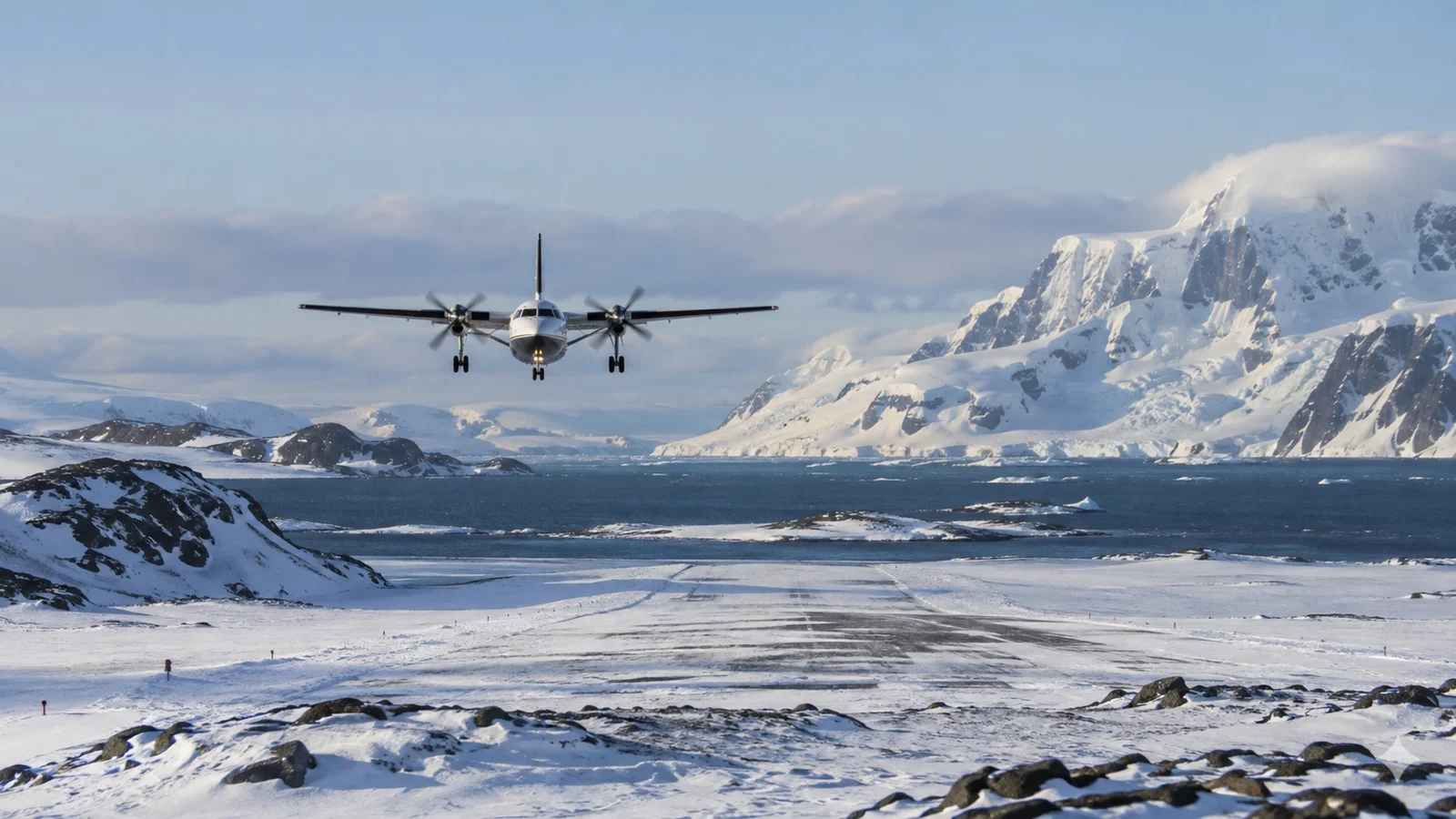
The charter crosses the Drake Passage and lands on King George Island, where several national research stations operate. This is not a normal scheduled route with frequent alternative flights, so the operator’s contingency arrangements are part of the product rather than fine print.
After landing, passengers transfer toward the shore and board inflatable Zodiacs for the trip to the expedition vessel. There is no conventional cruise terminal or enclosed gangway linking the aircraft directly to the ship.
What flying across the Drake actually saves
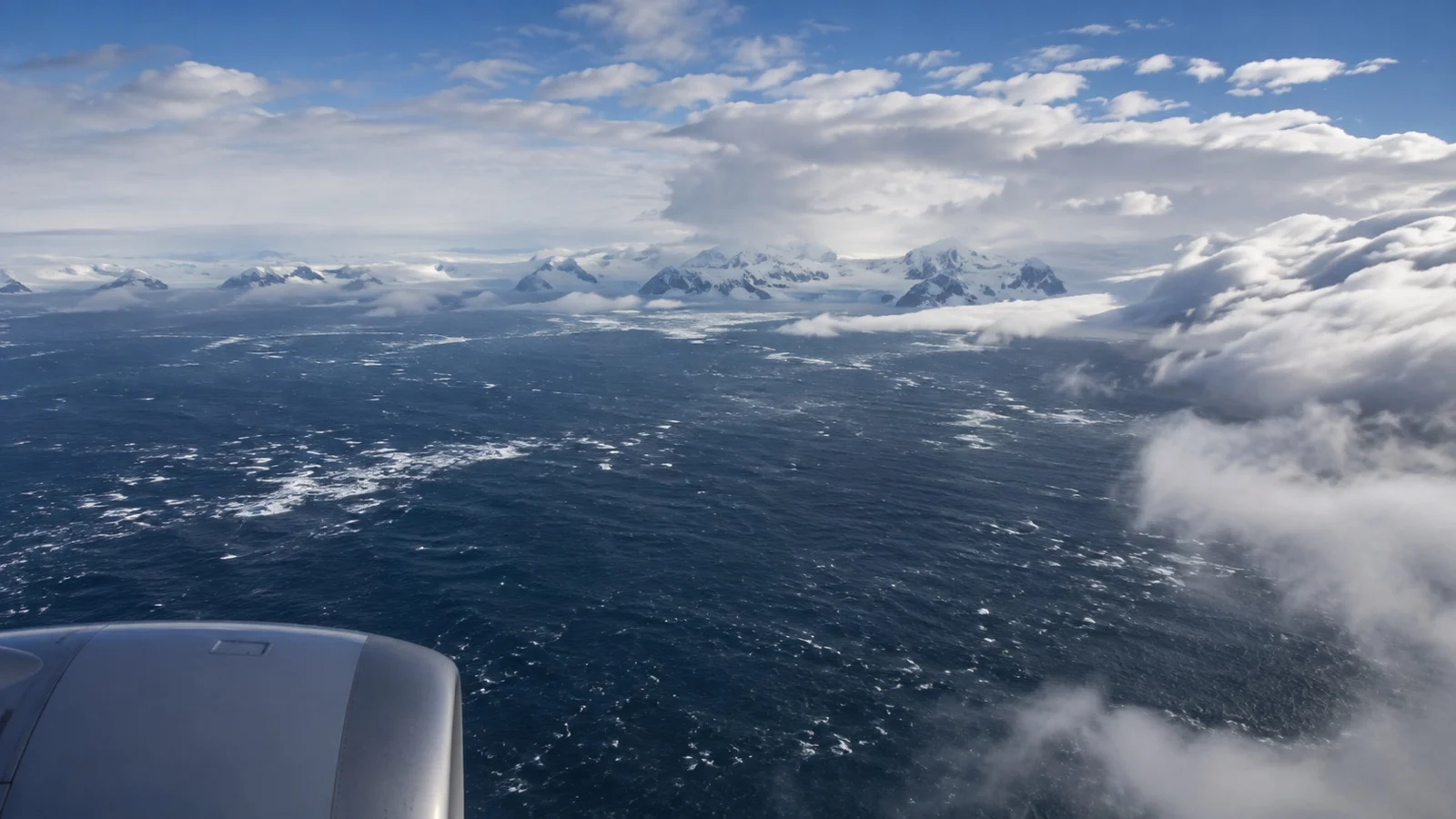
A ship sailing between Ushuaia and the Antarctic Peninsula generally spends about two days crossing in each direction. A round-trip flight can therefore return roughly four days to the traveler, though the exact saving depends on the itinerary and sea conditions.
That time saving matters for travelers with limited vacation days. An eight-day air cruise can devote more of the itinerary to Antarctic waters than a similar-length sailing from Ushuaia.
Flying also avoids the prolonged swell that causes many passengers to feel seasick. It does not eliminate motion once aboard, since Bransfield Strait and exposed waters around the South Shetland Islands can still be rough.
The weather delay risk
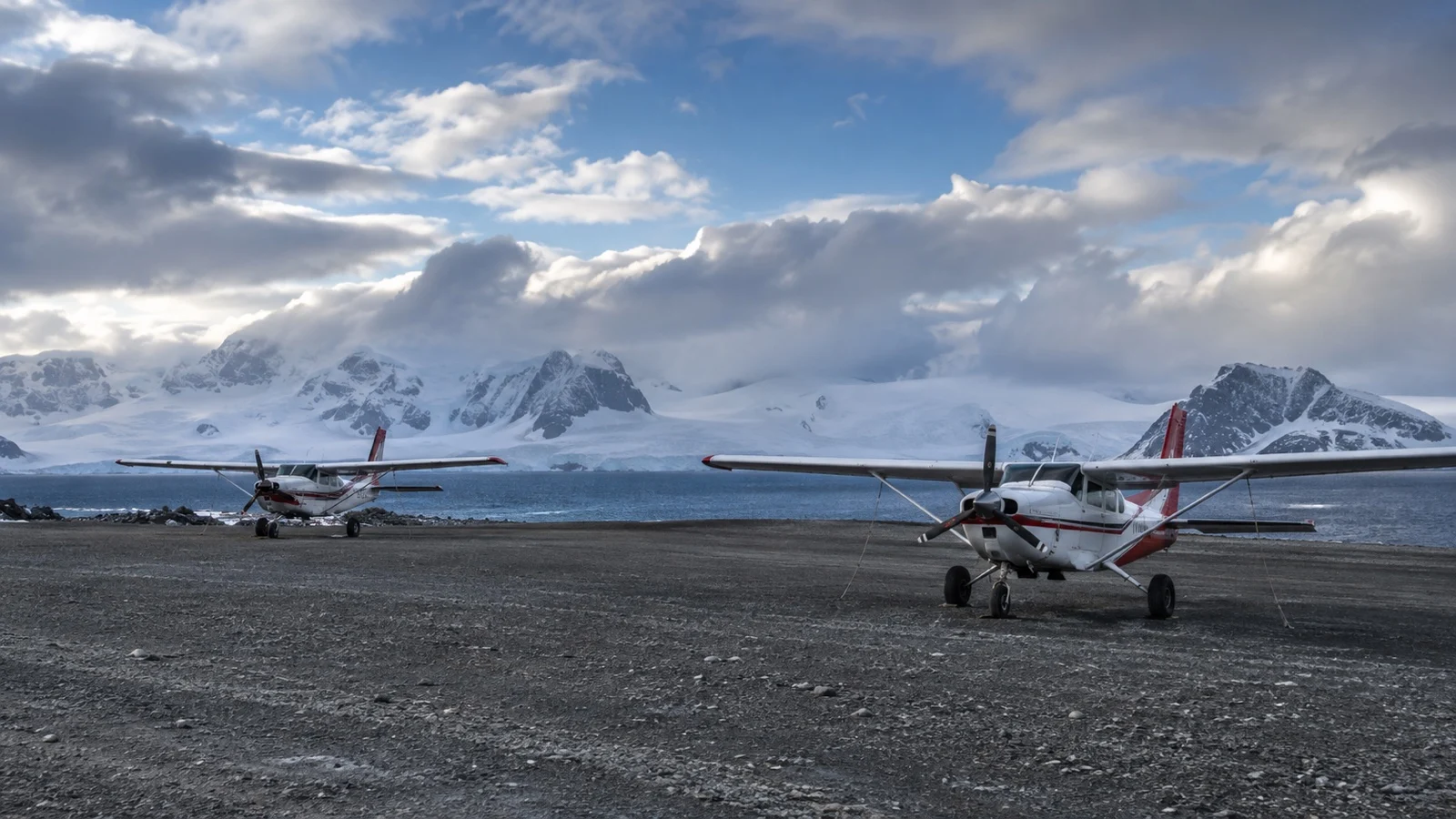
King George Island weather can change quickly, and safe flight operations depend on visibility, cloud, wind, snow, and runway conditions. The operator may advance, postpone, or cancel a flight when the forecast and actual conditions require it.
Antarctica21’s official Antarctic flights guide reported 346 flights through April 2025. It recorded 264 departures on the scheduled day, 26 on the preceding day, 40 with a one-day delay, 13 with a two-day delay, and three with a three-day delay.
Those figures are useful history, not a promise for a specific departure. Travelers should read the current contract because delay care, refund triggers, itinerary interruption, and return-flight arrangements vary by operator and product.
For its Punta Arenas air cruises, Antarctica21 publishes a contingency process that attempts to fly through the afternoon of Day 4. Its stated plan includes local accommodation and activities during parts of the wait, followed by trip interruption and a cruise-fare refund if transport to Antarctica is still impossible under the stated conditions.
Build a safer connection plan
Do not treat the advertised return time in Punta Arenas as if it were a protected airline connection. Leave uncommitted time before an inflexible international departure, and favor tickets that can be changed without destroying the rest of the trip budget.
Two or three spare nights after the expedition provide a meaningful cushion, though no buffer can guarantee protection from every disruption. Patagonia, Punta Arenas, or Santiago can turn that contingency time into part of the vacation if the flight operates as planned.
Travel insurance deserves close reading rather than a checkbox. Confirm in writing how the policy handles weather delay, missed onward travel, trip interruption, medical treatment, and evacuation from a polar region.
The transfer from runway to ship
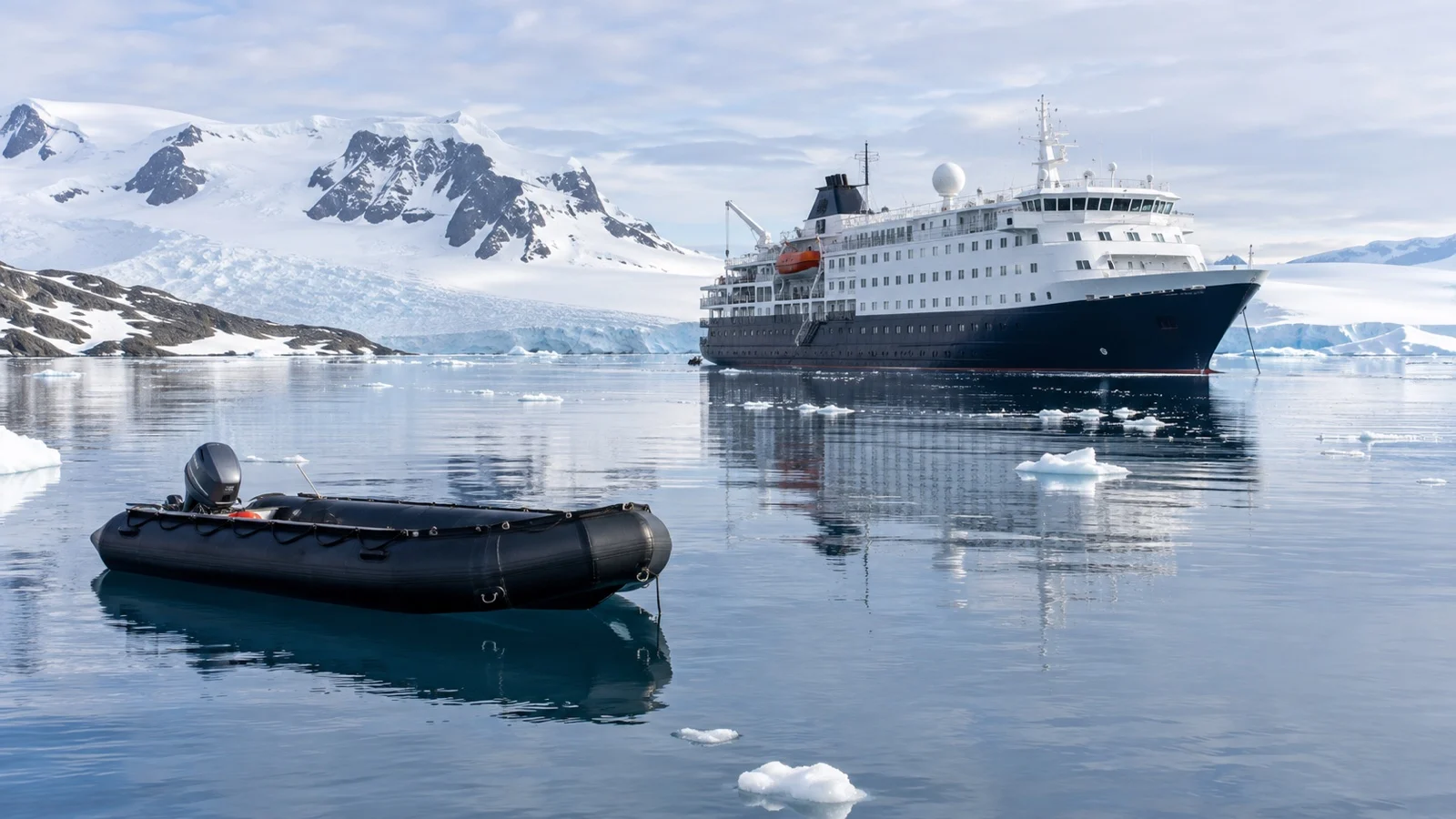
Landing in Antarctica is only the first stage of embarkation. Antarctica21 describes a dedicated bus transfer to the shore, followed by a Zodiac ride to the expedition vessel.
Passengers should expect outdoor exposure, uneven footing, bulky clothing, and a moving inflatable boat. Crew members provide instructions and assistance, but travelers still need to meet the operator’s physical participation requirements.
Waterproof outer layers should be accessible rather than buried in stored luggage. Keep essential medicine, documentation, and any permitted critical equipment in the bag that remains with you, following the operator’s security and baggage directions.
Baggage and aircraft limits
Antarctic charter baggage allowances can be tighter than the allowance on the flight that brought you to Chile. Limits may cover checked and cabin baggage together, and excess luggage may remain in Punta Arenas until the expedition returns.
Use the exact number in the final passenger documents, not a value remembered from an older brochure. Ask early about cameras, medical devices, batteries, mobility equipment, and any single-piece weight limit because operational restrictions may not be waivable at check-in.
A compact packing system helps when departure timing moves forward. Separate the items needed for the aircraft and shore transfer from anything the operator stores, and label every bag clearly.
Why fly cruise ships are usually small
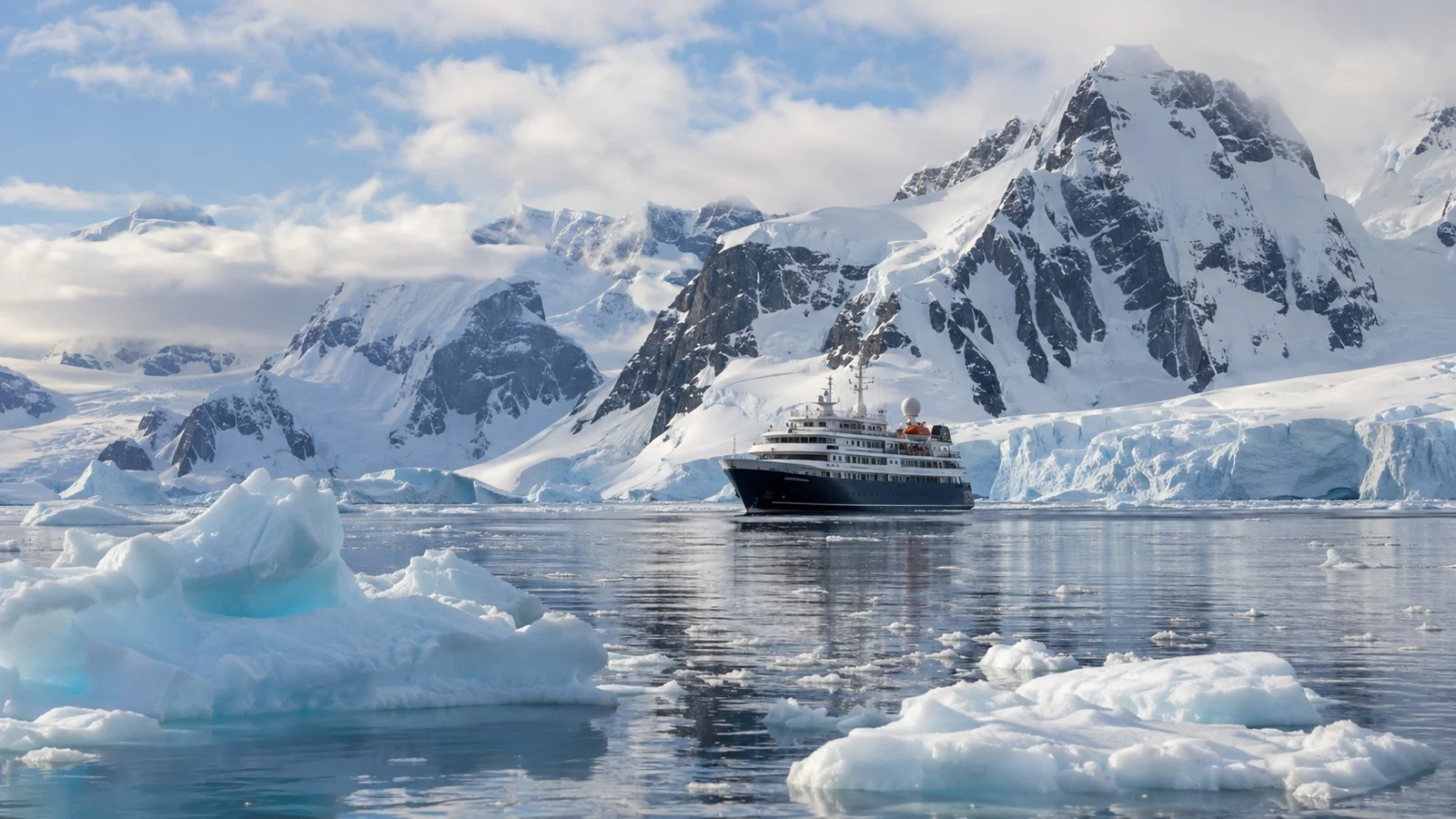
The aircraft, transfer logistics, and shore-landing rules favor smaller passenger groups. Antarctica21 currently says its air cruises carry a maximum of 88 guests, allowing everyone to travel on one flight and go ashore without rotating a larger shipload.
Under the commonly applied Antarctic visitor framework, no more than 100 visitors from a vessel go ashore at one site at the same time. A vessel carrying several hundred passengers must rotate groups or offer cruise-only viewing, while a small expedition ship can often move the whole guest group together.
Small size does not guarantee every landing. Ice, wildlife, wind, swell, and local site guidance determine what is safe on the day, and the expedition leader can substitute a different location or a Zodiac cruise.
Fly both ways or cross the Drake once
A full air cruise flies between Punta Arenas and King George Island in both directions. It maximizes time in Antarctica and minimizes Drake exposure, but it creates a weather-dependent flight at both ends of the expedition.
A one-way combination sails one direction and flies the other, often linking Ushuaia with King George Island and Punta Arenas. This version preserves one classic Drake crossing while saving about two sea days.
The mixed route can be appealing to travelers who want the seabird-filled approach and the sense of crossing into Antarctica without repeating the passage. It also requires careful planning across two gateway cities and, in some cases, different countries.
What sailing offers that flying does not
The Drake Passage is not merely dead time. Sea days provide expedition lectures, wildlife watching, equipment preparation, and a gradual transition into the Antarctic environment.
Travelers may see albatrosses, petrels, whales, and changing ocean conditions from the ship. The return passage also creates time to process photographs and experiences before reaching Ushuaia.
A sailing itinerary may cost less than a comparable air cruise, although cabin type, ship, season, and inclusions can outweigh the route difference. Compare the total trip cost, including hotels, internal flights, insurance, and flexible airfare.
Accessibility and medical realities
A fly cruise can reduce days of ship motion, which may help travelers who struggle with seasickness or balance. The King George Island transfer can still be a firm barrier because it may involve bus steps, uneven ground, an exposed beach, and stepping into a Zodiac.
Ask the operator to evaluate the full journey from Punta Arenas check-in through aircraft boarding, shore transfer, Zodiac embarkation, and ship access. A traveler who can use an airport wheelchair may still be unable to meet the expedition landing requirements.
Medical screening is normal for polar travel, and facilities are limited once the expedition begins. Disclose conditions honestly, carry an adequate supply of medicine, and understand what evacuation insurance and the operator’s medical team can actually provide.
Season, weather, and wildlife
Tourist air cruises operate during the austral summer, when expedition vessels and support services are active. Exact departure windows vary by season and operator, so use the dated itinerary rather than assuming every product runs from November through March.
Antarctic weather can be cold, wet, windy, and changeable even in summer. The Australian Antarctic Program explains that coastal conditions are milder than the interior but can still bring severe winds and rapid changes.
Early-season voyages tend to encounter more snow and sea ice, while midsummer brings long daylight and active penguin colonies. Later departures are often associated with stronger whale-watching opportunities, but wildlife timing varies by location and year.
Documents, permits, and responsible behavior
Passengers must satisfy the entry rules for Chile and any other gateway country on the itinerary. Antarctic visitor permissions are generally handled through the operator’s national authorization process, but travelers remain responsible for passports, visas, health documents, and insurance.
Biosecurity begins before boarding. Clean soil, seeds, and organic material from boots, bags, tripods, hook-and-loop fasteners, and outer clothing, then follow every inspection and disinfection instruction on the ship.
Keep the required distance from wildlife, never block an animal’s route, and do not take rocks, feathers, bones, or other natural material. The expedition team’s directions reflect site conditions and the visitor rules that protect a fragile environment.
Questions to answer before paying a deposit
What does the delay plan cover?
Request the current written plan for outbound and return delays, including hotels, meals, local activities, extra ship nights, refunds, and the day on which the expedition is interrupted. Do not assume another company follows Antarctica21’s published terms.
What is the final baggage allowance?
Confirm the combined allowance, hand luggage rule, single-piece cap, and treatment of stored excess bags. Get written clearance for medical devices and batteries before arriving in Punta Arenas.
Can the operator accommodate my mobility?
Describe specific limitations and ask about every transfer rather than requesting a general accessibility label. The most demanding point may be the Zodiac embarkation on King George Island, not the aircraft or cabin.
How much schedule buffer do I need?
Use the operator’s advice as the minimum and consider additional time before costly or inflexible plans. If the flight runs on schedule, a spare stay in Patagonia or Santiago can become part of the vacation.
Who should choose an Antarctica fly cruise?
The format suits travelers who place a high value on time, strongly prefer to avoid a full Drake crossing, and can tolerate a flexible departure. It is especially compelling when the alternative is skipping Antarctica because a longer voyage will not fit the calendar.
A traditional sailing may be better for travelers watching the budget, wanting the complete ocean approach, or needing a more predictable transport framework. Anyone unable to absorb a delayed return should examine the air cruise risk with particular care.
Final thoughts on skipping the Drake Passage
An Antarctica fly cruise can be an effective use of limited vacation time, but it is not a guaranteed shortcut. Its value comes from reaching Antarctic waters quickly while accepting that weather, aircraft operations, and a Zodiac transfer still set the terms.
Schedules, prices, baggage rules, and contingency terms can change, so verify them directly with the operator before booking. This guide is for general planning and does not replace the current passenger contract, medical advice, insurance policy, or expedition team instructions.
How this guide was researched: Flight times, transfer arrangements, passenger limits, delay statistics, and contingency terms were checked against Antarctica21. Visitor rules were checked against the Antarctic Treaty system, and weather guidance against the Australian Antarctic Program.
Logistics and time-sensitive details were reviewed on September 12, 2026. See our Editorial Policy.
More on this topic: browse every guide on expedition and alternative cruises.