Tall Ship Cruise Guide: Sailing Ships, Anchorages and No Berth at All
On a tall ship cruise, the wind can reshape the itinerary and anchorages often replace berths. Getting ashore by tender is part of the trip, not an occasional inconvenience.
That freedom is either the whole appeal or an immediate dealbreaker. This guide explains how much the ships really sail, which vessels you can book, and what tender-heavy itineraries demand.
The practical take
Tall ships suit travelers who value time under sail more than big-ship entertainment. If your picture of a cruise involves a theater, a midnight buffet and a gangway onto a pier, this format may disappoint.
What you get instead is a ship that can heel, creak and change plans when the wind moves. A sea day can be a highlight when the ship is able to sail.
Pick the operator by how much real sailing you want, not by the brochure photography. Sea Cloud Cruises works its square rig by hand, Star Clippers mixes electric and muscle-powered winches, and Windstar’s sails are computer-operated.
Avoid booking a tall ship cruise around a fixed-date occasion ashore. Anchorage calls can be canceled when conditions make tender operations unsafe.
The quick facts
- What counts as a tall ship: Sail Training International defines Class A as square-rigged vessels over about 79 feet in length overall, plus any vessel over about 131 feet regardless of rig. Every passenger ship below sits in that bracket.
- The fleet you can actually book: a short but changing list. Star Clippers, Sea Cloud Cruises, and Windstar retain nine established sailing ships between them, while the 110-guest Orient Express Corinthian entered service in 2026 with three large rigid sails.
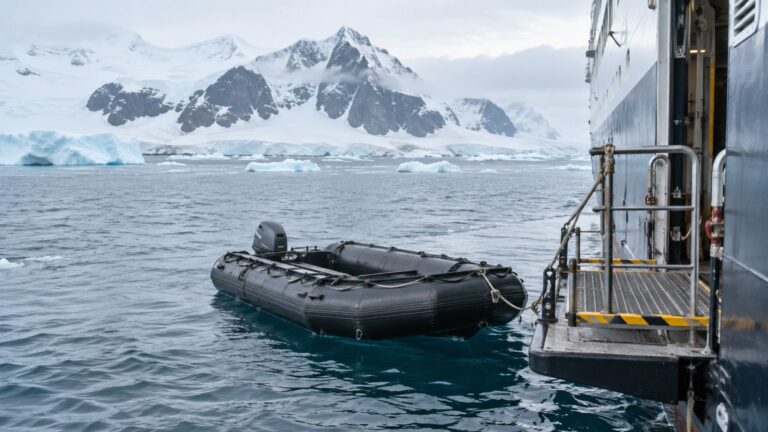
- How you get ashore: tender or Zodiac far more often than a gangway onto a quay. Star Clippers says outright that its tender and Zodiac service is what lets the ships reach places away from congested harbors, including landings straight onto a beach.
- Passenger counts: tiny. Sea Cloud takes a maximum of 64 guests, Star Clipper and Star Flyer 166 each, Royal Clipper 227, and Wind Surf is the outlier at 342.
- Cabin reality: small, and honestly advertised as such. Star Flyer’s cabins run from about 86 square feet up to roughly 237 square feet in an owner’s suite; Royal Clipper spans about 108 to 430 square feet.
- How the sails are set: three different answers depending on the line. Star Clippers states plainly that nothing about its sails is computerized, while Wind Surf carries seven triangular self-furling computer-operated sails.
- Motion and heel: real, permanent, part of the deal. Star Clippers fits stabilizers and says heel under sail is kept to a comfortable angle, which is not the same as flat.
- What can go wrong: wind, swell and the tender operation, in that order. Ports get swapped, anchorages abandoned, and the sea day gets longer.
What a tall ship cruise actually feels like under sail
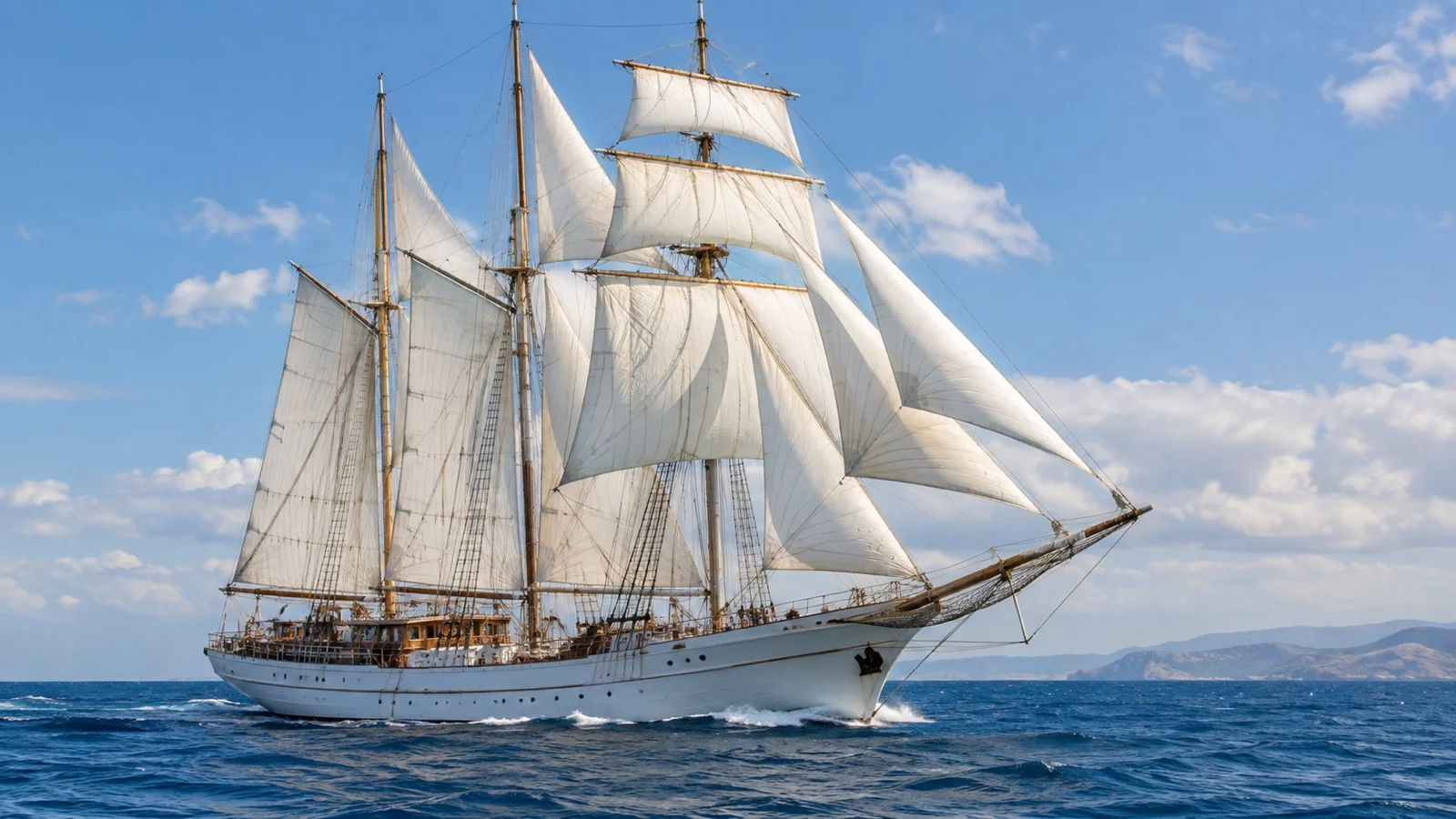
A sailing ship under canvas can lean away from the wind, so the angle may be noticeable even when stabilizers are in use.
The motion varies with wind and sea conditions. Star Clippers publishes a speed range of 5 to 17 knots for Star Flyer.
When the engines are off, the sounds come mainly from the rigging, canvas and water. That quieter setting is a central part of the appeal.
Some itineraries include full days without a port call. Onboard options are limited compared with a large resort ship, so expect time on deck and a slower pace.
If you are prone to motion sickness, review the ship size and route before booking. Smaller sailing vessels can move differently from large cruise ships, and conditions vary by voyage.
Hand-set canvas, electric winches, and computer-furled sails
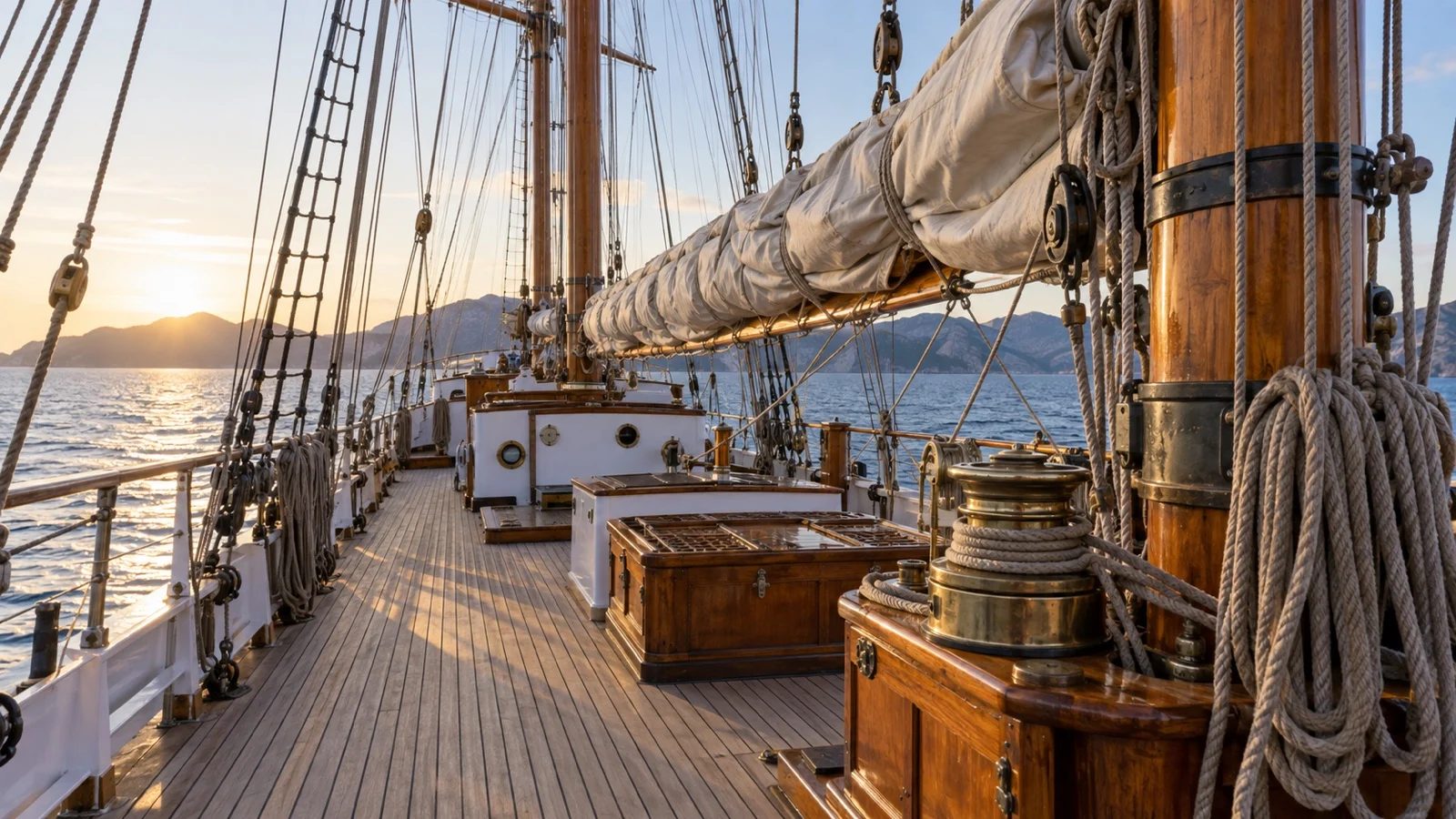
How the sails are handled is a useful distinction when comparing operators. Sea Cloud Cruises, Star Clippers and Windstar use different combinations of manual work, powered winches and automated controls.
Sea Cloud is the purist end. Built in 1931, she is a four-masted barque with 29 sails and roughly 32,000 square feet of canvas across a hull about 360 feet long.
With around 60 crew for a maximum of 64 guests, that ratio exists partly because sails on a ship of that age take people aloft and on deck to set them. Watching it happen from the rail is the reason to book her.
Star Clippers sits in the middle and says so. Its own FAQ describes a mix of electric-powered and muscle-powered winches with no computerized sail control, and the ships sail wherever possible and use engines when the wind will not cooperate.
Windstar uses automated sail controls. Wind Surf carries seven self-furling computer-operated sails totaling about 28,000 square feet on five masts roughly 221 feet tall, and cruises at 10 to 12 knots on engines alone.
Anchoring off is the default, not the exception
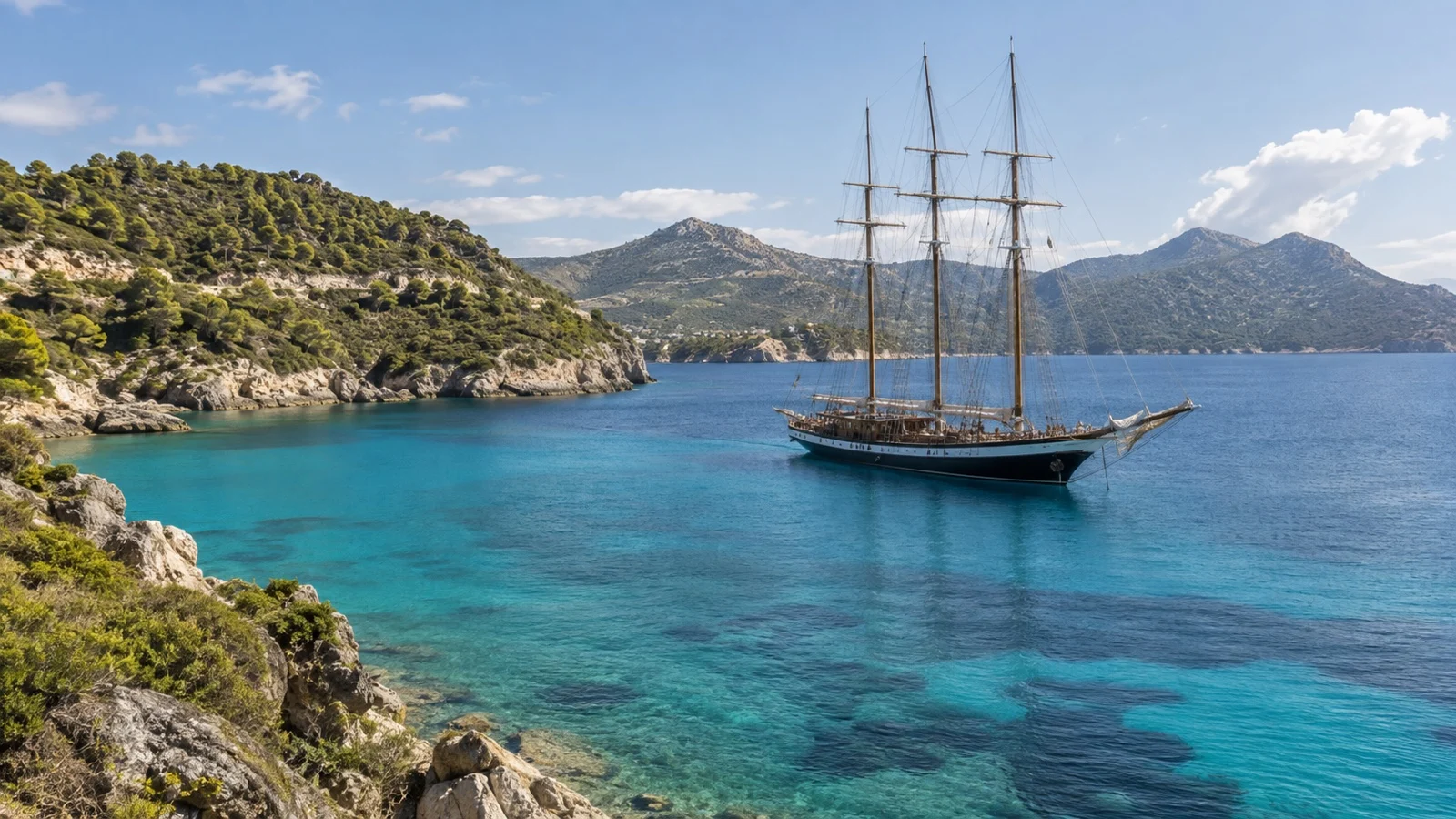
Tendering can reshape the day. Check each itinerary for anchorage and tender notes because the balance between tender calls and alongside berths varies by route.
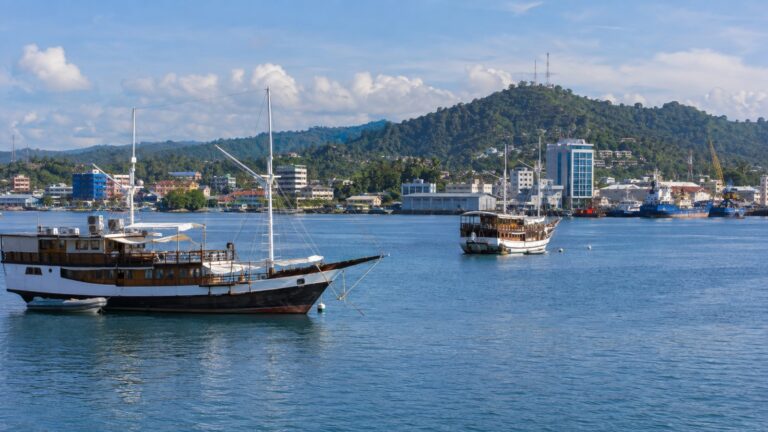
These ships are built to reach small bays, roadsteads and beaches with no cruise pier at all. Star Clippers explicitly sells that access to places away from crowded harbors.
The upside is a different port list, plus the ability to swim off the ship. Royal Clipper carries a marina platform that lowers to sea level for kayaks, paddleboards, windsurfing and waterskiing.
The downside is that anchorage calls are fragile. Swell that would not trouble a berthed ship can make a tender platform unusable, and the call gets shortened, moved or dropped.
Treat every anchorage call as weather-dependent, and avoid nonrefundable plans ashore. The same caution applies when rough seas threaten a tender operation.
If tendering is new to you, start with this guide to what a tender port actually means. The mechanics are similar across ships, but the frequency varies by itinerary.
The ships to compare
Star Clippers, Sea Cloud Cruises and Windstar account for nine established sailing ships, while Orient Express Corinthian began sailing in May 2026. Here is how they differ.
- Royal Clipper: five masts, 42 sails and roughly 54,000 square feet of canvas on a roughly 440-foot hull. Star Clippers cites a Guinness World Records entry from 2001 for the world’s largest square rigger, and it carries 227 guests with 106 crew.
- Star Clipper and Star Flyer: four-masted barquentines from the early 1990s, about 379 feet long, with 16 sails and 166 guests each. Star Flyer’s tallest mast reaches roughly 207 feet.
- Sea Cloud: the 1931 original, a four-masted barque for up to 64 guests. Sixty-four guests, 32 outside cabins, and staterooms that run from about 102 square feet to a roughly 409-square-foot suite.
- Sea Cloud II: a three-masted barque from 2001, about 384 feet long, with 23 sails and roughly 29,000 square feet of canvas. Ninety-four guests, and a draft of roughly 18 feet, which is what gets her into small anchorages.
- Sea Cloud Spirit: the newest of the three, a three-masted full-rigged ship for up to 136 guests in 69 cabins. Almost half have a balcony or a window that opens, which is rare in this category.
- Wind Surf: five masts, seven computer-operated sails, 342 guests and 14,745 gross tons. It is the largest established sailing ship in this comparison.
- Wind Star and Wind Spirit: the 148-guest sisters entered service in 1986 and 1988. Their computer-controlled sails assist conventional propulsion, making them different from ships with hand-worked canvas.
- Orient Express Corinthian: a 2026 ultra-luxury addition with 54 suites for 110 guests and three 1,500-square-meter SolidSail panels. It is much larger and more resort-like than a traditional tall ship, but its rigid sailing system makes it relevant to this comparison.
Fun fact: Star Clippers reports that Royal Clipper offers about 18,900 square feet of open deck for 227 passengers, along with three swimming pools and a lounge with underwater portholes. Those published figures work out to about 83 square feet of open deck per passenger at full capacity.
How to decide
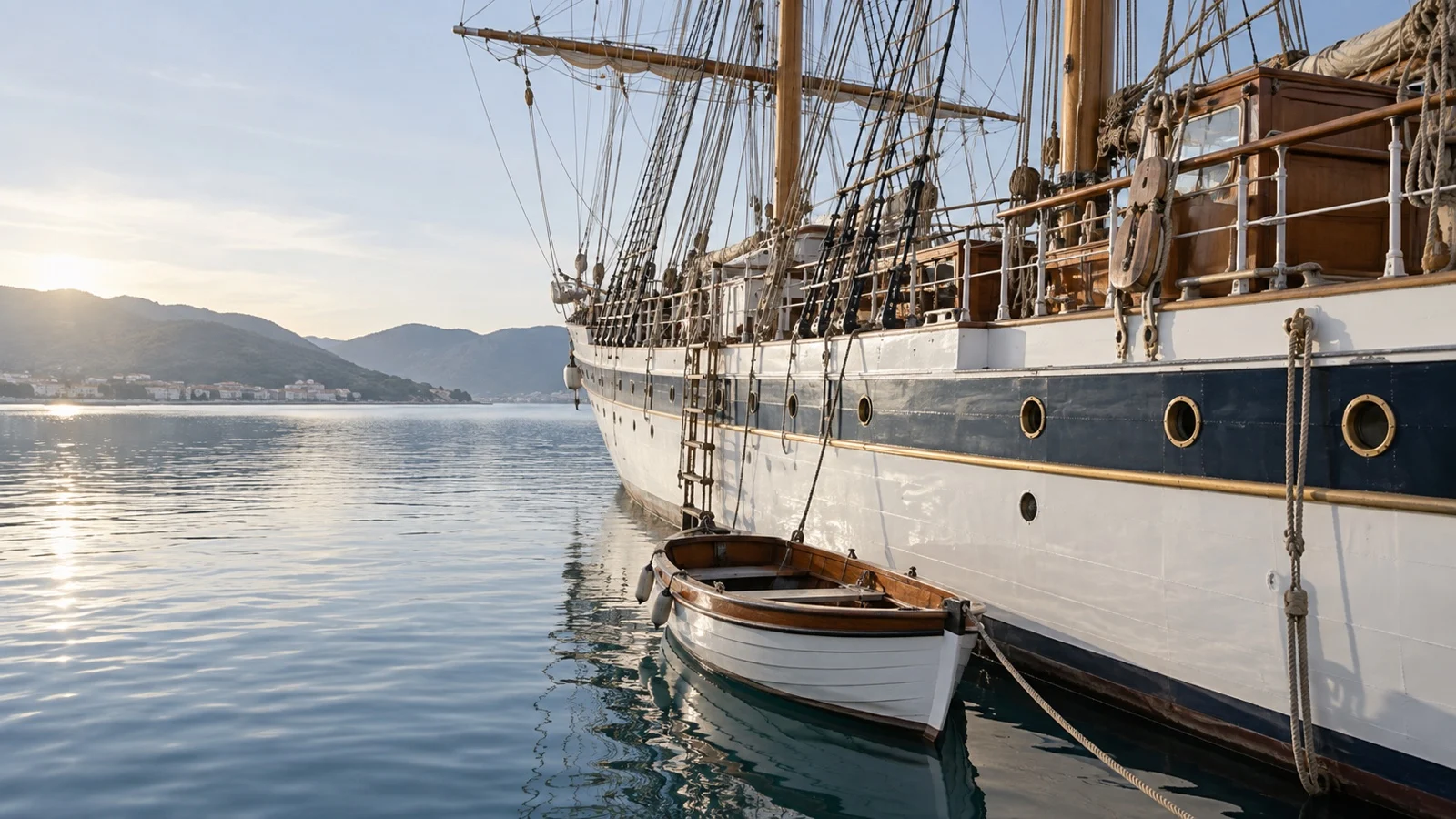
Start with the sailing question. Travelers who want to watch square sails worked by crew should compare the vessels at Sea Cloud Cruises.
If you want a real rig with a barefoot atmosphere and a marina platform, Star Clippers is the sensible middle. It is also the line that puts climbing to a crow’s nest on the daily program.
If you want a larger small ship with automated sails and more conventional cruise comforts, compare Wind Surf. Its 342-guest capacity makes it the largest established vessel in this guide.
Finally, count how many calls are anchorages rather than berths. A tender-heavy itinerary makes conditions and mobility requirements especially important.
A realistic word on accessibility
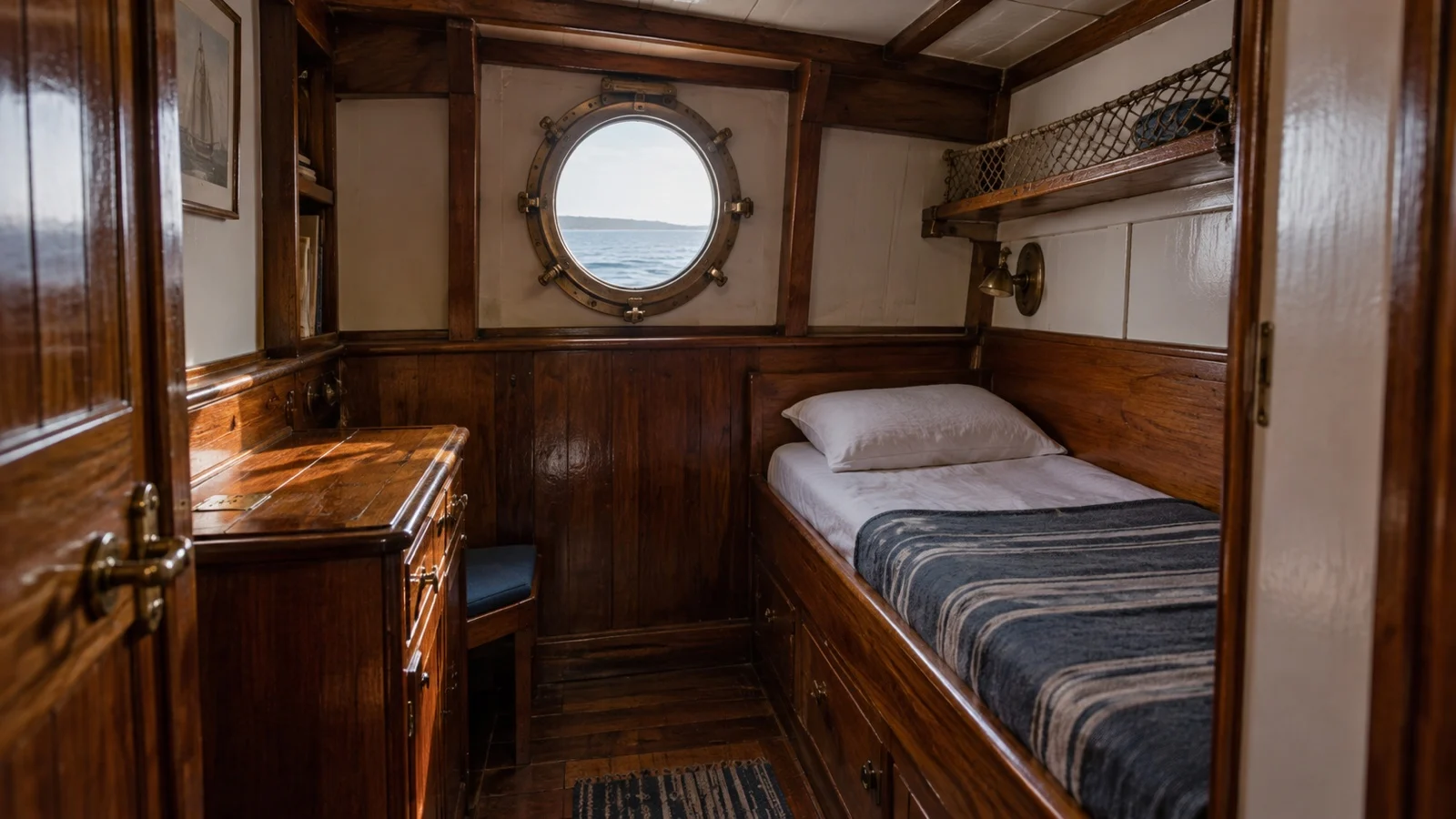
Accessibility varies significantly by ship, and older sailing vessels can have narrow companionways, steep stairs or limited elevator access. Ask the operator about the exact vessel before booking.
Tender transfers can be the harder part for travelers with reduced mobility. Crews may restrict a transfer when sea conditions make it unsafe.
Cabin layouts and adapted facilities differ by vessel. If step-free access matters, ask the line for deck plans and written confirmation of elevator, cabin and tender arrangements before paying a deposit.
A larger ship does not guarantee an accessible port call. Treat any anchorage day as one you may need to spend on board if the transfer is not suitable.
When to go, and the weather
These fleets follow the trade winds and the Mediterranean summer, crossing between them on repositioning voyages. Caribbean sailing runs through the northern winter, the Mediterranean season roughly May to October.
Caribbean conditions vary by island and month. The Atlantic hurricane season officially runs from June 1 to November 30 according to the National Hurricane Center.
Mediterranean temperatures and winds vary widely by route and month. Compare the seasonal climate for each embarkation point and port rather than relying on a regionwide average.
Wind is the variable nobody prices in. A calm week means more engine time and less of what you paid for, and no operator can promise otherwise.
Quick answers
Do tall ship cruises really sail, or do they just motor with the sails up?
It depends entirely on the operator and the wind.
Star Clippers says its ships sail wherever possible and use engines when there is not enough wind, while Windstar’s computer-operated sails are explicitly assistance rather than primary propulsion.
Will I get seasick?
Motion varies by vessel, route and sea conditions.
These vessels are between 2,000 and 15,000 gross tons, they heel under sail, and stabilizers reduce the roll without removing it.
How many people are on board?
Between 64 and 342 on the established ships in this guide, with Sea Cloud at the small end and Wind Surf at the large end.
Crew ratios are high, at roughly one crew member per passenger on Sea Cloud.
Can I climb the mast?
On Star Clippers ships, yes, up to the first crow’s nest when weather permits and with crew supervision.
Other lines vary, so check with your line before you build a vacation around it.
Do these ships dock or tender?
Many itineraries use tenders or Zodiacs, and some include direct beach landings.
Check the line’s itinerary and accessibility notes for each call.
The last word
A tall ship cruise is a different product wearing the same word as a megaship vacation. You are trading cabin space, port certainty and step-free access for a rig, a heel and a very short passenger list.
If that trade appeals but the anchorages worry you, the fix is to understand the mechanics first, because tendering changes how much time you get ashore more than any other single factor. Then look at where these ships actually go, and compare the guide to tender ports that are worth the boat ride.
If you like the scale but want a pier, the wider small ship cruise ports category covers ships that give you the intimacy without the rigging. That is a reasonable compromise.
Tall ships make the sailing itself part of the trip. The best fit is a traveler comfortable trading some space and certainty for more time close to the water.
How this guide was researched: This guide is based on independent research, not a first-hand sailing, cabin inspection or tender transfer. Official operator, maritime and government sources were used where available. Ship specifications were taken from the Star Clippers, Sea Cloud Cruises, Windstar Cruises, and Orient Express fleet pages and Star Clippers’ own FAQ, the tall ship class definitions from Sail Training International, and the hurricane season dates from NOAA’s National Hurricane Center.
Logistics and time-sensitive details were reviewed on September 12, 2026. See our Editorial Policy.
More on this topic: browse every guide on expedition and alternative cruises.