Rørvik Cruise Port: Quay, Vikna Islands & Norveg Museum
Rørvik puts you ashore in the middle of a working Norwegian coastal town, not a resort built for cruise ships. It also hands you the easiest possible jumping-off point for the Vikna archipelago, six thousand islands and skerries that most travelers never get close to.
The D/S Kaien quay and the town around it
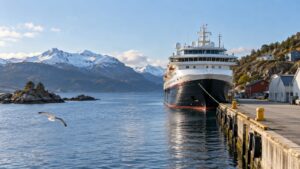
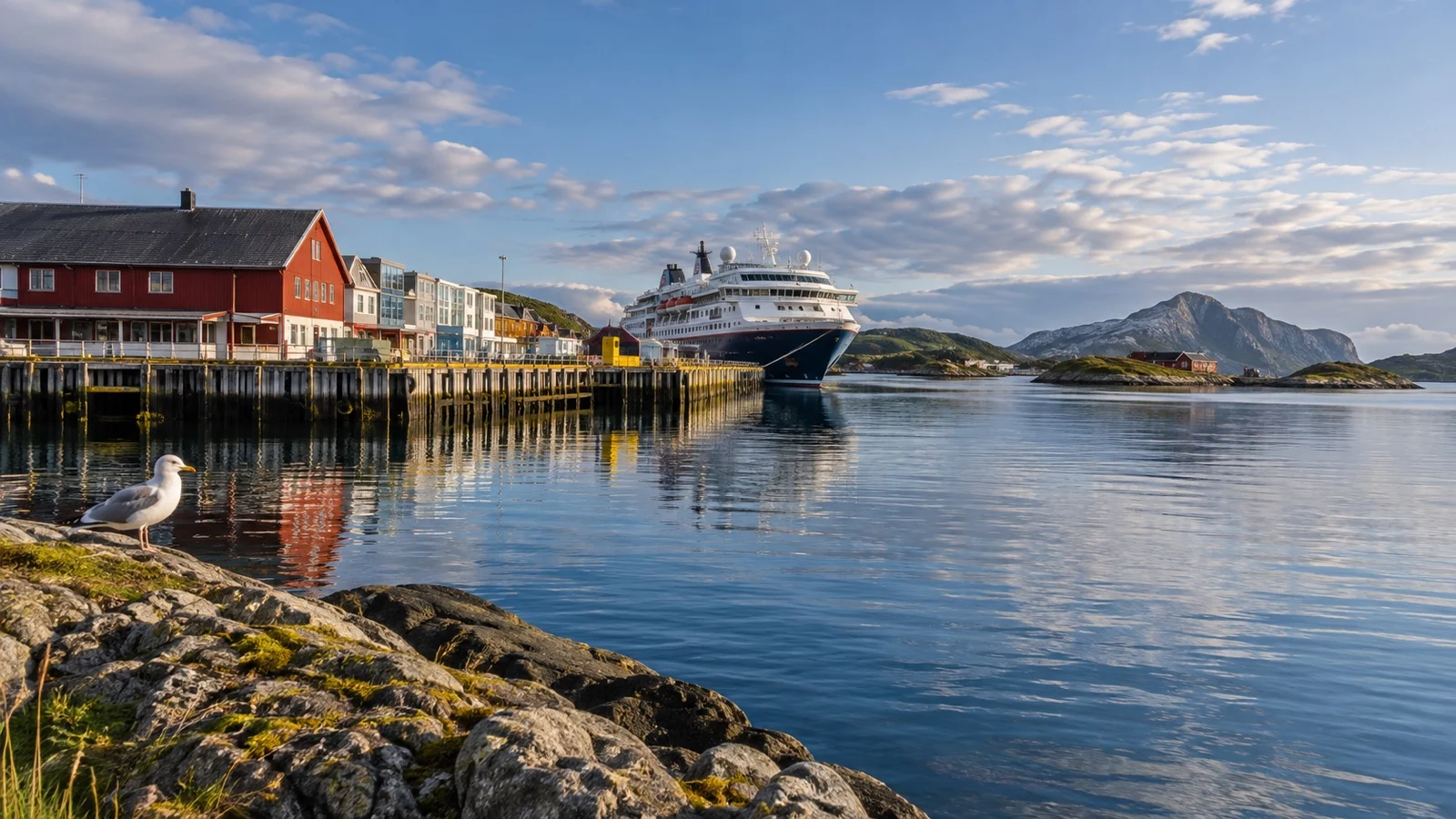
Rørvik’s cruise berth is D/S Kaien, the old steamship quay right in the town center, at address 7900 Rørvik. It sits on Inner-Vikna island, the administrative heart of Nærøysund Municipality, about 124 miles north of Trondheim.
Rørvik is a busy working harbor serving fishing, freight, passenger, and cruise traffic. That mix is part of the town’s character, but it also means access and activity around the quay can change.
Rørvik remains a short evening stop on the Norwegian Coastal Express, and current Havila schedules place northbound and southbound calls close together. Treat any side-by-side meeting as a possibility rather than a promise because operators revise sailing plans.
Rørvik cruise port quick facts
- Dock or tender: Ships berth alongside at D/S Kaien, the town-center quay in Rørvik, so no tender is required.
- Into town: The quay sits in the town center, so shops, cafés, and the Norveg museum are a short walk away.
- Currency: Norwegian krone (NOK); Norwegian is the local language, but English is widely spoken.
- Time zone: Central European Time: CET (UTC+1) in winter, CEST (UTC+2) in summer.
- Operational caution: Wind, visibility, sea conditions, and ship schedules can delay or change a call, especially when an island boat excursion is involved.
A small town that doubles as an island gateway
Rørvik itself holds a little over 3,700 residents, packed into about 0.8 square mile of town. That is small enough to see on foot in an hour and lively enough to have real shops, cafés, and a harbor that never quite stops working.
The town’s shape follows its history. Steamship service arrived in 1838, the official port of call moved to Rørvik in 1863, and the post office followed in 1866, which is roughly when the fishing settlement turned into a proper coastal town.
Despite sitting at 65 degrees north, the maritime climate is gentle enough that private gardens here grow plum and apple trees. It is a small detail, but it says something about how the Gulf Stream softens this coast compared to its latitude.
Hurtigruten currently lists D/S Kaien as the port address and promotes excursions to Nærøya and Rørvik’s museums. Confirm what is actually operating on your date because a short Coastal Express call and a longer expedition visit support very different plans.
Norveg and the story of the coast
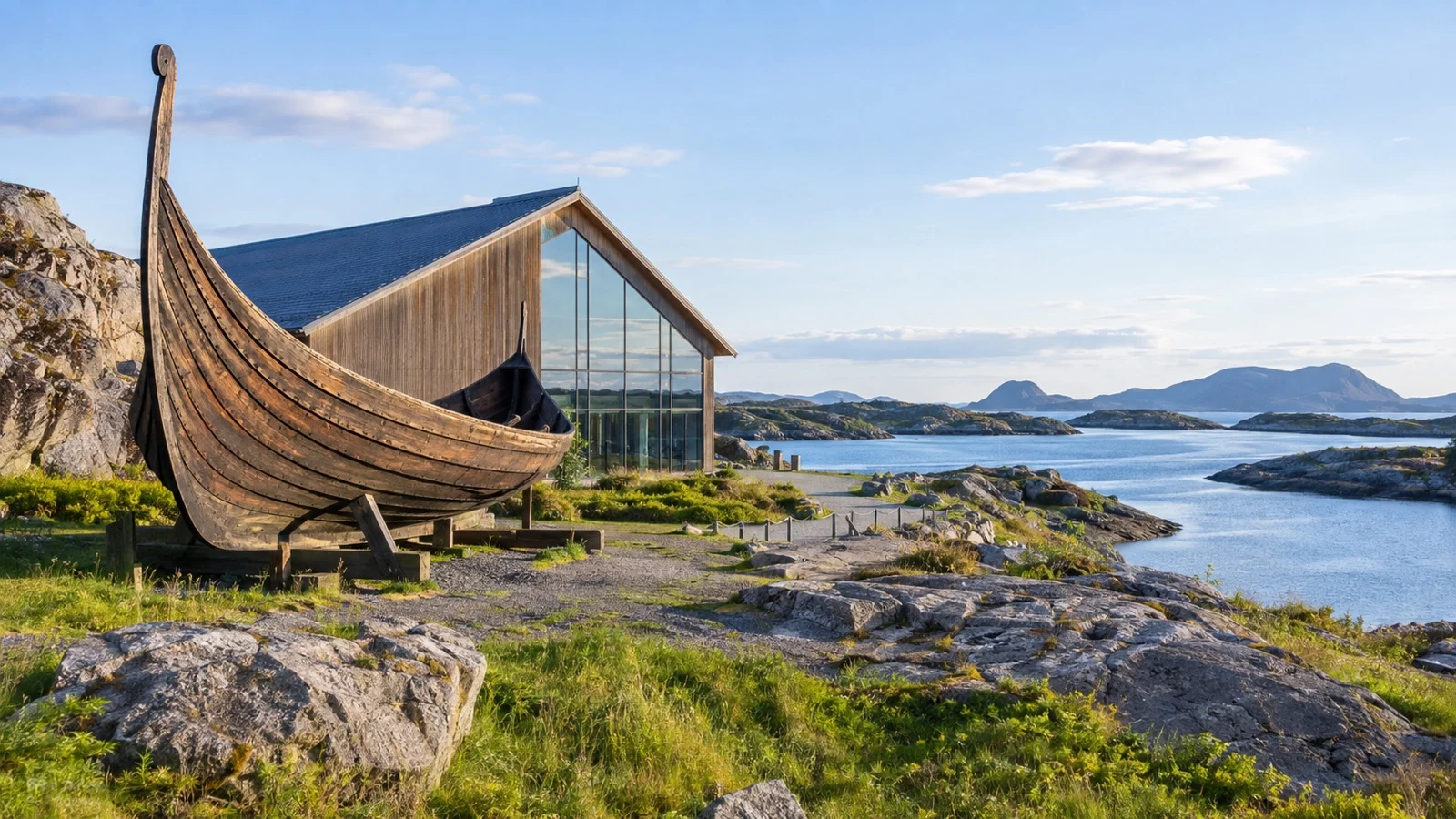
The centerpiece attraction is Kystmuseet Norveg, an architecturally striking wave-shaped building on the Rørvik waterfront. Its permanent exhibition covers roughly 10,000 years of Namdalen coastal history, running from the first settlers to the modern fishing and aquaculture industry.
Next door, Berggården adds the human scale to that history. It is a restored 1878 trading post with a preserved 1910s-era shop, the kind of place where a ledger book tells you more than a plaque ever could.
Norveg also runs a salmon-farming exhibit connected to the modern aquaculture industry that now dominates this coast as much as cod once did. It is a useful reminder that the Vikna archipelago is a working landscape, not a preserved one.
Rørvik also hosts a seasonal Cod Festival each March, built around the winter fishery that first put this coast on the map. It will not overlap with most cruise calendars, but it explains why cod recipes still dominate the local menu.
Seeing Rørvik on your own two feet
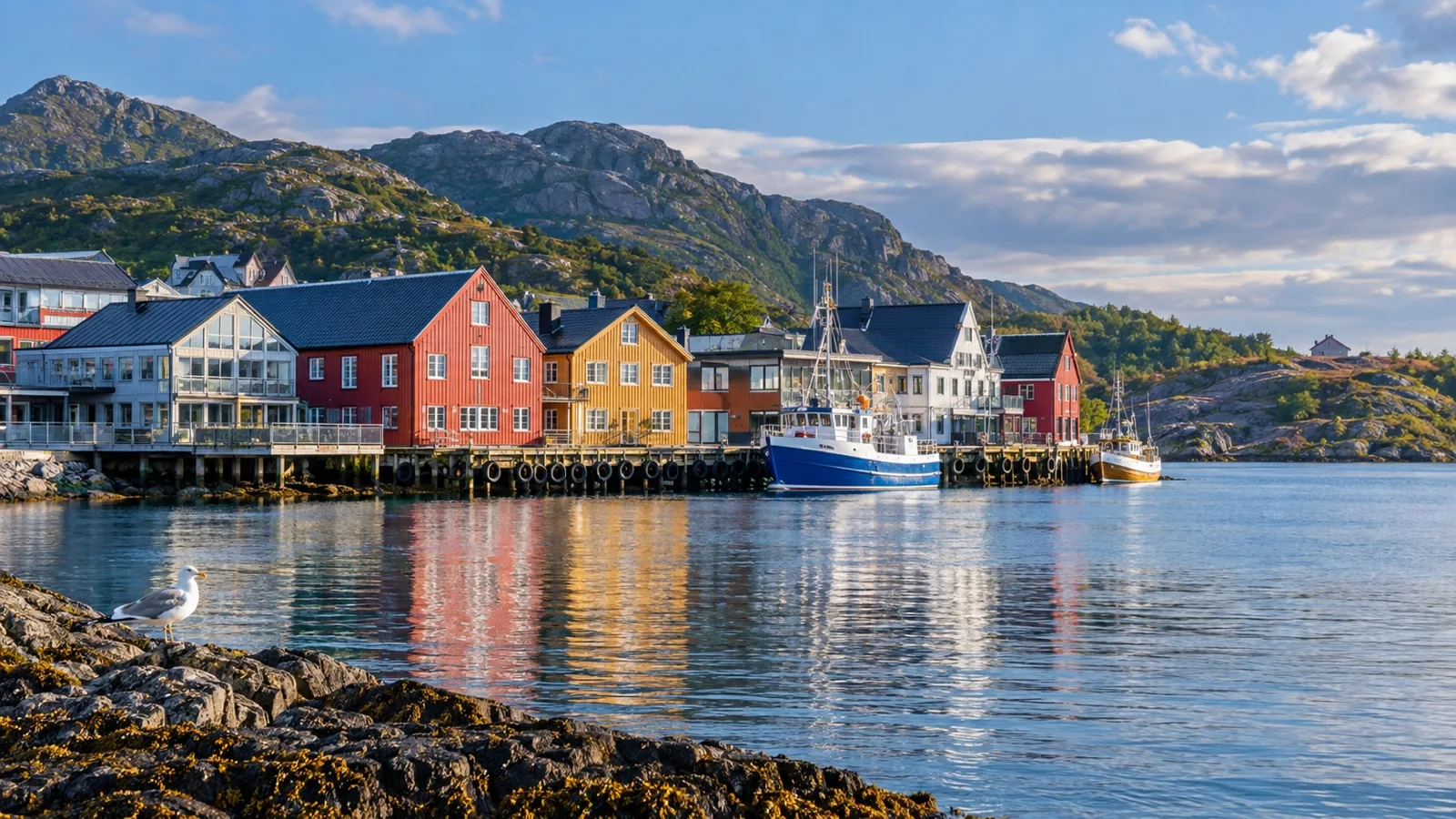
Start at the quay and walk into the center; nothing in Rørvik is more than about 15 minutes from the ship. The harbor front strings together the shops, a handful of cafés, and the Norveg building in one easy loop.
Give Norveg and Berggården the bulk of your time if museums interest you, since together they are the most complete version of the town’s story you will find without a guide. Budget 60 to 90 minutes if you want more than a walkthrough.
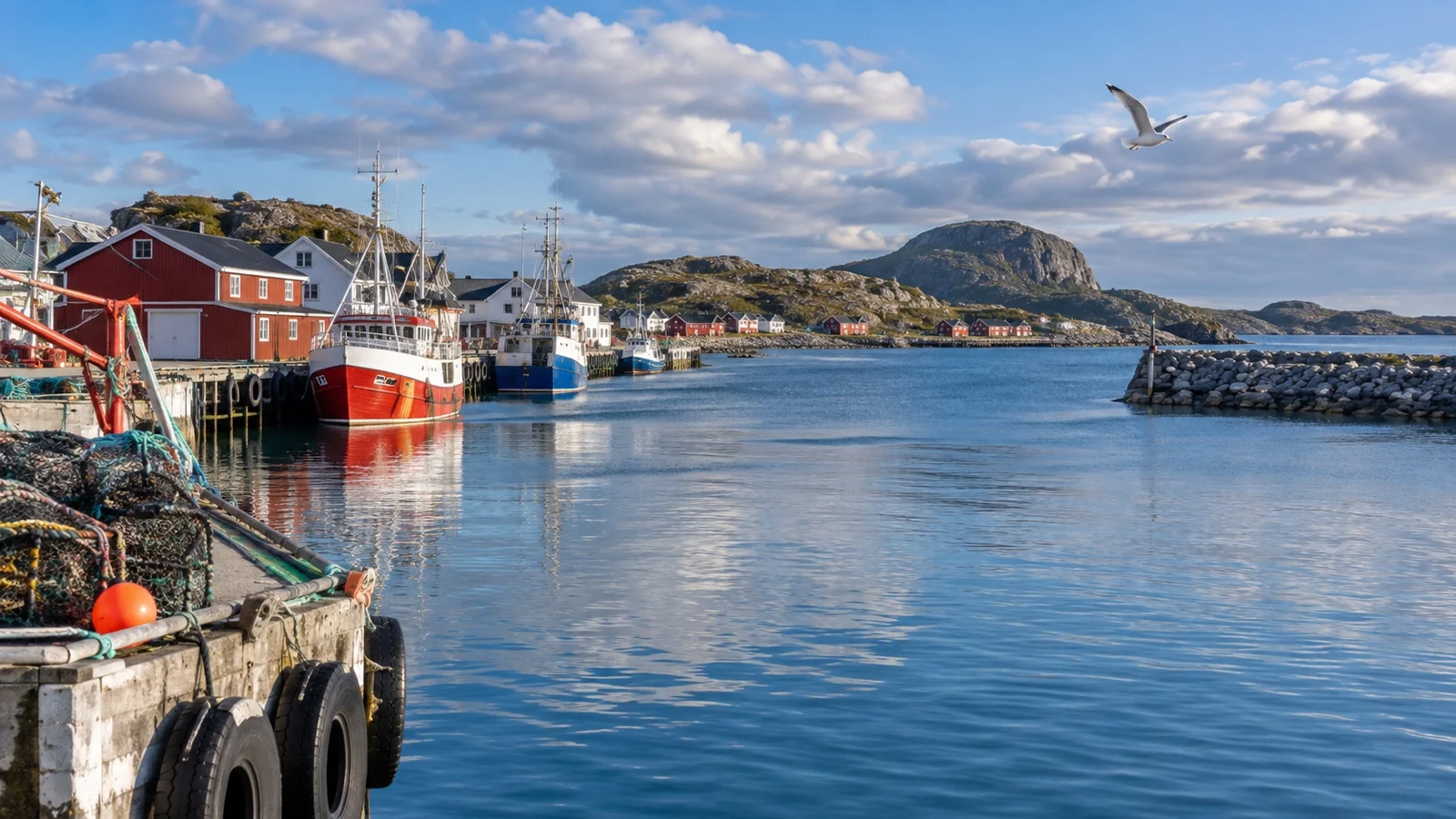
If you would rather skip the exhibits, the harbor itself is the show. Working boats, fish-processing activity, and the ordinary business of a small Norwegian port are all visible from the quay without paying for anything.
Rain is common here even in summer, so keep the plan flexible. A wet hour is better spent under Norveg’s roof than fighting the weather for a harbor view you can get through a café window.
The Vikna archipelago is the real excursion
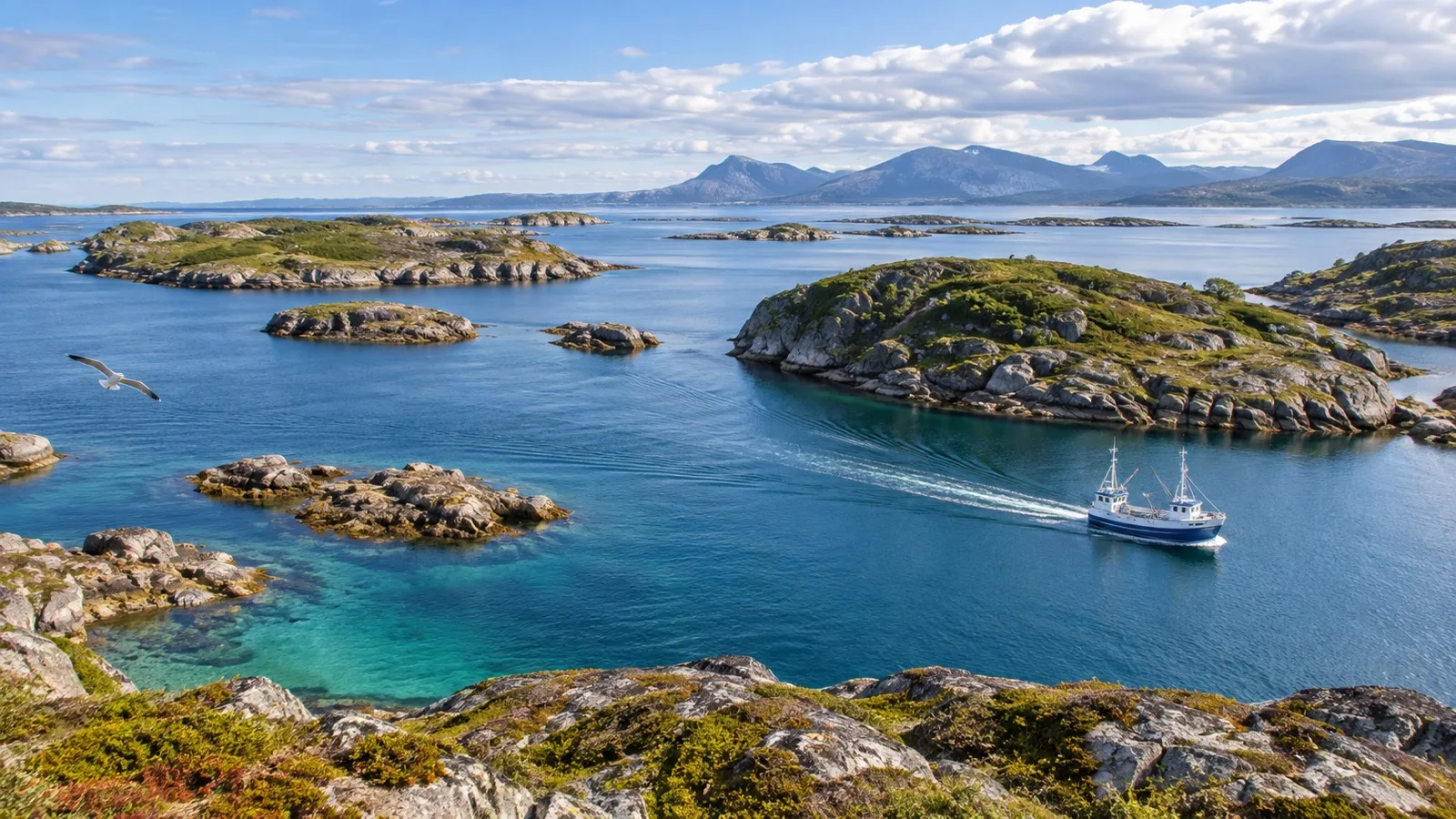
Rørvik’s real advantage over almost any other Norwegian port is what surrounds it: the Vikna archipelago, roughly 6,000 islands, islets, and skerries stretching out from the harbor. It is an eldorado for birdwatchers, with white-sand beaches and narrow sounds between the islands.
Small-boat trips out into the archipelago are the classic Rørvik excursion, whether booked through the ship or a local operator. Kayaking, diving, and simple sightseeing cruises among the skerries are all realistic options if the weather cooperates.
The standout destination is Sør-Gjæslingan, a preserved former fishing village that was once the largest settlement south of Lofoten. It is reachable by boat and, outside cruise-day logistics, even offers overnight stays in traditional rorbu cabins.
Nærøya island, with its medieval church, is a shorter and more manageable boat excursion if your call is tight on time. Either way, book through a cruise-coordinated operator rather than improvising a departure time on the quay.
Choose town, museum, or islands
Town: Walk the harbor front, browse the shops, and let the working port be the scenery. This is the plan for a short call or a day with uncertain weather.
Museum quarter: Spend most of your time at Norveg and Berggården, and treat the rest of the town as a bonus. It is the best single option for understanding why this coast looks and works the way it does.
Islands: Book a boat into the Vikna archipelago, whether that means Sør-Gjæslingan, Nærøya, or a shorter sightseeing loop. This is the option that actually uses Rørvik’s location instead of just its dock.
Accessibility around the quay
An alongside berth at D/S Kaien means no tender transfer, which is the single biggest accessibility win Rørvik offers. Gangway angle still depends on tide and ship equipment, so arrange help through the cruise line in advance if you need it.
The harbor front and main street are flat and walkable by small-town Norwegian standards. Older buildings, including parts of Berggården, may still have thresholds or narrow doorways that cannot be made fully step-free.
Norveg itself, as a modern purpose-built museum, is a safer bet for step-free access than the historic trading post next door. Confirm current access with the museum directly if this matters for your visit.
Any boat trip into the Vikna archipelago adds its own layer of questions: the vessel, the landing at the far end, and the sea conditions on the day. Ask the operator about all three before booking rather than assuming a harbor tour and an open-water excursion are the same thing.
Weather, wind, and staying safe
Rørvik sits exposed to the open Norwegian Sea even though the town itself is tucked into the archipelago, so wind and sudden rain are normal, even in July. Bring a real waterproof layer and shoes that can handle a wet quay.
Boat excursions into the islands are the part of the day most likely to be affected by weather, since open water between skerries is a different proposition from the sheltered harbor. Keep ship communications on and do not improvise a return if a scheduled trip is delayed or canceled.
The town itself is straightforward and low-risk, but use ordinary care around the working harbor and any wet surfaces. Norway’s emergency numbers are 112 for police, 113 for medical emergencies, and 110 for fire.
Return timing
From central Rørvik, D/S Kaien is close enough that a 30 to 45 minute buffer before all aboard is usually plenty if you have stayed in town. There is no ferry connection or long walk working against you here.
Anyone on a Vikna archipelago boat trip needs a wider margin, especially for Sør-Gjæslingan, since the return leg depends on the same open water that got you there. Favor a cruise-coordinated excursion over an independent booking so the operator is watching your ship’s clock as closely as you are.
Save the quay name before you go ashore, even though Rørvik is small enough that confusion is unlikely. It costs nothing and removes one variable on a day that already depends on the weather.
How Rørvik fits a Norway cruise
Rørvik almost never appears on a classic Bergen-to-Geiranger itinerary; it belongs to the Arctic and coastal-express side of Norway instead. If your ship is sailing the Hurtigruten coastal route, Rørvik is one of the working stops that gives that voyage its character, alongside similarly modest calls like Kristiansund further south.
It also sits well inside the window for a northern lights voyage if your dates land between September and March. For the wider shape of the country’s ports, my Norway cruise ports overview compares Rørvik’s working-harbor style against the bigger fjord-tourism calls.
The practical checks I would make before Rørvik
Confirm D/S Kaien or another assigned quay, the direction of travel, and the exact call length because Coastal Express and expedition schedules are not interchangeable. The ship is alongside, but cargo handling and a short stop can make the practical walking window much smaller than the port name suggests.
Norveg and the harbor are the strong short-call plan, while the Vikna islands require a booked boat, workable weather, and a genuinely long stay. I would choose the ship’s protected option or a return at least 60 minutes before departure for any independent archipelago trip.
Check Norway and Schengen entry rules, museum hours and admission, the live sailing plan, and operator cancellation terms. Wind, rain, cold, wet quays, gangway slope, small boats, and island landings each need a separate accessibility and safety check.
Rørvik cruise port FAQs
Where do ships dock in Rørvik?
Ships berth alongside at D/S Kaien, the town-center quay at 7900 Rørvik. It is a working harbor built for direct docking rather than a tender operation.
Is Rørvik worth a call on a small expedition ship?
Yes, mainly for the Vikna archipelago rather than the town itself. Hapag-Lloyd Cruises and Hurtigruten both use Rørvik as a gateway to island excursions that larger fjord-focused itineraries skip entirely.
Can I visit the Vikna archipelago without a ship excursion?
It is possible through independent operators, but a cruise-coordinated booking is the safer choice given how far a boat trip can range from the harbor. Confirm current schedules locally, since options vary by season.
What is the one thing to see if I only have an hour?
Kystmuseet Norveg, both for the building itself and for the fastest possible introduction to why this coast looks the way it does. It sits a short walk from the quay, so it fits almost any call length.
The honest case for Rørvik
Rørvik is not going to out-charm Bergen or out-drama Geiranger, and it is not trying to. What it offers is a real working Norwegian coastal town with a genuinely excellent museum and, just offshore, six thousand islands that almost nobody on a standard fjord cruise ever sees.
Treat it as the port where the itinerary stops being a highlight reel and starts being Norway. Confirm the quay, the museum hours, and any boat excursion locally, because a small working harbor like this one changes its offerings faster than a guidebook can keep up.
How this guide was researched: This guide was checked on September 12, 2026, against current information from Hurtigruten, Havila Voyages, Visit Namdalen’s coastal museum guide, Visit Namdalen’s coast guide, and Norway’s immigration authority. Reconfirm the assigned quay, call length, excursion reboarding, weather, accessibility, costs, and final departure because live operations can change.