Kavala Cruise Port: Panagia, Philippi & Port Details
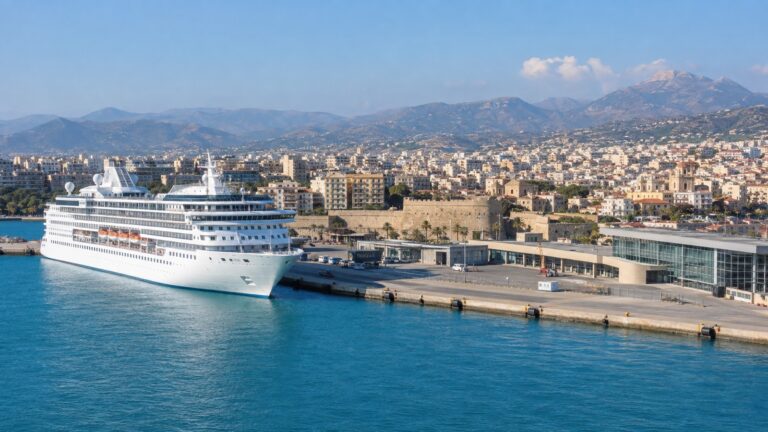
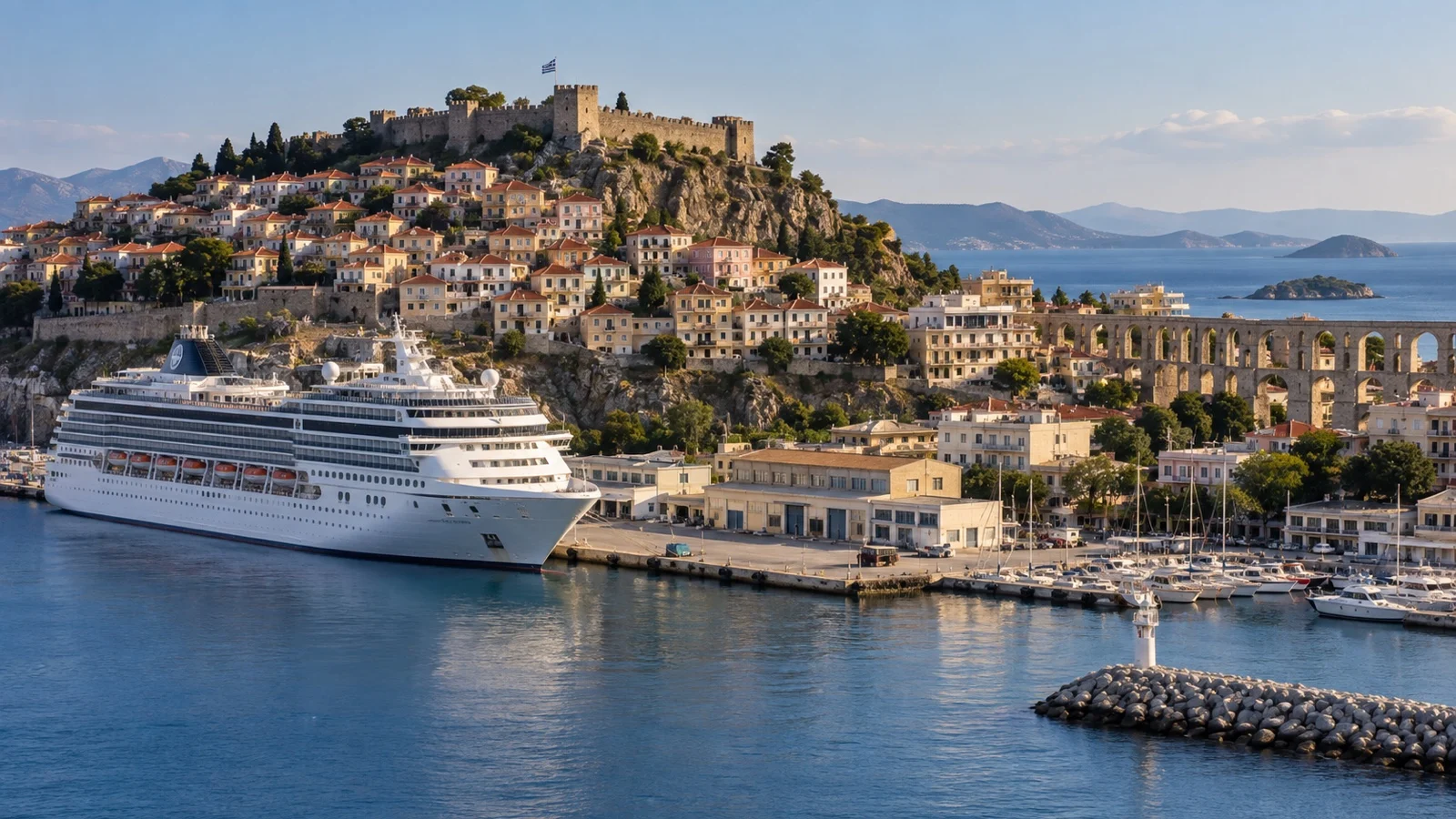
Kavala is one of northern Greece’s most visually dramatic cruise arrivals, with a fortress and old town rising above a curved working harbor. The central Apostolos Pavlos passenger port puts you within walking distance of cafes, shopping streets, the aqueduct, and the steep Panagia quarter.
Ancient Philippi is the major excursion, especially for travelers interested in Macedonian, Roman, or early Christian history. A city day is easier and more flexible, while Philippi needs arranged transportation and a larger return buffer.
Kavala cruise port quick facts
- Main cruise facility: Apostolos Pavlos passenger port
- City access: The center begins directly around the harbor
- Cruise positions: Two 160-meter positions with average depths of 9 and 10 meters
- Best city sights: Panagia old town, Kavala Fortress, and Kamares aqueduct
- Main excursion: UNESCO-listed archaeological site of Philippi
- Currency: Euro
- Terrain: Easy waterfront below a steep, stepped old town
- Main risk: Summer heat, uphill walking, and return traffic from Philippi
My quick take on Kavala
With a short call, I would explore Panagia early, visit the fortress if the climb suits you, and return through the center and aqueduct area. With a longer call, Philippi deserves to become the day’s main event.
Kavala is not a flat port, and the hill is part of its character. A taxi to the fortress followed by a downhill walk can turn a demanding route into a much more enjoyable one.
Where cruise ships dock in Kavala
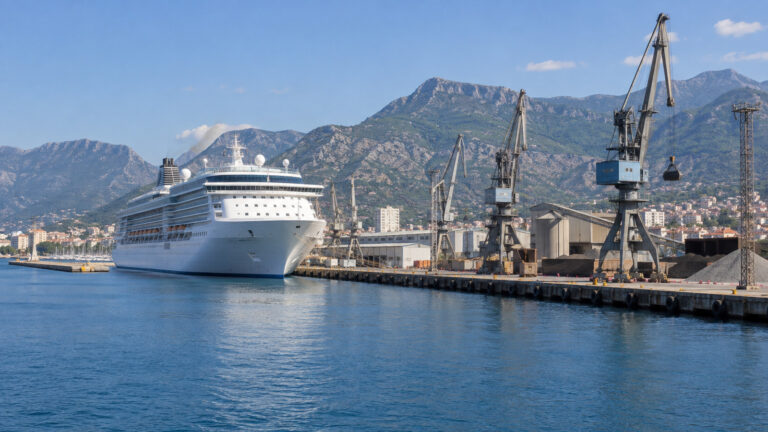
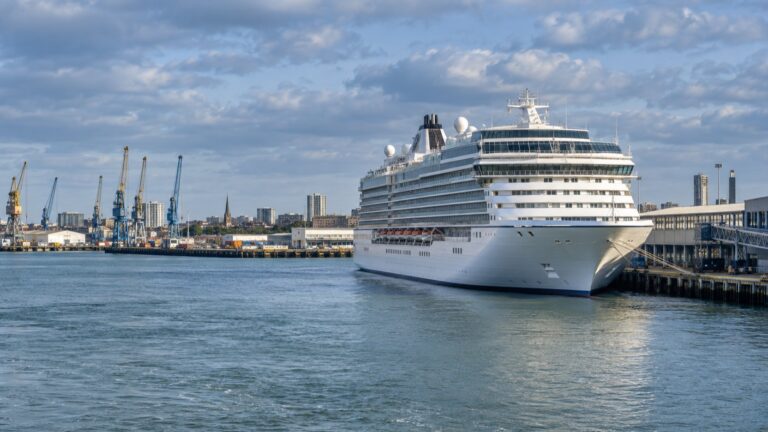
Cruise vessels use the central Apostolos Pavlos passenger port, which is surrounded by the city. The official Kavala Port Authority page says the broader facility has 1,950 meters of platform and depths ranging from 4 to 10 meters.
The port’s dedicated cruise information lists two positions, each 160 meters long. Position I has an average depth of 9 meters and can serve ships longer than 200 meters, while Position II has an average depth of 10 meters and serves ships around 180 meters or longer.
Official facilities include a newer passenger terminal with an air-conditioned lounge, port health station, coach parking, ISPS security, and common vessel services. The port also lists anchorage, so the actual gangway or tender plan depends on your ship and daily operations.
Walking from the port
The harbor edge, central shops, cafes, and lower city are within easy walking distance. Traffic can be busy around ferry and commercial areas, so use marked crossings and remain alert when photographing the waterfront.
Panagia begins to climb on the peninsula east of the central harbor. The distance looks compact, but steep paving, steps, heat, and photo stops make the walk slower than a flat map suggests.
Panagia old town
Panagia occupies the historic peninsula beneath the fortress. Narrow lanes, traditional houses, sea views, religious sites, and surviving Ottoman-period landmarks create the most atmospheric part of the city.
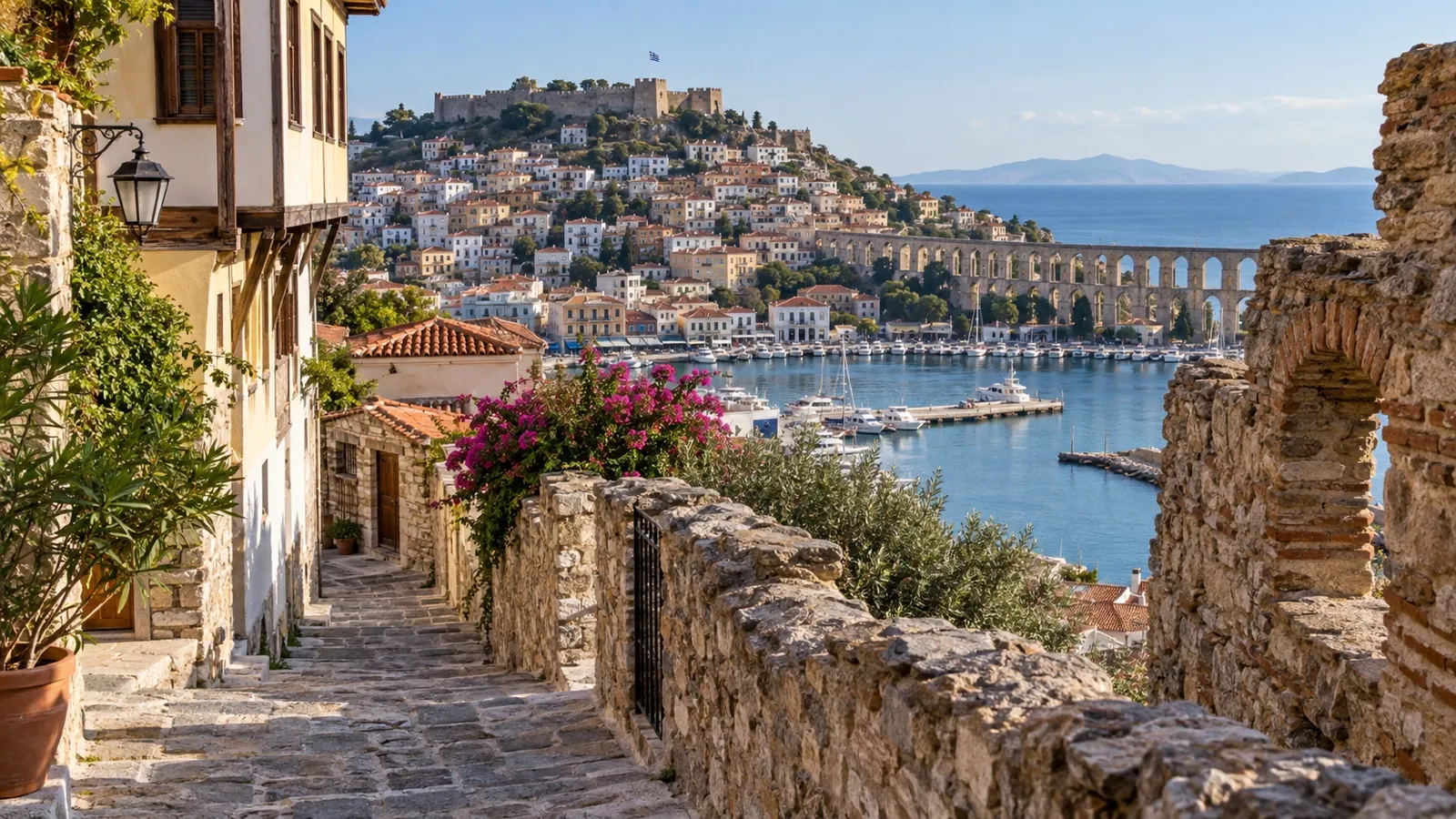
Move slowly and look back toward the harbor as you climb because some of the best views appear between buildings. Shade is intermittent, and the polished surfaces require care in both dry and wet weather.
Kavala Fortress
The fortress crowns the peninsula and dominates the approach by sea. Its walls, towers, and elevated position reveal how the city controlled the coast and routes inland.
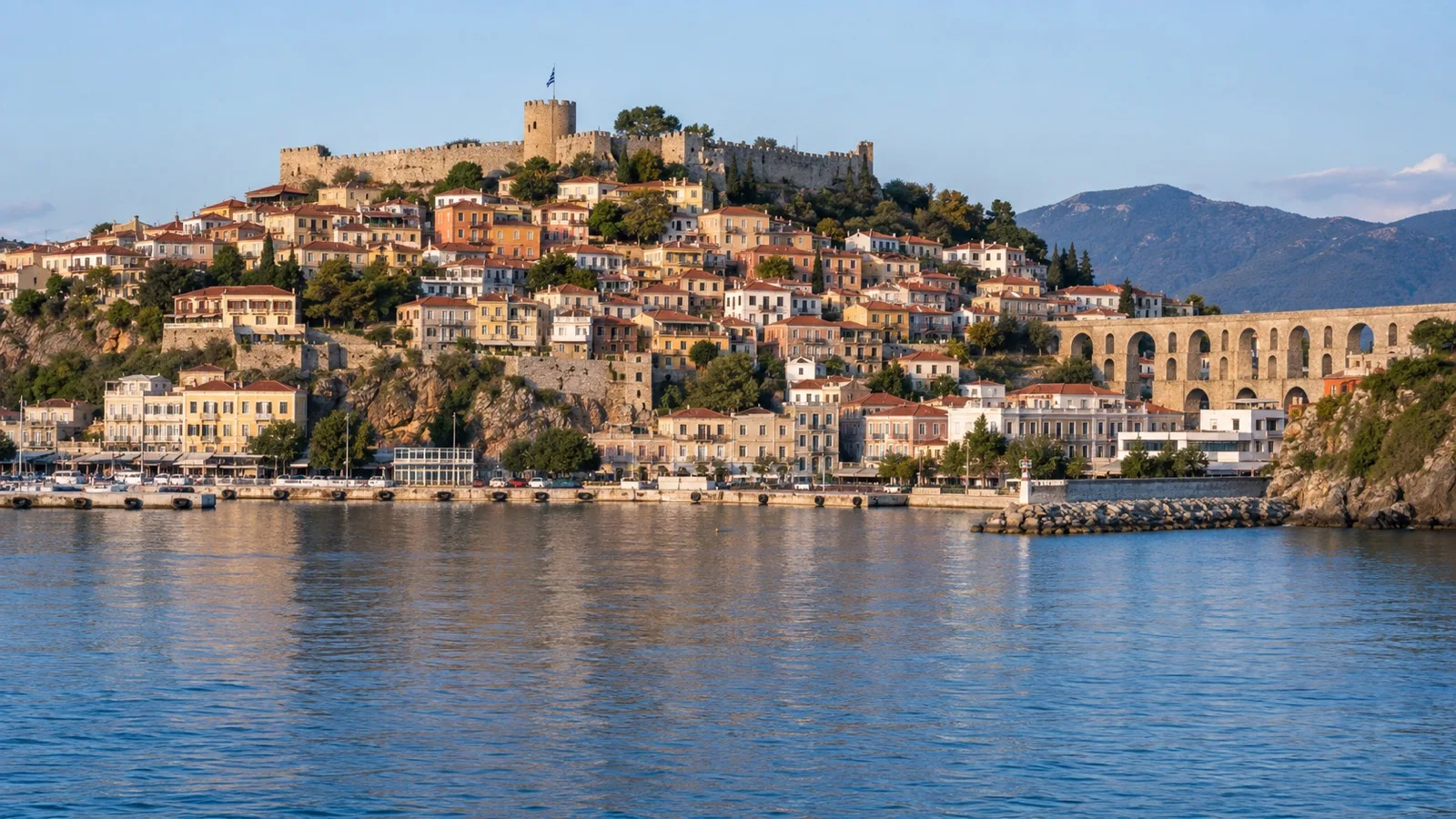
Reaching the site on foot requires a sustained climb, and interior paths include historic stone and stairs. Check official Visit Kavala information for current hours, events, and access before making it the centerpiece of a short call.
A taxi uphill is the practical choice for many travelers. Walking down through Panagia afterward gives you the atmosphere without spending your freshest hour on the ascent.
Imaret and the house of Muhammad Ali
The Imaret complex is one of Panagia’s most distinctive Ottoman-era buildings and now operates as a hospitality property. Public access can be limited, so admire the exterior unless you have confirmed a tour or reservation.
Nearby, the house associated with Muhammad Ali of Egypt provides another layer of Kavala’s Ottoman history. Opening arrangements can change, making same-day local confirmation worthwhile.
Kamares aqueduct
Kamares is the monumental aqueduct that crosses the lower city with a long double tier of arches. Its present form is associated with the Ottoman period, though the route reflects the city’s older need to carry water toward the fortified peninsula.
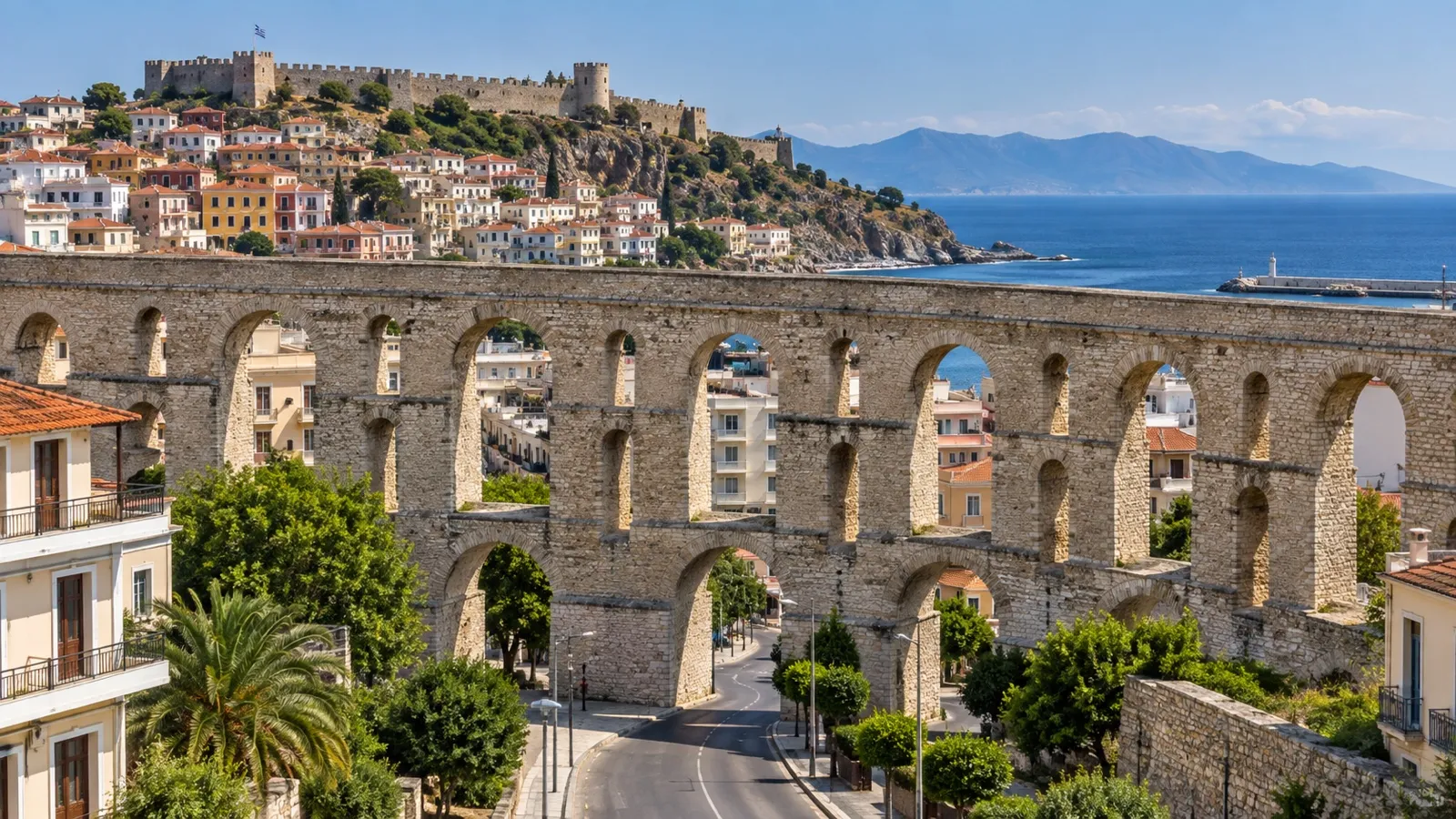
You can see the structure from streets near the eastern side of the center without climbing to the fortress. It fits naturally into a loop between the harbor, shopping district, and Panagia entrance.
Tobacco history and the modern center
Kavala’s modern prosperity was deeply connected to tobacco processing and trade. Warehouses, merchant buildings, and museum collections help explain the city’s growth beyond its ancient and Ottoman layers.
The lower center is the easiest area for a cafe, shopping, or a relaxed final hour. If heat or mobility makes Panagia impractical, a harbor and tobacco-history walk still produces a satisfying port day.
Philippi from Kavala cruise port
Philippi lies inland from Kavala and is the region’s major archaeological attraction. UNESCO describes a walled city on the ancient Via Egnatia, refounded by Philip II in 356 BCE and later reshaped as a Roman colony after the Battle of Philippi.
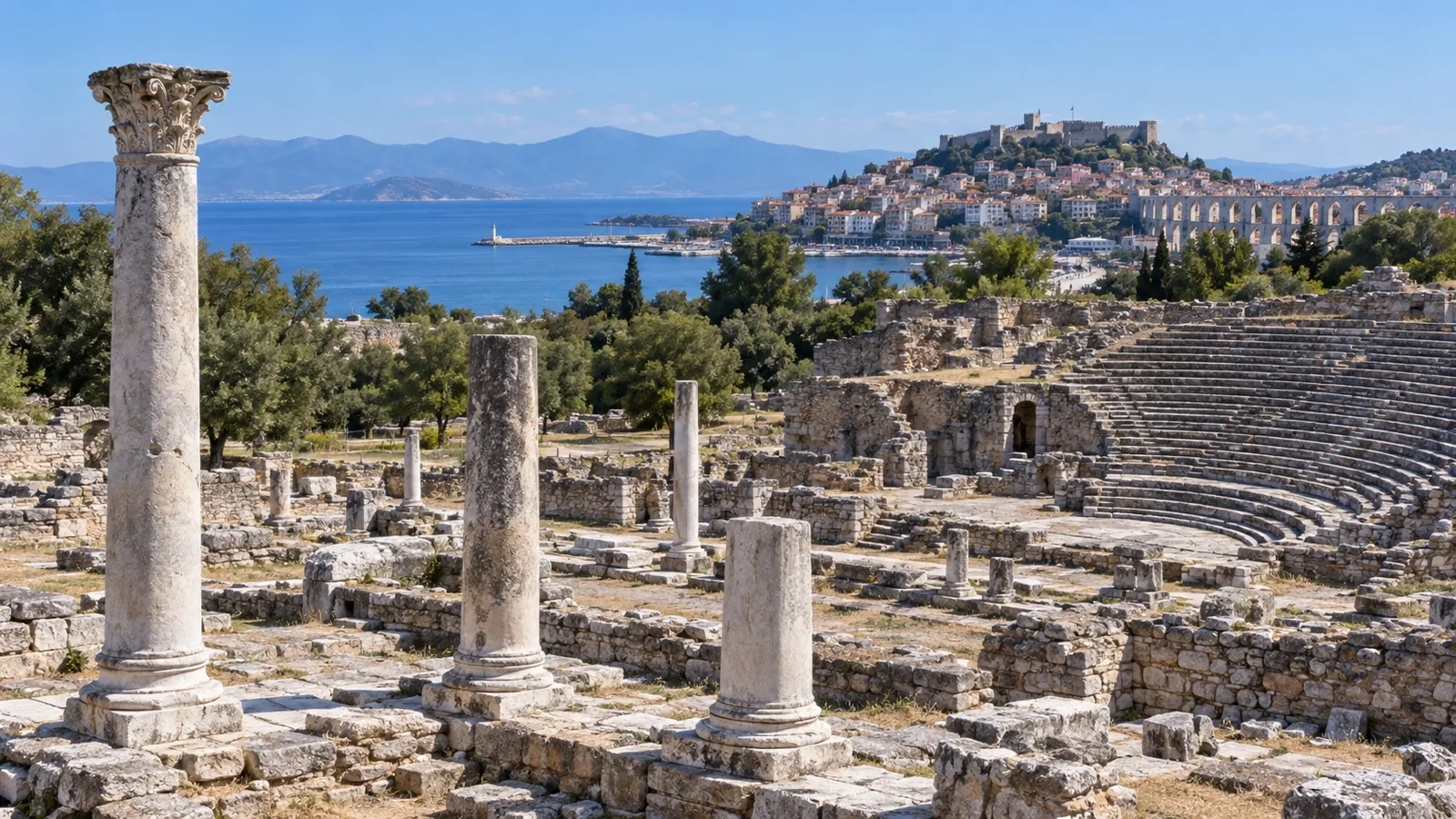
Visible remains include the theater, walls and gates, Roman forum, monumental religious terraces, early Christian basilicas, and the octagonal church complex. The site also carries deep Christian significance because the Apostle Paul visited in 49 or 50 CE.
Use the official UNESCO Philippi listing for historical context and the Greek culture service for current hours and tickets. Outdoor archaeological sites can change schedules during heat, holidays, conservation work, or special events.
How to reach Philippi
A ship excursion is the simplest choice because it coordinates transport, entry, and return timing. A reputable local tour or prearranged private driver can offer more flexibility while still avoiding uncertain bus connections.
Independent public transportation may be possible, but schedules and stop locations must align in both directions. A missed bus is a much larger problem at an inland site than in central Kavala.
Philippi deserves enough time to understand its layers rather than a hurried photo stop. Make it the primary outing, then add Kavala’s waterfront only if the return is comfortably early.
Lydia’s Baptistery and Christian heritage
Some tours pair Philippi with the nearby site associated with Lydia, remembered in Christian tradition as Paul’s first European convert. This stop is meaningful for faith-focused visitors but adds transport and tour time.
Confirm exactly which churches, river locations, or monuments an excursion includes. Broad descriptions such as footsteps of Paul can cover very different itineraries.
Three realistic Kavala port-day plans
Plan one: Panagia and fortress
Take a taxi uphill, visit the fortress, and descend through Panagia past historic landmarks and sea views. Finish at Kamares and the central waterfront before walking back to the ship.
Plan two: Philippi
Travel directly to Philippi with a ship tour or prearranged driver and give the site several unhurried hours. Return early enough for a short harbor stroll rather than adding the entire old town.
Plan three: easy lower Kavala
Stay around the harbor, center, tobacco landmarks, and aqueduct viewpoints. This plan works for a short call, extreme heat, or travelers avoiding stairs.
Beaches and Thassos cautions
Kavala has beaches west and east of the center, but transport and facilities vary by season. Ask locally for the best choice based on wind, water conditions, and reliable return transportation.
Ferries connect the region with Thassos, but an independent island trip introduces ferry schedules, port transfers, and a second marine crossing. Save Thassos for a longer stay unless the cruise line offers it as a protected excursion.
Accessibility
The central passenger terminal and lower waterfront provide the easiest access. Panagia and the fortress have steep lanes, steps, and uneven historic surfaces that may make a full walking circuit unsuitable.
A taxi can reduce elevation, but confirm how close it can reach the desired entrance. Philippi is a large outdoor archaeological site with rough ground and limited shade, so ask about the exact accessible route and tour vehicle.
Weather and what to wear
Summer can be hot, bright, and dry, while spring and fall bring more variable rain and wind. Wear supportive shoes with grip, carry water, and use a hat and sunscreen for the exposed climb.
Philippi has extensive outdoor areas with limited protection from the sun. Start early when possible and carry a light waterproof layer during unsettled seasons.
Money and connectivity
Greece uses the euro, and cards are accepted at many established businesses. Small cash is useful for minor purchases, taxis, local transport, and a backup when card terminals fail.
Download maps and save the Apostolos Pavlos port location before leaving the ship. Mobile data is helpful around the city, but it should not be the only record of your meeting point or return deadline.
Returning to the ship
A central Kavala walk carries little transport risk because the harbor remains close. Philippi, beaches, and private drives need a larger cushion for traffic, waits, and the port security process.
Use the cruise line’s all-aboard time rather than the ship’s sailing time as the deadline. If tendering is announced, add time for the final boat and do not assume you can walk directly to the gangway.
Frequently asked questions
Is Kavala cruise port walkable?
Yes, the Apostolos Pavlos port is surrounded by the city and the lower center is close. The fortress and Panagia require a steep uphill walk.
Do ships dock or tender in Kavala?
The port has two cruise berthing positions and gives cruise ships priority over passenger vessels. Anchorage service is also listed, so confirm your ship’s specific operation.
Can I visit Philippi independently?
Yes, a prearranged taxi or private driver is the most reliable independent option. Public transit requires careful timetable planning in both directions.
Is the fortress suitable for limited mobility?
Historic surfaces, steps, and steep lanes make full access challenging. A taxi can reduce the climb, but confirm the final approach and entrance conditions.
How does Kavala compare with other Greek ports?
Kavala blends a steep historic city with an important inland archaeological site. Compare it with Katakolon, Heraklion, and Rhodes when weighing Greek itineraries.
Final thoughts on Kavala cruise port
Kavala offers a memorable mix of harbor life, hillside history, and one of northern Greece’s great archaeological excursions. Choose between the old town and Philippi first, then protect enough return time to enjoy the final waterfront walk without rushing.