Heraklion Cruise Port: Knossos, Museums & Old Harbor
Heraklion gives cruise passengers two very different good days. You can make Knossos the main event, or stay close to the ship for the archaeological museum, Venetian harbor, old-city streets, and a long Cretan lunch.
My favorite first-visit plan is Knossos early, followed by the Heraklion Archaeological Museum if time and energy allow. The palace makes more sense after you see its setting, while the museum holds many of the original objects that give Minoan Crete its color and detail.
Heraklion Cruise Port Quick Facts
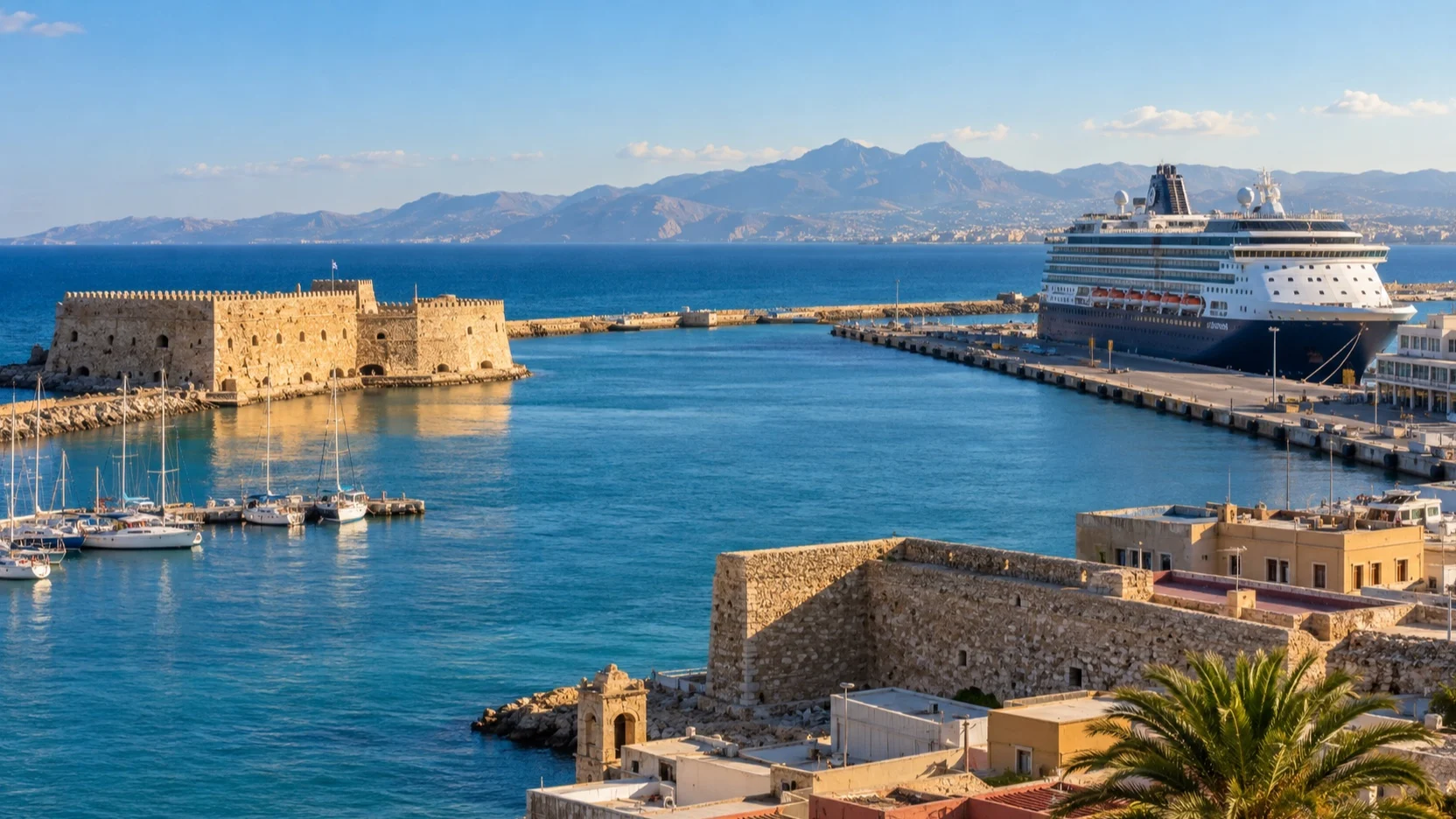
- Arrival: Cruise ships normally berth in the commercial port east of central Heraklion.
- Port exit: Follow the ship and port’s current pedestrian or shuttle instructions through the controlled area.
- City center: The Venetian harbor and old-city sights are reachable on foot from the public port exit.
- Knossos: Inland from the city and best reached by urban bus, taxi, organized excursion, or private tour.
- Top museum: The Heraklion Archaeological Museum is the essential companion to Knossos and a strong destination by itself.
- Currency: Euro.
- Language: Greek, with English commonly understood in visitor businesses.
- Return rule: Allow extra time for traffic, port security, and the walk or shuttle from the gate to the ship.
Where Cruise Ships Dock in Heraklion
Heraklion is a working ferry, cargo, and cruise port, so passengers do not simply wander across every quay. Your exact berth and the port’s operating plan determine whether you walk through a designated route or use an internal shuttle.
Listen to the ship’s instructions and note the gate or shuttle point you must use on return. A map pin placed at the edge of the harbor may not show the safe route through the controlled port.
Once outside the port, the Venetian harbor and central streets are reasonably close for active walkers. Heat and exposed pavement can make the distance feel longer than it looks, especially after a morning at Knossos.
Walking Into Central Heraklion
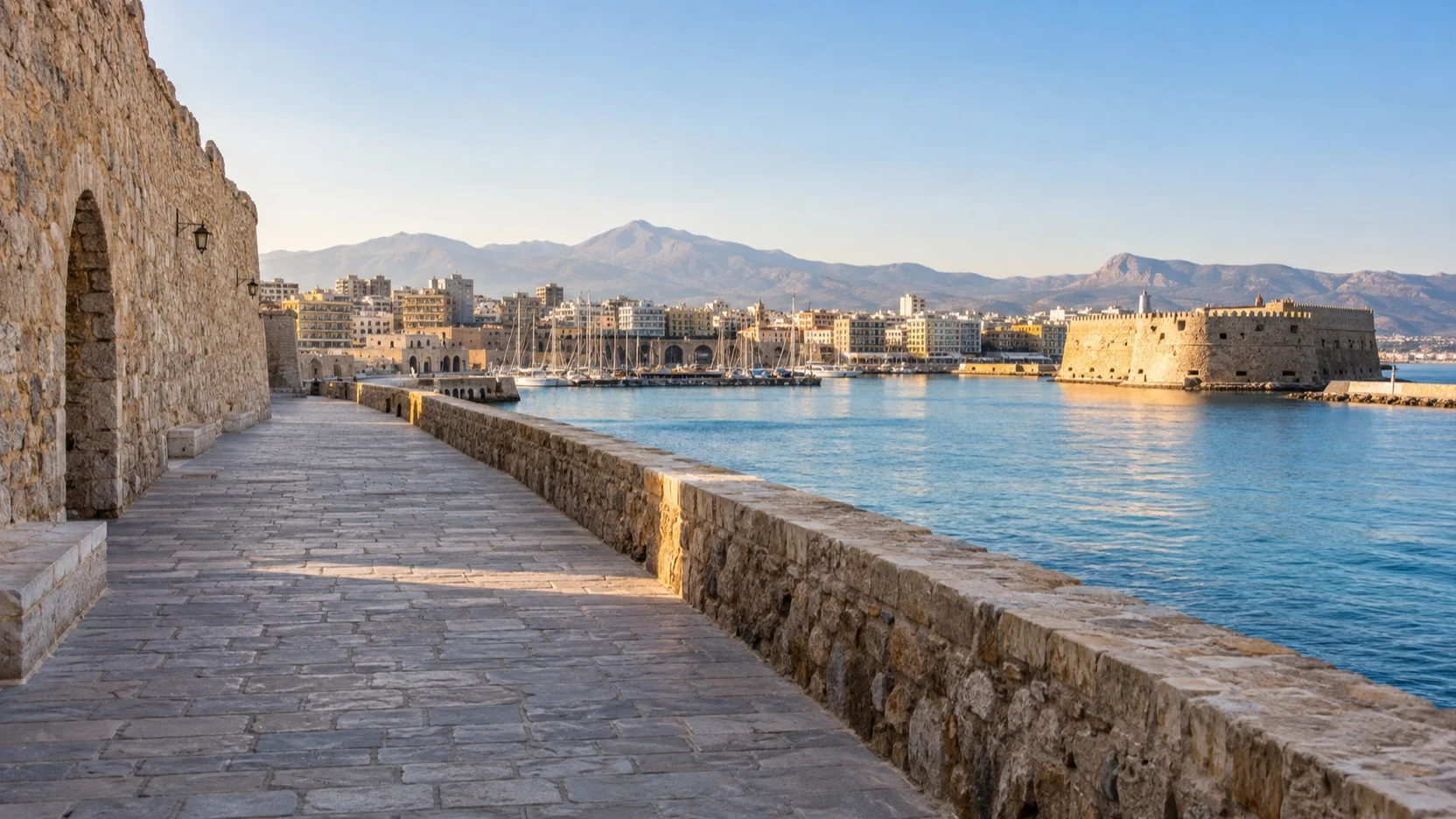
The waterfront provides the clearest orientation. Walk toward the Venetian harbor, where fishing boats, the long breakwater, and Koules Fortress mark the city’s historic relationship with the sea.
From the harbor, turn inland toward the pedestrian center, Lions Square, and the streets around 25th of August. The archaeological museum sits on the eastern side of central Heraklion, making it a logical first or final major stop.
Traffic can be busy near the port and main roads, so use marked crossings and watch for scooters. Save the terminal location offline because the large harbor contains several passenger and vehicle functions.
Should You Visit Knossos?
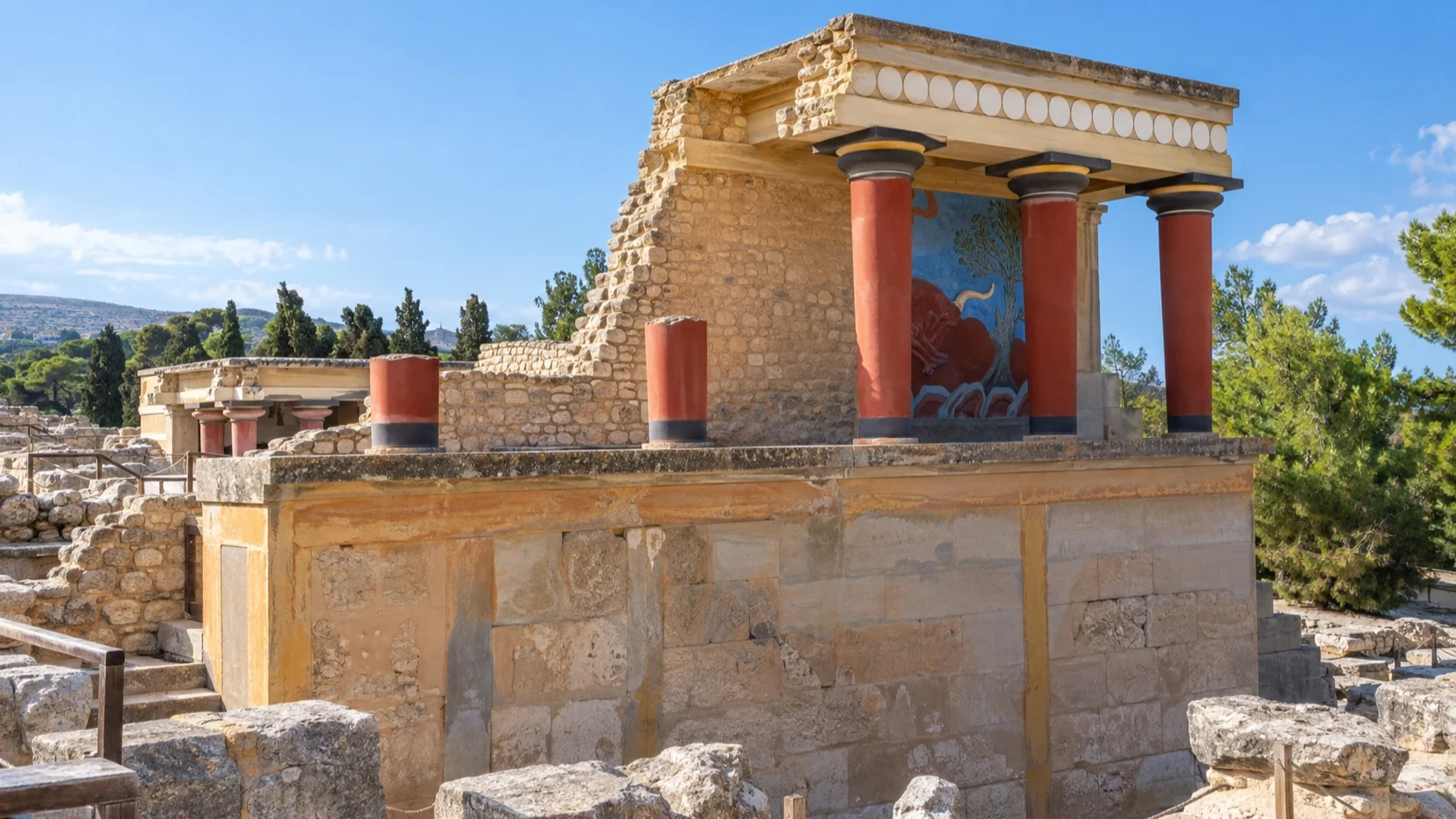
Knossos is the right choice if Minoan history is your main reason for visiting Crete. The archaeological site preserves a palace complex linked with the island’s Bronze Age civilization, later excavation, and controversial reconstruction.
The experience is more exposed and visually reconstructed than some visitors expect. Go for the history and site plan rather than imagining a fully intact ancient palace.
Use the official Hellenic Heritage ticket system and Ministry of Culture information for current hours, admission, and any timed-entry rules. Avoid fragile prices from old guides because Greece’s ticketing policies and seasonal schedules can change.
Getting to Knossos Independently
Heraklion’s urban bus network serves the Knossos area, and its official website provides itineraries, ticket information, announcements, and real-time tools. Confirm the current line, stop, direction, and payment method for your travel date rather than relying on an older route number.
The bus is usually the budget choice, but you must first reach the correct city stop from the cruise port. Leave room for waiting, traffic, the walk from the stop, and a crowded return service.
A taxi can simplify the outbound journey and is useful for a small group, while an organized tour removes the need to navigate local transport. Agree on the fare or meter arrangement according to local rules and confirm whether the driver is waiting or providing only a one-way ride.
How Long to Allow at Knossos
Allow enough time to pass entry, orient yourself, and move through the site without rushing from sign to sign. Crowds, group tours, summer heat, and exposed paths can slow the visit.
A licensed guide or well-prepared audio resource can make the palace layout easier to understand. If you visit independently, decide which areas matter most before arrival so you do not spend the first half of the visit studying a map in the sun.
Set a firm departure time based on the ship’s schedule and your return transport. The archaeological museum deserves its own meaningful block, so do not leave Knossos so late that the museum becomes a rushed photo stop.
Heraklion Archaeological Museum
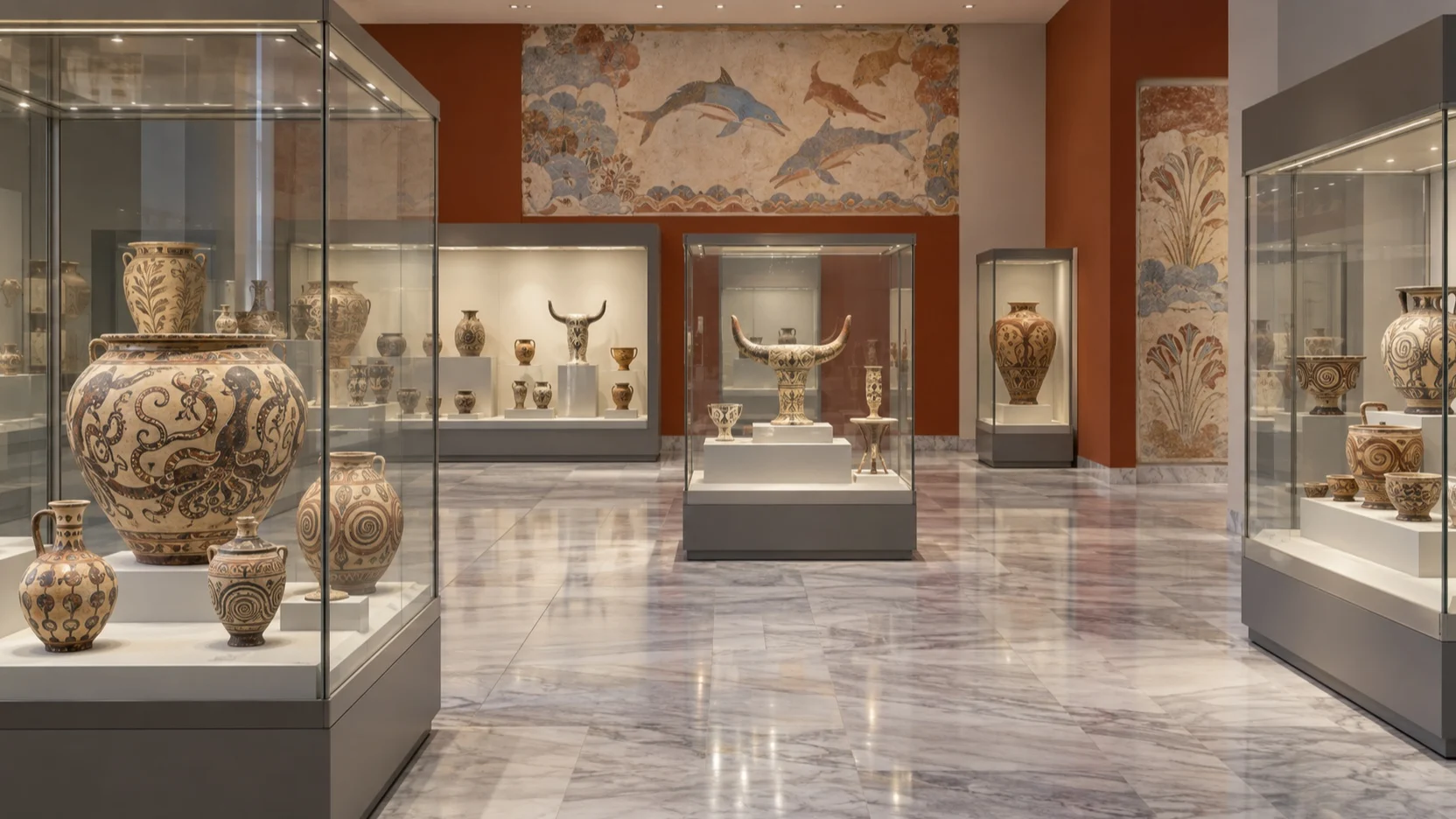
The Heraklion Archaeological Museum contains the richest context for Knossos and other Minoan sites across Crete. Frescoes, pottery, jewelry, sculpture, ritual objects, and the famous Phaistos Disc turn palace ruins into a much fuller human story.
You do not need to visit Knossos first for the museum to be worthwhile. On a short call, hot day, or uncertain-weather visit, the museum can be the single anchor for an excellent Heraklion day.
Check the museum’s official site for current galleries, opening hours, ticketing, and temporary changes. Choose a few priority rooms if time is limited rather than trying to read every label at the same pace.
A Heraklion Old-City Walking Plan
Begin at the Venetian harbor and see Koules Fortress from the waterfront, then continue inland along 25th of August Street. The route leads toward the Loggia, the Basilica of Saint Mark, and Lions Square with the Morosini Fountain.
Continue toward the Cathedral of Saint Minas if time allows, then loop through shopping streets and local food stops. The center is busy rather than preserved as a silent historic district, which is part of its appeal.
Save the archaeological museum for the coolest part of the day or as shelter from a shower. Finish near the harbor so the final walk to the port does not require crossing central Heraklion again.
Koules Fortress and the Venetian Harbor
Koules stands at the entrance to the old Venetian harbor and is Heraklion’s most recognizable waterfront monument. Even when the interior is closed, the exterior and harbor walk provide strong views and an easy sense of place.
Check official cultural-site information before planning an interior visit because opening hours can vary by season or restoration work. The breakwater can be hot, windy, and exposed, so do not walk its full length casually near all aboard time.
Heraklion on a Short Port Call
For a short call, stay in the city and make the museum your anchor. Add the Venetian harbor, Lions Square, a church or historic building, and lunch only as time allows.
Knossos becomes less comfortable when a late arrival, early departure, or traffic disruption removes the return buffer. A focused city day is not a lesser choice because it gives you original Minoan objects, Venetian history, and modern Cretan life without a separate inland transfer.
Beaches and Trips Beyond Heraklion
Crete has beautiful beaches and inland villages, but most require transport from the cruise port. Choose one destination, confirm current bus or taxi logistics, and avoid stacking a beach with Knossos and a full city visit.
A rental car can offer flexibility, yet city traffic, parking, pickup time, and the return deadline all reduce its advantage on a short call. Read the rental terms, photograph the vehicle, and refuel with enough margin to handle a delay.
Food and Shopping
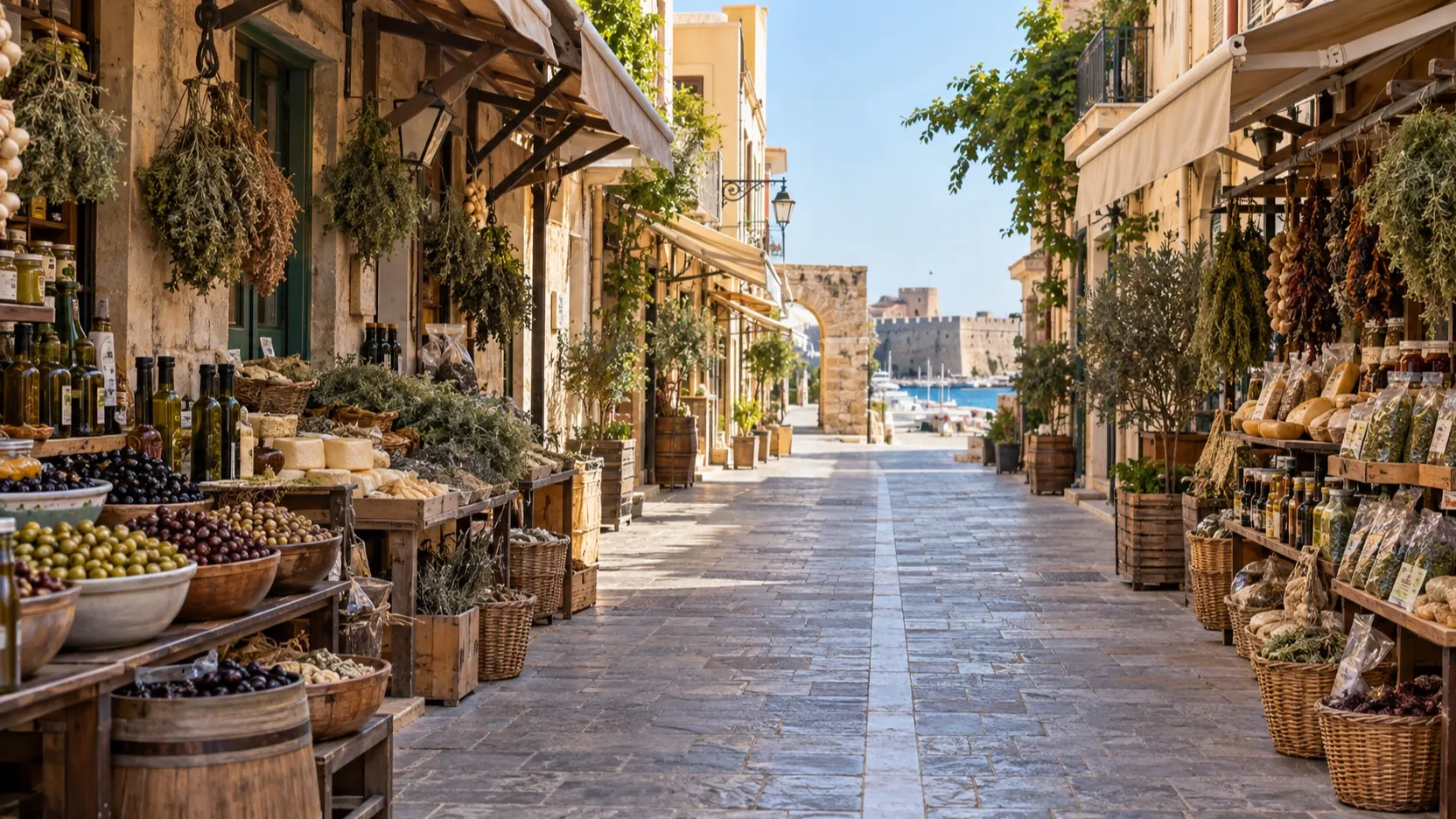
Heraklion is an excellent place to slow down over Cretan food. Look for dakos with tomato and cheese, seasonal vegetables, grilled meat or fish, local cheeses, olives, and honey-based sweets.
Ask about portion sizes because several shared dishes can quickly become a full meal. Check posted prices in the busiest squares, and allow enough time for relaxed service rather than ordering just before you need to leave.
Olive oil, herbs, honey, wine, ceramics, and food products are common souvenirs. Confirm customs rules for your final destination and the cruise line’s policy for carrying alcohol back aboard.
Accessibility and Mobility
The commercial port can involve distance, controlled routes, and a shuttle, so ask the cruise line about the exact berth and accessible transfer. Do not assume a port shuttle can take every mobility device without advance confirmation.
Central Heraklion includes traffic, curbs, uneven paving, and crowded pedestrian streets. The museum is generally the strongest major choice for limited stamina, but verify current elevator access and any gallery restrictions directly.
Knossos has outdoor surfaces, slopes, steps, heat exposure, and crowded pinch points. Ask the site and tour operator about the route appropriate for your device or walking ability before purchasing a fixed excursion.
Heat, Sun, and Weather
Summer heat can be intense at Knossos and along exposed harbor pavement. Carry water, use sunscreen and a hat, and wear shoes suited to polished stone and uneven archaeological surfaces.
Spring and fall can bring wind or showers, while the harbor may feel cooler than the inland site. A light layer and compact rain protection are useful without adding bulky gear to a crowded bus.
Money, Safety, and Staying Connected
Cards are widely useful, but carry some euros for small purchases and transport. Use bank-affiliated cash machines when possible and decline unnecessary conversion into your home currency.
Use ordinary city awareness around crowded buses, markets, and tourist sights. Keep phones and wallets secure, watch traffic at crossings, and avoid walking distracted beside the busy port roads.
Download tickets, maps, the ship’s port contact, and the terminal location. Mobile data can slow in crowded areas, and an offline screenshot is easier to show a taxi driver.
How Early to Return
Work backward from the ship’s announced all aboard time and include the correct port gate, security, and any internal shuttle. Traffic between Knossos and central Heraklion can change, so choose a return that leaves room for a delayed bus or taxi.
Keep the final stop near the harbor and make it easy to skip. I would rather enjoy coffee within a comfortable walk of the port than spend the last hour watching traffic from the wrong side of the city.
Official Planning Resources
Use the Heraklion Port Authority for port information, the Heraklion Archaeological Museum for current visitor details, and Hellenic Heritage for official state-site ticketing.
For independent transport, check the Heraklion Urban Bus website for current itineraries, tickets, announcements, and real-time tools. Ship instructions remain authoritative for your berth, port shuttle, and boarding deadline.
Final Thoughts
Heraklion works best when you choose Knossos or the city as the clear anchor and let the other become optional. Protect the return buffer, use official ticket and transport information, and leave enough time for Crete to feel like more than a list of ruins.